This site is supported by our readers. We may earn a commission, at no cost to you, if you purchase through links.

Your dog sniffs the pear slice in your hand, tail already moving. It’s a sweet moment—but before you hand it over, it’s worth knowing that not every part of a pear is safe for dogs.
The seeds, for example, contain a compound that releases cyanide during digestion. Most pet owners never hear that until something goes wrong.
Fresh pear flesh, though, tells a different story: fiber for gut health, antioxidants, and a water‑rich crunch that dogs tend to love.
Knowing exactly what to serve, how much, and how often makes all the difference.
Table Of Contents
- Key Takeaways
- Can Dogs Eat Pears Safely?
- Are Pears Good for Dogs?
- What Pear Parts Are Unsafe?
- How Much Pear Can Dogs Eat?
- How to Prepare Pears for Dogs
- Frequently Asked Questions (FAQs)
- What happens if dogs eat pears?
- Are pears safe for dogs to eat?
- Is pear bad for dogs?
- Are pears toxic to dogs?
- Are pears safe for dogs?
- Are any fruits toxic to dogs?
- What fruit is best for dogs?
- Can pears upset a dog’s stomach?
- Is there a limit to how often I can feed my dog pears?
- Are there any negative side effects of feeding my dog pears?
- Conclusion
Key Takeaways
- Pear flesh is safe for dogs in small amounts, but the seeds contain a compound that releases cyanide during digestion, so always remove the seeds, core, and stem before serving.
- Fresh pear offers real benefits—fiber for gut health, antioxidants, and hydration—making it a genuinely useful occasional treat rather than just empty calories.
- Stick to the 10% rule: treats like pear shouldn’t exceed 10% of your dog’s daily calorie intake, and once or twice a week is plenty to avoid sugar and fiber overload.
- Dogs with diabetes, obesity, or sensitive stomachs should only get pear with a vet’s approval, since the natural sugars and fiber can cause real problems for certain health conditions.
Can Dogs Eat Pears Safely?

Yes, dogs can eat pears — but how you serve them makes all the difference. A few simple rules keep this fruit safe and enjoyable for your pup. Here’s what you need to know before offering a slice.
For the full breakdown on safe serving sizes and prep tips, find out everything about dogs eating pears before your pup takes that first bite.
Fresh Pear Flesh Only
Regarding feeding pears to your dog, fresh pear flesh is the only part worth offering. Ripe pear flesh is firm yet slightly yielding — not mushy or mealy. Look for these signs of a good pear:
- Smooth, unblemished skin
- Gentle give near the stem when pressed
- No soft, browned, or oxidized spots
Fresh ripe pears deliver vitamin C and fiber your dog can actually use.
With roughly 57 kcal per 100 g, pears are a low energy density snack for dogs.
Safe Occasional Treat
Pears make a genuinely good occasional treat for your dog. Think of them the way you’d think of a small reward — something special a couple of times a week, not an everyday snack. Portion frequency guidelines matter here, so keeping pear treats to once or twice weekly helps your dog enjoy the benefits without overloading on natural sugars.
| Treat Factor | Pear Details |
|---|---|
| Frequency | 1–2 times per week |
| Storage | Refrigerate, use within 24 hours |
Always supervise your dog during supervised feeding sessions, especially the first time. Some dogs may have sensitivities, so watch for any stomach upset after that first taste.
Avoid Daily Feeding
Daily feeding isn’t the goal here. Even though pears are safe, your dog’s gut needs digestive rest days between fruit treats.
Too much fiber too often can cause loose stool or gas. Sticking to a weekly treat schedule — once or twice a week — keeps things balanced and gives you time to spot any reactions.
Are Pears Good for Dogs?

Pears aren’t just a safe treat — they actually bring some real nutritional value to the table for your dog. Think of them as a snack that does a little extra work. Here’s what makes pears worth adding to your dog’s rotation.
Fiber for Digestion
One medium pear packs about 5.5 grams of dietary fiber — and that matters more than you might think. The soluble fiber in pears acts as a prebiotic, feeding beneficial gut bacteria that produce short-chain fatty acids like butyrate, which fuel healthy colon cells.
A single pear’s fiber feeds the gut bacteria that keep your dog’s colon cells thriving
This promotes digestive health in dogs by softening stool, regulating gut transit, and keeping bowel movements regular.
The fiber works gently over time, which is why rutabagas make a smart addition to a dog’s diet when you want steady digestive support without the shock of a harsh laxative.
Vitamins and Antioxidants
Beyond fiber, pears offer a small but useful mix of vitamins. Vitamin C — about 4 mg per 100 g — helps protect your dog’s cells from free radical damage, and assists immune function.
Pears also contain flavonoids and antioxidant compounds that may reduce oxidative stress. Think of them as quiet bodyguards working behind the scenes.
Hydration Support
Fresh pears are about 57% water, so each bite gives your dog a small but real hydration boost. This matters most on warm days when dogs pant heavily and lose fluids fast.
Here’s what that looks like in practice:
- Urine stays lighter and less concentrated
- Gums remain moist and healthy-looking
- Kidney function gets quiet, steady support
- Panting-related water loss gets partially offset
That said, pears never replace fresh water access — keep the bowl full always.
Low-Calorie Snack
Most dogs only need around 85 kcal per cup of pear — making it one of the lightest treats you can offer. That low calorie density means you can reward your dog without quietly nudging their weight upward.
Pair a slice with plain yogurt for a small protein and fiber boost that keeps them satisfied longer without adding unnecessary calories.
What Pear Parts Are Unsafe?

Not every part of a pear is safe to share with your dog. A few parts can cause real harm, even if the flesh itself is fine. Here’s what to watch out for before you hand over that next slice.
Pear Seeds
Pear seeds are the most dangerous part of the fruit for your dog. They contain amygdalin, a compound that releases cyanide when digested.
Here’s why you should always remove seeds and core before serving:
- Cyanide risk increases if seeds are chewed or crushed
- Even a few seeds may be harmful to smaller dogs
- Seeds offer no nutritional value worth the risk
- Symptoms may include vomiting and weakness
Core and Stem
Even after you remove the seeds, the core and stem aren’t safe to offer your dog. Both parts are tough and fibrous, making them hard to chew properly — and most dogs will just swallow the pieces whole.
That can cause digestive irritation, leading to vomiting, diarrhea, or an upset stomach, especially in sensitive dogs.
Always stick to the soft flesh only.
Choking Hazards
Choking is a real risk when dogs eat pear pieces that are too large or haven’t been chewed properly. Quick eating makes this worse — excited dogs often gulp bites whole.
Follow these preventing choking in dogs basics:
- Always cut into bite-size pieces (about 1 inch wide)
- Practice seedless serving by removing seeds, stems, and leaves first
- Remove the seeds and core completely before serving
- Watch for texture risks — slippery or large chunks slide down fast
- Allow chew time with supervised snacks, especially for small breeds
Canned Pears
Fresh pear is the way to go — canned pears aren’t safe for dogs.
Most canned varieties are packed in syrup or juice with added sugars that can upset digestion, worsen obesity, and spike blood sugar. Some also contain preservatives or artificial ingredients. Even "juice pack" versions add unnecessary sweetness.
Stick with fresh, plain pear flesh instead.
How Much Pear Can Dogs Eat?

Portion size really does matter when sharing pears with your dog. Too much of a good thing can cause digestive upset, even with a healthy fruit. Here’s a simple breakdown based on your dog’s size and health needs.
Small Dog Portions
Small dogs need surprisingly little pear to get the benefit. A good rule of thumb is 10 g per 10 lb of body weight — so a 10-pound dog gets roughly one thin slice, while a 20-pound dog may have two small pieces.
- Keep treats to once or twice weekly
- Always cut into bite-size pieces
- Replace other treats to balance calories
- Start with a tiny piece to check digestive tolerance
- Stop immediately if loose stools appear
That small amount is plenty. Their daily calorie needs are lower, so moderation isn’t optional — it’s essential.
Medium Dog Portions
Medium dogs — think Beagles, Cocker Spaniels, or Border Collies — can handle a little more than their smaller friends.
Two to three small slices per serving are a practical target, roughly 1 to 2 teaspoons of pear flesh.
Keep treats to once or twice a week, and make sure pear stays within 10% of their daily food intake.
Large Dog Portions
Large dogs — like Golden Retrievers, Labradors, or German Shepherds — can enjoy up to four small pear slices per serving. That’s roughly 2 to 3 teaspoons of fresh flesh.
Even so, portion control still matters. A bigger body doesn’t mean unlimited treats. Stick to once or twice a week, and always account for pear within their daily calorie budget.
Ten Percent Treat Rule
Every treat your dog eats — pears included — counts toward their daily calorie limit. The rule is simple: treats shouldn’t exceed 10% of total daily intake.
Here’s what that means in practice:
- Track all extras, not just pear slices
- Measure treats by weight for accuracy
- Adjust the main meal if treats add up
Portion control for dogs keeps nutrition balanced day to day.
Dogs With Health Issues
If your dog has diabetes, obesity, or pancreatitis, pear isn’t the right treat without a vet’s approval first. The natural sugars can spike blood glucose in diabetic dogs, and extra calories worsen obesity in dogs quickly.
Dogs prone to gastrointestinal upset may react to pear’s fiber with loose stools.
When in doubt, check with your vet before offering any fruit.
How to Prepare Pears for Dogs
Getting pears ready for your dog takes just a few simple steps, and it’s easier than you might think. The goal is to keep it safe, fresh, and the right size for your pup. Here’s exactly how to do it.
Wash The Pear

Before anything goes into your dog’s bowl, wash the pear thoroughly. Hold it under cool running water and gently rub the skin with your hands or a produce brush. This simple step removes pesticide residue concerns and surface dirt that you can’t always see.
Here’s a quick checklist for safe fruit preparation for dogs:
- Rinse under water for at least 20–30 seconds, covering the entire surface
- Use a produce brush if the skin feels rough or waxy
- Avoid soap or detergent — plain tap water is all you need
- Wash timing matters — rinse right before serving, not hours ahead
- Dry after washing by patting with a clean paper towel so pieces aren’t slippery when you cut them
Once the pear is washed, cored, and cut into bite-size pieces, it’s genuinely ready for your pup.
Remove Seeds and Core

Once the pear is clean, the next step matters just as much — remove seeds and core completely.
Pear seeds contain cyanogenic compounds that can release cyanide, making them genuinely toxic to dogs. The core holds those seeds, so cut the entire center out and inspect the remaining flesh to confirm every piece is clean before serving.
Cut Bite-Size Pieces

Now that the seeds and core are gone, cut into bite-size pieces — roughly 1 inch wide and ¼ inch thick. Uniform cut size keeps portion control simple and reduces any choking hazard, especially for smaller dogs.
Here’s what to keep in mind when cutting:
- Consistent piece size helps you track exactly how much your dog eats per session.
- Surface moisture makes fresh pear slippery, so slightly chilled pieces are easier to handle and separate cleanly.
- Treat temperature matters — cold pear firms up nicely, giving you cleaner cuts and less juice mess.
- Chewing texture is just right when pieces are thick enough that your dog bites through them rather than swallowing whole.
- Supervision while eating lets you catch any piece that’s too large before it becomes a problem.
Frozen Pear Treats
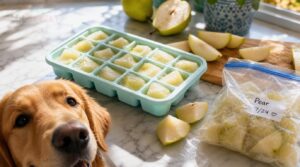
Freezing bite-size pear chunks turns a simple prep step into a cool, low-calorie treat your dog will love on a warm day. Pop those pre-cut pieces into an ice cube tray, freeze solid, and serve one or two straight from the freezer. Supervise your dog while eating — frozen pieces soften quickly but start firm.
| Serving Size | Dog Size | Freeze Time |
|---|---|---|
| 1 small chunk | Small dog | 2–3 hours |
| 2–3 small chunks | Medium dog | 2–3 hours |
| 3–4 small chunks | Large dog | 2–3 hours |
Keep extras in a sealed freezer bag for up to one week. Don’t refreeze partially thawed pieces — the texture turns wet and messy. Because freezing releases natural juices as pear thaws, dogs with sensitive stomachs do better with smaller portions introduced slowly.
Pear Yogurt Pup-Cicles

If you loved how easy frozen pear chunks were, pup-cicles take things one step further. Blend mashed pear with plain, unsweetened Greek yogurt — no added sugar, no xylitol.
Pour into a mold or ice cube tray and freeze for two to three hours. Offer one small portion once or twice weekly, and watch for any stomach upset.
Frequently Asked Questions (FAQs)
What happens if dogs eat pears?
Most dogs handle a small piece of fresh pear just fine. But too much can lead to digestive upset — think loose stools or an upset stomach — especially if your dog isn’t used to fiber-rich foods.
Are pears safe for dogs to eat?
Yes, pears are safe for dogs when served correctly. Offer only fresh pear flesh — no seeds, core, or stem — in small portions, and skip canned varieties with added sugars.
Is pear bad for dogs?
Pear isn’t a villain — but it’s not a free pass either. Seeds contain amygdalin, which can trigger cyanide poisoning. The core risks choking or intestinal blockage. Too much flesh causes sugar and fiber overload.
Are pears toxic to dogs?
Fresh pears aren’t toxic to dogs, but pear seeds contain amygdalin, a cyanogenic glycoside that releases cyanide when digested. The flesh itself is safe in small amounts.
Are pears safe for dogs?
Perfectly prepared pears are safe for dogs in small amounts. Stick to fresh pear flesh only — never the seeds or core — and treat it as an occasional snack, not a daily habit.
Are any fruits toxic to dogs?
Some fruits are genuinely dangerous for dogs. Grapes and raisins can trigger acute kidney failure, even in tiny amounts. Avocado contains persin, which causes vomiting and diarrhea. Cherries, citrus, and figs can also cause serious digestive upset.
What fruit is best for dogs?
There’s no single best fruit — it depends on your dog. Safe fruits for dogs include blueberries, apples, watermelon, strawberries, and bananas, each offering fiber, antioxidants, or hydration in small portions.
Can pears upset a dog’s stomach?
Yes, pears can cause digestive upset if served incorrectly. Too much fiber or natural sugar may trigger loose stools or vomiting. Always offer small, fresh pieces to keep your dog’s stomach happy.
Is there a limit to how often I can feed my dog pears?
There’s a sweet spot with pears — a few times per week is plenty. Stick to the 10% daily calorie rule, and adjust the portion based on your dog’s size.
Are there any negative side effects of feeding my dog pears?
Yes, pears can cause digestive upset, sugar overload, weight gain, dental decay, choking hazards, intestinal blockage, cyanide poisoning from toxic seeds, and rarely, an allergic reaction — especially when overfed or poorly prepared.
Conclusion
Pears prepared right make a safe snack. Pears served right amount support your dog’s health. Pears with seeds and core removed protect them from hidden risks.
Can dogs eat pears? Yes—but only the flesh, only in moderation, and only when you’ve done the simple prep work first.
That slice you’re holding can be a small, nourishing gift. Just make sure it’s ready before it reaches your dog’s mouth.
- https://vettoday.com/blog/blogs/are-pears-safe-for-dogs-health-benefits-and-feeding-tips
- https://jetpetresort.com/blog/dog-boarding/can-dogs-eat-pear-essential-steps-for-safe-feeding
- https://us.ziwipets.com/blogs/digestive-health/can-dogs-eat-pears
- https://fourleafrover.com/blogs/natural-health/can-dogs-eat-pears
- https://www.metlifepetinsurance.com/blog/pet-health/can-dogs-eat-pears