
This site is supported by our readers. We may earn a commission, at no cost to you, if you purchase through links.

Your kids bolt out the door every morning, your weekends revolve around hiking trails, and you’ve got enough backyard space to host a small track meet. If that sounds like your household, you’re probably not looking for a lapdog who considers a stroll to the mailbox a marathon.
Active families need dogs who can keep pace—breeds that view a five-mile run as a warmup and treat “fetch” like a professional sport. The challenge isn’t just finding a high-energy dog; it’s matching your family’s specific rhythm with a breed that thrives in your lifestyle. Some excel at endurance activities, others shine in agility and training, and a few seem genetically programmed to outlast even the most energetic teenager.
Understanding what drives these athletic breeds—and what they genuinely need to stay balanced and happy—makes the difference between a perfect companion and a four-legged tornado tearing through your home.
Table Of Contents
- Key Takeaways
- Best Dog Breeds for Active Families
- Labrador Retriever – Energetic and Friendly
- Border Collie – Intelligent and Agile
- Australian Shepherd – Athletic and Loyal
- Golden Retriever – Playful and Gentle
- Siberian Husky – Endurance and Adventure
- German Shorthaired Pointer – Athletic and Versatile
- Boxer – Playful and Sturdy
- Dalmatian – Energetic and Unique
- High-Energy Breeds for Outdoor Activities
- Choosing The Right Breed for Your Lifestyle
- Exercise and Training Needs of Active Breeds
- Health and Safety Tips for Active Dog Breeds
- Frequently Asked Questions (FAQs)
- What is the best dog for an active family?
- Which breed of dog would be best for an active owner?
- What is the most active dog breed?
- What is the most family friendly dog?
- How do energetic breeds fare in apartments?
- What diets best suit high-energy dogs?
- Do these breeds interact well with children?
- Are specific toys better for these breeds?
- Can energetic dogs participate in dog sports?
- What age should puppies start intense exercise?
- Conclusion
Key Takeaways
- Active families need dogs that require 60–120 minutes of daily exercise, with breeds like Border Collies, Australian Shepherds, and Siberian Huskies thriving on structured physical and mental challenges that match high-energy lifestyles.
- Successful breed selection depends on honest assessment of your family’s baseline activity levels, available space, and commitment to consistent training—not just the dog’s appearance or popularity.
- Early socialization before 14–16 weeks reduces fear-based aggression by 40% and creates better interactions with children and other pets, making temperament matching as critical as energy level compatibility.
- Proper care for active breeds requires balanced nutrition with 25–30% protein, preventative health screenings to catch joint issues early, and injury prevention strategies like warm-up routines that cut muscle strains by 14%.
Best Dog Breeds for Active Families
If you’re the kind of family that’s always on the go—hiking trails on weekends, playing fetch in the park, or exploring new outdoor spots—you’ll want a dog that can keep up with your lifestyle.
Some breeds are naturally wired for action, thriving on physical challenges and family adventures.
Let’s look at eight breeds that bring the energy, enthusiasm, and temperament to match your active household.
Labrador Retriever – Energetic and Friendly
The Labrador Retriever brings pure joy to active families. You’ll find them happiest with 1.5 to 2 hours of energetic play daily—think fetch, swimming, and trail adventures. Their friendly training response makes them perfect for families seeking intelligent and loyal dogs.
- Weighs 25-34 kg, ideal for dog breeds for outdoor activities
- Needs 1,800-2,400 kcal daily for proper dog nutrition
- Thrives on family bonding through high energy dog breeds activities
- Lives 10-12 years with proper Labrador care
- Watch for hip dysplasia and weight management
To guarantee the best care, families should conduct a literature review to understand the needs of their pets.
Border Collie – Intelligent and Agile
If you’re ready to step up your game, the Border Collie brings exceptional intelligent behavior to active family dogs. These high-energy dog breeds need 60–120 minutes daily of canine athletics—think agility training, problem-solving games, and work that taps their natural herding instincts.
You’ll find them thriving in dog training and athletics environments, making them intelligent and loyal dogs for families who embrace challenge. To resolve any issues with accessing dog training resources, check the web server status for more information.
Australian Shepherd – Athletic and Loyal
Another powerhouse among high energy breeds is the Australian Shepherd—athletic and loyal dogs that need 60–90 minutes of daily activity to stay balanced. These active family dogs excel in dog training and athletics, bonding through work like herding drills and agility courses.
Australian training emphasizes shepherd care with proper dog nutrition to fuel their active lifestyle, honoring a breed history built on ranching partnerships alongside canine companions for active lifestyles.
Golden Retriever – Playful and Gentle
If you’re looking for Golden Care that balances a gentle nature with athletic potential, Golden Retrievers shine as family companions. These high-energy breeds need about 60 minutes of daily exercise—think playful exercises like fetch and swimming—to keep your active family lifestyle humming.
Retriever training builds on their sociability, with positive methods hitting 85% success rates in early family pet care routines. Plus, their patient temperament makes dog training feel like teamwork, not a chore.
Siberian Husky – Endurance and Adventure
For Dog Breeds for Running and Hiking, Siberian Huskies are your go-to endurance champions. These High-Energy Dog Breeds can cruise 6–9 miles per hour for hours, making them ideal for an Active Family Lifestyle that loves the outdoors.
To keep up with their Adventure Planning needs:
- Sled Training sharpens their pulling instincts safely
- Endurance Racing channels that legendary stamina
- Husky Nutrition (20–25% healthy fats) fuels long outings
They thrive in Cold Climate Outdoor Activities with Dogs—just remember cool mornings beat afternoon heat.
German Shorthaired Pointer – Athletic and Versatile
If you’re hunting for one of the most adaptable breeds around, the German Shorthaired Pointer checks every box for active families. This powerhouse needs 60–90 minutes of daily dog exercise and health—think trail runs, fetch marathons, and athletic training drills that satisfy those energetic needs.
| What They Need | Why It Matters |
|---|---|
| Structured runs daily | Burns mental + physical energy |
| Obedience work | Channels intelligence productively |
| Regular vet screenings | Catches hip dysplasia early |
Breed socialization from puppyhood prevents leash-reactive behavior you’ll see at dog parks. For dog breeds for running and hiking, these high-energy dog breeds deliver—just don’t skip pointer health checks or fenced yards.
Boxer – Playful and Sturdy
Boxers bring goofy charm and muscle-bound enthusiasm to active families who want a playful training partner. Their sturdy exercise needs peak between ages 1–3, demanding at least 60 minutes daily to channel that trademark bounce. Smart breed characteristics make them fast learners—78% nail basic commands in just 8 weeks with positive reinforcement.
- Daily tug-of-war or agility drills prevent destructive behavior
- Calorie-controlled Boxer nutrition combats their 8–12% obesity risk
- Joint-friendly workouts protect against cruciate ligament injuries
Proper dog exercise and health routines transform these high-energy dog breeds into devoted family pets who thrive on family bonding adventures.
Dalmatian – Energetic and Unique
Those iconic spots don’t just turn heads—they signal a breed built for endurance. Dalmatians need 1.5 to 2.5 hours daily to thrive, making them ideal for active families who crave running partners.
Their breed history as carriage dogs explains why they’re hardworking and driven. Start Dalmatian training early with 15-20 minute sessions twice daily—consistency transforms their energetic needs into family-bonding adventures.
High-Energy Breeds for Outdoor Activities
If you’re the type who’s happiest with dirt under your boots and a trail stretching out ahead, these next breeds will feel like kindred spirits. They don’t just tolerate outdoor adventures—they crave them, thriving on action that would leave most dogs (and people) sprawled out for a nap.
Let’s look at six dogs built for families who live for the great outdoors.
Australian Cattle Dog – Hardworking and Active

If you’re looking for a partner who’ll match your energy mile for mile, the Australian Cattle Dog brings remarkable stamina and smarts to active families. These high-energy dog breeds thrive on structured daily routines, turning outdoor activities and dog sports into shared adventures.
- 90+ minutes of vigorous exercise keeps your ACD balanced and happy
- Morning and evening activity windows align perfectly with family schedules
- Herding-style games and puzzle toys cut problem behaviors by 40%
- 12–18 months of consistent training builds rock-solid obedience
- Health-focused breeding reduces temperament issues by 15–20%
Their breed history as tireless cattle herders means they need jobs to stay fulfilled. Training tips emphasize positive reinforcement and mental stimulation alongside physical workouts. Health considerations include monitoring for hip issues, so regular vet visits matter. With proper exercise needs met, you’ll find a devoted companion who transforms your active lifestyle into something exceptional.
Vizsla – Sleek and Affectionate

The Vizsla brings elegance and energy to active families who crave a companion that won’t quit. These high-energy dog breeds need 1–2 hours of daily vigorous exercise—think trail runs, swimming sessions, and dog sports that challenge their athletic build.
Their breed history as Hungarian hunting partners translates into trainability that responds beautifully to positive reinforcement. With proper dog nutrition and attention to hip health, your Vizsla thrives in family dynamics built around an active lifestyle.
Weimaraner – Adventurous and Energetic

If you want a partner for High-Energy Dog Breeds adventures, the Weimaraner delivers. These Active Families favorites need 1.5–2 hours of Outdoor Activities daily—think Adventure Planning that includes tracking, jogging, and Dog Sports and Activities.
Their Active Lifestyle demands consistent Energetic Training with positive reinforcement, plus Weimaraner Care that includes proper Breed Nutrition and timed meals to prevent bloat risks.
Jack Russell Terrier – Spirited and Playful

Don’t let their compact 13–17-pound frame fool you—Jack Russell Terriers pack serious energy. Your spirited companion needs at least 60 minutes of vigorous exercise daily, with Dog Agility courses and scent work topping the list.
Here’s how to channel that fire:
- Schedule 15–20 minute high-intensity play sessions to boost motivation
- Add puzzle toys for mental stimulation (reduces destructiveness by 20–30%)
- Start Pet Socialization before 14 weeks to prevent reactivity
Terrier Training demands consistency, but positive reinforcement works wonders with this intelligent breed.
Portuguese Water Dog – Loves Swimming and Boating

If you’ve got waterfront access, the Portuguese Water Dog thrives in your world. These canine athletes need 150–300 minutes weekly of aquatic training—think dock diving and water fetch. Their webbed paws make swimming injuries rare (2–4% annually with proper water safety), while breed nutrition fuels their stamina. Active families love how these dog breeds transform pet-friendly activities into boating adventures.
| Activity Type | Weekly Duration | Key Benefits |
|---|---|---|
| Swimming Sessions | 60–90 minutes | Cardiovascular health, joint support |
| Dock Diving | 30–45 minutes | Builds confidence, muscle tone |
| Leash-Free Water Play | 45–60 minutes | Mental stimulation, bonding |
| Boating Outings | 90+ minutes | Enrichment, adventure exposure |
| Land-Based Exercise | 60–75 minutes | Balanced conditioning, prevents monotony |
Brittany Spaniel – Lively and Engaged

For families who crave field adventures over water sports, the Brittany Spaniel matches your pace beautifully. These pointing breeds need 60+ daily minutes of exercise, thriving with consistent positive reinforcement training that boosts efficiency by 15–25%.
Their strong breed characteristics make dog socialization and Brittany training essential for active lifestyles.
With proper Spaniel health screenings—hips and eyes—you’re looking at 12–14 years of boundless companionship.
Choosing The Right Breed for Your Lifestyle

Finding the right active dog breed isn’t just about picking the one with the coolest coat or the most Instagram-worthy face. It’s about honestly matching a dog’s needs with what your family can actually provide day in and day out.
Choosing the right active breed means honestly matching a dog’s real needs with what your family can actually provide every single day
Let’s walk through the key factors that’ll help you figure out which energetic breed will truly thrive in your home.
Assessing Family Activity Levels
Before you bring home a high-energy dog breed, think honestly about your family’s baseline activity. Research shows that households clocking 150+ minutes of weekly exercise integrate active dogs more successfully.
If you’re already hitting the trails, visiting dog parks three times a week, or enjoy structured exercise planning with your kids, you’re setting yourself up for a great match with energetic breeds.
Space and Housing Considerations
Your home’s footprint matters more than you might think. Large active breeds thrive with at least 6–8% of your indoor space dedicated as a dog zone for rest and recovery.
A securely fenced yard cuts escape and injury risks by 25–40%, while proximity to green spaces within half a mile can boost weekly outdoor sessions by 40–60%—essential for high-energy, family-friendly breeds.
Compatibility With Children and Other Pets
Temperament is your north star here. Sporting and herding breeds show 72% positive cross-species interactions in multi-pet homes, while early socialization before 14 weeks slashes fear-based aggression by 40%.
You’ll see 78% of active-family kids playing daily with well-matched breeds, boosting bonding without incident.
Choose sociable, non-guarding temperaments—your loyal companions will reward you with safe, joyful family dynamics.
Grooming and Maintenance Requirements
Your weekly grooming routine matters more than you’d think—coat care varies wildly across breeds. Labradors need brushing 2–3 times weekly to tackle year-round shedding control, while double-coated Aussies benefit from professional sessions every 6–8 weeks.
Don’t overlook nail trimming every 2–4 weeks, ear cleaning after swims, and daily tooth brushing to protect skin health and prevent infections.
Training and Socialization Needs
Training high-energy dog breeds starts early—puppy socialization before 16 weeks boosts calm behavior with unfamiliar dogs by 40%. Structured dog obedience classes sharpen impulse control, with 72% of owners seeing results in just six weeks.
For intelligent dogs thriving in active families, try these essentials:
- Positive reinforcement sessions 2–3 times weekly
- Canine communication practice in varied environments
- Dog behavior and training routines reducing escape attempts by 35%
Exercise and Training Needs of Active Breeds
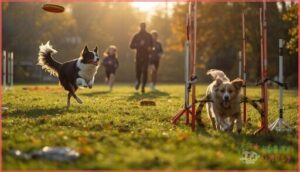
Getting the exercise and training right isn’t just about tiring your dog out—it’s about building a happy, well-adjusted companion who thrives alongside your family.
Active breeds need more than a quick walk around the block, and understanding what works for each type makes all the difference.
Let’s break down what these energetic dogs really need to stay healthy, focused, and content.
Daily Exercise Requirements by Breed
Before you commit to a breed, you need to know exactly how much exercise your future companion requires. High-energy dog breeds demand markedly different daily routines than calmer breeds—understanding these needs is essential for active families planning daily exercise and activity schedules.
| Breed | Daily Exercise Requirement |
|---|---|
| Labrador Retriever | 1–1.5 hours |
| Border Collie | 1.5–2.5 hours |
| Australian Shepherd | 1.5–2 hours |
| Siberian Husky | 1.5–3 hours |
| German Shorthaired Pointer | 1.5–2 hours |
Match your family’s energy levels with breed specificity—your dog’s happiness depends on it.
Engaging in Dog Sports and Activities
Once your dog’s getting their daily workout, why not channel that energy into dog sports? Around 44% of active families now participate in competitions like dog agility, flyball, or obedience trials.
These canine endurance activities transform routine exercise into engaging sport training, giving high-energy dog breeds a real job. Active playgrounds and pet competitions strengthen your bond while satisfying your dog’s drive to work.
Mental Stimulation and Enrichment
Physical workouts matter, but high-energy dog breeds need brain games too. Interactive games and puzzle toys reduce boredom-related behaviors by 40% in active breeds. Try short enrichment activities twice daily rather than one long session—you’ll see better cognitive engagement. Mix it up with scent work, cognitive training, and interactive games. Around 72% of active families use puzzle feeders to keep their dogs mentally sharp between adventures.
- Hide treats around your house for scent work challenges
- Rotate different puzzle toys weekly to maintain interest
- Practice new tricks or commands during TV commercials
- Create obstacle courses using household items
Positive Reinforcement Training Techniques
Reward systems work best when you bridge the gap between action and treat in under half a second—that’s how your dog makes the connection. Clicker training accelerates learning by 25–50% in high-energy breeds, especially during early training schedules.
Active families see improved focus and fewer behavior issues with consistent positive reinforcement methods. Short daily sessions beat marathon training every time.
Health and Safety Tips for Active Dog Breeds

Keeping your active dog healthy and safe isn’t just about exercise—it’s about creating smart habits that protect them from injuries and long-term health issues.
From injury prevention to proper nutrition, there are a few key areas every active family should prioritize. Let’s walk through the essentials that’ll keep your four-legged adventure buddy in top shape.
Preventing Injuries During Activities
Your high-energy companion isn’t invincible, even if they act like it. Start with five-minute warm-up routines before intense play—research shows this cuts muscle strains by 14%.
Use protective gear like booties on rough terrain, practice proper leash safety to prevent neck injuries, and respect exercise limits.
These simple steps help injury prevention become second nature for active families enjoying outdoor activities with their dogs.
Regular Health Checks and Preventative Care
Routine vet visits aren’t just reactive—they’re your best defense against hidden problems. Annual wellness exams reduce emergency visits by up to 20%, while preventative care catches issues before they sideline your adventurous pup.
- Vaccination Schedules: Keep immunity strong against infectious diseases (70-95% protection)
- Parasite Control: Prevent fleas, ticks, and worms year-round
- Dental Care: Regular cleanings lower systemic disease risk by 60%
- Preventative Screenings: Blood work detects subclinical issues in 5-15% of cases
- Nutrition Planning: Vet-guided diets reduce obesity by 10-20% annually
Safe Outdoor Environments
When you’re exploring dog parks or trails with high-energy dog breeds, remember that 52% of owners report near-miss injuries in unfenced urban spaces. Heat management matters too: establish shaded areas and water stations to prevent the 41% annual heat exhaustion risk.
Choose pet-friendly activities in secure outdoor environments with noise reduction features—85% of active breeds show stress from sudden loud sounds.
Emergency response planning keeps outdoor adventures safe.
Hydration and Nutrition for Active Dogs
Proper hydration strategies and nutrition planning are essential for fueling your dog’s adventures and protecting against heat exhaustion. Active families with high-energy dog breeds require evidence-based approaches to ensure optimal pet health and wellness.
Here are key strategies to implement:
- Water intake: Offer 40–80 ml/kg daily, with small amounts every 20–30 minutes during dog care and exercise
- Electrolyte balance: Use sodium-chloride solutions for activities exceeding 60 minutes
- Energy supplements: Feed high-protein meals (25–30%) 2–3 hours pre-activity
- Recovery nutrition: Provide post-exercise meals within 1–2 hours for muscle repair
Frequently Asked Questions (FAQs)
What is the best dog for an active family?
Think of finding your ideal running partner—someone who matches your pace and never flakes.
The Labrador Retriever fits active families perfectly, combining boundless energy with a gentle, kid-friendly temperament and requiring about 90 minutes of daily exercise.
Which breed of dog would be best for an active owner?
For an active owner, Border Collies, Australian Shepherds, and Vizslas stand out. They require 90–120 minutes of vigorous daily exercise, thrive on mental challenges, and form strong bonds when matched with energetic lifestyles.
What is the most active dog breed?
Border Collies and Belgian Malinois top the energy charts, often needing 2–3 hours of daily activity.
Siberian Huskies and Australian Shepherds follow closely, thriving on endurance runs and mentally challenging work that matches their high-energy dog breeds characteristics.
What is the most family friendly dog?
Labrador Retrievers absolutely dominate as the most family-friendly dog, appearing in 38% of U.S. households.
Their stable temperament, child-safe behavior, and enthusiastic energy make them ideal companions for active families seeking both adventure and reliability.
How do energetic breeds fare in apartments?
High-energy dog breeds struggle in apartments without structured exercise—studies show 60% of urban owners provide under 60 minutes daily activity.
Space constraints, noise concerns, and behavioral issues make apartment living challenging for active breeds.
What diets best suit high-energy dogs?
Fueling your pup’s power moves takes more than kibble and hope. Your energetic companion thrives on increased protein intake (25–30%), balanced diets with omega fatty acids, quality energy sources, and strategic nutrient timing to support their high-octane lifestyle.
Do these breeds interact well with children?
Most active breeds shine around kids when socialized early—before 16 weeks cuts behavioral issues by about 40%.
Positive interactions bloom with supervised play, structured routines, and breed temperament that matches your family dynamics perfectly.
Are specific toys better for these breeds?
Think of toys as fuel—they power your dog’s mind and body. Durable materials, breed-specific designs, and interactive features keep high-energy breeds engaged while meeting toy safety standards and preventing wear-related injuries.
Can energetic dogs participate in dog sports?
Absolutely—energetic breeds thrive in dog sports like agility, dock diving, and rally. About 72% of owners engage their high-energy dogs in organized sports within two years, boosting bonding and mental stimulation markedly.
What age should puppies start intense exercise?
Picture a puppy’s legs like a construction site—growth plates are still open. Most breeds shouldn’t tackle intense exercise until 12-18 months.
Vet guidance ensures joint health while building your high-energy dog’s stamina safely.
Conclusion
Picture your perfect Saturday morning: trail shoes laced, leash in hand, and a dog who matches your enthusiasm stride for stride. That partnership doesn’t happen by accident.
Finding the right dog breeds for active families means looking beyond energy levels to temperament, trainability, and genuine compatibility with your daily rhythm. When you match your lifestyle with a breed that naturally thrives in it, you’re not just choosing a pet—you’re gaining an adventure partner who’ll push you to explore more.