This site is supported by our readers. We may earn a commission, at no cost to you, if you purchase through links.
Ranch dressing sits at the top of the people food list that dogs seem magnetically drawn to—a lick off a dropped chip, a swipe from an unattended plate, and suddenly you’re wondering if you have a problem.
That creamy, tangy smell is hard for dogs to resist, and most owners never think twice about it.
They should.
Ranch contains a combination of ingredients that veterinary nutrition specialists flag as genuinely dangerous for dogs, not just mildly inadvisable.
Garlic powder, onion powder, high sodium levels, and heavy dairy fats each carry real health risks—and ranch dressing stacks all of them together.
Table Of Contents
- Key Takeaways
- No, Dogs Should Not Eat Ranch
- Why Ranch is Bad for Dogs
- Dangerous Ranch Ingredients Explained
- What Happens After Eating Ranch?
- Serious Symptoms to Watch For
- What to Do Immediately
- How Much Ranch is Dangerous?
- Can Homemade Ranch Be Safer?
- Safer Treat Alternatives to Ranch
- Prevent Future Ranch Accidents
- Frequently Asked Questions (FAQs)
- Conclusion
Key Takeaways
- Ranch dressing is genuinely dangerous for dogs—not just a bad idea—because it stacks garlic powder, onion powder, high sodium, and heavy fats into one condiment, and each of those ingredients can cause real harm on its own.
- Even a small lick carries risk, since garlic and onion compounds damage red blood cells cumulatively, meaning repeated tiny exposures can build toward anemia without any single "large" dose.
- If your dog gets into ranch, act fast: pull them away, check the label for allium ingredients, estimate how much they ate, and call your vet right away rather than waiting to see if symptoms show up.
- Dog-friendly swaps like plain cooked chicken, carrot sticks, or cucumber slices give your dog something satisfying to snack on without any of the hidden dangers in that dipping bowl.
No, Dogs Should Not Eat Ranch

Ranch dressing isn’t something your dog should ever have, even in small amounts. The ingredients that make it taste good to you are the same ones that can cause real harm to your dog. Here’s what you need to know before you let your pup anywhere near that dipping bowl.
Ingredients like garlic and onion powder are especially dangerous—find out which salad dressings are safe for dogs before sharing any from your plate.
Unsafe for Most Dogs
Ranch dressing can be harmful to dogs, and most vets will tell you to keep it off their menu entirely. It contains a mix of toxic allium compounds from garlic and onion powder, a high sodium risk, and a fatty dairy base that can trigger digestive upset or pancreatitis. These aren’t minor concerns — they’re real health threats packed into one condiment.
Ranch dressing is considered one of the high‑risk foods for dogs.
Three reasons ranch isn’t safe for most dogs:
- Ingredients like garlic and onion attack red blood cells, causing anemia
- The high fat content is a known pancreatitis trigger
- Dairy intolerance and excess salt can cause immediate stomach distress
As a preventive measure, treat ranch like any household hazard — keep it away.
Small Licks Still Risky
Even a small lick seems harmless, but the risks add up faster than you’d think. Garlic and onion compounds don’t need a large dose to start damaging red blood cells — cumulative toxicity means repeated small exposures build toward real harm, including digestive upset and pancreatitis risk.
| What Happens | Why It Matters |
|---|---|
| Sodium accumulates | Strains fluid balance quickly |
| Fat irritates the pancreas | Even tiny amounts trigger inflammation |
Watch for early warning signs like vomiting or lethargy after any exposure.
Avoid Regular Feeding
Regular feeding turns occasional risk into a real health pattern.
The high fat and sodium content in ranch builds up over time, raising your dog’s chances of pancreatitis and obesity.
Stick to a consistent meal routine with approved ingredients, monitor your dog’s weight regularly, and track what they’re eating — because small habits either protect them or quietly cause harm.
Why Ranch is Bad for Dogs
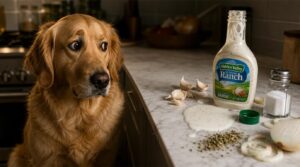
Ranch dressing isn’t just an odd choice for dogs — it’s actually a mix of ingredients that can do real harm. The problem isn’t one single thing, but several working together. Here’s what makes it risky.
Garlic and Onion Powder
Both garlic and onion powder contain thiosulfate compounds that directly damage your dog’s red blood cells, leading to hemolytic anemia — a condition where the body can’t carry enough oxygen.
What makes this especially tricky is that the powdered, dehydrated forms are actually more concentrated than fresh versions, so even a small amount carries real risk and may require emergency veterinary care.
Powdered garlic is more concentrated than fresh, meaning even a small amount can demand emergency veterinary care
High Fat Content
Most ranch dressings are surprisingly high in fat, combining sour cream, buttermilk, and vegetable oils into a rich mix your dog’s digestive system simply isn’t built to handle. Sour cream alone can carry 10–20% fat by weight, and when you add oil-based emulsifiers on top, that fat load adds up fast.
Here’s why that matters for your dog:
- Even one tablespoon can be a significant fat hit for a small dog
- High fat intake is a known pancreatitis trigger in dogs
- Fatty foods slow digestion, making nausea and discomfort worse
- Dogs prone to fatty food intolerance face higher risk with every exposure
Acute pancreatitis in dogs is painful, sometimes serious, and often directly linked to a single high-fat meal.
Too Much Sodium
Salt might seem harmless, but sodium toxicity in pets is a real concern.
A single teaspoon of ranch can pack around 80 mg of sodium — close to a small dog’s entire daily limit.
That excess sodium disrupts fluid balance, strains the kidneys, and can trigger an electrolyte imbalance that affects nerve and muscle function.
Dairy-based Ingredients
Dairy might seem like the least alarming ingredient in ranch, but it can cause real problems for many dogs. Lactose intolerance in dogs is surprisingly common — their digestive systems often can’t break down lactose properly, leading to loose stool and stomach upset.
Ranch commonly contains:
- Buttermilk and sour cream, which retain lactose and casein proteins
- High milk fat that strains digestion and raises pancreatitis risk
- Whey proteins that can worsen sensitivity in vulnerable dogs
Possible Added Chives
Some ranch dressings also include chives as a flavoring, and that’s worth taking seriously. Chives belong to the allium family — the same group as onion and garlic powder.
Even in small amounts, chive toxicity can damage your dog’s red blood cells. Don’t let the mild flavor fool you; the risk is real.
Dangerous Ranch Ingredients Explained
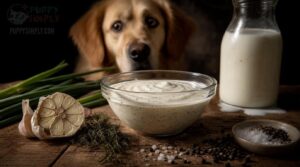
Ranch dressing isn’t just one ingredient — it’s a combination of several things that don’t mix well with a dog’s system. Some of these are more immediately dangerous than others, but none of them belong in your dog’s diet. Here’s a closer look at what’s actually in that bottle and why each ingredient is a problem.
Garlic Toxicity Risk
One of the most dangerous ingredients in ranch dressing is something your dog can’t even taste: garlic powder. Garlic toxicity works quietly inside your dog’s body, targeting red blood cells through sulfur compounds that cause RBC damage at the cellular level. This leads to Heinz body formation — abnormal clumps inside red blood cells that make them fragile and prone to rupture.
Here’s why that matters practically:
- Garlic dose limits are low — even small amounts of garlic powder can be harmful because the drying process concentrates the toxic compounds greatly.
- Chronic garlic exposure is cumulative, meaning repeated small exposures add up over time and can trigger anemia even without a single large dose.
- Breed susceptibility factors vary — Japanese breeds like Akita and Shiba Inu face higher risk than many other dogs.
The result of this damage is canine toxicity that shows up as weakness, pale gums, and fatigue — signs that your dog’s blood can no longer carry enough oxygen.
Onion Toxicity Risk
Garlic gets a lot of attention, but onion powder in ranch dressing is just as dangerous — perhaps more so, because it’s concentrated. Like garlic, onion belongs to the allium family, and it damages your dog’s red blood cells through oxidative RBC damage, making them fragile and unable to carry oxygen properly.
| Onion Form | Toxicity Level | Risk to Dogs |
|---|---|---|
| Fresh raw onion | Moderate | Causes vomiting and diarrhea |
| Cooked onion | Moderate | Cooking doesn’t remove toxicity |
| Onion powder | High | Concentrated; small amounts harmful |
| Onion juice | High | Absorbs quickly into bloodstream |
| Processed blends | High | Hidden in condiments like ranch |
Dose sensitivity matters here. Even a small amount of onion powder can trigger harm because the drying process concentrates the toxic compounds. The symptom timeline usually starts with vomiting and diarrhea within hours, then progresses to lethargy and pale gums as anemia develops. If you notice those signs, contact your veterinarian right away. As a preventive measure, check ingredient labels on any condiment your dog might access — onion and garlic powder often hide in plain sight.
Buttermilk and Sour Cream
While garlic and onion powder get most of the blame, buttermilk and sour cream bring their own problems.
Both contain lactose, which many dogs can’t digest well, leading to diarrhea and stomach upset.
Sour cream also carries noticeably more fat, and that extra fat load raises your dog’s risk of pancreatitis — even from a small taste of ranch dressing.
Mayonnaise and Oils
Mayonnaise is another ingredient that doesn’t do your dog any favors. It’s basically oil in water emulsion — meaning it’s mostly fat, and that fat hits your dog’s digestive system hard.nn| Factor | What It Means | Risk to Dogs |n|—|—|—|n| High fat content | Dense calorie load | Pancreatitis risk |n| Greasy texture | Fast, easy to gulp | Stomach irritation |n| Oil emulsion | Fat spreads evenly in gut | Worsens GI upset |nnEven a small lick can be a fat overload for smaller dogs.
Preservatives and Additives
Store-bought ranch doesn’t just contain fat and allium powders — it’s also packed with preservatives and additives. Antimicrobial preservatives like sodium benzoate, antioxidant preservatives, emulsifiers, and acidity regulators are all common in commercial dressings.
These aren’t formulated with dogs in mind, and some may cause additional GI irritation on top of everything else already working against your dog.
What Happens After Eating Ranch?

If your dog got into some ranch dressing, you’ll likely notice a reaction fairly quickly. The body doesn’t take kindly to those ingredients, and symptoms can show up within a few hours. Here’s what to watch for after your dog eats ranch.
Vomiting
Vomiting is often the first sign your dog ate ranch. It usually kicks in within a few hours as the body tries to push out the irritants.
Contact your veterinarian right away if vomiting happens repeatedly, since ongoing gastrointestinal upset can lead to dehydration — and a dehydrated dog goes downhill faster than you’d expect.
Watery Diarrhea
Right after vomiting, watery diarrhea often follows as your dog’s gut scrambles to flush out the irritants. This rapid fluid loss can quickly lead to dehydration, especially if stools are frequent.
- Watch stool frequency closely
- Note any urgency or straining
- Offer fresh water for hydration monitoring
- Avoid food until symptoms ease
- Call your vet if diarrhea persists
Stomach Pain
Along with vomiting and diarrhea, abdominal pain is one of the most telling signs that ranch has upset your dog’s system. You might notice your dog hunching over, whining, or guarding their belly — these are classic signs of localized or generalized discomfort.
Colicky episodes, where the pain comes and goes in waves, can also occur as their gut works through the irritants.
Excessive Thirst
After swallowing ranch, your dog may develop excessive thirst — medically called polydipsia — as their body tries to flush out the excess sodium. High sodium content in ranch disrupts normal fluid balance, forcing the kidneys to work harder.
Watch for these thirst-related warning signs:
- Drinking far more water than usual
- Repeated trips to the bowl within minutes
- Restless, unsettled behavior between drinks
If thirst seems unrelenting, contact your veterinarian right away.
Low Energy
Low energy, or lethargy, is one of the quieter warning signs after your dog eats ranch dressing.
You might notice them sleeping more, moving slowly, or simply not interested in their usual activities — a clear signal of energy deficiency caused by toxic ingredients disrupting normal body function. Offer fresh water for hydration benefits, and contact your veterinarian if the tiredness persists.
Serious Symptoms to Watch For

Some symptoms are more urgent than others, and a few are serious enough to mean your dog needs emergency care right now. If you notice any of the following signs after your dog got into ranch dressing, don’t wait to see if things improve on their own. These are the red flags that tell you something more dangerous may be happening.
Pale Gums
Pale gums are one of the clearest warning signs that something serious is happening inside your dog’s body. When red blood cell damage occurs from garlic or onion powder, your dog’s blood loses its ability to carry oxygen properly.
Check your dog’s gums — healthy gums should look pink, not white or gray. That color shift signals hemolytic anemia and needs immediate clinical assessment.
Dark Urine
Dark urine is another red flag worth taking seriously. When garlic or onion compounds damage your dog’s red blood cells, the breakdown products get filtered through the kidneys, turning urine tea-colored or amber. That color can also signal dehydration or, in serious cases, liver stress from toxic food ingestion.
If you notice red-tinged or very dark urine, contact your vet right away.
Rapid Breathing
Alongside dark urine, rapid breathing is a sign you shouldn’t brush off. When garlic or onion compounds damage red blood cells, your dog’s body struggles to deliver enough oxygen to its tissues — and breathing faster is how it tries to compensate. This is called tachypnea, and it can appear even when your dog is resting quietly.
Watch for short, shallow breaths or visible chest effort. If difficulty breathing develops or worsens quickly, treat it as an emergency and head to an emergency animal hospital right away.
Tremors or Seizures
Breathing problems are alarming, but tremors or seizures take things to another level. High sodium from ranch can trigger involuntary shaking, while garlic-related red blood cell damage may cause seizure activity as oxygen delivery fails.
- Tremors look rhythmic and repetitive
- Seizures involve chaotic jerking or stiffening
- Both signal a veterinary emergency
- Don’t wait — call your vet immediately
Collapse or Weakness
After tremors and seizures, collapse or weakness is the most urgent warning sign. If your dog ate ranch and their legs suddenly give out, that’s a medical emergency. Toxins, dehydration, and shock can all drain circulation fast. Call your vet immediately — don’t wait to see if they improve on their own.
What to Do Immediately
If your dog just got into the ranch dressing, staying calm and acting quickly makes a real difference. There are a few straightforward steps you can take right now to protect your dog and give your vet the information they need. Here’s what to do first.
Remove The Ranch
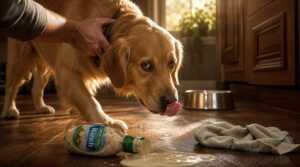
The moment you realize your dog got into the ranch, act fast. Pull your dog away from the area so they can’t lick up any more. If there’s residue on their mouth or fur, wipe it away gently with a damp cloth. Then offer fresh water and start watching closely, noting the exact time it happened.
Check The Ingredients
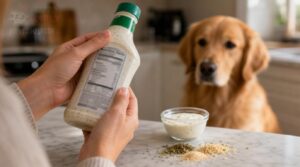
Once your dog is away from the ranch, check the ingredient list right away.
Turn the bottle over and scan for onion or garlic powder, chives, high sodium, and heavy dairy like buttermilk or sour cream.
These are the ingredients most likely to cause harm.
Knowing exactly what’s in it helps your vet respond faster and more accurately.
Estimate The Amount Eaten

Try to estimate how much ranch your dog actually got into — even a rough guess helps.
Think about how long they had access, whether they licked a plate or reached a bottle, and how much is visibly missing.
Tell your vet the amount in teaspoons or tablespoons, plus your dog’s weight, so they can assess the risk accurately.
Offer Fresh Water

After estimating how much ranch your dog ate, offer fresh water right away — but keep it calm and controlled.
- Let your dog sip small amounts rather than gulp a full bowl
- Stop offering water briefly if vomiting occurs, then retry
- Watch for dark urine, which can signal dehydration
- Avoid sports drinks or human electrolyte beverages
- If your dog refuses water for hours, contact your vet
Call Your Veterinarian

Once your dog has had some water, it’s time to make that emergency phone call. Contact your veterinarian right away — don’t wait to see if symptoms improve.
Have your dog’s name, breed, age, and medical history info ready.
Describe exactly what they ate and how much.
That detail helps your vet triage the situation fast and give you the right follow-up instructions.
How Much Ranch is Dangerous?
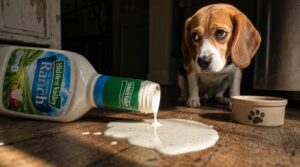
There’s no single answer to how much ranch is too much — it really depends on a few key factors. Some dogs can react to even a small taste, while others might show no signs right away but still be at risk. Here’s what actually determines the danger level.
Dog Size Matters
Your dog’s size plays a big role in how dangerous even a small amount of ranch can be. A dose per weight principle applies here — the same teaspoon hits a 10-pound Chihuahua far harder than a 70-pound Labrador.
- Small dog risk is higher due to their elevated surface area ratio
- Puppies weigh less, making toxic ingredients more concentrated in their system
- Large dog tolerance is greater by volume, but symptoms can still occur
- Size-based sensitivity means faster onset and quicker dehydration in smaller breeds
That’s why monitoring your dog for symptoms closely — and acting quickly — matters most if your dog is small. A vet emergency threshold arrives sooner when body weight is low.
Ingredients Matter
Not all ranch dressings carry the same level of risk — the ingredient list tells the real story. A ranch heavy with garlic powder and onion powder poses a serious allium toxicity threat, since both damage your dog’s red blood cells.
High fat and sodium content add more strain.
Some brands also include chives, which share the same danger as onions and garlic.
Repeated Exposure Increases Risk
Even a small amount of ranch once in a while may seem harmless, but repeated exposure accumulates toxic load faster than most owners realize. Each serving adds to your dog’s chronic sodium load, strains the pancreas through persistent fat consumption, and compounds the risk of canine pancreatitis and obesity prevention concerns over time.
Repeated allium exposure and ongoing dairy sensitivity make every additional encounter riskier than the last.
Puppies Are More Vulnerable
Puppies face far greater danger from ranch than adult dogs do. Their immature enzyme production means they can’t properly break down the fats, proteins, and additives in ranch.
Their smaller body mass concentrates toxins quickly — a single teaspoon can overwhelm a puppy’s sodium threshold. A developing immune system and sensitive gut microbiome make vomiting, diarrhea, and anemia more severe.
Call your vet immediately.
Pancreatitis-prone Dogs Need Care
If your dog already has pancreatitis, ranch is especially dangerous.
High fat content from mayonnaise and dairy can trigger painful flare-ups, causing vomiting and diarrhea quickly.
These dogs need fat-restricted meals, careful meal timing, and sometimes a pancreas rest period under vet guidance.
Track any symptoms closely and contact your vet before things escalate.
Can Homemade Ranch Be Safer?
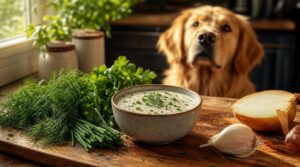
Homemade ranch sounds like a safer bet, but it’s not quite that simple. Most recipes still call for garlic, onion, or heavy dairy — the same ingredients that cause problems in store-bought versions. Here’s what to keep in mind before you consider making a dog-friendly version.
Still Usually Not Ideal
Homemade ranch might seem like the safer option, but it still isn’t ideal for dogs. Most recipes call for garlic powder, onion powder, salt, mayo, and buttermilk — the same core ingredients that make store-bought ranch harmful.
Swapping fresh for homemade doesn’t remove the risk; it just changes the label.
Avoid Garlic and Onion
If you’re making ranch at home, garlic and onion must go — no exceptions. Both garlic powder and onion powder are toxic ingredients that damage your dog’s red blood cells, even in small amounts.
Read product labels carefully on any ingredient you use, since hidden allium can appear as "natural flavors" or seasoning blends. Choose allium-free alternatives and avoid cross-contamination from shared utensils.
Skip Added Salt
Salt seems like a small thing, but it’s one of the biggest risks in homemade ranch. Even a teaspoon can push past a small dog’s daily sodium limit. Always skip added salt entirely.
Watch for hidden sodium sources too — buttermilk and mayonnaise naturally contain sodium even when no salt is added during processing. Check the sodium per serving on every ingredient label.
Use Low-fat Ingredients
Choosing low-fat ingredients makes a real difference when building a safer homemade version.
Swap regular mayo for light mayonnaise, use fat-free sour cream or plain Greek yogurt as your creamy base, and thin the dressing with low-fat buttermilk or unsweetened almond milk.
These swaps cut fat markedly, reducing pancreatitis risk without sacrificing that familiar creamy texture your dog might sneak a taste of.
Ask Your Vet First
Before you experiment with any homemade version, ask your vet first. Even a recipe that skips garlic and onion can still pose risks depending on your dog’s age, weight, or health history.
A quick vet consultation takes minutes and gives you peace of mind — because, concerning your dog’s safety, guessing isn’t worth it.
Safer Treat Alternatives to Ranch

Your dog doesn’t need ranch to enjoy a tasty snack — there are plenty of safe options that won’t put their health at risk. The good news is that some of the best dog-friendly treats are probably already in your kitchen. Here are a few simple alternatives worth trying.
Plain Cooked Chicken
Plain cooked chicken is one of the best swaps when ranch dressing is off the table. It’s high in protein — about 31 grams per 100g serving — and strengthens healthy muscles without any toxic ingredients.
Remove all bones, skip the skin, and cut pieces small to prevent choking. Serve it cooled, unseasoned, and in modest portions.
Carrot Sticks
Carrot sticks are a dog-safe alternative that’s hard to beat. They deliver beta-carotene and fiber without any toxic ingredients, and most dogs love the natural sweetness.
Offer them raw for a satisfying crunch, or lightly cooked if your dog prefers softer texture.
Always cut them into size-appropriate pieces to avoid a choking hazard.
Cucumber Slices
Another dog-safe alternative worth keeping on hand is cucumber slices. They’re mostly water, which makes them naturally hydrating and low in calories — an invigorating change from heavier treats.
- Digestive fiber promotes healthy bowel movements
- Small amounts of vitamin K and potassium add mild nutritional value
- Thin slices reduce choking risk for dogs of any size
Always serve them plain, never with ranch dressing or any toxic ingredients.
Green Beans
Green beans are a great swap for fatty, salty dressings. One cup contains just 30 calories, making them ideal for dogs watching their weight.
| Feature | Detail | Dog Benefit |
|---|---|---|
| Calories | ~30 per cup | Weight-friendly |
| Fiber | 2.7g per cup | Digestive support |
| Key Vitamins | C, A, K | Immune and bone health |
Serve them plain — steamed or raw — never seasoned.
Plain Low-fat Yogurt
If your dog’s been dealing with vomiting or loose stools from ranch dressing, plain low‑fat yogurt is a gentle, dog‑safe reset.
It delivers probiotic gut health support, plus around 448 mg of calcium per cup.
Unlike ranch dressing, it’s a low‑fat protein source, your vet would likely approve— just confirm it contains no added sugars or xylitol.
Prevent Future Ranch Accidents
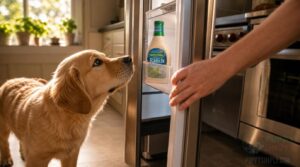
Once your dog has had a run-in with ranch, the goal is to make sure it doesn’t happen again. A few simple habits around the house can go a long way toward keeping curious noses out of the wrong places. Here’s what actually works.
Store Condiments Securely
One of the easiest ways to prevent accidents is to think like your dog — if it smells good, they’ll find it. Keeping ranch and other condiments locked away properly removes the temptation entirely.
- Use airtight containers with secure screw-on lids
- Store opened dressings in refrigerator placement away from the door’s reach
- Apply labeling dates so you discard spoiled items promptly
- Use pet-proof shelving or a dedicated fridge drawer for all human condiments
Clear Plates Quickly
Leaving ranch-coated plates on the table — even for a minute — is an open invitation for a curious dog. Dogs can lick a plate clean before you’ve turned around, and that residue adds up fast.
| Cleanup Step | Why It Matters |
|---|---|
| Rubber scraper use | Removes thick ranch residue before it reaches the drain or your dog |
| Paper towel lift | Absorbs emulsified dressing immediately after the meal |
| Warm water rinse | Loosens dairy and oil so residue doesn’t harden |
| Hot soapy soak | Breaks up fat films that a quick rinse misses |
| Dishwasher quick cycle | High heat dissolves clinging oils before they dry |
Clear plates straight into the sink after eating, and don’t leave them within nose-or-paw range.
Teach “leave It”
Teaching your dog "leave it" is one of the most practical things you can do to prevent accidental ranch ingestion.
Start with a low-value treat, reward your dog for ignoring it, and build up gradually to real-life temptations.
Practice in different spots — the kitchen, yard, anywhere food might be dropped.
Consistency makes the cue reliable when it truly counts.
Avoid Table Scraps
Even small bits of leftover food can cause real problems for your dog.
Table scraps often carry hidden seasonings, excess fat, and sodium that aren’t safe for dogs — and ranch dressing can be harmful to dogs even in trace amounts left on plates.
Clearing dishes promptly and keeping scraps off reachable surfaces remove the temptation entirely.
Inform Guests and Family
Not everyone in your household automatically knows that garlic and onion powder in ranch dressing can harm your dog. Take a moment to let guests and family members know — a quick heads-up goes a long way:
- Ranch residue on plates or fingers still counts as exposure
- Smaller dogs face higher risk from the same small amount
- Symptoms can appear hours later, even after no immediate reaction
Frequently Asked Questions (FAQs)
Can dogs eat raisins?
No, raisins are toxic to dogs. Even a small amount can trigger acute kidney failure. If your dog eats any, call your vet immediately — don’t wait for symptoms.
Can dogs eat human food?
Some human foods are fine for dogs in small amounts, but many contain toxic ingredients like garlic, onion, or xylitol that can cause serious harm, even in tiny quantities.
Can dogs eat oranges?
Dogs can eat small amounts of orange flesh, but skip the peel and seeds — both are choking hazards. Too much citrus sugar can upset their stomach, so keep portions tiny.
Can dogs eat ranch dressing?
Ranch dressing is unsafe for dogs. It contains garlic and onion powder, which are toxic to dogs, along with high fat, excess sodium, and dairy — all of which can cause serious harm.
Can dogs eat ranch?
Like a wolf in sheep’s clothing, ranch dressing hides real danger. It’s toxic to dogs due to garlic, onion, high fat, and sodium — making it unsafe even in small amounts.
Is ranch bad for dogs?
Yes, ranch dressing is toxic to dogs. It contains garlic and onion powder, which damage red blood cells, plus high fat, excess sodium, and dairy — all harmful to your dog’s health.
What should I do if my dog eats ranch?
First, remove access to the ranch and stay calm. Check the label for garlic or onion powder, estimate how much your dog ate, and call your veterinarian right away.
How much ranch can a dog eat a day?
There’s no safe daily amount of ranch for dogs. Veterinarians recommend none at all. Even small licks carry risks from garlic powder, sodium, and fat — choose dog-safe alternatives instead.
Can dogs eat ranch if they are lactose intolerant?
Even with lactose intolerance, ranch still isn’t safe for dogs. Garlic and onion powders remain toxic regardless of dairy sensitivity, making any dogsafe version of ranch dressing practically impossible with standard recipes.
How much ranch is too much for dogs?
Any amount of ranch is too much for dogs. Even a small lick carries real risk, thanks to high sodium, fat, and allium content that can quickly overwhelm a dog’s system.
Conclusion
Ranch isn’t exactly a friend to your dog’s system—it’s a cocktail of ingredients that quietly work against their health, one lick at a time. Asking can dogs eat ranch might seem like a small question, but the answer carries real weight. Garlic, onion, sodium, and fat don’t belong in your dog’s diet, even occasionally.
The safest plate you can offer them is one you’ve chosen with care, not one left unattended.
- https://www.justanswer.com/dog-health/ecntm-dog-ate-cup-ken-s-ranch-dressing-50lb.html
- https://articles.hepper.com/can-dogs-eat-ranch
- https://www.dialavet.com/vet-answers/dog-ate-ranch-worried-349337
- https://www.petco.com/content/content-hub/home/questions/01/20/548157.html
- https://www.akc.org/expert-advice/health/dog-food-allergies/