This site is supported by our readers. We may earn a commission, at no cost to you, if you purchase through links.
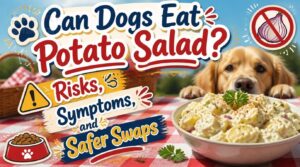
Your dog’s nose finds the picnic table before you do, and that mayo-drenched potato salad looks like fair game to him. It isn’t. Can dogs eat potato salad? The short answer is no, and the reasons go beyond a simple stomach ache.
Onions, garlic, and mustard hide in nearly every recipe, and each one carries its own risk to your dog’s red blood cells and digestive tract. Add a heavy dose of mayonnaise, and you’ve got a fat bomb that can trigger pancreatitis within hours.
If your dog already snuck a bite, knowing what symptoms to watch for—and what to do next—can make all the difference.
Table Of Contents
- Key Takeaways
- Can Dogs Eat Potato Salad?
- Why Potato Salad is Unsafe
- Mayonnaise and Fat Risks
- Symptoms to Watch For
- What to Do Immediately
- Safer Potato Options
- Frequently Asked Questions (FAQs)
- Is potato salad ok for dogs to eat?
- Will a little mayonnaise hurt a dog?
- Can dogs eat cold potatoes?
- Can puppies eat small amounts of potato salad?
- How long after eating should symptoms appear?
- Are homemade potato salads safer than store-bought?
- What specific potato salad ingredients cause toxicity?
- Should I induce vomiting after potato salad consumption?
- How long after eating potato salad do symptoms appear?
- How much activated charcoal helps after accidental ingestion?
- Conclusion
Key Takeaways
- Potato salad is unsafe for dogs because onions, garlic, mustard, and excess salt can damage red blood cells, irritate the digestive tract, and strain the kidneys.
- Mayonnaise’s high fat content puts dogs at risk for pancreatitis, upset stomach, and weight gain even in small amounts.
- Watch for symptoms like vomiting, lethargy, pale gums, dark urine, or abdominal pain, and call your vet right away if any appear.
- Plain cooked potatoes (no salt, butter, or seasoning) are a safe alternative, but should still make up less than 10% of your dog’s daily calories.
Can Dogs Eat Potato Salad?
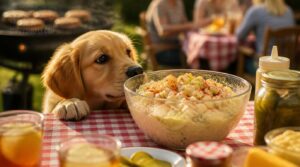
That picnic table classic might look harmless sitting next to the burgers, but it’s not something to share with your dog. The short answer is no, and the reasons go beyond just one bad ingredient. Here’s what you need to know before your pup gets anywhere near that bowl.
For a closer look at why fast-food staples like this don’t belong on the menu for dogs, check out this breakdown of why a McDonald’s cheeseburger is bad for your dog.
No, Avoid Traditional Recipes
No, the short answer is no. Traditional potato salad almost always hides toxic ingredients like onions and garlic, plus mustard, pepper, and pickle relish that irritate your dog’s stomach.
Recipe variations make things worse, since you can’t always tell what’s mixed in. Add mayonnaise’s fat content, which raises pancreatitis risk, and this picnic staple just isn’t pet-safe fare.
Small Bites Still Risky
Just one bite" doesn’t mean safe. Toxicity from onions and garlic is dose-dependent, but a chihuahua eating the same bite as a Lab faces a much bigger relative dose—this is small breed vulnerability in action.
Unattended bowls invite repeat sampling, and those cumulative ingredient effects add up fast. Hidden portion risks make potato salad harmful to dogs even when servings look harmless.
Plain Potatoes Are Different
So what’s actually safe? Plain cooked potatoes — no salt, no mayo, no onion — are a different food entirely. Boiling reduces solanine but doesn’t erase it, so stick to fresh, unsprouted spuds.
Waxy varieties hold texture better; starchy ones turn mushy. Either way, plain beats mixed for canine nutrition every time.
Why Potato Salad is Unsafe
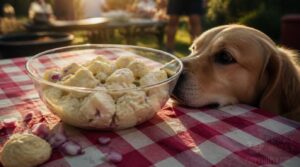
It’s not just one bad ingredient turning your dog’s stomach into a danger zone. Potato salad is more like a lineup of small risks stacked on top of each other. Here’s what’s actually hiding in that bowl.
Onions and Garlic
Onions and garlic are members of the allium family, and that’s exactly why they don’t belong in your dog’s bowl. Their sulfur compounds damage red blood cells, leading to hemolytic anemia.
Cooking doesn’t neutralize the danger—it just changes the flavor. Even small, concentrated amounts in potato salad can trigger toxicity, so avoiding onions and garlic entirely is the safest rule for any homemade dog food.
Toxic Allium Powders
Here’s where things get sneaky: garlic and onion powder are more concentrated than their fresh counterparts, since drying removes the water but keeps all the sulfur compounds intact. That means a sprinkle can pack a bigger punch than a whole clove.
Always check labels for "onion powder," "garlic granules," or vague "spices." Hidden seasoning adds up—toxic to dogs even in small, repeated doses.
Green Potato Toxins
Even a sweet, plain-looking potato salad can hide danger if the potatoes went green before they hit the bowl. Solanine builds up when potatoes sit in light or get bruised, concentrating in the skin, sprouts, and green flesh—toxic to dogs no matter how well you cook them. To minimize risks, you should avoid green and germinating potatoes.
- Sprouted potatoes: highest risk
- Green flesh: avoid entirely
- Cooking won’t neutralize it
- Pale interior: lower risk
- Bitterness signals trouble
Mustard and Seasonings
What gives mustard its sharp bite? Isothiocyanate compounds, the same chemicals that give your nose that little zing, can irritate a dog’s digestive tract.
If you’re rethinking other human foods for your pup, this guide on whether dogs can safely eat Spanish rice breaks down which seasonings are worth skipping altogether.
Recipes also sneak in black pepper or taco seasoning blends, which often hide toxic ingredients like onion or garlic powder. When checking a recipe, stick to dog-safe ingredients only—skip the seasoning packet entirely.
Excess Salt
Salt is the silent troublemaker in potato salad. Even a small spoonful loads your dog with more sodium than their kidneys can comfortably handle, raising blood pressure and triggering water retention.
- Kidney strain
- Electrolyte imbalance
- Cardiovascular stress
- Bloating
- Dehydration
Over time, this strain on dog health risks adds up—proof that pet food safety means watching salt as closely as fat.
Mayonnaise and Fat Risks

Even if you skip the onions, mayonnaise alone can land your dog in trouble. It’s loaded with fat, and a dog’s body just isn’t built to handle that kind of richness. Here’s what that creamy scoop can really do to your pup.
Pancreatitis Risk
Mayonnaise is the real troublemaker in potato salad, and your dog’s pancreas knows it. Dietary fat triggers pancreatic enzyme release, and a high-fat dish can easily overload that capacity in one sitting.
Dogs sensitive to portion size face real pancreatitis risk from rich, high-fat leftovers. The result? Pancreatic inflammation, pain, and a vet visit you’d rather skip.
Upset Stomach
Even before pancreatitis becomes a concern, that fatty mayo base can cause gastrointestinal distress on its own. Overeating rich food stretches the stomach, triggering nausea and indigestion.
You might see gas buildup, bloating, or diarrhea from irritation in the gut. Some dogs vomit as their body forcibly expels what it can’t digest—an unpleasant but telling sign something’s off.
Extra Calories
Beyond the upset stomach, there’s a quieter problem: hidden calorie sources. Mayo is high in fat, and fat packs roughly 9 calories per gram—more than double what carbs offer.
A few "harmless" spoonfuls can quietly create a caloric surplus, especially for smaller dogs. That’s why portion control matters so much; potato salad has poor nutrient density for what it costs energy-wise.
Weight Gain Concerns
One spoonful here, a taste there—it adds up faster than you’d think. This is cumulative portion creep in action, and it’s how steady weight gain sneaks up on dogs.
Combine starchy potatoes with high-fat content from mayo, and you’ve got real calorie density risks. Over weeks, that pattern feeds canine obesity and throws off nutritional balance your dog’s diet needs.
Sensitive Dogs
Not every dog reacts to rich foods the same way. Dogs with noise sensitivity or anxious attachment styles often carry that same heightened reactivity into their gut—stress and digestive upset go hand in hand.
A dog already prone to environmental arousal may vomit or refuse food after eating potato salad, even in small amounts. When in doubt, skip it and stick to gentle, predictable meals.
Symptoms to Watch For

If your dog already snuck a bite of potato salad, watching for symptoms is your next move. Some signs show up fast, while others take a little longer to surface. Here’s what to keep an eye on.
Vomiting and Diarrhea
Vomiting and diarrhea are usually the first red flags after your dog raids the potato salad bowl. These signs point to digestive upset or gastrointestinal inflammation, and together they raise dehydration risk fast since fluid loss comes from both directions.
If symptoms persist beyond a few hours, that’s an urgent care sign—don’t wait it out hoping it passes on its own.
Lethargy or Weakness
If your dog seems lethargic and withdrawn after eating potato salad, take it seriously. Reduced physical engagement, unsteady movement, or trouble standing can signal real animal health risks, not just a tired afternoon.
These are classic pet poisoning symptoms tied to anemia or toxin exposure. Checking how they react matters—if weakness or muscle coordination issues appear, that’s a veterinary emergency requiring immediate attention.
Pale Gums
Why would your dog’s gums suddenly look washed out? Onions and garlic in that potato salad are toxic to dogs, damaging red blood cells and triggering hemolytic anemia. Less oxygen circulating means pale, almost whitish gums instead of healthy pink.
Onions and garlic destroy red blood cells, turning your dog’s gums pale where healthy pink should be
This is a genuine veterinary emergency, not something to watch and wait on—pale gums signal real oxygenation problems requiring immediate care.
Dark Urine
Did the litter box surprise you with tea-colored or brown urine? That’s often bilirubin buildup from red blood cells breaking down—a hallmark of allium toxicity and hemolytic anemia.
Other culprits exist too:
- Dehydration signs
- Hemoglobinuria causes
- Food dye effects
- Medication color changes
- Liver or bile duct issues
Onions and garlic are toxic to dogs, so dark urine after potato salad deserves a vet call, not guesswork.
Abdominal Pain
A hunched back or a refusal to settle down often points to stomach cramping brewing underneath. Watch for restlessness, a tucked belly, or whimpering when picked up—these are classic symptoms of poisoning from onion, garlic, or fatty mayo.
Bloating signs paired with gastrointestinal discomfort shouldn’t be brushed off. This kind of internal irritation can signal pancreatitis or early digestive distress, so don’t wait it out—call your vet.
What to Do Immediately
If your dog just ate potato salad, take a breath first. Panicking won’t help, but acting fast will. Here’s exactly what to do, step by step.
Check Ingredients
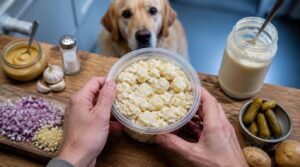
Before you panic, play detective. Grab the recipe or container and scan for the usual troublemakers: onions and garlic, mustard, mayonnaise, pickles, salt.
Common toxic ingredients list includes:
- Onions and garlic (hidden allium risks)
- Mustard or seasoning blends
- Pickles with vinegar and sugar
- Mayonnaise and preservatives
Knowing what’s harmful to dogs guides your next move toward safety.
Estimate Amount Eaten
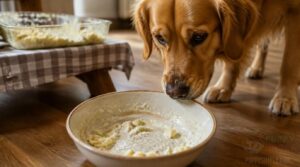
How much did your dog actually eat? Compare the bowl before and after—leftover residue on the sides often hides more than it shows. A few extra bites add up fast with sticky, scoopable salad.
| Clue | What It Tells You | Why It Matters |
|---|---|---|
| Bowl level | Estimated volume gone | High in fat, sodium adds up |
| Eating speed | Fast = more consumed | Upset stomach risk rises |
| Chunk size | Tongue scoop volume per bite | Density variability affects dose |
Call Your Veterinarian

Once you have a rough estimate, pick up the phone. The receptionist will ask triage questions to gauge urgency, so describe symptom onset clearly and share any treatment you’ve already given. Mention toxic ingredients like onions or garlic by name.
Pancreatitis and toxic foods for pets are taken seriously, so don’t hesitate to push for urgent care access if symptoms worsen.
Follow Vet Instructions
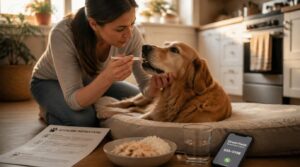
Once your vet gives instructions, follow them to the letter, even if your dog seems fine an hour later. That might mean:
- A bland diet for a few days
- An exact medication dosing schedule
- Watching closely for worsening symptoms
- Reporting changes promptly, not at the next checkup
Missed a dose? Call your veterinarian instead of guessing. Compliance now prevents repeat poisoning scares later.
Prevent More Access
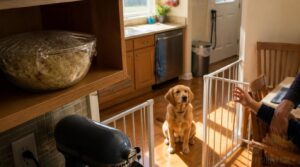
Once the immediate crisis passes, preventing accidental ingestion becomes your main job. Move the bowl off the counter, cover leftovers tightly, and remind family members why "just a taste" isn’t kind here.
Good pet proofing tips and consistent mealtime supervision protect your dog long-term—because onions and garlic don’t get less harmful to dogs the second time around.
Safer Potato Options
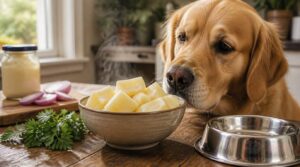
The good news is your dog doesn’t have to skip potatoes altogether. The key is keeping things plain and simple, the way nature intended. Here’s what safe potato options actually look like.
Plain Boiled Potatoes
Plain boiled potatoes are your safest bet. Boil with the skin on for extra fiber and potassium, skip salt and butter entirely, and cool before serving to boost resistant starch—gentler on digestive health.
Mash soft to avoid choking. Yes, boiling reduces vitamin C, but for dogs, that’s a fair trade for a safe, simple carb side.
Baked Potatoes Without Seasoning
Baking gives you another safe, plain option—russet potatoes hold up well, with drier skin and a fluffy interior. Pierce a few times to release steam, then bake at 400–425°F until a fork slides in easily.
Skip oil, salt, and butter. Let it cool before cutting, since trapped steam burns fast. Cooked potatoes like this support healthy digestion without added fat.
Cooked Sweet Potatoes
Swap the russet for a sweet potato and you’re giving your dog a nutrient upgrade. Cooked sweet potato delivers strong vitamin A activity from beta-carotene, plus potassium and dietary fiber that helps digestion.
It’s naturally low in fat, too.
Why it’s a smart swap:
- Rich in beta-carotene
- Around 3-4g fiber per serving
- High potassium content
- Nearly zero fat
- Moderate calorie density
Always serve it plain, never seasoned.
Small Serving Sizes
A few bites is the safe ceiling, not a starting point. Most of the risk tied to portion control limits comes down to dose-dependent exposure—smaller amounts mean less fat, salt, and seasoning reaching your dog’s system.
Small dogs need extra caution, since even a modest serving represents a bigger share of their body weight. Always watch for digestive upset afterward, however little they ate.
Treats Under Ten Percent
Here’s the rule vets actually use: treats, including potato bites, should stay under 10% of daily calories. The rest comes from a balanced meal, so go overboard and you risk nutritional displacement.
Factor in training reward management too—those small rewards add up fast. Combined with safe alternatives like plain potato, this keeps caloric budgeting realistic and weight control strategies on track.
Frequently Asked Questions (FAQs)
Is potato salad ok for dogs to eat?
No, traditional recipes aren’t safe. Onions and garlic cause anemia, mayonnaise raises pancreatitis risk, and salt or mustard can trigger vomiting. Even a small bite carries real ingredient toxicity—plain, unseasoned potatoes are the only safe alternative for your dog.
Will a little mayonnaise hurt a dog?
Some dogs tolerate it, some don’t — that’s the honest answer. High fat content can trigger digestive upset or, in sensitive pups, pancreatitis. Add egg sensitivity risks and hidden additives, and "a little" still carries real, individual risk.
Can dogs eat cold potatoes?
Cold doesn’t make potatoes risky—cooked potatoes stay safe whether warm or chilled.
Just skip raw ones (solanine poisoning risk) and any salad fixings. Plain, cool, peeled potato is fine; gentle digestive upset is unlikely if portions stay small.
Can puppies eat small amounts of potato salad?
A small bite still carries risk. Puppies’ small body vulnerability means onion, garlic, or sodium hit harder per pound than in adult dogs, so even tiny amounts can trigger delayed toxic reactions and digestive upset.
How long after eating should symptoms appear?
Symptom timing runs like a dimmer switch, not an on/off light.
Dose-dependent onset means bacterial toxins strike within hours, while allergy versus intolerance or viral gastroenteritis can delay digestive upset a day or longer—watch closely for any delayed reaction signs.
Are homemade potato salads safer than store-bought?
Neither is automatically safer. Hidden allium detection matters more than origin—homemade recipes risk casual onion or garlic seasoning, while store-bought adds preservatives.
Check ingredient transparency on labels and recipes alike; truly dog-safe ingredients mean plain potatoes only, no exceptions either way.
What specific potato salad ingredients cause toxicity?
Pandora’s box of picnic leftovers, basically: allium compounds in onions and garlic damage red blood cells, solanine from green potatoes harms nerves, hidden xylitol in condiments poisons fast, and mayo’s fat triggers pancreatitis.
Should I induce vomiting after potato salad consumption?
Don’t induce vomiting without veterinary guidance first. Call your vet or poison control for ingredient-specific advice—vomiting induction dangers include throat injury and aspiration risk, especially if your dog’s already nauseated.
How long after eating potato salad do symptoms appear?
Timing varies—onset can start within 30 minutes or take up to 12 hours, depending on dose and cause. Allergic reactions strike fast; infectious or toxic ingredients (onions, garlic) may take longer to trigger digestive upset.
How much activated charcoal helps after accidental ingestion?
Forget guessing — activated charcoal isn’t a kitchen-cabinet fix. Only a vet should dose it, based on weight and timing since ingestion. Never attempt home administration; aspiration risks and incorrect dosing can harm your dog more than the potato salad itself.
Conclusion
Picnic tables and curious noses share an odd coincidence: both find the mayo-soaked bowl at the exact same moment. That’s the danger.
So, can dogs eat potato salad? No—not with onions, mustard, or salt hiding in every bite. Plain, cooked potatoes make a far safer choice. Keep portions small, skip seasonings, and call your vet quickly if symptoms appear. A little caution now spares your dog a painful, sleepless night later.
- https://www.newsbreak.com/dogtime-1587465/4021386179513-can-dogs-eat-potato-salad-is-potato-salad-safe-for-dogs
- https://www.tasteofthewildpetfood.com/articles/can-my-dog-eat-that/potatoes
- https://jonathanmelendez.com/chicago-dog-potato-salad
- https://www.fetchpet.com/the-dig/can-dogs-eat-potatoes
- https://www.petmd.com/dog/nutrition/can-dogs-eat-potatoes