This site is supported by our readers. We may earn a commission, at no cost to you, if you purchase through links.
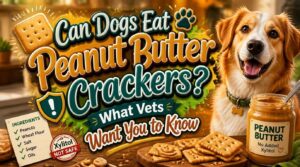
Your dog spots the cracker in your hand and is already sitting, eyes locked, tail going. You break off a piece without thinking twice—it’s peanut butter flavored, so it must be fine, right?
Not always. The peanut butter itself rarely causes problems, but commercial crackers carry a lineup of additives that can genuinely harm dogs. Salt, hydrogenated oils, artificial preservatives, and occasionally xylitol—a sweetener toxic to dogs even in tiny amounts—all hide in ingredient lists most people never read.
Knowing what’s actually in that cracker before it reaches your dog’s mouth makes all the difference.
Table Of Contents
- Key Takeaways
- Can Dogs Eat Peanut Butter Crackers?
- Why Peanut Butter Crackers Can Be Risky
- Dangerous Ingredients to Avoid
- Safe Serving Size for Dogs
- What if Your Dog Eats Them?
- Safer Peanut Butter Snack Options
- Top 5 Peanut Butter Dog Treats
- Frequently Asked Questions (FAQs)
- Can dogs eat peanut butter crackers?
- Can dogs eat crackers?
- Can dogs eat graham crackers?
- Can dogs eat Peanut butter and cheese crackers?
- Can dogs eat crackers and Peanut butter?
- Can dogs eat Austin Peanut Butter crackers?
- How much peanut butter crackers per day?
- What age can puppies eat peanut butter?
- Do peanut butter crackers cause diarrhea?
- Can diabetic dogs eat peanut butter?
- Conclusion
Key Takeaways
- Peanut butter crackers are safe for dogs only as a rare, small treat — the real danger lies in additives like xylitol, excess salt, and hydrogenated oils hidden in the ingredient list.
- Xylitol is the most urgent threat: even a trace amount can crash your dog’s blood sugar within 30 minutes and requires immediate emergency care.
- Treats should never exceed 10% of your dog’s daily calories, meaning one small bite of cracker — not a whole cracker — is the safe upper limit.
- Safer alternatives like plain unsalted peanut butter, carrot sticks, or homemade biscuits deliver the same satisfaction without the harmful additives found in commercial crackers.
Can Dogs Eat Peanut Butter Crackers?

Yes, dogs can eat peanut butter crackers, but only occasionally and in small amounts. They’re not toxic on their own, yet the ingredients inside can cause real problems depending on the brand. Before you share one with your dog, there are a few things worth knowing.
Ingredients like added sugar and artificial sweeteners are the real concern, so it’s worth checking whether Nutter Butters are safe for dogs before sharing one.
Short Safety Answer
Yes, dogs can eat peanut butter crackers, but only in very small amounts and not regularly. The real concern isn’t the peanut butter itself — it’s what else is in the cracker. Xylitol, added salt, and excess fat can all cause serious harm. Always check the ingredient label before sharing any with your dog.
Occasional Treat Only
Think of peanut butter crackers the way you’d think of birthday cake — fine once in a while, not something you’d hand over every afternoon. Occasional treat only means low frequency: a rare reward, not a daily habit.
That small distinction protects your dog’s calorie balance and keeps their digestion running smoothly.
Not a Daily Snack
Daily feeding is where small risks quietly grow into bigger ones. Peanut butter crackers are calorie-dense, so even a couple each day can push your dog past its healthy calorie limit without you realizing it.
Over time, that creep contributes to weight gain, reduced appetite at mealtimes, and potential nutritional gaps if crackers start crowding out more balanced food.
Check Ingredients First
Before you offer your dog even a single cracker, flip the package over and scan the ingredient list. Ingredients are listed by weight, so what appears first makes up most of the product. If you spot xylitol, salt, or sugar in the first few ingredients, put it back. That label tells you everything.
Why Peanut Butter Crackers Can Be Risky
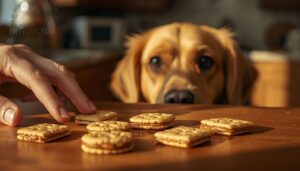
Peanut butter crackers aren’t toxic on their own, but the ingredients packed inside them can cause real problems for your dog. Most of the risk comes down to what manufacturers add to make these snacks taste good for humans. Here’s what to watch out for before you share one with your pup.
High Fat Content
Fat is calorie-dense — 9 calories per gram — and peanut butter crackers pack that in fast. Even one cracker adds a meaningful fat load for a small dog, especially on top of a regular meal.
Saturated fat is the bigger concern. Too much raises the risk of canine pancreatitis, a painful inflammation that can turn serious quickly in predisposed dogs.
Added Salt
Salt makes crackers taste better — which is exactly why dogs tend to wolf them down fast. But commercial crackers carry 200–280 mg sodium per serving, and for a small dog, even one cracker can push sodium intake too high.
High sodium pulls fluid out of balance and triggers thirst. Dogs with kidney or heart issues feel that strain hardest. Always check sodium per serving on the label before sharing.
Added Sugar
Sugar might seem harmless, but added sugars in crackers spike blood glucose fast — faster than whole foods with fiber. That quick rise can stress your dog’s metabolism over time.
Crackers also pack extra empty calories, making weight gain easy to miss. And sugar feeds the mouth bacteria that erode tooth enamel, so dental health quietly takes a hit too.
Artificial Preservatives
Many commercial crackers contain BHT and BHA — synthetic antioxidants that slow fat from going rancid. They’re approved for human foods, but canine studies have linked long-term exposure to liver and kidney strain.
The tricky part? Labels don’t always make these easy to spot. Scanning the ingredients list before every purchase keeps your dog safer than trusting a familiar brand name.
Empty Calories
Peanut butter crackers offer empty calories — energy without nutrients. Your dog gets a calorie hit but misses out on vitamins, fiber, and protein they actually need.
Four ways this quietly backfires:
- Weight gain from stored, unused energy
- Micronutrient gaps when junk crowds out better foods
- High caloric density that delivers no real fullness
- Ultraprocessed ingredients with zero nutritional payoff
Dangerous Ingredients to Avoid
Some ingredients don’t just make peanut butter crackers a poor snack choice — they can be genuinely dangerous for your dog. A few of them show up in products you’d never suspect, so knowing what to look for on the label really matters. Here are the specific ingredients worth watching out for.
Xylitol in Peanut Butter
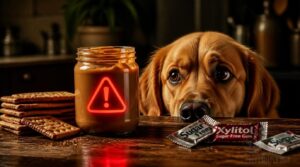
Xylitol is the one ingredient that turns a harmless‑looking jar into a genuine danger.
Even a small amount triggers an insulin surge in dogs, crashing blood sugar fast. Weakness, trembling, and collapse can follow within 30 minutes.
Even a trace of xylitol can send a dog’s blood sugar crashing within 30 minutes
Sugar-free or "no sugar added" labels don’t mean xylitol‑free — always scan the full ingredients list before sharing anything with your dog.
Sugar‑free chewing gum remains the most frequent canine exposure source.
Garlic or Onion Powder
Xylitol hides in plain sight, but it’s not the only label threat worth your attention.
Garlic and onion powders are Allium-based seasonings that can damage your dog’s red blood cells, leading to anemia. The powder form is especially risky — it’s far more concentrated than fresh versions, so even a small cracker coating delivers a meaningful dose. Check for "spices" or "seasoning mix" too; those vague terms sometimes hide both.
Hydrogenated Oils
Garlic powder isn’t the only processing concern hiding in crackers.
Hydrogenated oils are created by forcing hydrogen into liquid fats, making them solid and shelf-stable — but that process produces saturated and trans fats that strain your dog’s pancreas. Too much fat, even once, can trigger pancreatitis. Look for "partially hydrogenated" on the label and skip that bag.
Excess Sodium
Salt stresses your dog more quietly than you’d think. High sodium content in crackers triggers sodium water retention, raises blood pressure, and gradually strains the kidneys over time.
- Sodium water retention causes fluid buildup
- Blood pressure strain taxes the heart
- Kidney disease risk grows with excess salt
- Cardiovascular health impact worsens over time
- Bone density concerns tied to sodium intake
Artificial Flavorings
Salt isn’t the only hidden culprit — artificial flavorings bring their own concerns. These synthetic compounds are engineered for flavor stability and aroma consistency across millions of cracker batches, not for canine health.
Some masking agents used to hide bitter notes have been linked to liver and kidney strain in dogs. When pet food labeling simply says "artificial flavors," you can’t know what’s inside.
Safe Serving Size for Dogs

Even if peanut butter crackers aren’t the best snack for your dog, portion size makes a real difference. A little goes a long way, and keeping treats within safe limits protects your dog from unnecessary risks. Here’s what you need to know before breaking off that next piece.
Follow The Ten Percent Rule
Think of treats as a small slice of your dog’s daily diet — not the main course. Veterinary guidelines cap treats at 10% of daily calories. For a 30-pound dog eating around 700 calories daily, that’s just 70 treat calories.
- One peanut butter cracker can hit 190 calories
- That’s nearly three times the daily treat limit
- Stick to one small bite, not one full cracker
Small Dogs Need Less
If your dog is on the smaller side, the 10% rule gets even tighter. Small breeds burn energy faster per pound, but their stomachs hold far less — so a treat that’s fine for a Labrador can push a Chihuahua well past their daily limit.
Even a single bite of cracker counts. Portion control matters more when there’s less wiggle room.
One Small Cracker Maximum
Most vets land on one small cracker — roughly an inch square — as the upper limit per snack session. That size keeps fat, sodium, and calories from stacking up too fast.
Peanut butter crackers aren’t dangerous in that amount for healthy dogs, but going beyond one starts pushing into territory where calorie overload and fat spikes become real concerns.
Avoid Frequent Feeding
How often you offer that one small cracker matters just as much as the size. Repeating treats throughout the day quietly fills your dog’s calorie budget before meals even arrive, which can dull their appetite and chip away at weight control over time.
- Treat frequency shifts hunger patterns
- Repeated snacks crowd out balanced meals
- More exposures mean more digestive strain
- Oral plaque builds with every snack
- Training value drops when treats flow freely
Once daily is plenty.
Monitor After Eating
After the cracker’s gone, your job isn’t over. Watch for digestive upset signs — vomiting, drooling, or loose stool — within the first hour.
| Sign | Urgency |
|---|---|
| Vomiting or diarrhea | Monitor closely for one hour |
| Weakness or wobbling | Call your vet immediately |
| Restlessness or "praying" posture | Abdominal pain cue |
Dehydration monitoring matters too if symptoms persist. Suspected xylitol? That’s always an emergency.
What if Your Dog Eats Them?
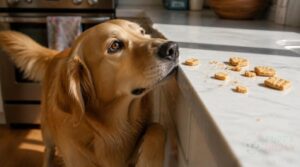
If your dog just swiped a peanut butter cracker off the counter, don’t panic — but don’t ignore it either. What happens next depends on what was in that cracker. Here’s what to check and watch for.
Check The Package Label
The first thing you should do is find the package and read it carefully. Look for xylitol in the ingredient list — it’s listed by name, and even small amounts are dangerous. Ingredients appear in order by weight, so anything near the top matters most. Check the sodium and sugar grams on the nutrition panel too.
Watch for Vomiting
Once you’ve checked the label, watch your dog closely for a few hours. Vomiting after eating a cracker — especially one containing xylitol — can set in quickly.
Watch for these red flags:
- Forceful or projectile vomiting
- Vomit resembling coffee grounds
- Repeated episodes within one hour
- Lethargy or confusion alongside vomiting
- Dry mouth or reduced urination — early dehydration signs
Watch for Diarrhea
Diarrhea is just as telling as vomiting. Loose, watery stools after eating a cracker signal your dog’s digestive system is struggling. Watch for frequent urgent trips outside, mucus or blood in the stool, or accidents indoors — all signs something’s off.
If diarrhea continues beyond two days or your dog seems lethargic, dehydration can follow fast, so don’t wait it out.
Call Your Veterinarian
Once you’ve spotted symptoms or confirmed a risky ingredient, call your vet right away.
Tell them your dog’s name, breed, age, how many crackers were eaten, and when. Share any symptoms you’ve noticed and read the ingredient label aloud — the vet needs those details to triage your situation and decide whether you’re coming in or watching at home.
Xylitol Requires Emergency Care
If xylitol is listed on that label, don’t wait for symptoms — go straight to an emergency veterinarian.
Xylitol poisoning triggers a rapid insulin spike that crashes blood sugar within 30 to 60 minutes, causing weakness, vomiting, and ataxia (loss of coordination).
Dogs need immediate dextrose administration and liver enzyme monitoring, since delayed hepatic failure is a real risk.
Safer Peanut Butter Snack Options

The good news is you don’t have to give up on peanut butter treats altogether — you just need better options. Plenty of snacks give your dog that same satisfying experience without the risky ingredients hiding in store-bought crackers. Here are five safer choices worth keeping on hand.
Unsalted Natural Peanut Butter
Unsalted natural peanut butter is the safest choice for your dog. Made from roasted peanuts only, it contains no xylitol, added salt, or sweeteners.
- Look for a minimalist ingredient list — just peanuts
- Expect oil separation; stir before use
- Refrigerate after opening to maintain freshness
The gritty texture dogs love comes straight from the peanut itself.
Homemade Peanut Butter Biscuits
Making your own biscuits puts you in full control of what goes into your dog’s treat. A simple base of unsalted peanut butter, rolled oats, eggs, and water keeps sodium and sugar out entirely.
Roll the dough into small balls, flatten them lightly, then bake at 170–180°C for 8–10 minutes until the edges just brown. Store cooled biscuits in an airtight container.
Carrot Sticks
Few snacks are as simple — or as dog-friendly — as a plain carrot stick. They’re crunchy enough to keep your dog chewing, which many dogs genuinely enjoy, and the natural fiber promotes healthy digestion without any additives.
Beta-carotene, the pigment that gives carrots their orange color, converts to vitamin A and promotes immune health. Best of all, they’re low-calorie and free from salt, sugar, and preservatives.
Plain Pumpkin
Plain pumpkin is a quiet powerhouse for digestion. A small spoonful of plain canned pumpkin — not pie filling — delivers soluble fiber that helps regulate your dog’s gut.
Keep these tips in mind:
- Always choose plain canned pumpkin, not pie filling
- Start with one teaspoon only
- Refrigerate after opening
It’s a genuinely safe, healthy snack with no harmful additives.
Apple Slices Without Seeds
Apples make a surprisingly crunchy, dog-friendly treat when prepared correctly. Always remove the center and seeds first — seed-free slices eliminate hard fragments that could cause choking.
| Prep Step | Why It Matters |
|---|---|
| Remove seeds | Avoids hard, unsafe pieces |
| Cut thin slices | Easier chewing, safer portions |
| Serve immediately | Prevents oxidation and browning |
| Offer small amounts | Helps monitor stomach response |
One or two thin slices is plenty.
Top 5 Peanut Butter Dog Treats
If you’d rather skip the guesswork and grab something ready-made, there are some great peanut butter treats designed specifically for dogs. These options skip the harmful additives and are built with your pup’s safety in mind. Here are five worth keeping on your radar.
1. Buddy Budder Natural Dog Peanut Butter
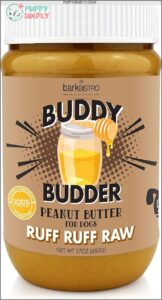
Buddy Budder keeps things refreshingly simple — just peanuts and honey, with no xylitol, added salt, hydrogenated oils, or artificial sweeteners anywhere on the label. That short ingredient list is exactly what you want when you’re trying to keep your dog safe.
It runs a little runny at room temperature, but refrigerating it firms the texture, making it much easier to load into lick mats, pill pockets, or silicone molds. Safe for dogs at every life stage.
| Best For | Dog owners who want a clean, minimal-ingredient treat for puppies or adult dogs of any size — especially handy for hiding medication or filling lick mats. |
|---|---|
| Net Weight | 17 oz |
| Xylitol Free | Yes |
| Texture | Runny; firms when chilled |
| Key Ingredients | Peanuts, honey |
| Added Sweetener | Honey |
| Refrigeration Needed | Recommended to thicken |
| Additional Features |
|
- Only two ingredients (peanuts and honey) — no xylitol, artificial sweeteners, added salt, or hydrogenated oils
- Versatile serving options: spoon-feed it, spread on lick mats, freeze in molds, or use as a pill pocket
- Safe for all life stages and made in the USA from regionally sourced ingredients
- Runny at room temperature — refrigeration is needed to get a firmer, more workable consistency
- Pricier per ounce than most conventional peanut butter brands
- Not suitable for dogs with peanut or honey allergies; introduce gradually to watch for digestive sensitivity
2. Kong Peanut Butter Treat Paste
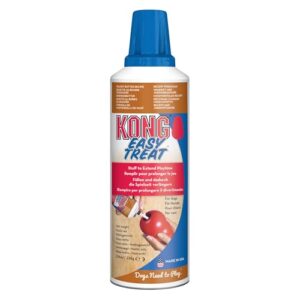
Kong Easy Treat Paste takes a different approach from something like Buddy Budder — instead of whole-food simplicity, it’s engineered for convenience. The easy-dispense nozzle makes stuffing a KONG toy fast and mess-free, which is genuinely useful during training sessions or busy mornings.
That said, the ingredient list includes milk, soybean oil, whey proteins, carrageenan, and artificial peanut butter flavor. If your dog has food sensitivities, those additives are worth a closer look before you squeeze any into a toy.
| Best For | Dog owners who want a quick, mess-free way to stuff KONG toys or sneak medication into treats — especially during training or busy routines. |
|---|---|
| Net Weight | 6.88 oz |
| Xylitol Free | Yes |
| Texture | Thin, spray-on |
| Key Ingredients | Milk, soy, artificial peanut flavor |
| Added Sweetener | None |
| Refrigeration Needed | Not required |
| Additional Features |
|
- The easy-dispense nozzle makes filling KONG toys fast and totally mess-free
- Can be frozen to extend enrichment time, keeping dogs engaged longer
- Works great for hiding pills, making medication time way less stressful
- Contains additives like carrageenan and artificial peanut butter flavor, which may not suit dogs with food sensitivities
- Thin consistency means it can be gobbled up quickly — less chew time than thicker spreads
- Costs more per ounce than regular peanut butter, so it adds up over time
3. Pumpkin Pup Peanut Butter
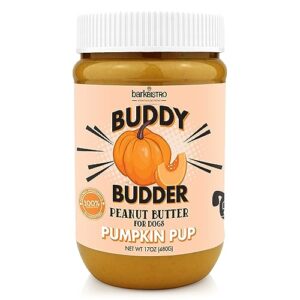
If you want something closer to whole-food simplicity, Pumpkin Pup Buddy Budder is worth a look. The ingredient list is short: peanuts, pumpkin, cinnamon, and honey — no xylitol, no preservatives, no artificial anything.
It comes in a 17 oz jar and works well spooned into lick mats or frozen inside enrichment toys.
The consistency runs thin and separates naturally, so refrigerate it before use. That thickens it up and makes it much easier to handle without the mess.
| Best For | Dog owners who want a clean, whole-food treat with minimal ingredients for dogs of all life stages. |
|---|---|
| Net Weight | 17 oz |
| Xylitol Free | Yes |
| Texture | Thin; firms when chilled |
| Key Ingredients | Peanuts, pumpkin, cinnamon, honey |
| Added Sweetener | Honey |
| Refrigeration Needed | Recommended to thicken |
| Additional Features |
|
- Short, recognizable ingredient list with no xylitol, artificial sugars, or preservatives
- Versatile — spoon it, freeze it, bake it, or use it as a pill pocket
- Works great with lick mats and enrichment toys for slower feeding and mental stimulation
- Thin, runny consistency that separates and requires refrigeration before use
- Can get messy when dispensed from toys or spread on surfaces
- At $13.99 for 17 oz, it’s a bit pricier than standard peanut butters
4. Skippy No Sugar Peanut Butter
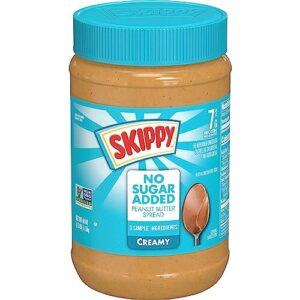
Skippy No Sugar Added is a familiar name that works reasonably well in a pinch. The ingredient list — roasted peanuts, palm oil, and salt — is short and free of xylitol, which is the main thing to confirm before sharing any peanut butter with your dog.
Each serving delivers 7 g of protein with zero added sugar or artificial preservatives. Just stir before use, and keep portions small.
| Best For | Athletes, students, and anyone on a keto or low-sugar diet who wants a clean, simple peanut butter without the extras. |
|---|---|
| Net Weight | 40 oz |
| Xylitol Free | Yes |
| Texture | Smooth, minimal separation |
| Key Ingredients | Roasted peanuts, palm oil, salt |
| Added Sweetener | None |
| Refrigeration Needed | Not required |
| Additional Features |
|
- Only three ingredients — no added sugar, artificial flavors, or preservatives
- 7 g of protein per serving makes it a solid, satisfying snack
- Xylitol-free, so it’s safe to share with your dog in small amounts
- Contains palm oil, which some people prefer to avoid for health or environmental reasons
- Oil separation can happen over time, so you’ll need to stir before use
- Not an option for anyone with a peanut allergy
5. All Natural Dog Peanut Butter
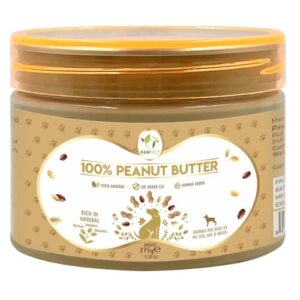
Pawfect Foods’ All Natural Dog Peanut Butter is built specifically for dogs — 100% roasted peanuts, no added salt, sugar, or xylitol. That single-ingredient simplicity makes it one of the safest picks on this list.
The 275 g jar has a thick, creamy texture that works well in lick mats or for hiding pills. It separates naturally, so give it a good stir before use. Calorie-dense, so keep servings small.
| Best For | Dog owners who want a clean, single-ingredient treat for training, enrichment, or sneaking in medication. |
|---|---|
| Net Weight | 9.7 oz |
| Xylitol Free | Yes |
| Texture | Thick and creamy |
| Key Ingredients | 100% peanuts |
| Added Sweetener | None |
| Refrigeration Needed | Not required |
| Additional Features |
|
- 100% peanuts with no xylitol, salt, or sugar — completely safe for dogs
- Versatile use: great for lick mats, Kong toys, or hiding pills
- Packed with protein, healthy fats, and B & E vitamins to support overall health
- Very thick texture can be tricky to scoop or spread evenly
- Small 275 g jar means you’ll be restocking fairly often
- High in calories, so overfeeding can lead to weight gain or an upset stomach
Frequently Asked Questions (FAQs)
Can dogs eat peanut butter crackers?
Like a chip off the old block, peanut butter crackers are mostly fine as a rare treat, but only if they contain no xylitol, excess salt, or harmful additives.
Can dogs eat crackers?
Plain crackers aren’t toxic to dogs, but they offer almost nothing nutritionally. Most are loaded with salt, refined carbs, and preservatives your dog simply doesn’t need. Think of them as junk food — fine rarely, never routine.
Can dogs eat graham crackers?
When in doubt, leave it out." Graham crackers aren’t toxic, but they’re loaded with added sugar and salt — empty calories your dog simply doesn’t need.
Can dogs eat Peanut butter and cheese crackers?
Peanut butter and cheese crackers aren’t a safe snack for dogs. Both fillings add fat and salt, and cheese can upset a dog’s digestion. Skip these and choose a dog-safe treat instead.
Can dogs eat crackers and Peanut butter?
Yes, dogs can eat crackers and peanut butter in small amounts, but only if the ingredients are safe. Always check for xylitol — it’s toxic to dogs and requires emergency care.
Can dogs eat Austin Peanut Butter crackers?
Austin Peanut Butter crackers are not recommended for dogs. They contain added salt, sugar, and processed oils — none of which your dog needs. Check the label carefully for xylitol before sharing even one.
How much peanut butter crackers per day?
One small cracker max — that’s the daily ceiling. Treats shouldn’t crack past 10% of your dog’s daily calories, so keep it rare, small, and always ingredient-checked first.
What age can puppies eat peanut butter?
Most puppies can try peanut butter around 8 weeks old, once they’re reliably eating solid food. Start with just a quarter teaspoon, and always choose a xylitol-free, unsweetened variety.
Do peanut butter crackers cause diarrhea?
They can. Fat, salt, and additives in peanut butter crackers can upset your dog’s gut, causing loose stools or diarrhea — especially in smaller dogs or those with sensitive stomachs.
Can diabetic dogs eat peanut butter?
Diabetic dogs can have peanut butter in small amounts, but only if it’s unsweetened and xylitol-free. Even then, its fat content can affect glucose stability, so always ask your vet first.
Conclusion
That cracker in your hand is a small thing—but what’s hiding in the ingredient list isn’t. Can dogs eat peanut butter crackers?
The honest answer is occasionally, with real caution. Read the label before you share, watch for xylitol, and keep portions small.
Your dog trusts you completely with every bite they take. A little habit of checking ingredients takes seconds and could genuinely protect them. That’s worth far more than any snack.
- https://www.petmd.com/dog/nutrition/can-dogs-eat-peanut-butter
- https://www.fda.gov/consumers/consumer-updates/paws-xylitol-its-dangerous-dogs
- https://vcahospitals.com/know-your-pet/xylitol-toxicity-in-dogs
- https://www.dogster.com/dog-nutrition/can-dogs-eat-peanut-butter-crackers
- https://www.feedpetaluma.com/blogs/blog/the-safety-of-human-grade-peanut-butter-for-dogs-a-comprehensive-look