This site is supported by our readers. We may earn a commission, at no cost to you, if you purchase through links.
Your dog just swiped a lick of horseradish mustard sauce off your plate. Probably not a big deal, right? Actually, that single exposure can trigger a cascade of chemical reactions in a dog’s body that most pet owners never see coming.
Horseradish mustard sauce isn’t just spicy—it’s a compound threat. The active irritant, allyl isothiocyanate, binds to pain receptors in ways that hit dogs far harder than humans, partly because their olfactory systems improve volatile compounds to an almost overwhelming degree. Pair that with garlic powder, sodium overload, and high-fat cream bases commonly found in commercial sauces, and you have a recipe for genuine toxicity.
Knowing exactly what’s in that sauce—and what it does inside your dog’s body—changes how fast you act.
Table Of Contents
- Key Takeaways
- Can Dogs Eat Horseradish Mustard Sauce?
- Why Horseradish Mustard Can Poison Dogs
- Dangerous Ingredients in Mustard Sauce
- Symptoms After Eating Horseradish Mustard
- What to Do Immediately
- Safer Treats for Dogs
- Frequently Asked Questions (FAQs)
- Does horseradish poison dogs?
- Can horseradish get rid of Worms in a dog?
- Can horseradish kill Fido?
- What happens if a dog eats horseradish sauce?
- What are the symptoms of mustard poisoning in dogs?
- What are the symptoms of radish poisoning in dogs?
- Is mustard poisonous to dogs?
- What happens if a dog eats mustard?
- Are mustard greens safe for dogs?
- Can dogs eat mustard seeds?
- Conclusion
Key Takeaways
- Horseradish mustard sauce contains allyl isothiocyanate, a compound that binds to pain receptors and floods your dog’s mouth, nose, and stomach with burning irritation almost instantly.
- Beyond the horseradish itself, sauce additives like garlic powder, high sodium, vinegar, and heavy cream each add their own risks, ranging from red blood cell damage to pancreatitis and dehydration.
- Watch for drooling, face pawing, vomiting, sneezing, lethargy, or blood in vomit, since these signal escalating distress that needs prompt veterinary attention.
- If your dog gets into the sauce, remove it immediately, rinse their mouth with cool water, never induce vomiting, and call your vet right away rather than waiting to see if symptoms appear.
Can Dogs Eat Horseradish Mustard Sauce?

No, dogs shouldn’t eat horseradish mustard sauce — and the reasons go deeper than just "it’s spicy." Several factors make this condiment genuinely harmful, from its chemical makeup to the additives hiding in most store-bought versions. Here’s what you need to know.
The same goes for other popular condiments — ketchup and mustard are also off-limits for dogs, packed with ingredients that can irritate or harm them.
Short Answer: No
No — horseradish mustard sauce is not safe for dogs under any circumstances.
Four reasons it’s an immediate concern:
- Mustard seeds trigger gastrointestinal upset rapidly
- Horseradish compounds cause canine toxicity through mucosal irritation
- Prepared horseradish products often contain allium additives
- Even small amounts warrant emergency veterinary care
Don’t wait for symptoms to decide it’s serious.
Why It Irritates Dogs
Allyl isothiocyanate (AITC) is the primary chemical irritant behind horseradish’s aggressive effect on canine tissue. When myrosinase acts on glucosinolates in horseradish, it releases AITC — a volatile organosulfur compound that turns gaseous at room temperature and saturates mucous membranes almost instantly.
| Irritation Pathway | Effect on Dogs |
|---|---|
| AITC binds TRPA1 ion channels | Triggers acute pain and inflammation signals |
| Gaseous expansion at room temperature | Immediate nasal and sinus irritation |
| Mucous membrane contact | Hypersalivation, drooling, oral burning |
| Olfactory receptor overload | Sneezing, head shaking, face pawing |
| GI tract exposure post-swallowing | Vomiting, diarrhea, stomach inflammation |
That TRPA1 activation matters clinically. AITC binds covalently to the channel, forcing sensory neurons to fire sustained pain signals — not a brief sting, but a persistent inflammatory cascade. Dogs carry between 125 and 300 million olfactory receptors, roughly three times the genetic OR repertoire of humans, which means mustard oil volatiles register at concentrations far below what you’d even notice. The irritant pathway starts before a dog swallows a single drop.
AITC binds covalently to pain receptors, so dogs feel horseradish burning before they ever swallow a drop
Sauce Versus Plain Horseradish
Plain horseradish root contains allyl isothiocyanate alone. Sauce multiplies that risk considerably — vinegar disrupts gastric pH, added salt elevates sodium load, and creamy bases introduce high-fat content that can trigger pancreatitis.
Can my dog eat horseradish in any form? No. But sauce compounds gastrointestinal upset through its layered ingredient profile, making it categorically more dangerous than the root by itself.
Risk by Dog Size
Body weight determines severity. A teaspoon of horseradish mustard sauce hits a five-pound Chihuahua with far greater concentration per kilogram than it does a sixty-pound Labrador.
Small breeds face faster dehydration from gastrointestinal upset, narrower airways that worsen respiratory distress, and quicker systemic absorption of irritants. If your dog is small, don’t wait — veterinary intervention becomes urgent sooner.
Why Horseradish Mustard Can Poison Dogs
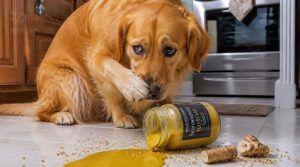
Horseradish mustard isn’t just unpleasant for dogs — it can genuinely harm them through several distinct biological mechanisms. The combination of volatile chemical compounds and inflammatory reactions means your dog’s body takes a real hit from even a small taste. Here’s what’s actually happening inside when they’re exposed.
Mustard Oil Irritation
Allyl isothiocyanate — the volatile compound released when horseradish is crushed — doesn’t just taste unpleasant to your dog; it triggers a full neuroexcitation response by activating trigeminal nociceptors in moist mucosal tissue. This chemical irritant binds instantly to pain-sensing nerves.
Dose dependence matters: even small concentrations cause mucosal irritation significant enough to prompt protective reflexes, while repeated exposure compounds the inflammatory response rather than diminishing it. Research indicates that certain substances can lead to reciprocal cross-desensitization between different types of irritants.
Burning Mouth and Throat
When AITC contacts mucosal tissue, it doesn’t linger politely — it binds to trigeminal nerve endings and triggers immediate, radiating pain across the tongue, lips, and throat.
This burning sensation compounds quickly when combined with high-sodium foods, as explained in this guide on why Spam is unsafe for dogs — salt stress and nerve irritation together can overwhelm a small animal fast.
Your dog’s salivary glands flood the mouth in response, producing excessive drooling as the body attempts dilution. This chemical irritant simultaneously disrupts oral pH balance, compounding inflammation across the entire upper respiratory tract.
Sensitive Canine Noses
Think about what 125 to 300 million olfactory receptors means in practice — your dog’s nose doesn’t just detect horseradish; it experiences it as an overwhelming sensory assault.
The nasal turbinates funnel scent-laden air deep into moisture-rich mucous membranes, where volatile AITC binds directly to trigeminal nerve endings, triggering immediate respiratory distress even from brief proximity to the sauce.
Stomach Lining Inflammation
Once swallowed, allyl isothiocyanate attacks the gastric mucosa directly, stripping away the protective mucus layer your dog’s stomach depends on to resist its own digestive acids.
Acute gastritis sets in fast:
- Mucosal barrier breakdown
- Protective mucus loss
- Cell shedding from the lining
- Gastric mucosa inflammation
- Stomach pain and gastrointestinal upset
Respiratory Discomfort Risks
The pungent aroma alone can trigger sneezing and coughing before your dog even swallows. Allyl isothiocyanate volatilizes instantly, irritating mucous membranes lining the airway. Dogs with chronic respiratory conditions face amplified reactions.
Aspiration pneumonia becomes a real risk when coughing or drooling pushes irritating liquid into the lungs. Bluish gums or labored breathing signals an oxygenation emergency — get to a vet immediately.
Dangerous Ingredients in Mustard Sauce
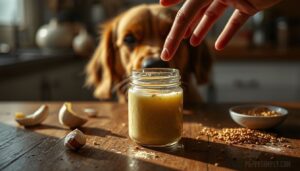
Horseradish mustard sauce rarely contains just one problematic ingredient — it’s usually a cocktail of compounds that each carry their own risks for dogs. Some of these additives are far more dangerous than the horseradish itself, and a few can cause serious harm even in small amounts. Here’s what you need to watch out for.
Garlic and Onion Powder
Garlic and onion powder hide in mustard sauces as hidden allium seasonings — more potent than fresh forms. These sulfur-containing compounds directly damage red blood cells, causing hemolytic anemia. Small breeds are most at risk:
- A fraction of a teaspoon can hit toxic thresholds
- Powders coat every bite evenly, so no lick is safe
- Symptoms may not even appear for days
High Sodium Levels
Sodium concentration in mustard sauces is far higher than any dog’s system can safely handle. When blood sodium exceeds 145 mEq/L, hypernatremia sets in — disrupting water balance and pulling fluid from cells, not just adding salt.
| Symptom | Mechanism |
|---|---|
| Excessive thirst | Osmotic imbalance triggers fluid-seeking response |
| Muscle weakness | Electrolyte disruption impairs neuromuscular signaling |
| Restlessness/confusion | Neurologic stress from rapid sodium shifts |
| Vomiting/nausea | GI tract response to sodium overload |
| Seizures | Severe hypernatremia depletes cellular hydration |
Even accidental ingestion of a sodium-dense condiment can cascade quickly into dehydration and neurologic distress, especially in small breeds.
Vinegar and Acidity
Sodium’s damage doesn’t stop at electrolytes. Mustard sauces rely on vinegar — usually 2.0 to 3.5 pH — to preserve shelf life and sharpen flavor. That acidity, driven by acetic acid concentrations of 4–7%, disrupts your dog’s gastric pH balance.
The result: oral irritation, hypersalivation, and digestive tract inflammation that compounds every other ingredient’s harm.
Creamy High-fat Sauces
Creamy horseradish mustard sauces compound the acidity problem. Heavy cream — usually 36–40% milk fat — creates a stable emulsion that coats the digestive tract with concentrated fat your dog can’t efficiently metabolize:
- Pancreatic inflammation triggered by sudden fat overload
- Vomiting and diarrhea from gastrointestinal upset
- Excessive drooling and acute stomach pain
- Rapid dehydration as fluid loss escalates
Spices and Additives
Beyond fat content, hidden flavorings lurking in horseradish mustard sauces threaten your pet’s safety. Turmeric disrupts clotting and gallbladder function. Capsaicinoids trigger gastrointestinal upset and excessive drooling even in small amounts.
| Additive | Risk to Dogs |
|---|---|
| Garlic powder | Allium toxicity, hemolytic anemia |
| Turmeric | Clotting and gallbladder disruption |
| Capsaicin | GI irritation, excessive drooling |
| Vinegar | Acidic pH disruption |
| "Natural flavors" | Hidden flavorings hazards |
Symptoms After Eating Horseradish Mustard

When horseradish mustard irritates your dog’s system, the body doesn’t stay quiet about it. Symptoms can appear within minutes and range from mild discomfort to signs that demand immediate veterinary attention. Here’s what to watch for:
Drooling and Face Pawing
Hypersalivation and muzzle pawing are your dog’s earliest distress signals after contact with horseradish mustard. Allyl isothiocyanate irritates oral mucous membranes instantly, triggering saliva production that exceeds normal swallowing capacity.
Watch for:
- Excessive drooling pooling around the lips
- Repeated pawing at the muzzle or mouth
- Rubbing the face along the floor
- Watery eyes accompanying oral discomfort
- Sudden behavioral restlessness paired with gastrointestinal upset
Vomiting or Diarrhea
Gastrointestinal irritation from allyl isothiocyanate triggers vomiting and diarrhea as the canine digestive system expels the offending compounds. The intestinal lining, inflamed and hyperstimulated, accelerates transit time — reducing water reabsorption and producing watery, mucus-laden stool.
Repeated vomiting causes rapid fluid loss, risking dehydration and electrolyte imbalance that weakens muscle and cardiac function. Track vomiting frequency closely; worsening patterns signal systemic involvement requiring immediate veterinary attention.
Sneezing and Coughing
Allyl isothiocyanate volatilizes instantly, flooding the nasal cavity and activating sensory nerves that trigger sneezing through brainstem reflex circuits — the same pathways that process olfactory overload in dogs with 300 million receptors.
Coughing follows when isothiocyanates reach the throat, driving intrathoracic pressure upward before the glottis releases a forceful air burst. Both reflexes signal active respiratory mucosal irritation.
Lethargy or Weakness
Systemic toxicity doesn’t always announce itself dramatically. After ingesting horseradish mustard, a dog may simply stop moving — lying still, slow to rise, uninterested in stimulation.
Vomiting and diarrhea accelerate dehydration, reducing blood volume and impairing cellular energy production. Muscle strength drops when circulation falters. If your dog seems unusually drained after exposure, that quiet stillness warrants immediate veterinary attention.
Blood in Vomit
Blood in vomit — called hematemesis — signals something beyond ordinary gastrointestinal distress. Repeated retching can tear small vessels in the throat or esophagus (Mallory-Weiss syndrome), producing streaks of bright red blood. Darker, coffee-ground material indicates digested blood from the stomach lining.
Signs demanding immediate veterinary attention:
- Bright red or dark brown vomit
- Coffee-ground appearance in stomach contents
- Blood mixed with mucus
- Repeated vomiting episodes with visible bleeding
- Any blood following ingestion of toxic foods
This is internal bleeding. Call your vet now.
What to Do Immediately
If your dog just got into some horseradish mustard sauce, the next few minutes matter. Acting quickly and calmly can make a real difference in how your dog feels and recovers. Here’s exactly what to do right away.
Remove The Sauce

Act within the first few seconds. If your dog has gotten into horseradish mustard sauce, your immediate priority is physical removal — get the bowl, plate, or spilled sauce completely out of reach before anything else.
Dogs will keep licking at the source if it’s accessible, worsening gastrointestinal distress and prolonging exposure to compounds that irritate oral and esophageal tissue.
Rinse The Mouth

Once the sauce is removed, flush the mouth with cool water right away.
- Use small amounts — large volumes risk being swallowed
- Swish across gums and cheeks, not straight back
- Repeat two or three short rinses
- Stop immediately if the dog gags
AITC continues irritating tissue on contact. Rinsing dilutes residue before it travels further.
Offer Fresh Water

After rinsing, set down a fresh bowl of water where your dog can reach it easily. Keep it cool but not ice-cold — extreme temperatures may discourage drinking when nausea is already present.
If your dog vomits, offer water in small amounts repeatedly rather than one full bowl. Frequent, small sips matter more than volume right now.
Do Not Induce Vomiting

Resist the reflex to make your dog vomit. Horseradish compounds burn tissue on contact, so vomiting forces those same irritants back up through the esophagus and throat — causing secondary burns worse than the original exposure.
Aspiration is a real risk: a nauseated dog can inhale vomit, blocking airflow and triggering aspiration pneumonia. Stomach emptying is rarely complete anyway, so the trade-off isn’t worth it.
Call Your Veterinarian

Once vomiting is off the table, your next move is the phone. Call your vet immediately — tell them your dog’s breed, age, and symptoms, when the exposure happened, and how much sauce was involved.
They’ll triage the situation and may prescribe home monitoring or request an in-person visit. Have the sauce packaging ready if you can find it.
Safer Treats for Dogs

The good news is that plenty of safe, dog-friendly snacks can take the place of anything off the table. Your dog doesn’t need spicy human condiments to enjoy a satisfying treat — nature’s already got that covered. Here are some wholesome options worth keeping on hand.
Plain Carrots
Raw carrots make an ideal antidote to toxic condiment anxiety — crunchy, naturally sweet, and clinically sound.
- Low in fat, with negligible oil content
- High water content helps maintain healthy hydration
- Dietary fiber promotes normal stool consistency
- Carotenoids deliver provitamin A benefits
- Easy to portion safely for any breed size
Slice them into small pieces to prevent choking. At just 41 calories per 100g, they won’t compromise your dog’s nutritional balance.
Green Beans
Green beans sit at the opposite end of the spectrum from horseradish mustard sauce — low in fat, gentle on the stomach, and genuinely useful as a snack. At roughly 31 calories per cup and about 90% water, they won’t disrupt your dog’s diet.
Serve them plain and unseasoned, raw or lightly cooked. Both deliver fiber and vitamin C without the gastrointestinal distress that toxic condiments cause.
Apple Slices
Apple slices offer a crunchy, low-calorie alternative that dogs genuinely enjoy. Vitamin C and dietary fiber support digestion and antioxidant activity, while the high water content adds mild hydration between meals.
The chewing action itself stimulates saliva production, helping rinse food residue from teeth. Remove seeds and the center, keep portions small, and serve plain.
Sweet Potato Chews
Sweet potato chews earn their place as a genuinely safe swap — slow-baked until firm, digestible, and rawhide-free.
Five reasons they work:
- Single-ingredient options keep the label clean
- Low-and-slow baking creates the right chew texture
- Nutritional content is lean — minimal fat, modest fiber
- Airtight storage preserves homemade batches after full cooling
- Size-matched portions prevent gulping
Always supervise chew time.
Dog-safe Training Treats
Ingredient transparency matters most when choosing training treats. Single-ingredient options — plain chicken, carrot, or apple-based bites — let you identify any reaction quickly.
Soft textures keep training flow smooth, while pea-sized portions help you reward frequently without overloading daily calories. Homemade batches give you full control over sodium, seasonings, and fat — everything a commercial condiment like horseradish mustard sauce gets dangerously wrong.
Frequently Asked Questions (FAQs)
Does horseradish poison dogs?
Like a chemical flare fired inside the gut, horseradish triggers mucous membrane irritation and gastrointestinal inflammation in dogs. It isn’t classified as acutely toxic, but it reliably causes significant clinical distress.
Can horseradish get rid of Worms in a dog?
No. Horseradish doesn’t deworm dogs. Intestinal parasites like hookworms and roundworms require veterinary antiparasitic treatment — not irritants. A fecal test identifies the specific worm; only then can the correct dewormer clear the infection reliably.
Can horseradish kill Fido?
Rarely fatal on its own, it can still kill Fido indirectly. Severe dehydration from repeated vomiting, fatal electrolyte imbalances, or hemolytic anemia from garlic additives can each escalate what seems minor into a genuine emergency.
What happens if a dog eats horseradish sauce?
Mucous membrane irritation begins almost instantly — burning triggers drooling, sneezing, and eye watering. Gastrointestinal distress follows, with vomiting and diarrhea as the digestive lining reacts to volatile allyl isothiocyanate compounds.
What are the symptoms of mustard poisoning in dogs?
Vomiting and diarrhea hit fast. You’ll also see drooling, face pawing, and abdominal pain. Severe cases bring lethargy, bloody stool, or respiratory distress — gastrointestinal distress signs that demand immediate veterinary attention.
What are the symptoms of radish poisoning in dogs?
Radish poisoning mirrors horseradish toxicity: oral irritation, drooling, and pawing at the mouth, followed by vomiting, diarrhea, abdominal pain, dehydration signs, sneezing, coughing, and—in severe cases—lethargy or tremors signaling toxic food exposure.
Is mustard poisonous to dogs?
Yes — mustard seeds contain glucosinolates that break down into irritating organosulfur compounds, triggering gastrointestinal irritation. Even small amounts can upset a dog’s stomach, making mustard one of several toxic foods deserving a permanent spot on your dietary restrictions list.
What happens if a dog eats mustard?
Oral mucosal irritation hits first—drooling, pawing at the mouth—followed by gastrointestinal inflammation. Mustard seeds trigger vomiting, diarrhea, and digestive tract sensitivity. Symptoms often show delayed onset, so monitor your dog closely for hours after exposure.
Are mustard greens safe for dogs?
Plain mustard greens (not condiments) are fine in small, cooked portions—offering vitamins A, C, K, calcium, and fiber. Skip seasonings, watch for loose stools or allergic reactions, and never confuse them with toxic horseradish-based sauces.
Can dogs eat mustard seeds?
No — mustard seed ingestion triggers glucosinolate breakdown into mustard oil and isothiocyanates, irritating your dog’s mouth and gut.
Even small seed toxicity levels cause digestive irritation risks, and their strong scent invites curious sniffing thanks to keen canine olfactory sensitivity.
Conclusion
That tiny lick can feel like swallowing fire to your dog’s nervous system. Can dogs eat horseradish mustard sauce poisoning isn’t some rare fluke—it’s a predictable chain reaction once allyl isothiocyanate meets sensitive tissue.
Your dog can’t tell you it’s burning inside, so you’re the only line of defense. Skip the table scraps, rinse the mouth fast, and call your vet at the first sign. Caution beats regret, every single time.
- https://www.justanswer.com/dog-health/68xac-dog-ate-horseradish-cheese.html
- https://www.petmd.com/dog/poisoning/poisons-dogs
- https://www.webmd.com/vitamins/ai/ingredientmono-257/horseradish
- https://pubmed.ncbi.nlm.nih.gov/22129740
- https://www.aspca.org/pet-care/aspca-poison-control/people-foods-avoid-feeding-your-pets