This site is supported by our readers. We may earn a commission, at no cost to you, if you purchase through links.
Your dog just snagged a Goldfish cracker off the couch cushion before you could stop them. No big deal, right? Those little orange snacks seem harmless enough—but the ingredient list tells a different story. Goldfish crackers pack salt, onion powder, and garlic powder at levels that can genuinely harm dogs, especially smaller breeds or those with kidney issues.
A one-time crumb probably won’t send you rushing to the emergency vet, but knowing exactly what’s inside these crackers—and what they do to a dog’s body—can help you make smarter decisions before the next snack incident happens.
Table Of Contents
- Key Takeaways
- No, Dogs Should Avoid Goldfish Crackers
- What Are Goldfish Crackers Made Of?
- Are Goldfish Crackers Toxic to Dogs?
- Sodium Risks in Goldfish Crackers
- Onion and Garlic Powder Dangers
- What Happens After Dogs Eat Goldfish?
- How Many Goldfish Are Too Many?
- What to Do After Ingestion
- Safer Dog Treat Alternatives
- Prevent Dogs Eating Goldfish Crackers
- Frequently Asked Questions (FAQs)
- Can dogs eat Goldfish crackers?
- Can dogs eat goldfish?
- Can Great Danes eat Goldfish crackers?
- Can dogs eat crackers?
- Can dogs have Flavor Blasted Goldfish?
- Do Goldfish crackers need to be cooked?
- How many goldfish crackers can a dog eat?
- What crackers are ok for dogs?
- Are goldfish crackers safe?
- Can cats eat goldfish crackers?
- Conclusion
Key Takeaways
- Goldfish crackers contain salt, onion powder, and garlic powder — all genuinely harmful to dogs, with the last two capable of destroying red blood cells and causing serious anemia.
- A cracker or two usually won’t cause a crisis, but a large amount can trigger salt poisoning quickly, especially in small breeds, puppies, or dogs with kidney disease.
- If your dog gets into a bag, check the flavor, estimate how much they ate, offer fresh water, and call your vet or the ASPCA Poison Control line at (888) 426-4435 right away.
- Safe swaps like plain carrot sticks, cooked chicken, or unseasoned dog treats give your pup a real reward without any of the hidden risks hiding in those little orange crackers.
No, Dogs Should Avoid Goldfish Crackers
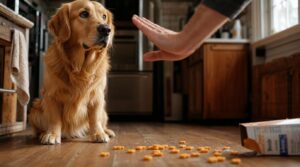
Goldfish crackers might seem harmless, but they’re not a good fit for your dog. The ingredients that make them tasty for us can actually cause real problems for dogs.
What’s true for Goldfish crackers applies to many snacks we love—check out why dogs and human crackers don’t mix well for a closer look at the risks.
Before your pup sneaks one off the floor, understand the risks.
Why Goldfish Crackers Are Not Dog-safe Treats
Goldfish crackers might seem like a harmless snack to toss your dog’s way, but they’re packed with harmful ingredients for canine health. The sodium levels alone risk sodium toxicity in dogs, while onion and garlic powder can damage red blood cells.
Additionally, these crackers contribute to calorie overload, nutrient deficiency, and additive sensitivities that disrupt your dog’s gut microbiome. These factors collectively make the snack unsafe for consumption.
The excess sodium risks include increased thirst and possible hypertension, further underscoring the dangers of feeding goldfish crackers to dogs.
Why One or Two Crackers is Usually Different From a Large Amount
One or two Goldfish crackers usually stay below the threshold dosing level where your dog’s body can’t keep up. Bite frequency stays low, salt accumulation stays minimal, and hydration demand doesn’t spike.
A larger amount triggers GI overload — more sodium, more seasoning, more stomach stress all at once. That’s when salt toxicity in dogs becomes a real concern.
When Accidental Ingestion Becomes a Concern
Accidental ingestion becomes a real concern when quantity risk evaluation points toward "more than a few."
Rapid symptom onset — vomiting, lethargy, excessive thirst — can follow within hours.
Underlying health factors like kidney disease or small body size raise the stakes fast.
Start managing accidental ingestion in dogs by monitoring after ingestion closely, and do not hesitate to call your vet.
What Are Goldfish Crackers Made Of?
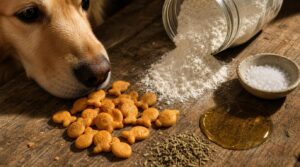
Before deciding if something is safe for your dog, it helps to know exactly what’s in it. Goldfish crackers might seem harmless, but the ingredient list tells a different story.
Here’s what you’ll actually find inside every little cracker.
Enriched Wheat Flour and Refined Carbohydrates
Enriched wheat flour sits at the top of the ingredient list, and that’s worth noting. The milling process strips away bran and germ, causing significant nutrient loss; then adds back only a handful of vitamins.
For your dog, this carbohydrate-based, processed snack delivers empty calories, fiber deficiency and blood sugar spikes, with vitamin enrichment limits that leave real nutritional deficiencies behind.
Cheddar Cheese, Dairy, and Lactose Concerns
Cheddar cheese gives Goldfish crackers their signature flavor, but it comes with concerns for dogs. While cheese aging naturally lowers lactose content, lactose tolerance varies widely between dogs, and some still experience digestive upset.
Dogs with food allergies or a dairy allergy can react even to small amounts. Skim milk powder in certain varieties adds another layer of dairy exposure worth watching.
Vegetable Oils and Unnecessary Fats
Goldfish crackers rely on a vegetable oil blend — canola, soybean, or sunflower — that adds fat without nutritional benefit for dogs. These unsaturated fats raise real Oil Oxidation Risks and Unsaturated Fat Stability concerns over time. Here’s why those fats matter:
- Caloric Density Impact — Fat delivers 9 kcal per gram, making even a few goldfish crackers a source of empty calories.
- Emulsifier Fat Absorption — Emulsifiers help fats absorb faster, increasing digestive load.
- Oxidized Fat Concerns — Opened packages accelerate fat breakdown, worsening quality.
- Weight gain — Repeated oily snacks displace low-fat dog treats that actually support health.
Salt, Seasonings, and Flavor Additives
Salt does most of the heavy lifting in Goldfish crackers, but it’s not alone. Umami enhancers, flavor carriers, onion powder, and garlic powder round out the seasoning blend — and those last two are genuinely toxic to dogs.
The high salt content alone risks sodium poisoning. Acidifiers’ effects sharpen that saltiness further, meaning your dog gets a concentrated hit of ingredients their bodies simply can’t handle safely.
Dyes, Sugars, and Preservatives in Some Varieties
Some Goldfish varieties go beyond salt and seasoning. Artificial color risks appear through dyes like Red 40 or annatto, which can trigger reactions to artificial additives and canine allergies in sensitive dogs.
Hidden sugar sources—including corn syrup—quietly raise sugar content per serving.
Preservatives also appear in certain formulations, and their health impact on dogs isn’t well-studied.
Always check the label.
Are Goldfish Crackers Toxic to Dogs?

The answer depends a lot on which kind you’re dealing with — plain or flavored. Some Goldfish varieties carry ingredients that are genuinely toxic to dogs, not just unhealthy.
Here’s what you need to know before you decide if it’s a big deal or not.
Plain Versus Flavored Goldfish Crackers
Not all Goldfish crackers carry the same risk for your dog. The flavor coating method matters — plain varieties bake seasoning into the dough, while Flavor Blasted versions add a heavy cheese dust level on top, increasing sodium and additive exposure.
- Plain crackers: lower seasoning, but still non-dog-safe Goldfish crackers
- Flavor Blasted: extra coating raises salt toxicity risk
- Whole grain option: different ingredients, still unsafe
- Plant-derived colors: added chemicals, texture contrast from standard varieties
Onion Powder and Garlic Powder Risks
Some flavored Goldfish crackers contain onion powder and garlic powder — both seriously harmful to dogs. These ingredients trigger an allium metabolite mechanism that damages red blood cells, leading to hemolytic anemia.
Flavored Goldfish crackers can contain onion and garlic powder, both toxic ingredients that destroy dogs’ red blood cells
Cumulative low-dose exposure also matters; repeated small amounts add up over time.
Symptoms of onion and garlic poisoning in dogs include vomiting, lethargy, and pale gums — urgent warning signs requiring immediate attention.
Why Seasoning Blends Can Be Dangerous
Seasoning blends go beyond just onion powder and garlic powder. They often pack anti-caking agents, bulking starch additives, and masking stabilizers alongside high sodium levels — ingredients your dog’s body can’t handle well.
This concentrated blend toxicity compounds quickly:
- Flavor enhancer overload irritates the gut lining.
- Hidden sodium spikes thirst and strains kidneys.
- Undeclared additives multiply the toxic ingredients in human snacks for pets.
Toxicity Risk for Small Dogs and Puppies
Small dogs and puppies face the steepest danger here. Toxicity is dose-dependent severity — meaning a tiny body absorbs a much higher concentration from the same handful of crackers.
Rapid fluid loss from vomiting can quickly cause kidney strain, and puppy anemia risk from allium ingredients is very real.
Early symptom escalation happens fast, so don’t wait to call your vet.
Why Ingredient Labels Matter
Reading the ingredient label on Goldfish crackers isn’t just a habit — it’s how you catch hidden dangers before your dog does. Ingredient transparency helps with allergen detection, sodium awareness, and claim verification. "Cheddar flavor" on the front doesn’t tell you about onion powder inside.
Regulatory compliance requires full disclosure, so use that list to spot toxic ingredients for dogs before sharing anything.
Sodium Risks in Goldfish Crackers

Salt is one of the biggest reasons Goldfish crackers don’t belong in your dog’s bowl. Even a small handful can push their sodium intake way beyond what’s safe.
Here’s what that actually means for their health.
Why Goldfish Crackers Are Too Salty for Dogs
Goldfish crackers carry a surprisingly high salt content — one small pack can push well past your dog’s entire daily sodium limit. That kind of sodium load triggers blood pressure rise, electrolyte imbalance, and sodium-induced edema in dogs not built to handle it.
The health risks of feeding Goldfish crackers to dogs add up fast, and salt poisoning in dogs is a real concern, not just an overreaction.
Excessive Thirst and Frequent Urination
After your dog consumes salty crackers, excessive thirst followed by frequent urination are often the first noticeable signs—symptoms that mirror those of diabetes mellitus and diabetes insipidus. High sodium levels trigger a fluid balance feedback loop the dog cannot regulate. Watch for these specific indicators:
- Constant water-seeking behavior
- Unusually frequent bathroom trips
- Large urine volumes (polyuria benchmarks suggest concern beyond normal output)
These hypernatremia symptoms signal a real electrolyte imbalance in canine health.
Dehydration and Sodium Imbalance
When your dog consumes too many salty crackers, high sodium levels trigger a fluid compartment shift—water exits cells to balance the bloodstream, causing cellular dehydration. This electrolyte imbalance in canine health can escalate quickly.
| Warning Sign | Cause | Urgency |
|---|---|---|
| Dry gums | Cellular dehydration | Moderate |
| Disorientation | Osmotic brain swelling | High |
| Lethargy | Hypernatremia | High |
Rapid sodium correction without electrolyte monitoring risks further harm—always contact your vet first.
Higher Risk for Dogs With Kidney Disease
If your dog already has kidney disease, even a small amount of salty crackers can tip the balance. Reduced renal reserve means their kidneys can’t flush excess sodium efficiently, which accelerates uremic toxin buildup and exacerbates anemia.
High sodium also worsens proteinuria progression and triggers complications related to hyperphosphatemia.
The impact of high salt on kidney disease in dogs isn’t gradual — it can escalate rapidly.
Warning Signs of Salt Poisoning
Salt poisoning can sneak up fast — and knowing what to look for may save your dog’s life. Watch for these warning signs:
- Dry gums and dehydration from rapid fluid loss
- Persistent vomiting and diarrhea, worsening the electrolyte imbalance in canine health
- Unsteady gait, lethargy, or neurological agitation as sodium disrupts the nervous system
- Elevated heart rate signaling cardiovascular stress
If you spot these, call your vet immediately.
Onion and Garlic Powder Dangers

Onion and garlic powder are two of the most concerning ingredients hiding in flavored Goldfish crackers, and their effects on dogs go beyond causing simple stomach upset. Even small amounts can damage your dog’s red blood cells in ways that aren’t always immediately obvious.
Here’s what you need to know about how these ingredients cause harm.
How Allium Ingredients Affect Red Blood Cells
Onion and garlic compounds don’t just upset your dog’s stomach — they attack red blood cells directly. These allium ingredients increase osmotic fragility, making cells rupture easily.
Garlic-derived compounds cause hemoglobin modification, specifically on the beta-chain, disrupting oxygen transport. Red cell turnover accelerates, outpacing your dog’s ability to replace them.
This process — red blood cell destruction — drives the serious anemia tied to allium toxicity.
Signs of Onion or Garlic Toxicity
Symptoms of onion toxicity in dogs and garlic toxicity in dogs do not always show up right away.
Watch for vomiting, diarrhea, and lethargy first.
As red blood cell destruction progresses, you may notice dark urine, blood in urine, jaundice appearance, elevated heart rate, and rapid breathing.
These signs reflect the effects of allium compounds on canine red blood cells — and they demand immediate attention.
Pale Gums, Weakness, and Lethargy
As red cell hemolysis progresses, pale gums become one of the clearest anemia indicators you’ll notice. Your dog’s gums should look bubble-gum pink — pale coloring signals blood oxygen deficiency and poor energy metabolism. Weakness and lethargy follow as anemia deepens, similar to how vitamin B12 deficiency drains human energy.
Goldfish crackers containing allium ingredients can push a sensitive dog toward this dangerous state quickly.
Why Powdered Forms Are Especially Concentrated
Powdered forms like onion powder don’t just sit on a cracker’s surface — they dissolve almost instantly through rapid dissolution and surface area amplification. This ensures uniform dispersion across your dog’s gut happens fast.
Clumping dynamics then cause powder clumps to break apart quickly once swallowed, concentrating the dose.
Invisible portioning makes it easy to underestimate how much your dog actually consumed.
Breeds and Dogs at Higher Risk
Some dogs are simply more vulnerable than others. Akitas and Shiba Inus carry a known breed-specific anemia susceptibility that makes allium exposure especially dangerous. Beyond breed sensitivity, size also matters—a Chihuahua faces a far greater toxicity risk than a medium-sized dog or Great Dane from the same cracker.
- Brachycephalic breathing dogs already strain under stress
- Long-backed disc disease breeds tire faster during illness
- Genetic heart risk and folded skin infections add extra strain
What Happens After Dogs Eat Goldfish?

What your dog experiences after eating Goldfish crackers depends on how many they ate and which variety. Symptoms can start within a few hours and range from mild to serious.
Here’s what to watch for.
Mild Stomach Upset After Small Amounts
If your dog snagged one or two Goldfish crackers, don’t panic — mild dog digestive upset is usually the worst you’ll see.
Portion size management matters here; a small occasional treat rarely causes serious harm in medium or large dogs.
Focus on hydration strategies like offering fresh water, and watch for settling symptoms.
Consider a bland diet introduction if their stomach seems off.
Vomiting, Diarrhea, Gas, and Bloating
When your dog eats Goldfish crackers, their gut microbiome can react fast. The high sodium content, refined flour, and dairy trigger vomiting, diarrhea, gas, and bloating — sometimes within hours.
The bloat risk associated with high-salt treats is real, especially in sensitive dogs.
Probiotic support and fiber balance aid recovery, but if vomiting or diarrhea persists, diagnostic tests and veterinary care are the right next steps.
Increased Thirst After Salty Snacks
If your dog just ate a handful of Goldfish crackers, don’t be surprised when they head straight for the water bowl. That’s osmotic thirst at work — high salt content raises blood sodium, triggering a hypothalamic thirst signal that tells the brain to drink up fast.
Here’s what’s happening inside your dog’s body:
- Cellular fluid shift pulls water out of cells, creating that dry, thirsty feeling
- ADH regulation adjusts how much water the kidneys hold onto
- Kidney sodium excretion ramps up, requiring more water to flush excess dietary sodium
- Repeated thirst and urination together may signal early hypernatremia in dogs
Symptoms That May Appear Within Hours
Within just a few hours, symptoms of salt and onion powder toxicity in dogs can surface quickly. Watch for vomiting, diarrhea, and gastrointestinal irritation first — these are your early warning signs.
Abdominal cramping may follow, along with increased thirst and dark urine from sodium strain.
Some sensitive dogs show facial swelling, respiratory wheezing, or rapid heart rate, especially after flavored varieties.
Severe Signs Requiring Urgent Veterinary Care
Some signs go beyond an upset stomach and signal a true emergency. If your dog shows labored breathing, seizure episodes, or sudden collapse, get to an emergency vet immediately.
Symptoms of salt and onion powder toxicity in dogs can escalate fast — uncontrolled muscle weakness, neurological emergency signs, or pale gums mean every minute counts.
Don’t wait when symptoms of sodium poisoning in dogs turn severe.
How Many Goldfish Are Too Many?

There’s no magic number that makes Goldfish crackers safe for dogs — even a small amount carries real risk. How much is too much depends on your dog’s size, age, health, and how often they’re snacking on things they shouldn’t.
Here’s what you need to know about where the line gets crossed.
Why There is No Safe Recommended Serving
There’s no magic number that makes the safety of feeding goldfish crackers to dogs reliable. Variable dog physiology—such as metabolism and health—means the same handful affects differently depending on individual factors.
Inconsistent ingredient levels across flavors create dose-response uncertainty, and owner misestimation of consumed quantities is surprisingly common. These variables compound risks, as precise toxicity thresholds remain undefined.
The lack of veterinary guidance underscores a critical reality: no safe serving exists. Formal standards cannot account for the unpredictable interplay of biology, product inconsistency, and human error.
Size, Weight, and Health Condition Factors
Your dog’s size, weight, and health condition all shape how risky even a few crackers can be. Small breed vulnerability is real — a tiny dog absorbs far more sodium per pound than a large one. Weight-based dosage matters here.
Dogs with kidney disease, heart disease, or obesity-related risks have even narrower safety margins. These conditions amplify sensitivity to excess sodium, making even small amounts potentially dangerous.
Age-dependent toxicity means puppies and seniors feel the effects faster. Their bodies struggle to process sodium efficiently, increasing susceptibility to complications.
Risks for Toy Breeds and Puppies
Toy breeds and puppies face compounded risks from Goldfish crackers that larger, healthier dogs don’t. Their fracture susceptibility, hypoglycemia risk, tracheal collapse vulnerability, patellar luxation tendencies, and dental crowding all mean their bodies are already working harder.
Adding high sodium content exacerbates these vulnerabilities, pushing small dogs into serious trouble fast. Safe alternative treat options for dogs — like plain carrots — remain the smarter choice to avoid such dangers.
Concerns After Eating a Whole Bag
A whole bag of food poses a real problem, no matter the dog’s size. The high salt content in that much food can trigger sodium toxicity quickly — leading to rapid fluid loss, electrolyte imbalance, and acute renal strain.
You might notice symptoms of sodium poisoning in dogs, such as vomiting, confusion, or behavioral changes, within hours.
Dog health risks escalate quickly in such cases, underscoring the urgency of addressing this issue.
Why Repeated Feeding Increases Health Risks
Giving your dog a few crackers every day might seem harmless, but cumulative toxin buildup from repeated allium exposure is a real concern. Chronic sodium overload strains the kidneys over time, and nutrient imbalance quietly develops when snacks crowd out balanced meals.
You’re also risking weight gain progression and gut microbiome disruption — both tied to the long-term effects of chronic junk food consumption.
What to Do After Ingestion
Finding your dog nose-deep in a bag of Goldfish crackers is stressful, but staying calm and acting quickly makes a real difference.
The steps you take in the next few minutes can help you determine the situation’s seriousness.
Here’s what to do right away.
Check The Goldfish Cracker Flavor and Ingredients
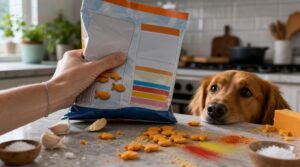
First, grab that cracker bag and read the label carefully. Not all Goldfish crackers are equal — a seasoning blend audit can reveal hidden dangers fast.
Cheese variant analysis matters too, since cheddar varieties contain more dairy and sodium. Check for onion powder, garlic powder, artificial color, and allergen cross-contamination warnings.
Identifying toxic ingredients in pet treats early helps you act quickly and confidently.
Estimate How Many Crackers Your Dog Ate
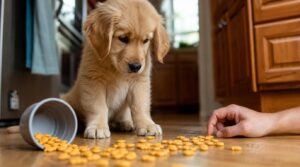
Next, think about how many crackers your dog actually got into. Your estimate matters more than you’d think — body weight ratio changes everything here.
- Visual Portion Estimation: Picture the pile; even a rough count helps your vet.
- Cracker Weight Approximation: Each cracker is roughly 1–2 grams.
- Dog’s Size: Smaller dogs face higher risk from fewer crackers.
- Salt Content vs. Symptoms: More crackers eaten means faster-appearing warning signs.
Remove Remaining Crackers Immediately

Once you’ve got a rough count, act fast — clear out every cracker still within reach. Safe Pickup Methods matter here: use a paper towel or gloves, bag the pieces immediately, and don’t forget the crumbs.
| Step | Why It Matters |
|---|---|
| Crumb Removal Techniques | Small fragments still pose risk |
| Isolation Zone Setup | Move your dog to another room first |
| Hand Hygiene Protocol | Residue on hands can transfer back |
| Final Visual Check | Scan carpet gaps and furniture edges |
Preventing accidental ingestion means leaving zero pieces behind.
Offer Fresh Water Without Forcing Intake
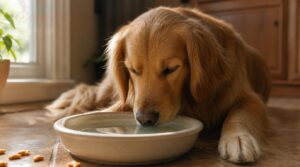
After clearing away the crackers, set out a shallow water bowl filled with room temperature water — cold water can put some dogs off drinking. Offer frequent small servings rather than one big bowl.
High salt content and electrolyte imbalances can worsen quickly in dogs, so monitor hydration status: check gum color and watch for panting.
Never force water; aspiration is a real risk.
Call Your Veterinarian or Poison Helpline

Don’t wait to see how things unfold — this is the moment to call. Reach out to your veterinarian first, or contact a 24/7 pet poisoning hotline for urgent guidance on timing and veterinary emergency care.
Have these essential case details ready:
- Your dog’s weight and breed
- The Goldfish cracker flavor and estimated amount eaten
- Time elapsed since ingestion
- Any symptoms already showing
- Treatments given before calling
ASPCA Animal Poison Control: (888) 426-4435. Pet Poison Helpline: (855) 764-7661 — note the $89 per-incident helpline fee structure.
After your vet consultation for accidental ingestion, post-call monitoring is equally important — watch for worsening signs and know when to seek emergency veterinary care for dog poisoning.
Safer Dog Treat Alternatives

The good news is your dog doesn’t have to miss out on snack time just because Goldfish crackers are off the table. There are plenty of simple, wholesome options that are safe, satisfying, and easy to find.
Here are some go-to alternatives worth keeping on hand.
Carrot Sticks and Cucumber Slices
Carrot sticks and cucumber slices make excellent vegetable sticks for dogs, offering a crunchy contrast to high-sodium snacks like Goldfish crackers, which negatively impact canine health.
Carrots provide a vitamin boost through beta-carotene, while cucumbers deliver hydrating freshness with minimal calories. Both vegetables create a nutritious, low-calorie alternative to processed treats.
Cut them into uniform pieces to ensure consistent texture and size, resulting in a low-salt snack your dog can safely enjoy.
Plain Pumpkin or Cooked Sweet Potato
Plain pumpkin and cooked sweet potato are two of the gentlest, most nourishing swaps you can make after avoiding salty Goldfish crackers.
Both offer real fiber benefits and digestive support, plus they’re a solid vitamin A source through natural beta-carotene.
Pumpkin is lower in calories, making calorie comparison easy when portion guidelines matter.
Serve plain — no salt, no spices.
Unsalted Cooked Chicken or Turkey
If pumpkin and sweet potato cover your dog’s fiber needs, unsalted cooked chicken or turkey provides protein. Both are easy to digest, making them smart, safe alternative treats for dogs with sensitive stomachs.
Cook poultry to 165°F — that’s your safe cooking temperature baseline. Keep portions small, skip the skin, and serve it plain. Lean chicken especially hits the right nutrient balance without unnecessary fat.
Plain Air-popped Popcorn in Moderation
Plain air-popped popcorn is another snack worth considering for dogs, as it carries far fewer risks compared to human snacks like Goldfish crackers when served correctly.
Skip butter, salt, and seasonings entirely to avoid harmful additives. Practice portion control by offering just a few pieces, not a handful, to prevent overfeeding.
Always monitor for choking risks, especially with smaller dogs, and support hydration by ensuring water is available nearby.
Dog Treats Made Without Salt or Seasonings
When plain popcorn isn’t enough variety, purpose-made dog treats without salt or seasonings are worth keeping on hand. Look for labels that say "no added salt," and check for hidden sodium from broth or flavoring. These steps ensure treats align with kidney-friendly dietary needs.
Ingredient simplicity matters here — single-protein options with natural preservatives like rosemary extract are smart picks. Such choices support dogs managing the risks of high sodium in canine diet without sacrificing reward value.
Prevent Dogs Eating Goldfish Crackers

Prevention really comes down to a few simple habits you can start today. Dogs are opportunists — if crackers are within reach, they’ll find them.
Here are some easy ways to keep Goldfish crackers out of your dog’s life for good.
Store Snack Bags in Sealed Containers
Transfer open Goldfish bags into airtight containers with silicone gaskets or snap-lock lids — this seal keeps your crackers fresh and deters curious pets.
Maintain good reusable container hygiene by cleaning out crumbs regularly, as old residue attracts pets. These simple practices genuinely prevent accidental ingestion before it becomes a problem.
Keep Crackers Off Counters and Tables
Even a casual snack zone setup can make a real difference. Use crumb-catching trays or portioned serving bowls to keep crackers contained, and place a napkin barrier underneath for quick surface wipe cleanup.
Dogs are opportunistic — a cracker left on a table edge is an open invitation. Keeping your snack area tidy is one of the simplest guidelines for preventing accidental ingestion.
Teach “leave It” and “drop It” Commands
Teaching "leave it" builds impulse control before your dog ever reaches a dropped cracker.
Start with a hand target setup — place a treat in your closed fist and reward only when your dog disengages. Use leash management during practice to prevent stealing.
Cue timing matters: say "leave it" at the first movement, not after.
Follow a reward hierarchy — offer higher-value training treats as the payoff.
Avoid Sharing Salty Human Snacks
Sharing salty snacks like Goldfish crackers with your dog might feel harmless in the moment, but the high salt content adds up fast. Set snack zone boundaries in your home — keep crackers in elevated storage solutions, away from curious noses.
To prevent accidental sharing, establish a crumb cleanup routine, enforce a guest snack policy, and practice hand washing to remove salt residue. Key steps include:
- Crumb cleanup routine: sweep floors after snacking
- Guest snack policy: remind visitors not to share
- Hand washing: removes salt residue before petting your dog
Use Dog-safe Treats During Training
Training your dog with the right rewards makes all the difference. Skip the Goldfish crackers and reach for micro-sized treats designed for dogs instead.
| Treat Type | Why It Works |
|---|---|
| Single-ingredient bites | Simple, safe, easy to identify |
| Calorie-controlled rewards | Keeps daily intake balanced |
| Soft training treats for dogs | Enables quick reward timing |
| Treat pouch convenience | Keeps pet safe snack alternatives ready |
Frequently Asked Questions (FAQs)
Can dogs eat Goldfish crackers?
No, dogs shouldn’t eat Goldfish crackers. The harmful ingredients in Goldfish crackers—including excess sodium and seasoning blends—make them a poor choice.
These ingredients negatively impact canine health, even when offered as an occasional snack.
Can dogs eat goldfish?
Goldfish crackers aren’t safe for dogs. They contain harmful ingredients like salt, onion powder, and garlic.
These ingredients are all flagged by veterinarian consensus as risky. Even a few crackers can trigger digestive upset.
Can Great Danes eat Goldfish crackers?
No, Great Danes shouldn’t eat Goldfish crackers. Despite their size, the high sodium content risks joint stress, microbiome disruption, and caloric overload — all with real longevity impact for this breed.
Can dogs eat crackers?
Some crackers are less harmful than others, but most aren’t safe for your dog. High salt, nutrient deficiency risks, and hidden seasonings make even small amounts a concern worth skipping.
Can dogs have Flavor Blasted Goldfish?
Flavor Blasted Goldfish are even riskier than the original. The bolder seasonings mean higher sodium content, and many varieties contain onion or garlic powder — both toxic to dogs.
Do Goldfish crackers need to be cooked?
No extra cooking needed. The baking process explained during shelf-stable production means they’re ready straight from the bag.
Re-crisping guidelines aside, heat-induced flavor changes won’t make them dog-safe goldfish crackers either.
How many goldfish crackers can a dog eat?
There’s no weight-based limit or safe serving size.
Even a few Goldfish crackers can push past a dog’s sodium threshold, and allium toxicity risk rises with small‑breed risk, making owner monitoring and strict portion control essential.
What crackers are ok for dogs?
Ironically, the "safest" crackers for dogs are the ones with almost nothing in them. Plain Unsalted Crackers or Mini Rice Cakes — no salt, no seasonings — are your lowest-risk options.
Are goldfish crackers safe?
Goldfish crackers aren’t safe for dogs. They contain harmful ingredients like sodium and allium seasonings that pose a risk to your dog’s health.
Veterinary guidance strongly advises skipping them in favor of safe dog treats.
Can cats eat goldfish crackers?
Cats shouldn’t eat Goldfish crackers. Feline lactose intolerance, cat sodium toxicity, and allium toxicity in cats make these non-dog-safe Goldfish crackers equally risky for your feline friend.
Cat-safe treat alternatives are always the smarter choice.
Conclusion
It’s funny how the same afternoon your dog steals a Goldfish cracker is the day you finally read the ingredient label. That small moment of curiosity could genuinely protect them. Can dogs eat Goldfish crackers safely? No—the salt, onion powder, and garlic make them a poor choice, even occasionally.
Swap those orange fish for a carrot stick or plain chicken, and your dog gets a real treat without the hidden risks you’d rather never deal with.
- https://articles.hepper.com/can-dogs-eat-goldfish-crackers/
- https://vetmeds.org/pet-poison-control-list/salt/
- https://www.dogster.com/dog-nutrition/can-dogs-eat-goldfish-crackers
- https://www.justanswer.com/dog-health/rb7e1-dog-around-15-20-pounds-ate-small-handfuls.html
- https://www.eatthismuch.com/calories/goldfish-crackers-504848