
This site is supported by our readers. We may earn a commission, at no cost to you, if you purchase through links.

Your dog’s nose is already twitching. You’re holding a bowl of fresh cherries, and those puppy eyes are doing their job. It’s a familiar moment—and a fair question.
Fresh cherries aren’t toxic to dogs the way grapes or chocolate are, but they carry real risks hiding in plain sight. The flesh itself is safe in small amounts. The pit, stem, and leaves are a different story—each one contains amygdalin, a compound your dog’s body converts into cyanide during digestion.
Knowing which part of the cherry is safe—and which part can send you rushing to an emergency vet—makes all the difference.
Table Of Contents
- Key Takeaways
- Can Dogs Eat Fresh Cherries?
- Yes, but Only Prepared Safely
- Why Cherry Pits Are Dangerous
- Cherry Poisoning Symptoms in Dogs
- Blockage Signs After Eating Pits
- How Many Cherries Can Dogs Eat?
- Are Cherries Good for Dogs?
- Cherries Dogs Should Never Eat
- What if Your Dog Eats Cherries?
- Frequently Asked Questions (FAQs)
- Can dogs eat cherries?
- Can dogs eat fruit?
- Can dogs eat maraschino cherries?
- What happens if a dog eats a cherry pit?
- What words do dogs love to hear the most?
- Can dogs eat cherries from cyanide?
- How many cherry pits can a dog eat?
- What happens if a dog eats a cherry?
- How many cherries can a dog eat a day?
- Can dogs eat cherries before bed?
- Conclusion
Key Takeaways
- Cherry flesh is safe for dogs in small amounts, but pits, stems, and leaves contain amygdalin, which converts to cyanide during digestion and can be life-threatening.
- Always remove every pit, stem, and leaf before serving, then wash and cut the flesh into small pieces to eliminate choking risk and hidden pit fragments.
- Portion size should match your dog’s body weight, ranging from one cherry for tiny dogs to six to eight for extra-large breeds, offered no more than two to three times per week.
- If your dog swallows a pit or shows symptoms like bright red gums, labored breathing, or tremors, contact your veterinarian immediately without waiting for the situation to worsen.
Can Dogs Eat Fresh Cherries?

Fresh cherries can be safe for dogs, but the answer isn’t a simple yes or no. A lot depends on how the cherries are prepared and which parts your dog actually eats. Here’s what you need to know before sharing any with your pup.
The specifics around preparation, portion size, and which parts to avoid are all covered in this guide to whether dogs can safely eat cherries.
Quick Safety Answer
Yes, dogs can eat fresh cherries — but only when prepared correctly. The flesh itself is safe in small amounts, but the pits, stems, and leaves contain amygdalin, a compound that releases cyanide when digested.
That’s why preparation matters so much. If your dog accidentally swallows a pit, contact your veterinarian right away, even if they seem fine at first.
Fresh Cherry Flesh Only
The cherry flesh itself is safe and mildly nutritious. It offers antioxidants, fiber, and vitamins in a juicy, low-calorie package your dog can enjoy occasionally.
Fresh, ripe cherries are the only form worth offering — their natural sweetness comes without the additives found in processed versions. Think of the flesh as the good part, kept simple and clean.
When Cherries Become Dangerous
The flesh is fine — it’s everything around it that isn’t. Cherry pits, stems, and leaves contain amygdalin, which breaks down into cyanide inside your dog’s body and blocks cells from using oxygen properly.
- Chewed pits release far more toxin than swallowed ones
- Even stems and leaves carry the same risk
- Repeated exposure builds cumulative toxicity over time
Yes, but Only Prepared Safely

Fresh cherries can be a fine occasional treat for your dog, but how you prepare them makes all the difference. A few simple steps before serving can keep things safe and stress-free. Here’s what to do every time you offer cherries to your dog.
Remove Pits Completely
The pit is the single most dangerous part of any cherry you give your dog. Cherry pits release cyanide when crushed, and even one swallowed whole pit can cause a dangerous intestinal blockage or mechanical injury.
| De-pitting Method | Tool Required | Why It Works |
|---|---|---|
| Halving with knife | Paring knife | Splits the pit cleanly in two |
| Cherry pitter press | Cherry pitter tool | Pushes the whole pit out quickly |
| Straw punch | Firm metal straw | Pops the pit through the stem end |
| Squeeze and pull | Fingers only | Works well on very ripe cherries |
Use a knife or a dedicated cherry pitter to remove every pit before serving. Don’t rush this — one missed pit is all it takes.
Remove Stems and Leaves
Stems and leaves hide the same cyanogenic glycoside threat as pits. Amygdalin in these parts converts into cyanide once inside your dog’s body.
Before serving, always:
- Pull off every stem by hand
- Strip any attached leaves completely
- Check for partial stems near the flesh
- Discard loose leaves found in the bag
- Inspect each cherry individually before cutting
Pet safety starts with this simple habit.
Wash Cherries Thoroughly
Even fresh cherries can carry pesticide residue and bacteria on their skin. Rinse under cold running water for at least 30 seconds while swishing them in a colander — this removes up to 20% of surface residues.
For deeper cleaning, soak in a 1% baking soda solution for 12–15 minutes. Pat dry with paper towels right after to prevent mold.
Cut Into Small Pieces
Slice each cherry into halves or quarters before handing one over. Smaller pieces reduce choking risk and make it nearly impossible for your dog to swallow a whole chunk without chewing.
Cutting also gives you a final chance to inspect for pit remnants — any hidden fragment can still cause intestinal blockage or release cyanide. It’s a quick step that protects both.
Feed as Occasional Treats
Cherries work best as an occasional reward, not a daily staple. Treats should stay within 10% of your dog’s daily calories, so a few cherries go a long way.
It is important to remember that excessive treat consumption can lead to pet obesity.
Sharing one during training or bonding time keeps portions small and meaningful. Too many, even safely prepared ones, tip the caloric balance without adding complete nutrition.
Why Cherry Pits Are Dangerous
The pit is the most dangerous part of a cherry, and it causes problems in more than one way. It’s not just about one risk — there are several, and each one matters depending on your dog. Here’s what makes cherry pits so concerning.
Beyond pits, how you prepare cherries for your dog — washing, cutting, and portioning — plays a huge role in keeping them safe.
Cyanide-related Toxicity Risk

The hard shell of a cherry pit hides a compound called amygdalin, a cyanogenic glycoside that your dog’s body converts into cyanide.
That cyanide blocks cytochrome c oxidase, a mitochondrial enzyme cells need to use oxygen. Even with oxygen present, tissues can’t access it — a condition called histotoxic anoxia — forcing a dangerous shift toward anaerobic metabolism and lactic acidosis.
Cyanide doesn’t suffocate dogs by removing oxygen — it makes every cell forget how to use it
Chewed Pits Increase Danger

A swallowed pit is mostly harmless. Chewed pits are different — biting down fractures the shell, releasing cyanide-forming compounds and mixing sharp fragments into food your dog already swallowed.
Three reasons this compounds the risk:
- Pit fragmentation exposes more surface area, speeding cyanide release into the mouth
- Mouth tissue trauma from sharp shell pieces causes cuts, swelling, and pain
- Indigestible residue moves through the gut, irritating the gastrointestinal lining along the way
Choking Hazard

Beyond cyanide, the pit itself is a physical threat. Its round, smooth shape mirrors exactly what makes airway blockages so dangerous — it can seal off the throat with minimal contact, leaving no room for air.
Dogs eat fast. That speed means a pit can slip past before your dog even registers it. Smaller breeds face the greatest risk.
Intestinal Blockage Risk
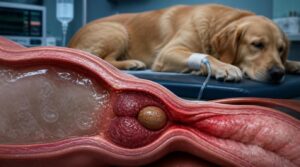
If a pit makes it past the throat, the danger doesn’t stop there. Once swallowed, it can lodge in the intestines and block normal digestion entirely.
Cherry pulp absorbs moisture as it moves through the gut, swelling in volume. That extra bulk — combined with fiber — can turn a partial blockage into a full one fast, triggering vomiting, dehydration, and the need for emergency veterinary care.
Small Dogs Face Higher Risk

Smaller breeds carry a steeper risk for one simple reason: body weight scales the danger. The same pit delivers a proportionally higher cyanide dose to a Chihuahua than a Labrador.
Their narrower airways mean a swallowed pit can partially block breathing faster, and rapid vomiting drains their limited fluid reserves quickly — making delays in veterinary care far more serious.
Cherry Poisoning Symptoms in Dogs

If your dog got into some cherries — pits and all — knowing what to watch for can make a real difference. Cyanide affects the body fast, and the signs tend to show up in very specific ways. Here’s what to look for.
Bright Red Gums
Bright red gums are one of the most alarming signs of cyanide poisoning. Cyanide blocks cells from using oxygen, so blood stays oxygen-rich and turns gum tissue a vivid red. This isn’t inflammation from gingivitis or plaque — it’s cellular hypoxia happening in real time.
If your dog’s gums look unusually bright or cherry-red, contact your veterinarian immediately.
Labored Breathing
Watch your dog’s chest and belly when breathing. Labored breathing can show up as uneven chest-and-abdomen movement, irregular rhythm, or visible neck muscle strain — signs the body is fighting for air.
Cyanide disrupts oxygen use at the cellular level, forcing the respiratory system to work harder. That’s why breathing rhythm changes matter. Contact your veterinarian immediately if breathing looks effortful or erratic.
Dilated Pupils
Your dog’s eyes can tell you a lot. Dilated pupils — larger than normal and slow to react to light — are a sign that cyanide is affecting the nervous system. This happens because toxins interfere with the cranial nerves that control pupil response.
Check both eyes; unequal pupil sizes signal something serious. Call your vet right away.
Tremors or Seizures
Cyanide disrupts the brain’s electrical signals, and that disruption shows up fast. You might notice rhythmic, uncontrolled shaking — a tremor — or something far more alarming: a sudden seizure with stiffening followed by jerking movements.
Unlike tremors, seizures arrive without warning. Your dog may lose awareness completely. Either symptom means cyanide toxicity has reached the nervous system. Call your vet immediately.
Collapse or Extreme Weakness
When the body can no longer compensate, collapse follows fast. Cyanogenic glycosides cause rapid deterioration by disrupting normal circulation and oxygen delivery.
Watch for these signs:
- Sudden extreme weakness
- Pale or mottled gums
- Cold, clammy skin
- Reduced consciousness
These point to dangerously low blood pressure and shock. Don’t wait — this is a true pet emergency.
Blockage Signs After Eating Pits

If your dog swallowed a cherry pit, a different kind of danger can quietly take hold — one that has nothing to do with cyanide. Blockages don’t always show up right away, but your dog’s body will start sending signals within a day or so.
Watch for these warning signs that something might be stuck.
Vomiting
Vomiting after pit ingestion isn’t just stomach upset — it signals serious gastrointestinal distress. Both toxicity and physical blockages rank among the top vomiting causes in this situation.
| Vomiting Pattern | Likely Cause | Next Step |
|---|---|---|
| Single episode | Nausea, mild irritation | Monitor for 2–4 hours |
| Repeated vomiting | Blockage or toxicity | Call your vet |
| Vomiting with diarrhea | Gut inflammation | Vet visit recommended |
Persistent vomiting drains fluids fast, making dehydration risks very real. That’s medical urgency — don’t wait it out.
Constipation
When a pit gets stuck, your dog’s digestive tract can slow to a crawl. Bowel frequency drops noticeably — fewer than normal movements, or none at all. Stool becomes hard and difficult to pass, and your dog may strain without producing much.
That’s colonic motility failing under pressure. A gastrointestinal obstruction doesn’t just block waste — it disrupts the entire digestive system.
Abdominal Pain
Constipation strains the whole system, and that strain often shows up as visible abdominal discomfort. Your dog may hunch, resist being touched near the belly, or shift restlessly without settling.
That’s visceral pain — a dull, poorly localized ache caused by pressure building inside a blocked gut. It isn’t subtle. If your dog’s belly looks swollen or feels tight, that’s a red flag.
Loss of Appetite
When a blockage builds pressure in the gut, eating becomes the last thing your dog wants to do. Refusing food entirely is one of the clearest signs something is wrong inside.
This isn’t pickiness. A blocked digestive system sends pain signals that shut down hunger cues naturally. If your dog skips meals after eating pits, don’t wait.
Reduced Stool Production
Skipping meals goes hand in hand with another quiet warning sign — fewer trips outside.
When a pit blocks the gut, stool can’t move through normally. Dietary fiber bulk, hydration levels, and activity all support regular bowel movement. A blockage overrides all of that. If your dog hasn’t produced a normal stool within 24 hours of eating pits, contact your vet.
How Many Cherries Can Dogs Eat?

Portion size really does matter if you’re sharing cherries with your dog. A little goes a long way, and the right amount depends mostly on how big your dog is. Here’s a simple breakdown to help you stay in the safe zone.
Extra-small Dogs: 1–2 Cherries
Tiny dogs carry tiny margins for error. If your dog weighs under 15 pounds, 1 cherry at most per treat occasion keeps things safe — and even that should happen no more than 2 to 3 times weekly.
- Offer cherry flesh only, never the pit
- Cut into small pieces to reduce choking risk
- Wash thoroughly before serving
- Remove stems and leaves entirely
- Treat as occasional, not routine
Small Dogs: 2–3 Cherries
Dogs weighing between 16 and 25 pounds can handle a slightly larger portion — 2 to 3 cherries, offered no more than 2 to 3 times weekly.
Still, keep each piece halved or quartered. Cherry pits and stems stay off the menu entirely, since even small amounts of cyanide compounds create real risk. Treats should never exceed 10% of your dog’s daily calories.
Medium Dogs: 3–4 Cherries
Medium-sized dogs — those weighing between 26 and 60 pounds — can safely enjoy 3 to 4 pit-free cherries, offered two to three times weekly at most.
Every pit, stem, and leaf must come off first. Treats like these should stay within 10% of daily calories, so keep portions small and watch for any vomiting or unusual sluggishness afterward.
Large Dogs: 5–6 Cherries
Large breeds — those between 61 and 90 pounds — can handle 5 to 6 pit-free cherries, offered two to three times weekly.
That’s still a small handful, not an open bowl. Cut each cherry into halves so your dog can chew safely. Keep all treats within 10% of daily calories, and watch for vomiting or sluggishness after any new fruit.
Extra-large Dogs: 6–8 Cherries
Extra-large dogs — those weighing 91 pounds or more — can safely enjoy 6–8 pit-free cherries two to three times weekly. That’s still a treat, not a staple.
Before serving, always:
- Remove every pit and stem
- Wash the fruit thoroughly
- Cut each cherry into small pieces
Keep portions within 10% of daily calories to avoid digestive upset.
Are Cherries Good for Dogs?

Fresh cherries aren’t just a safe treat when properly prepared — they actually bring a few small nutritional perks to the table. That doesn’t mean they’re a health food, but there are some real benefits worth knowing about. Here’s what cherries can offer your dog when you serve them the right way.
Antioxidants
Cherries contain natural antioxidants that help fight oxidative stress — the slow cellular damage caused by free radicals produced during normal metabolism.
| Antioxidant Type | Role in the Body | Source in Cherries |
|---|---|---|
| Flavonoids | Scavenge free radicals | Pigmented flesh |
| Phenolic acids | Donate electrons to reactive molecules | Skin and juice |
| Plant polyphenols | Support cellular redox balance | Whole fruit |
| Vitamin C | Assists enzymatic defense systems | Fresh cherry flesh |
| Anthocyanins | Suppress ROS formation | Deep red pigment |
Antioxidant bioavailability matters here — your dog’s body must absorb these compounds for any real benefit, which fresh fruit provides better than preserved forms.
Vitamin Content
Fresh cherries offer a modest mix of water-soluble vitamins, including vitamin C, which helps immune function and cellular defense. These vitamins absorb quickly but degrade with heat — so fresh cherries deliver more than cooked or preserved ones.
Your dog’s complete diet covers most vitamin needs, but a few fresh cherries add small, real nutritional value without displacing balanced meals.
Fiber
Vitamins aren’t the only thing cherries bring to the bowl. The flesh contains both soluble and insoluble fiber, which support your dog’s digestion in different ways:
- Soluble fiber slows digestion and steadies blood sugar
- Insoluble fiber adds stool bulk and prevents constipation
- Fermentable fiber feeds beneficial gut bacteria
Small portions from unprocessed cherries offer real, gentle digestive support.
Hydration
Water makes up most of cherry flesh, so each piece your dog eats adds a small hydration boost alongside nutrients. That moisture aids healthy circulation, helps the kidneys flush waste, and keeps digestion moving smoothly.
On a warm day or after a walk, even small amounts of water from food help your dog’s body regulate temperature and stay alert. It’s a quiet benefit, but a real one.
Treat Calorie Limits
Those small hydration wins still come with calories, so they count toward your dog’s daily treat budget — which should stay at 10% of total intake. Cherries are low-density, but portion size matters.
Measure servings by weight rather than guessing. If your dog gains weight, cut back treats first. Swapping cherries for part of a meal keeps the calorie balance predictable.
Cherries Dogs Should Never Eat

Not all cherries are created equal, and some forms are far more dangerous than plain fresh ones. Added sugars, preservatives, and unpitted fruit can all cause serious harm to your dog. Here are the cherry types you should always keep out of their reach.
Maraschino Cherries
Maraschino cherries might look harmless, but they’re far from a natural treat. They go through a brine bleaching process using calcium chloride and sulfur dioxide, stripping away nutrients and natural flavor. Then comes a sugar and dye soak — including Allura Red AC — adding about 42 grams of added sugar. That sugar content alone makes them unsafe for dogs.
Never give your dog maraschino cherries because:
- The artificial food dye offers zero nutritional value
- Extreme sugar content risks obesity and digestive upset
- Nutrient loss from processing makes them empty calories
Canned Cherries
Canned cherries seem like a convenient swap, but the packing liquid alone can carry more sugar than the fruit itself. Many brands use light or heavy syrup, which spikes calorie intake fast — a real concern if your dog has diabetes or weight issues.
Even pitted versions often contain preservatives and acidity regulators your dog simply doesn’t need. Skip them entirely.
Cherry Pie Filling
Cherry pie filling looks harmless, but it’s one of the most processed cherry products you can find. A standard batch packs around one cup of sugar for just four cups of cherries, plus cornstarch, lemon juice, and almond extract.
Your dog’s digestive system isn’t built for that load. Keep the pie for yourself.
Preserved Cherries
Preserved cherries go through an osmotic process that gradually replaces the fruit’s natural water with concentrated sugar syrup. That high sugar load puts unnecessary strain on your dog’s system.
Once opened, these products also lose sterility quickly, meaning bacteria can develop fast. Whether candied or syrup-packed, preserved cherries aren’t a safe treat option.
Cherries With Pits
Whole cherries with pits are one of the most common choking hazards for dogs.
- Cyanide poisoning can occur if a dog chews and crushes the pit
- Intestinal blockage is a real risk, especially in smaller breeds
- Intact pits can still lodge in the throat
- Stone fruit toxins form during digestion
- Even one pit can cause serious harm
Never serve unprepared cherries.
What if Your Dog Eats Cherries?

If your dog just snatched a few cherries off the counter, try not to panic — what you do next really does matter. A few quick steps can help you figure out whether there’s a real concern or just a minor hiccup. Here’s what to do right away.
Count How Many Eaten
Try to piece together exactly what your dog consumed — the number matters for figuring out cyanide poisoning or intestinal blockage risk.
| Dog Size | Known Eaten | Possible Eaten |
|---|---|---|
| Extra-small | 1–2 cherries | 3+ = urgent concern |
| Small | 2–3 cherries | 4+ = call vet now |
| Medium | 3–4 cherries | 5+ = call vet now |
| Large | 5–6 cherries | 7+ = call vet now |
| Extra-large | 6–8 cherries | 9+ = call vet now |
Check the starting quantity against what remains. Treat partially eaten cherries as fully consumed — the pit may already be gone. When uncertain, always report the maximum plausible number to your vet.
Check for Missing Pits
Look at every cherry that’s left. Count the pits you can account for — if the number doesn’t match what was in the bowl, assume your dog swallowed the rest. Split cherry halves can hide pit fragments on one side, so inspect each piece closely. Dispose of all pits immediately so your dog can’t find them.
Watch Symptoms Closely
Once you’ve accounted for the pits, shift your attention to your dog. Symptoms can develop over hours, not just minutes.
Watch for:
- Bright red gums or labored breathing — signs of cyanide toxicity
- Vomiting or diarrhea occurring repeatedly within the first day
- No stool production after 24 hours, which may signal a blockage
- Tremors, weakness, or collapse — treat these as emergencies
Call Your Veterinarian
If you’re at all unsure about what your dog ate — especially whether pits were involved — call your vet right away. Don’t wait for symptoms to appear.
Tell them your dog’s weight, breed, how many cherries were eaten, and what you’ve already noticed. If it’s after hours, most clinics have an emergency intake line or answering service that can guide you.
Choose Safer Fruit Treats
Once your dog is safe, it’s worth rethinking which fruits make the best regular treats. Blueberries, watermelon, and sliced apple (no seeds) are far simpler to prepare safely — no pits, no cyanide risk.
Wash them well, cut them small, and keep portions modest. Safer choices mean less worry every time you reach for a snack to share.
Frequently Asked Questions (FAQs)
Can dogs eat cherries?
Think of a cherry like a gift with a dangerous wrapper. The sweet flesh is mostly safe for dogs, but cherry pits, stems, and leaves release cyanide-related compounds that can seriously harm them.
Can dogs eat fruit?
Yes, dogs can eat many fruits safely. Remove seeds, pits, and peels before serving. Avoid grapes, raisins, and avocado entirely — they’re toxic. Stick to plain, fresh pieces cut small enough to prevent choking.
Can dogs eat maraschino cherries?
Maraschino cherries aren’t safe for dogs. Each one contains about 2 g of added sugar, and the preservatives and additives used in processing don’t belong in your dog’s diet.
What happens if a dog eats a cherry pit?
A swallowed cherry pit releases amygdalin, which metabolizes into cyanide and blocks cells from using oxygen. It can also cause a digestive blockage. Call your vet immediately if your dog swallows one.
What words do dogs love to hear the most?
Like a secret language only your dog understands, certain words carry real power. "Walkies" tops the list, spiking heart rates to 156 BPM, followed by "dinner," "treat," and "fetch."
Can dogs eat cherries from cyanide?
Cherry pits contain amygdalin, a compound that converts to cyanide during digestion. This blocks cells from using oxygen properly. The flesh alone is safe, but pits, stems, and leaves make cherries genuinely dangerous.
How many cherry pits can a dog eat?
The answer is zero — no safe number, no acceptable dose, no threshold worth testing. Even one chewed pit can release enough cyanide to endanger a small dog.
What happens if a dog eats a cherry?
What happens depends on what got eaten. The cherry flesh is usually harmless, but pits, stems, or leaves contain cyanide compounds that block how cells use oxygen, which can turn serious fast.
How many cherries can a dog eat a day?
Picture a small treat bowl next to your dog’s meal — only a few bright red pieces. Daily cherry limits depend on body weight: tiny dogs get 1, while extra-large breeds can have up to
Can dogs eat cherries before bed?
It’s best to skip cherries at bedtime. Digestive upset overnight means you won’t catch early symptoms, and high sugar content can disturb your dog’s gut while they sleep. Always feed cherry treats earlier in the day.
Conclusion
Funny how we’ll pit-check a cherry for thirty seconds but hand a dog a grape without blinking. Can dogs eat fresh cherries—yes, but only the flesh, prepared properly and given sparingly.
The pit isn’t just a choking hazard; it’s a slow-release threat your dog can’t warn you about. One pit, one problem. Strip the fruit bare, watch the portion, and when in doubt, call your vet. That’s the whole rule.
- https://www.petpoisonhelpline.com/poison/cherry
- https://www.petmd.com/dog/nutrition/can-dogs-eat-cherries
- https://www.gardenia.net/guide/can-dogs-eat-cherries
- https://www.akc.org/expert-advice/nutrition/can-dogs-have-cherries
- https://www.aspca.org/pet-care/aspca-poison-control/toxic-and-non-toxic-plants/cherry