
This site is supported by our readers. We may earn a commission, at no cost to you, if you purchase through links.

Your dog spots that slice of American cheese from across the room and suddenly becomes your most devoted companion.
It’s hard to say no to that face—but before you hand over a corner of your grilled cheese, it’s worth knowing what’s actually in that processed square.
American cheese packs nearly 460 mg of sodium per slice and close to 9 grams of fat per ounce, numbers that matter more than most pet owners realize.
The good news is that small amounts won’t send your dog to the vet, but portion size and frequency make all the difference between a harmless treat and a habit that quietly causes problems.
Table Of Contents
- Key Takeaways
- Can Dogs Eat American Cheese?
- Nutritional Content of American Cheese
- Risks of Feeding American Cheese to Dogs
- Managing Lactose Intolerance in Dogs
- Potential Allergic Reactions to Cheese
- Portion Size Guidelines for Dogs
- Healthier Cheese Alternatives for Dogs
- Using Cheese for Dog Training and Medication
- Top Cheese-Flavored Dog Treats
- Frequently Asked Questions (FAQs)
- Is American cheese ok for dogs to eat?
- How many slices of cheese can I give my dog?
- Can dogs eat cheese?
- How much cheese can one eat in a day?
- Are all cheeses healthy for dogs?
- Can a dog eat a cheese plate?
- Can dogs eat cream cheese?
- Can a low Fat Dog Eat Cheese?
- What happens if my dog eats American cheese?
- What kind of cheese can dogs eat?
- Conclusion
Key Takeaways
- American cheese is safe for dogs in tiny amounts, but its high sodium (up to 460 mg per slice) and fat content make it an occasional treat, not a daily habit.
- Portion size depends on your dog’s weight — small dogs should stick to 1–2 pea-sized pieces, while larger dogs can handle up to 8 small cubes a few times a week.
- Watch your dog for up to 48 hours after eating cheese, since lactose sensitivity can trigger loose stools, bloating, or vomiting, especially in breeds like Bulldogs or Akitas.
- Healthier swaps like cottage cheese, fresh mozzarella, or Swiss cheese deliver similar rewards with less sodium, lower lactose, and fewer additives.
Can Dogs Eat American Cheese?

Yes, dogs can eat American cheese, but there’s a bit more to it than just tossing them a slice.
It’s fine as an occasional treat, though American cheese safety tips for dogs can help you figure out the right amount for your pup.
It’s processed, salty, and not exactly designed with your pup’s stomach in mind.
Here’s what you need to know before making it a regular part of their treat rotation.
Safety of American Cheese for Dogs
Yes, your dog can have a small piece of American cheese — but think of it as an occasional indulgence, not a staple.
The safety of feeding American cheese to dogs depends heavily on portion size limits and your dog’s individual health. Watch for these four key concerns:
- Sodium Overload — one slice packs up to 460 mg
- Excess Fat Issues — nearly 9 grams per ounce
- Lactose Reaction — digestive upset within 24 hours
- Preservative Irritation — artificial additives can upset sensitive stomachs
For dogs sensitive to the high sodium content, choose low‑sodium options such as cottage cheese.
Occasional Treat Guidelines
Think of American cheese like a weekend treat — fine occasionally, but not every day. Moderation is the real key here, and portion size guidelines for dogs make it simple to follow. Be aware of the lactose content concerns for dogs prone to intolerance.
| Dog Size | Max Per Session |
|---|---|
| Under 10 lbs | 1–2 pea-sized pieces |
| 11–50 lbs | 2–4 small cubes |
| Over 50 lbs | 5–8 cubes |
Stick to few times weekly for dog health, and always adjust weight-based limits for overweight or senior dogs.
Veterinary Recommendations
Most vets give American cheese a cautious thumbs-up — tiny amounts, healthy dogs only.
Their top three recommendations usually look like this:
- Follow low-fat guidelines and sodium restrictions for dogs with heart or kidney issues.
- Start with lactose testing and allergy screening before making cheese a regular treat.
- Prioritize weight management by keeping cheese additives and processed varieties minimal in your dog’s diet.
Nutritional Content of American Cheese

Before you share a slice with your pup, it helps to know exactly what’s inside little square of processed cheese.
American cheese might seem harmless, but its nutritional profile tells a more complicated story.
Here’s a closer look at the key numbers worth knowing.
Protein and Calcium Levels
American cheese packs a solid nutritional punch in a small package. One ounce delivers 5 grams of protein to support muscle development, plus an impressive 296 milligrams of calcium — that’s real bone strength support for your dog.
Its amino acid profile, including leucine and glutamic acid, aids growth support and mineral balance.
Not bad for something that fits in your palm.
Calorie Count Per Slice
One slice of American cheese carries about 104 calories, with roughly 75 percent coming from fat content alone. That’s a surprising slice energy density for something so small.
For calorie tracking purposes, think of it as a concentrated snack, not a meal. Calorie portioning matters here, so even a half-slice counts toward your dog’s daily nutritional content and calorie management plan.
Sodium and Fat Content
A single ounce of American cheese packs a surprising nutritional punch — and not always in your dog’s favor.
Here’s what’s actually inside that little slice:
- High sodium — up to 400mg per slice, well above safe sodium intake limits for small dogs
- Saturated fat — 5 grams per ounce, raising Heart Health concerns with regular feeding
- Total Fat Types — 9 grams combined, including trans fats
- Caloric Density — 104 calories, making these calorie dense treats add up fast
- Weight Management — even half a slice impacts fat content goals daily
Risks of Feeding American Cheese to Dogs

American cheese isn’t exactly a health food for humans, and the same goes for your dog.
If you want a better snack option, these homemade dog treats made with rolled oats give you full control over what goes into your pup’s mouth.
A few bites here and there might seem harmless, but there are some real concerns worth knowing before you tear off that next slice.
Here’s what to watch out for.
High Sodium Concerns
That innocent-looking slice of American cheese? It carries 250 to 400 mg of sodium — and that adds up fast.
High sodium raises Blood Pressure Impact risks and causes Thirst and Urination spikes that leave your dog restless.
Sodium Monitoring matters most for dogs with kidney disease, where even small amounts cause serious Kidney Strain.
| Sodium Risk | What Happens |
|---|---|
| High sodium intake | Blood pressure climbs |
| Excess thirst | Constant urination |
| Kidney strain | Worsening damage |
| Salt poisoning signs | Vomiting, tremors |
| Sodium poisoning | Emergency vet visit |
Saturated Fat and Obesity Risk
Each slice of American cheese packs 60–70 calories, mostly from saturated fat — and those calories have serious Calorie Density that sneaks up on your dog’s waistline fast.
Repeated high fat treats don’t just cause Weight Gain Mechanisms to kick in; they also affect your dog’s Metabolic Impact over time.
Watch for these obesity in dogs warning signs:
- Ribs that are hard to feel under extra padding
- Slower movement or reluctance to exercise
- Body Condition Scoring showing a rounder, less defined shape
- Weight gain that builds despite normal meals
- Poor Exercise Compensation, meaning activity no longer offsets intake
Dog diet guidelines exist for a reason — small breeds especially gain weight quickly, even from quarter-slice portions.
Artificial Additives and Preservatives
Processed cheese isn’t just cheese — it’s a cocktail of emulsifiers, preservatives, and colorants like annatto. These cheese additives raise real processed food concerns for your dog.
Emulsifier Digestion issues can quietly upset the gut, while Preservative Sensitivity and Colorant Allergy reactions may show up as skin irritation or digestive distress.
Food additives for pets deserve scrutiny, and American cheese has plenty worth watching.
Managing Lactose Intolerance in Dogs

Most dogs don’t handle dairy well, and cheese is no exception.
If your dog got into some American cheese, it’s worth knowing what to watch for.
Here are the key signs that lactose intolerance might be causing trouble.
Signs of Lactose Sensitivity
Most dogs have some degree of lactose intolerance, and American cheese can quietly trigger it. Symptoms usually show up within 30 minutes to 12 hours. Watch for these identifying signs of dairy intolerance:
- Loose stools or increased bathroom urgency
- Abdominal gurgling, bloating, or restlessness and pacing
- Lips licking, excessive thirst, or low energy
Gastrointestinal upset can sneak up fast.
Identifying Digestive Upset
Once digestive upset starts, the signs come in waves.
Stool Consistency Changes—like loose, watery, or mucus‑streaked stools—are usually the first clue that something’s off.
Vomiting Triggers often follow, along with Nausea Behaviors such as lip‑licking or restlessness.
Watch for Abdominal Bloating Indicators such as a tight belly or the “praying position.”
Dehydration Warning Signs, including dry gums, can appear quickly with ongoing gastrointestinal upset.
Monitoring After Cheese Consumption
After spotting those digestive issues, keep watching your pup for up to 48 hours. Monitoring dog health after cheese consumption means tracking three things:
- Digestive Timing — diarrhea can hit within 12 hours
- Behavioral Changes and Skin Reactions — lethargy, itching, or hot spots signal allergic reactions
- Hydration Checks — moist gums mean you’re good
Veterinary Alerts apply if vomiting persists or dry gums appear.
Potential Allergic Reactions to Cheese

Some dogs don’t just struggle with lactose — they can have a full-on allergic reaction to cheese itself.
It’s less common than digestive upset, but it’s worth knowing what to watch for.
Here’s what the signs look like, when to call your vet, and whether your dog’s breed plays a role.
Common Allergy Symptoms
Allergic reactions to cheese don’t always look the same in every dog. Skin Itching is often the first red flag—your pup scratching their ears, belly, or paws repeatedly. Gastrointestinal Distress, Ear Infections, Behavioral Changes, and Secondary Infections can follow.
| Symptom Category | What You’ll Notice | When It Appears |
|---|---|---|
| Skin Itching | Red, inflamed patches | Within hours |
| Gastrointestinal Distress | Diarrhea, vomiting, bloating | Within 12 hours |
| Ear Infections | Discharge, head shaking | Days after exposure |
| Behavioral Changes | Restlessness, irritability, lethargy | Alongside physical symptoms |
Recognizing food allergy symptoms early helps protect your dog’s diet and overall health—always seek veterinary advice if symptoms persist.
When to Contact a Veterinarian
Some reactions need more than watchful waiting. Call your vet right away if you notice any of these after your dog eats American cheese:
- Persistent Vomiting or Severe Diarrhea lasting beyond 12 hours
- Lethargy, Weakness, or Abdominal Pain Signs developing within 24 hours
- Sudden Collapse or signs of pancreatitis like hunching and fever
Timely veterinary care makes all the difference for your dog’s health.
Breed-Specific Sensitivities
Not every dog deals with American cheese the same way. Breed-specific sensitivities play a real role here.
French Bulldogs and Westies face breed sodium sensitivity risks due to their small size. Bulldogs and Beagles carry higher pancreatitis risk from high-fat treats. Meanwhile, Akitas and Shiba Inus show clear breed lactose tolerance issues. Knowing your dog’s breed helps you make smarter, safer choices.
Your dog’s breed isn’t just identity—it’s a health blueprint that shapes how safely they handle every treat
Portion Size Guidelines for Dogs

Even the best treats need a limit, and cheese is no exception.
How much American cheese your dog can safely eat really depends on a few key factors.
Here’s what you need to know about keeping portions in check.
The 10% Treat Rule
Think of cheese as a budget item in your dog’s daily diet — and that budget is slim. The 10 rule keeps treats, including cheese, at no more than 10% of daily calories.
This treat calorie allocation protects against obesity, promotes healthy body condition scoring, and keeps portion size guidelines for dogs on track. Simple moderation goes a long way.
Adjustments by Dog Size and Weight
Not all dogs are built the same, and portion size guidelines based on dog weight make a real difference.
Small dogs weighing under 20 pounds do best with 1 to 2 pea-sized pieces, while medium dogs handle 3 to 4 cubes. Large dogs can manage up to 6 cubes.
Weight-based cube count and size-scaled sodium limits protect your dog’s health without skipping the fun.
Frequency of Cheese Treats
Healthy adult dogs do well with cheese 2 to 3 times per week, but that’s not a one-size-fits-all number. Age-based frequency matters — seniors should drop to once weekly or less, while active adults handle occasional cheese treats more easily.
Size-based limits, your dog’s activity level, and veterinary monitoring all shape the right balance. Moderation is the real guide here.
Healthier Cheese Alternatives for Dogs
American cheese isn’t the worst thing your dog could snack on, but it’s definitely not the best either.
If you want to share a cheesy treat without the extra sodium and additives, a few better options are worth keeping on your radar. Here are some healthier cheeses your dog will probably love just as much.
Cottage Cheese

Cottage cheese is one of the best low sodium cheese picks you can add to your dog’s diet. It’s packed with about 28 grams of protein per cup, giving your pup a solid calcium boost for strong bones.
Live culture varieties even offer probiotic benefits that support digestive health. For dogs managing their weight, its low-fat options and high protein make it a smart, vet-friendly treat.
Fresh Mozzarella

Fresh mozzarella is a calorie-light treat your dog will love without the high sodium that makes American cheese a concern.
It’s one of the gentler options for dogs with lactose intolerance, since lower lactose levels make it easier on sensitive stomachs.
With 6 grams of protein per ounce and minimal fat, fresh mozzarella fits naturally into a balanced dog diet.
Swiss and Cheddar Cheese

Swiss cheese and cheddar cheese earn their place in a balanced dog diet thanks to fermentation reduction, which brings lactose down to under 1 percent.
Swiss cheese delivers impressive calcium density — about 140 mg per ounce — for solid bone health.
Aged cheddar also brings zinc support for skin and coat, plus solid protein quality, all with naturally lower sodium than American cheese.
Goat Cheese

Goat cheese is worth keeping in mind, especially if your dog struggles with lactose intolerance.
It naturally contains lower lactose than cow’s milk cheeses, making it gentler on sensitive stomachs.
You also get real nutritional value — Vitamin A for immunity, calcium for Bone Support, and medium-chain fatty acids that aid digestion.
Just watch safe cheese portions, since the fat content can still raise pancreatitis risk.
Using Cheese for Dog Training and Medication

Cheese isn’t just a tasty snack — it’s one of the most useful tools you can have in your training routine. Whether you’re rewarding good behavior or sneaking in a pill, knowing how to use it smartly makes all the difference.
Here’s what you need to keep in mind.
Cheese as a High-Value Reward
Few training rewards beat cheese for grabbing your dog’s attention quickly. Its Aroma Appeal is practically magnetic — dogs can sniff it out from across a yard. That’s what makes it such a powerful high‑value treat for Distraction‑overcoming moments.
- Quick Consumption keeps sessions moving — soft bites disappear in seconds.
- Fat Motivation makes it rank higher than most treats in your dog’s mind.
- Portion Precision matters — stick to pea‑sized pieces for smart cheese portion size control.
Concealing Pills Safely
American cheese’s soft, pliable texture makes it a go-to for using cheese to conceal medication for pets. Cheese Texture Modification is simple — microwave a slice for 10 seconds, then use Pill Wrapping Techniques to mold it snugly around the pill. Size Calibration matters: keep each ball under one inch, so your dog swallows it whole without sniffing out the surprise.
| Step | Technique | Why It Works |
|---|---|---|
| Warm it | Temperature Control — 10 seconds microwave | Increases pliability for wrapping |
| Wrap it | Seal edges completely | Flavor Masking hides the pill |
| Size it | No larger than 1 inch | Encourages whole swallowing |
Always confirm the medication label allows food administration first — some antibiotics bind to calcium, making dairy a poor choice.
Calorie Management During Training
Calorie budgeting keeps training fun without sneaking extra pounds onto your pup. A 20-pound dog gets roughly 33 to 40 treat calories daily, so even a few cheese pieces adds up fast.
Use weight-based allowances to size portions right — pea-sized for small dogs, a few quarter-inch cubes for larger ones. Always practice kibble offsetting: whatever you give as a high-value training treat, subtract from their next meal.
Top Cheese-Flavored Dog Treats
If your dog goes wild for cheese but you’d rather skip the sodium overload of American cheese, purpose‑made cheese‑flavored treats are worth a look.
These options give your pup that irresistible flavor while being formulated with dogs in mind. Here are a few worth keeping on your radar.
1. Greenies Pill Pockets Cheese Flavor Dog Treats
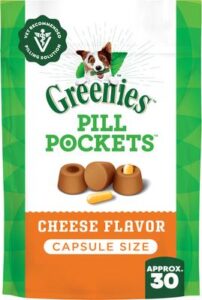
If your dog turns into a detective, the moment you try hiding a pill, Greenies Pill Pockets Cheese Flavor Dog Treats might be your best ally. Each soft treat has a built-in pouch that wraps snugly around small tablets, and the blended cheese-and-chicken flavor masks both the smell and taste of most medications.
At just 10 calories per treat, they won’t throw off your dog’s diet. They’re suitable for all breeds and sizes, making pill time genuinely stress‑free.
| Best For | Dog owners who struggle to get their pup to take medication without a fight. |
|---|---|
| Cheese Flavor | Yes (disguised) |
| Calorie Count | 10 per treat |
| Artificial Additives | None |
| Breed Suitability | All breeds |
| Special Diet | Natural, Pea-Free |
| Form | Treats |
| Additional Features |
|
- Real chicken is the first ingredient, so most dogs go crazy for the taste
- The built-in pouch makes wrapping a pill quick and easy — no mess, no stress
- Only 10 calories per treat, so you’re not wrecking their diet every time they need meds
- Not great for larger pills — the pouch is built for small tablets
- Contains wheat, so dogs with grain sensitivities may need to sit this one out
- At $8.52 a pack, the cost can add up if your dog is on daily medication
2. Pet MD Cheese Bacon Pill Paste

Pet MD Cheese Bacon Pill Paste works like a tiny moldable blanket for medication. Just pinch off a small amount, wrap it around any pill or capsule, and hand it over — your dog won’t suspect a thing.
The cheese and bacon flavor is strong enough to cover most medication scents, and at 9 calories per serving, it won’t sabotage your pup’s diet. It’s especially handy if your dog takes daily medication long-term or often sniffs out hidden pills.
| Best For | Dogs on daily medication who are sneaky about swallowing pills, especially those on weight management plans. |
|---|---|
| Cheese Flavor | Yes (cheese & bacon) |
| Calorie Count | Low-calorie formula |
| Artificial Additives | None |
| Breed Suitability | All breeds |
| Special Diet | Weight loss friendly |
| Form | Paste |
| Additional Features |
|
- Wraps around any pill size easily — works like moldable clay
- Cheese and bacon flavor is strong enough to mask most medication smells
- Only 9 calories per serving, so it won’t throw off a diet
- Some flavors can be drier and harder than expected
- Picky dogs may still refuse it based on texture
- Consistency can vary from jar to jar
3. Pupford Cheddar Crunchies Dog Treats
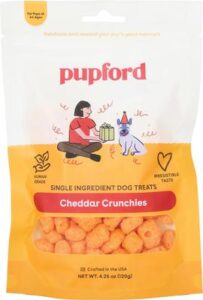
If your pup goes absolutely wild for cheese, Pupford Cheddar Crunchies are worth keeping in your treat pouch. They’re made from a single ingredient — 100% real cheddar cheese — with no fillers, grains, or artificial anything.
Each piece is about the size of a penny and clocks in at just 7 calories, making portion control easy. The freeze-dried crunch also gives teeth a light scrub while your dog chews. Great for training, especially with picky eaters.
| Best For | Dogs who love cheese and owners looking for a simple, clean single-ingredient treat for training or everyday snacking. |
|---|---|
| Cheese Flavor | Yes (cheddar) |
| Calorie Count | Not specified |
| Artificial Additives | None |
| Breed Suitability | All breeds |
| Special Diet | Grain-Free, Limited Ingredient |
| Form | Treats |
| Additional Features |
|
- Just one ingredient — real cheddar cheese — so you always know exactly what your dog is eating
- Low calorie at 7 calories per piece, making it easy to treat freely without overdoing it
- No grains, fillers, or artificial anything, which is gentle on sensitive stomachs
- Not a good fit for pups with dairy allergies or sensitivities
- Single-ingredient formula means it’s not bringing much nutritional variety to the table
- Plastic packaging might be a turnoff for eco-conscious pet owners
4. Cloud Star Cheddar Crunchy Training Treats
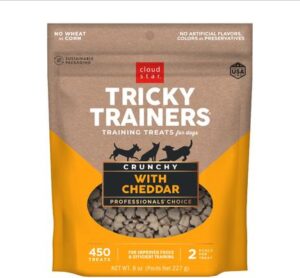
Cloud Star Cheddar Crunchy Training Treats are a smart pick if you’re working on obedience or just want a reliable everyday reward. Made with real cheddar as the first ingredient, they’re free from wheat, corn, soy, and artificial additives — good news if your dog has a sensitive stomach.
At just 2.5 calories per treat, you can use them generously without stressing over weight gain.
The crunchy texture also works great in puzzle feeders or snuffle mats for some extra mental enrichment.
| Best For | Dog owners who train regularly and want a low-calorie, real-ingredient reward that works for dogs of all ages and sizes. |
|---|---|
| Cheese Flavor | Yes (cheddar) |
| Calorie Count | 2 per treat |
| Artificial Additives | None |
| Breed Suitability | All breeds |
| Special Diet | Limited Ingredient |
| Form | Treats |
| Additional Features |
|
- Made with real cheddar cheese — most dogs go crazy for the smell and taste
- Only 2 calories per treat, so you can reward freely without worrying about weight
- No wheat, corn, soy, or artificial junk — great for dogs with sensitive stomachs
- Some dogs might find the size a bit big for rapid-fire training sessions
- Only one flavor, so picky dogs might lose interest over time
- A little pricier than your average training treat
Frequently Asked Questions (FAQs)
Is American cheese ok for dogs to eat?
Yes, American cheese is generally safe for dogs in very small amounts. It’s not toxic, but the high sodium and fat content mean it should only be an occasional treat.
How many slices of cheese can I give my dog?
Most dogs do fine with just one thin slice a few times a week. Stick to the 10% rule — that’s about 40 to 100 calories from treats daily, depending on your dog’s size.
Can dogs eat cheese?
Sure, cheese won’t turn your dog into a four-legged dairy connoisseur, but yes, your pup can eat it — just keep it small, occasional, and far from their daily bowl.
How much cheese can one eat in a day?
Most adults do fine with about 30 to 40 grams of cheese daily — roughly a matchbox-sized chunk. Going beyond 40 grams regularly can raise your cardiovascular risk and pack on unwanted calories.
Are all cheeses healthy for dogs?
Not all cheeses are created equal for dogs.
Blue cheese is genuinely dangerous, while aged options like cheddar or Swiss are much safer.
check what’s in the cheese before sharing.
Can a dog eat a cheese plate?
A cheese plate looks like a dream, but it’s actually a minefield for your dog.
Blue cheese, grapes, nuts, and cured meats — all common on cheese plates — can be seriously toxic or even deadly.
Can dogs eat cream cheese?
Plain cream cheese is fine for dogs in tiny amounts. Skip flavored kinds since they often have garlic or onions, which are toxic.
Stick to a pea-sized portion and watch for tummy troubles.
Can a low Fat Dog Eat Cheese?
Yes, but carefully.
If your dog is on a low fat diet, American cheese isn’t the best pick.
Stick to tiny portions—pea-sized and consider lower-fat options like cottage cheese instead.
What happens if my dog eats American cheese?
small piece here and there usually won’t cause serious harm, but expect some digestive grumbling — loose stools, gas, or mild vomiting — especially if your dog is lactose-sensitive.
Watch them closely for the next few hours.
What kind of cheese can dogs eat?
Dogs do best with low-lactose options like cheddar, mozzarella, Swiss, or cottage cheese. These are gentler on their stomachs and safer as occasional treats.
Conclusion
Like salt on a wound, too much American cheese can quietly turn a sweet gesture into a health problem for your dog.
The answer to whether dogs can eat American cheese is yes, but only in small, infrequent amounts. Keep portions tiny, watch for any digestive changes, and consider lower-sodium alternatives when possible. Your dog doesn’t need much to feel rewarded—a thumbnail-sized piece says “I love you” just as loudly as the whole slice.
- https://petzyo.com.au/blogs/health-wellbeing/can-dogs-eat-cheese
- https://www.pumpkin.care/post/can-dogs-eat-cheese
- https://www.strongrfastr.com/foods/american-cheese-1042
- https://www.houndsy.com/blogs/modern-tails/how-much-cheese-can-a-dog-eat-a-comprehensive-guide-for-pet-owners
- https://nutrition.umd.edu/label.aspx?RecNumAndPort=220082%2A1