
This site is supported by our readers. We may earn a commission, at no cost to you, if you purchase through links.

Around 1 in 5 dogs develops some form of digestive sensitivity during their lifetime—but most owners spend months cycling through random kibble bags before realizing the problem has a pattern.
A dog with a sensitive stomach isn’t just being picky. Chronic loose stools, post-meal vomiting, and relentless gas often trace back to specific ingredients, protein types, or fat levels that the gut simply can’t handle well. The difference between a dog that thrives and one that suffers through every meal usually comes down to what’s actually in the bowl.
Picking the best dog food for sensitive stomach gets complicated fast. Marketing language like "gentle" or "easy to digest" means nothing without the nutritional data to back it up. What follows cuts through that noise—grounded in digestibility research, AAFCO standards, and the kind of ingredient scrutiny that actually moves the needle for dogs with real digestive struggles.
Table Of Contents
- Key Takeaways
- How We Chose Our Picks
- Top 9 Sensitive Stomach Dog Foods
- 1. Honest Kitchen Human Grade Dog Food
- 2. JustFoodForDogs Balanced Remedy
- 3. Open Farm Digestive Health Dog Food
- 4. Hills Digestive Care Dog Food
- 5. Dr Harvey Canine Health Base Mix
- 6. Royal Canin Large Digestive Care
- 7. Purina Pro Plan Sensitive Skin Salmon
- 8. Purina One Digestive Health Dog Food
- 9. Purina One Sensitive Stomach Salmon
- What Sensitive Stomach Means
- Common Digestive Triggers in Dogs
- Signs Your Dog Needs Digestive Food
- Ingredients That Support Gentle Digestion
- Ingredients Sensitive Dogs Should Avoid
- Dry, Wet, and Prescription Options
- How to Switch Food Safely
- Frequently Asked Questions (FAQs)
- What foods are good for dogs with sensitive tummies?
- What are signs of digestive issues in dogs?
- What food is best for dogs with sensitive stomachs?
- What dog food is least likely to cause diarrhea?
- What is the most digestible dry dog food?
- What is the difference between perfect digestion and sensitive stomach?
- How often should I feed my sensitive-stomach dog?
- Can exercise impact my dogs sensitive stomach?
- Are there any natural remedies for sensitive stomachs?
- How long does it take to see improvement?
- Conclusion
Key Takeaways
- Around 1 in 5 dogs develop digestive sensitivity, and identifying the specific trigger—whether a protein, fat level, or ingredient like corn or wheat—matters far more than simply switching to any food labeled "gentle" or "easy to digest."
- The most reliable sensitive-stomach formulas share a few key traits: a named, highly digestible protein (like salmon or lamb) listed first, limited ingredients, added prebiotic fiber, and a valid AAFCO nutritional adequacy statement on the label.
- Switching foods too quickly is one of the most common reasons flare‑ups happen, so a structured ten‑day transition—starting at 25% new food and slowly increasing—gives your dog’s gut bacteria and digestive enzymes time to adjust.
- When symptoms like vomiting, loose stools, or blood in the stool persist beyond 48 hours or worsen rapidly, stop the new food and call your vet early rather than waiting to see if things resolve on their own.
How We Chose Our Picks

Picking the right food for a sensitive stomach isn’t guesswork — it takes a clear set of standards. We evaluated each formula against five key criteria to make sure every pick actually earns its place on this list. Here’s exactly what we looked at.
Each standard traces back to real-world results, drawing on the same rigorous testing behind our guide to natural dog food for sensitive stomachs.
Veterinarian-backed Formulas
Not every food labeled "vet formulated" means the same thing. Veterinarian formulation means a vet helped balance nutrients across the full ingredient list — that’s different from a product simply being "vet recommended."
When evaluating our picks, we looked for foods with a nutritional adequacy statement on the label, confirming the diet is complete and balanced, not just professionally endorsed.
A “vet recommended” claim must be backed by a statistically valid survey requirement.
Digestible Protein Quality
Protein quality isn’t just about the percentage on the label — it’s about what your dog’s body can actually use.
We prioritized foods with highly digestible protein sources whose amino acid profiles closely match what dogs need, because a protein that passes through unabsorbed helps no one. True ileal digestibility and processing methods both shaped our selections.
Fiber and Probiotic Support
Digestible protein gets your dog’s gut started, but fiber and probiotics keep it running smoothly.
Soluble fibers like beet pulp and inulin act as fuel for beneficial bacteria, which ferment them into short-chain fatty acids that support the gut lining. Paired with strains like Lactobacillus, this symbiotic feeding approach helps regulate stool water content and keeps microbiome balance consistent day to day.
AAFCO Nutritional Adequacy
A label that says "complete and balanced" means the food meets AAFCO’s nutrient profiles for a specific life stage — adult maintenance requires at least 18% protein and 5.5% fat on a dry‑matter basis.
We only included foods with a valid nutritional adequacy statement, whether backed by feeding trials or formulation analysis, so your dog isn’t missing anything critical long‑term.
Value and Availability
Price matters, especially when sensitive stomach dog food can cost 1.5 to 3.5 times more per cup than standard formulas.
We looked for picks available through major retailers, veterinary clinics, and online subscriptions — because a limited ingredient diet your dog needs shouldn’t require a treasure hunt.
Auto-ship programs can trim costs noticeably, making digestive health nutrition more sustainable long-term.
Top 9 Sensitive Stomach Dog Foods
These nine foods stand out because they’re built around ingredients that actually agree with sensitive stomachs — not just marketing claims. Each one brings something different to the table, whether that’s novel proteins, added probiotics, or a prescription-grade formula. Here’s what made the cut.
1. Honest Kitchen Human Grade Dog Food
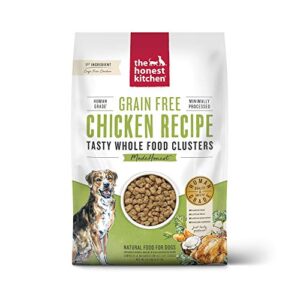
The Honest Kitchen stands out by using human-grade ingredients — cage‑free chicken, oats, and live probiotics — processed in facilities held to human food safety standards. That’s a meaningful distinction for dogs with sensitive stomachs, since ingredient quality directly affects digestibility.
The formula skips meat meals, fillers, and artificial preservatives entirely. Salmon oil and L‑carnitine round out the nutrient profile, supporting skin, coat, and metabolism.
At $93.09 for 20 lbs, it’s a premium commitment, but the transparency in sourcing is hard to argue with.
| Best For | Adult and senior dog owners who prioritize ingredient quality and want a digestive-friendly, human-grade kibble — especially for dogs with sensitive stomachs, skin issues, or weight concerns. |
|---|---|
| Primary Protein | Cage-free chicken |
| Food Form | Dry kibble |
| Life Stage | Adult & senior |
| Digestive Support | Live probiotics |
| Grain Status | Gluten-free |
| Price | $93.09 |
| Additional Features |
|
- Made with human-grade, cage-free chicken and whole ingredients processed to human food safety standards — no meat meals, fillers, or artificial preservatives
- Live probiotics and minimally processed clusters support easy digestion, making it a solid pick for sensitive or allergy-prone dogs
- Salmon oil and L-carnitine provide added benefits for skin, coat health, and metabolism support
- At $93.09 for a 20 lb bag, it’s a significant investment compared to standard dry dog foods
- Not suitable for puppies or breeding dogs — formulated exclusively for adults and seniors
- Requires careful dry storage, as moisture can degrade the kibble’s texture and shelf life
2. JustFoodForDogs Balanced Remedy
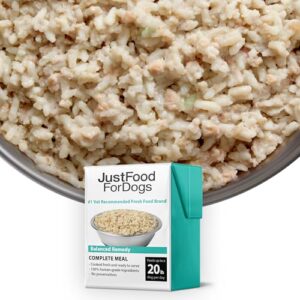
Turkey and rice might sound plain, but that simplicity is exactly the point. JustFoodForDogs Balanced Remedy uses human-grade ground turkey and white rice as its entire foundation — no fillers, no byproducts, no artificial preservatives.
The low-fat, limited-ingredient formula targets dogs prone to pancreatitis or renal sensitivities. At 300–400 kcal per cup, portioning stays straightforward. Shelf-stable Tetra Pak packaging makes it practical for travel or boarding, too.
The $89.88 price per carton isn’t small, but for a clinically researched, vet-recommended option, it’s defensible.
| Best For | Dogs with sensitive stomachs, pancreatitis, or renal issues who need a clean, limited-ingredient diet that’s easy to digest. |
|---|---|
| Primary Protein | Turkey |
| Food Form | Wet carton |
| Life Stage | Adult |
| Digestive Support | Low-fat formula |
| Grain Status | Rice-based |
| Price | $89.88 |
| Additional Features |
|
- Human-grade ingredients gently cooked to retain nutrients, with no fillers, byproducts, or artificial preservatives
- Shelf-stable Tetra Pak packaging makes it convenient for travel, boarding, or on-the-go feeding
- Vet-recommended and clinically researched, with claimed 40% higher digestibility than conventional kibble
- At $89.88 per carton, the cost adds up fast — especially for larger dogs or daily feeding
- Single protein source and high rice content may not suit every dog’s nutritional needs or taste preferences
- Limited vegetable variety means owners may need to supplement for a broader micronutrient profile
3. Open Farm Digestive Health Dog Food
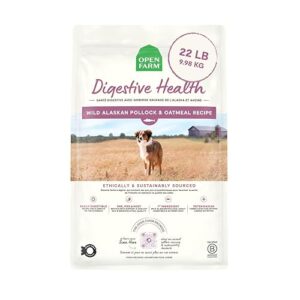
Wild Alaskan pollock leads the ingredient list here — a novel protein that sidesteps the chicken and beef sensitivities many dogs carry.
Open Farm pairs it with chicory root, FOS, and probiotics to support gut balance from multiple angles, not just one.
The grain‑free, poultry‑free formula also skips corn, soy, peas, and legumes.
At $98.99 for 22 lbs, it’s a premium buy, and the strong fish scent won’t win over every dog — but for sensitive stomachs, the traceability and formulation are hard to argue with.
| Best For | Dogs with sensitive stomachs, food allergies, or digestive issues who need a novel protein source free from common irritants like chicken, beef, grains, and legumes. |
|---|---|
| Primary Protein | Wild Alaskan pollock |
| Food Form | Dry kibble |
| Life Stage | Adult |
| Digestive Support | Tri-biotic blend |
| Grain Status | Grain-free |
| Price | $98.99 |
| Additional Features |
|
- Wild Alaskan pollock as the first ingredient makes it a great option for dogs with common protein sensitivities
- A triple-action gut support system — prebiotics, probiotics, and postbiotics — tackles digestive health from multiple angles
- Fully traceable, humanely sourced ingredients made in the USA give peace of mind about quality
- At $98.99 for 22 lbs, the cost can add up quickly, especially for owners with large or multiple dogs
- The strong fish aroma is a dealbreaker for some picky eaters
- Dogs with fish allergies can’t use it, and even compatible dogs may experience temporary gas during the adjustment period
4. Hills Digestive Care Dog Food
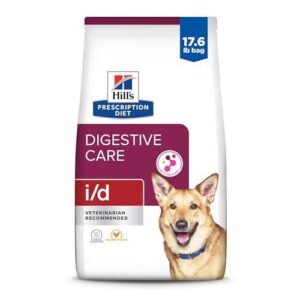
If your vet has already pointed you toward a prescription diet, Hill’s i/d is likely the name they mentioned. It’s built around ActivBiome+ prebiotic fiber, which works to activate beneficial gut bacteria faster than standard formulas.
The kibble uses highly digestible proteins and carbohydrates, plus added B-vitamins and electrolytes to replace what’s lost during digestive upset. At $102.99 for 17.6 lbs, it’s an investment — but it requires a prescription, so your vet’s guidance comes built in.
| Best For | Adult dogs recovering from gastrointestinal issues or with chronic digestive sensitivities who need a vet-recommended therapeutic diet. |
|---|---|
| Primary Protein | Chicken |
| Food Form | Dry kibble |
| Life Stage | Adult |
| Digestive Support | Prebiotic fiber blend |
| Grain Status | Not specified |
| Price | $102.99 |
| Additional Features |
|
- ActivBiome prebiotic fiber rapidly supports a healthier gut microbiome during and after digestive upset
- Highly digestible proteins and carbs, plus B-vitamins and electrolytes, help dogs recover and absorb nutrients efficiently
- Built-in SOXSHIELD system protects urinary tract health while the digestive system heals
- Requires a veterinary prescription, so you can’t just pick it up on a whim
- At $102.99 for 17.6 lbs, it’s significantly pricier than standard dog food
- Not suitable for puppies, seniors with specific needs, or dogs that don’t require a therapeutic diet
5. Dr Harvey Canine Health Base Mix
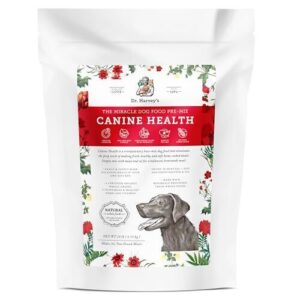
Dr. Harvey’s takes a different approach entirely — instead of handing you a finished formula, it gives you a whole food base you build around your dog’s specific needs.
The mix rehydrates with hot water in about 8 minutes, then you add your chosen protein and a healthy oil. That means you control the allergen list completely.
With 9 dehydrated vegetables and 6 organic grains, no fillers or synthetic additives, it’s a solid pick for dogs with tricky sensitivities.
| Best For | Dog owners who want full control over their pet’s diet — especially those managing allergies, sensitivities, or specific health conditions like kidney or liver issues. |
|---|---|
| Primary Protein | Customizable |
| Food Form | Dehydrated mix |
| Life Stage | All life stages |
| Digestive Support | Whole food blend |
| Grain Status | Organic grains |
| Price | Not listed |
| Additional Features |
|
- Made with 9 dehydrated vegetables and 6 organic grains — no fillers, preservatives, or synthetic ingredients
- Lets you pick the protein source yourself, making it easy to avoid allergens or tailor nutrition to your dog’s needs
- Works for all life stages and supports digestion, coat health, and energy levels
- Not a complete meal on its own — you still need to add protein and oil every time
- Prep takes more time and effort than scooping kibble, especially if you’re cooking raw or fresh protein
- Costs more per meal than standard dog food, which adds up fast for bigger dogs or multi-dog households
6. Royal Canin Large Digestive Care
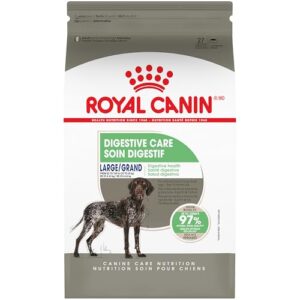
If you have a large breed dog struggling with loose stools, Royal Canin Large Digestive Care is worth a look. It’s built specifically for dogs 56 to 100 pounds, 15 months and older, using highly digestible proteins paired with prebiotics and dietary fibers to steady gut function.
The kibble size is calibrated for big jaws, which encourages slower chewing and helps with gastric emptying. At $109.99 per bag, it’s a premium option — though older dogs with worn teeth may need pieces broken up.
| Best For | Large breed dogs (56–100 lbs) aged 15 months and older who struggle with digestive sensitivities like loose stools or inconsistent digestion. |
|---|---|
| Primary Protein | Customizable |
| Food Form | Dehydrated mix |
| Life Stage | All life stages |
| Digestive Support | Whole food blend |
| Grain Status | Organic grains |
| Price | $52.00 |
| Additional Features |
|
- Targets digestive issues directly with a blend of prebiotics, dietary fibers, and highly digestible proteins to support gut health and stool quality
- Kibble size is designed for large breeds, encouraging slower chewing and better digestion
- Pairs well with Royal Canin Digestive Care wet food for dogs who benefit from mixed textures
- At $109.99 per bag, it’s a significant investment compared to standard dog food options
- Large kibble pieces may be hard for older dogs with worn or sensitive teeth to chew comfortably
- Occasional quality control issues (such as mold reports) and may not be suitable for dogs with skin sensitivities
7. Purina Pro Plan Sensitive Skin Salmon
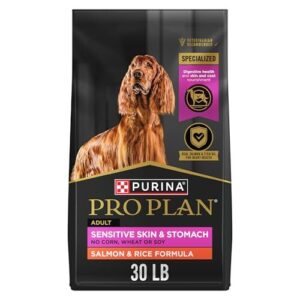
Stepping down in price from Royal Canin, Purina Pro Plan Sensitive Skin & Stomach hits a sweet spot for budget-conscious owners who still want a vet-backed formula.
Salmon leads the ingredient list, paired with rice and oatmeal for easy digestion. Chicory root adds prebiotic fiber, and live probiotics support gut balance.
At $77.48 for a 30 lb bag, it’s solid value. One note: it contains barley and oat, so it’s not suitable for dogs that need a grain-free diet.
| Best For | Dogs with food sensitivities, allergies, or sensitive stomachs whose owners want a vet-recommended, salmon-based formula without breaking the bank. |
|---|---|
| Primary Protein | Mixed proteins |
| Food Form | Dry kibble |
| Life Stage | Large breed adult |
| Digestive Support | Prebiotics & fiber |
| Grain Status | Not specified |
| Price | $109.99 |
| Additional Features |
|
- Salmon is the first ingredient, delivering high-quality protein alongside probiotics and prebiotic fiber for solid digestive support
- Omega-3 and omega-6 fatty acids promote a healthy, shiny coat and can help ease itching and skin irritation
- At $77.48 for 30 lbs, it’s a more affordable step down from premium brands like Royal Canin without sacrificing quality
- Contains grains (barley, rice, oat), so it’s not an option for dogs that need a grain-free diet
- The large 30 lb bag can be awkward to store and needs an airtight container to stay fresh
- Pricier than most standard dry dog foods, which may be a stretch for some budgets
8. Purina One Digestive Health Dog Food
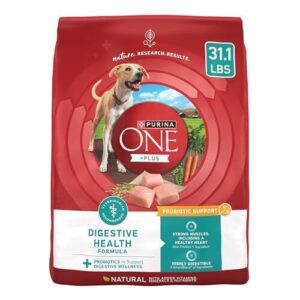
Purina One Digestive Health costs $49.98 for a 31.1 lb bag — noticeably more affordable than Pro Plan.
Real chicken leads the ingredient list, with probiotics and beet pulp fiber working together to support stool consistency. The SmartBlend formula skips artificial flavors, colors, and preservatives.
One honest caveat: it contains corn, wheat, soy, and chicken by-product meal. If your dog has confirmed grain sensitivities or protein allergies, this likely isn’t the right fit.
| Best For | Adult dogs with sensitive stomachs whose owners want a budget-friendly, probiotic-supported formula without paying Pro Plan prices. |
|---|---|
| Primary Protein | Salmon |
| Food Form | Dry kibble |
| Life Stage | Adult |
| Digestive Support | Live probiotics |
| Grain Status | Contains grains |
| Price | $77.48 |
| Additional Features |
|
- Real chicken is the first ingredient, paired with probiotics and beet pulp fiber for consistent, comfortable digestion
- SmartBlend formula contains no artificial flavors, colors, or preservatives
- Includes antioxidants, omega-6 fatty acids, and glucosamine to support immune health, skin/coat, and joints
- Contains corn, wheat, soy, and chicken by-product meal — not ideal for dogs with grain or protein allergies
- Higher price point than many standard dry dog foods
- Not a therapeutic diet, so dogs with serious medical conditions still need vet guidance
9. Purina One Sensitive Stomach Salmon
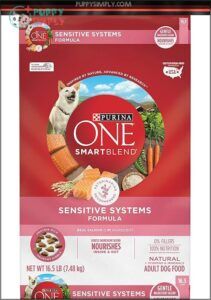
If chicken is the sticking point with your dog’s digestion, the salmon option gives you a cleaner alternative. Real salmon as the first ingredient means a highly digestible protein source that sidesteps common beef and chicken sensitivities.
Rice, oats, and beet pulp keep the carbohydrate base gentle and easy to break down. At $31.58 for 16.75 lbs, it’s an accessible pick. Just know it includes chicken by-product meal, so it’s not fully chicken-free despite the salmon focus.
| Best For | Dogs with sensitive stomachs or skin issues who react to beef or chicken but can tolerate grains like rice, oats, and barley. |
|---|---|
| Primary Protein | Chicken |
| Food Form | Dry kibble |
| Life Stage | Adult |
| Digestive Support | Probiotics |
| Grain Status | Contains grains |
| Price | $49.98 |
| Additional Features |
|
- Real salmon is the first ingredient, offering a highly digestible protein that sidesteps common beef and chicken sensitivities
- SmartBlend of omega-6 fatty acids, vitamin E, and antioxidants supports healthy skin, a glossy coat, and overall immune health
- Natural glucosamine from salmon and chicken by-product meal helps maintain joint health in adult dogs
- Contains chicken by-product meal, so it’s not a true single-protein or fully chicken-free formula
- Includes grains (rice, barley, oatmeal) and corn gluten meal — not suitable for dogs requiring a grain-free diet
- At $31.58 for 16.75 lbs, it sits above budget-friendly options, and Amazon pricing can fluctuate
What Sensitive Stomach Means

Not every dog with a sensitive stomach is dealing with the same problem, and that distinction matters more than most people realize. "Sensitive stomach" is actually an umbrella term that covers several different digestive patterns, each with its own triggers and solutions. Here’s what those patterns look like and how to tell which one might apply to your dog.
Occasional Digestive Upset
Most dogs with sensitive stomachs experience occasional digestive upset at some point.
Watch for:
- Loose stools or a softer stool texture
- Vomiting shortly after meals
- Gas or visible abdominal bloating
- Mild restlessness after eating
Dietary stress factors like fatty scraps or a rushed dietary change are common culprits. Monitoring vomiting frequency and stool changes helps you catch digestive issues early.
Food Intolerance Patterns
Food intolerance works differently from a sudden upset stomach — symptoms tend to follow a postprandial pattern, showing up after meals each time your dog eats the trigger food. Poorly absorbed carbohydrates ferment in the gut, producing gas and loose stools.
A dietary elimination trial helps identify the culprit, since overlapping symptoms like bloating, diarrhea, and skin irritation can make pinpointing one food tricky.
Allergy-related Stomach Issues
When a dog’s immune system flags a protein as dangerous, IgE antibodies form. Re-exposure triggers histamine release, increasing gut permeability and stomach motility fast — unlike food intolerance, which builds slowly. A hypoallergenic or limited ingredient diet can help.
When a dog’s immune system flags a protein as a threat, IgE antibodies form — and re-exposure triggers a fast, inflammatory chain reaction
Common signs include:
- Sudden vomiting after eating
- Cramping or abdominal pain
- Watery diarrhea
- Skin hives
- Respiratory changes
Chronic Versus Temporary Symptoms
Not every upset stomach means the same thing. A one-time reaction after raiding the trash is very different from symptoms that linger for months.
| Temporary Symptoms | Chronic Symptoms |
|---|---|
| Sudden onset, identifiable trigger | Gradual onset, ambiguous cause |
| Resolves within days | Persists a year or longer |
| Short-term care works | Needs ongoing dietary management |
Recurring clinical signs point to something deeper — often food intolerance requiring long-term management rather than a quick fix.
Common Digestive Triggers in Dogs

Even with the right food, certain everyday triggers can quietly wreak havoc on your dog’s stomach. Some are obvious, but others are easy to overlook until the symptoms show up. Here are the most common culprits worth knowing about.
Sudden Food Changes
Switching foods overnight is one of the fastest ways to upset your dog’s stomach. Their enzyme and bile secretion patterns adapt to whatever they eat routinely, so an abrupt change disrupts that process. The gut microbiome shifts too, altering fermentation and stool consistency within days.
A gradual ten-day shift gives both digestive enzymes and gut bacteria time to catch up smoothly.
Chicken or Beef Sensitivity
Chicken and beef are two of the most common protein triggers in dogs with sensitive stomachs. Their immune system may flag these proteins as threats, triggering vomiting or loose stools — sometimes alongside skin itching.
Watch labels carefully. Chicken meal or beef meal still contain reactive protein fractions, so hidden exposure can keep symptoms cycling even after you’ve switched foods.
Fatty Table Scraps
Protein sensitivity isn’t the only trigger worth watching. What sits on your plate can be just as disruptive as what’s in the bowl.
Fatty table scraps put real pressure on a sensitive stomach. High-fat meals are harder to digest and can trigger vomiting, loose stools, or worse — pancreatitis, which vets treat as an emergency. Over time, those extra calories also quietly add up, causing unplanned weight gain.
Stress and Routine Changes
Food isn’t always the culprit. Stress and routine changes can trigger canine gastrointestinal upset just as reliably as a bad ingredient.
When your dog’s feeding schedule shifts or the household gets chaotic, stress hormones disrupt gut motility — often causing faster eating, more swallowed air, and loose stools. Even travel or new guests can quietly unsettle digestion.
Hidden Food Access
Even when you’ve switched to a limited ingredient diet, hidden food access can undo your progress fast.
Dogs are resourceful. Common sources that quietly derail digestive health:
- Trash bin scavenging
- Compost pile hazards
- Recycling bin access
- Unsecured pantry storage
- Outdoor food sources
Lock them down before blaming your vet-recommended diet.
Signs Your Dog Needs Digestive Food

Your dog can’t tell you when something feels off, but their body usually makes it pretty obvious.
Digestive issues tend to show up in a handful of predictable ways, and knowing what to look for helps you act before things get worse.
Here are the most common signs that your dog’s stomach might need some extra support.
Loose Stools or Diarrhea
Loose or watery stools are one of the clearest signs your dog’s digestion is struggling. When the intestines can’t properly absorb water and electrolytes, stool water content rises fast.
Left unchecked, this creates a real dehydration risk — especially in smaller dogs.
Watch for mucus or blood in the stool, as those signal something more serious than a simple diet issue.
Occasional Vomiting
Vomiting that happens now and then isn’t always a crisis, but it’s worth watching closely.
Post-meal timing matters — if your dog vomits shortly after eating or when lying down, acid reflux may be the cause. Stress can also trigger nausea through gut‑brain pathways.
Track how often episodes occur; vomiting that persists beyond a day or two usually signals a deeper dietary trigger pattern worth addressing with your vet.
Excessive Gas
Gas often signals more than just bad timing. Swallowed air during fast eating, carbohydrate fermentation in the colon, or constipation can all drive flatulence. Common culprits include:
- Eating too quickly
- Dairy or fructose intolerance
- High-fermentable carbs reaching the colon
- Slowed gut transit from constipation
Persistent gas may point to hidden gut disease worth discussing with your vet.
Loud Stomach Noises
Those rumbling, gurgling sounds from your dog’s belly are caused by intestinal muscle contractions moving gas and liquid through the gut.
Some noise is normal, but when it gets loud and frequent, food intolerance or infectious enteritis may be driving hyperactive bowel activity.
Chronic sounds paired with loose stools or vomiting are worth a vet conversation.
Appetite Changes
Why would a hungry dog suddenly refuse food? Hunger signal shifts and satiety balance changes signal gastrointestinal sensitivity.
Watch food interest levels:
- Sniffing but skipping meals
- Eating less than usual
- Grazing instead of meals
- Skipping meals despite access
- Finishing fast despite low hunger
These shifts reflect digestive comfort, signaling appetite fluctuation triggers worth tracking closely.
Ingredients That Support Gentle Digestion
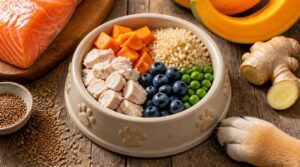
Not all dog food ingredients are created equal, especially when your dog’s stomach is the judge. Some choices calm things down, while others stir up trouble you didn’t see coming. Here’s what actually belongs in a bowl built for gentle digestion.
Lamb, Fish, or Salmon
Some proteins just sit easier with sensitive stomachs, and lamb and salmon top that list. Lamb amino acids support muscle repair, while grass-fed lamb benefits include better omega ratios than grain-fed cuts.
Wild-caught salmon quality matters too—those salmon omega-3s calm inflammation in the gut lining. Both are highly digestible, novel proteins, often featured in limited ingredient diets, salmon rice formulas, or a simple lamb oatmeal recipe your vet might suggest.
Rice, Oatmeal, Sweet Potato
These three humble carbs form a gentle digestive team for sensitive stomachs.
Cooked and highly digestible, rice, oatmeal, and sweet potato each work differently:
- Rice: low-fiber, gentle starch
- Oatmeal: soluble fiber, firms stool
- Sweet potato: fiber plus nutrients
- All cooked for easier digestion
- Blended carbs broaden tolerance
Combined, these carbs add dietary fiber and digestive health to limited ingredient diets.
Pumpkin and Beet Pulp
Pumpkin and beet pulp round out this carb trio with serious fiber power. Pumpkin pulp brings pectin, a soluble fiber that thickens gut contents and steadies stool consistency.
Beet pulp works differently, offering fermentable fiber that feeds healthy gut microbes.
Together, they balance fiber types nicely, supporting digestive health without leaning on fatty or heavily processed ingredients—just like pairing pumpkin and apples for gentle, natural support.
Inulin and Chicory Root
Beyond fiber that thickens or ferments broadly, inulin offers something more targeted: it’s a fructose chain your dog can’t digest until gut bacteria break it down in the colon. That fermentation feeds Bifidobacteria and Lactobacilli directly.
Chicory root, holding roughly 17% inulin by fresh weight, is the main source manufacturers tap for this prebiotic fiber—gentle, science-backed gut microbiome support, not just digestive guesswork.
Moderate Fat Levels
Fat type matters as much as the amount. Look for moderate fat levels—not a strict low‑fat dog diet—balanced with limited saturated fat, since dogs’ fat metabolism processes unsaturated sources better.
Skip fatty meats; they raise caloric density risks and strain digestion.
A label showing low‑fat content alongside quality protein helps control energy intake without swinging toward dietary extremes that upset sensitive stomachs.
Ingredients Sensitive Dogs Should Avoid

Knowing what to feed your dog matters, but knowing what to leave out matters just as much. Some common ingredients can quietly upset a sensitive stomach, even when they look harmless on the label. Here are the main offenders you’ll want to keep off your dog’s plate.
Artificial Colors and Flavors
Synthetic additives really don’t belong in a sensitive dog’s bowl. Artificial colors and flavors are lab-created compounds that can trigger additive-induced hypersensitivity even in small amounts.
Watch your labels for:
- Synthetic dyes or certified colorants
- Catch-all "artificial flavors" listings
- Chemical preservatives alongside flavor compounds
- Ultra-processed, filler-heavy ingredient profiles
High-quality, non-GMO ingredients digest cleaner and better support your dog’s balanced nutrition.
Corn, Wheat, and Soy
Corn, wheat, and soy appear in countless kibbles as budget fillers or grain protein fractions. For dogs with food sensitivities, these ingredients can trigger loose stools through compounds like wheat gluten proteins or soy protein isolate — even when the overall diet is nutritionally complete.
| Ingredient | Trigger Component | Likely Symptom |
|---|---|---|
| Corn | Corn gluten meal | Intolerance, loose stools |
| Wheat | Wheat gluten proteins | Sensitivity, inflammation |
| Soy | Soy protein isolate | Immune-type reaction |
| Corn starch | Variable digestibility | Stool inconsistency |
| Soy lecithin | Emulsifier compound | Digestive irritation |
A limited ingredient or hypoallergenic diet cuts these out entirely — often the clearest path forward for a sensitive stomach dog.
Dairy-based Ingredients
Dairy catches many owners off guard — it seems harmless, yet most dogs lack sufficient digestive enzymes to break down lactose properly. Milk proteins in whey-based ingredients add another layer of risk, since dogs with dairy sensitivities can react to those protein fractions directly.
Even plain Greek yogurt, while fermented and lower in lactose, isn’t universally tolerated and shouldn’t be assumed safe.
Spicy Human Foods
When that taco hits the floor, your dog’s nose finds it fast — chili heat plus acidity spells trouble. Capsaicin activates pain receptors, not taste buds, creating real burning that worsens with dose. Watch for:
- Stomach upset or vomiting
- Diarrhea from irritant combinations
- Heartburn-like discomfort
Skip table scraps entirely; gentle dietary transitions keep gastrointestinal upset away.
Dry, Wet, and Prescription Options
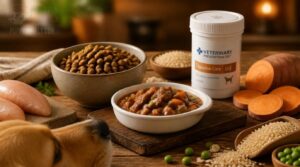
Not every dog does well with the same food format, and that’s okay — what works for one pup might not sit right with another.
The good news is there are several options worth exploring, from everyday kibble to veterinary-prescribed formulas. Here’s a look at the formats that tend to work best for dogs with sensitive stomachs.
Digestible Dry Kibble
Dry kibble earns its place in sensitive digestion dog food for good reason. Extrusion processing creates a porous, shelf-stable pellet that digests efficiently — as long as the formula is right.
| What to Look For | Why It Matters | What to Avoid |
|---|---|---|
| Named meat first | Ensures high-quality protein | "Meat by-products" |
| AAFCO statement | Confirms complete nutrition | No adequacy claim |
| Chelated minerals | Improves mineral absorption | Oxide forms |
| Prebiotics included | Helps gut microbiome | Artificial additives |
| 8–12% crude fat | Reduces vomiting risk | High-fat formulas |
Check that meat meal sources are clearly named — "salmon meal" beats vague "poultry meal" every time. Palatability coatings using fish or flaxseed oil also add digestive-friendly fatty acids without tipping fat levels too high.
Moisture-rich Wet Food
Some dogs simply eat better when their food smells inviting and feels gentle going down — that’s where wet food shines.
With 75–85% moisture, it dilutes calories while boosting hydration, easing digestion strain. Textures range from pâté to stew, and warming refrigerated portions enhances aroma, encouraging picky eaters.
Blue Buffalo Wilderness Digestive Health Chicken Recipe offers highly digestible animal protein, supporting digestive health without sacrificing flavor or comfort.
Freeze-dried Digestive Formulas
Freeze-dried formulas are a strong pick for dogs with sensitive stomachs — nutrient-dense freeze-drying preserves vitamins and probiotics without damaging heat. Many rely on single-source proteins like salmon or lamb to support digestive health. Look for these features:
- Probiotic viability maintained through gentle processing
- Highly digestible proteins with no fillers
- Enzyme-driven digestion for absorption support
- Pumpkin or fiber for microbiome support
Veterinary Therapeutic Diets
When freeze-dried formulas aren’t enough, veterinary prescription diets step in. These aren’t everyday foods — they’re built around condition-specific nutrition, with precise nutrient profiles and strict cross-contamination controls.
Options like Hill’s Prescription Diet i/d and Purina Pro Plan EN Gastroenteric Formula are formulated for clinical nutrition under veterinary-guided feeding. Your vet will reassess the plan as your dog responds.
Short-term Bland Meals
When prescription diets aren’t immediately available, a bland meal buys your dog’s stomach time to recover.
Boiled chicken and plain white rice — low fat, soft texture, single protein — is the go-to starting point.
- Small, frequent portions
- No seasoning or sauces
- Skinless cooked meat only
- White rice, not whole grain
- Serve at room temperature
This is short-term dietary relief, not a permanent fix.
How to Switch Food Safely
Switching your dog’s food too quickly is one of the most common reasons sensitive stomachs flare up, even when the new food is a great choice. A slow, structured change gives your dog’s digestive system time to adjust without the upset.
Here’s what that process should look at, step by step.
Ten-day Transition Plan

Switching dog food too quickly is one of the most common mistakes owners make.
Spread the change across ten days using a gradual food change ratio: start at 25% new food, move to 50% by day three, then 75% by day five, and reach 100% by day seven. If stools soften at any point, slow down and hold that ratio an extra day or two.
Remove Treats and Scraps

Even a careful ten-day phase can fall apart if treats and table scraps keep sneaking in. Every bite outside the prescribed food introduces new ingredients that muddy the dietary baseline you’re trying to establish.
Secure treats in closed cabinets, keep counters clear, and make sure everyone in the house follows the same no-extras rule — visitors included.
Track Stool Quality Daily

Daily stool tracking turns guesswork into real data. Use the Bristol Stool Scale to grade consistency — you’re aiming for Types 3 or 4.
Log color, frequency, and any mucus each day and note urgency too.
Patterns across several days reveal whether the new food is settling well or stirring up trouble.
Watch for Worsening Symptoms

Some signs during a diet change aren’t just bumps — they’re warnings. If your dog shows persistent vomiting, can’t keep water down, or develops blood in stool, stop the new food immediately.
Rapid symptom escalation within 24 hours, a tight or painful belly, or signs of dehydration — dry gums, reduced urination, lethargy — mean something more serious may be happening.
Call Your Veterinarian Early

Don’t wait until things spiral. If symptoms persist beyond 48 hours or match any red flags — repeated vomiting, blood in stool, or signs of dehydration — call your veterinarian early.
- Have your dog’s name, age, and breed ready
- Describe when symptoms started and how they’ve changed
- Note any recent food, treat, or medication changes
- Report severe lethargy or inability to keep fluids down
That call helps the clinic triage your dog’s case and arrange the right care before you arrive.
Frequently Asked Questions (FAQs)
What foods are good for dogs with sensitive tummies?
Like a good broth for an upset stomach, lean proteins, gentle carbs, and soluble fiber work best. Think fish, white rice, sweet potato, pumpkin, and probiotic support to keep digestion on track.
What are signs of digestive issues in dogs?
Loose stools, vomiting, and excess gas are the most telling signs. You might also notice a hunched posture, mucus in the stool, or appetite loss — all signals your dog’s gut is struggling.
What food is best for dogs with sensitive stomachs?
Ironically, the "best" food is often the simplest one. For sensitive stomachs, a limited-ingredient, vet-recommended diet featuring a novel protein and easily digestible carbs promotes digestive health better than premium complexity ever could.
What dog food is least likely to cause diarrhea?
Foods with limited ingredients and a novel protein — like salmon or lamb — paired with soluble fiber and low fat levels are least likely to cause diarrhea in sensitive dogs.
What is the most digestible dry dog food?
Studies suggest high-quality dry kibble can reach digestibility rates above 85% when real animal protein leads the ingredient list, easily digestible carbohydrates like rice or oats follow, and moderate fat with added prebiotic fiber round it out.
What is the difference between perfect digestion and sensitive stomach?
A dog with perfect digestion maintains a resilient intestinal barrier, steady gut motility, and efficient nutrient absorption. A sensitive stomach reacts more intensely, leaving digestive residue that triggers immune responses and inconsistent stool quality.
How often should I feed my sensitive-stomach dog?
Timing is everything — or rather, meal timing is. Feeding your dog three to four smaller meals daily reduces gastric distension and eases the workload on a sensitive stomach far better than two large meals.
Can exercise impact my dogs sensitive stomach?
Yes, exercise can upset your dog’s sensitive stomach. Vigorous activity redirects blood flow away from the gut, slowing digestion and triggering gas or vomiting. Always wait at least two hours after meals before intense play.
Are there any natural remedies for sensitive stomachs?
Canned pumpkin is one of the easiest natural remedies — a spoonful adds soluble fiber that helps firm up loose stools. Probiotic supplements with Lactobacillus strains can also restore gut balance quickly.
How long does it take to see improvement?
Think of gut recovery like a slow tide — it shifts before you see it. Most dogs show stool consistency improvements within 3–7 days, with full stabilization taking 2–3 weeks after the food trial is complete.
Conclusion
Like Hippocrates said, all disease begins in the gut—and for dogs, healing often starts there too. Finding the best dog food for sensitive stomach isn’t about chasing trendy labels; it’s about understanding what your dog’s body is actually telling you.
Track the patterns. Read the ingredients. Trust the data over the marketing. When you match the right formula to your dog’s specific triggers, mealtimes stop being a source of dread and start becoming something they genuinely look forward to.
- https://www.forbes.com/sites/forbes-personal-shopper/article/best-dog-foods-for-sensitive-stomachs
- https://plentum.com/blogs/lifestyle/discover-the-top-5-dog-foods-for-gut-health-with-reviews-comparisons-that-your-pup-will-love
- https://www.splootvets.com/post/dog-food-sensitive-stomachs
- https://openfarmpet.ca/blogs/news/finding-the-best-dog-kibble-for-gastrointestinal-health
- https://www.dogfoodadvisor.com/best-dog-foods/sensitive-stomach