
This site is supported by our readers. We may earn a commission, at no cost to you, if you purchase through links.
Walk into any dog show with a Boston Terrier, and someone will stop you to ask whether that deep brownish-black coat is actually black. That’s the seal color at work—a shade so rich it shifts to reddish-brown under sunlight, and one of five coat colors the AKC officially recognizes in the breed. Most people picture the classic black-and-white tuxedo look, but Boston Terrier colors run a wider spectrum than that, from brindle stripes to rare dilute shades that don’t make the breed standard at all. Some of those non-standard colors carry real health considerations worth knowing before you bring one home.
Table Of Contents
- Key Takeaways
- AKC Boston Terrier Colors
- Required Boston Terrier Markings
- Rare Boston Terrier Colors
- Color Genetics and Health Risks
- Top 6 Coat Care Products
- Frequently Asked Questions (FAQs)
- How many different colors of Boston Terriers are there?
- What dog is the target dog?
- Which is better Boston Terrier or French Bulldog?
- How many colors to Boston Terriers come in?
- Why are Boston Terriers black and white?
- What color Boston Terriers does AKC recognize?
- What is a seal-colored Boston Terrier?
- What 2 breeds make a Boston Terrier?
- What color is a splash Boston Terrier?
- What is the average lifespan of a Boston Terrier?
- Conclusion
Key Takeaways
- The AKC only recognizes five Boston Terrier coat colors—Black & White, Brindle & White, Black Brindle & White, Seal & White, and Seal Brindle & White—each requiring specific white tuxedo markings to meet breed standards.
- Seal is one of the trickiest colors to identify because it looks pure black indoors but reveals a warm reddish‑brown glow in sunlight.
- Rare non‑standard colors like blue, merle, and all‑white come with real health risks—including color dilution alopecia, deafness, and serious eye defects—so knowing the genetics before buying matters.
- Keeping your Boston’s short coat healthy comes down to basics: omega‑3 supplements for shine, a gentle pH‑balanced shampoo, and a simple rubber brush that works for both grooming and bath time.
AKC Boston Terrier Colors

The AKC officially recognizes five coat colors for Boston Terriers, and each one comes with specific white markings that make the breed so iconic. Think of it as a built-in tuxedo — there’s a reason they’re called the "American Gentleman." Here are the five standard colors you’ll see recognized in the show ring.
Beyond those five, plenty of Boston Terriers sport coat colors outside AKC standards that are beautiful but won’t qualify in a show ring.
Black & White
Black and white is the classic Boston Terrier look — the one most people picture. That sharp contrast between a solid black coat and crisp white markings is exactly why the breed earned its "tuxedo dog" nickname. AKC-recognized breed standards require a white muzzle band, a blaze between the eyes, and white forechest markings that sit balanced and symmetrical.
Brindle & White
Brindle & White is where things get visually interesting. Instead of solid black, you’re looking at dark tiger-like stripes layered over a lighter base — giving the coat that textured, almost painterly depth. The AKC fully recognizes this pattern, and the required tuxedo markings still apply: white muzzle band, blaze between the eyes, and white forechest. Understanding the brindle coat genetics explains why the stripes appear.
Black Brindle & White
Think of Black Brindle & White as the brindle family’s bolder sibling. The dark base runs deeper here, making those tiger-stripe contrasts feel sharper and more dramatic against the required white markings. The AKC fully recognizes this coat, and breed standards still demand the classic tuxedo pattern:
- Dark base with visible brindle striping
- White muzzle band framing the face
- Blaze running between the eyes
- White forechest anchoring the look
- Short, smooth, glossy coat texture throughout
Coat color genetics — specifically the K-locus — drives that rich, layered striping. In good lighting, this coat is genuinely photogenic.
Seal & White
If Black Brindle & White is the dramatic one, Seal & White is the elegant crowd-pleaser. The seal coat description is easy to miss indoors — it reads as black until sunlight catches it, revealing a rich reddish-brown warmth underneath. That depth is what makes this one of the most visually rewarding AKC-recognized Boston Terrier colors.
| Feature | Description | Show Relevance |
|---|---|---|
| Base Coat | Deep seal tone, reddish in sunlight | AKC-recognized standard color |
| White Blaze | Symmetrical stripe between the eyes | Required marking |
| Nose & Eye Rims | Black leather and dark rims | Must meet breed standard |
The required white tuxedo markings — including the white blaze between the eyes, muzzle band, and forechest — need clean symmetry here. Markings symmetry matters most in the show ring, where judges notice even slight irregularities.
Seal Brindle & White
Seal Brindle & White is the rarest of the five AKC-recognized standard colors — a subtle mashup of the seal coat’s warm depth and the brindle’s darker, streaky overlay. In sunlight, those stripes appear almost smoky against a reddish-brown base. Young dogs tend to show richer tones that mellow with age, while the classic white tuxedo markings remain non-negotiable.
Required Boston Terrier Markings
A Boston Terrier’s coat isn’t just about color — the white markings matter just as much to the AKC. Think of them as the breed’s signature look, the tuxedo details that make a Boston unmistakably a Boston. Here are the specific markings the standard calls for.
White Muzzle Band

That little ring of white around your Boston’s mouth isn’t just cute — it’s actually required. The white muzzle band is an AKC-recognized marking that wraps around the muzzle at lip level, commonly aligning with the mouth corners. Governed by S-locus genetics, it’s a non-negotiable part of the breed standard and a signature piece of the classic tuxedo look.
That tuxedo elegance is part of a much bigger picture — B dog breeds with standout markings and personalities show just how much breed standards shape the dogs we fall in love with.
Blaze Between Eyes

Right between those soulful eyes sits another required AKC marking — the white blaze. It runs vertically up from between the eyes, ideally extending over the crown, and it’s as much a part of the classic tuxedo coat as the muzzle band.
- Blaze symmetry matters to judges — an even, centered blaze signals balanced genetics and meets breed standards cleanly
- S-locus genetics governs its placement, the same gene family controlling most white markings
- A well-defined blaze keeps white markings crisp against black, brindle, or seal coat backgrounds
Keeping the blaze bright is simple: a gentle wipe during grooming removes tear staining before it sets.
White Forechest

The white forechest is the third required marking in the AKC tuxedo coat — that crisp patch sitting center-chest, just below the throat. It’s anchored by S-locus genetics and ranges from a slim stripe to a broader V-shape. Keep it bright with gentle, pH-balanced shampoo every few weeks.
Desired White Collar
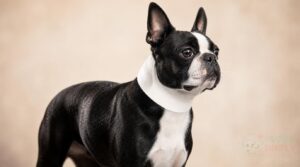
The desired white collar circles the neck like a finishing touch on that classic tuxedo coat — it’s not strictly required by AKC standards, but judges definitely notice its presence. This full white collar adds elegance and symmetry, reinforcing the breed’s distinguished look. Think of it as the bow tie on an already-sharp suit.
Haggerty Spot

Some Boston Terrier enthusiasts call it the "hubble dot" — a small, dark circular spot sitting right between the ears atop the head. The Haggerty Spot traces back to early 1900s breeding lines from the Haggerty family, making it a charming piece of living history.
Here’s what makes it special:
- Visual identifier: a crisp, round patch contrasting against lighter fur
- Ranges from deep black to dark brindle, matching the dog’s coat pattern
- Often appears alongside the standard white chest and tuxedo markings
- Prized by breeders for lineage and character, not show requirements
While it isn’t part of the AKC’s required markings or breed standards, the community absolutely loves it.
Rare Boston Terrier Colors
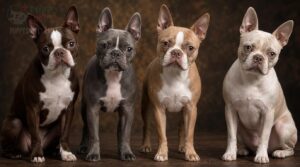
Beyond the AKC’s approved palette, Boston Terriers actually come in a surprising range of coat colors you won’t see in the show ring. These shades are often labeled "rare" or "exotic," and they come with their own genetic backstories and health considerations worth knowing. Here’s a closer look at the most common non-standard colors you’ll encounter.
Blue and Blue Brindle
If you’ve ever spotted a blue Boston Terrier and done a double-take, you’re not alone. That smoky, steel-toned coat is the result of the color dilution gene — a recessive trait that softens black pigment into a cool blue-gray. Add brindle striping to the mix, and you get blue brindle patterns: subtle tiger-like streaks layered over that misty base.
Lilac and Champagne
Blue was just the beginning. Lilac and champagne take rare dog coat colors even further, each driven by a specific pairing of recessive dilution genes. A lilac Boston carries the bb dd genotype — two brown gene copies plus two dilution gene copies — producing that dusty lavender-taupe coat. Champagne runs warmer, closer to pale gold. Both sit firmly outside AKC conformation eligibility.
Chocolate and Red
Chocolate and red sits in similar territory. A chocolate Boston Terrier gets its rich brown coat from the B-locus liver mutation — the recessive bb genotype swaps black eumelanin for brown. Red undertones surface through pigment gene interaction at the E-locus, warming that chocolate base into something almost amber in bright light. Like lilac and champagne, it’s not AKC recognized in conformation.
Merle and Splash
Merle and splash are a different beast entirely. The merle gene creates irregular lighter patches over a base coat — a marbled, almost painterly effect. Splash pattern genetics layer on top, producing high-contrast blotches unique to each dog. Both are non-standard, carry real merle pattern health concerns like deafness and eye defects, and often fetch premium "exotic color" prices.
All-white Coats
All-white Boston Terriers are strikingly rare. Their recessive genetics stem from white spotting syndrome — the piebald gene pushed to its extreme. That appeal comes with a real trade-off: congenital deafness is a documented risk, so always ask breeders about hearing tests. Their pink skin needs consistent sun protection, and those bright coats need gentle care to stay spotless.
Color Genetics and Health Risks

Your Boston Terrier’s coat color isn’t just cosmetic — it’s written into their DNA, and some of those genetic combinations come with real health trade-offs worth knowing. Understanding a few key genes can help you ask smarter questions when choosing a puppy or working with a breeder. Here’s a closer look at the main genetic factors and the health risks tied to each.
K-locus Color Basics
Think of the K-locus as the coat’s master switch. It controls whether a Boston Terrier expresses dominant black, brindle striping, or allows other pigment patterns to show through. The three K-locus alleles — KB, kbr, and ky — determine this. A black Boston Terrier usually carries KB, while a brindle Boston Terrier carries kbr, which allows pigment switching between eumelanin and phaeomelanin.
B-locus Liver Pigment
The B-locus works like a color-swap instruction buried in your Boston’s DNA. It controls the TYRP1 gene, which determines whether eumelanin appears black or chocolate brown. A dog with the bb genotype swaps black pigment for liver — you’ll notice it first on the nose and pads, which turn brownish instead of staying black. That’s the giveaway.
D-locus Dilution Risks
The D-locus dilution gene works by scrambling how pigment granules get packed into hair shafts — they clump instead of spreading evenly, leaving coats looking washed-out and dull. That abnormal packing weakens the hair itself, making it fragile and prone to breakage. Over time, this can trigger color dilution alopecia, causing patchy hair loss and recurring skin infections in affected dogs.
White Spotting Deafness
Here’s something that might surprise you: the same gene controlling white coat patches can quietly rob a Boston Terrier of its hearing. The piebald (S-locus) gene disrupts melanocyte migration into the inner ear during development, leaving cochlear tissue without the pigment cells it needs to function. The broader those white patches, the higher the risk — and BAER hearing testing catches problems early, before they become a bigger challenge to manage.
The gene behind Boston Terriers’ white patches can silently steal their hearing
Merle Vision Concerns
The merle gene is where things get truly serious for Boston Terriers. Double merle dogs — bred from two merle parents — face a cascade of eye problems: microphthalmia (abnormally small eyes), colobomas (structural gaps in the iris or retina), starburst pupils, photophobia, and even a missing tapetum that wrecks night vision. Genetic testing before breeding is non-negotiable here.
Top 6 Coat Care Products
Your Boston Terrier’s coat doesn’t need much, but the right products make a real difference. Whether you’re chasing that healthy shine or just keeping things clean and comfortable, a few well-chosen items will cover all the basics. Here are six worth keeping on your shelf.
1. Grizzly Omega Health Liquid Supplement
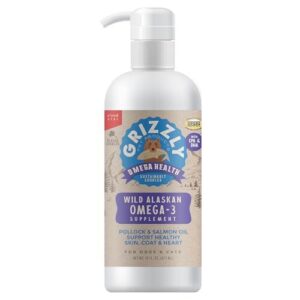
Grizzly Omega Health is a liquid omega-3 supplement made from wild Alaskan pollock and salmon — no farm-raised fish. It’s packed with DHA and EPA, the fatty acids that genuinely support a glossy, healthy coat. The pump dispenser makes dosing easy and consistent, which matters because too much fish oil can cause weight gain. Just mix it into your Boston’s food. One heads-up: it does have a noticeable fish smell.
| Best For | Pet owners looking for a natural, easy-to-dose omega-3 boost for dogs or cats dealing with dry skin, dull coats, or stiff joints. |
|---|---|
| Primary Benefit | Skin & coat health |
| Form Factor | Liquid pump bottle |
| Size / Quantity | 16 oz |
| Target Animal | Dogs & cats |
| Key Ingredient | Wild Alaskan fish oil |
| Ease of Use | Pump dispenser |
| Additional Features |
|
- Made from wild-caught Alaskan pollock and salmon — no farm-raised fish
- The pump dispenser makes dosing simple and consistent every time
- Supports skin, coat, joints, and immune health all in one supplement
- Strong fish smell that some owners (and picky pets) find off-putting
- The pump can drip, so a little care goes a long way to avoid mess
- Overdoing it is easy — too much fish oil adds calories fast, so stick to the label
2. Nutramax Welactin Omega 3 Dog Supplement
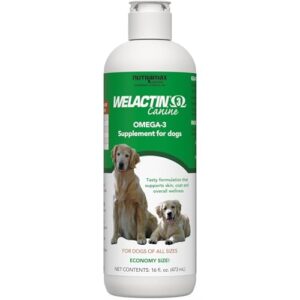
Another solid pick from the fish oil aisle is Nutramax Welactin Canine Liquid. Where Grizzly leans on wild-caught fish, Welactin focuses on delivering serious omega-3 numbers — 870 mg EPA and 570 mg DHA per 6 mL scoop. That’s meaningful support for your Boston’s coat, skin, joints, and even heart health. Just shake the bottle, measure with the included scoop, and mix it into meals daily. Fair warning: it does have a fishy smell.
| Best For | Dogs of any size or life stage needing high-potency omega-3 support, especially seniors with joint issues or dogs with skin and coat problems. |
|---|---|
| Primary Benefit | Skin & coat health |
| Form Factor | Liquid bottle |
| Size / Quantity | 16 oz |
| Target Animal | Dogs |
| Key Ingredient | Fish oil |
| Ease of Use | Measuring scoop |
| Additional Features |
|
- High EPA and DHA levels (870 mg / 570 mg per serving) give you serious omega-3 punch in one small scoop
- The built-in measuring scoop takes the guesswork out of dosing, and it mixes easily into food
- Nutramax has a strong quality reputation — their manufacturing standards go beyond what the industry requires
- The fish smell is real and noticeable, even if the label downplays it
- The redesigned dispensing cap tends to drip, which means cleanup and wasted product
- Not safe for dogs with fish or oil allergies, and over-supplementing is a real risk if you skip the weight-based dose chart
3. Nutramax Welactin Omega3 Dog Soft Chews
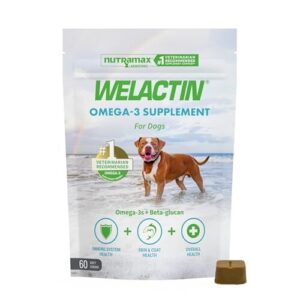
If you’d rather skip the measuring spoon, the Welactin Omega3 Soft Chews are a genuinely convenient alternative. Same trusted Nutramax formula — just in a soft, treat-like chew your Boston can eat straight from your hand. Each chew delivers 300 mg of omega-3s (155 mg EPA, 100 mg DHA), plus beta-glucan and a vitamin-mineral blend for immune support. The 60-chew package lasts about two months for a small dog. Most Bostons eat them without any fuss.
| Best For | Dog owners who want a no-fuss way to give their pup omega-3s without dealing with liquid fish oil or measuring out doses. |
|---|---|
| Primary Benefit | Skin & coat health |
| Form Factor | Soft chews |
| Size / Quantity | 60 chews |
| Target Animal | Dogs |
| Key Ingredient | Fish oil + beta-glucan |
| Ease of Use | Treat-style chew |
| Additional Features |
|
- 300 mg of omega-3s per chew (EPA DHA) in a soft, treat-like form most dogs will happily eat on their own
- Backed by Nutramax’s 25-year track record, with quality standards that go beyond the typical industry bar
- Includes bonus support from beta-glucan and a vitamin-mineral blend — not just plain fish oil
- The chews run on the firm and larger side, so cutting them down for small dogs takes a little effort
- That fishy smell is strong — fine for your dog, maybe less fine for you
- Not an option for dogs with fish oil allergies, and you’ll need to store them properly after opening or they’ll go stale
4. Earthbath Oatmeal Aloe Dog Shampoo
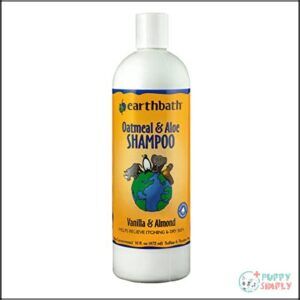
Once your Boston’s coat is getting proper omega-3 support from the inside, what you use on bath day matters just as much. Earthbath Oatmeal & Aloe Shampoo ($18.99 for 16 oz) is a solid pick for sensitive Boston skin. Its soap-free, pH-balanced formula cleans without stripping natural oils, while colloidal oatmeal soothes any itchiness and organic aloe vera adds moisture. It’s paraben-free, sulfate-free, and safe for weekly bathing — with a gentle vanilla-almond scent that won’t overwhelm.
| Best For | Boston Terriers (and other sensitive-skinned dogs) that deal with dry, itchy, or flaky skin and need a gentle shampoo safe for regular bathing. |
|---|---|
| Primary Benefit | Soothes itchy skin |
| Form Factor | Liquid bottle |
| Size / Quantity | 16 oz |
| Target Animal | Dogs & cats |
| Key Ingredient | Colloidal oatmeal |
| Ease of Use | Dilutable formula |
| Additional Features |
|
- Soap-free and pH-balanced, so it cleans well without drying out your dog’s skin or stripping natural oils
- Packed with skin-soothing ingredients — colloidal oatmeal, aloe vera, and shea butter — that actually help with itchiness and dryness
- Safe for weekly baths and compatible with topical flea/tick treatments, so it fits easily into your routine
- The bottle cap has a reputation for leaking during shipping, so it might arrive a little messy
- The scent is intentionally subtle — if you want your dog smelling like they just left a groomer, this probably isn’t it
- Won’t fix serious skin conditions on its own; if your dog has chronic issues, you’ll still want to loop in your vet
5. Earthbath Oatmeal Aloe Dog Conditioner
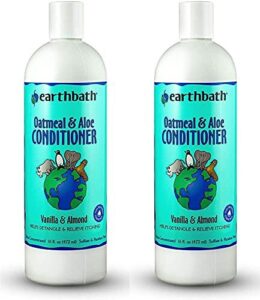
Think of this as the follow-up your Boston’s coat didn’t know it needed. After shampooing, Earthbath Oatmeal & Aloe Conditioner works in colloidal oatmeal and organic aloe vera to restore moisture and calm any lingering skin irritation. Shea butter and hydrolyzed silk protein leave the coat soft and lightly glossy — without weighing it down. It’s soap-free and pH-balanced, safe for regular use, and pairs seamlessly with the shampoo. Leave it on for a few minutes, rinse well, and you’re done.
| Best For | Dog owners dealing with dry, itchy, or allergy-prone skin — especially breeds with thick or curly coats that need extra moisture after washing. |
|---|---|
| Primary Benefit | Moisturizes dry skin |
| Form Factor | Liquid bottle |
| Size / Quantity | 2 x 16 oz |
| Target Animal | Dogs |
| Key Ingredient | Colloidal oatmeal |
| Ease of Use | Ready to use |
| Additional Features |
|
- Colloidal oatmeal and aloe vera actually soothe irritated skin, not just coat it
- Works on all breeds and coat types, including puppies, and won’t mess with topical flea treatments
- Clean ingredient list — no sulfates, parabens, dyes, or synthetic fragrances
- Pricier than your average conditioner, so it adds up if you’re bathing frequently
- Not a substitute for vet treatment if your dog has a real skin condition
- Very dry or matted coats might need a leave-in on top to get the full effect
6. Kong Zoom Groom Dog Brush
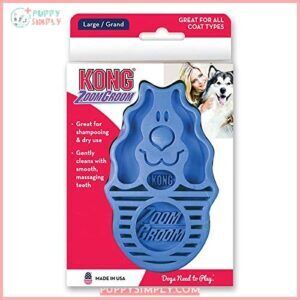
The KONG Zoom Groom is a deceptively simple tool — a palm-sized silicone brush with flexible rubber fingers that reach right down to your Boston’s skin. Those ¾-inch bristles do double duty: lifting loose hair during dry brushing and spreading shampoo evenly at bath time. The massaging action stimulates circulation and nudges natural oils through the coat. It rinses clean in seconds, too. For a short-coated breed like your Boston, it’s honestly all you need.
| Best For | Short-coated breeds like Boston Terriers, beagles, and greyhounds who need a simple, gentle grooming tool that works for both dry brushing and bath time. |
|---|---|
| Primary Benefit | Reduces shedding |
| Form Factor | Silicone brush |
| Size / Quantity | Single unit |
| Target Animal | Dogs |
| Key Ingredient | Silicone rubber |
| Ease of Use | Palm-sized grip |
| Additional Features |
|
- The rubber fingers reach the skin to massage and stimulate natural oils, not just skim the surface
- Works wet or dry — great for spreading shampoo and rinsing clean in seconds
- Easy to clean and comfortable to hold for quick grooming sessions
- Not much help for long, thick, or matted coats — you’ll need a different tool for those
- The grip can get uncomfortable if you’re brushing for a while
- Loose hair scatters, so expect a little cleanup afterward
Frequently Asked Questions (FAQs)
How many different colors of Boston Terriers are there?
There are five officially recognized colors, but several rare, unofficial shades exist beyond that. So the real answer depends on whether you’re counting AKC-standard only or including those "exotic" extras breeders sometimes advertise.
What dog is the target dog?
Well, surprise — this article isn’t actually about Boston Terriers. The target dog is the Bull Terrier, a compact, muscular breed famous for its distinctive egg-shaped head and short, smooth coat.
Which is better Boston Terrier or French Bulldog?
Neither breed is universally "better" — it depends on your lifestyle. Boston Terriers suit active owners, while French Bulldogs fit a more relaxed pace. Both make wonderful companions.
How many colors to Boston Terriers come in?
Boston Terriers come in five AKC-recognized colors: Black & White, Brindle & White, Black Brindle & White, Seal & White, and Seal Brindle & White — each paired with those signature white tuxedo markings.
Why are Boston Terriers black and white?
That tuxedo look isn’t an accident. Black eumelanin pigments drive the dark coat, while the S-locus gene controls where white markings appear — giving Boston Terriers their signature dapper contrast.
What color Boston Terriers does AKC recognize?
The AKC recognizes five official color combinations for Boston Terriers: Black & White, Brindle & White, Black Brindle & White, Seal & White, and Seal Brindle & White — all paired with required white markings.
What is a seal-colored Boston Terrier?
Think of seal as black with a secret — in bright sunlight, the coat glows reddish-brown. Indoors, it reads pure black. That hidden warmth is what makes seal uniquely striking.
What 2 breeds make a Boston Terrier?
The Boston Terrier descends from two breeds: the English Bulldog and the White English Terrier. That pairing gave the breed its stocky frame, brachycephalic face, and lively, affectionate personality.
What color is a splash Boston Terrier?
A splash Boston Terrier is mainly white with irregular black, liver, or blue-gray patches scattered across the body. The size and placement of those colored spots vary from dog to dog.
What is the average lifespan of a Boston Terrier?
Boston Terriers usually live 11 to 13 years, though some reach 15 with good care. Genetics, diet, exercise, and regular vet visits all play a role in where your dog lands on that range.
Conclusion
Beauty is only skin deep, but with Boston Terrier colors, what’s beneath the surface matters just as much. That rare blue or merle coat might turn heads, but it can come with hearing or vision risks worth knowing before you fall in love at first sight. Whether your Boston rocks the classic tuxedo or a one-of-a-kind champagne shade, the right nutrition and grooming keep that short coat gleaming—and your dog thriving.
- https://showsightmagazine.com/dog-breeds/boston-terrier
- https://www.royalkennelclub.com/breed-standards/utility/boston-terrier
- https://www.ukcdogs.com/boston-terrier
- https://bostonterrier.world/blogs/boston-terrier-world-blog/an-overview-of-the-different-boston-terrier-colors
- https://bostonterrierblog.com/boston-terrier-coat-colors