This site is supported by our readers. We may earn a commission, at no cost to you, if you purchase through links.

Your Goldendoodle puppy’s first year of nutrition sets the foundation for a lifetime of health, yet not all puppy foods deliver what these unique hybrid dogs actually need.
Goldendoodles inherit traits from both Golden Retrievers and Poodles, which means they require a careful balance of protein for muscle development, omega fatty acids for their signature coat, and controlled calcium levels to support proper bone growth without triggering developmental issues.
The wrong food can lead to allergies, digestive upset, or joint problems down the road. Finding the best puppy food for Goldendoodle pups means looking beyond marketing claims to understand what’s actually in the bag and how it matches your puppy’s size, activity level, and potential sensitivities.
Table Of Contents
- Key Takeaways
- Best Puppy Food for Goldendoodles: Top 9 Picks
- 1. Nutro Natural Puppy Food
- 2. Nulo Limited Ingredient Turkey Dog Food
- 3. Natural Balance Duck Potato Dog Food
- 4. Purina One Large Breed Puppy Food
- 5. Blue Buffalo Puppy Dry Dog Food
- 6. Taste Of The Wild Puppy Food
- 7. Canidae Pure Grain Free Puppy Food
- 8. Hill’s Science Diet Large Breed Puppy Food
- 9. Royal Canin Medium Puppy Food
- Essential Nutrients for Goldendoodle Puppies
- Goldendoodle Puppy Feeding Guidelines
- Choosing The Right Formula for Your Goldendoodle
- Best Puppy Food for Mini Goldendoodles
- Managing Allergies and Sensitivities in Goldendoodle Puppies
- Transitioning Goldendoodle Puppies to Adult Food
- Tips for Maintaining Goldendoodle Puppy Health Through Diet
- Frequently Asked Questions (FAQs)
- What is the best food for a Goldendoodle puppy?
- What do vets recommend for goldendoodles?
- What foods are toxic to goldendoodles?
- How much food should I feed my Goldendoodle puppy each day?
- What type of treats are best for Goldendoodles?
- How often should I feed my Goldendoodle?
- What are the signs of an allergic reaction to food for Goldendoodles?
- Can goldendoodle puppies eat raw food diets?
- What human foods are safe for goldendoodle puppies?
- How much water should goldendoodle puppies drink daily?
- Conclusion
Key Takeaways
- Goldendoodle puppies need balanced nutrition with 22-28% quality animal protein, controlled calcium levels (especially for large breeds), and omega fatty acids to support healthy muscle growth, joint development, and coat health without triggering hip dysplasia or developmental issues.
- The best puppy foods avoid common allergens like chicken by-products, corn, wheat, and soy, while offering limited-ingredient or novel protein options (duck, venison, turkey) for puppies with sensitive stomachs or food sensitivities that cause itching, digestive upset, or skin reactions.
- Feeding schedules should match your puppy’s age and size—3-4 meals daily until 12 weeks, then 2-3 meals through the first year—with portion sizes adjusted based on activity level, growth rate, and calorie density (320-450 kcal per cup) to prevent overfeeding and obesity.
- Transition to adult food around 9-18 months when your Goldendoodle reaches 80% of expected adult size, using a gradual 7-day mixing process (25% new food increasing to 100%) to avoid digestive upset while monitoring weight, energy levels, and stool quality.
Best Puppy Food for Goldendoodles: Top 9 Picks
Finding the right puppy food for your Goldendoodle means looking for formulas that support healthy growth without overdoing calcium, which can increase the risk of hip issues.
Look for puppy formulas tailored to medium or large breeds, especially if you’re raising an Australian Goldendoodle with an active lifestyle.
You’ll want options with quality protein, balanced fats, and ingredients that are easy on your puppy’s digestion. Here are nine top picks that meet these needs and work well for different sizes and sensitivities.
1. Nutro Natural Puppy Food
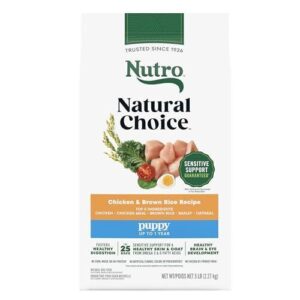
When you’re raising a Goldendoodle puppy, you want something dependable that promotes growth without cutting corners. Nutro Natural Puppy Food does that with real chicken as the first ingredient, giving your pup the protein needed for building strong muscles.
It includes DHA for brain and eye development, plus omega-3s and omega-6s to keep that fluffy coat healthy. The formula has no artificial flavors or preservatives, and it’s designed to aid digestion and immunity. At around $16 for a 5-pound bag, it’s a solid, straightforward choice.
| Best For | Goldendoodle puppy owners who want a chicken-based formula that supports brain development, coat health, and digestion with clean ingredients. |
|---|---|
| Brand | Nutro |
| Primary Protein | Chicken |
| Age Range | Puppy |
| Item Form | Dry Kibble |
| Weight | 5 lb |
| Price | $15.97 |
| Additional Features |
|
- Real chicken as the first ingredient provides quality protein for muscle growth
- DHA supports healthy brain and eye development during critical puppy stages
- Omega-3 and omega-6 fatty acids promote a soft, shiny coat
- Higher price point at around $16 for a 5-pound bag
- Not suitable for puppies with chicken allergies or specific dietary restrictions
- Only formulated for puppies, so you’ll need to switch foods as your dog matures
2. Nulo Limited Ingredient Turkey Dog Food
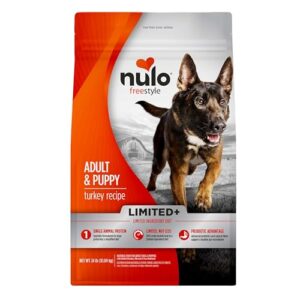
If your Goldendoodle puppy has food sensitivities, Nulo Limited Ingredient Turkey Dog Food keeps things simple. It uses deboned turkey as the only animal protein, skipping common triggers like chicken, eggs, soy, corn, and wheat.
You’re getting 30% crude protein to support lean muscle development, plus omega fatty acids for a healthy coat. The formula includes prebiotics and BC30 probiotics to support digestion and immunity.
It works for both puppies and adults, which is handy if you have multiple dogs at home.
| Best For | Goldendoodle puppies with food sensitivities or allergies who need a simple, single-protein diet that supports healthy growth and digestion. |
|---|---|
| Brand | Nulo |
| Primary Protein | Turkey |
| Age Range | Adult and Puppy |
| Item Form | Dry |
| Weight | 24 lb |
| Price | Not specified |
| Additional Features |
|
- Single turkey protein source avoids common allergens like chicken, soy, corn, and wheat
- High 30% protein content supports muscle development and heart health in growing puppies
- Prebiotics and BC30 probiotics promote digestive health and immune system support
- Strong fishy smell from salmon oil that can cause unpleasant breath in dogs
- More expensive compared to other premium puppy food brands
- Some reports of quality control issues with packaging freshness and hard kibble texture
3. Natural Balance Duck Potato Dog Food
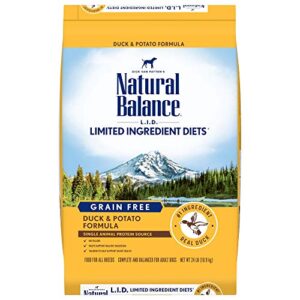
Duck offers a solid alternative for puppies with poultry or grain reactions. Natural Balance Duck & Potato Formula relies on duck meal and fresh duck as the primary proteins, delivering around 21–24% crude protein to build muscle without overwhelming sensitive tummies.
Potatoes replace grains, providing fiber that steadies digestion, while salmon oil brings in omega-3s for brain development and coat shine. It’s a limited-ingredient approach that cuts out common allergens, making it easier to pinpoint what works for your Goldendoodle’s unique needs.
| Best For | Goldendoodle puppies with sensitive stomachs, food allergies, or skin issues who need a simple, grain-free diet with a single protein source. |
|---|---|
| Brand | Natural Balance |
| Primary Protein | Duck |
| Age Range | Adult |
| Item Form | Dry |
| Weight | 24 lb |
| Price | $128.99 |
| Additional Features |
|
- Duck-based formula avoids common allergens like chicken and grains, making it easier to identify triggers
- Salmon oil provides omega-3s for healthy brain development and a shiny coat
- Limited ingredients reduce the risk of digestive upset and allergic reactions
- Higher price point at $128.99 for 24 pounds compared to other puppy foods
- Some owners report inconsistent quality or formula changes that caused digestive issues
- Lower protein content (21-24%) may not be ideal for very active or large-breed puppies
4. Purina One Large Breed Puppy Food
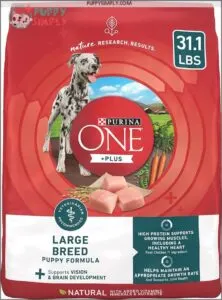
Real chicken shows up first on the ingredient list, which means protein‘s front and center for building those strong, growing muscles your Goldendoodle needs.
Purina One Large Breed Puppy Food packs in glucosamine and chondroitin to keep joints healthy while your pup shoots up in size—especially important since large-breed puppies can develop hip issues if their diet isn’t balanced.
DHA from fish oil aids brain and vision development, and the kibble size is designed to slow down those quick eaters.
| Best For | Owners of large-breed Goldendoodle puppies who want high-quality nutrition with real chicken as the main protein source and added joint support during the critical growth phase. |
|---|---|
| Brand | Purina ONE |
| Primary Protein | Chicken |
| Age Range | Puppy |
| Item Form | Granule |
| Weight | 31.1 lb |
| Price | Not specified |
| Additional Features |
|
- Real chicken is the first ingredient, providing high-quality protein for strong muscle development and a healthy heart
- Contains glucosamine and chondroitin to support healthy joint and bone development, crucial for large breeds prone to hip issues
- Includes DHA from fish oil for brain and vision development, plus four antioxidant sources to strengthen the immune system
- Higher price point compared to standard puppy foods due to large-breed specific formulation and quality ingredients
- Large 31.1 lb bag size requires a bigger upfront investment and storage space
- Some users have reported quality control inconsistencies, and it may not work for puppies with specific food allergies or sensitivities
5. Blue Buffalo Puppy Dry Dog Food
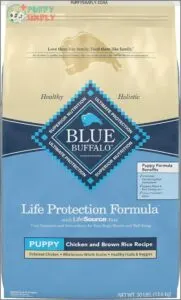
LifeSource Bits are what set this formula apart—they’re little kibbles packed with vitamins and minerals and antioxidants that support your puppy’s immune system as it develops.
Real chicken leads the ingredient list, giving your Goldendoodle the protein it needs for lean muscle growth. DHA and ARA from sources similar to mother’s milk help with brain and eye development, which is vital during those first months.
You won’t find chicken by-product meals, corn, wheat, or soy here, and the smaller kibble size makes it easier for young mouths to handle.
| Best For | Goldendoodle puppies who need nutrient-dense food that supports brain development, immune health, and muscle growth without common allergens like corn, wheat, or soy. |
|---|---|
| Brand | Blue Buffalo |
| Primary Protein | Chicken |
| Age Range | Puppy |
| Item Form | Pellet |
| Weight | 30 lb |
| Price | Not specified |
| Additional Features |
|
- Real chicken as the first ingredient provides high-quality protein for lean muscle development
- LifeSource Bits deliver targeted antioxidants and nutrients to support a developing immune system
- Includes DHA and ARA for cognitive and eye development during critical early months
- May cause gas or digestive issues in some puppies during the adjustment period
- Not appropriate for puppies with chicken allergies or specific dietary restrictions
- Some puppies may be picky eaters and reject the food initially
6. Taste Of The Wild Puppy Food
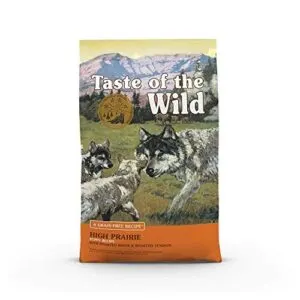
Roasted bison and venison give this formula a protein punch your puppy won’t get from typical chicken-based foods, and that 28% protein content helps the strong muscles and bones your Goldendoodle needs.
If your Goldendoodle puppy struggles with digestion despite high-quality protein sources, consider switching to puppy food brands formulated for sensitive stomachs that use gentle, limited ingredients.
The grain-free recipe works well for puppies with sensitive stomachs, while those K9 Strain probiotics help keep digestion smooth and consistent. You’ll also find omega fatty acids for coat health and antioxidants from real fruits and vegetables. It’s made in the USA, which gives many owners extra peace of mind about quality control.
| Best For | Goldendoodle puppy owners looking for a high-protein, grain-free option with novel protein sources like bison and venison, especially if their pup has a sensitive stomach or food allergies. |
|---|---|
| Brand | Taste of the Wild |
| Primary Protein | Bison & Venison |
| Age Range | Puppy |
| Item Form | Dry Kibble |
| Weight | 28 lb |
| Price | $59.99 |
| Additional Features |
|
- 28% protein from real roasted bison and venison supports strong muscle and bone development
- Grain-free formula with probiotics helps puppies with sensitive digestion
- Made in the USA with omega fatty acids for coat health and antioxidants from fruits and vegetables
- Higher price point at $59.99 for 28lbs may not fit every budget
- Some puppies may need a gradual transition period to adjust to the novel proteins
- Not all dogs enjoy the taste of bison and venison compared to more familiar flavors like chicken
7. Canidae Pure Grain Free Puppy Food
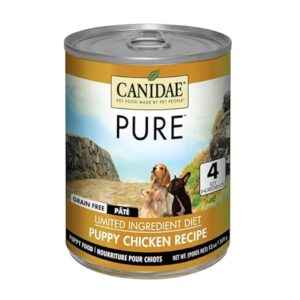
Four simple ingredients make up this formula, and that stripped-down approach can work wonders for puppies with sensitive stomachs or known food sensitivities.
Real chicken leads the list, followed by whole food peas in a grain-free recipe that skips common irritants like corn, wheat, and carrageenan. You’re getting mid-20s to low-30s percent protein on a dry matter basis, which promotes lean muscle growth without overwhelming young digestive systems.
The limited ingredient design means fewer chances for allergic reactions, though it does come at a higher price point than some alternatives.
| Best For | Puppy owners looking for a simple, grain-free option that’s gentle on sensitive stomachs and minimizes allergy risks with just four clean ingredients. |
|---|---|
| Brand | CANIDAE |
| Primary Protein | Chicken |
| Age Range | Puppy |
| Item Form | Wet |
| Weight | 12 x 13 oz |
| Price | $50.77 |
| Additional Features |
|
- Real chicken as the first ingredient supports lean muscle development with quality protein
- Limited ingredient formula (just 4 ingredients) reduces the chance of triggering food sensitivities or allergic reactions
- Grain-free recipe excludes common irritants like corn, wheat, soy, and carrageenan
- Higher price point at $50.77 for 12 cans compared to many other puppy food options
- Not suitable for puppies with chicken allergies or sensitivities
- Limited to puppy stage only, so you’ll need to switch formulas as your dog matures
8. Hill’s Science Diet Large Breed Puppy Food
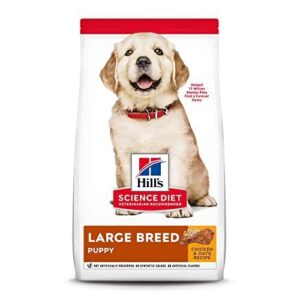
Hill’s Science Diet Large Breed Puppy Food builds its reputation around controlled calcium levels that help protect rapidly growing joints and bones—particularly important for goldendoodles prone to hip concerns.
You’re getting DHA from fish oil to support brain and eye development, along with quality animal protein for lean muscle. The kibble includes prebiotic fiber for digestive comfort, and the formula balances minerals to encourage steady, healthy skeletal growth without the spikes that can stress developing frames during those critical first months.
| Best For | Goldendoodle owners raising large breed puppies who want controlled calcium levels to protect developing joints and support steady bone growth without overtaxing growing frames. |
|---|---|
| Brand | Hill’s Science Diet |
| Primary Protein | Chicken Meal |
| Age Range | Puppy |
| Item Form | Pellet |
| Weight | 30 lb |
| Price | Not specified |
| Additional Features |
|
- Controlled calcium formula specifically targets healthy skeletal development in large breeds prone to hip issues
- DHA from fish oil supports brain and eye development during critical early growth stages
- Prebiotic fiber promotes digestive comfort, helpful for puppies with sensitive stomachs
- Higher price point compared to standard puppy food options
- Some reports of packaging quality issues like torn bags upon delivery
- A few puppies may experience gas or minor digestive adjustment when switching foods
9. Royal Canin Medium Puppy Food
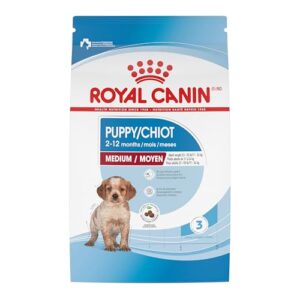
Royal Canin Medium Puppy Food tailors its formula to the short growth window that medium-sized goldendoodles experience, delivering a balanced energy profile alongside highly digestible proteins from dehydrated poultry.
You’ll find prebiotics like fructo-oligosaccharides working to support gut health and easier stool quality, while omega fatty acids nourish skin and coat.
The patented antioxidant complex helps build immune resilience during those vulnerable early months, and the kibble size suits medium breed chewing abilities—making mealtimes both nutritious and manageable for your pup.
| Best For | Medium breed goldendoodle puppies (expected adult weight 23-55 lbs) who need targeted nutrition during their critical first year of growth. |
|---|---|
| Brand | ROYAL CANIN |
| Primary Protein | Chicken |
| Age Range | Puppy |
| Item Form | Kibble |
| Weight | 17 lb |
| Price | $73.99 |
| Additional Features |
|
- Supports brain development and immune system with antioxidants and omega fatty acids during the vulnerable puppy stage
- Promotes healthy digestion with prebiotics that help maintain good gut health and consistent stool quality
- Crunchy kibble size is designed specifically for medium breed jaws and can be mixed with wet food for variety
- Pricey at $73.99 for a 17 lb bag compared to other puppy food brands on the market
- Some puppies experience digestive upset or diarrhea when first switching to this formula
- Certain pups may be picky eaters and refuse it unless you add extra protein or toppers
Essential Nutrients for Goldendoodle Puppies

Your Goldendoodle puppy needs the right balance of nutrients to grow strong and healthy without putting too much strain on developing bones and joints. Think of it like building a house—you need quality materials in the right amounts, or things can go wrong down the line.
Goldendoodle puppies need balanced nutrition—quality materials in the right amounts—to build strong bones and joints without strain
Let’s break down the essential nutrients your pup needs and why each one matters for those critical first months.
Protein Needs for Healthy Growth
Your Goldendoodle puppy needs solid protein to build muscle, organs, and tissue during those rapid growth stages. Aim for 1.0 to 1.6 grams per kilogram of body weight daily, depending on activity level.
Quality animal proteins like chicken or fish deliver the amino acid balance puppies crave. Spread meals across the day to keep energy needs steady and support healthy nutrient ratios without tipping into overfeeding.
Importance of Healthy Fats and Omegas
Healthy fats power energy metabolism and support brain development in your Goldendoodle puppy. Look for puppy food with omega 3s from fish oil or flaxseed—they reduce inflammation and sharpen cognition. A balanced omega balance also matters for skin and coat health.
Because fats enable fat solubility of vitamins A, D, E, and K, they’re critical for strong bones and immunity. Aim for 12 to 22 percent fat content in quality canine nutrition formulas built around animal protein. Understanding the importance of different types of fats can help you choose the best food for your puppy’s overall health.
- DHA and EPA support normal cognitive function and brain cell growth
- Omega 3s reduce inflammation for comfortable joints and mobility
- Linoleic acid keeps skin and coat healthy during rapid growth
- Fats deliver energy puppies need without overloading on carbs
- Quality fish oils preserve omega content better than processed supplements
Key Vitamins and Minerals
Beyond fats, vitamins and minerals fuel the biochemical reactions that drive every cell in your puppy’s body.
Vitamin A sharpens vision and strengthens immunity, while calcium and phosphorus build strong bones—aim for a 1.2 to 1.5 ratio to prevent skeletal issues.
Iron facilitates energy metabolism, zinc keeps skin healthy, and iodine regulates growth through thyroid function.
Quality puppy food balances these nutrients, so mineral supplements aren’t usually needed unless your vet recommends them for a specific nutrient deficiency.
The Role of Fiber in Puppy Diets
Fiber often flies under the radar, but it plays a surprisingly big role in puppy digestion. Soluble fiber slows digestion to boost nutrient absorption and steady blood sugar, while insoluble fiber adds bulk for regular bowel movements.
Sources like pumpkin, oats, and beet pulp support gut health by feeding beneficial bacteria, improving stool quality, and helping your Goldendoodle puppy feel satisfied between meals. For more insight into the role of fiber sources for dogs, consider which types of fiber provide the greatest benefits for growing puppies.
Goldendoodle Puppy Feeding Guidelines

Getting the feeding routine right during your Goldendoodle’s puppyhood sets the foundation for a lifetime of good health. It’s not just about what goes in the bowl, it’s about when, how much, and how you adjust as your pup grows.
Let’s walk through the key feeding guidelines that’ll help your Goldendoodle puppy thrive.
Age-Appropriate Feeding Schedules
Young puppies thrive on routine, so feeding frequency really matters. From 8 to 12 weeks, you’ll want to offer puppy food 3 to 4 times daily to support rapid puppy development.
As your Goldendoodle grows, shift to 3 meals between 3 and 6 months, then settle into 2 meals by their first birthday. Schedule consistency helps with dog nutrition and growth tracking.
Portion Control and Calorie Density
Getting portion sizes right means understanding calorie density—the calories packed into each cup of Puppy Food. Most Goldendoodle formulas range from 320 to 450 kcal per cup, so a high-density kibble delivers more Energy Intake in smaller servings. Start with package guidelines, then fine-tune based on your pup’s growth pace and body condition.
- Check the calorie density on your bag to calculate accurate Portion Sizes for dog nutrition
- Use measuring cups or a kitchen scale for consistent Feeding Routines and Calorie Management
- Monitor weekly weight gain and adjust portions to maintain a steady, healthy growth curve
- Favor foods with moderate calorie density to support Nutrient Balance without overfeeding
- Watch for a visible waist and rib feel—signs your portion control is on track
Adjusting Meals for Activity Level
Active puppies burn through calories fast, so you’ll want to track how much they run, play, and train each day. On high-energy days, boost their puppy food intake by 15 to 25 percent to fuel those Goldendoodle zoomies and support healthy puppy development. Moderate activity calls for a 10 to 15 percent calorie adjustment, while quieter days need baseline portions to prevent overfeeding.
| Activity Level | Calorie Adjustment | Meal Timing Tips |
|---|---|---|
| High Activity | +15–25% above baseline | Feed 1–2 hours before play |
| Moderate Activity | +10–15% above baseline | Split into 3 meals evenly |
| Low Activity | Baseline calories | Standard morning/evening routine |
Focus on nutrient balance by choosing calorie-dense sources—lean proteins and complex carbs—rather than just adding more kibble. Time larger meals 1 to 2 hours before strenuous activity so your pup has steady energy without digestive upset. Activity tracking helps you match energy needs to canine health goals, keeping your Goldendoodle’s growth curve smooth and their coat shiny.
Monitoring Growth and Weight
Weekly growth tracking during the first six months captures your Goldendoodle’s rapid development and helps you fine-tune puppy food portions. Weigh your pup at the same time each day, using the same scale for consistency. Record both weight and body condition—ribs should be felt but not seen—then compare results against breed benchmarks.
If weight shifts suddenly or falls outside the ideal range, adjust your feeding strategies and schedule a veterinary check to keep puppy development on track.
Choosing The Right Formula for Your Goldendoodle

Once you’ve nailed down your puppy’s feeding schedule and portion sizes, it’s time to pick the actual formula that’ll fuel their growth.
Not all puppy foods are created equal, and your Goldendoodle’s size, digestion, and ingredient sensitivities all play a role in what works best.
Here’s what to keep in mind when you’re comparing labels and narrowing down your options.
Grain-Free Vs. Grain-Inclusive Options
You’ll find both grain-free and grain-inclusive puppy food options for your Goldendoodle, and here’s what matters most. Grain-free diets replace grains with peas, lentils, or sweet potato for carbohydrates, often using meat-based protein to meet energy needs.
They can cost more due to specialized sourcing. Choose grain-free only if your puppy has confirmed grain allergies or food sensitivity—otherwise, grain benefits include digestible fiber and balanced nutrition.
Large Breed Puppy Formulas
Your Goldendoodle’s size determines whether you need a large breed puppy formula.
Standard Goldendoodles—those hitting 50 pounds or more—benefit from formulas calibrated for controlled growth.
These recipes balance 22 to 26 percent protein with carefully adjusted calcium and phosphorus to support steady bone development, helping prevent hip dysplasia and other joint issues common in rapidly growing puppies.
Human-Grade and Fresh Food Choices
Some owners are switching to human-grade options that mirror what you’d find in your own fridge. These meals use real meats, vegetables, and grains prepared in FDA-approved facilities, offering transparency and nutrient balance customized to your puppy’s needs.
Fresh Food Benefits include:
- High moisture content aids hydration and digestion
- Omega-3s from fish or flax boost coat and brain development
- Pre-portioned delivery simplifies meal planning tips
- Veterinary nutritionist input ensures adequate puppy nutrition
Monitor your Goldendoodle’s weight weekly, especially when switching to grain-free or fresh diets.
Limited Ingredient Diets
If your Goldendoodle puppy shows signs of food allergies—itching, tummy trouble, or ear infections—limited ingredient diets can help. These formulas use a single protein like turkey or venison paired with one carbohydrate such as potato or rice, making it easier to pinpoint triggers. Whether you choose grain-free or grain-inclusive puppy food, watch for improvements over an 8 to 12-week trial.
| Component | What to Look For | Why It Matters |
|---|---|---|
| Protein source | Single option: turkey, venison, salmon | Reduces exposure to common allergens |
| Carbohydrate | Potato, rice, or oats | Limits grain-related sensitivities |
| Added nutrients | Omega fatty acids, fortified vitamins | Helps skin health and growth |
| Ingredient count | Short, simple list | Easier allergen tracking |
| Transition period | 7–10 days gradual shift | Prevents digestive upset |
Track your puppy’s weight and energy weekly during the switch to confirm the limited ingredients meet their needs.
Best Puppy Food for Mini Goldendoodles
Mini Goldendoodles have unique nutritional needs that differ from their standard-sized cousins.
Their smaller mouths and faster metabolisms mean you’ll need to think about both what’s in the bag and how it’s shaped.
Let’s look at what makes a puppy food work well for these pint-sized pups.
Nutritional Needs for Smaller Sizes

Mini Goldendoodles pack a lot of energy into a compact frame, so their dietary needs deserve special attention. Your smaller pup needs food that delivers complete nutrition without overwhelming that tiny appetite.
Here’s what matters most for mini Goldendoodle puppy care:
- Small Pup Protein between 22 to 28 percent aids lean muscle without taxing digestion
- Tiny Appetite Calories around 850 to 1100 kcal daily fuel growth in smaller portions
- Joint Fatty Acids from fish oil protect developing hips and knees
- Mineral Balance ensures proper bone growth without excess calcium
Recommended Kibble Size and Texture

Once you’ve nailed those nutritional basics, the physical form of the food matters just as much. Kibble diameter between 6 and 8 millimeters fits perfectly into small mouths, helping your mini Goldendoodle puppy food experience feel comfortable rather than frustrating.
Texture variations like softer, melt-in-mouth kibble ease teething discomfort, while moderate crunch levels support healthy jaw development. Bite size affects palatability factors too—smaller pieces release aroma faster, making grainfree or grain-inclusive formulas equally appealing during mealtime.
Managing Allergies and Sensitivities in Goldendoodle Puppies

Goldendoodle puppies can develop sensitivities to certain ingredients, just like any other breed. Catching these early makes a real difference in your puppy’s comfort and long-term health.
Let’s walk through the common allergens to watch for, hypoallergenic food options that work, and the signs that tell you something’s not sitting right.
Common Food Allergens to Avoid
Food allergies and sensitivities can sneak up on your Goldendoodle puppy, turning mealtime into a mystery. Some of the biggest culprits include:
- Dairy Allergies – Milk proteins like casein and whey trigger reactions in about 2 to 3 percent of sensitive pups, causing itching or tummy upset
- Wheat Sensitivity – Gluten can hide in sauces and processed foods, making grain-free options worth considering
- Egg Allergens – Both whites and yolks contain proteins that spark skin issues or digestive trouble in certain puppies
Soy Intolerance and Nut Reactions also pop up occasionally, affecting puppy health and dog nutrition and health when your pup has a sensitive stomach.
Hypoallergenic Puppy Food Options
When your Goldendoodle puppy has food allergies and sensitivities, hypoallergenic puppy food offers real relief.
Novel protein sources like duck, venison, or lamb paired with hypoallergenic ingredients such as potato or rice help ease a sensitive stomach.
Limited ingredient formulas and hydrolyzed protein diets minimize reactions, while food allergy tests guide your puppy nutrition plans toward sensitive stomach care that actually works.
Signs of Food Sensitivities
Digestive issues like bloating and gas, or loose stools within hours of eating can signal your Goldendoodle puppy’s struggle with certain dog food ingredients.
Skin reactions—itchy paws, red rashes, or dull coat—often follow, while respiratory problems and behavioral changes like restlessness may appear too.
These signs point to sensitive stomachs needing puppy food that promotes digestive health and prevents nutrient deficiencies before they take hold.
Transitioning Goldendoodle Puppies to Adult Food

Switching your Goldendoodle puppy from puppy food to adult food is a landmark that requires careful timing and a thoughtful approach. Getting this change right helps prevent digestive upset and promotes your dog’s continued health as they mature.
Let’s walk through when to make the switch, how to do it safely, and what signs tell you your puppy is ready for the change.
When to Switch Puppy to Adult Food
You’ll know it’s time to make the nutrient shift from puppy food to adult dog food when your Goldendoodle hits about 80 percent of their expected adult size.
Here’s what guides timing for the change:
- Growth monitoring through weekly weigh-ins and body condition checks
- Age benchmarks around 9 to 18 months depending on size
- Health checks confirming stable development
- Feeding schedules that match slowing growth rates
How to Transition Diets Safely
Think of diet switching like shifting gears—you can’t just jump straight to fifth. Start your gradual changeover by mixing 25 percent new puppy food with 75 percent current food for two days, then shift to 50-50 by day three.
Move to 75 percent new by day five, reaching 100 percent by day seven if digestive health stays smooth throughout.
Signs Your Puppy is Ready for Adult Food
Watching for readiness means tracking Growth Indicators that show your Goldendoodle hitting about 80 percent of adult size—usually between 9 and 15 months.
Key Feeding Cues and Health Transitions include:
- Stable energy levels with reduced appetite intensity
- Consistent coat texture and improved skin condition
- Well-formed stools during gradual Nutrient Shifts
These Development Stages signal it’s time to think about adult dog food for proper canine health.
Tips for Maintaining Goldendoodle Puppy Health Through Diet

Getting your Goldendoodle puppy off to a strong start means more than just picking a quality food—it’s about how you feed, how much you offer, and how you support their growing body every single day.
Small choices around portions, routines, and extras like supplements can make a real difference in preventing issues down the road. Here are four practical tips to help you keep your puppy healthy and thriving through smart nutrition habits.
Preventing Overfeeding and Obesity
Overfeeding sneaks up fast—those puppy eyes can be hard to resist. Stick to measured portions and calorie management using a kitchen scale, not eyeballing.
Track your Goldendoodle’s weight weekly and feel for ribs with gentle pressure. Obesity prevention starts now, so swap high-calorie treats for crunchy kibble pieces.
Consistent portion control keeps your pup lean, energetic, and primed for lifelong canine health.
Supporting Healthy Joints and Bones
Once you’ve nailed portion control, focus on joint health and bone density—your Goldendoodle’s frame needs the right nutrient balance during those first critical months.
Here’s how to protect growth plates and cartilage support:
- Balance calcium and phosphorus carefully in large breed puppy formulas
- Add omega-3s from fish oil to calm inflammation
- Include glucosamine and chondroitin for cartilage support
- Monitor weight to prevent joint stress
Strong bones start with smart dog nutrition.
The Importance of Consistent Feeding Routines
Beyond joint care, a reliable feeding schedule brings order to your Goldendoodle’s day and promotes digestive health.
| Feeding Routine Element | Impact on Puppy Development |
|---|---|
| Consistent meal timing | Steadier metabolism and energy levels |
| 3-4 daily portions (under 6 months) | Matches high calorie needs |
| Predictable intervals | Reduces night waking, improves sleep |
| Measured portions | Prevents overfeeding, tracks growth |
| Regular schedule | Easier appetite monitoring for canine health |
Structured puppy feeding schedules help you spot appetite changes early and maintain nutrient balance.
Using Supplements Wisely
A well-rounded puppy food should cover most of your Goldendoodle’s needs, so supplement safety starts with checking whether extras are truly necessary.
Dosage control matters—over-supplementing calcium, for instance, can interfere with healthy absorption and puppy development. Always consult your vet before adding anything new, ensuring balanced intake that promotes canine health without triggering nutrient interactions or disrupting your pup’s dog nutrition foundation.
Frequently Asked Questions (FAQs)
What is the best food for a Goldendoodle puppy?
Your growing Goldendoodle thrives on nutrient-dense dog nutrition featuring quality protein sources, balanced fats, and controlled calcium levels—ingredients that support canine health without risking joint strain during those critical early months of development.
What do vets recommend for goldendoodles?
Vets recommend AAFCO-approved puppy food with quality animal protein, balanced calcium-phosphorus ratios for large breeds, and regular health checks.
They emphasize portion control, gradual diet transitions, and tailored nutrition plans based on your Goldendoodle’s growth and activity level.
What foods are toxic to goldendoodles?
Chocolate, xylitol, grapes, onions, and garlic top the toxic food list for goldendoodles. These poisonous ingredients trigger symptoms from vomiting to kidney failure.
Always check labels to protect your puppy’s canine health and avoid every toxic substance.
How much food should I feed my Goldendoodle puppy each day?
If your 12-week-old Goldendoodle puppy suddenly refuses breakfast, check your portions first. Most medium-sized puppies need 2 to 4 cups daily, split across meals, adjusted for steady growth and daily calorie needs.
What type of treats are best for Goldendoodles?
Look for high-quality soft training rewards with real meat as the first ingredient. Small bite-sized healthy snacks work best for frequent sessions, while dental chews support oral health.
Grain-free options help Goldendoodles with sensitive stomachs.
How often should I feed my Goldendoodle?
Your Goldendoodle puppy needs 3 to 4 meals daily until about 12 weeks old.
After that, you can shift to 2 to 3 meals through the first year, matching portions to their growth stages and energy levels.
What are the signs of an allergic reaction to food for Goldendoodles?
You might notice itchy ears, red paw pads, or facial rashes first.
Digestive reactions like vomiting or diarrhea often follow meals, while behavioral changes such as excessive scratching signal your Goldendoodle’s discomfort with certain ingredients.
Can goldendoodle puppies eat raw food diets?
Yes, Goldendoodle puppies can eat raw food, but it takes careful planning to balance calcium, phosphorus, and nutrients for growing bones.
Work with your vet to guarantee proper nutrition and safe handling.
What human foods are safe for goldendoodle puppies?
Your pup can enjoy plain cooked chicken, blueberries, carrots, and sweet potato as healthy treats.
Skip grapes, chocolate, onions, and xylitol—they’re toxic. Always introduce human snacks gradually to support puppy nutrition and canine digestion.
How much water should goldendoodle puppies drink daily?
Your growing pup needs about 5 to 1 ounce of water per pound of body weight each day. During warm weather or active play, daily hydration needs can jump by 25 to 50 percent.
Conclusion
Finding the best puppy food for Goldendoodle doesn’t have to be a “ruff” journey when you know what to look for. Your pup’s nutritional foundation shapes everything from coat quality to joint health, so choosing a formula with balanced protein, essential omegas, and appropriate calcium levels matters deeply.
Trust your observations, adjust portions as your puppy grows, and remember that what works perfectly for one Goldendoodle might need tweaking for another. You’re building their future, one bowl at a time.
- https://open-farm-pet.pxf.io/c/2442109/2832567/12719
- https://www.fda.gov/animal-veterinary/animal-health-literacy/questions-answers-fdas-work-potential-causes-non-hereditary-dcm-dogs
- https://vcahospitals.com/know-your-pet/food-allergies-in-dogs
- https://pangovet.com/talk-to-a-vet-online-dog-preventative-wellness/?utm_source=dogster&utm_medium=article&utm_campaign=dog-preventative-wellness&utm_content=best-puppy-foods-for-goldendoodles
- https://doi.org/10.3389/fanim.2024.1440644