
This site is supported by our readers. We may earn a commission, at no cost to you, if you purchase through links.

French Bulldogs eat like athletes but breathe like they just climbed a flight of stairs. nutritional needs are anything but ordinary.
wrong kibble shows up fast—loose stools, itchy skin, or a dog that won’t touch the bowl twice.
Finding the best dry dog food for French Bulldogs isn’t about grabbing whatever’s on sale. protein source, kibble shape, fat ratios, and ingredient count all matter more than the marketing on the bag.
Here’s what actually works.
Table Of Contents
- Key Takeaways
- Best Dry Foods for French Bulldogs
- French Bulldog Nutrition Needs
- How to Choose Frenchie Kibble
- Ingredients to Watch Closely
- Feeding Your French Bulldog Dry Food
- Frequently Asked Questions (FAQs)
- Do older Frenchies need more protein… or less?
- What’s the best food for a French bulldog puppy?
- What is best to feed my Frenchie?
- What is the best dry food for French Bulldogs?
- What food is best for French Bulldogs to eat?
- Do French Bulldogs need specific food?
- How Much Should I Feed My French Bulldog?
- How Many Times a Day Should I Feed My French Bulldog?
- What Treats Are Safe For French Bulldogs?
- Are There Any Special Considerations for French Bulldog Nutrition?
- Conclusion
Key Takeaways
- French Bulldogs need named animal protein first on the label, small kibble for their flat jaws, and 12–18% fat to stay lean and healthy.
- Grain-free diets carry real heart risks — the FDA linked them to dilated cardiomyopathy, so grain-inclusive formulas are the safer bet for most Frenchies.
- Nutritional needs shift at every life stage: puppies need DHA and calcium, adults need portion control, and seniors need at least 28% protein to hold onto muscle.
- Transition foods slowly over 7–10 days and watch for stool changes, vomiting, or skin reactions that signal a poor ingredient match.
Best Dry Foods for French Bulldogs

Picking the right kibble for your Frenchie doesn’t have to feel overwhelming. We’ve done the homework and found options that fit different needs and life stages. Here are our top picks, broken down so you can find the best match for your pup.
If you’re just starting out, this guide to dry dog foods for first-time dog owners is a great place to build your foundation before diving into Frenchie-specific picks.
Best Overall Kibble
The best overall kibble starts with a named animal protein, like chicken or turkey, as the first ingredient. That builds lean muscle and enhances protein digestibility.
Look for healthy fat ratios, with omega-3 and omega-6 for skin and coat.
Small, easy-to-chew bites help Frenchies eat safely. Choose an AAFCO-recognized, vet-recommended formula with nutrient integrity and no fillers. Ensuring the kibble complies with AAFCO‑certified nutrition standards provides a reliable baseline of essential nutrients.
Best Grain-Inclusive Option
Grain-inclusive dry dog food is often the safer bet for French Bulldogs with sensitive stomachs. Ingredients like oats, barley, and brown rice deliver steady carbohydrate sources without the DCM concerns linked to grain-free formulas.
Look for digestible protein blends — chicken, turkey, or lamb listed first.
Merrick Classic Beef & Brown Rice is a solid pick, offering 29% protein and reliable fiber for regularity.
Best Limited-Ingredient Food
Some Frenchies do better with fewer ingredients. A limited ingredient diet lowers allergy triggers and eases digestion.
Here are five vet-recommended picks:
- Natural Balance L.I.D. – single protein, allergy-friendly diet
- Canidae Pure – eight core ingredients, novel protein sources
- Instinct LID – single protein, promotes gut health
- Blue Basics LID – novel proteins like kangaroo or salmon
- Merrick LID – turkey first, clear ingredient transparency
Each offers solid allergen reduction for sensitive French Bulldogs.
Best Puppy Dry Food
Puppies need more than allergy-friendly basics. They need fuel for growth.
Look for puppy formulas with 24-32% protein and 12-22% fat. Royal Canin French Bulldog Puppy fits this breed’s jaw shape perfectly.
DHA for brain development matters too. Blue Buffalo Puppy Chicken & Oatmeal delivers that, plus calcium for sturdy bones. Small kibble texture makes chewing easy on tiny mouths.
Best Senior Dry Food
Senior French Bulldogs need fewer calories but more protein — at least 28% — to hold onto muscle as they age. Hill’s Science Diet Adult 7+ and Orijen Senior both deliver on this.
Look for added glucosamine, omega-3s, and vitamin E for joint comfort, brain function, and cellular protection.
Keep portions tight: around 400–700 kcal daily.
French Bulldog Nutrition Needs

French Bulldogs aren’t just any small dog — their compact build and brachycephalic anatomy mean their nutritional needs are specific and worth getting right. What you feed your Frenchie at 3 months looks very different from what they need at 10 years. Here’s what changes across each life stage.
Puppy Growth Requirements
Your Frenchie puppy’s first year is basically a construction project — bones, muscles, and a brain all being built at once.
That means nutrition timing really matters — check out this guide on how often puppies should eat per day to keep all that growth on track.
Calcium requirements for puppies sit between 1.2–1.8%, supporting skeletal development without overdoing it. DHA fuels neural growth and sharpens vision. Growth-phase pups need roughly twice the calories per pound as adults.
Key nutrients to prioritize:
- Animal protein for lean muscle and organ development
- Calcium and phosphorus at a 1.2:1 ratio for strong bones
- DHA and EPA for brain and eye development
- Amino acids like methionine for tissue growth
- Measured portions to prevent puppy obesity
Look for AAFCO "Growth" or "All Life Stages" labeling. Royal Canin French Bulldog Puppy meets this standard and suits the breed’s life stage nutrition needs well. Avoid overfeeding — puppy obesity prevention matters early, since excess weight stresses developing joints fast.
Adult Weight Maintenance
Once your dog hits adulthood, weight management becomes the main job.
Adult Frenchies need 22-28% protein and roughly 900-1300 kcal daily to stay lean.
Caloric surplus risks sneak in through treats, chews, and toppers—measure those calories too.
Use body condition scoring monthly, and adjust portions if activity drops.
Consistent feeding schedules, split into two meals, support obesity prevention long-term.
| Body Condition | Action |
|---|---|
| Ribs easily felt | Maintain portion |
| Ribs hard to feel | Reduce food 10% |
| Visible waist missing | Cut treats, recheck weekly |
Senior Protein Needs
Aging quietly changes everything about how your Frenchie uses food.
By age 10, muscle loss accelerates—and protein becomes the front-line defense. Seniors need at least 28% protein from high-quality animal sources like chicken, fish, or eggs. These deliver leucine, the amino acid that directly triggers muscle rebuilding.
By age 10, senior Frenchies need at least 28% protein to defend against muscle loss
- Spread protein across two meals for steady muscle support
- Choose foods with higher protein density to compensate for smaller appetites
- Look for multiple animal proteins listed early on the label
Lean mass preservation depends on consistency—same meals, same timing, every day.
Calcium Phosphorus Balance
Think of calcium and phosphorus as a tag team — they only work when the ratio is right. Aim for 1.2:1 to 1.4:1 calcium-to-phosphorus in your Frenchie’s kibble.
Too much phosphorus triggers hormonal stress responses that pull calcium from bones. Look for foods meeting AAFCO nutrient profiles to guarantee that balance is already built in.
Healthy Fat Levels
Fat fuels your Frenchie, but too much skews caloric density fast.
Aim for 12-18% fat to support energy density and weight management.
- Choose digestible fat sources like salmon oil for omega-3 fatty acids
- Check for vitamin E to cut fat oxidation risks
- Watch your protein-to-fat ratio closely for skin coat health
- Consider fatty acid supplementation if your coat looks dull
How to Choose Frenchie Kibble
Picking the right kibble can feel overwhelming with so many options on the shelf. Good news: it gets easier once you know what to check for. Here are the five things that matter most when reading a label.
AAFCO Complete and Balanced
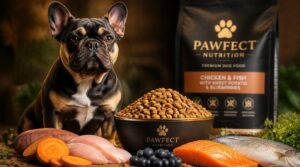
Look for the phrase "complete and balanced" on any bag. That statement means the food meets AAFCO’s Nutrient Profile Standards or passed a Feeding Trial.
Both paths confirm your Frenchie’s dry dog food delivers everything they need.
Check the label for the life stage too — Growth vs Maintenance matters more than most owners realize.
Animal Protein First
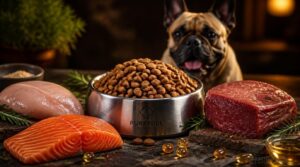
After checking for "complete and balanced," flip the bag over. Animal protein should sit first on the ingredient list—chicken, beef, or fish, not just "meal."
That’s animal protein first in action.
High protein content fuels muscle mass preservation in your French Bulldog. Quality protein sourcing means better digestible protein scores and stronger amino acid absorption. Higher biological value simply means more nutrition reaches your dog’s body, not the litter box.
Small-Breed Kibble Shape

Protein placement matters, but shape matters too for small breed dry dog food.
French Bulldogs have short jaws, so kibble size for small jaws really counts.
Here’s what matters:
- 6-8 mm pieces sized for compact mouths
- Ridged textures for dental scrubbing action
- Cross shapes that create slow feeding habits
- Firm bites boost jaw muscle engagement
- Smooth surfaces for better palatability
Omega Fatty Acids
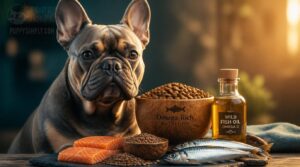
Shape gets kibble into your Frenchie’s mouth. Omega fatty acids keep what’s inside it working.
Look for fish oil on the label — it delivers EPA and DHA directly. These omega-3 fatty acids reduce inflammation, support skin and coat health, and keep cell membranes flexible. Aim for ≥ 0.5 % EPA/DHA in the formula.
Joint Support Ingredients

French Bulldogs are prone to patellar luxation and IVDD, so joint support in dry food matters more than most owners realize.
Four ingredients to look for:
- Glucosamine sulfate — builds cartilage-supporting glycosaminoglycans
- Chondroitin sulfate — resists joint compression and reduces stiffness
- Hydrolyzed collagen — absorbs easily and reinforces connective tissue
- MSM (methylsulfonylmethane) — sulfur compound that enhances daily mobility
Ingredients to Watch Closely
Reading a pet food label can feel like decoding a puzzle. But once you know what to look for — and what to skip — it gets a lot easier. Here are the key ingredients to keep on your radar when shopping for your Frenchie.
Common Frenchie Allergens
Your Frenchie’s itchy skin or upset stomach might trace back to its food bowl.
Beef, chicken, dairy, and wheat are the most common culprits.
These ingredients trigger hives, persistent itching, vomiting, or loose stools in sensitive dogs. Wheat can even cause skin flare-ups.
Always scan labels carefully — hidden allergens hide in plain sight.
Grain-Free Diet Concerns
Grain-free sounds healthy — but it carries real risks for French Bulldogs.
The FDA flagged these diets in 2018, linking them to dilated cardiomyopathy (DCM), a serious heart condition that can lead to heart failure.
Here’s what the concern really comes down to:
- Many grain-free formulas rely heavily on legumes like peas and lentils
- These ingredients may interfere with taurine absorption, a nutrient critical to heart health
- Taurine deficiency has been identified in some affected dogs
- The risk grows with long-term grain-free feeding without vet guidance
- Switching diets and supplementing taurine has helped some dogs recover
The causes aren’t fully proven yet — but the pattern is hard to ignore.
Artificial Colors and Preservatives
Bright colors don’t feed your dog—they feed marketing. Synthetic dye risks include itching, GI upset, even behavior changes from Yellow 5 and 6.
Skip BHA, BHT, and ethoxyquin too; these preservatives raise long-term concerns. Choose natural preservation methods—antioxidant based preservatives like rosemary extract, in a preservative-free formulation.
Check colorant labeling standards, and watch for additive sensitivity signs like loose stools.
Probiotics for Digestion
Not all probiotics are created equal. Look for foods listing the strain name—like Lactobacillus or Bifidobacterium—since each works differently.
Survival matters: only hardy strains or enteric-protected blends reach your dog’s gut alive.
Aim for high CFU potency, and pair probiotics with prebiotic fiber (think beet pulp or pumpkin) for true digestive support and gut health.
Label Transparency
Reading a dog food bag shouldn’t feel like decoding a secret code. Real transparency means no vague terms, just clear facts.
Check these four things:
- True weight order for every ingredient—no mystery "meat meal"
- An AAFCO statement verifying complete and balanced nutrient profiles
- Country of origin printed clearly on the bag
- A real certification mark, not just clever packaging
Feeding Your French Bulldog Dry Food

Picking the right food is only half the job. How you feed it matters just as much. Here’s what to know before mealtime.
Daily Portion Guidelines
Start with the bag’s feeding guide for your dog’s weight and life stage. Most Frenchies need 900–1,300 kcal daily, split across two meals.
Measure every portion with a kitchen scale — scoops lie.
Treat calories count too; cut kibble if treats increase. Adjust based on body condition, not just the scale.
Preventing Unhealthy Weight Gain
Portion control gets you halfway there. The rest comes down to habits.
- Measure every meal — skip guessing; use a kitchen scale each time.
- Count treat calories — they add up fast and cause weight creep.
- Stick to two meals daily — scheduled feeding beats free-feeding every time.
- Weigh your Frenchie weekly — catch slow gain before it becomes a problem.
- Keep activity consistent — even short walks balance daily calorie intake.
Switching Foods Safely
Once you’ve nailed portion control, the next challenge is switching foods without upsetting your Frenchie’s stomach.
Use gradual mixing ratios over 7–10 days: start at 25% new food, then move to 50/50, then 75%, then full swap. If loose stools appear, slow down. Store both bags in airtight containers to keep kibble fresh throughout.
Monitoring Digestive Reactions
Switching foods causes stress, so watch your Frenchie now.
Score stool as normal, soft, diarrhea, or mucus daily.
Check vomit color too — bile-yellow or food-colored both signal trouble. Track gas frequency and watch for ear irritation or paw licking.
Note appetite changes, since skipped meals can flag food sensitivities. A limited-ingredient formula promotes digestive health for dogs with sensitive stomachs.
Fresh Water With Kibble
Dry kibble is only part of the equation — fresh water matters just as much. Adding water to your Frenchie’s bowl boosts meal moisture by 10–20%, supporting digestion and stool consistency.
Senior dogs especially benefit, since thirst sensation fades with age. Start with a 1:1 ratio and adjust to preference.
Always keep a separate water bowl available.
Frequently Asked Questions (FAQs)
Do older Frenchies need more protein… or less?
More, actually. Healthy senior Frenchies need higher protein — around 28% dry matter — to fight muscle loss. Unless kidney disease is present. Then less. Always confirm with your vet first.
What’s the best food for a French bulldog puppy?
Look for ideal protein levels around 26-30%, plus bone development minerals. Blue Buffalo Puppy Chicken Oatmeal also adds puppy caloric density, brain development nutrients, and digestive health support for your French Bulldog puppy’s nutrition requirements.
What is best to feed my Frenchie?
What does your Frenchie’s bowl really need? Pick a vet-recommended, breed-specific formula matched to their life stage—puppy, adult, or senior. Adjust calories as they grow, focus on nutrient density, and feed two measured meals daily.
What is the best dry food for French Bulldogs?
Royal Canin French Bulldog Adult dry dog food tops the list as the best overall pick.
It’s built for breed-specific nutrition, with easy-to-chew kibble texture, high digestibility, balanced caloric density, and quality sourcing—truly vet-recommended.
What food is best for French Bulldogs to eat?
No single food suits every dog—French Bulldogs need digestible protein, novel proteins for allergy‑prone pups, fiber for digestion, and essential fatty acids.
Vet‑recommended, breed-specific dry dog food balances all four for steady energy, comfort.
Do French Bulldogs need specific food?
Yes. French Bulldogs have breed-specific nutritional needs shaped by their brachycephalic jaw, joint vulnerability, and compact build. Life stage matters too — puppies, adults, and seniors each need different protein and caloric levels.
How Much Should I Feed My French Bulldog?
Most adult French Bulldogs do well on 1 to 5 cups of dry food daily, split into two meals. Aim for 25–30 calories per pound of body weight.
How Many Times a Day Should I Feed My French Bulldog?
Puppies need 3 to 4 meals daily until 6 months, then shift to Adults thrive on two meals, 8-12 hours apart. Consistent timing curbs hunger gaps, enhances portion control, and matches life stage’s needs.
What Treats Are Safe For French Bulldogs?
Treat your Frenchie right — pick single-ingredient snacks like cooked chicken or frozen blueberries.
Avoid toxic grapes and chocolate completely. Choose low-calorie veggies like carrots, limit treat calories, and pick allergy-friendly, human-grade treats with natural ingredients.
Are There Any Special Considerations for French Bulldog Nutrition?
French Bulldogs face brachycephalic aerophagia risks, so kibble shape matters.
Grain-free links to DCM warrant caution.
Skeletal mineral ratios, digestibility standards, and nutrient synergy support joint health, skin, and weight management — true breed-specific nutrition basics.
Conclusion
The proof is always in the pudding—and for your Frenchie, it shows up fast in their coat, digestion, and energy levels.
Finding the best dry dog food for French Bulldogs takes more than a quick scan of the bag. Real animal protein first. Clean ingredients with no artificial fillers. The right kibble size for those flat little Frenchie faces.
Get those basics consistently right, and your dog won’t just eat well. They’ll truly thrive.
- https://thefarmersdog.otegtm.net/c/2442109/1640964/9488?subId3=best-dog-foods%2Ffrench-bulldogs_8igomBM7FM7eYYerAb2gUq3
- https://open-farm-pet.pxf.io/c/2442109/2832567/12719?subId3=best-dog-foods%2Ffrench-bulldogs_8iOU6oApYJs2AO32rJAE6lV
- https://sites.tufts.edu/petfoodology/2020/12/28/what-is-guaranteed-about-the-guaranteed-analysis/
- https://muenstermilling.com/?aff=249
- https://www2.dogfoodexposed.com/cid/7013w000002859QAAQ