
This site is supported by our readers. We may earn a commission, at no cost to you, if you purchase through links.

The wrong treat at the wrong moment can unravel a training session faster than a squirrel across the yard. dogs lose focus not because they’re stubborn, but because the reward didn’t match the moment—too big, too dry, too forgettable.
Treat selection is a training decision, not a shopping one.
The best dog training treats share a short list of non-negotiable qualities: small enough to swallow in seconds, soft enough to chew without a pause, and flavorful enough to compete with every distraction your dog finds more interesting than you.
The picks ahead meet all three.
Table Of Contents
- Key Takeaways
- 10 Best Dog Training Treats
- 1. Blue Buffalo Beef Soft Treats
- 2. Open Farm Soft Beef Training Treats
- 3. Pet Botanics Chicken Soft Dog Treats
- 4. Zukes Pumpkin Berry Dog Training Treats
- 5. Fruitables Pumpkin Berry Dog Treats
- 6. Vital Essentials Freeze Dried Minnow Dog Treats
- 7. Stewart Freeze Dried Beef Liver Dog Treats
- 8. Rocco Roxie Mini Beef Dog Treats
- 9. Zukes Grain Free Puppy Training Treats
- 10. Nutri Bites Freeze Dried Beef Liver Treats
- What Makes a Great Training Treat
- How to Choose for Your Dog
- Best Treat Types by Training Goal
- How to Prevent Overfeeding
- Compare Price, Ingredients, and Texture
- Frequently Asked Questions (FAQs)
- What are the best training treats for dogs?
- What is the 7 7 7 rule for dogs?
- What kind of treats should a dog eat?
- What are the best dog treats for training?
- How can you use treats to train a dog?
- What are the best dog treats for small dogs?
- Is a dog treat good for training?
- How do I choose the best dog treats?
- What do most dog trainers use for treats?
- What training treats do vets recommend?
- Conclusion
Key Takeaways
- Treat size and texture aren’t afterthoughts — a pea-sized, soft bite that’s gone in under six seconds keeps your training momentum intact, while a slow-chewing treat kills it.
- Calorie control is the hidden foundation of effective treat training; staying within the 10% daily rule lets you reward dozens of times without derailing your dog’s diet.
- Single-ingredient or limited-ingredient treats — like freeze-dried beef liver or minnows — outperform complex formulas for dogs with sensitivities and deliver a stronger scent signal in high-distraction environments.
- Matching treat value to the task (high-value for new skills, kibble for familiar commands) builds a reward hierarchy that sustains your dog’s motivation across long training sessions without overfeeding.
10 Best Dog Training Treats
Not every treat earns a spot in your training pouch — only the ones that are small, irresistible, and easy to reward fast. These ten options stood out for their ingredients, calorie counts, and real-world performance across different dogs and training styles.
If you want the full breakdown behind these picks, best low-calorie dog training treats covers exactly why keeping calories low lets you reward generously without guilt.
Here’s what made the cut.
1. Blue Buffalo Beef Soft Treats
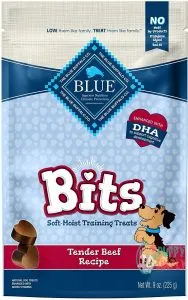
Blue Buffalo Beef Soft Treats earn a solid spot in any training bag. Real beef leads the ingredient list, and at roughly 4 kcal per piece, they’re dense enough to matter but manageable across a full session.
The heart-shaped bits break apart easily for small dogs or puppies.
DHA support is a genuine bonus if you’re working with a young dog building new skills.
No corn, wheat, soy, or artificial colors — clean enough for daily repetition without the guilt.
| Best For | Puppy owners and trainers looking for a clean, soft reward treat that’s easy to portion and gentle on sensitive stomachs. |
|---|---|
| Calorie Count | High (not specified per treat) |
| Treat Size | Bite-sized |
| Primary Protein | Beef |
| Made in USA | Yes |
| Resealable Packaging | Yes |
| Life Stage | Puppy & Adult |
| Additional Features |
|
- Real beef is the first ingredient, so dogs actually want them
- Soft texture works great for puppies, seniors, or dogs with dental issues
- No corn, wheat, soy, or artificial colors — solid for daily training use
- High calorie density means larger dogs can rack up calories fast
- Only one flavor, so picky dogs don’t get much variety
- The 9 oz bag might be more than casual trainers need before it loses freshness
2. Open Farm Soft Beef Training Treats
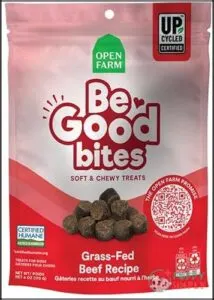
Open Farm takes the quality bar even further with full ingredient traceability — every component tracked from source to pouch. Grass-fed beef leads here, supported by rice bran and sorghum for that consistently soft, pliable texture.
At under 2.5 calories per treat, you can run long repetition sets without blowing your dog’s daily intake.
The resealable pouch keeps them fresh between sessions.
Worth noting: at $14.85 for 6oz, you’re paying a premium, but the sourcing transparency backs it up.
| Best For | Dog owners who prioritize ingredient transparency and want a low-calorie treat for long training sessions without compromising on quality. |
|---|---|
| Calorie Count | < 2.5 kcal |
| Treat Size | Bite-sized |
| Primary Protein | Turkey |
| Made in USA | Yes |
| Resealable Packaging | Yes |
| Life Stage | Adult |
| Additional Features |
|
- Full ingredient traceability from source to pouch gives you real confidence in what you’re feeding
- Under 2.5 calories per treat means you can train longer without worrying about overfeeding
- Resealable pouch keeps treats fresh and easy to bring anywhere
- At $14.85 for 6oz, it’s one of the pricier options on the shelf
- Not ideal for dogs with sensitivities to turkey, barley, or coconut glycerin
- The 6oz pouch may run out faster than expected during heavy training periods
3. Pet Botanics Chicken Soft Dog Treats
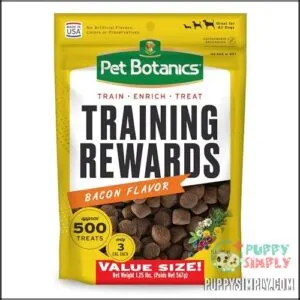
If Open Farm is the boutique option, Pet Botanics is the workhorse.
At $16.64 for a 20 oz bag — roughly 500 treats — you’re getting serious volume without sacrificing quality.
Each soft, chewy piece comes in at 3 calories, making long repetition sets manageable.
Pork liver and real bacon drive palatability, so even disengaged dogs tend to perk up fast.
Wheat‑free, no artificial additives, and resealable packaging.
For multi‑dog households or daily training schedules, this bag stretches further than most.
| Best For | Trainers, busy dog owners, and multi-dog households who need a reliable, high-volume treat that won’t blow a dog’s daily calorie budget. |
|---|---|
| Calorie Count | ~3 kcal |
| Treat Size | Bite-sized |
| Primary Protein | Pork Liver & Bacon |
| Made in USA | Yes |
| Resealable Packaging | Yes |
| Life Stage | All life stages |
| Additional Features |
|
- Around 500 treats per bag at $16.64 — one of the better values you’ll find for soft training treats
- Pork liver and bacon combo is genuinely hard for dogs to ignore, even picky ones
- Soft, chewy texture works well for puppies, seniors, or dogs with dental issues
- Contains eggs, barley, and rice, so it’s not a great fit for dogs with grain or common food sensitivities
- Includes zinc propionate and calcium propionate — a heads-up if you prefer a cleaner ingredient list
- The bag needs a good seal after every use or the treats dry out faster than you’d expect
4. Zukes Pumpkin Berry Dog Training Treats
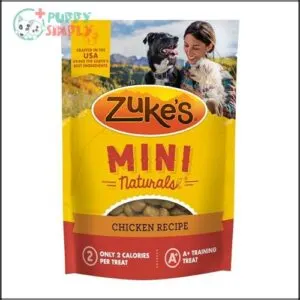
Zuke’s takes a different angle with pumpkin as the lead ingredient — and it works. Real pumpkin adds natural fiber, which helps digestion hold up during high-repetition sessions.
The berry notes come from natural flavoring, not artificial additives, keeping the ingredient list clean.
At roughly 2 calories per piece, you can reward frequently without watching the scale creep.
The soft, chewy texture holds up well in cooler conditions, and the resealable pouch keeps things fresh between sessions.
A solid all-around pick.
| Best For | Dogs at any life stage whose owners want a low-calorie, easy-to-chew treat built for frequent training rewards. |
|---|---|
| Calorie Count | ~2 kcal |
| Treat Size | Bite-sized |
| Primary Protein | Chicken |
| Made in USA | Yes |
| Resealable Packaging | Yes |
| Life Stage | All life stages |
| Additional Features |
|
- Only 2 calories per treat, so you can reward a lot without overfeeding
- Real ingredients like chicken, cherries, and oats — no corn, wheat, or soy
- Small, soft bites work great for puppies, small breeds, and senior dogs
- Texture is firm-chewy, not ultra-soft like some competing treats
- Meat isn’t human-grade, which might be a dealbreaker for some owners
- Can dry out quickly if the pouch isn’t resealed properly after each use
5. Fruitables Pumpkin Berry Dog Treats
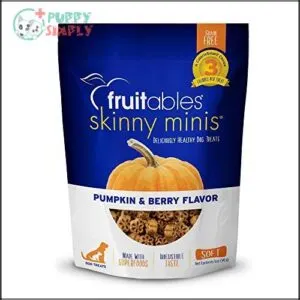
Fruitables takes the pumpkin-and-berry concept further with a fuller superfood lineup — flaxseed, green tea extract, honey, and blueberries all make up the ingredient list. That’s more complexity than some trainers prefer, but the payoff is real: dogs tend to find these highly palatable, even picky ones.
At roughly 3.5 kcal per piece, they sit comfortably within the 10% daily calorie rule.
Soft, breakable, and gluten-free — they work especially well for dogs with grain sensitivities who still need a frequent, low-calorie reward.
| Best For | Dogs with grain or gluten sensitivities who need a soft, low-calorie treat for frequent training sessions. |
|---|---|
| Calorie Count | < 4 kcal |
| Treat Size | Bite-sized |
| Primary Protein | Plant-based |
| Made in USA | Yes |
| Resealable Packaging | No (standard bag) |
| Life Stage | All life stages |
| Additional Features |
|
- Only 3.5 kcal per piece, so you can reward generously without blowing your dog’s daily calorie budget.
- Soft and breakable — great for puppies, seniors, or dogs with sensitive teeth.
- Real superfoods like blueberry, flaxseed, and green tea make the ingredient list feel intentional, not filler-heavy.
- The ingredient list is longer than some owners prefer — not ideal if you want a simple, minimal treat.
- Contains pork stock, so dogs with pork sensitivities or owners avoiding animal products should take note.
- Fruit-based flavor won’t win over every dog, especially those who only get excited for meat.
6. Vital Essentials Freeze Dried Minnow Dog Treats
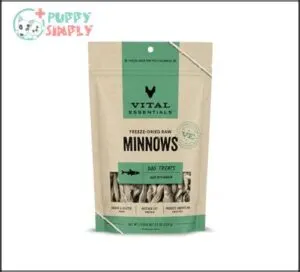
Few treats grab a dog’s attention faster than fish — and Core Essentials knows it.
These freeze-dried minnows are 100% single-ingredient: muscle, organs, and bone marrow, nothing else.
With roughly 2,892 kcal per kilogram, you’ll want to break them into pea-sized pieces, especially for smaller dogs.
The strong aroma makes them ideal for high-distraction outdoor sessions where softer treats just don’t cut through the noise.
Grain-free, gluten-free, and allergen-friendly, they’re a solid pick for sensitive stomachs too.
| Best For | Dogs with food sensitivities, allergy-prone pups, or active dogs that need a high-protein, single-ingredient treat for training or daily rewards. |
|---|---|
| Calorie Count | Low (not specified) |
| Treat Size | Bite-sized |
| Primary Protein | Minnow (Fish) |
| Made in USA | Yes |
| Resealable Packaging | No (standard bag) |
| Life Stage | All life stages |
| Additional Features |
|
- 100% minnows — muscle, organs, and bone marrow — with zero fillers, grains, or additives
- Natural enzymes support digestion, while zinc and taurine give immune and heart health a boost
- Strong fishy aroma makes them a great motivator in busy, high-distraction environments
- The smell is intense — not great if you’re treat-pouch-ing these in a small space
- Pricier per ounce than most treat options on the market
- Not a meal replacement, and small pieces may need supervision for tiny dogs
7. Stewart Freeze Dried Beef Liver Dog Treats
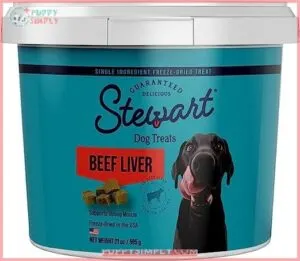
If you train with liver, you already know what happens — dogs lock in fast. Stewart’s Freeze-Dried Beef Liver treats work because the formula is exactly what it sounds like: 100% USDA-certified beef liver, nothing added.
Each piece breaks apart easily for smaller dogs, and the strong aroma cuts through distractions better than most soft treats.
At roughly 4 kcal per piece, they fit comfortably within the 10% daily calorie rule.
Grain-free, gluten-free, and made in small batches in Dayton, Ohio.
| Best For | Dog owners who train regularly and want a single-ingredient, high-value reward their dog will actually work for. |
|---|---|
| Calorie Count | Low (not specified) |
| Treat Size | Bite-sized |
| Primary Protein | Beef Liver |
| Made in USA | Yes |
| Resealable Packaging | Yes (tub) |
| Life Stage | All life stages |
| Additional Features |
|
- Pure beef liver, nothing else — great for dogs with food sensitivities or allergies
- Strong natural smell keeps dogs focused, even in distracting environments
- ~475 treats per tub means you’re not restocking every few weeks
- The liver odor is real — not everyone loves reaching into that tub
- Larger pieces need breaking down for small or toy breeds
- At $35.99, it’s a premium price that adds up if you train daily
8. Rocco Roxie Mini Beef Dog Treats
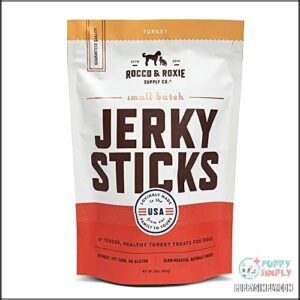
Rocco & Roxie’s Mini Beef treats earn their spot here on texture and convenience alone. Slow-roasted for nine hours, each small piece stays soft enough for puppies and seniors while still holding together in a treat pouch without crumbling.
The beef-first formula skips corn, soy, gluten, and dairy — keeping the ingredient list short and digestible.
Low odor means your hands stay clean mid-session.
At $9.97 for 6 oz, you’re paying a slight premium, but the palatability backs it up.
| Best For | Dog owners who need a soft, mess-free training treat that works for puppies, seniors, and picky eaters alike. |
|---|---|
| Calorie Count | Low (not specified) |
| Treat Size | Bite-sized |
| Primary Protein | Beef |
| Made in USA | Yes |
| Resealable Packaging | No |
| Life Stage | All life stages |
| Additional Features |
|
- Slow-roasted beef-first formula — real flavor dogs actually want
- Soft texture works for all ages, from teething pups to older dogs
- Low odor, non-greasy — no wiping your hands mid-training session
- Contains garlic powder and potassium sorbate, which may not suit sensitive dogs
- 6 oz goes fast if you’re training daily or have multiple dogs
- Slightly pricier than bulk grain-based alternatives
9. Zukes Grain Free Puppy Training Treats
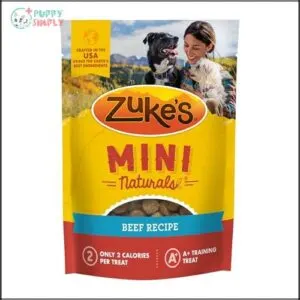
Puppies need smaller, softer, and faster. Zuke’s Grain Free Puppy Training Treats check every one of those boxes.
Real chicken leads the ingredient list, the grain-free formula skips corn and wheat, and each piece clocks in at around 2–3 calories. That low count lets you reward repeatedly without overshooting daily intake.
The soft texture is gentle on developing teeth, and the resealable pouch keeps things fresh between sessions.
For early training milestones, these are a dependable go-to.
| Best For | Puppy owners who want a low-calorie, grain-free treat they can use over and over during training sessions without worrying about overfeeding. |
|---|---|
| Calorie Count | ~2 kcal |
| Treat Size | Bite-sized |
| Primary Protein | Beef |
| Made in USA | Yes |
| Resealable Packaging | Yes |
| Life Stage | All life stages |
| Additional Features |
|
- Only about 2 calories per treat, so you can reward freely without blowing your pup’s daily calorie budget
- Soft, chewy texture is easy on young teeth and gets eaten fast — no waiting around mid-session
- Grain-free and allergen-friendly formula skips corn, wheat, and soy
- Small size might not cut it for bigger, heavy-chewing dogs who want something more substantial
- If you don’t seal the pouch tight, the treats can dry out quickly
- Only one flavor described here, so if your dog’s picky, you may need to shop around
10. Nutri Bites Freeze Dried Beef Liver Treats
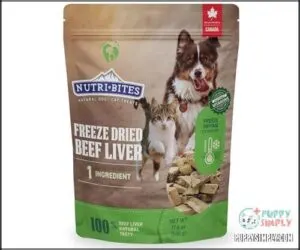
One ingredient. That’s it — and that’s the point.
Nutri Bites Freeze Dried Beef Liver Treats are 100% beef liver, nothing else. No fillers, no artificial anything. Each piece runs about 2 calories, making it easy to reward frequently without wrecking your dog’s daily intake.
The freeze-dried process keeps the aroma intense, which matters when you’re working in a distraction-heavy environment. Dogs lock in fast.
At 17.6 oz per resealable bag, you won’t run out mid-session.
| Best For | Pet owners who want a clean, single-ingredient treat for training, meal topping, or everyday rewards — great for dogs and cats at any life stage. |
|---|---|
| Calorie Count | ~2 kcal |
| Treat Size | Bite-sized |
| Primary Protein | Beef Liver |
| Made in USA | Yes |
| Resealable Packaging | Yes |
| Life Stage | All life stages |
| Additional Features |
|
- Pure 100% beef liver with zero fillers, grains, or artificial additives — as clean as it gets
- Low-calorie at ~2 kcal per treat, so you can reward often without the guilt
- Big 17.6 oz resealable bag means you’re stocked for the long haul
- Bite size runs small, so large breeds may need a lot of pieces to feel rewarded
- Can be tough for senior pets or puppies with sensitive teeth
- It’s a treat, not a meal — won’t replace a complete, balanced diet on its own
What Makes a Great Training Treat
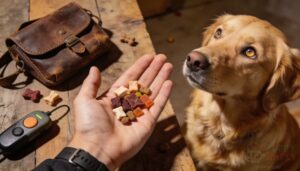
Not every treat earns a spot in your training pouch.
The best ones share a handful of qualities that keep your dog focused and your sessions moving.
Here’s what to look for before you buy.
Right Size for Fast Rewards
Size is the silent variable most people overlook. A treat that takes 15 seconds to chew kills your session’s momentum — and your dog’s focus.
Stick to Pea‑Sized Portions that qualify as true quick-to-chew, pocket‑sized training treats. Calorie Uniformity across pieces keeps your math honest, session after session.
Quick Chew Duration targets to aim for:
- Micro‑Treat Metrics: 0.25–0.5g per piece
- Quick Chew Duration: 2–6 seconds per treat
- Weight‑Based Sizing: smaller pieces for puppies and small breeds
- Training treat size: 1–3 calories per small piece
Soft Texture for Quick Chewing
Beyond size, texture does the heavy lifting.
A treat with high moisture content and a breakable surface compresses fast — no grinding, no waiting.
That means a better fragmentation rate, smoother mouthfeel, smoothness, and quicker flavor release speed right at the moment of reward.
Trainer approved quick test: if it yields in under three seconds, your session stays on track.
High-Value Flavor Dogs Love
Texture gets your dog into the moment — flavor keeps them there. Dogs respond most reliably to a real meat aroma, specifically beef and chicken. That savory flavor profile triggers focus better than anything sweet.
Trainer-approved palatability testing is simple: watch for wide eyes and an immediate nose-lock.
Rotate flavors regularly — flavor variety rotation prevents bait fatigue and keeps reward-based training sharp.
Their keen sense of smell, known as canine olfactory sensitivity, amplifies flavor attraction.
Low Calories for Repetition
Flavor gets your dog’s attention, but calorie control keeps training sustainable. Aim for 1 to 3 calories per treat — that low calorie content helps session consistency without tipping daily intake.
Micro rewards at this range let you reward timing stay tight and repetitions stay high.
Calorie tracking becomes simple when packaging clearly lists calories per treat, making calorie-controlled treats your most energy-efficient tool. shorter rest intervals can also raise calorie burn during training sessions.
Simple Ingredients and Real Protein
What’s in the treat matters as much as how it tastes. Look for single-ingredient or limited-ingredient options where whole meat content — like beef liver or chicken — leads the label.
Clean label standards mean no artificial additives, no mystery fillers.
That ingredient transparency isn’t just marketing; it’s trainer guidelines made edible.
High-protein dog treats with a natural flavor boost keep your dog locked in without unnecessary extras.
Portable, Non-Messy Treat Design
What you carry, treats in, matters almost as much as what’s inside. A pouch with belt loop carry and one‑handed access keeps your hands free when timing is everything.
Magnetic closure and an odor blocking lining prevent spills and scent transfer between sessions.
Pocketized training treats in a resealable bag with a spill‑resistant window stay fresh, clean, and ready — exactly when you need them.
How to Choose for Your Dog
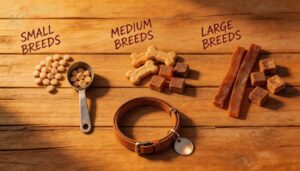
Not every dog has the same needs, and the right treat really comes down to who you’re training. Size, age, and sensitivities all shape what works best in a session.
Here’s how to match the right treat to your dog.
Best Treats for Puppies
Puppies need their own rules regarding training treats. Their mouths are small, attention spans shorter, and their calorie budgets tighter than adult dogs.
Stick to soft treats with small pieces — options like Zukes Pumpkin Berry or Wellness Soft Puppy Bites work well.
Low-calorie treats let you repeat rewards without derailing growth. Flavor variety impact keeps sessions fresh and engagement high.
Best Treats for Small Dogs
Small dogs have tiny mouths and fast metabolisms — so size and calorie density matter more than most owners realize. Pocket-sized training treats measuring 1–3 mm help you nail micro portion control without disrupting their daily intake.
Look for soft texture, low-calorie treats with aroma-driven rewards like chicken or liver to keep focus sharp.
- Choose tiny treats under 3 calories each
- Prioritize soft texture for quick chewing and faster reward cycles
- Seek veterinary-approved formulas with limited ingredients
Best Treats for Large Dogs
Large dogs burn through energy fast, but that doesn’t mean their treats should be oversized. Keep treat size selection tight — 2 to 3 calories per piece lets you run high-repetition sessions without blowing their daily budget.
high-protein dog treats with ingredient transparency, real meat listed first. Calorie-controlled treats with flavor variety and limited ingredient formulas keep big dogs locked in and performing.
Treats for Sensitive Stomachs
A dog with a sensitive stomach doesn’t need fancy — it needs simple. Single Protein Focus treats reduce exposure to multiple protein sources, which is exactly what reactive digesters need during repetition-heavy sessions.
Look for:
- Gentle Carbohydrate Sources like pumpkin or sweet potato
- Digestive Herbs such as ginger or turmeric
- Low Irritant Formulations free from artificial additives
Freeze-Dried Porosity makes portioning easy without gut stress.
Limited-Ingredient and Allergy-Friendly Options
Sensitivity doesn’t stop at the stomach. If your dog reacts to mystery proteins, limited-ingredient treats are your training ally.
Single Protein source — beef, salmon, or lamb — makes allergen identification straightforward. Look for Allergen-Free Packaging with Simple Ingredient Lists and Hypoallergenic Certifications, where available.
| Feature | Why It Matters |
|---|---|
| Single-ingredient treats | Isolates reactions fast |
| No artificial additives | Reduces inflammation triggers |
| Clear protein labeling | Promotes AllergyFriendliness |
| Limited Ingredient Benefits | Fewer variables, safer repetition |
Soft Vs Freeze-Dried Treats
Texture preference often comes down to your training context. Soft treats win for quick reward chains — their moisture content makes them easier for puppies and seniors to chew.
Freeze-dried treats offer:
- Extended shelf life without refrigeration
- Higher flavor concentration for distracting environments
- Better nutrient retention through minimal processing
Both work as high-value treats, but calorie content differs — portion accordingly.
Best Treat Types by Training Goal
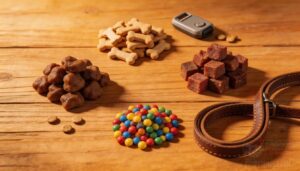
Not every training situation calls for the same treat. The reward that works perfectly in your living room might fall flat at a busy park or during a tricky new skill.
Here’s how to match your treat choice to what you’re actually working on.
Everyday Obedience Practice
For everyday obedience, session timing matters as much as the treat itself. Keep sessions to 5–10 minutes and reward immediately after each correct behavior — that’s how reward-based training actually sticks.
Use calorie-controlled treats under 3 kcal for repetition without overfeeding. Limited-ingredient, pea-sized training treat sizes work best here.
Track progress through behavior charting and practice environment scaling gradually, starting indoors. Always watch for stress monitoring cues.
High-Distraction Outdoor Training
Outdoor sessions raise the stakes fast. Urban Noise Management, unpredictable crowds, and shifting scents demand your dog’s full attention — and your treat game needs to match.
Reach for high-value treats that are quick to chew and pocket-sized training treats under 3 kcal.
Scent Distraction Strategies work best paired with Terrain Balance Drills and Weather Adaptation practice, keeping distraction training sharp across every environment.
Recall and Leash Training
Recall starts close — 5 to 10 feet — then builds through Recall Distance Progression as reliability grows. Cue Consistency across every family member locks in the behavior faster than anything else.
Use high-value treats the instant your dog returns, within 2 seconds.
For leash work, Leash Pressure Management paired with low-calorie treats and Distraction Gradual Increase keeps focus sharp without overfeeding.
Puppy Socialization Sessions
Socialization class moves fast — new floors, strange sounds, unfamiliar people, and playgroup dynamics all at once. That’s why pocket-sized training treats with calm handling matter here.
Use a high-value treat during gradual exposure to noises and sensory desensitization exercises, but keep them low-calorie options so repetition doesn’t spike intake. Positive reinforcement lands best when your puppy has a safe retreat space nearby and feels zero pressure.
Advanced Skills and Trick Training
When your dog starts learning complex heeling, memory chaining, or task stacking, treat selection becomes more strategic. High-value treats drive motivation through difficult cue sequences, while cue fading keeps precision sharp once behaviors solidify.
- target stick guidance with calorie-controlled treats to direct movement precisely.
- task stacking rewards after completing multi-step sequences.
- training treat size to reward speed — smaller means faster flow.
- treat texture to sustain engagement across long trick sessions.
- top-tier reward-based training treats for new or difficult routines.
Rewards for Picky Eaters
Some dogs just aren’t impressed by a plain biscuit — and that’s not stubbornness, it’s preference. For picky eaters, lean into flavor rotation and novel food pairings: rotate between chicken, fish, and beef to break monotony.
Aroma enrichment matters most here — freeze-dried options hit harder.
Use gradual flavor introduction with limited-ingredient, hypoallergenic dog treats in soft or easy-to-break pieces to build acceptance steadily.
How to Prevent Overfeeding

Training with treats is effective, but it’s easy to cross the line from rewarding to overfeeding without realizing it. A few simple habits can keep your dog’s calorie intake in check while still making every session productive.
Here’s what to watch.
Keep Treats Pea-Sized
Think of pea-sized pieces — roughly a quarter inch — as your training tempo control. That uniform size gives you fingertip delivery, hand feeding ease, and calorie tracking simplicity all at once.
Consistent bite count stays predictable when every piece matches.
Quick-eating treats keep sessions moving without pause.
Pocket-sized training treats cut under three calories each, so treat size directly shapes how long and effectively you can train.
Follow The 10% Calorie Rule
Ten percent is your daily calorie allocation ceiling for treats — not per session, but across the entire day. A dog eating 1,000 calories daily gets roughly 100 treat calories total. That’s your calorie budget tracking number.
Add up every reward, walk snack, and good boy bite. Low-calorie treats stretch that budget further, letting you run more repetitions without blowing your calorie count before dinner.
Adjust Meals on Training Days
Heavy training days shift your dog’s treat intake up — which means dinner should come down. Carb Timing and Protein Consistency work together here: adjust meal portions to account for extra treat calories, not ignore them. Think of it as Fluid Management for calories — balancing input with output.
- Trim meal size on high-treat days
- Reduce carb-heavy toppers when Snack Portioning increases
- Keep protein consistent across meals
- Practice Fiber Adjustment by avoiding rich extras on active days
- Log calories per treat to prevent overfeeding and support weight management for dogs
Mix High- and Low-Value Rewards
Not every reward needs to be a celebration. Mixing high-value treats with low-calorie treats builds a reward hierarchy that prevents overfeeding while keeping your dog locked in. Think of it as Reward Rotation — vary what lands in your dog’s mouth, and you create a Scarcity Effect that makes high-value treat moments hit harder.
Rotate treat value strategically — scarcity makes high-value rewards hit harder
| Reward Type | Best Used When | Example Treat |
|---|---|---|
| High-value treat | New skill, distraction present | Freeze-dried liver |
| Mid-value treat | Familiar task, mild challenge | Soft chicken bites |
| Low-calorie treats | Easy repetitions, warm-up reps | Kibble or veggie bites |
Use Progressive Fade as skills improve — shift from high-value to mid-value rewards, then lean on positive reinforcement training cues like praise. Reward Timing and Motivation Bursts keep sessions sharp without the calorie creep.
Use Kibble for Easy Commands
Once you’ve got your reward rotation dialed in, kibble manages the easy stuff surprisingly well. For Simple Cue Pairing — sit, down, eye contact — Low Distraction Settings are where kibble shines. Quick Reward Timing stays tight because dry pieces need no breaking.
- Use kibble for familiar cues indoors
- Deliver within 1–2 seconds for clear positive reinforcement
- Pre-portion to practice Kibble Portion Control
- Match Consistent Flavor Cue to your dog’s daily food
Monitor Weight and Portion Size
Kibble manages the familiar commands, but tracking what your dog eats overall is where real weight control happens.
Weigh treats on a kitchen scale — Scale Portioning removes the guesswork when pieces vary. Combine Treat Weight Logging with Weekly Weight Checks to catch upward trends early.
Body Condition Scoring alongside Calorie Tracking gives you a clearer read than numbers alone.
Compare Price, Ingredients, and Texture
Not all training treats are created equal, and the differences in price, ingredients, and texture matter more than you might think. Knowing what to look for helps you pick something that actually works for your dog and your budget.
Here’s how the most popular options stack up.
Budget-Friendly Vs Premium Picks
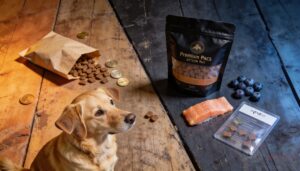
Budget-friendly training treat options normally cost 30 to 60 percent less per bag, but that gap narrows quickly during seasonal sales or subscribe-and-save deals — so price stability matters more than the sticker price alone.
Premium pet products usually win on ingredient traceability, longer shelf life, and calorie efficiency.
Better packaging sustainability also keeps those treats fresher across multiple sessions.
Know what you’re actually paying for.
Best Value Per Treat
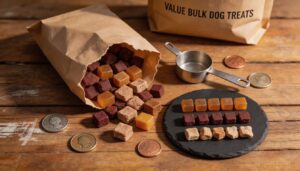
True value per treat isn’t just about price — it’s about the calorie cost ratio and how much behavioral payoff each bite delivers.
- Bulk purchasing benefits cut costs 20–40% per treat
- Ingredient cost efficiency peaks with organ meats like liver
- Shelf-life value extends usability across multiple sessions
- Packaging savings improve with resealable, freshness-locking bags
- Budget-friendly training treat options often match premium price performance when bought in bulk
Protein Sources to Look For
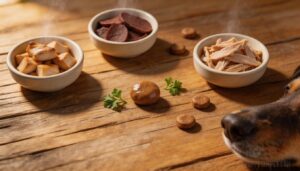
When scanning a treat label, start with the first ingredient — that’s where protein quality is decided.
Animal muscle protein from chicken, beef, or turkey gives your dog a complete amino acid profile. Single named protein ingredients make rotation and allergy tracking simple. Organ protein options like beef liver punch above their weight in palatability. Hydrolyzed protein works well for sensitive dogs.
Grain-Free and Limited-Ingredient Formulas

Grain-free dog training treats cut common allergens like corn, wheat, and rice, replacing them with proteins your dog actually digests well. Limited-ingredient formulas — usually seven or fewer components — simplify allergen tracking and support nutrient bioavailability.
For dogs with sensitivities, these high-value treats offer ingredient sourcing transparency and better energy balance. Veterinarian and trainer recommendations consistently favor them for reliable digestibility metrics and regulatory compliance.
Texture Differences That Affect Training
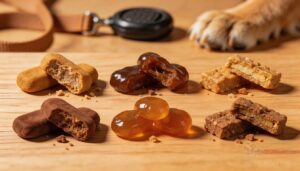
Treat texture shapes every rep. Uniform texture uniformity across a bag directly facilitates training momentum and command repetition speed.
Soft or easy-to-break pieces deliver near-instant melt rate impact, keeping your timing tight. Crunch consistency matters too — variable hardness creates uneven chew density balance that throws off your reinforcement rhythm.
Moisture sensitivity affects chewy treats as humidity shifts alter chew duration mid-session.
Packaging, Freshness, and Convenience
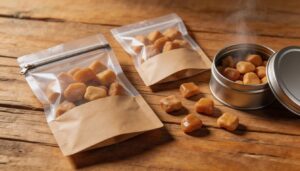
Packaging affects how fresh and usable your treats stay across multiple sessions. Resealable pouches lock in aroma — critical for scent-driven rewards — and keep soft treats from drying out between uses.
Freshness indicators like printed dates or humidity warnings.
Portion control packs prevent overfeeding on the go, while pocket-sized training treats in travel-friendly containers with eco-friendly materials make non-greasy, portable training treat packaging genuinely practical.
Frequently Asked Questions (FAQs)
What are the best training treats for dogs?
The best dog training treats balance low calorie content, high-value treat flavor, and limited ingredient formulas.
Veterinarian and trainer recommendations for dog treats consistently highlight soft, pea-sized bites with precise reward timing for fastest results.
What is the 7 7 7 rule for dogs?
The 7-7-7 rule centers on gradual exposure across seven categories — people, environments, sounds, surfaces, objects, experiences, and challenges — using positive reinforcement and training treats to build lasting confidence through multi-category enrichment.
What kind of treats should a dog eat?
Dogs do best with high-value treats built on real protein, natural preservatives, and limited-ingredient formulas.
Keep training treats size small, rotate flavors strategically, and prioritize digestibility and fiber for lasting energy and focus.
What are the best dog treats for training?
best dog training treats balance training treat size, low-calorie treats, and high-value treats with reward consistency.
Limited ingredient diet options keep sensitive dogs on track without sacrificing flavor variety impact.
How can you use treats to train a dog?
Treat-based dog obedience training dates back centuries. Use timing and consistency, pair verbal cues with each reward, adjust reward frequency as skills improve, and fragment treats small for rapid reinforcement.
What are the best dog treats for small dogs?
For small dogs, soft or easy-to-break pieces work best. Tiny, tasty, and quick to chew options like Zuke’s or Pet Botanics keep sessions moving without overwhelming a small mouth.
Is a dog treat good for training?
Yes, absolutely.
Treats reinforce desired behaviors, strengthen the trainer bond, and drive cue association quickly.
Their palatability impact and role in reward-based behavior modification make them one of the most effective positive reinforcement tools available.
How do I choose the best dog treats?
Focus on ingredient transparency, allergen screening, calorie content, and treat size.
Match flavor variety and texture to your dog’s needs, and prioritize ethical sourcing and shelf life stability for consistent, effective training rewards.
What do most dog trainers use for treats?
Most trainers reach for soft, high-value treats with real protein — think beef or chicken — that dogs consume in seconds. Reward timing matters, and a fast chew keeps momentum going.
What training treats do vets recommend?
Vets commonly recommend soft, low-calorie treats with single-protein recommendations and clear ingredient transparency.
Vet-approved treats follow calorie-based reward planning, keeping portions small, allergy-safe formulations clean, and protein sources named and recognizable.
Conclusion
Think of treats as the secret ingredient in your training recipe—the difference between a distracted dog and one locked onto your every word. The best dog training treats aren’t just snacks; they’re precision tools designed to reward focus instantly.
Our picks deliver the ideal trifecta: pea-sized, soft, and packed with flavor to outshine squirrels or sirens.
Use them strategically, and you’ll turn chaotic sessions into smooth teamwork.
Train with purpose, and watch your dog’s potential unfold—one perfectly timed treat at a time.
- https://petkeen.com/how-to-train-your-dog-with-positive-reinforcement/
- https://pupford.com/collections/dog-training-treats
- https://kellyjonesnutrition.com/what-to-eat-on-rest-days-vs-training-days/
- https://jamesnicholnutrition.com/articles/what-should-i-eat-training-days-vs-rest-days
- https://support.myprocoach.net/hc/en-us/articles/360022206491-Nutrition-in-Training