This site is supported by our readers. We may earn a commission, at no cost to you, if you purchase through links.

Boxers eat like athletes and stress like worriers—a combination that puts real demands on what goes in their bowl. This breed carries a cardiac vulnerability most owners don’t hear about until it matters, plus a stomach that bloats faster than almost any other dog.
The food you choose isn’t a background decision. It shapes how your Boxer moves, breathes, and ages.
Protein levels, fat sources, meal timing… each one pulls weight.
The best dog foods for Boxers thread a specific needle: enough nutrition to fuel that muscular frame without triggering the conditions bred into the bloodline.
Table Of Contents
- Key Takeaways
- Boxer Nutrition Basics Every Owner Should Know
- Boxer Life Stage Feeding Guide
- Common Boxer Health Issues and Diet Solutions
- How to Spot Quality Dog Food for Boxers
- Grain-Free Vs. Grain-Inclusive Diets for Boxers
- Top 10 Best Dog Foods for Boxers
- 1. Royal Canin Boxer Adult Dog Food
- 2. Taste of the Wild Bison Venison Dog Food
- 3. Wellness Core Grain Free Dog Food
- 4. Nulo Adult Salmon Grain Free Dry Dog Food
- 5. Wellness Large Breed Puppy Food
- 6. Merrick Senior Chicken Dry Dog Food
- 7. Victor Nutra Pro Dog Food
- 8. Natural Balance Lamb Brown Rice Dog Food
- 9. Hill’s Science Diet Large Breed Mobility Dog Food
- 10. Taste of the Wild Grain Free Dog Food
- Dry, Wet, Fresh, and Raw Food Options Compared
- How to Switch Your Boxer to a New Food Safely
- What Not to Feed a Boxer Dog
- Frequently Asked Questions (FAQs)
- What is the best dog food for a Boxer?
- What not to feed a Boxer?
- Are Boxers loyal to one person?
- What is the best dog food for a boxer?
- What are the top dog food options for dogs?
- Which dog food is best for boxers with allergies?
- What is the best wet food for Boxer puppies?
- What is the best dehydrated dog food for boxers?
- Can boxers eat dog food?
- Does a boxer need to eat special dog food?
- Conclusion
Key Takeaways
- Boxers need at least 22–25% crude protein from named animal sources like chicken or salmon, plus taurine and omega-3s, to protect their hearts and support lean muscle.
- Splitting meals into two or three smaller portions daily is one of the most effective ways to reduce your Boxer’s risk of bloat, a life‑threatening condition this breed faces.
- Nutritional needs shift significantly across life stages — puppies need controlled calcium and DHA for growth, adults need high protein and portion discipline, and seniors need joint support without cutting protein.
- Whether you choose grain‑free or grain‑inclusive food matters less than confirming it meets AAFCO standards, lists real meat first, and suits your dog’s specific health profile.
Boxer Nutrition Basics Every Owner Should Know

Boxers aren’t just big, energetic dogs — they’ve specific nutritional needs that can directly affect how long and how well they live. Getting the basics right makes everything else easier, from choosing the right kibble to adjusting portions as they age.
If you’re not sure where to start, this guide to best dog food for Boxers breaks down exactly what to look for at every life stage.
Here’s what every Boxer owner should understand before picking a food.
Protein Requirements for Boxers
Boxers need more protein than most breeds. For adult dogs, look for foods with at least 22–25% crude protein on the label — that’s your baseline for protein quantity guidelines.
High-quality animal proteins like chicken, fish, or turkey come first. They deliver complete amino acid balance, your dog can’t get from plants alone. AAFCO standards confirm the minimum… but active Boxers thrive above it.
Healthy Fats for Energy and Coat Health
Protein isn’t the only heavy lifter here. Healthy fats do serious work too.
Omega-3 sources like fish oil supply EPA and DHA — fatty acids that support coat health and calm skin inflammation. Linoleic acid from sunflower or hemp oil balance keeps the skin barrier strong.
Fat also drives fat-soluble vitamin absorption and gives active Boxers steady energy levels all day.
Maintaining the optimal omega-6:omega-3 ratio helps keep the skin barrier strong.
Carbohydrates, Fiber, and Digestive Support
Fats set the stage. carbohydrates keep the show running.
Your Boxer’s gut is surprisingly sensitive. The right carbohydrates — think whole grains, sweet potatoes, and low glycemic carbohydrates like oats — release energy steadily without spiking blood sugar.
Fiber does the real digestive work:
- Soluble fiber benefits digestion by slowing nutrient absorption and stabilizing gut function.
- Insoluble fiber role keeps stool moving and prevents constipation.
- Prebiotic fiber sources like beet pulp feed healthy gut bacteria.
- Probiotics and prebiotics together strengthen long-term digestive health.
- Starch digestibility improves when carbohydrates come from whole, minimally processed sources.
Essential Vitamins, Minerals, and Supplements
Carbs handle energy. Vitamins and minerals handle everything else.
calcium level management from day one — too much early on raises hip dysplasia risk. Antioxidant Vitamin E and Selenium Antioxidant protect cells. Iodine Thyroid Support keeps metabolism steady. Electrolyte Balance maintains hydration. Multivitamin Benefits fill gaps a single food can’t. Glucosamine and chondroitin supplementation? Start it before joint problems appear.
Boxer Life Stage Feeding Guide

What works for a Boxer puppy won’t cut it for a senior. Nutritional needs shift at every life stage, and feeding the wrong formula at the wrong time can cause real problems.
Here’s what your Boxer actually needs, from puppyhood through their golden years.
Puppy Nutrition and Controlled Growth
Puppy nutrition isn’t one-size-fits-all — especially for Boxers, who grow until 15–24 months. Getting it right early protects joints and sets the foundation for life.
Focus on four essentials:
- Calcium Phosphorus Balance — controls hip dysplasia risk
- DHA Brain Development — helps eyes and cognition via fish oil
- Calorie Density Control — prevents rapid growth rate
- Meal Frequency Schedule — three meals daily meets AAFCO standards for high protein nutritional requirements
Adult Boxer Diet Requirements
Once your Boxer hits 15–24 months, their nutritional needs shift substantially. Adult Boxers thrive on high protein diets — at least 18% by AAFCO Standards, though active dogs often need more.
Caloric density matters here: too many calories without portion control leads to fast weight gain. Stick to two meals daily. Meal frequency reduces bloat risk.
Activity adjustments keep everything balanced. Human-grade ingredients in the best dog food for Boxers 2026 make a real difference.
Senior Boxer Dietary Adjustments
At six years old, your Boxer officially enters senior territory — and their diet needs to reflect that. Calorie reduction becomes essential as activity levels drop.
But don’t cut protein. Muscle preservation depends on quality animal sources like chicken or fish.
Add an Omega-3 Boost through fish oil for joints and coat.
Weight monitoring every few weeks catches changes early.
Best dog food for senior Boxers includes glucosamine for joint support and mobility.
Common Boxer Health Issues and Diet Solutions

Boxers face a handful of health concerns that can be managed with the right diet.
What you feed your dog plays a big role in keeping these issues at bay. Let’s look at how specific foods and feeding habits help tackle each challenge.
Heart Health and Taurine Support
Heart disease is one of the biggest risks Boxers face. Taurine benefits your dog’s heart directly — it helps heart muscle calcium regulation, aids blood pressure regulation, and provides cardiac antioxidants that fight vascular inflammation reduction, at the cellular level.
Look for foods with taurine listed and high-quality animal proteins meeting AAFCO standards.
When in doubt, schedule a vet nutritionist consultation early.
Joint Health With Glucosamine and Chondroitin
Think of glucosamine and chondroitin as your Boxer’s cartilage building blocks — glucosamine strengthens structure, chondroitin helps cartilage hold water and resist compression. Together, they’re synergistic nutrient pairings that protect joints from the inside out.
For joint health and mobility in senior Boxers, consistent use matters. Long-term efficacy depends on proper supplement dosing guidelines, so ask your vet about custom nutrition plans before starting any joint health supplement.
Managing Food Allergies and Sensitivities
Food sensitivities can sneak up on you — one week your Boxer is fine, the next they’re scratching constantly. Common triggers include beef, dairy, wheat, and soy.
Start here:
- Keep an Allergy Symptom Log tracking stool, itching, and ear issues daily.
- Use Trial Diet Labeling so everyone in the house knows what’s off-limits.
- Practice Cross-Contact Prevention — clean bowls and surfaces between meals.
A limited ingredient diet or grain-free formula is often the best food for Boxers with allergies. Veterinary allergy testing helps confirm triggers. Always have an Emergency Reaction Plan ready.
Reducing Gastric Dilation Volvulus Risk Through Feeding Habits
Gastric dilation volvulus is one condition you really don’t want to gamble with. Meal Splitting — two to three smaller portions daily instead of one large feeding — directly lowers that risk.
Stick to Floor-Level Feeding, use Slow-Feed Bowls, avoid moistening dry kibble, and choose a Low-Fat Formulation.
A consistent feeding schedule matters too. When in doubt, a vet nutritionist consultation is worth every minute.
How to Spot Quality Dog Food for Boxers

Not every bag that looks premium actually is.
Once you know what to look for, spotting a quality food takes less than two minutes at the store.
Here’s exactly what to check.
High-Quality Animal Protein Comes First
When scanning a dog food label, the first ingredient matters more than anything else. Look for a named animal-based protein — chicken, turkey, beef, or salmon — listed first. That’s your signal; it’s a meat first formulation.
High quality animal proteins deliver complete amino balance and excellent protein digestibility, meaning your Boxer actually uses what they eat. Protein percentage should hit at least 22–25%.
Clean Fats for All-Day Energy
Fat is the next thing to look for after protein. Healthy fats — think fish oil, chicken fat, and flaxseed — give your Boxer steady, all-day energy.
Omega-3 fatty acids from whole-food fat sources like salmon support coat and joint health. Aim for 12–18% fat content.
That energy density, balanced through smart Omega-3 timing and proper fat portion size, keeps your Boxer fueled without packing on extra weight.
Thoughtful Carbohydrates and Digestive Support
Carbs aren’t the enemy — the wrong carbs are. Look for complex carb timing from low glycemic carbs like sweet potatoes and oats. These support fermentation control and feed gut bacteria through prebiotic fiber sources.
Resistant starch benefits come from legumes and whole grains, working alongside probiotics and prebiotics to build digestive health. Grain-inclusive or grain-free, quality matters most.
Ingredient Transparency and Minimal Processing
What’s actually in your Boxer’s bowl matters more than the marketing on the bag. Check the full ingredient list first — ingredients appear in order by weight, so real meat should lead.
Look for sourcing traceability and clear label clarity. Human-grade ingredients signal minimal processing and additive reduction.
Ingredient transparency isn’t a trend… it’s how you verify what you’re actually feeding.
Ingredient transparency is not a trend — it is how you verify what you are actually feeding your dog
AAFCO Standards and Label Compliance
The AAFCO Standards on a label aren’t just fine print. Look for the Nutritional Adequacy Statement — it confirms the food meets a specific AAFCO nutrient profile for your Boxer’s life stage.
The Guaranteed Analysis Requirements show exact protein and fat numbers. Calorie Disclosure Rules tell you energy per cup.
Together, these dog food labeling requirements and Feeding Directions Standards make nutrient profile analysis simple and reliable.
Grain-Free Vs. Grain-Inclusive Diets for Boxers

Grain-free diets get a lot of attention, but they’re not the right fit for every Boxer. Whether grains belong in your dog’s bowl depends on their health, digestion, and what the science actually shows.
Here’s what you need to know before making that call.
When Removing Grains Actually Helps
Ever notice your Boxer’s gut seems happier after switching to a grainfree diet? That’s not just luck.
Removing grains often means Reduced Fermentation, Improved Stool Consistency, and a Lower Glycemic Load—especially for dogs with food sensitivities.
For Boxers, the right grainfree formula can mean Decreased Inflammation and Enhanced Nutrient Absorption. Here’s how those benefits stack up:
| Benefit | Boxer Life Stage | Best GrainFree Dog Food For Boxers |
|---|---|---|
| Reduced Fermentation | Adult | Taste of the Wild |
| Improved Stool Consistency | Puppy | Instinct Raw Boost |
| Lower Glycemic Load | Senior | Merrick Senior Grain Free |
| Decreased Inflammation | Adult | Wellness Core Grain Free |
| Enhanced Nutrient Absorption | All Stages | Nulo Salmon Grain Free |
Benefits of Whole Grains for Boxer Digestion
Whole grains aren’t just filler — they’re functional. For most Boxers, grain-inclusive kibble helps digestive health through fiber bulk, prebiotic benefit, and steady energy release.
Fiber absorbs excess water, improves stool consistency, and feeds beneficial gut bacteria for better gut microbiota balance. Add probiotics, and you’ve got a solid foundation.
| Whole Grain Benefit | How It Helps Boxers |
|---|---|
| Fiber Bulk | Helps regular, formed stools |
| Prebiotic Support | Feeds beneficial gut bacteria |
| Stool Consistency | Reduces loose or watery stools |
| Gut Microbiota Balance | Promotes a healthier intestinal environment |
| Steady Energy Release | Slows digestion for consistent nutrient absorption |
Choosing Balance Over Trends
Trends come and go. Your Boxer’s health doesn’t have to follow them.
Whether grain-free or grain-inclusive, what matters most is nutrient ratio focus and evidence-based ingredients — not marketing buzz.
| Priority | What to Look For |
|---|---|
| Long-Term Health Priorities | AAFCO standards, complete and balanced labeling |
| High Protein | Animal-first ingredients, 22–25% minimum |
| Moderate Portion Control | Portions matched to body condition, not just weight |
Stick to vet-approved Boxer nutrition for a balanced canine diet built on large breed nutrition science.
Top 10 Best Dog Foods for Boxers
Here are ten options worth your attention, each chosen with Boxer-specific needs in mind. Some are grain-free, some aren’t — but all meet AAFCO standards and hold up well under scrutiny.
Let’s walk through them one by one.
1. Royal Canin Boxer Adult Dog Food
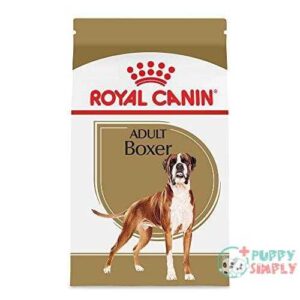
Royal Canin built this formula specifically for Boxers — and it shows. The wave-shaped kibble fits your dog’s short muzzle, making every meal easier to pick up and chew.
Inside, you’ll find taurine, EPA, and DHA to support the heart health Boxers genuinely need. L-carnitine helps convert fat into usable energy, keeping muscle lean.
At $99.99 for 30 lbs, it’s a premium buy… but for a breed prone to cardiomyopathy, that targeted nutrition is hard to argue with.
| Best For | Purebred adult Boxers (15 months+) whose owners want breed-specific nutrition that targets heart health and muscle maintenance. |
|---|---|
| Price | $99.99 / 30 lb |
| Protein Source | Chicken by-product meal |
| Grain-Free | No |
| Life Stage | Adult (15+ mo) |
| Made in USA | Yes |
| Joint Support | Taurine, EPA & DHA |
| Additional Features |
|
- Wave-shaped kibble is designed for short muzzles, so your Boxer can actually grab and chew it without a struggle
- Taurine, EPA, and DHA give real cardiac support — important for a breed that’s genuinely prone to heart issues
- L-carnitine helps keep muscle lean and weight in check, which matters for an active, energetic breed
- At $99.99 for 30 lbs, the price adds up fast — especially if you have more than one dog
- Contains grains and chicken by-products, which could be a problem for dogs with food sensitivities
- It’s tailored for adult Boxers specifically, so it’s not a great fit for puppies, seniors, or other breeds
2. Taste of the Wild Bison Venison Dog Food
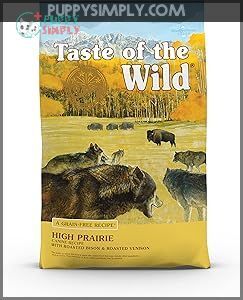
If Royal Canin is breed-specific precision, Taste of the Wild is primal simplicity — and Boxers tend to love it.
Roasted bison and venison lead the ingredient list, delivering around 32% crude protein to support lean muscle. Fat sits at roughly 18%, which keeps energy steady without packing on pounds.
Sweet potatoes and chicory root handle digestion cleanly. Taurine’s included too, which matters for a breed with heart concerns.
At $19.99 for 5 lbs, it’s genuinely affordable quality.
| Best For | Active adult dogs — especially those with grain sensitivities or a taste for bold, wild-protein flavors — who need solid muscle support without a hefty price tag. |
|---|---|
| Price | $19.99 / 5 lb |
| Protein Source | Bison & venison |
| Grain-Free | Yes |
| Life Stage | Adult |
| Made in USA | Yes |
| Joint Support | Omega-3s |
| Additional Features |
|
- Real roasted bison and venison are the top ingredients, giving you a high-protein (≈32%) kibble that actually earns the label
- Probiotics, prebiotics, and omega-rich fats work together to support digestion, skin, and coat health
- At $19.99 for 5 lbs, it delivers genuine quality without the premium price tag
- Not suitable for puppies, seniors, or dogs on a vet-prescribed diet — adults only
- Multiple protein and plant sources (lamb meal, peas, canola oil) can trigger reactions in dogs with allergies
- Grain-free formulas have raised some heart-health questions in certain breeds, so a vet check-in is a smart move
3. Wellness Core Grain Free Dog Food
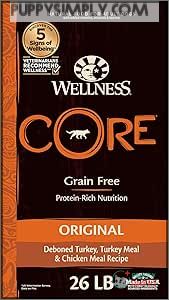
If Taste of the Wild leans wild and rugged, Wellness CORE goes deep on protein science.
At 44% protein from deboned turkey, turkey meal, and chicken meal, this grain-free kibble is built for muscle-forward breeds like Boxers. Salmon oil and flaxseed cover omega-3s for coat and joints. Glucosamine, chondroitin, and taurine are already inside… no extra supplements needed. Chicory root and probiotics keep digestion smooth.
One bag runs $79.98 for 26 lbs. Solid value for what you’re getting.
| Best For | Active adult dogs with grain sensitivities who need high-protein support for lean muscle, healthy skin, and joint health. |
|---|---|
| Price | $79.98 / 26 lb |
| Protein Source | Turkey & chicken |
| Grain-Free | Yes |
| Life Stage | Adult |
| Made in USA | Yes |
| Joint Support | Glucosamine & chondroitin |
| Additional Features |
|
- 44% animal protein from real turkey and chicken — great for muscle-forward breeds that need serious fuel
- Omega-3s from salmon oil and flaxseed, plus glucosamine and chondroitin built right in — no extra supplements to buy
- Probiotics and chicory root keep digestion running smoothly, even in sensitive stomachs
- At $79.98 a bag, it’s a premium price that adds up fast for larger dogs
- High protein levels aren’t ideal for seniors or dogs with kidney issues — worth a vet check first
- Contains legumes like peas and lentils, which can trigger allergies or stomach upset in some dogs
4. Nulo Adult Salmon Grain Free Dry Dog Food
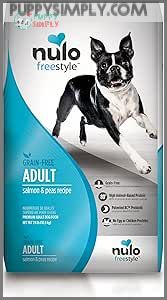
Nulo takes a different angle — salmon leads here, not poultry. Deboned salmon is the first ingredient, with turkey meal and menhaden fish meal rounding out a solid 30% protein minimum.
That’s meaningful for muscle maintenance in an active Boxer. The BC30 probiotic and chicory root handle gut health from two directions. Omega-3s from fish oil support coat and joints. No corn, wheat, or soy.
At $86.98 for 24 lbs, it’s a premium pick worth considering.
| Best For | Active adult dogs with grain sensitivities or fish-based protein preferences, especially larger breeds needing lean muscle support. |
|---|---|
| Price | $86.98 / 24 lb |
| Protein Source | Salmon & turkey |
| Grain-Free | Yes |
| Life Stage | Adult |
| Made in USA | Yes |
| Joint Support | Omega-3 EPA & DHA |
| Additional Features |
|
- Salmon-forward formula with 85% animal-based protein — great for muscle maintenance and dogs who do better on fish than poultry
- BC30 probiotic plus omega-3s cover gut health, coat shine, and joint support all in one bag
- No corn, wheat, soy, or common grain allergens — solid pick for dogs with sensitive stomachs
- Premium price tag at $86.98 for 24 lbs adds up fast, especially for larger breeds that eat more
- Contains legumes (peas, lentils, chickpeas) which some vets flag as a potential concern for heart health in dogs
- Not suitable for puppies, pregnant dogs, or pups with fish or legume allergies
5. Wellness Large Breed Puppy Food
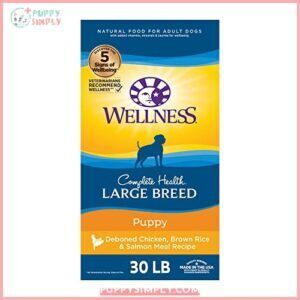
For growing Boxer pups, Wellness Large Breed Puppy gets the formula right. Deboned chicken leads the ingredient list, supported by salmon meal and brown rice — a clean, balanced base for a breed with a long growth window of up to 18 months.
DHA from salmon oil aids brain and eye development.
Glucosamine and probiotics are included too.
No corn, wheat, or soy.
$69.98 for 30 lbs, it’s solid value for what you’re getting.
| Best For | Large-breed puppy owners — especially Boxer parents — who want a clean, protein-forward kibble that supports healthy growth, joints, and brain development without corn, wheat, or soy. |
|---|---|
| Price | $69.98 / 30 lb |
| Protein Source | Chicken & salmon |
| Grain-Free | No |
| Life Stage | Puppy (large breed) |
| Made in USA | Yes |
| Joint Support | Glucosamine added |
| Additional Features |
|
- Deboned chicken and salmon meal give you real, quality protein sources right at the top of the ingredient list
- DHA from salmon oil, plus glucosamine and probiotics, cover brain development and joint health in one bag
- No corn, wheat, soy, or artificial preservatives — a cleaner label than most options in this price range
- Still contains grains (brown rice, barley, oats), so it’s not a fit for pups with grain sensitivities
- Some dogs experience fishy breath or extra gas, especially during the transition period
- At $69.98 for 30 lbs, it’s pricier than everyday kibble — and the bag can be genuinely hard to open
6. Merrick Senior Chicken Dry Dog Food
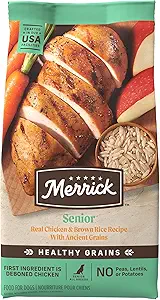
Once your Boxer hits the senior years, their needs shift fast. Merrick Senior Chicken Dry Dog Food keeps up.
Real deboned chicken leads the ingredient list — not a meal, not a by-product. Ancient whole grains like oats, barley, and quinoa deliver steady energy without the blood sugar spikes.
Glucosamine and chondroitin are built right in for aging joints. Omega-3s from salmon oil support coat and inflammation. Probiotics round it out.
At $72.98 for 25 lbs, it’s a strong choice for older dogs.
| Best For | Senior dogs — especially Boxers and larger breeds — who need joint support, quality protein, and easy digestion as they slow down with age. |
|---|---|
| Price | $72.98 / 25 lb |
| Protein Source | Deboned chicken |
| Grain-Free | No |
| Life Stage | Senior |
| Made in USA | Yes |
| Joint Support | Glucosamine & chondroitin |
| Additional Features |
|
- Real deboned chicken is the first ingredient, so you’re getting solid, whole-meat protein right off the bat.
- Glucosamine and chondroitin are baked right in — no need to buy separate joint supplements.
- Ancient whole grains plus probiotics make this easier on older, more sensitive stomachs.
- At $72.98 a bag, it’s on the pricier end — and you’re limited to just 4 lb or 25 lb sizes.
- Contains grains, so it’s a no-go if your dog has grain sensitivities.
- Not a fit for dogs with chicken or poultry allergies, and a handful of reviewers have flagged an occasional off smell.
7. Victor Nutra Pro Dog Food
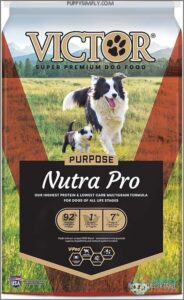
If your Boxer is athletic, growing, or just always hungry, Victor Nutra Pro deserves a close look. It delivers 38% protein from chicken, beef, and fish meals — about 92% of that is from actual meat.
Fat sits at 18%, which provides sustained energy without tipping into excess. The gluten-free grains keep carbs low. A proprietary VPRO blend adds digestive and coat support.
At roughly $70 for a 40‑lb bag, it’s solid value for high‑energy dogs.
| Best For | Active, athletic, or high-energy dogs — including puppies, pregnant females, and adults who need serious protein without the filler. |
|---|---|
| Price | $70.23 / 40 lb |
| Protein Source | Chicken, fish & beef |
| Grain-Free | Yes |
| Life Stage | All life stages |
| Made in USA | Yes |
| Joint Support | Essential fatty acids |
| Additional Features |
|
- 38% protein with 92% from real meat sources (chicken, fish, and beef meals) — that’s genuinely impressive for a kibble
- Gluten-free and low-carb, so it’s a solid pick for dogs with grain sensitivities or digestive issues
- Great value at ~$70 for 40 lbs, especially given the quality of ingredients and the VPRO vitamin and fatty acid blend
- Some large breeds have reported GI upset and dark/black stools — the blood meal content can be a lot for sensitive stomachs
- Grain-free diets have been loosely linked to dilated cardiomyopathy in dogs, so worth a vet chat if your dog has a heart predisposition
- May not cover all nutritional bases on its own for dogs with specific health conditions
8. Natural Balance Lamb Brown Rice Dog Food
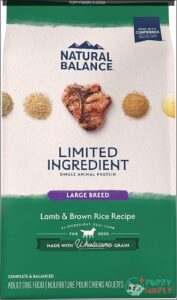
Natural Balance keeps things simple — and that’s exactly the point. Lamb is the first ingredient; brown rice provides steady fiber, and the formula skips soy, corn, wheat, and artificial additives entirely.
Boxers with mild food sensitivities, that clean list matters. You’re getting around 22% protein and 12% fat, plus glucosamine from lamb meal for joint support.
The larger kibble also slows eating down, which helps reduce bloat risk.
Solid choice for adult Boxers who need straightforward, allergen-conscious nutrition.
| Best For | Adult large-breed dogs with food sensitivities or mild allergies who need a simple, clean ingredient list. |
|---|---|
| Price | $72.98 / 26 lb |
| Protein Source | Lamb & lamb meal |
| Grain-Free | No |
| Life Stage | Adult (large breed) |
| Made in USA | Yes |
| Joint Support | Glucosamine from lamb meal |
| Additional Features |
|
- Lamb is the first ingredient with no soy, corn, wheat, or artificial additives — great for sensitive stomachs
- Glucosamine from lamb meal helps support joint health in bigger dogs
- Larger kibble size slows eating down, which can reduce bloat risk
- At $72.98 for 26 lbs, it’s pricier than most standard dry foods
- Contains grains, so it won’t work for dogs on a grain-free diet
- Highly sensitive dogs may still react, and any formula changes can upset very delicate stomachs
9. Hill’s Science Diet Large Breed Mobility Dog Food
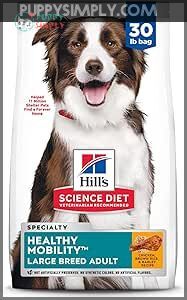
Hill’s Science Diet Large Breed Mobility is built around one goal — keeping joints moving.
Chicken meal is the first ingredient, delivering the protein your Boxer needs to hold onto muscle. Fish oil adds EPA, which directly helps joint cartilage health. You also get natural glucosamine and chondroitin, the actual building blocks of healthy cartilage.
No artificial additives.
Manufactured in the USA.
It’s pricier at $89.99 for 30 lbs, but for a Boxer with stiff hips, that investment makes sense.
| Best For | Large-breed adult dogs (like Boxers) aged 1–5 years who need extra joint support and mobility help. |
|---|---|
| Price | $89.99 / 30 lb |
| Protein Source | Chicken meal |
| Grain-Free | No |
| Life Stage | Adult (1–5 yrs) |
| Made in USA | Yes |
| Joint Support | EPA, glucosamine & chondroitin |
| Additional Features |
|
- Real chicken meal as the first ingredient keeps protein levels high, which helps maintain muscle mass
- Fish oil with EPA plus natural glucosamine and chondroitin work together to actually support cartilage health
- No artificial colors, flavors, or preservatives — clean formula backed by the top vet-recommended brand in the U.S.
- At $89.99 for 30 lbs, it’s on the pricier side compared to most dry dog foods
- Contains grains (wheat, rice, barley, sorghum), so it’s a no-go if you’re after a grain-free diet
- Some buyers have reported receiving opened bags, so it’s worth buying from a trusted seller
10. Taste of the Wild Grain Free Dog Food
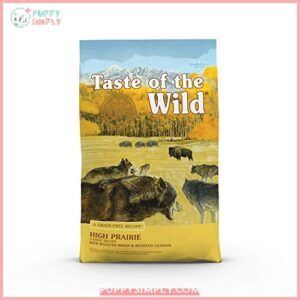
Taste of the Wild keeps things simple — wild proteins, clean ingredients, real results.
Roasted bison and venison lead the formula, with 32% protein to help your Boxer’s lean muscle. Sweet potatoes and peas deliver digestible carbs and fiber. Salmon oil and flaxseed handle skin and coat from the inside out. A built-in probiotic blend helps gut health daily.
At $58.99 for 28 lbs, it’s solid value. Grain-free, no artificial additives, and made in the USA.
| Best For | Dogs with grain sensitivities or active adult dogs who need high-protein fuel and a digestive boost. |
|---|---|
| Price | $58.99 / 28 lb |
| Protein Source | Bison & venison |
| Grain-Free | Yes |
| Life Stage | Adult |
| Made in USA | Yes |
| Joint Support | Omega-3s & chelated minerals |
| Additional Features |
|
- 32% protein from real bison, venison, and other animal sources keeps muscles strong and lean.
- Salmon oil and flaxseed work together to support healthy skin and a shiny coat.
- Built-in probiotics and prebiotic chicory root make it easy on the gut day to day.
- Grain-free formulas have been flagged for a possible link to heart disease (DCM) in some dogs — worth a chat with your vet.
- Peas and plant proteins pad the protein percentage, but they’re not as bioavailable as meat.
- One kibble size means it may not be the best fit for tiny breeds or dogs with chewing issues.
Dry, Wet, Fresh, and Raw Food Options Compared
Not every Boxer thrives on the same type of food, and the format matters just as much as the ingredients. From crunchy kibble to fresh-cooked meals, each option comes with real trade-offs worth knowing.
Here’s how the main food types stack up for Boxers.
Advantages of Dry Kibble for Boxers

Dry dog food quietly does a lot of heavy lifting. Beyond convenience, digestible kibble promotes Dental Health Benefits through mechanical chewing that scrubs plaque.
Portion Consistency is simple — every cup is measurable. Extended Shelf Life means less waste. High protein, AAFCO standards-compliant formulas deliver real Nutrient Density for large breed nutrition.
- Travel Convenience — grab and go, no refrigeration needed
- Dental scrubbing — crunchy texture reduces tartar naturally
- Consistent portions — easier weight management for your Boxer
When Wet or Fresh Food Works Best

Kibble doesn’t work for every Boxer. If yours is a picky eater, recovering from illness, or dealing with kidney concerns, wet or fresh food earns its place.
Hydration Benefits are real — canned food is roughly 78% water, which helps Kidney Support and Weight Management naturally.
Fresh Humangrade meals also offer Appetite Stimulation for dogs that turn their noses up at dry.
Dental Comfort matters too — softer textures help dogs with sensitive mouths eat without stress.
Raw and Freeze-Dried Options for Active Boxers
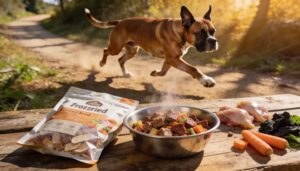
Active Boxers push hard — and their food should keep up.
Raw and freeze-dried options are worth knowing for high-energy dogs:
- Shelf Stability keeps meals ready without daily freezer prep
- Rehydration Timing is simple — add water, wait, serve
- Travel Convenience makes freeze-dried the best raw food for Boxers on the go
- Pathogen Safety still requires clean bowls and careful handling
Ingredient Transparency sets the best freeze-dried dog food for Boxers apart.
How to Switch Your Boxer to a New Food Safely

Switching your Boxer to a new food the wrong way can upset their stomach fast. A slow, steady adjustment makes all the difference. Here’s exactly how to do it right.
Week-by-Week Transition Schedule
Switch slowly — your Boxer’s gut needs time to adjust. Follow this blend ratio progression: 25% new food in week one, 50% in week two, 75% in week three, then 100% by week four.
Keep a consistent feeding spot and meal timing throughout.
Practice treat limitation strategy by holding extras steady.
Monitor hydration and do a daily stool consistency check to catch trouble early.
Warning Signs to Watch During The Switch
Even a careful change can hit bumps. Watch for diarrhea indicators like watery or mucus-streaked stool, vomiting alerts after meals, and skin itching signs — especially new ear odor or paw licking.
Bloating symptoms paired with restlessness need prompt attention. Energy drops that linger beyond a few days are a red flag.
If symptoms appear, stop the new food and call your vet.
Adjusting Portions for Age and Activity Level
Portion size isn’t static — it shifts with your Boxer’s life stage and activity level. Use these four checkpoints to stay on track:
- Age-Based Portions: Puppies need more calories per pound; seniors need less.
- Activity Adjustments: Active days mean more food; rest days mean less.
- Weight Monitoring: Visible ribs or excess fat signal a change is needed.
- Calorie Scaling: Use calorie content guidelines to hit the ideal body condition.
What Not to Feed a Boxer Dog

Knowing what to feed your Boxer matters — but knowing what to avoid matters just as much. Some ingredients and everyday foods can quietly trigger health problems your dog doesn’t need.
Here’s what to keep off the menu.
Common Allergens and Problematic Ingredients
Some Boxers react badly to ingredients hiding in plain sight on the label. Beef, dairy, wheat, chicken, egg, and soy top the list of food allergies in dogs — and Boxers are especially prone.
| Allergen | Label Names to Watch | Risk Level |
|---|---|---|
| Milk Protein Alerts | Casein, whey, lactose | High |
| Egg Ingredient Risks | Whole egg, egg powder | Moderate |
| Wheat Gluten Concerns | Malt, starch, gluten | High |
| Soy Derivative Labels | Soy protein, isolate | Moderate |
| Fish Shellfish Triggers | Fish meal, shellfish | Moderate |
Limited-ingredient diets cut the guesswork. Ingredient transparency and labeling for Boxer foods matter more than marketing claims.
Foods That Worsen Boxer Health Conditions
Some foods don’t just cause an upset stomach — they actively work against your Boxer’s health.
- High-Fat Snacks and greasy scraps can trigger pancreatitis and worsen obesity.
- Seasoned Human Foods with garlic or onion increase food sensitivities and risk anemia.
- Cooked Bones splinter and cause internal injuries or dangerous blockages.
- Alcoholic Beverages and Xylitol Sweeteners are outright toxic — even small amounts cause serious harm.
Ingredients to Always Avoid on The Label
Reading labels isn’t optional — it’s your first line of defense.
Avoid xylitol sweetener in any form; even trace amounts can crash blood sugar. Allium powders like onion and garlic damage red blood cells. Grape derivatives risk kidney failure. Artificial smoke flavor signals heavy processing.
Watch for misleading collective terms that hide ingredient quality. On grain-free labels, gluten‑free claims, or limited-ingredient diets, common allergens and ingredient sensitivities can still sneak through.
Frequently Asked Questions (FAQs)
What is the best dog food for a Boxer?
The best dog food for a Boxer meets AAFCO Standards, delivers high protein from named animal sources, and matches your dog’s life stage — whether puppy, adult, or senior.
What not to feed a Boxer?
Some foods are outright dangerous. Chocolate, xylitol sweeteners, onion, garlic, grapes, raisins, and alcohol can cause serious harm. Fatty treats stress digestion. Keep these away — always.
Are Boxers loyal to one person?
Like a compass that points north, a Boxer is inclined to orient toward one person — but they’re far from exclusive.
Attachment patterns depend on who feeds, trains, and walks them daily.
What is the best dog food for a boxer?
Taste of the Wild Ancient Prairie tops the list — 36% protein, real buffalo, and AAFCO-compliant. It meets your Boxer’s high-protein needs without unnecessary fillers.
What are the top dog food options for dogs?
For Boxers, the best options balance calorie density, quality protein, and veterinary endorsements.
Whether dry, wet, or fresh, choose complete and balanced formulas that fit your dog’s age, size, and health needs.
Which dog food is best for boxers with allergies?
For allergy-prone Boxers, Limited Ingredient Formulas with Novel Protein Sources like duck or salmon work best. Hydrolyzed Diets and Omega‑3 Enrichment calm reactions fast. Always check Allergen‑Free Labeling first.
What is the best wet food for Boxer puppies?
For Boxer puppies, choose wet food with at least 22% protein, balanced omega-3 sources, and AAFCO compliance.
Limited ingredient formulas with veterinary endorsement support controlled growth without overwhelming a puppy’s developing digestive system.
What is the best dehydrated dog food for boxers?
Ironically, the "freshest" option comes in a bag. Ziwi Peak’s air-dried formula — built on meat, organs, and bone — tops the list for boxers needing calorie density without the fuss.
Can boxers eat dog food?
Yes, Boxers can absolutely eat commercial dog food. Just make sure it meets AAFCO Standards, lists real meat first, and fits your dog’s life stage and size.
Does a boxer need to eat special dog food?
Not really.
Despite the breed-specific myths, any complete, balanced food meeting AAFCO standards works. Veterinary guidance points to nutrient adequacy over fancy labels. Match quality ingredients to your dog’s life stage.
Conclusion
Choosing the right food is essential, just like selecting a training program or a vet.
The best dog foods for Boxers balance energy needs with health risks.
Fuel their playful spirit, support their heart, and protect their joints.
High-quality ingredients make all the difference.
Your Boxer’s health and happiness depend on it.
Make informed choices and enjoy a long, active life together.
Nourish their potential with every bite.
- https://the-honest-kitchen.pxf.io/c/2442109/2058258/17474
- https://thefarmersdog.otegtm.net/c/2442109/1640964/9488
- https://sites.tufts.edu/petfoodology/2020/12/28/what-is-guaranteed-about-the-guaranteed-analysis/
- https://www.petmd.com/dog/slideshows/nutrition-center/choosing-best-dog-food
- https://www.aafco.org/