
This site is supported by our readers. We may earn a commission, at no cost to you, if you purchase through links.

Huskies burn through calories like endurance athletes—because that’s exactly what they are.
Bred to pull sleds across frozen tundra for hours, their metabolism, muscle composition, and digestive efficiency differ markedly from your average Labrador or Golden Retriever.
Feed them like a generic large breed, and you’ll see it fast: dull coat, low energy, weight swings, or a stomach that never quite settles.
Finding the best dog food for huskies means understanding what their bodies actually demand—not just picking whatever has the highest protein number on the bag.
The right formula makes a visible difference, and this guide cuts straight to it.
Table Of Contents
- Key Takeaways
- Top 10 Husky Dog Foods
- 1. Taste of the Wild Grain Free Dog Food
- 2. Diamond Naturals Large Breed Adult Dog Food
- 3. Wellness Complete Health Chicken Oatmeal Dog Food
- 4. Nutro Ultra Adult Weight Management Dog Food
- 5. Merrick Healthy Grains Salmon Dog Food
- 6. Acana Grasslands High Protein Dog Food
- 7. Instinct Original Rabbit Dry Dog Food
- 8. Solid Gold Bison Dry Dog Food
- 9. Stella Chewy Freeze Dried Chicken Patties
- 10. ORIJEN Puppy Grain Free Dry Dog Food
- Husky Nutrition Needs
- Choose by Husky Life Stage
- Match Food to Husky Needs
- Feeding and Transition Tips
- Frequently Asked Questions (FAQs)
- What is the best dog food for Huskies?
- What dog food does a Siberian Husky eat?
- What should a Huskie eat?
- How do I make food choices for my husky?
- What makes a Siberian Husky a good dog?
- Can Huskies eat high-protein dog food?
- What is the best dog food for huskies?
- What are Siberian Huskies favorite food?
- Do huskies like dry or wet food?
- What type of food is best for huskies?
- Conclusion
Key Takeaways
- Huskies have a high-performance metabolism, so feeding them like a generic large breed leads to visible problems — dull coat, low energy, and digestive issues.
- Protein quality matters more than the number on the bag; aim for 26–32% from real animal sources, with omega-3s from fish oil or flaxseed to support their double coat from the inside out.
- Nutritional needs shift across life stages — puppies need calcium-balanced growth formulas, active adults need higher fat and protein, and seniors actually need more protein, not less, to prevent muscle loss.
- Always transition to a new food over 7–8 days using a gradual mix, and watch for firmer stools, steady energy, and improved coat shine as signs the food is actually working.
Top 10 Husky Dog Foods
Finding the right food for your Husky doesn’t have to feel overwhelming. Each pick below was chosen with your dog’s protein needs, coat health, and energy levels in mind.
If you’d rather skip the bag altogether, these homemade husky dog food recipes make it easy to fuel their energy with real, whole ingredients.
Here are ten vet-approved options worth a closer look.
1. Taste of the Wild Grain Free Dog Food
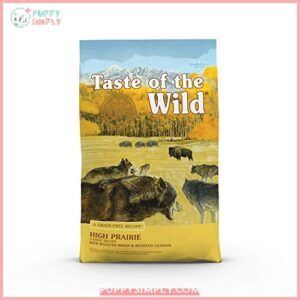
Taste of the Wild High Prairie is a solid pick for active Huskies. It leads with water buffalo, lamb meal, and chicken meal — three quality animal proteins delivering 32% protein per serving.
That’s enough to support lean muscle without overloading your dog’s system. The K9-strain probiotic blend and chicory root keep digestion on track, while salmon oil and flaxseed supply the omega-3s your Husky’s double coat genuinely needs.
Grain-free, USA-made, and priced around $59 for 28 lbs.
| Best For | Active adult dogs — especially high-energy breeds like Huskies — who need a high-protein, grain-free diet with solid digestive and coat support. |
|---|---|
| Primary Protein | Bison & Venison |
| Probiotic Support | K9-strain probiotic blend |
| Omega Fatty Acids | Fish oil, salmon oil, flaxseed |
| Grain-Free | Yes |
| Bag Weight | 28 lb |
| Price (USD) | $58.99 |
| Additional Features |
|
- 32% protein from real animal sources like water buffalo, lamb meal, and chicken meal — great for maintaining lean muscle in active dogs.
- Built-in probiotic blend and chicory root help keep digestion running smoothly, which is a nice bonus for sensitive stomachs.
- Salmon oil and flaxseed deliver the omega-3s a double-coated breed like a Husky genuinely needs for skin and coat health.
- Contains peas and pea-based ingredients that pad the protein number but don’t have the same nutritional punch as animal proteins.
- Grain-free formulas are still under scrutiny for a possible link to heart issues (DCM) — worth a conversation with your vet if you have a predisposed breed.
- At $59 for 28 lbs, the cost adds up fast if you’re feeding a large or very active dog every day.
2. Diamond Naturals Large Breed Adult Dog Food
If you want something tried and true at a budget-friendly price, Diamond Naturals Large Breed Adult checks a lot of boxes.
Real cage‑free chicken leads the ingredient list, backed by chicken meal to push protein up to around 23%. Fat sits at 13% — steady, not excessive.
Glucosamine and chondroitin are built in for joint support, which matters for a breed prone to hip issues. Add the K9‑strain probiotics, prebiotic chicory root, and omega‑rich superfoods like chia and flaxseed.
At $43.99 for 40 lbs, the value is hard to argue with.
| Best For | Large-breed adult dog owners who want solid nutrition — real chicken, joint support, and probiotics — without spending a fortune. |
|---|---|
| Primary Protein | Cage-Free Chicken |
| Probiotic Support | Multi-strain probiotic blend |
| Omega Fatty Acids | Omega-6 & omega-3 from superfoods |
| Grain-Free | No |
| Bag Weight | 40 lb |
| Price (USD) | $43.99 |
| Additional Features |
|
- Real cage-free chicken is the first ingredient, with glucosamine and chondroitin already built in for hip and joint health
- K9-strain probiotics, prebiotics, and omega-rich superfoods like chia and flaxseed cover digestion and coat health
- At $43.99 for 40 lbs, it’s genuinely hard to beat the value for a large breed formula
- Contains multiple grains (rice, barley, sorghum), so it’s not a fit for dogs with grain sensitivities
- Probiotic potency isn’t quantified, so effectiveness can vary from bag to bag
- The 40-lb bag is great for big households but a bit much if you’ve only got one dog
3. Wellness Complete Health Chicken Oatmeal Dog Food
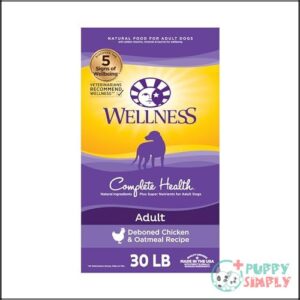
Step up in price, and you get a lot more in the bag. Wellness Complete Health Chicken & Oatmeal packs deboned chicken and chicken meal as its first two ingredients — real protein up front, no filler padding the list.
Glucosamine and chondroitin support those Husky hips, while omega fatty acids keep the double coat looking sharp. Probiotics and prebiotic chicory root handle digestion.
No corn, wheat, or soy. At around $2.31 per pound, it’s a solid mid-range pick for active adults.
| Best For | Adult dogs of all sizes — especially active breeds with joint concerns or sensitive stomachs who need clean ingredients without corn, wheat, or soy. |
|---|---|
| Primary Protein | Deboned Chicken |
| Probiotic Support | Lactobacillus & Enterococcus |
| Omega Fatty Acids | Flaxseed & fish-derived |
| Grain-Free | No |
| Bag Weight | 30 lb |
| Price (USD) | $69.21 |
| Additional Features |
|
- Real deboned chicken and chicken meal lead the ingredient list — solid protein from the start
- Glucosamine, chondroitin, and omega fatty acids cover joint health and coat condition in one bag
- Probiotics and prebiotic chicory root keep digestion running smoothly
- At $69.21 for 30 lbs, it costs more than most mainstream kibbles
- Contains grains (oatmeal, barley, rice), so it’s not a fit for dogs with grain sensitivities
- The large bag size can be awkward for smaller households with limited storage
4. Nutro Ultra Adult Weight Management Dog Food
Not every Husky runs marathons. Some are couch-adjacent, and that’s where Nutro Ultra Adult Weight Management earns its place.
Real chicken leads the ingredient list, backed by lamb and salmon meals — 23% protein to hold lean muscle while keeping calories in check.
Fat stays around 13%, reasonable for a less active dog. Fifteen superfoods, including kale and blueberries, cover antioxidant and immune support.
Glucosamine and chondroitin are in there too. No corn, wheat, or soy.
| Best For | Adult dogs that are overweight or less active, especially breeds prone to weight gain who need lean muscle support without excess calories. |
|---|---|
| Primary Protein | Chicken, Lamb & Salmon |
| Probiotic Support | Not specified |
| Omega Fatty Acids | Salmon meal & flaxseed |
| Grain-Free | No |
| Bag Weight | 30 lb |
| Price (USD) | Not specified |
| Additional Features |
|
- Three real animal proteins (chicken, lamb, salmon) help maintain muscle while keeping fat intake moderate
- Packed with 14 superfoods plus omega-3/6s for immune health, skin, and coat shine
- Natural glucosamine and chondroitin support joints — no corn, wheat, or soy
- Pricier than most dry dog foods, which adds up fast with larger breeds
- Weight loss isn’t guaranteed — strict portion control is still on you
- Multiple proteins and grains could be a problem for dogs with food sensitivities
5. Merrick Healthy Grains Salmon Dog Food
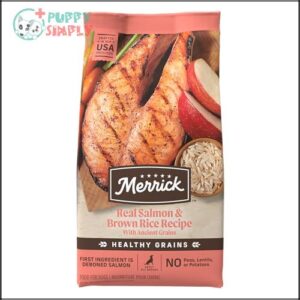
Salmon leads here — deboned, real, and listed first. That matters for a Husky’s coat and muscles both.
That protein foundation supports the energy demands covered in this Husky German Shepherd mix care guide, where diet and exercise go hand in hand.
Merrick’s Healthy Grains formula sits at around 25% protein and 15% fat, with 477 kcal per cup — solid numbers for an active adult without tipping into excess.
Brown rice, oats, and barley keep digestion steady.
Glucosamine and chondroitin are built in for joint support. Four probiotic strains round it out.
No corn, peas, or soy. Clean, practical, and well-balanced.
| Best For | Adult Huskies and active dogs that need solid protein, joint support, and a coat-friendly omega boost without corn, peas, or soy. |
|---|---|
| Primary Protein | Deboned Salmon |
| Probiotic Support | 4-strain probiotic blend |
| Omega Fatty Acids | Salmon oil & flaxseed |
| Grain-Free | No |
| Bag Weight | 25.3 lb |
| Price (USD) | $76.98 |
| Additional Features |
|
- Real deboned salmon is the first ingredient, great for muscle and coat health
- Built-in glucosamine, chondroitin, and four probiotic strains cover joints and digestion
- No corn, peas, soy, or artificial anything — a cleaner label than most
- At $76.98 for a 25 lb bag, it’s pricier than a lot of everyday dry foods
- Contains grains and multiple proteins (chicken, turkey), so it’s not ideal for dogs with allergies or grain sensitivities
- Some picky dogs may turn their nose up at it without a little added topper
6. Acana Grasslands High Protein Dog Food
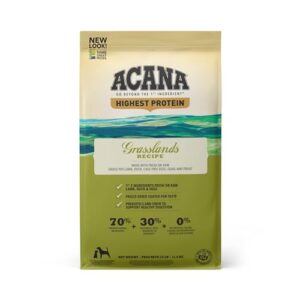
ACANA Grasslands is built around a simple idea: feed what wolves actually ate. Lamb, duck, and eggs lead the ingredient list — no filler, no shortcuts.
You’re getting 35% protein and 17% fat, with around 3,810 kcal/kg metabolizable energy. That’s serious fuel for an active Husky.
The freeze-dried coating adds real palatability for picky eaters. Probiotics and pumpkin fiber keep digestion on track.
Grain-free, no corn or soy — and 70% of every bag is pure animal ingredient.
| Best For | Active adult dogs (under 70 lb) who need a high-protein, grain-free diet — especially picky eaters or dogs with grain sensitivities. |
|---|---|
| Primary Protein | Lamb & Duck |
| Probiotic Support | Lactobacillus & Bifidobacterium |
| Omega Fatty Acids | Fish oil & diverse animal fats |
| Grain-Free | Yes |
| Bag Weight | 24.9 lb |
| Price (USD) | Not specified |
| Additional Features |
|
- 70% animal ingredients with a freeze-dried coating that even fussy dogs tend to love
- Probiotics and pumpkin fiber make a real difference for dogs with sensitive stomachs
- Diverse proteins — lamb, duck, quail, trout, organ meats — support lean muscle and a healthy coat
- Pricier than most mainstream kibbles, which adds up fast for bigger dogs
- Not a fit for large-breed dogs over 70 lb or pups that need lower protein levels
- Kibble size can be a bit much for very small breeds without soaking or breaking it up
7. Instinct Original Rabbit Dry Dog Food
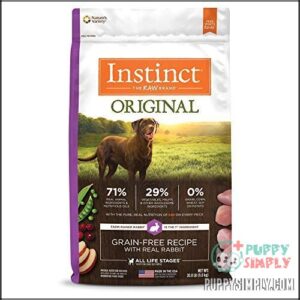
Rabbit isn’t the flashiest protein — but for Huskies with sensitivities, it’s a smart switch. Instinct Original leads with real rabbit, backed by salmon and menhaden fish meals, landing around 34–36% protein and 18–22% fat. That fat-to-protein ratio fits an active Husky’s energy needs well.
The freeze-dried rabbit coating boosts palatability — helpful if your dog’s picky. Grain-free, no soy or wheat, with live probiotics for gut support.
One note: the odor is strong, and the $97.99 price tag reflects that premium.
| Best For | Huskies and active dogs with grain, soy, or common protein sensitivities who need a high-quality, novel protein source. |
|---|---|
| Primary Protein | Rabbit |
| Probiotic Support | Live guaranteed probiotics |
| Omega Fatty Acids | Natural omega fatty acids |
| Grain-Free | Yes |
| Bag Weight | 20 lb |
| Price (USD) | $97.99 |
| Additional Features |
|
- Real rabbit leads the ingredient list — a great novel protein for dogs with food sensitivities
- Freeze-dried raw coating makes it more appealing to picky eaters
- Live probiotics and omega fatty acids support both digestion and coat health
- At $97.99 for 20 lbs, it’s a significant investment compared to conventional kibble
- The strong "raw" odor is a common complaint from owners
- Some dogs experienced digestive upset, possibly due to batch variability
8. Solid Gold Bison Dry Dog Food
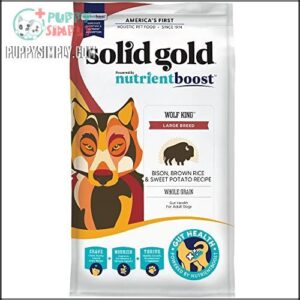
Bison isn’t common in dog food — and that’s actually a good thing. It’s a lean, nutrient-dense protein that works well for active Huskies without the allergen baggage of chicken or beef.
Solid Gold leads with real bison, adds salmon oil for omega-3 coat support, and backs it with 90 million probiotic CFU for gut health.
Brown rice, oatmeal, and barley give steady energy.
At $3.64/lb, it’s a premium pick — but the ingredient quality backs the price.
| Best For | Large, active dogs (30–100 lbs) with sensitive stomachs or potential chicken/beef allergies who need a high-quality protein source. |
|---|---|
| Primary Protein | Bison |
| Probiotic Support | Bacillus coagulans (90M CFU/lb) |
| Omega Fatty Acids | Salmon oil & flaxseed |
| Grain-Free | No |
| Bag Weight | 22 lb |
| Price (USD) | $79.99 |
| Additional Features |
|
- Real bison as the first ingredient — lean, nutrient-rich, and easier on dogs with common protein sensitivities
- Salmon oil and 90 million probiotic CFU support a healthy coat, digestion, and immune system
- Complex carbs like brown rice, oatmeal, and barley deliver steady energy for bigger, more active dogs
- At $3.64/lb, it’s pricier than most dry foods — the 22 lb bag runs nearly $80
- Not grain-free, and contains legumes like peas and chickpeas, which can trigger sensitivities in some dogs
- High protein and calorie density makes it a poor fit for dogs managing weight or kidney issues
9. Stella Chewy Freeze Dried Chicken Patties
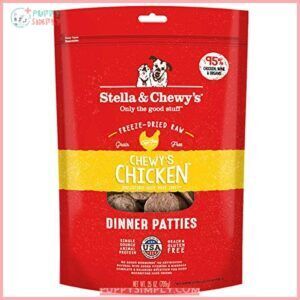
Freeze-dried raw isn’t just a trend — it’s a smart option for Huskies who need high protein without the mess of raw prep. Stella & Chewy’s patties pack 95% cage-free chicken, organs, and bone into a shelf-stable format.
That means 48% crude protein and 28% fat — strong numbers for an active breed. Added probiotics support digestion, omega fatty acids back coat health, and the versatility is real: serve dry, rehydrated, or crumbled over kibble.
| Best For | Huskies and active dogs who need high-protein, nutrient-dense meals without the hassle of raw food prep. |
|---|---|
| Primary Protein | Cage-Free Chicken |
| Probiotic Support | Fermented probiotic cultures |
| Omega Fatty Acids | Omega fatty acids added |
| Grain-Free | Yes |
| Bag Weight | 1.67 lb |
| Price (USD) | $59.97 |
| Additional Features |
|
- 95% cage-free chicken with organs and bone — serious protein in a shelf-stable, easy-to-use format
- Incredibly versatile: serve it dry, rehydrated, or crumbled over kibble as a topper
- Probiotics and omega fatty acids support both digestion and coat health
- At $59.97 for 25 oz, it’s a premium price that adds up fast — especially for larger breeds
- Some bags arrive with a lot of crumbled pieces, and occasional changes in smell or color can put picky dogs off
- Not safe for dogs with chicken allergies, and the sodium content is worth a look if your dog has dietary restrictions
10. ORIJEN Puppy Grain Free Dry Dog Food
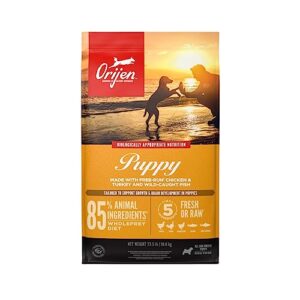
Husky puppies burn through nutrients fast — and ORIJEN delivers. This grain-free kibble pulls 85% of its content from fresh or raw animal ingredients: chicken, turkey, chicken liver, salmon, and whole herring lead the lineup.
That’s a WholePrey approach, meaning organs, hearts, and gizzards fill in the nutritional gaps that muscle meat alone can’t cover.
Protein is high, fat provides sustained energy, and the omega-3 load backs coat development from the start.
Worth every dollar at $106.99.
| Best For | Husky puppies and other high-energy breeds whose owners want a protein-dense, biologically appropriate diet without grains or fillers. |
|---|---|
| Primary Protein | Fresh Chicken & Turkey |
| Probiotic Support | Added probiotics |
| Omega Fatty Acids | Pollock oil & fish ingredients |
| Grain-Free | Yes |
| Bag Weight | 23.5 lb |
| Price (USD) | $106.99 |
| Additional Features |
|
- 85% fresh or raw animal ingredients — chicken, salmon, herring, and organ meats — means real food at the top of every bite
- WholePrey formula covers the full nutritional picture, including vitamins and omega-3s that support coat, joints, and brain development
- Grain-free and free of corn, soy, wheat, and potato — a solid pick for puppies prone to food sensitivities
- At $106.99 for a 23.5 lb bag, it’s a real budget commitment — especially for fast-growing pups that eat a lot
- The fish and meat smell is strong and tends to stick around on hands, scoops, and storage containers
- Contains legumes and egg, and is made in a facility that also handles grains — worth knowing if your pup has specific allergies
Husky Nutrition Needs

Huskies aren’t built like your average dog, and their diet reflects that. They need specific nutrients to support everything from their double coat to their joints to that relentless energy.
Here’s what actually matters when you’re reading a label.
Ideal Protein Levels for Lean Muscle
Protein does the heavy lifting regarding muscle maintenance in Huskies. Aim for 28–32% protein percentage for working dogs, or 26–30% for companions. Protein density matters more than raw numbers — prioritize lean protein with a strong amino acid profile, especially leucine threshold support.
Spread intake across meals. Consistent meal distribution keeps amino acids available throughout the day.
Healthy Fat Ratios for Steady Energy
Fat carries more calories per gram than protein or carbs — that’s why fat-to-carb balance matters for energy stabilization in active medium breed dogs. Target a 15–20% fat percentage in vet‑approved dog food.
Meal fat consistency day‑to‑day keeps digestion predictable. Prioritize unsaturated fat sources like fish oil.
These fat quality indicators signal a formula built for Huskies across nutrient life stages.
Omega-3 and Omega-6 for Coat Health
Beyond fat ratios, the omega ratio shapes your Husky’s coat from the inside out. Three things matter most:
- EPA Skin Support — reduces follicle inflammation, calming itchy, flaky skin
- DHA Coat Shine — strengthens skin structure for that glossy double coat
- Ceramide Production — omega-6 fatty acids seal moisture in
Keep omega-3 and omega-6 fatty acids balanced near AAFCO’s 30:1 limit for real inflammation control.
Adequate essential fatty acids support skin barrier health.
Digestible Carbs for Active Huskies
Carbs often get overlooked, but they’re your Husky’s pre-workout fuel. Slow release carbs — brown rice, oats, sweet potato — keep energy steady across long runs without blood sugar spikes.
That’s the low-glycemic diet advantage for energy-dense medium breeds.
Fiber digestibility matters too; complex carb sources like barley and oats support gut comfort.
Post-exercise recovery also improves when digestible carbs replenish energy stores quickly.
Including omega-3 fatty acids enhances skin and coat health.
Zinc, Selenium, and Iodine Support
Three trace minerals — zinc, selenium, and iodine — quietly run your Husky’s thyroid, coat, and immune system.
Zinc bioavailability drops fast with poor-quality ingredients, which is why chelated minerals matter.
Selenium’s antioxidant role aids thyroid hormone conversion.
Iodine thyroid balance keeps metabolism stable.
Zinc-responsive skin issues — crusty patches, hair loss — are your first mineral deficiency sign.
Veterinarian-approved dog food selections cover trace mineral synergy through AAFCO-compliant formulas.
Joint-support Nutrients for Hips and Mobility
Huskies are built to run — but their hips pay the price over time. The right nutrients keep those joints moving freely.
- Glucosamine Benefits + Chondroitin Role: These two work together, supporting cartilage structure and cushioning for hip dysplasia prevention.
- Collagen Peptide Support + MSM Comfort: Strengthen connective tissue and ease movement discomfort daily.
- Hydration Synovial Fluid: Fresh water keeps joints lubricated — don’t overlook it.
Choose by Husky Life Stage
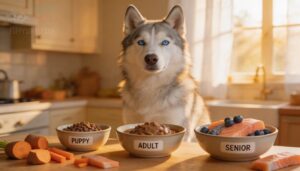
A Husky’s nutritional needs shift quite a bit from puppyhood through their senior years. Getting the life stage right isn’t optional — it’s the difference between a dog that thrives and one that just gets by.
Getting a Husky’s life stage nutrition right isn’t optional — it’s the difference between thriving and just surviving
Here’s what to look for at each stage.
Puppy Growth and Calcium Balance
Getting the calcium phosphorus ratio right during puppyhood isn’t optional — it’s foundational. Young Huskies can’t regulate calcium absorption well, so excess leads to growth plate development problems, not stronger bones.
Stick to a puppy recipe with AAFCO growth-stage labeling and trust supplement-free feeding.
Vitamin D regulation takes care of the rest. No guesswork needed when the formula is built correctly.
Adult Maintenance for Active Dogs
Once your Husky crosses the 12-month mark, maintenance becomes about precision — not excess. A husky adult thrives on high protein content (26–30%), moderate fat, and AAFCO standards-compliant formulas.
Build in omega-3 fatty acids for coat and inflammation, joint health supplements for long-term mobility, and digestive enzymes for gut stability.
Energy timing, hydration strategies, and electrolyte supplementation matter most on active days. Recovery nutrition keeps lean muscle intact.
Senior Diets With Higher Protein
After age 8–10, your senior Husky’s protein requirement actually goes up, not down. muscle loss accelerates with age, so kidney-friendly protein sources with a strong amino acid profile become essential.
digestibility enhancers like prebiotics to improve absorption.
Veterinary formulation guidance matters here — calorie-protein balance keeps seniors lean without taxing aging kidneys.
Always confirm senior dog nutrition plans with your vet.
Calorie Density by Age and Activity
Calorie density isn’t one-size-fits-all — it shifts with your dog’s age and daily output.
A young, high-metabolism Husky in training burns far more than a calm senior.
Think of it as an Age Activity Matrix: puppies and working adults need energy-dense foods, while older dogs do better with lower energy density.
Adaptive Calorie Targets keep weight stable across every life stage.
AAFCO Life-stage Labeling to Check
Labels matter more than marketing. Look for the AAFCO nutritional adequacy statement — it’s your clearest signal.
Balanced Claim tied to the right life stage tells you whether it’s a Supplemental vs Complete food. Check Species Specification and Feeding Directions too.
Guaranteed Analysis confirms protein and fat ranges match AAFCO nutrient profiles. "All life stages" covers puppies through adults — valid for most Huskies.
Match Food to Husky Needs
Not every Husky needs the same bowl. A sled dog logging miles in the cold has different fuel requirements than a couch-loving pup who mostly naps between walks.
Here’s how to match the right food to where your Husky actually lands.
High-energy and Working Huskies
If your Husky pulls sleds, runs trails, or logs serious miles, their nutritional needs shift fast. Cold Weather Metabolism burns through fuel quickly — especially in winter.
For Endurance Training and Pulling Performance, prioritize these:
- High protein content: 28–32% minimum
- Fat: 18–22% for energy density for active medium breed dogs
- Omega3 fatty acids for coat health: EPA/DHA from marine sources
- Hydration Strategies: always increase water intake post-exertion
Veterinarianapproved dog food selections emphasize protein requirements for highenergy dogs and Mental Stimulation through varied, nutrient-rich meals.
Weight Control for Less Active Dogs
Not every Husky runs trails. Some are couch dogs — and that’s fine. But their portions need to reflect that.
Low Calorie Formulas with Activity-Based Calorie Adjustments prevent quiet weight creep. Portion Measurement beats guessing every time. Food Dispensing Toys help slow intake.
For weight management of neutered dogs or dogs gaining steadily, Veterinary Weight Plans through vet‑approved dog food make the real difference.
Sensitive Stomach and Allergy-friendly Options
Some Huskies react badly to complex recipes. Food allergies in dogs often show up as itchy skin, loose stool, or dull coats.
Here’s what actually helps:
- Single Protein Formulas cut potential triggers fast
- Limited Ingredient Diets make problem ingredients easier to spot
- Hydrolyzed Protein Options like Royal Canin reduce immune reactions
- Probiotic Enrichment aids gut recovery during elimination trials
Allergen Avoidance Strategies work best with human-grade ingredients and consistent formulas.
Grain-free Vs Grain-inclusive Choices
Neither option is automatically better.
Grain-free formulas swap grains for legumes or root vegetables — different Carb Quality, different Fiber Sources. Grain-inclusive foods add B vitamins and minerals naturally through whole grains.
Digestibility Differences come down to your dog’s individual response, not the label. Check Ingredient Transparency and Cost Comparison per serving.
The best dog food recommendations for Siberian Huskies — whether grain-free formula or grain-inclusive — depend on what your Husky actually tolerates.
Skin, Shedding, and Double-coat Support
Your Husky’s double coat is a two-layer system — and food fuels it. Omega-3 fatty acids for skin and coat health reduce inflammation and improve sheen.
Essential fatty acids for skin and coat also minimize excessive seasonal shedding management. Prioritize coat health supplements with EPA and DHA.
Higher brush frequency and undercoat moisture control prevent mats and prevention techniques from becoming painful skin problems.
Joint Health for Active and Aging Huskies
Joint problems don’t wait for old age. Hip Dysplasia Prevention starts at the puppy bowl — excess calcium early on raises structural risk.
For adults and seniors, glucosamine and chondroitin slow cartilage breakdown.
Elbow Dysplasia Management and Arthritis Pain Relief both benefit from omega-3s and controlled body weight.
Pair Cartilage Nutrition with Low Impact Exercise and your aging Husky keeps moving comfortably longer.
Feeding and Transition Tips
Getting the food right is only half the battle — how and when you feed your Husky matters just as much. From portioning meals by weight to switching brands without upsetting their stomach, the details add up fast.
Here’s what you need to know to keep feeding time simple and stress‑free.
Daily Portions by Weight and Activity
Most adults do well starting at 1.5–2.5 cups daily — but that’s just your baseline. Calorie Scaling based on Activity Multipliers matters here.
A working Husky burns far more than a couch dog. Use Weight-Based Charts as your starting point, then apply Body Condition Scoring weekly.
Portion Adjustments should follow real trends, not guesses. Small, consistent changes keep weight management strategies for active dogs on track.
Puppy, Adult, and Senior Meal Schedules
Meal Frequency shifts with every nutritional life stage for Huskies. Puppies need 3–4 meals daily — their metabolism runs fast and their stomachs run small. Adults thrive on 2 meals with consistent Portion Timing, morning and evening. Seniors do best with 2–3 smaller portions and Activity Adjustments as energy drops.
Feeding Consistency across all stages keeps digestion steady and appetite predictable.
How to Switch Foods Gradually
Switching foods too fast is one of the easiest ways to upset your Husky’s stomach. A Stepwise Ratio Plan keeps things smooth.
- Days 1–3: Gradual Mix Method — 25% new, 75% current food
- Days 4–5: 50/50 split, with Stool Monitoring daily
- Days 6–7: 75% new, 25% old — watch Appetite Tracking closely
- Day 8+: 100% new; seek Veterinary Guidance if problems persist
Signs a New Food is Working

Once your Husky hits day eight on 100% new food, watch for these signals.
Stool Quality firms up — consistent shape, less odor, no straining. Energy Levels stay steady between meals. Coat Shine improves within weeks as skin health in dogs benefits from better fats. Appetite Consistency means clean bowls, no begging. Allergy Reduction shows as less paw licking. That’s your green light.
When to Adjust Calories or Formula
Not every green light stays green. If your Husky starts gaining too fast or losing muscle, that’s your cue — growth monitoring matters long-term.
A calorie density shift works better than a volume adjustment when hydration balance is already solid. Always loop in veterinary guidance before changing anything.
Portion control and weight management strategies for active dogs aren’t guesswork. They’re precision.
Frequently Asked Questions (FAQs)
What is the best dog food for Huskies?
The Farmer’s Dog and Taste of the Wild top the Best Dog Food for Huskies 2026 list — both earn strong veterinary‑approved dog food selection marks for ingredient sourcing, brand reputation, and balanced nutrition.
What dog food does a Siberian Husky eat?
A Siberian Husky thrives on high-protein, moderate-fat food — think real meat first, omega-3s for that double coat, and calories matched to their energy output.
What should a Huskie eat?
What does your Husky actually need to thrive?
A balanced diet is built on 22–30% animal protein, moderate fat around 20%, and complex carbs — plus omega-3s, zinc, and iodine for coat and thyroid support.
How do I make food choices for my husky?
Match food to your husky’s activity level, life stage, and any sensitivities. Prioritize ingredient transparency, vet-approved formulas, and check brand recall history before committing.
What makes a Siberian Husky a good dog?
Honestly, Huskies are the total package.
Friendly Family Companion by nature, High Energy Drive built-in, Vocal Communication Style included for free.
Double Coat Adaptation, Independent Yet Trainable — they’re active dogs with big hearts.
Can Huskies eat high-protein dog food?
Yes, Huskies can eat high-protein dog food — as long as it’s complete and balanced.
Prioritize protein quality sources, watch calorie balance, and seek veterinary guidance if kidney health risks are a concern.
What is the best dog food for huskies?
Think of your Husky’s bowl as fuel for a well-tuned engine. The Farmer’s Dog and Orijen consistently top veterinary-approved dog food selections for meeting Huskies’ demanding nutritional requirements.
What are Siberian Huskies favorite food?
Huskies lean toward fish and chicken — flavor preferences that align with their coat and muscle needs.
Texture choices vary, but most warm to toppers: broth, freeze-dried meat, or plain pumpkin work well.
Do huskies like dry or wet food?
Most lean toward wet dog food for its Aroma Appeal, but dry kibble wins on Storage Convenience and Chewing Satisfaction.
Husky food preferences vary — hydration from wet dog food matters if yours drinks little.
What type of food is best for huskies?
Real meat first. That’s non-negotiable. Protein source quality and animal protein content drive everything — coat, muscle, energy. Aim for high caloric density with ingredient transparency, and you’re already ahead.
Conclusion
Forget the “one-biscuit-fits-all” fairy tales—your Husky’s a sled-pulling supernova, not a couch potato.
Those generic bags? They’ll leave their coat duller than a January sky.
Our vet-backed picks target their unique engine: high-octane protein, joint-loving nutrients, and fats that fuel tundra-worthy stamina.
The best dog food for huskies isn’t a luxury—it’s the difference between a lethargic pup and one whose eyes gleam like northern lights.
Feed their legacy. Watch them thrive.
- https://www.dpbolvw.net/click-100788894-15827016
- https://www.pdsa.org.uk/pet-help-and-advice/looking-after-your-pet/puppies-dogs/large-dogs/siberian-husky
- https://springfieldvc.com/client-resources/breed-info/siberian-husky/
- https://the-honest-kitchen.pxf.io/zaLJzO
- https://vcahospitals.com/know-your-pet/food-allergies-in-dogs