
This site is supported by our readers. We may earn a commission, at no cost to you, if you purchase through links.

Golden Retrievers develop cancer at nearly twice the rate of most other breeds—a sobering fact that’s pushed veterinary researchers to look hard at the role diet plays in long‑term health. What your dog eats doesn’t just fill their bowl; it shapes their joints, coat, immune system, and how well they age.
Most owners know to avoid cheap kibble loaded with corn syrup and mystery meat, but choosing the best food for Golden Retrievers goes deeper than reading a label at the pet store. The right nutrition targets this breed’s specific vulnerabilities—hip dysplasia, weight gain, skin issues—before they become vet visits.
Table Of Contents
- Key Takeaways
- Key Nutritional Needs for Golden Retrievers
- Factors to Consider When Choosing Dog Food
- Ingredients to Seek and Avoid
- Top 10 Best Foods for Golden Retrievers
- 1. Honest Kitchen Chicken Oat Dry Dog Food
- 2. Nutro Ultra Adult Dog Food
- 3. JustFoodForDogs Beef Potato Dog Food
- 4. Open Farm Grain Free Turkey Chicken Dog Food
- 5. Blue Buffalo Life Protection Dog Food
- 6. Open Farm Senior Grain Free Dog Food
- 7. Acana Wholesome Grains Lamb Pumpkin Dog Food
- 8. Blue Buffalo True Solutions Digestive Care Dog Food
- 9. Portland Fresh Dog Food Pouches
- 10. Natural Balance Fat Dogs Low Calorie Dog Food
- Feeding Guidelines for Golden Retrievers
- Managing Health Issues Through Diet
- Tips for Switching Your Golden’s Food
- Frequently Asked Questions (FAQs)
- Do golden retrievers need special dog food?
- How much food should you feed a golden retriever?
- When is a golden retriever considered a senior?
- When can you safely switch a golden retriever to adult food?
- What is the best food to feed my Golden Retriever?
- What is the best dog food for Golden Retrievers?
- Can Golden Retrievers eat chicken?
- Can Golden Retrievers eat dry dog food?
- How do I choose the right food for my Golden Retriever?
- What is the best dog food for Golden Retrievers with allergies?
- Conclusion
Key Takeaways
- Golden Retrievers develop cancer at nearly twice the rate of other breeds, making targeted nutrition—focused on joint support, healthy weight, and immune function—more than just a preference; it’s preventive care.
- Matching food to your dog’s life stage matters more than brand loyalty, since a puppy needs triple the calories of a senior and very different nutrient ratios across the board.
- Key nutrients to prioritize are high-quality animal protein, omega-3 and omega-6 fatty acids, and built-in glucosamine and chondroitin, which together protect the coat, muscles, and joints that Goldens stress most.
- Switching foods slowly over 7–14 days and watching for red flags like bloody stool, vomiting, or appetite loss is the safest way to keep your Golden’s gut healthy during any diet change.
Key Nutritional Needs for Golden Retrievers

Golden Retrievers aren’t just big, lovable goofballs — they’re also big dogs with big nutritional demands.
Feeding them right matters more than most people realize, especially if you’re also raising a high-energy mix like a Husky German Shepherd that shares similarly demanding dietary needs.
Golden Retrievers are lovable goofballs, but they’re also large dogs with serious nutritional needs
Getting their diet right means paying attention to a handful of key nutrients that directly affect how they feel, move, and age.
Here’s what your Golden actually needs to thrive.
Protein Requirements for Muscle Health
Although every Golden Retriever is unique, muscle health depends on Ideal protein levels customized to life stage.
Adult dogs generally do best around 18–25% from high-quality animal sources, while Puppy protein needs are higher.
Aim for good Digestibility scores, mainly Animal vs plant blends, to support Canine Nutrition, Nutritional Balance, BreedSpecific Diet planning and everyday Dog Diet Protein timing strategies.
Remember that dogs need about 800 mg calcium per pound of food.
Importance of Balanced Fats for Skin and Coat
Protein sets the foundation, but fat does the finishing work — especially for that gorgeous Golden coat.
Omega-3 and omega-6 fatty acids are the backbone of Essential Fatty Balance, supporting dermatological health from the inside out.
Salmon oil and flaxseed are excellent Natural Oil Additives that promote coat shine, skin comfort, and real Shedding Reduction.
That’s Nutrient Synergy working quietly in every bowl.
A balanced diet for puppies promotes strong bone development.
Essential Vitamins and Minerals
Once fats and oils are covered, you also need steady vitamin and mineral support.
I look for Vitamin E Antioxidant protection, Zinc Immune Support, Copper Pigment Health, Selenium Thyroid Function, and Magnesium Muscle Relaxation on every label.
These Dog Food Ingredients keep Nutrition balanced, protect Golden Retriever Health, and guide practical Pet Nutrition Advice when comparing BreedSpecific Food for you.
Calcium and Phosphorus for Bone Health
Vitamins set the foundation, but bones need the right building blocks too.
For Golden Retriever Health, Puppy Bone Development depends on tight Calcium Ratio Guidelines — ideally 1.2:1 calcium to phosphorus. Overshooting Phosphorus Upper Limits puts you at risk of skeletal stress.
Check your Large Breed Dog Food Reviews for calcium listed per 1,000 kilocalories. Smart Supplement Timing and Nutrition choices now protect Bone Density and long‑term Joint support.
Joint Support Nutrients (glucosamine, Chondroitin)
Because Golden Retrievers are a large breed with heavy, athletic bodies, you want overall joint health on your radar early.
Many joint support diets include glucosamine and chondroitin at an appropriate Glucosamine Dosage from safe Chondroitin Sources, paired with Synergistic Nutrients like omega‑3s.
Talk with your vet about Joint Supplement Timing and Safety Side Effects within your dog nutrition plan.
Factors to Consider When Choosing Dog Food

Choosing food for your Golden isn’t just about picking a good brand; it’s about finding what fits their age, energy level, and health.
Things like weight, allergies, and even whether they prefer kibble or fresh food all play a role.
To make that easier, here are the key factors to keep in mind as you compare different options.
Life Stage (puppy, Adult, Senior)
Your dog’s life stage is the single biggest driver of what goes in their bowl. A Golden Retriever puppy’s caloric needs are almost triple those of a senior dog — that’s not a small gap.
- Puppy food promotes rapid growth with 22%+ protein and DHA for brain development
- Adult food focuses on lean muscle and coat health through balanced adult protein levels
- Senior formulas emphasize joint support, lighter calories, and age-specific supplements
Match the food to the life stage, not just the breed.
Activity Level and Weight Management
Because your Golden is a large breed athlete, you’ll want Activity‑Based Feeding that matches movement.
Start with Weight Management through safe Calorie Adjustment based on Activity Level, then use careful Portion Monitoring and Weight Tracking weekly.
| Exercise Scheduling | Daily Dog Nutrition Focus |
|---|---|
| 60 min light | Maintain body weight |
| 60–90 min active | Support lean muscle |
| Very high | Add energy, protect joints |
Food Allergies and Sensitivities
It’s surprising how often Food Allergies hide behind itchy skin, ear infections, or a Sensitive Stomach.
When you’re choosing Nutrition for Golden Retrievers, watch for Common Allergen Triggers and protect Digestive Health by:
- Using Novel Protein Sources
- Considering Hypoallergenic Formulas
- Trying vet‑guided Elimination Diet Trials
- Doing consistent Food Diary Tracking to spot Best Dog Food Options.
Preference for Kibble, Fresh, or Raw Diets
There’s no single right diet — it really comes down to your lifestyle and your Golden Retriever’s needs.
| Factor | Kibble | Fresh/Raw |
|---|---|---|
| Cost Considerations | $30–$100/month | $150–$300/month |
| Convenience Comparison | Under 1 minute prep | 10–30 minutes daily |
| Digestibility Scores | Lower | Higher |
| Palatability Factors | Moderate | High |
Owner Lifestyle Fit matters most when weighing Dog Nutrition and Health priorities across Kibble and Raw Diets.
Importance of AAFCO Nutritional Adequacy
Think of AAFCO as a nutrition baseline you can actually trust. When a label says "Complete & Balanced," it means the food meets verified Nutrient Profiles — not just marketing claims.
Look for that statement in your Label Verification routine every time you shop.
Foods backed by Feeding Trials offer even stronger proof.
For Large Breed Golden Retriever Care, this Regulatory Standard is a simple, VetApproved filter for smarter Dog Food Recommendations.
Ingredients to Seek and Avoid
What’s actually in dog’s food matters more than the brand name on the bag.
A few key ingredients can make a real difference in how your Golden feels, moves, and looks over time.
Here’s what to look for — and what to leave on the shelf.
High-quality Animal Proteins

That shiny coat you love starts with protein: for your Golden Retriever, look for Named Whole Meats like chicken, lamb, or salmon, plus Animal Meal Concentrates such as chicken meal.
Together they boost Amino Acid Completeness, high Digestibility Scores, and Protein Sourcing Transparency in Large Breed formulas, including Chicken Cuisine, Royal Canin, and similar evidence‑based Nutrition for long‑term joint health.
Whole Grains Vs. Grain-free Options

Protein quality sets the foundation, but what carries it matters too.
For most Golden Retrievers, whole grains like brown rice and oats offer real fiber benefits, better digestibility scores, and — importantly — no DCM risk.
Grain‑Free dog food costs nearly double and, given low allergy prevalence to grains, rarely benefits your Golden Retriever.
For a Sensitive Stomach, whole‑grain nutrition is usually the smarter, safer call.
Beneficial Fatty Acids (Omega-3 & Omega-6)
Alongside smart grain choices, your golden retrievers’ fats deserve the same care.
Follow Omega Ratio Guidelines of about 5–10:1 omega‑6 to omega‑3 for skin and coat health and joint support in this large breed. Prioritize Fish Oil Benefits from salmon or herring over Plant vs Animal Sources like flax. Adjust Seasonal Fatty Needs and Supplement Timing with your vet regularly.
Artificial Additives and Preservatives

While you’re checking fats, also scan labels for Synthetic Antioxidants like BHA, BHT, and ethoxyquin. These extend shelf life but their Preservative Effects and other Chemical Risks worry vets, especially for Sensitive Stomachs and Food Allergies.
Skip Artificial Colors and flavor boosters; choose Natural Alternatives using mixed tocopherols or rosemary to support Healthy Digestion, Nutrition, and GrainFree or whole‑grain diets.
Top 10 Best Foods for Golden Retrievers
Finding the right food for your Golden doesn’t have to feel overwhelming.
These ten options cover everything from fresh meals to budget-friendly kibble, so there’s something here for every dog and every lifestyle.
Let’s take a closer look at each one.
1. Honest Kitchen Chicken Oat Dry Dog Food
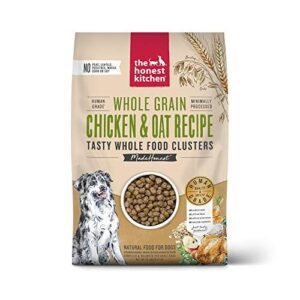
If you want real food without the prep hassle, The Honest Kitchen Chicken & Oat hits a sweet spot. It’s made with human‑grade ingredients — actual chicken, oats, carrots, and chicken liver — cold pressed and dehydrated to lock in nutrients without harsh heat processing.
Your Golden gets 24% protein and 14.5% fat, plus salmon oil for that glossy coat and probiotics for gut health. It works across all life stages, which is genuinely convenient. Just know that it costs more than standard kibble.
| Best For | Dog owners who want high-quality, natural nutrition for their pup at all life stages — especially dogs with food sensitivities or allergies. |
|---|---|
| Life stage | All life stages |
| Primary protein | Chicken |
| Food form | Dry whole clusters |
| Grain content | With grains |
| Digestive focus | Supports digestion, sensitivities |
| Price level | Premium-priced |
| Additional Features |
|
- Made with human-grade ingredients like real chicken, oats, and carrots — no fillers or artificial preservatives
- Easy to prepare, just add warm water, so you get a fresh meal without a lot of effort
- Works for puppies, adults, and nursing moms, so you don’t have to switch foods as your dog grows
- Pricier than most standard dog food options, which adds up fast
- Some bags have a lot of powder at the bottom that dogs tend to ignore, which feels like wasted money
- Can cause gas or digestive upset during the transition period, so switching slowly is a good idea
2. Nutro Ultra Adult Dog Food
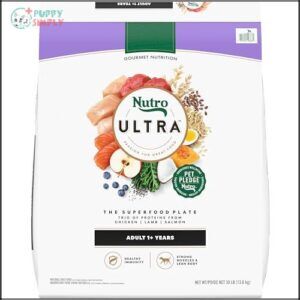
Nutro Ultra Adult stands out for its triple‑protein foundation — chicken, lamb, and salmon — delivering roughly 31% dry‑matter protein, which sits comfortably above AAFCO’s minimum for adult dogs. That matters for keeping your Golden’s muscles strong and their energy steady.
The omega‑3 and omega‑6 fatty acids support that signature Golden coat, while natural glucosamine from chicken meal quietly does joint‑support work in the background.
No corn, wheat, soy, or by‑product meals. It’s a clean, well‑rounded daily option.
| Best For | Adult dogs—especially medium to large breeds like Golden Retrievers—that need high-quality protein plus extra support for skin, coat, digestion, and overall immunity, including some dogs managing diabetes. |
|---|---|
| Life stage | Adult |
| Primary protein | Chicken, lamb, salmon |
| Food form | Dry kibble |
| Grain content | With grains |
| Digestive focus | Supports healthy digestion |
| Price level | Premium-priced |
| Additional Features |
|
- Triple animal protein (chicken, lamb, salmon) provides high-quality nutrition that helps maintain lean muscle and steady energy.
- Radiant Skin & Coat formula with omega‑3 and omega‑6 fatty acids plus 14 superfoods supports a shiny coat, healthy digestion, and strong immunity.
- Made with non-GMO ingredients and contains no chicken by-product meal, corn, wheat, or soy, making it a cleaner choice for sensitive dogs.
- More expensive than many standard dog foods, which can add up for larger dogs or multi-dog households.
- Some buyers may find lower prices at other retailers, so it can take extra effort to shop around.
- Not ideal for dogs with specific protein allergies or strict veterinary dietary restrictions, since it includes multiple animal proteins and a wide range of ingredients.
3. JustFoodForDogs Beef Potato Dog Food
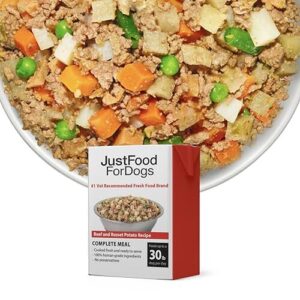
Fresh food done right — that’s the best way to describe JustFoodForDogs Beef & Potato.
Every ingredient is human-grade: lean ground beef, beef heart, russet potatoes, carrots, and sweet potatoes, all gently cooked to preserve nutrients.
It’s 40% more digestible than kibble, which your Golden’s gut will thank you for.
With about 1,559 kcal/kg and added omega-3s for coat health, it works beautifully as a complete meal or a kibble topper for picky eaters.
| Best For | Dog parents who want a convenient, gently cooked, human-grade beef and potato meal or topper that’s easier on digestion and great for sensitive stomachs. |
|---|---|
| Life stage | All life stages |
| Primary protein | Beef |
| Food form | Wet pate |
| Grain content | Grain-free |
| Digestive focus | Improves digestion |
| Price level | Premium-priced |
| Additional Features |
|
- 100% human-grade, gently cooked recipe with real beef, potatoes, and veggies for better nutrient absorption.
- Proven to be about 40% more digestible than kibble, which can help with sensitive stomachs and overall gut health.
- Shelf-stable Tetra Pak packaging makes it super convenient for travel and easy to use as either a full meal or a topper.
- More expensive than many standard dog foods, which can add up for larger dogs or multi-dog households.
- Some dogs may not love the taste or soft pâté texture, especially if they’re used to crunchy kibble.
- Packaging can be tricky to open and may squirt when squeezed, and it might not suit dogs with certain allergies or dietary restrictions.
4. Open Farm Grain Free Turkey Chicken Dog Food
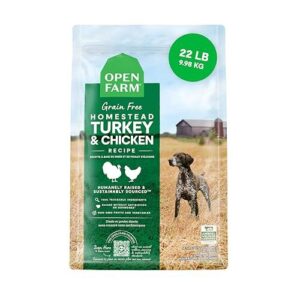
Open Farm’s Grain-Free Turkey & Chicken hits a sweet spot that’s hard to find: transparent sourcing with real nutritional muscle.
The turkey comes from GAP-certified farms, the chicken from Pennsylvania, and ocean whitefish meal adds concentrated omega-3s on top.
At 30% crude protein and 14% fat, it meets what adult Goldens genuinely need.
Superfoods like pumpkin and chicory root support digestion, while salmon oil keeps that signature golden coat gleaming.
It’s premium, yes — but you’re paying for ingredients you can actually trace.
| Best For | Pet parents who want a grain-free, high-protein food with fully traceable, ethically sourced ingredients, especially for adult Golden Retrievers or dogs with sensitive stomachs. |
|---|---|
| Life stage | All life stages |
| Primary protein | Turkey and chicken |
| Food form | Dry pellets |
| Grain content | Grain-free |
| Digestive focus | Gentle for sensitive stomachs |
| Price level | Premium-priced |
| Additional Features |
|
- Grain-free and nutrient-dense formula made with real turkey, chicken, and ocean whitefish meal to support overall health.
- Ethically and sustainably sourced, with transparent and traceable ingredients like GAP-certified turkey and regional chicken.
- Includes superfoods like pumpkin, chicory root, and salmon oil to support digestion, skin, and a healthy, shiny coat across all life stages.
- More expensive than many other dog food options, which can be tough if you’re on a tighter budget or have multiple dogs.
- Some buyers feel the bag quantity and expiry date don’t match their expectations, and it’s not returnable if your dog refuses it.
- The strong smell can be off-putting for some owners and may not appeal to particularly picky dogs.
5. Blue Buffalo Life Protection Dog Food
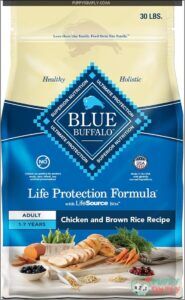
Blue Buffalo Life Protection is one of those dog foods that earns its reputation quietly, without a lot of noise. Deboned chicken leads the ingredient list, and the formula hits 24% crude protein — right in the sweet spot for adult Goldens.
Omega-3 and omega-6 fatty acids support that beautiful coat, while glucosamine and chondroitin protect those hard-working joints.
The LifeSource Bits add vitamins and antioxidants your dog can’t get from meat alone.
No corn, wheat, or soy. solid, balanced nutrition.
| Best For | Adult dogs with high energy needs who benefit from real chicken protein, healthy coat support, and immune-boosting nutrition. |
|---|---|
| Life stage | Adult |
| Primary protein | Chicken |
| Food form | Dry granules |
| Grain content | With grains |
| Digestive focus | Standard digestion support |
| Price level | Mid-range premium |
| Additional Features |
|
- Real deboned chicken is the first ingredient, with no corn, wheat, soy, or poultry by-products
- LifeSource Bits deliver added vitamins and antioxidants to support immune health
- Omega-3 and 6 fatty acids help keep skin healthy and coats looking great
- Pricier than a lot of other dog food options on the market
- May not sit well with dogs that have sensitive stomachs
- Some customers have run into packaging issues, including damaged bags on arrival
6. Open Farm Senior Grain Free Dog Food
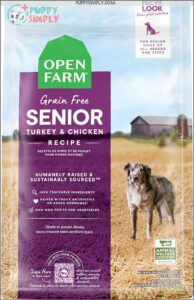
When Golden starts slowing down, their food needs to work harder. Open Farm’s Senior Grain Free formula does exactly that — certified humane chicken and turkey make up roughly 90% of the protein, helping preserve lean muscle in aging dogs.
Glucosamine and chondroitin are built right in, so you don’t need extra joint supplements. Green-lipped mussel adds natural omega-3s for comfort and mobility.
No corn, wheat, or soy — just clean, traceable ingredients you can actually feel good about.
| Best For | Senior dogs who need a gentle, grain-free, high-protein food that supports joints, mobility, and digestion, especially for breeds like Goldens starting to slow down. |
|---|---|
| Life stage | Senior |
| Primary protein | Chicken and turkey |
| Food form | Dry pellets |
| Grain content | Grain-free |
| Digestive focus | For sensitive senior digestion |
| Price level | Premium-priced |
| Additional Features |
|
- Grain-free, high-protein recipe with humanely raised chicken and turkey to help maintain lean muscle in aging dogs.
- Includes built-in joint support from glucosamine, chondroitin, and green-lipped mussel to support hips and mobility.
- Clean, traceable, ethically sourced ingredients that work well for seniors with digestive issues, food sensitivities, or as a topper for home-cooked meals.
- Kibble pieces may be too small or hard for some dogs, especially those with dental issues.
- Not ideal for dogs with specific poultry, fish, or pea allergies, and it requires a slow transition for sensitive stomachs.
- Pricier than many standard senior dog foods, which may be a consideration for multi-dog or budget-conscious households.
7. Acana Wholesome Grains Lamb Pumpkin Dog Food
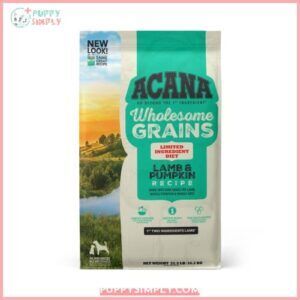
If your Golden has a sensitive stomach or struggles with allergies, Acana Wholesome Grains Lamb & Pumpkin is worth a close look. Lamb is the single animal protein source — simpler ingredient lists often mean fewer reactions.
At 27% protein and 17% fat, it hits solid nutritional marks without overloading the system. Whole pumpkin and chicory root keep digestion running smoothly, while built‑in omega‑3s and omega‑6s support that famously beautiful Golden coat. Pre‑ and probiotics round it out nicely.
| Best For | Golden Retrievers and other dogs with sensitive stomachs or food sensitivities who do well on a single-source lamb protein and gentle grains. |
|---|---|
| Life stage | Adult |
| Primary protein | Lamb |
| Food form | Dry kibble |
| Grain content | With grains |
| Digestive focus | For sensitive stomachs |
| Price level | Premium-priced |
| Additional Features |
|
- High-quality recipe with 60% animal ingredients and lamb as the single animal protein, great for pups that don’t tolerate multiple proteins well.
- Fiber-rich grains plus pumpkin, prebiotics, and probiotics to support healthy, regular digestion.
- Naturally occurring omega-3 and omega-6 fatty acids to help keep skin calm and coats shiny, especially in allergy-prone dogs.
- More expensive than many other kibble options, which can add up for large dogs like Goldens.
- May cause loose stools or diarrhea if you don’t transition slowly from the current food.
- Not a fit for dogs that are picky about lamb, dislike the kibble texture, or are allergic to lamb or certain grains.
8. Blue Buffalo True Solutions Digestive Care Dog Food
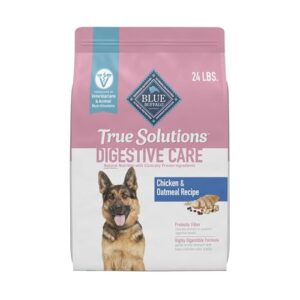
When digestion is the main concern, this formula from Blue Buffalo steps up. The Blissful Belly recipe puts real deboned chicken first, skips corn, wheat, and soy, and uses clinically proven prebiotic fiber to help firm up loose stools and ease gas.
At 24% protein and 394 kcal per cup, it fits an adult Golden’s needs without overloading a sensitive gut.
If your dog suffers from frequent stomach upset, this one’s built exactly for that.
| Best For | Adult dogs, especially medium to large breeds like Goldens, with sensitive stomachs, loose stools, or frequent gas who need a gentle, natural chicken-based diet. |
|---|---|
| Life stage | Adult |
| Primary protein | Chicken |
| Food form | Dry kibble |
| Grain content | With grains |
| Digestive focus | Clinically proven gut support |
| Price level | Mid-range premium |
| Additional Features |
|
- Real deboned chicken as the first ingredient with no chicken by-product meals, corn, wheat, or soy.
- Clinically proven prebiotic fiber to support digestion, improve stool quality, and reduce gas.
- Made in the USA, formulated by vets, with no artificial flavors or preservatives and available in a convenient 24-lb bag.
- Not ideal for dogs with severe food allergies or those who can’t tolerate chicken at all.
- Requires a slow transition from your current food to avoid temporary digestive upset.
- May not replace a prescription gastrointestinal diet for dogs with more serious medical conditions.
9. Portland Fresh Dog Food Pouches
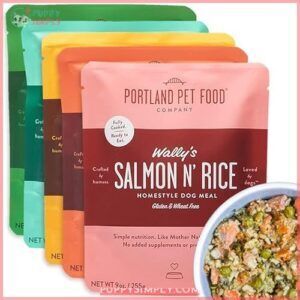
After focusing on sensitive bellies, you might want something that feels closer to home‑cooked. Portland Fresh Dog Food Pouches (Crafted by Humans Loved by Dogs) use 11 or fewer whole‑food ingredients, all sourced in the USA and cooked in Portland, Oregon kitchens.
Each 9‑ounce, shelf‑stable pouch works as a soft meal for smaller Goldens or a topper for bigger ones, great for picky eaters or seniors with tender teeth. Just remember, this human‑grade option costs more than standard kibble overall.
| Best For | Dogs with sensitive stomachs or picky appetites, especially seniors or smaller breeds who do better with soft, simple meals. |
|---|---|
| Life stage | All life stages |
| Primary protein | Mixed proteins |
| Food form | Wet pouches |
| Grain content | Limited-ingredient, varied grains |
| Digestive focus | Easily digestible recipes |
| Price level | Premium-priced |
| Additional Features |
|
- Only 11 or fewer whole-food ingredients per pouch, so you always know exactly what your dog is eating
- Flexible — use it as a standalone meal, mix it with kibble, or serve it as a topper
- Shelf-stable and microwave-safe, which makes it super convenient to store and serve
- Pricier than most kibble or standard wet food options
- A few dog owners have noticed formula or quality changes over time
- Doesn’t agree with every dog — some have had adverse reactions, so it’s worth a slow intro
10. Natural Balance Fat Dogs Low Calorie Dog Food
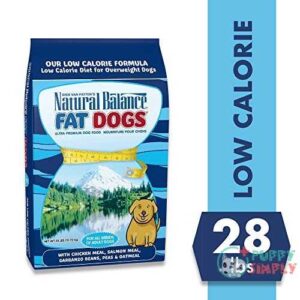
If your Golden’s main challenge is extra weight, Natural Balance Fat Dogs Low Calorie Dog Food gives you structured help. This adult formula is one of the lowest‑calorie kibbles on the market, at about 300 kcal per cup, yet still offers 26% protein from chicken meal and salmon meal.
A high‑fiber blend plus L‑carnitine aids weight loss while helping dogs feel full.
Grain‑friendly ingredients suit many sensitive stomachs, though some dogs may get gassy on the higher fiber at first.
| Best For | Dogs carrying extra weight who need a low-calorie, high-fiber kibble that still delivers solid protein without skimping on nutrition. |
|---|---|
| Life stage | Adult |
| Primary protein | Chicken |
| Food form | Dry kibble |
| Grain content | With grains |
| Digestive focus | Supports healthy digestion |
| Price level | Mid-range premium |
| Additional Features |
|
- Chicken meal is the first ingredient, so you’re getting real, quality protein at around 26% — not fillers dressed up as protein.
- The fiber and L-carnitine combo does double duty: helps dogs feel fuller and supports fat metabolism at the same time.
- Works for all sizes and is gentle enough for dogs with sensitive stomachs or food sensitivities.
- The higher fiber content can cause gas at first, especially during the transition period.
- Kibble size runs on the larger side, which can be tricky for smaller dogs.
- Stock availability can be hit or miss — some owners have a hard time finding it consistently.
Feeding Guidelines for Golden Retrievers

Now that you know which foods are best, the next step is understanding how to feed your Golden day‑to‑day. These guidelines will cover how often to feed, how much to offer, and where treats fit in.
Use them as a practical checklist as you choose portions, snacks, and tools like automated feeders for your dog.
Ideal Meal Frequency and Portion Sizes
Think of your Golden Retrievers’ bowls as a daily budget: Puppy Meal Timing is 3–4 small meals, adults thrive on two.
Use Weight‑Based Portions, Adult Caloric Needs, Life Stage and Activity Level to set amounts.
This Activity‑Adjusted Feeding, paired with Bloat Prevention Strategies, enhances Dog Nutrition and Health, and smarter Dog Food Selection, customized to your dog’s real everyday routine.
Adjusting Portions for Age and Activity
As your Golden moves through life stages, their nutritional needs shift more than you might expect.
- Puppies (8–12 weeks): Start at 1–2 cups daily, scaling up to 3.5 cups by 6–12 months.
- Active adults: Boost to 3.5–4 cups; Life Stage and Activity Level drive every adjustment.
- Seniors (7+): Apply a 20–30% calorie reduction for slower metabolism.
- Winter Portion Cut: Trim 10% during quieter months.
- Summer Portion Increase: Add 10–15% for swimming seasons.
Use Body Condition Scoring — Target Weight Ribs felt, not buried — alongside Seasonal Calorie Shifts to fine‑tune Dog Nutrition and Health for your Golden Retriever.
Safe Treats and Healthy Snacks
Treats should never quietly undo all the careful feeding work you’ve put in.
For a 70-pound Golden Retriever, keep Low-Calorie Treats under 160 calories daily — roughly three to eight small biscuits.
Blueberries and carrot sticks make excellent Fruit Snacks and Veggie Crunchies, both light on calories.
Dental Chews support Healthy Digestion and oral health.
For Homemade Treat Safety, refrigerate soft treats within five days.
Using Automated Feeders for Consistency
Life gets busy, and your Golden Retriever’s meals shouldn’t suffer for it.
Automatic feeders bring real structure to your dog’s day — here’s what they actually do well:
- Schedule Programming keeps meals consistent, reducing digestive upset and meal‑skipping anxiety.
- Portion Accuracy within 95–98% prevents the slow calorie creep that causes obesity.
- Multi‑Pet Access via microchip feeders ensures each dog gets their own dog food without bowl battles.
- Health Monitoring becomes easier when logged feeding times reveal skipped meals early.
- Feeder Safety requires daily hopper checks and stable placement away from moisture.
Managing Health Issues Through Diet

Golden Retrievers are prone to issues like weight gain, joint pain, allergies, and skin troubles—and food plays a big role in all of them.
The right diet can help prevent some problems and make existing ones much easier to manage. Below, you’ll see specific ways to use nutrition to support your Golden’s weight, joints, digestion, and skin and coat.
Preventing Obesity With Proper Nutrition
Did you know sedentary 70‑pound Golden can maintain weight on about 1,350 calories a day?
Calorie Monitoring and Portion Control protect this Large Breed from creeping gain.
Match Nutrition to Life Stage and Activity Level, choose Low‑Fat Options, add a Fiber Boost with green beans, and pair meals with Activity Integration to protect long‑term Pet Health and daily comfort.
Dietary Strategies for Joint Health
Your Golden Retriever’s joints take a beating over time — but the right dog food selection makes a real difference.
- Omega-3 dosing: Aim for 1,000–2,000 mg EPA/DHA daily from fish oil
- Green-lipped mussel: Supplies natural chondroitin and omega3s together
- Turmeric anti-inflammatory: Curcumin eases joint inflammation noticeably
- Bone broth collagen: Aids cartilage matrix gently
- Supplement timing: Consistency beats occasional high doses for large breed joint help
Addressing Allergies and Food Sensitivities
Food allergies affect roughly 15–20% of Golden Retrievers — and chicken is the top culprit, triggering reactions in nearly half of allergic dogs. If your Golden is constantly scratching or battling ear infections, food may be the hidden cause.
| Approach | Best For | Key Benefit |
|---|---|---|
| Elimination Diet Protocol | Identifying triggers | Pinpoints exact allergens |
| Hydrolyzed Protein | Severe sensitivities | Immune system bypass |
| Novel Protein Sources | Confirmed allergies | Reduces exposure risk |
| Limited Ingredient Recipes | Sensitive stomachs | Fewer reaction triggers |
| GrainFree formulas | Grain-intolerant dogs | Simplifies ingredient list |
Allergy Symptom Monitoring over 8–12 weeks is your clearest path forward.
Supporting Skin and Coat Condition
Diet does more for your Golden Retriever’s skin and coat than any shampoo ever could.
Dog food rich in omega-3s — think fish oil with EPA and DHA — calms inflammation from the inside out.
Pair that with biotin enrichment and zinc sources like brewer’s yeast for keratin support.
For seasonal shedding management, consistent pet nutrition beats reactive grooming every time.
Ceramide topical use helps when diet alone isn’t enough.
Tips for Switching Your Golden’s Food

Switching your Golden to a new food can feel a bit stressful, but it doesn’t have to be.
The key is to go slowly, watch how their stomach and energy respond, and know when something isn’t normal. Below are simple, vet-backed tips to guide you through a smooth, safe change.
Step-by-step Transition Process
Think of it like easing into a cold pool — you wouldn’t dive straight in. Switching your Golden’s food works best with gradual mix ratios over 7 days:
- Days 1–2: 75% old, 25% new
- Days 3–4: 50/50 split
- Days 5–7: 25% old, 75% new
- Day 8+: 100% new food
For sensitive stomachs or special cases, stretch the shift timeline to 10–14 days.
Monitoring for Digestive Upset
Once the gradual mix is underway, keep a close eye on how your Golden responds day to day. Small changes can tell you a lot.
| What to Watch | Red Flag Signs |
|---|---|
| Stool Consistency Check | Watery, mucusy, or bloody stool |
| Vomiting Frequency | More than once after meals |
| Hydration Status | Tacky gums, skin that stays tented |
| Gas and Bloating | Excessive, foul‑smelling gas |
| Appetite Changes | Hesitating or walking away from the bowl |
Sensitive stomachs and food allergies can surface quickly. Tracking these signs helps your Golden’s digestive health and nutrition — and gives you clear, useful information before reaching out for dog care advice.
When to Consult Your Veterinarian
Although minor Digestive Problems are common during a switch, call your vet early to protect Pet Health and head off serious Dog Health Issues in Golden Retrievers.
- Appetite Changes lasting over a day
- Weight Fluctuations across a few weeks
- New or worsening Skin Issues
- Persistent Digestive Problems or vomiting
- Sudden drop in Energy Levels
Suspected Food Allergies need Veterinary Advice.
Frequently Asked Questions (FAQs)
Do golden retrievers need special dog food?
Not exactly, but Golden Retrievers do thrive on dog food customized to their needs —
think large breed formulas with calcium control, joint supplements, obesity prevention support, and heart health ingredients that generic options often skip.
How much food should you feed a golden retriever?
Most adult golden retrievers need about 2 to 5 cups of dog food daily, split into two meals.
Your dog’s life stage, activity level, and body condition score all affect the right portion size.
When is a golden retriever considered a senior?
Most Golden Retrievers hit their senior age threshold around 7 to 8 years old.
Metabolic slowdown, joint stiffness signs, and geriatric energy levels usually appear — signaling it’s time to adjust nutrition and schedule senior vet screening.
When can you safely switch a golden retriever to adult food?
Most Golden Retrievers are ready to switch to adult food between 12 and 18 months, once growth plate maturity is confirmed and they’ve hit roughly 80 percent of their expected adult weight.
What is the best food to feed my Golden Retriever?
The best Dog Food for your Golden Retriever balances Large Breed Nutrition, helps prevent Health Issues, fits Budget-friendly options, favors Seasonal ingredient sourcing, Eco-friendly packaging, honors Taste preference testing, and follows current Veterinary diet trends.
What is the best dog food for Golden Retrievers?
Picking the perfect protein-packed, palate-pleasing food for your Golden Retriever doesn’t have to be overwhelming.
Look for large breed dog food with quality animal protein, balanced fats, and joint support nutrients.
Can Golden Retrievers eat chicken?
Yes, Golden Retrievers enjoy Chicken Cuisine or plain chicken if chicken safety is followed: cooked, boneless.
Use Portion guidelines for Treat integration with Dog Food, watch Allergy signs, allergies, Sensitive Stomachs, and follow Preparation tips carefully.
Can Golden Retrievers eat dry dog food?
Ever wonder if dry Dog Food is right for your Golden Retriever?
Large Breed Adult Food Nutrition with Calcium Balance, Ingredient Transparency, Dental Benefits, Portion Accuracy, and dependable Shelf Life.
How do I choose the right food for my Golden Retriever?
protein quality, fat balance, and ingredient transparency.
Match calorie needs to your Golden’s lifestyle — puppy, adult, or senior — and choose large breed nutrition that promotes long-term pet health and wellness.
What is the best dog food for Golden Retrievers with allergies?
For Golden Retrievers with allergies, limited ingredient diets built around novel proteins like duck, salmon, or venison work best. Pair that with omega fatty acids to calm skin inflammation and you’re already ahead.
Conclusion
Picture your Golden’s bowl as a daily blueprint for their future—each bite shaping joints, coat, and energy like careful brushstrokes on a canvas. When you match food to age, activity, and sensitivities, you’re not spoiling them; you’re practicing quiet, consistent prevention.
The best food for golden retrievers is ultimately the one your dog thrives on, confirmed by steady weight, bright eyes, easy stools, and a tail that never hesitates. That’s the quiet power of choice.
- https://dogmatchup.com/breeds/golden-retriever/nutrition
- https://petsworld.in/blogs/news/golden-retriever-top-dog-food-feeding-patterns-to-know
- https://goldenretrieverinsight.com/puppy-food-for-large-breeds-vet-guide/
- https://www.bonza.dog/2024/10/best-food-for-golden-retrievers-a-comprehensive-nutritional-guide/?v=7885444af42e
- https://www.k9-doghealth.com/dog-nutrition/dog-food-for-hip-dysplasia/






Lovable dachshund puppies
August 14, 2020 at 10:53 AM
Lovable Dachshund Puppies website provides you all kinds of dogs and puppies. This website is the most classified website in United states, for sale , adoption dachshund puppies. Mini Dachshund puppies are the best breed, we provide you with all vaccination.A dog is a long term joy and a long term commitment on your part. So you deserve to feel real peace of mind knowing you are protected for the whole time you are together with your dog. This is what you receive from lovable dachshund puppies, guaranteed.The LOVABLE DACHSHUND PUPPIES website provides a totally free to use advertising platform for private individuals, responsible breeders and rescue centers to list their adverts on.