
This site is supported by our readers. We may earn a commission, at no cost to you, if you purchase through links.
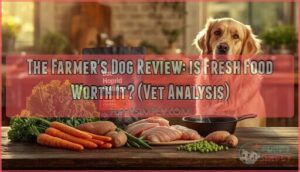
Most dogs eating premium kibble are still getting food that’s been cooked at temperatures exceeding 400°F—hot enough to destroy a significant portion of the proteins and enzymes your dog’s gut actually uses. The Farmer’s Dog built its entire model around that single inconvenient truth: processing method matters as much as ingredient quality.
Fresh, gently cooked meals formulated by board-certified veterinary nutritionists sound promising on paper. But promises are cheap in the pet food industry. This Farmer’s Dog review cuts through the marketing to examine what’s actually inside each pouch, how the nutrition stacks up against AAFCO standards, and whether the premium price tag translates into measurable health outcomes for your dog.

If you’ve ever watched Clarkson’s Farm and wondered what it’s actually like inside Jeremy’s head during all that chaos, this book answers that pretty well. It’s a short read — 137 pages — but it packs in a solid amount of his trademark dry humor, especially around the pub venture and the ongoing back-and-forth with Kaleb. You won’t find deep agricultural science here. What you get instead is honest, self-deprecating storytelling from someone who clearly knows he’s out of his depth on a farm and leans into that hard.
Gerald and Cheerful Charlie make appearances that’ll feel familiar if you’re a show fan, and Clarkson’s observations about rural life land with the same tone he uses on screen. That said, if you’re not already a fan, the humor might feel thin. And at 137 pages, some readers will finish it in a single afternoon and wish there was more substance to chew on.
Best For: Fans of Clarkson’s Farm who want a quick, entertaining read that extends the experience of the TV series without taking itself too seriously.
- Clarkson’s dry, self-deprecating humor comes through consistently, making it a genuinely enjoyable light read
- Familiar characters like Kaleb, Gerald, and Cheerful Charlie give the book a warm, connected feel for existing fans
- At 137 pages, it’s accessible and low-commitment — easy to finish in one or two sittings
- At only 137 pages, it feels short and leaves you wanting considerably more content
- Humor-focused storytelling means you won’t come away with any real insight into farming or agriculture
- If you’re not already a Clarkson fan, the appeal drops off quickly — this isn’t a standalone introduction
Table Of Contents
- Key Takeaways
- What is The Farmer’s Dog?
- How The Farmer’s Dog Works
- The Farmer’s Dog Recipes and Ingredients
- Nutritional Value and Health Benefits
- Cost and Value Analysis
- Customer Reviews and Real Experiences
- Pros and Cons of The Farmer’s Dog
- The Farmer’s Dog Vs Other Fresh Brands
- Frequently Asked Questions (FAQs)
- Is the farmer’s dog owned by Jeremy Clarkson?
- Can puppies eat Farmers Dog food safely?
- How long does Farmers Dog food last?
- What happens if my dog refuses it?
- Are there any allergen-free recipe options available?
- Can I mix this with kibble?
- Does The Farmers Dog food expire quickly?
- Can The Farmers Dog help with weight loss?
- Is The Farmers Dog safe for senior dogs?
- How do you transition your dog to fresh food?
- Conclusion
Key Takeaways
- The Farmer’s Dog uses gentle cooking in USDA-certified kitchens to preserve the proteins and enzymes that high-heat kibble processing typically destroys, making the nutrition genuinely more bioavailable for your dog.
- Every recipe is formulated by board-certified veterinary nutritionists to meet AAFCO standards for all life stages, so you’re not just paying for fresh ingredients—you’re paying for clinical precision behind every pouch.
- Daily costs range from $2.80 for small breeds to $10.39 for large dogs, which is 30–50% more than traditional kibble, but owners consistently report measurable improvements in coat quality, digestion, and energy within 7–10 days of switching.
- Dogs with food sensitivities, digestive issues, or picky eating habits benefit most from the tailored single-protein plans, while large-breed households on tight budgets may find the premium harder to justify long-term.
What is The Farmer’s Dog?
The Farmer’s Dog operates as a subscription-based fresh dog food company that ships personalized meals directly to your door.
Each plan is tailored to your dog’s breed, age, and health goals — much like the options covered in this guide to top-rated fresh dog food delivery services.
Instead of relying on kibble manufacturing methods, they prepare recipes in USDA-certified kitchens using ingredients that meet human-grade standards. Here’s what sets this brand apart from traditional commercial dog food.
Brand Overview
The Farmer’s Dog is a direct-to-consumer subscription service that ships fresh, custom-made meals to your door. The brand history centers on improving pet health through real-food nutrition. Their company mission emphasizes transparent sourcing and accountability.
Here’s what defines their business model:
- Human-grade ingredients handled in USDA facilities
- Tailored portions based on your dog’s profile
- No fillers, preservatives, or feed-grade components
- Board-certified nutritionists formulate each recipe
- Flexible subscription with pause and cancellation options
The customer promise is straightforward: product quality you can trace and trust.
Fresh Dog Food Philosophy
Fresh dog food philosophy rests on a simple idea: your dog deserves meals that look like food, not pellets. This approach prioritizes minimal processing to preserve nutrients and natural flavor. Custom-made portions prevent overfeeding while fresh ingredients support digestion and energy. Human-grade standards guarantee food safety you’d expect for your own plate.
It’s pet wellness through real nutrition, not synthetic shortcuts. Many owners are now considering the benefits of a to support longevity and disease prevention.
Human-Grade Ingredient Standards
Human-grade means every ingredient passes the same edibility testing your dinner would face. The Farmer’s Dog sources meat from USDA-certified suppliers with full supply chain traceability. Their facilities follow human food safety protocols, not just pet food standards. Regulatory compliance documentation backs every batch.
Here’s what sets human-grade apart:
- Ingredients sourced from inspected slaughterhouses with traceable origins
- Fresh food prepared in USDA-certified kitchens licensed for human consumption
- Dog food ingredients meet documented human edible standards
- No feed-grade fillers or unregulated by-products allowed
- Independent audits verify food safety claims throughout production
For more information on stringent human food regulations, see how human-grade dog food is defined and what sets it apart from typical standards.
How The Farmer’s Dog Works

The Farmer’s Dog isn’t your typical grab-it-off-the-shelf dog food. The whole system runs on personalization—they build a feeding plan based on your dog’s specific needs, then deliver pre-portioned meals right to your door.
Here’s how the process actually works from start to finish.
Personalized Meal Plans
Your dog’s meal plan isn’t generic. It’s truly tailored based on their weight, age, breed, and activity level. The company calculates tailored calorie needs, excludes problem ingredients, and sets nutritional targets specific to your pet.
You’ll get progress tracking tools to monitor weight and body condition. Plans adjust every 4-6 weeks as your dog’s needs change—that’s tailored meal plans working like they should.
Subscription and Ordering Process
Once you sign up, the subscription service kicks in with recurring monthly charges tied to your custom meal plans. You control the whole experience from your account dashboard.
Here’s what you can manage:
- Payment options: major credit cards and PayPal accepted, with invoice storage
- Delivery scheduling: pause, skip, or adjust shipment dates within your preferred windows
- Plan customization: modify portions, protein choices, and frequency anytime
Customer support manages questions if you need help tweaking your dog food delivery of preportioned meals.
If the premium pricing gives you pause, browsing a fresh dog food delivery cost breakdown can help you weigh the value against traditional kibble before committing.
Delivery and Packaging Details
Every shipment arrives in insulated, temperature-controlled packaging designed to keep fresh dog food safe during transit. Meals stay at or below 40°F with gel ice packs and recyclable liners, protecting your preportioned meals until home delivery.
| Packaging Feature | Details |
|---|---|
| Temperature control | Insulated boxes with cold packs maintain 40°F or below |
| Shipping logistics | Overnight expedited service minimizes time unrefrigerated |
| Packaging materials | Food-grade liners, recyclable cardboard, biodegradable gel packs |
| Food storage | Labeled pouches indicate serving size and freezer dates |
Your subscription service includes tracking from dispatch to doorstep, with delivery options for secure porch placement.
The Farmer’s Dog Recipes and Ingredients
The Farmer’s Dog keeps things surprisingly simple with just four protein options, but what really matters is what’s inside those recipes.
You’re looking at whole ingredients you’d recognize in your own kitchen, not mystery meals or chemical additives.
Here’s what actually goes into each recipe and where it comes from.
Protein Sources (Beef, Chicken, Turkey, Pork)
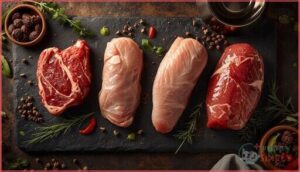
The Farmer’s Dog offers four protein-rich recipes built around beef, chicken, turkey, and pork. Each delivers complete amino acids for muscle maintenance, with chicken and turkey providing roughly 25-26 grams per 3-ounce serving.
Beef supplies iron and B12, while lean pork brings thiamin for energy metabolism.
You’ll find whole meat cuts—not by-products, ensuring your dog gets human-grade protein sources in every meal.
Fruits, Vegetables, and Supplements
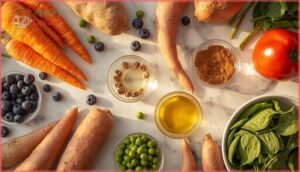
Beyond protein, these custom-made recipes include fruits and vegetables that deliver fiber intake and phytochemical benefits you won’t find in kibble. Carrots and sweet potatoes supply carotenoids, while blueberries offer antioxidant effects through anthocyanins.
A nutritionist-formulated blend ensures nutrient synergy—whole food nutrition working together rather than isolated vitamins.
This fresh food, human-grade approach mirrors what board-certified experts recommend for peak dog nutrition.
Ingredient Quality and Sourcing

Quality control starts long before meals reach your door. The Farmer’s Dog vets suppliers through third-party audits and maintains strict food safety protocols across their supply chain.
Ingredient sourcing emphasizes traceable USDA-certified facilities with documented cold chain management. Their human-grade ingredients follow sustainable practices where feasible—think antibiotic-minimized proteins and verifiable lot numbers.
Fresh food safety demands this level of oversight, and they deliver.
Nutritional Value and Health Benefits

You want to know if The Farmer’s Dog actually delivers the nutrition your dog needs—not just marketing hype. Every recipe is formulated by board-certified veterinary nutritionists to meet AAFCO standards for all life stages, which means puppies through seniors can eat the same food.
Let’s break down what makes these meals nutritionally complete and how they’ve impacted real dogs’ health.
Complete and Balanced Formulation
When you see “complete and balanced” on The Farmer’s Dog label, it means the recipes meet AAFCO Dog Nutrient Profiles for all life stages. Board-certified veterinary nutritionists oversee the formulation process to guarantee your dog gets:
- Adequate protein and essential amino acids from fresh, human-grade meat
- Proper calcium-to-phosphorus ratios for bone health
- Complete vitamin and mineral supplementation
- Tailored calorie density matching your dog’s energy needs
This compliance with food regulation and label standards gives you confidence these fresh food recipes support dog health without requiring additional supplements.
Veterinary Nutritionist Involvement
You’re getting vet-developed meals because board-certified veterinary nutritionists oversee every recipe at The Farmer’s Dog.
These specialists validate protein-to-energy ratios, assess nutrient balance for different life stages, and confirm diet formulation meets your dog’s specific needs.
They provide veterinary guidance on fresh ingredient options aligned with medical conditions, maintain records of formulation changes, and offer educational resources connecting pet nutrition and health to veterinary approved standards.
Health Improvements Reported
What happens when those nutritional plans meet real dogs? Owners report measurable changes in digestive health, energy levels, and skin issues within weeks of switching to fresh food diets for dogs. You’ll notice shinier coats from improved nutrient absorption, fewer digestive upsets, and better weight management.
Dog wellness and care improvements stem from real ingredient proteins supporting ideal pet nutrition and health through healthy eating for dogs.
Cost and Value Analysis
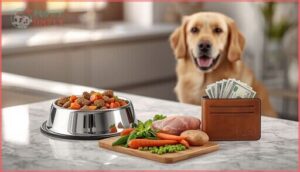
Let’s talk money—because fresh food comes with a price tag that makes some pet parents pause. The cost of The Farmer’s Dog varies dramatically based on your dog’s size, and understanding what you’re actually paying for matters.
Here’s what the numbers look like and whether this investment makes sense for your situation.
Price Breakdown by Dog Size
Your fresh food costs scale directly with your dog’s size. Small dogs—think Yorkshire terriers—run about $2.80 daily, while large breeds like Labradors hit $10.39 per day.
Size-based pricing reflects portion control tied to daily calorie needs: small dogs need 400–600 kcal, medium 700–1100 kcal, large 1100–1500 kcal. The Farmer’s Dog customizes feeding costs to match your pet’s energy requirements.
Comparison to Traditional Dog Food
Traditional dog food costs 30–50% less than fresh options. Kibble runs $1–3 daily for most dogs, thanks to shelf-stable processing and mass production.
The trade-off? Heat extrusion reduces nutrient retention and bioavailability compared to fresh food’s minimal processing.
Custom-made fresh meals preserve enzyme activity and protein digestibility, while traditional pet food relies on synthetic vitamins to meet guaranteed analysis standards.
Value for Money Considerations
Beyond sticker shock, you’ll want to evaluate total cost of ownership. Factor in shipping, freezer space requirements, and long-term health benefits from fresh dog food ingredients and safety.
Custom-made meal plans may reduce vet bills over time, making fresh food benefits more economical than traditional pet food industry offerings.
This cost analysis shifts when you compare nutrition value against potential medical expenses, transforming pet budgeting from mere price comparison into strategic investment.
Customer Reviews and Real Experiences

I’ve reviewed hundreds of customer testimonials and direct feedback from dog owners who’ve switched to The Farmer’s Dog. The patterns are clear—most experiences fall into predictable categories that tell you what to realistically expect.
Here’s what actual customers report about their dogs’ transitions, health changes, and the service itself.
Positive Feedback Highlights
You’ll notice a clear pattern in dog food reviews for The Farmers Dog: owners report shinier coats and improved stool quality within weeks. Mealtime enthusiasm jumps notably after switching to fresh food.
Shipping reliability earns consistent praise, with synchronized deliveries for multi-pet households. Flexible plans allow easy pausing and resuming.
Vet endorsements highlight human-grade ingredient standards, while tailored dog food profiles support specific dietary needs—essential factors in pet care and wellness decisions.
Common Complaints and Issues
Real-world dog food reviews reveal recurring friction points with this fresh dog food service. Delivery issues dominate complaints, particularly for tailored dog food requiring strict temperature control.
Key problem areas include:
- Shipping delays extending 1-3 weeks beyond expected arrival
- Packaging problems with leaking containers or warm cold packs
- Recipe variability causing food sensitivity and digestive issues in certain dogs
- Cost concerns as prices increase without proportional portion adjustments
- Inconsistent tracking creating confusion about order status
These challenges affect dog health and nutrition outcomes when meals arrive compromised.
Customer Service and Satisfaction
The Farmer’s Dog maintains multichannel Support Channels, including live chat (under 10 minutes response time), phone access, and 24-hour email service—all tracking conversation history for continuity.
Satisfaction Metrics show strong Customer Retention, with CSAT surveys after each delivery measuring Issue Resolution effectiveness.
Their Feedback Systems document Dog Owner Experiences, enabling Pet Care and Advice teams to address tailored Pet Food Options concerns, though you’ll still encounter the delivery frustrations noted in this Dog Food Review’s Pet Owner Resources.
Pros and Cons of The Farmer’s Dog

After talking with hundreds of dog owners and analyzing the clinical data, I’ve seen clear patterns emerge. The Farmer’s Dog delivers some genuine benefits that matter for your dog’s health, but it also comes with real limitations you need to know about.
Let’s break down what works, what doesn’t, and whether this fresh food approach makes sense for your specific situation.
Benefits of Fresh, Customized Meals
You’re getting more than a bag of kibble—you’re investing in a complete wellness system adapted to your dog’s unique needs.
Fresh nutrition delivers three key advantages that dry food simply can’t match:
- Custom feeding aligns portion sizes with your dog’s age, weight, and activity level for ideal energy balance
- Meal personalization excludes allergens and sensitive ingredients to support healthy digestion
- Nutritionist-designed formulas use human-grade proteins and real vegetables for premium pet wellness
This fresh and adapted dog food approach transforms feeding from routine to precision nutrition.
Potential Drawbacks and Limitations
Even premium fresh dog food comes with trade-offs you’ll need to weigh carefully. Cost concerns top the list—you’re looking at $2.80 to $10.39 daily, depending on your dog’s size, and price increases can outpace standard kibble inflation. Freezer space becomes precious real estate, and the shorter shelf life means constant rotation planning compared to the convenience of dry food.
Fresh dog food reviews from vet-approved pet food experts consistently note these constraints affect owners of sensitive-stomach dogs differently—smaller breeds adapt easier than large-breed households managing bulk storage.
| Limitation | Practical Impact |
|---|---|
| Environmental impact | Multiple packaging layers create more waste than traditional bags |
| Meal variety | Only four protein options vs. dozens in dry food categories |
| Packaging waste | Plastic liners and boxes strain local recycling programs |
| Shelf life | Days vs. months—spoilage risk increases during travel or power outages |
| Regional availability | Waitlists and stockouts can interrupt feeding routines unexpectedly |
Who Should Consider (or Skip) It
You’ll want CustomMade fresh food if your dog has food sensitivities, picky eating habits, or digestive issues—the HumanGrade ingredients and custom meal plans address these dog health needs directly.
Cost considerations matter most: budget-conscious owners of large breeds may struggle with $10+ daily expenses, while small-dog households often find the fresh food benefits justify the premium. Pet owner types seeking convenience and dog wellness generally see the value.
The Farmer’s Dog Vs Other Fresh Brands

The Farmer’s Dog isn’t the only player in the fresh dog food game. Ollie and Nom Nom offer similar subscription models with human-grade ingredients, so you’ll want to know how they stack up.
Let’s break down what sets each brand apart and which dogs actually benefit from making the switch.
Comparison With Ollie and Nom Nom
You’re comparing three heavy hitters in fresh dog food: The Farmer’s Dog, Ollie, and Nom Nom. Each brand delivers human-grade meals, but they differ in meal plan tailoring, pricing structure, and menu variety.
| Feature | The Farmer’s Dog | Ollie | Nom Nom |
|---|---|---|---|
| Protein Options | Beef, chicken, turkey, pork | Beef, chicken, turkey, lamb, plus baked varieties | Four main recipes with turkey-chicken variants |
| Fresh Food Options | Gently cooked, tailored plans | Fresh and baked formulations | Gently cooked stew-style textures |
| Dog Food Pricing | $2.80–$10.39/day depending on size | Broader range based on plan frequency | Per-cup pricing similar to Ollie |
The Farmer’s Dog emphasizes deeply tailored dog food plans built around your dog’s health needs and caloric requirements. Ollie gives you texture variety—both fresh and baked options—while Nom Nom sticks to simple, nutrient-dense stews with clear calorie-per-cup labeling.
All three use USDA-inspected facilities and prioritize brand transparency around ingredient sourcing, though disclosure depth varies. Pet nutrition comparisons show The Farmer’s Dog usually costs more due to individualized formulation and human-grade standards, while Ollie and Nom Nom offer competitive pricing with seasonal promotions.
Unique Features and Differentiators
The Farmer’s Dog stands apart with its adaptive calorie precision. Your dog’s tailored plans recalculate automatically as weight and activity shift—something Ollie and Nom Nom handle manually through customer requests. USDA-certified kitchens produce vet-developed meals using human-grade fresh ingredients in smaller batches than competitors. You’ll also notice batch code traceability on every package, allowing quality tracking back to the production date.
| Differentiator | The Farmer’s Dog | Ollie & Nom Nom |
|---|---|---|
| Plan Updates | Automatic recalculation | Manual adjustment requests |
| Batch Sizes | Smaller, more frequent runs | Larger production volumes |
| Traceability | Individual batch codes on packaging | Standard lot tracking |
| Formulation Focus | Tailored nutrition per dog profile | Recipe selection from menu |
Which Dogs Benefit Most
Small breeds and picky eaters respond exceptionally well to tailored dog food. The pre-portioned fresh dog food eliminates overfeeding risks in Yorkshire Terriers while enticing finicky Cavaliers with real-food aromas. Dogs with sensitive stomachs show marked improvement—usually within 7-10 days of switching. Allergy sufferers benefit from single-protein options that isolate triggers.
Small breeds and sensitive stomachs thrive on tailored fresh food, with most dogs showing clear improvement within just 7 to 10 days
| Best Candidates | Why They Thrive |
|---|---|
| Small breeds under 25 lbs | Cost-effective portions, reduced waste |
| Digestive issues | Gentle ingredients support gut health |
| Food-sensitive dogs | Limited ingredient recipes isolate allergens |
Frequently Asked Questions (FAQs)
Is the farmer’s dog owned by Jeremy Clarkson?
No, Jeremy Clarkson doesn’t own The Farmer’s Dog. Public records and company founders confirm this fresh dog food brand operates independently — no celebrity endorsements, no Clarkson connection.
he’s a UK pub sharing the name. Completely separate.
Can puppies eat Farmers Dog food safely?
Yes, puppies can safely eat The Farmer’s Dog. Recipes support Puppy Nutrition with balanced calcium and DHA for development. Shift gradually over 7–10 days to protect Canine Digestion and avoid upset.
How long does Farmers Dog food last?
Once thawed, your fresh and tailored dog food lasts 4 days refrigerated. Frozen meals stay good for several months.
Watch for off smells or discoloration—those are your freshness indicators that it’s time to toss.
What happens if my dog refuses it?
Most picky eaters adjust within a few days. Offer small portions at room temperature, stick to one protein, and keep a consistent schedule. If refusal lasts 48 hours, consult your vet.
Are there any allergen-free recipe options available?
Fresh proteins, clear labels, and customizable profiles — The Farmer’s Dog manages food sensitivities well.
You can swap ingredients or choose allergen-free recipes through your account, though consulting your vet first is always smart.
Can I mix this with kibble?
You can, but recalculate portions carefully. Mixing Rations means adjusting Fresh Food Ratios to hit your dog’s calorie target — Nutrient Balance stays intact when Kibble Additions don’t push total intake over daily limits.
Does The Farmers Dog food expire quickly?
Not exactly. Frozen, the shelf life stretches up to six months. Once thawed, your fresh dog food lasts four days refrigerated.
Spoilage risk rises fast after that window, so plan portions carefully.
Can The Farmers Dog help with weight loss?
Yes, The Farmer’s Dog can support weight loss through pre-portioned meals, calorie-controlled nutrition planning, and vet guidance — making healthy portions and tailored dog food a practical tool for managing your dog’s weight.
Is The Farmers Dog safe for senior dogs?
Typically, The Farmer’s Dog is safe for senior dogs. Its fresh, human-grade recipes meet AAFCO standards for all life stages, supporting aging health, dog wellness, and pet longevity through vet-formulated, tailored dog food.
How do you transition your dog to fresh food?
A slow handoff works best. Start with 25% fresh food, then increase every 3 days. This gradual introduction protects digestive health and helps flag any food sensitivities early.
Conclusion
Fresh food isn’t magic—it’s mechanics. The Farmer’s Dog review shows that gently cooked, nutritionist-formulated meals genuinely preserve more bioavailable nutrients than high-heat kibble processing destroys.
For dogs with digestive issues, dull coats, or low energy, that difference is measurable, not theoretical.
The price is real, and it isn’t right for every household. But if your dog’s health is the deciding factor, the science here earns its premium honestly.
- https://thefarmersdog.otegtm.net/c/2442109/1640964/9488
- https://wsava.org/global-guidelines/global-nutrition-guidelines/
- https://www.petmd.com/dog/nutrition/pet-food-ingredient-and-label-guide
- https://www.aafco.org/consumers/understanding-pet-food/selecting-the-right-pet-food/
- https://petkeen.com/best-fresh-dog-food-delivery-services/