This site is supported by our readers. We may earn a commission, at no cost to you, if you purchase through links.

Most dog owners spend more time choosing their own protein shake than picking their puppy’s food.
For Goldendoodles, that’s a problem… because this breed carries genetic pressure from both Golden Retrievers and Poodles—two lines with distinct nutritional vulnerabilities. Hip dysplasia, chronic ear infections, and early joint wear aren’t bad luck. They’re often diet failures showing up years later.
The best food for Goldendoodles targets these risks from the first bowl, with precise calcium-to-phosphorus ratios, named animal proteins, and omega-3s that actually reach inflamed tissue. What follows cuts through the marketing noise.
Table Of Contents
- Key Takeaways
- Goldendoodle Nutritional Needs by Life Stage
- Top 10 Best Foods for Goldendoodles
- How to Choose The Best Goldendoodle Food
- Goldendoodle Health Issues Diet Can Address
- Feeding Guidelines for Goldendoodles
- Frequently Asked Questions (FAQs)
- How do I choose the best food for my goldendoodle?
- Can goldendoodles eat dry dog food?
- How much dog food should a goldendoodle eat?
- Which goldendoodle food is best for weight loss?
- How much food should I feed my goldendoodle?
- Do goldendoodles need special dog food?
- What’s the best dog food for a goldendoodle puppy?
- What if my goldendoodle is bred from a small or medium size poodle?
- What’s the best dog food for a senior goldendoodle?
- What food is best for a Goldendoodle?
- Conclusion
Key Takeaways
- Goldendoodles inherit joint and allergy vulnerabilities from both parent breeds, so their diet needs precise calcium-to-phosphorus ratios and named animal proteins from the very first bowl.
- Nutritional needs shift significantly across life stages — puppies need 28%+ protein with controlled calcium, adults need 22–26%, and seniors actually need more protein (28–30%) to fight muscle loss.
- Diet directly influences the breed’s most common health issues: glucosamine and omega-3s protect joints, limited-ingredient formulas manage allergies, and low-carb probiotic-rich foods reduce chronic ear infections.
- What separates good food from clever marketing is simple: named proteins first on the label, fish-derived omega-3s (not just flaxseed), and natural preservatives instead of synthetic additives.
Goldendoodle Nutritional Needs by Life Stage

What your Goldendoodle needs on their plate changes a lot between puppyhood and their senior years. Getting those details wrong — even slightly — can affect their joints, weight, and long-term health. Here’s what the science says for each stage of life.
Dialing in the right balance at each stage is easier when you have a solid reference like this guide to best dog food for Goldendoodles to cross-check ingredients, portions, and life-stage formulas.
Puppy Calcium and Protein Requirements
Getting puppy calcium right isn’t optional — it’s foundational. Goldendoodle puppies need calcium near 3 g per 1,000 calories, paired carefully with phosphorus at roughly 2.5 g per 1,000 calories. That 1.2–1.4:1 calcium-to-phosphorus ratio protects developing joints. Puppies also need high energy density to support rapid growth. Here’s what to watch:
- Never supplement calcium on top of a complete puppy food
- Choose large-breed puppy formulas specifically designed for their growth rate
- Target ≥28% protein to fuel tissue development
- Confirm AAFCO growth-stage compliance on the label
Balanced Diets for Adult Goldendoodles
Once your Goldendoodle hits 15–18 months, their nutritional requirements shift. Growth slows, so calorie density drops. Target 24% protein and 14–16% fat on the guaranteed analysis. This protein-to-fat ratio helps maintain muscle maintenance without promoting excess weight.
| Nutrient | Adult Target | Why It Matters |
|---|---|---|
| Protein | 22–26% | Muscle maintenance |
| Fat | 12–16% | Energy and coat health |
| Omega-3 | Fish oil listed | Reduces joint inflammation |
| Fiber | Moderate maximum | Helps maintain stool consistency |
| Calories | ~25 kcal/lb | Prevents obesity |
Activity-based calories matter here. A 50-lb adult needs roughly 1,200 kcal daily. Less-active dogs need fewer. Check body condition monthly — adjust portions before weight gain compounds.
Senior Dogs Need More Protein
Around age 8, your Goldendoodle’s body starts losing ground. Muscle mass drops quietly — and protein efficiency declines.
Senior dogs can’t utilize protein as well as younger dogs, so they need more of it to maintain strength. Target 28–30% dry matter protein to counter sarcopenia.
Exception: dogs with kidney disease often need restriction to 18–24% — always confirm with your vet first.
Pregnant and Lactating Female Needs
Pregnancy flips every nutritional dial at once.
Your female needs high-quality protein to build fetal tissues, support maternal blood volume, and fuel milk production later. Target ≥28% protein with named animal sources first.
- Calcium drives fetal bone mineralization
- Folate protects spinal development
- Iron aids oxygen transport to the fetus
- Hydration sustains milk production
- Caloric density must rise in late gestation
Top 10 Best Foods for Goldendoodles
Finding the right food doesn’t have to feel like guesswork. Each pick below was chosen based on protein quality, life-stage fit, and real nutritional data. Here’s what actually works for Goldendoodles.
If you’re also feeding a Sheltie, these same principles apply—check out what works best in this guide to top-rated dog food for Shetland Sheepdogs.
Merrick Classic Healthy Grains Beef and Rice
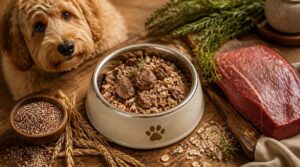
Merrick Classic Healthy Grains puts real deboned beef first — no guessing about protein quality. It delivers 26% crude protein and 15% fat, hitting the sweet spot for adult Goldendoodles.
The ancient grain blend (oats, quinoa, brown rice) promotes digestion and steady energy.
Added glucosamine, chondroitin, and taurine protect joints and heart.
No corn, wheat, soy, or artificial preservatives.
Orijen Large Breed Puppy Formula

Orijen Large Breed Puppy is built around one idea: feed puppies like their wild ancestors ate. It delivers 38% crude protein from fresh chicken, turkey, and wild-caught fish — a true multi-meat profile.
- Grain-free carbs (lentils, peas) keep glycemic load low
- DHA from fish oils promotes brain and eye development
- 16% fat fuels rapid growth without excess
- Balanced calcium-phosphorus protects developing joints
Diamond Naturals Senior Dog Food

Diamond Naturals Senior Dog Food earns its spot here. It delivers 28.8 % protein from real chicken — enough to preserve lean muscle as your Goldendoodle ages.
Glucosamine and chondroitin provide direct joint support. Probiotics ease digestion. Omega-3s calm inflammation. Blueberries and citrus supply natural antioxidants… no artificial preservatives needed.
At 318 kcal per cup, portions stay controlled.
Blue Buffalo Wilderness Red Meat
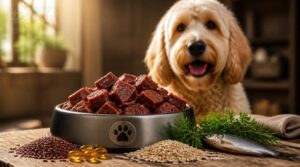
Blue Buffalo Wilderness Rocky Mountain Recipe puts deboned beef first — no fillers, no shortcuts. That matters. Real meat drives the protein percentage and promotes lean muscle in your Goldendoodle.
Flaxseed and fish meal deliver omega-3 and omega-6 fatty acids for coat health and joint inflammation. Probiotics support digestion.
Grain-inclusive versions add oats and barley for steady energy.
CANIDAE Pure Salmon and Sweet Potato

CANIDAE Pure Salmon and Sweet Potato is a smart pick for Goldendoodles with sensitive stomachs. Real salmon leads the ingredient list, delivering essential amino acids and omega-3 fatty acids for coat health.
Glucosamine and chondroitin support joints.
This limited ingredient diet cuts common triggers, making it one of the best hypoallergenic dog foods for Goldendoodles with food sensitivities.
How to Choose The Best Goldendoodle Food

Picking the right food doesn’t have to feel like decoding a science textbook. A few key factors separate genuinely good formulas from cleverly marketed ones. Here’s what to look for before you buy.
Prioritize Named Animal Protein Sources
The first ingredient on the label tells you everything. Named animal proteins — like salmon, chicken, or lamb — give you clarity that vague terms like "meat by-products" simply don’t.
You’ll know exactly what you’re feeding. That matters most when managing protein sensitivities, because eliminating one variable at a time only works when labels are honest about the source.
Evaluate Fat and Omega Fatty Acids
Protein sources matter — but fat quality is what most labels bury.
Look beyond crude fat percentage. Fish-derived EPA and DHA deliver omega-3s directly. Plant oils like flaxseed only provide ALA, which your dog’s body must convert — inefficiently.
Check the omega-6 to omega-3 ratio. A lower ratio means better anti-inflammatory balance. Also confirm antioxidants protect those fats from oxidation during storage.
Avoid Fillers and Artificial Preservatives
Fat quality matters — but what’s hiding in the formula can undo it all.
Synthetic preservatives like sodium benzoate and sodium nitrate extend shelf life artificially. Avoid them. Watch for the "5% loophole" too — small ingredients don’t always require full label disclosure, masking hidden additives. Choose foods using natural preservation through vitamin E, rosemary, or citric acid instead.
Avoid synthetic preservatives and hidden additives by choosing foods naturally preserved with vitamin E, rosemary, or citric acid
Grain-Free Vs. Grain-Inclusive Options
The debate around grain-free vs. grain-inclusive isn’t black and white. Grain-free doesn’t mean low-carb — peas, lentils, and potatoes still pack significant carbohydrates.
Grain-inclusive diets often provide better fiber and digestive consistency.
Both can meet AAFCO nutrient profiles if formulated correctly. Choose based on your Goldendoodle’s actual response — stool quality, energy, and coat condition tell you more than the label ever will.
Goldendoodle Health Issues Diet Can Address

What you feed your Goldendoodle can do more than just fill their bowl — it can directly shape their health outcomes. The right diet tackles some of the most common issues this breed faces. Here’s what diet can help you manage.
Hip Dysplasia and Joint Support
Hip dysplasia quietly destabilizes your Goldendoodle’s joint long before pain shows. The femoral head loses its snug acetabular fit, forcing surrounding ligaments and muscles to overcompensate.
Diet is your first line of defense. Foods containing glucosamine and chondroitin reinforce cartilage and soft tissue support. Omega-3 fatty acids reduce inflammation.
Limit excess calcium in puppies — it directly raises dysplasia risk.
Managing Allergies With Limited-Ingredient Diets
Goldendoodles are prone to food allergies — itchy skin, loose stools, and chronic inflammation are common signs. A limited-ingredient diet removes the guesswork.
Pick one novel protein like duck, rabbit, or salmon, your dog hasn’t eaten before. Stick with it.
Read every label carefully. Even treats must match the plan, or you’ll never isolate the trigger.
Reducing Ear Infection Risk Through Diet
Ear infections plague many Goldendoodles, and diet plays a bigger role than most owners realize.
Low-carbohydrate, probiotic-rich foods reduce yeast overgrowth in the ear canal. Omega-3s from salmon or flaxseed fight sugar-induced inflammation at the source.
Stay consistent with hydration — wet food helps. Avoid high-sugar kibble. It quietly feeds the problem.
Bloat Prevention and Weight Management
Bloat — or gastric dilatation volvulus — can kill a large breed dog within hours. Don’t let one rushed meal become a crisis.
Use a slow feeder bowl to pace every meal. Split daily portions into two or three smaller feedings. Wait at least an hour after eating before exercise. Consistent hydration and fiber keep digestion moving steadily, reducing gas buildup and supporting healthy weight.
Feeding Guidelines for Goldendoodles

Even the best food won’t help if you’re feeding the wrong amounts at the wrong times. How much, how often, and how you rotate foods all make a real difference. Here’s what you need to know.
Daily Portions by Size and Age
Size drives everything. A 15-lb Goldendoodle needs roughly 375 kcal daily; a 50-lb adult needs around 1,200 kcal. Use this to calibrate:
- Puppies need more calories per pound than adults
- Seniors often need fewer as metabolism slows
- Treats count — subtract them from the daily total
Always verify portions against your dog’s body condition score, not just weight.
Meal Frequency for Each Life Stage
How often you feed matters as much as what you feed.
| Life Stage | Meals Per Day | Key Reason |
|---|---|---|
| Puppy | 3–4 | Small stomach, rapid growth |
| Adult | 2 | Steady energy, easy digestion |
| Senior | 2–3 | Slower digestion, smaller appetite |
| Pregnant | 3 | Comfort, nausea reduction |
| Lactating | 3–4 | High energy demands of nursing |
Goldendoodle puppies need 3–4 daily meals. Adults do well on two. Goldendoodle seniors often benefit from a third smaller meal as digestion slows. Pregnant and lactating dogs need the most frequency… their energy demands are highest.
Switching Dog Foods Gradually
Switching foods overnight is a gut punch — literally. Your dog’s digestive system needs time to adjust.
Follow this 7–10 day protocol:
- Days 1–2: 75% old, 25% new
- Days 3–4: 50% each
- Days 5–7: 25% old, 75% new
- Days 8–10: 100% new food
Watch for loose stools or vomiting. If symptoms appear, slow the process down — don’t push forward.
Safe Treats, Toppers, and Supplements
Once food transitions are locked in, extras come into play. Choose single-ingredient treats — plain chicken, beef, or salmon — so you can pinpoint any trigger fast.
Toppers add calories… always include them in your dog’s daily total.
Look for no BHA or BHT on labels.
Add glucosamine and chondroitin for joints, and probiotics for gut stability.
Frequently Asked Questions (FAQs)
How do I choose the best food for my goldendoodle?
Every Goldendoodle is different… yet the fundamentals never change. Match food to life stage, check that a named protein leads the label, and confirm the caloric density fits your dog’s size and activity level.
Can goldendoodles eat dry dog food?
Yes, Goldendoodles can eat dry dog food. Complete, balanced kibble meets their canine nutrition needs. Just guarantee fresh water is always available, since dry food contains far less moisture than wet options.
How much dog food should a goldendoodle eat?
Like a gas tank, your Goldendoodle’s bowl needs the right fill level — not too much, not too little. Aim for 25–30 kcal per pound daily, adjusted for age and activity.
Which goldendoodle food is best for weight loss?
For weight loss, lower calorie density matters most. Choose foods with high protein (≥24%), added fiber like pumpkin, and controlled fat. Diamond Naturals Senior works well — 318 kcal per cup keeps portions honest.
How much food should I feed my goldendoodle?
Aim for 25–30 kcal per pound of body weight daily. A 50‑lb Goldendoodle needs roughly 1,200 kcal. Adjust portions if weight shifts — your dog’s body condition tells the truth.
Do goldendoodles need special dog food?
Goldendoodles don’t need a special label — but they do need life-stage-specific nutrition. Hybrid breed feeding demands shift from puppyhood to senior years, making individualized feeding plans essential for long-term health.
What’s the best dog food for a goldendoodle puppy?
For goldendoodle puppies, look for a large breed puppy formula with 28–32% protein and a 2:1 calcium-phosphorus ratio. DHA promotes brain development. Named meat should always be the first ingredient.
What if my goldendoodle is bred from a small or medium size poodle?
Poodle parent size shapes everything. A mini or medium Poodle parent means a smaller adult dog — lower calorie needs, smaller portions. Monitor body condition, not just age, to match food amounts accurately.
What’s the best dog food for a senior goldendoodle?
For a senior Goldendoodle, Diamond Naturals Senior delivers 8% protein, glucosamine, and just 318 kcal per cup — keeping joints supported and weight controlled without overloading an aging metabolism.
What food is best for a Goldendoodle?
The right answer depends on your dog’s age and size. Look for named animal protein as the first ingredient, with 24–28% protein and balanced fat — that’s the foundation for every healthy Goldendoodle diet.
Conclusion
Coincidentally, the dogs living longest in recent canine longevity research didn’t belong to the wealthiest households—they belonged to owners who chose food with clear, consistent intention.
That’s the quiet variable no one ever markets.
Choosing the best food for Goldendoodles is less about budget and more about knowing exactly what to look for on a label.
Named proteins.
Correct calcium ratios.
Omega-3s that reach inflamed tissue.
You already have that knowledge now.
Use it.
- https://open-farm-pet.pxf.io/c/2442109/2832567/12719
- https://sites.tufts.edu/petfoodology/2020/12/28/what-is-guaranteed-about-the-guaranteed-analysis/
- https://www.fda.gov/animal-veterinary/animal-health-literacy/fdas-regulation-pet-food
- https://www.smalldoorvet.com/learning-center/medical/glaucoma-in-dogs/
- https://www.ollie.com/fresh-dog-food/lamb/