This site is supported by our readers. We may earn a commission, at no cost to you, if you purchase through links.

The night you bring a new puppy home, nobody warns you about the silence that follows. One minute you’re giddy, watching this tiny creature explore every corner of your house. Then the lights go out, and the whining starts—sometimes for hours.
Most new owners assume that’s just how it goes. It doesn’t have to be. A puppy’s first night at home goes smoothly when you’ve set the right conditions before exhaustion kicks in. The steps ahead cover everything from a safe sleeping space to calming crate routines that actually work.
Table Of Contents
- Key Takeaways
- Prepare Before Puppy Arrives
- Puppy-Proof Your Home
- Set Up Sleeping Space
- Top 2 Puppy First Night Items
- Start Crate Training Gently
- Follow a Bedtime Routine
- Handle Crying and Accidents
- Monitor Health and Adjustment
- Frequently Asked Questions (FAQs)
- Should you let a puppy cry it out the first night?
- What to expect on a puppy’s first night home?
- What type of collar should I buy for my puppy?
- How soon should I begin obedience training?
- What is the best way to introduce a new puppy to my other pets?
- How do I know if my puppy is displaying signs of separation anxiety?
- How often should I take my puppy for walks?
- What temperature should the room be for puppy?
- When should I first introduce puppy to vet?
- How do I handle puppys first car ride?
- Conclusion
Key Takeaways
- Setting up a scent-familiar sleep space before your puppy arrives does more for that first night than anything you’ll scramble to fix after.
- Crate training works best when your puppy walks in on their own terms — forcing it breaks trust fast and makes every night harder.
- A simple bedtime routine (early dinner, water cutoff, final potty break, calm cues) cuts down on 2 a.m. accidents more reliably than any product will.
- Most puppies need a full week to settle in, so whining, skipped meals, and restless nights are normal — not a sign you’re doing it wrong.
Prepare Before Puppy Arrives
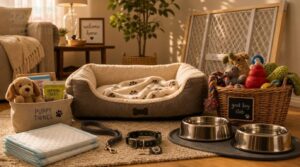
Getting ready before your puppy walks through the door makes that first night so much smoother. A little prep work now saves a lot of scrambling later. Here’s what to have on hand before pickup day.
Think of it as your personal responsible dog owner checklist—covering everything from your home setup to your daily routine before your pup even arrives.
Match Current Puppy Food
Ask your breeder or shelter which food the puppy is currently eating — then buy that exact brand. Switching foods too fast causes stomach upset, and a new puppy won’t eat if something tastes off. Stick with the match current puppy food rule for at least two weeks before gradually shifting to your preferred option.
When selecting a new brand, look for products that list named meat sources as the first ingredient.
Set Up Water Bowls
Food sorted — now let’s talk water. Place your puppy’s bowl in a quiet spot away from busy doorways. A non-slip mat underneath keeps it steady and cuts down on noise. Use a separate bowl from the food dish, ideally in a corner setup against a wall.
Fresh water should always be available, but you’ll limit water closer to bedtime.
Choose Safe Chew Toys
Now for toys. Natural rubber or non-toxic silicone are your safest picks for a teething puppy. Choose something bigger than your puppy’s mouth — no exceptions. Check for no detachable parts, and look for BPA-free, phthalate-free labels.
Textured surfaces even help clean teeth while they chew. Rotate two or three toys to keep things fresh, and always supervise new chew sessions.
Prepare Collar and ID
Once your puppy’s chew toys are sorted, the collar and ID tag deserve equal attention — and it’s easier than you’d think.
Get the Collar Fit Check right first: slide two fingers between the collar and your puppy’s neck. Snug but not tight.
For ID Tag Engraving, include:
- Your name and phone number
- An emergency contact
- A microchip reference note
Choose nylon for Material Selection — lightweight, washable, and durable. Test the Safety Buckle with a firm tug. It shouldn’t give.
Gather Cleaning Supplies
Stock your essential cleaning kit before your puppy arrives — accidents happen fast.
Grab an enzymatic cleaner first. It breaks down urine proteins completely, so your puppy won’t sniff out old spots and repeat the mistake. Pair it with puppy training pee pads and rubber gloves for those inevitable first-night moments.
Honestly, you’ll use all three within hours.
Puppy-Proof Your Home
Before your puppy takes a single step inside, your home needs a quick safety sweep. Puppies are curious little troublemakers who will find every hazard you forgot about. Here’s what to tackle first.
Cover Electrical Outlets
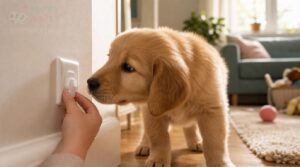
Electrical outlets sit at nose height for most puppies — and that’s a problem. Before your new arrival explores every inch of your home, cover every outlet.
- Install outlet safety covers with tamper-resistant features
- Use childproof receptacles requiring two simultaneous actions
- Add weatherproof gaskets in garages or outdoor areas
- Consider decorative plate options that blend with your walls
- Choose outlets with GFCI protection in damp spaces
Secure Loose Wires
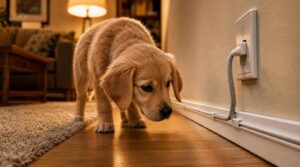
Loose wires are basically an open invitation to a teething puppy.
Bundle cords with cable clips and route them along baseboards using raceways or trunking. Keep wires at least 12 inches off the floor where possible. Use protective cable sleeves rated for pet use on any cord within reach.
A consistent "leave it" cue helps reinforce safe habits around cords.
Remove Choking Hazards
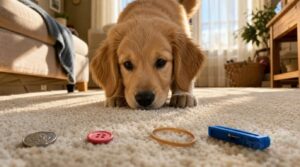
Think of your floor as a treasure map for your puppy — except every "treasure" is a choking hazard.
Remove small objects under 1 inch in diameter from any area your puppy can reach. Coins, buttons, rubber bands, and bag clips are top offenders.
Do a quick hands-and-knees sweep before your puppy arrives. You’ll be surprised what you find.
Lock Away Chemicals
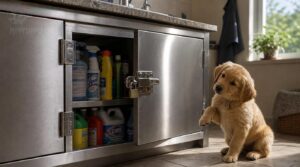
Your cleaning cabinet might be the most dangerous room in the house for a curious puppy.
Lock away all toxic substances before your pup arrives. Here’s what that looks like in practice:
- Store cleaners in a locking cabinet rated for chemicals
- Separate bleach from acids — mixed fumes are deadly
- Keep pesticides and solvents in locked, ventilated storage
- Maintain cabinet temps between 60–85°F to protect containers
Use original containers with intact labels. That’s non-negotiable.
Block Unsafe Rooms
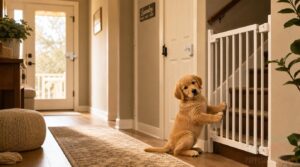
A new puppy treats your home like an adventure map — every door a mystery worth solving.
Door Barriers and Stair Gates are your first line of defense. Close unused rooms, latch attic doors, and add a Laundry Lock to keep toxic substances unreachable. Secure Balcony Rail gaps and fit an Attic Latch so no curious nose goes where it shouldn’t.
Set Up Sleeping Space

Where your puppy sleeps on night one matters more than you’d think. A calm, cozy setup can mean the difference between a puppy who settles in and one who cries until sunrise. Here’s how to get that space just right.
Choose a Quiet Area
Where you place your puppy’s safe space matters more than most people realize.
- Keep it away from kitchens and busy doors
- Choose a spot with rugs or curtains to soften sound
- Make sure airflow is steady but free of drafts
A quiet corner reduces puppy anxiety and sets the stage for a calmer night — for both of you.
Keep Lighting Dim
Quiet placement helps, but lighting matters just as much.
A gentle night glow tells your puppy this space is safe and calm. Skip the overhead lights. Instead, a dimmable bedside lamp or low watt nightlight keeps things soft without plunging the room into full darkness.
| Light Type | Why It Works |
|---|---|
| Warm white bulb (2700K) | Soothes without harsh shadows |
| Soft ambient light | Lowers stress, promotes rest |
| Dimmable bedside lamp | Adjustable for nighttime checks |
Avoid blue or cool white bulbs — they’re stimulating, even for puppies. Steady, indirect light also lets you spot accidents or check breathing without startling anyone awake.
Add Washable Bedding
Good lighting sets the mood — and good bedding seals the deal. Your puppy’s washable bedding is the unsung hero of crate comfort.
Look for cotton blend options that stay soft after hundreds of washes, or microfiber benefits like quick drying and wrinkle resistance. Hypoallergenic materials and stain resistant fabrics protect sensitive skin while surviving puppy sleep habits beautifully.
Use Familiar Scents
Soft bedding brings comfort, but scent is what really tells your puppy "you’re safe here." On your puppy’s first night at home, familiar smells calm faster than almost anything else.
On a puppy’s first night, familiar scents calm faster than almost anything else
Tuck a worn T-shirt into the crate. Your everyday scent signals safety. Avoid strong sprays — a young dog’s nose is powerful, and mild, natural scents work best.
Maintain Comfortable Temperature
Temperature matters more than you’d think on night one. Keep your puppy’s sleep space between 68 and 72°F — too cold and they’ll whine; too warm and they’ll overheat. Tuck a fleece blanket over their dog bed and place a small space heater nearby, never underneath. A room thermometer keeps you honest.
- Seal drafts under doors with weather stripping
- Layer washable fleece over the crate bedding
- Keep humidity around 40–50% with a small humidifier
- Place a hot water bottle wrapped in a towel inside the puppy crate
- Set any heater to shut off automatically at 72°F
Top 2 Puppy First Night Items
Two items will make your puppy’s first night go a lot smoother. They’re not glamorous, but they do the heavy lifting so you’re not scrambling at 2 a.m. Here’s what to grab before your pup comes home.
1. XL Absorbent Puppy Training Pee Pads
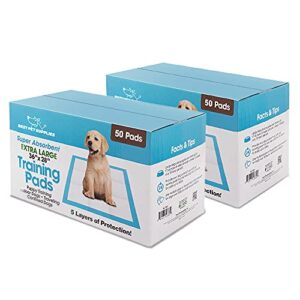
When accidents happen at 2 a.m., you’ll be glad you had these ready.
The XL Absorbent Puppy Training Pee Pads measure 36 x 28 inches and absorb up to 6 cups of liquid, locking moisture into a gel-forming polymer core so paws stay dry. The leak-proof plastic backing protects your floors, and built-in odor control keeps things fresh.
Lay one inside the crate entrance or nearby — your puppy will appreciate the clear, designated spot.
| Best For | Pet owners training puppies, managing senior dog accidents, or anyone who needs reliable, high-capacity coverage for large dogs or multiple pets. |
|---|---|
| Dimensions | 36 x 28 in |
| Material | Polymer |
| Primary Purpose | Potty Training |
| Portability | Lightweight & Flexible |
| Versatility | Indoor & Travel Use |
| Ease of Use | No Setup Required |
| Additional Features |
|
- Huge 36 x 28" size handles big dogs and cuts down on how often you’re swapping pads
- Absorbs up to 6 cups of liquid and locks it into a gel core, so paws don’t track wet prints across your floor
- Odor-locking tech keeps things smelling fresh between changes
- The pads can be tricky to unfold quickly, which isn’t ideal when you need one fast
- Unfolding them too aggressively might startle nervous or sensitive dogs
- If liquid pools under the waterproof backing, it can sit against laminate or hardwood and cause damage over time
2. BestPet Foldable Metal Dog Kennel
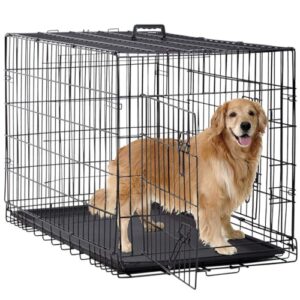
The BestPet Foldable Metal Dog Kennel is one of those things you don’t appreciate until 3 a.m. — and then you’re genuinely grateful.
It sets up in seconds, no tools needed. The dual-door design means you’re not contorting yourself to reach inside. The removable leak-proof tray makes cleanups fast. At 48 x 29 x 31 inches, there’s room to grow. Rounded corners and smooth wire spacing keep your puppy safe while they settle in.
| Best For | Pet owners who need a versatile, easy-to-move crate for travel, training, or everyday use with a calm, non-destructive dog. |
|---|---|
| Dimensions | 48 x 29 x 31 in |
| Material | Metal & ABS Plastic |
| Primary Purpose | Crate Training |
| Portability | Collapsible w/ Handles |
| Versatility | Indoor & Outdoor Use |
| Ease of Use | Tool-Free Assembly |
| Additional Features |
|
- Sets up and folds down fast with no tools — great for on-the-go use
- Dual doors (front and side) make it easy to access your dog from either angle
- Removable leak-proof tray means cleanups take seconds, not minutes
- Not a good fit for dogs with anxiety or chewing habits — they could damage it or escape
- The latches can be a little fiddly and may need some wiggling to open and close
- Fresh out of the box, it might have a manufacturing smell that needs a quick wipe-down
Start Crate Training Gently
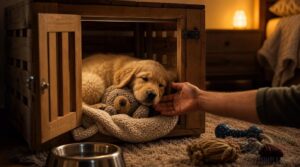
Crate training doesn’t have to be a battle of wills — it just takes a little patience and the right setup. Your puppy needs to see the crate as a safe spot, not a punishment. Here are the key steps to make that happen from night one.
Pick The Right Crate
The right puppy crate size makes all the difference. Your pup should stand, turn, and lie down comfortably — with about an inch or two of shoulder clearance. Too big, and they’ll use one corner as a bathroom.
A wire crate with a divider panel is your best bet: good ventilation, easy to resize as they grow, and no need to buy twice.
Keep Crate Near You
On your puppy’s first night at home, keep the crate nearby — ideally within arm’s reach. Your presence alone calms a lot of that new-place anxiety.
It also means you’ll catch early whines before they escalate, making nighttime potty trips quicker and quieter. A crate close to you becomes a safe space naturally, not something strange.
Avoid Forcing Entry
Never push your puppy into the crate. Voluntary crate entry builds trust — forcing it does the opposite.
Leave the door open and let curiosity do the work. Use a soft verbal cue like "settle" and a treat near the entrance. Entry routine consistency matters most here. A calm, unhurried gradual door approach makes the crate feel like a safe space, not a trap.
Reward Calm Behavior
Once your puppy steps in voluntarily, that’s your moment. Reward calm behavior immediately — a small treat after just five still seconds tells them exactly what you want.
Use a consistent cue word like "quiet" or "settle" paired with slow, gentle movements. Calm cue rewards paired with soft praise build recognition fast, often within just a few days.
Make Crate Comforting
Think of the crate as your puppy’s personal den. Crate location matters — keep it close to where you sleep so your puppy hears you nearby.
Layer it with cozy bedding and tuck in a worn T-shirt for a familiar scent. A white noise machine softens sudden sounds, and puppy crying at night often quiets once they feel genuinely settled in.
Follow a Bedtime Routine

A consistent bedtime routine is one of the best things you can do for your puppy — and for your own sleep. It doesn’t have to be complicated, but the order and timing really do matter. Here’s what a good puppy wind-down routine looks like, step by step.
Feed Earlier in Evening
Shift dinner a little earlier on your puppy’s first night at home — ideally 3 to 4 hours before bedtime.
This simple timing tweak gives your puppy time to digest and eliminates the guesswork around evening potty breaks. An earlier feeding schedule means the post-meal potty urge hits well before lights out, not at 2 a.m.
Limit Water Before Bed
You just moved dinner earlier — now do the same with water. Limit water 1 to 2 hours before bed to reduce the chance of your puppy peeing in their crate at night.
This simple bedtime routine tweak makes your nighttime fluid limit predictable. On your puppy’s first night, consistency with the hydration cutoff time matters more than precision.
Take Final Potty Break
Step outside with your puppy 15 to 20 minutes before bed — not right at the last second. Pick a consistent potty spot close to the door, keep things quiet, and wait.
Once they go, offer calm praise or a small treat. That positive reinforcement builds the bathroom routine fast and cuts down on puppy peeing in their crate at night.
Use Calm Bedtime Cues
Your puppy reads your energy more than you think. Keep your gentle voice tone low and steady as you guide them toward their crate. Kneel beside it, move slowly, and use a short phrase like "bedtime" every single night.
Consistent timing and calm body language together signal that sleep is coming — no drama, just quiet routine.
Keep Nights Boring
Think of nighttime as the world’s most intentional snooze fest. Keep stimulation near zero — no new toys, no playful voices, no bright lights.
If your puppy needs a potty trip, handle it quietly and quickly, then return them to their sleep space without fuss. White noise running softly in the background does the rest.
Handle Crying and Accidents
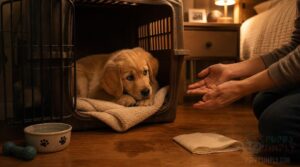
The first night will probably include some whining — that’s just puppy life, and it doesn’t mean you’re doing anything wrong. What matters is knowing when to step in and when to hold back. Here’s how to handle the tough moments without losing your sanity.
Expect Some Whining
Your puppy’s first night home will almost certainly include some whining — and that’s completely normal. Separation distress kicks in fast, often within the first 20 minutes alone. The sound itself is a soft, repetitive cry ranging between 400 and 800 hertz — basically nature’s alarm bell.
Watch for these common whining triggers:
- Sudden darkness or noise changes
- Hunger or thirst from an unsettled feeding schedule
- Missing the warmth of littermates
Crate training works best when you expect this behavior upfront.
Respond to Distress Cries
There’s a difference between a puppy fussing and a puppy genuinely scared. When you hear high-pitched, continuous distress whining, respond within 5 to 10 seconds.
Keep your voice low and steady — something like "I’m here, it’s okay." Pair that with a slow pet along the back. Dim the lights, add soft white noise, and let your calm presence do the work.
Avoid Rewarding Whining
Every time you rush over the moment your puppy whines, you’re teaching a lesson you didn’t mean to teach. Ignore whining consistently — reward quiet instead. Use a consistent cue like a soft click when calm arrives, then treat immediately.
- Wait for positive silence before any interaction
- Practice gradual separation starting at five minutes
- Reward quiet during crate training and sleep training
- Avoid eye contact during managing whining episodes
- Only return after calm, never mid-whine
Clean Accidents Thoroughly
Accidents happen — even with the best housebreaking routine in place. When they do, act fast.
Blot excess moisture with a paper towel before anything else. Then apply an enzymatic cleaner directly to the spot. These break down urine proteins at the source. Let it sit, then air dry the surface fully to neutralize pet odors and prevent repeat accidents.
Praise Outdoor Potty Breaks
Once the accident is cleaned up, shift your focus outside — that’s where the real wins happen.
- Praise within two seconds of your puppy finishing outdoors.
- Say "Good potty, good job" every single time.
- Use a calm, cheerful voice — not an excited shriek.
- Pair words with a gentle chest pat to reinforce the moment.
Monitor Health and Adjustment

Your puppy’s first week is a lot of watching and waiting — and that’s completely normal. A few key things will tell you whether everything’s going well or whether it’s time to call your vet. Here’s what to keep an eye on.
Watch Appetite Changes
Don’t panic if your new puppy won’t eat right away. Meal timing shifts are normal during the first night — stress from travel and a new home often delays appetite.
| Appetite Signal | What It Means |
|---|---|
| Slow eating | Normal settling behavior |
| Full meal refusal | Watch closely |
| Refusing food and water | Call your vet |
Puppy nutrition depends on a consistent feeding schedule, so if your puppy skips two consecutive meals or shows loose stool alongside refusal, contact your vet promptly.
Check Breathing and Energy
Once you’ve settled the appetite question, take a quiet moment to watch your puppy breathe. Normal resting breathing is steady and quiet — no heaving belly, no flared nostrils, no open-mouth panting.
Gently rouse your puppy and check that it stands and moves normally. On a puppy’s first night at home, calm breathing and alert energy are your clearest signs that everything’s okay.
Call Vet When Concerned
Trust your gut here — you know your puppy best.
Call your veterinarian right away if you notice any of these warning signs:
- Repeated vomiting or diarrhea more than once in 24 hours
- Blood in stool or black-colored diarrhea
- Trouble breathing, choking, or nonstop coughing
- Limping, shaking, or protecting a body part
- Bleeding that won’t stop within five minutes
Don’t wait on puppy health concerns. Veterinary care, even a quick call to your veterinary clinic, can make all the difference.
Expect One-week Adjustment
Here’s the honest truth: the first week at home is hard for everyone — you included.
Most puppies need about seven days to settle in. Sleep Pattern Shifts are normal early on, but sleep usually stabilizes to 8–12 hours by day seven. Appetite Variability often appears too, then usually returns by the end of the week.
| Day Range | What You’ll Notice | What Helps |
|---|---|---|
| Days 1–2 | Restlessness, whining, poor appetite | Calm presence, familiar scents |
| Days 3–5 | Potty Consistency Progress begins | Stick to your puppy routine |
| Days 6–7 | Social Bonding Growth, calmer sleep | Gentle handling, steady schedule |
The settling in period isn’t linear. Separation anxiety may spike, then ease. That’s completely normal.
Begin Socialization Planning
Once your puppy starts settling in, it’s time to think about socialization planning. In week one, aim for five new human interactions and two calm dog meetings.
Pair each experience with treats or praise — positive reinforcement makes new things feel safe. Get every family member involved so your puppy learns consistent expectations from everyone it loves.
Frequently Asked Questions (FAQs)
Should you let a puppy cry it out the first night?
No, don’t let a puppy cry it out. Long crying spikes cortisol and strains nighttime bonding. Brief, calm reassurance near the crate works better than silence or full attention.
What to expect on a puppy’s first night home?
That first night is messy, loud, and honestly a little heartbreaking. Expect whining, restless sleep, and a few accidents. Most puppies settle within one to two weeks.
What type of collar should I buy for my puppy?
Go with a nylon or leather collar — both are soft, durable, and adjust as your puppy grows. Make sure you can fit two fingers underneath. Add an engraved ID tag right away.
How soon should I begin obedience training?
You can start basic obedience training the day your puppy arrives home. Short, gentle sessions work best at 8 weeks old. Keep it simple — sit, come, stay. Reward immediately and keep sessions under five minutes.
What is the best way to introduce a new puppy to my other pets?
Start with scent introduction days before they meet. Swap a blanket or shirt between pets. Then arrange a neutral, calm meeting on leash. Watch body language closely, keep sessions short, and reward everyone.
How do I know if my puppy is displaying signs of separation anxiety?
Your puppy’s basically yelling, "Don’t leave me!" — and they mean it. Watch for persistent whining, destructive chewing near exits, toilet regression, pacing, or escape attempts triggered specifically when you’re gone.
How often should I take my puppy for walks?
A good rule is 5 minutes per month of age, once or twice daily. So a 3-month-old puppy gets about 15 minutes. Short, frequent outings protect growing joints better than one long walk.
What temperature should the room be for puppy?
Keep your pup’s sleep space between 75–80°F. A puppy crate or dog bed in a draft-free corner works best. Watch for panting — that’s your overheating warning. Cooler than 50°F? Add warmth fast.
When should I first introduce puppy to vet?
Book your first vet visit within a few days of bringing your new puppy home. Most pups are ready for early checkup at 8–12 weeks, when vaccinations begin.
How do I handle puppys first car ride?
Bring your puppy crate lined with a familiar blanket. Skip feeding right before the ride. Drive smoothly, speak softly, and reward calm behavior once you’re parked.
Conclusion
Paws before you panic—your puppy’s first night at home is one small step in a much bigger bond.
A quiet space, a familiar scent, a consistent routine—these aren’t complicated tricks. They’re simply how trust gets built, one calm night at a time.
Your puppy doesn’t need perfect behavior. They need you showing up, steady and patient. Do that, and the whining fades. What grows instead is something worth every single lost hour of sleep.
- https://theswiftest.com/best-pet-insurance-compared/?transaction_id=&oid=30&affid=1444&creative_id=10
- https://www.linkedin.com/in/sara-b-hansen80215/
- http://mailto:editor
- https://www.haywoodvet.com/services/dogs/blog/guidelines-when-you-should-call-vet
- https://www.avma.org/resources/pet-owners/emergencycare/13-animal-emergencies-require-immediate-veterinary-consultation-andor-care