This site is supported by our readers. We may earn a commission, at no cost to you, if you purchase through links.

Most dogs will eat anything you drop on the kitchen floor—and apples are no exception.
That enthusiastic, tail-wagging optimism is endearing, but it puts the responsibility squarely on you to know what’s safe before the slice hits the ground.
The good news: dogs can eat apples, and when prepared correctly, they make a genuinely nutritious snack.
The catch is in the details.
Seeds, cores, and stems hide real hazards that most pet owners don’t know about.
Get the prep right, and you’ve got a crunchy, low-calorie treat packed with fiber, vitamins, and antioxidants your dog will love.
Table Of Contents
Key Takeaways
- Apple flesh and skin are safe for your dog, but always remove the seeds, core, and stem — seeds contain cyanide compounds that can cause real harm, especially in small dogs.
- Keep apple treats to 10% of your dog’s daily calories: that’s 1–2 slices for small dogs, 2–4 for medium, and up to one-third of an apple for large breeds, offered 2–3 times a week.
- Genuine nutritional value — vitamins A, C, and K, gut‑supporting fiber, antioxidants, and 86% water content — making them one of the better fruit snacks you can offer.
- Skip sweetened applesauce, apple pie, and sugary dried apple products entirely, as added sugars, nutmeg, and preservatives like xylitol can be toxic or seriously disrupt your dog’s health.
Can Dogs Eat Apples Safely?
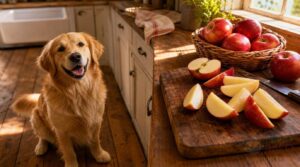
Yes, dogs can eat apples — but a few things determine whether it’s a treat or a problem. The good news is that with the right preparation, apples are genuinely safe and even healthy for most dogs. Here’s what you need to know before handing your dog a slice.
If you want to branch out beyond apples, it’s worth knowing which other snacks are safe and which ones to avoid before treat time.
Quick Safety Answer
Yes, dogs can eat apples — but with a few ground rules. The flesh is safe and nutritious.
However, seeds contain small amounts of cyanide, and the apple core is a choking hazard. Always remove both before serving.
If your dog eats seeds or shows vomiting, lethargy, or trouble breathing, call your vet promptly.
Best Apple Parts
The flesh and skin are the safest parts to share. Apple flesh delivers vitamins and hydration with minimal calories. The skin adds fiber and natural plant compounds — just know some dogs digest it better than others.
Always remove the core and remove the seeds before serving. Cut apple slices into small, bite-sized pieces to keep things safe.
Dogs Needing Caution
Not every dog interacts with apples the same way. Diabetic dogs need strict limits since natural fruit sugars can spike blood glucose.
Small breeds face a higher choking hazard, so smaller pieces matter even more.
Puppies have sensitive stomachs — start with just one small bite.
If your dog shows itching or vomiting, that’s a possible allergic reaction worth noting.
When to Call Vet
Knowing when to call the vet can make all the difference. If your dog ate apple seeds or the core, treat it as urgent — seeds contain cyanide compounds that affect the nervous system.
Watch for drooling, trembling, or sudden weakness. Repeated vomiting, facial swelling, or breathing trouble means call your vet or pet poison control immediately.
Apple Benefits for Dogs

Apples aren’t just a safe snack for your dog — they actually bring some real nutritional value to the table. A few slices can do more good than you might expect, from supporting digestion to giving their immune system a little boost. Here’s a closer look at what your dog gets out of every crunchy bite.
Low-calorie Snack
Apples are a low-calorie snack your dog will actually enjoy — just 52 calories per 100 grams. That’s a guilt-free reward, especially for dogs on weight management plans.
- Hydration boost: apples are 86% water
- Sugar-free options: no added sugars or artificial additives
- Nutrient density: vitamins plus natural carbohydrates in every slice
Pair a slice with cottage cheese for a satisfying, protein pairing snack. Always mind portion size.
Fiber for Digestion
Think of fiber as your dog’s internal cleanup crew. Apples provide about 2.4 g of fiber per 100 g, split between two types that each do different jobs.
Insoluble fiber increases motility helps maintain consistent bowel movements.
| Fiber Type | What It Does |
|---|---|
| Soluble fiber | Forms a gel that slows digestion and smooths blood sugar |
| Insoluble fiber | Adds stool bulk for easier, more regular bowel movements |
Both types also act as prebiotics, feeding beneficial gut bacteria. Those bacteria ferment the fiber and produce short-chain fatty acids — compounds that nourish the intestinal lining and support long-term digestive health.
Apple fiber feeds gut bacteria that produce the compounds keeping your dog’s intestinal lining healthy long-term
Vitamins A, C, K
Fresh apples bring three important vitamins to your dog’s bowl. Vitamin A keeps eyes sharp and skin healthy, while also supporting immune function. Vitamin C aids collagen production and tissue repair. Vitamin K helps blood clot properly after a cut or injury.
Together, these vitamins — plus apple’s natural antioxidants — quietly support your dog’s everyday health.
Hydration Support
Every apple slice is mostly water — about 86 grams per 100 grams of fruit. That natural water content adds a small but real boost to your dog’s daily fluid intake, especially on warm days or after a walk.
Keep portions small, though. Too much apple can cause loose stool, which actually worsens hydration by flushing fluid out. Apple promotes hydration — it doesn’t replace fresh drinking water.
Natural Antioxidants
What you might not know is that apples quietly deliver a powerful antioxidant punch. They contain quercetin and polyphenols that neutralize free radicals — unstable molecules that can damage your dog’s cells over time.
Vitamin C adds immune support too. These compounds work together, offering natural antioxidant synergy that helps reduce oxidative stress and may lower long-term cancer risk.
Apple Risks for Dogs
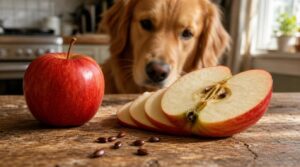
Apples are mostly safe, but there are a few things worth knowing before you start slicing. Some parts of the apple — and how much you give — can cause real problems for your dog. Here’s what to watch out for.
Seeds and Cyanide
Apple seeds contain amygdalin, a compound that releases cyanide during digestion. The real danger lies in quantity — a few seeds rarely cause harm, but large amounts of seeds can push cyanide to toxic levels.
Always remove every seed before sharing apple slices with your dog. It takes only seconds and eliminates the risk entirely.
Core Choking Hazard
The core is a different story from seeds. It’s firm, fibrous, and hard to chew down properly — making it a real choking hazard for dogs of any size.
- Apple core pieces can break into irregular chunks that lodge in the throat
- Large apple slices with core attached are especially risky for small breeds
- Core and seeds should always be removed before serving
Cut the fruit into bite-size pieces and stick to the soft flesh only. If your dog gulps food, stay close during supervised feeding sessions to catch any unsafe swallowing before it becomes a problem.
Too Much Fiber
Apples are fairly high in dietary fiber — and that’s mostly a good thing, until it isn’t. Too many slices at once can lead to bloating, gas, or diarrhea in dogs.
Their digestive systems aren’t built to handle large fiber loads quickly. Stick to small portions and introduce apples gradually to avoid gastrointestinal distress.
Sugar Concerns
Fiber isn’t the only thing to watch. Apples carry natural sugars — fructose, glucose, and sucrose — that can affect your dog more than you’d expect.
- Small dogs absorb a relatively high sugar load from even one large slice
- Frequent treats add up to daily sugar exposure
- Dogs with diabetes face real blood sugar disruption from fruit sugars
- Dried or sweetened apple products concentrate sugars substantially
- Unsweetened applesauce still contains sugar — it’s not a free pass
Sensitive Stomach Reactions
Some dogs just have sensitive stomachs, and apples can trigger real discomfort — think vomiting, diarrhea, bloating, or a tense belly within hours of eating. Symptoms like lip licking or gulping often signal nausea before vomiting starts.
Start with one small piece, watch for GI upset, and make sure fresh water is always available to prevent dehydration.
How to Prepare Apples
Getting an apple ready for your dog takes just a few simple steps. Done right, it keeps the snack safe and enjoyable every time. Here’s exactly how to prep it before handing a piece over.
Wash Apples Thoroughly
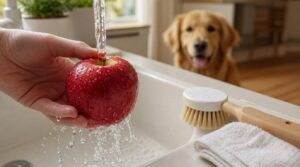
Before handing your dog a single slice, give that apple a proper clean. Start by rinsing under cold running water for 20–30 seconds. Then follow these steps:
- Scrub the skin with a clean produce brush
- Pay extra attention to the stem area and creases
- Avoid soap entirely — residue lingers even after rinsing
- Pat dry with a clean towel before cutting
Remove Seeds Completely
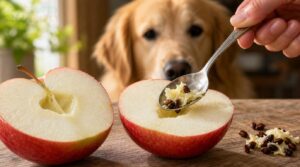
Every single seed must come out — no exceptions. Apple seeds contain amygdalin, which releases cyanide when digested. Even small amounts can cause cyanide toxicity in dogs over time.
Cut the apple into halves first. Use a small spoon to scoop out seed pockets completely. Re-check corners where seeds cling, wipe away gel residue, and rinse the pieces before serving.
Discard Core and Stem
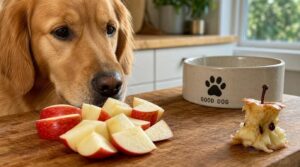
Once the seeds are out, toss the core and stem too. Apple cores are a choking hazard — they’re firmer than the flesh and harder for dogs to chew safely. The stem is small and woody, adding nothing nutritious.
- Cores surround the seed cavity with tougher tissue
- Stems are fibrous and dry
- Both increase choking risk in dogs that gulp food
- Removing them lowers the chance of gastrointestinal upset
- Flesh-only pieces are easier to portion consistently
Cut Bite-size Pieces
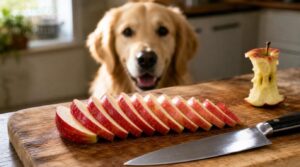
Once the core and stem are gone, cut bite-size pieces — roughly 1 inch by ¼ inch. That size fits comfortably in most dogs’ mouths without becoming a choking hazard.
Match piece size to your dog’s muzzle. Smaller breeds need thinner slices; larger dogs can handle slightly bigger chunks.
Uniform sizing also makes portion counting pieces simple and consistent.
Peel for Sensitive Dogs
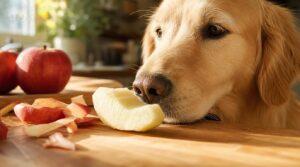
For dogs with sensitive stomachs, peeling the apple before serving is a smart move. The skin carries a heavier fiber load and rougher texture that can trigger digestive upset in dogs prone to loose stools or vomiting. Peeling also removes surface wax and reduces pesticide residue that lingers even after a thorough wash and scrub.
Watch for these signs that peel isn’t right for your dog:
- Loose stools or gas after eating apple skin
- Vomiting shortly after a new food introduction
- Skin itching, which may signal an allergy risk
Start with peeled slices, confirm your dog tolerates them well, then consider offering a tiny bit of peel later as a test.
How Much Apple Dogs Can Eat
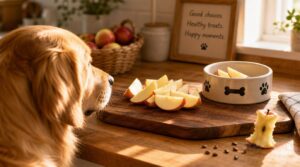
Apples are a great snack, but portion size really does matter. Too much of a good thing can upset your dog’s stomach, no matter how healthy the treat is. Here’s a simple breakdown of how much apple is right for your dog.
Treats Under Ten Percent
Think of your dog’s daily calories like a budget — and treats are a small line item. The Ten Percent Rule caps all treats at 10% of total daily calories.
For a 20 lb dog, that’s roughly 40–45 treat calories per day. Apples count toward that limit, so even healthy snacks need portion control.
Small Dog Portions
Small dogs — think Chihuahuas, Yorkies, or Maltese — have tiny treat budgets.
Stick to 1–2 thin apple slices per serving, roughly one teaspoon of prepared fruit. Cut each piece to about 1 inch by ¼ inch so it fits easily in their mouth.
That keeps portions safe and well within their 10% calorie limit.
Medium Dog Portions
Medium-sized dogs — Beagles, Cocker Spaniels, Bulldogs — have a bit more room in their treat budget than smaller breeds.
Aim for 2–4 thin apple slices per serving. That stays comfortably within the 10% daily calorie limit, whether your dog weighs 20 or 50 pounds.
More active dogs can handle the higher end; less active ones should stick closer to two slices.
Large Dog Portions
Large breeds — think Labs, Golden Retrievers, German Shepherds — can have up to one-third of a whole apple per serving. Cut pieces small to prevent gulping.
- Remove seeds, core, and stem every time
- Keep slices roughly 1 inch × ¼ inch
- Stay within 10% of daily calories
- Peel for dogs with sensitive stomachs
Feeding Frequency Tips
Apple treats work best on a 2–3 times per week schedule — not daily. That’s true regardless of your dog’s size. Keep apples occasional, and they won’t push past the 10% daily calorie limit for treats. If your dog eats twice a day, offer apple slices between meals, not on top of them.
| Dog Life Stage | Suggested Treat Frequency |
|---|---|
| Puppy (under 6 months) | Once a week, one small piece |
| Adult dog | 2–3 times per week |
| Senior dog | 1–2 times per week |
Safe Apple Treat Ideas

Once you’ve got the prep down, the fun part begins. There are a few simple ways to serve apples that your dog will actually look forward to. Here are five easy treat ideas to get you started.
Fresh Apple Slices
Fresh apple slices are the simplest treat you can offer — and done right, they’re genuinely good for your dog.
- Wash and scrub apples thoroughly before cutting
- Always remove apple seeds — they contain amygdalin, which releases cyanide
- Use a sharp knife; cutting technique matters for minimizing browning
- Store extras in the fridge to slow enzyme browning
- Serve slices soon after cutting for best nutrient retention
Frozen Apple Pieces
On a hot afternoon, frozen apple pieces can be just the thing your dog looks forward to.
| Tip | Detail |
|---|---|
| Piece size | Small chunks thaw faster and are safer to chew |
| Storage | Use freezer-safe bags; good for up to 9 months |
| Thawing | Thaw briefly before serving sensitive or small dogs |
| Sweeteners | Plain, unsweetened apple slices only — no added sugar |
| Serving | Treat occasionally, not daily |
Unsweetened Applesauce Cubes
Unsweetened applesauce cubes are one of the simplest homemade treats you can make. Just freeze applesauce in ice cube trays, pop out a cube, and serve.
Use only plain unsweetened fruit puree — no added sugars, no xylitol.
Each cube offers fiber, vitamin C, and natural hydration in a convenient, portion‑controlled serving that your dog will love.
Baked Apple Chips
Baked apple chips are a surprisingly easy, low-calorie treat you can make at home. To start, wash apples thoroughly to remove pesticide residue, then core and peel them for sensitive dogs.
- Choose crisp, sweet varieties like Fuji or Honeycrisp
- Slice apples 1/8 inch thin for even drying
- Arrange in a single layer on parchment-lined baking sheets
- Bake at 200°F for two hours, flipping halfway
- Skip sugar — plain or cinnamon only
Chips crisp up as they cool, so don’t worry if they seem soft right out of the oven.
KONG Apple Stuffing
A stuffed KONG toy turns apple time into a lasting mental challenge for your dog.
Mix diced apple pieces with unsweetened applesauce and pack them into the toy. Add KONG peanut butter spread for a thicker hold, or stir in rolled oats for an oat mix filling. Always remove apple seeds and cores first — these aren’t safe fruit for dogs.
| Recipe | Key Ingredients | Freeze? |
|---|---|---|
| Apple Peanut Butter | Diced apple, peanut butter | Yes |
| Oat Mix Filling | Applesauce, oats, banana | Yes |
| Frozen KONG Treat | Apple slices, applesauce | Yes |
Freeze your stuffed KONG for a firmer, longer-lasting DIY KONG filling.
Apple Foods Dogs Should Avoid

Not every apple product is safe to share with your dog. Some common treats contain ingredients that can cause real harm, even in small amounts. Here are the apple-based foods you’ll want to keep out of reach.
Apple Pie Dangers
Apple pie might seem harmless, but it’s one of the worst things you can share with your dog.
The crust alone is loaded with butter and refined flour, adding fat that can trigger vomiting or diarrhea. The sugary filling stresses blood sugar, especially in dogs with diabetes.
Always skip the pie — plain apple slices are the safer treat.
Nutmeg Toxicity
Nutmeg is the hidden danger in apple pie. Most recipes use it, and even a small amount can trigger nutmeg toxicity in dogs.
The culprit is myristicin, a compound with anticholinergic and psychoactive effects. Symptoms usually appear 3 to 6 hours after ingestion and can last up to 48 hours:
- Rapid heart rate, dry mouth, and blurred vision
- Confusion, agitation, or hallucinations
- Seizures in severe cases
Keep apple pie off your dog’s plate entirely.
Sweetened Applesauce
Sweetened applesauce is a different story from the plain variety. One cup can pack 42 grams of added sugar and nearly 194 calories — far too much for a dog’s small daily calorie budget.
Many commercial versions also contain potassium sorbate as a preservative. Always check the label. If it isn’t plain and unsweetened, skip it.
Sugary Apple Chips
Sugary apple chips carry the same problem, just in a crunchier package. Added sweeteners like brown sugar, honey, or maple syrup raise the sugar load well beyond what plain dried apple contains.
The caramelization process also concentrates natural sugars.
Even a small handful adds up fast. Stick to plain, unsweetened dehydrated apples — and keep portions small.
Top 4 Apple-Friendly Dog Products
If you want to make apple time even more fun for your dog, the right products can help. These four picks work well with apple-based treats and make serving them easier. Here’s what’s worth adding to your shelf.
1. KONG Classic Stuffable Dog Toy

The KONG Classic is one of the smartest ways to turn apple prep into playtime.
Stuff the hollow center with fresh apple slices, a little unsweetened applesauce, or apples mixed with kibble — then watch your dog work for every bite. That slow, problem‑solving eating reduces gulping and boredom at once. Freezing the stuffed KONG extends the fun even longer.
It’s dishwasher-safe, durable for average chewers, and comes in sizes to fit most dogs.
| Best For | Dog owners who want to keep their pup mentally stimulated, curb destructive behavior, or ease separation anxiety with a durable, treat-stuffable toy. |
|---|---|
| Made in USA | Yes |
| Artificial Additives | None |
| Apple Ingredient | Stuffable with apple treats |
| Price Range | $11.96 |
| Life Stage | All sizes (medium focus) |
| Allergen Consideration | Unscented, rubber only |
| Additional Features |
|
- Hollow center works with kibble, peanut butter, or wet food — freeze it for an extra-long distraction
- Unpredictable bounce makes it great for fetch too, so it pulls double duty as a puzzle toy and a play toy
- Dishwasher-safe and made from natural rubber, so it’s easy to clean and safe for everyday use
- Too big for small or toy-breed dogs — you’d need to size down to get the right fit
- Not built for serious power chewers, so aggressive dogs may wear it out faster than expected
- Fresh out of the package, the rubber smell can be pretty strong and might need a quick wash before your dog takes to it
2. Buddy Budder Natural Dog Peanut Butter
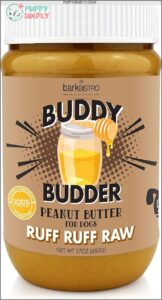
Pairing apple slices with Buddy Budder Natural Peanut Butter takes snack time up a notch. Made with just two ingredients — peanuts and honey — it’s free from xylitol, added sugars, and artificial sweeteners, so it’s genuinely safe for dogs.
Spread it on apple slices, use it as a pill pocket, or freeze it in molds for a longer-lasting treat. At $13.99 for 17 oz, it’s a clean, practical choice your dog will actually love.
| Best For | Dog owners who want a clean, additive-free treat for enrichment activities, hiding medication, or just spoiling their pup without the worry. |
|---|---|
| Made in USA | Yes |
| Artificial Additives | None |
| Apple Ingredient | Pairs with apple slices |
| Price Range | $13.99 |
| Life Stage | All life stages |
| Allergen Consideration | Xylitol-free, no additives |
| Additional Features |
|
- Only two ingredients — peanuts and honey — with zero xylitol, artificial sweeteners, or sketchy additives
- Super versatile: spoon it, spread it, freeze it, bake with it, or use it as a pill pocket
- Safe for all life stages, from puppies to seniors, and made in the USA
- Comes out runny at room temperature — you’ll need to stir it and refrigerate it before use
- At $13.99 for 17 oz, it’s pricier than your average grocery store peanut butter
- Not every dog is a fan, and dogs with peanut allergies should sit this one out
3. Acana Singles Lamb Apple Dog Food
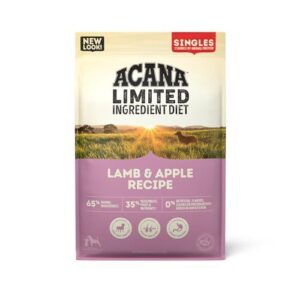
Acana Singles Lamb with Apple is a solid pick if your dog has food sensitivities. It uses lamb as the only animal protein — no poultry, no beef — and whole apples add natural vitamins and fiber. The freeze-dried coating boosts palatability, while added prebiotics and probiotics support gut health.
At $63.99 for 13 lb, it’s a premium option. Change slowly over 7–10 days to avoid digestive upset.
| Best For | Dogs with food sensitivities or allergies who need a single-protein, limited-ingredient diet. |
|---|---|
| Made in USA | Yes |
| Artificial Additives | None |
| Apple Ingredient | Contains real apples |
| Price Range | $63.99 |
| Life Stage | Adult dogs |
| Allergen Consideration | Grain-free, soy-free |
| Additional Features |
|
- Lamb-only protein keeps things simple and easy on sensitive stomachs
- Prebiotics and probiotics give your dog’s gut some extra support
- Omega-3 and Omega-6 fatty acids help keep skin healthy and coats looking great
- At $63.99 for 13 lbs, it’s pricier than most standard dry foods
- Made in a facility that handles grains, so it’s not ideal for dogs with severe grain allergies
- Dense kibble may need soaking for dogs with dental issues or softer-food preferences
4. Honest Kitchen Beef Jerky Bars
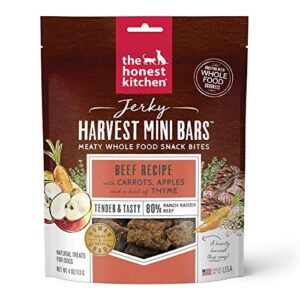
The Honest Kitchen Jerky Harvest Mini Bars are a wholesome reward your dog will actually get excited about. Made with 80% ranch-raised beef as the main ingredient, they also include real apples and carrots — making them a natural fit for this list.
The soft texture works well for puppies and senior dogs alike.
At $12.74 for 4 oz, they’re a premium pick, so break bars into smaller pieces to stretch each bag during training sessions.
| Best For | Dogs of all ages — especially puppies, seniors, or picky eaters who need a soft, high-protein treat for training. |
|---|---|
| Made in USA | Yes |
| Artificial Additives | None |
| Apple Ingredient | Contains real apples |
| Price Range | $12.74 |
| Life Stage | All life stages |
| Allergen Consideration | Corn, wheat, soy-free |
| Additional Features |
|
- Made with 80% ranch-raised beef, real carrots, and apples — no fillers, artificial flavors, or preservatives
- Soft, tender texture is easy on dogs with dental sensitivities or missing teeth
- Human-grade ingredients made in the USA, so you know exactly what you’re feeding
- Bars crumble easily, which can get messy during training
- The 4 oz bag goes fast, especially with medium or large dogs
- At $12.74 for a small bag, the cost adds up quickly if you’re treating often
Frequently Asked Questions (FAQs)
Can dogs eat Red Delicious apples?
Yes, Red Delicious apples are safe for dogs. Remove the seeds, core, and stem first. They’re sweeter than most varieties, so keep portions small to avoid too much sugar.
Can dogs eat apple skins?
Apple skin is safe for most dogs in small amounts. It adds fiber but can upset sensitive stomachs. Always wash it well and cut it into small pieces to reduce choking risk.
Can dogs eat apple slices?
Sliced and seed-free, apples are perfectly safe for dogs. Stick to the flesh, skip the core, and cut pieces small. That’s genuinely all it takes to turn this fruit into a healthy, dog-approved snack.
Are apples good for dogs?
Apples are genuinely good for dogs. They deliver vitamins A, C, and K, plus fiber and antioxidants — all in a low-calorie, hydrating package that promotes digestion and overall health.
Can dogs eat applesauce?
Plain, unsweetened applesauce is safe for dogs in small amounts. Always check the label — avoid xylitol or added sugars, which can be toxic or cause digestive upset.
Can dogs eat apple seeds?
No, dogs can’t eat apple seeds. They contain amygdalin, which releases cyanide during digestion. Even small amounts pose a risk — especially for small dogs. Always remove the entire core before sharing.
How much apple can I give my dog?
A good rule of thumb: treats shouldn’t exceed 10% of daily calories. Small dogs get 1–2 slices, medium dogs 2–4, and large dogs up to one-third of an apple per serving.
Can a dog eat apples with skin?
Yes, apple skin is safe for most dogs. It adds fiber and antioxidants. Just wash the apple well first. If your dog has a sensitive stomach, peel it to avoid digestive upset.
Can dogs eat raw apples?
Raw apples are perfectly safe for dogs. Simply wash, core, and slice them first. Skip the seeds and stem — those are the only parts that cause concern.
What foods are poisonous to dogs?
Several common foods are quietly dangerous for dogs. Chocolate, grapes, onions, xylitol, and alcohol can cause serious harm — from kidney failure to seizures — even in small amounts. Always check labels before sharing human food.
Conclusion
It’s almost funny—one of nature’s simplest snacks comes with a checklist.
But that’s exactly what makes you a responsible dog owner: knowing that yes, dogs can eat apples, and knowing how matters just as much as knowing if.
Skip the seeds, ditch the core, cut it small.
Do that, and a humble apple becomes something genuinely good for your dog—a crisp little reward that earns its place in the bowl.
- https://www.akc.org/expert-advice/nutrition/can-dogs-eat-apples
- https://www.medvet.com/which-fruits-are-safe-for-your-dog-to-eat
- https://stevesrealfood.com/2024/10/18/can-dogs-eat-apples-what-you-need-to-know
- https://www.petmd.com/dog/nutrition/can-dogs-eat-apples
- https://www.petsbest.com/blog/20-foods-dogs-shouldnt-eat