
This site is supported by our readers. We may earn a commission, at no cost to you, if you purchase through links.

Your dog’s eyes lock onto that chicken breast the second it hits the cutting board. It’s a scene that plays out in kitchens everywhere, and for good reason: chicken sits in nearly every bag of dog food you’ll find on store shelves.
So can dogs eat chicken straight from your plate? Often, yes. But the answer depends on how it’s cooked, what’s on it, and how much your pup already eats.
Get it right, and chicken becomes a lean protein boost for your dog’s diet. Get it wrong, and you’re looking at anything from an upset stomach to a trip to the emergency vet.
Table Of Contents
- Key Takeaways
- Can Dogs Eat Chicken Safely?
- Nutritional Benefits of Chicken
- Safe Chicken Preparation Methods
- How Much Chicken Can Dogs Eat?
- Chicken Bones and Raw Chicken Dangers
- When Chicken Should Be Avoided
- What to Do After a Reaction
- Frequently Asked Questions (FAQs)
- What three meats should dogs avoid?
- Can I give my dog cooked chicken?
- What words do dogs love to hear the most?
- What foods are toxic to dogs?
- Can dogs eat chicken every day?
- Can dogs eat chicken if they are allergic?
- Can dogs eat chicken bones?
- Is chicken good for dogs?
- Can one eat chicken while on a diet?
- Can dogs eat chicken without problems?
- Conclusion
Key Takeaways
- Plain, cooked, boneless, skinless chicken is safe for your dog, but seasoning, bones, and raw meat turn it risky fast.
- Always cook chicken to 165°F since raw chicken often carries Salmonella and Campylobacter that can sicken your dog and your family.
- Chicken offers real nutrition, with highly digestible protein, B vitamins, zinc, and amino acids that support muscle and energy.
- Keep chicken to about 10% of your dog’s daily calories, size your portions to your dog’s weight, and skip it entirely if allergies, pancreatitis risk, or garlic exposure are a concern.
Can Dogs Eat Chicken Safely?

Yes, dogs can eat chicken safely, but the details matter more than you’d think. How you prepare it, cook it, and which parts you use can mean the difference between a healthy treat and a trip to the vet. Let’s break down exactly what makes chicken safe for your pup.
If you’re boiling it, timing matters—check out this guide on how long to boil chicken for dogs to make sure it’s fully cooked but still tender.
Plain Vs. Seasoned Chicken
Plain versus seasoned chicken isn’t a small detail, it’s the whole ballgame. Unseasoned chicken gives clean protein with none of the risk.
Seasoning blends often hide garlic and onions, both toxic, plus salt loads that strain kidneys.
- Plain: safe, simple, vet-approved
- Seasoned: hidden toxins, excess sodium
- When unsure: skip it, ask your veterinarian
Moderation and plain prep keep Fido safe. Understanding how to read a dog food label helps identify harmful ingredients like garlic powder and oregano that may be hidden in seasoned products. reading dog food labels
Cooked Vs. Raw Chicken
Getting the seasoning right only matters if the chicken is cooked properly first. Cooked chicken kills off Salmonella and Campylobacter, while raw chicken often carries both, and about 1 in 25 store packages tests positive.
Raw feeding can even make your pup shed Salmonella in his stool, putting your family at risk too. Cook it through, and skip the gamble.
Safe Chicken Parts
Once it’s cooked through, which cut matters too. Stick with skinless, boneless, plain cooked chicken — breast or tenderloin are leanest, thigh is fine in moderation, wings run fatty. Skip chicken bones entirely; splintered bone dangers include torn intestines. Necks offer joint support but only ground, never whole. Skip seasoned broth altogether.
Nutritional Benefits of Chicken

Chicken isn’t just a tasty treat for your pup, it actually packs some real nutritional value. As a vet, I like recommending it because it checks a lot of boxes for a healthy diet. Here’s what makes it worth adding to Fido’s bowl.
High-Quality Protein Content
Not all protein is created equal, and chicken sits near the top. It boasts a biological value over 80, beating beef and lamb, with roughly 92% digestibility when boiled.
That means better muscle repair support, fewer digestive troubles, and smaller portions needed for homemade dog meals—a smart protein source for active pups like Fido.
Essential Vitamins and Minerals
A single chicken breast packs more than protein. Vitamin B6 helps regulate hormones and brain function, while vitamin B3 (niacin) fuels energy metabolism.
Zinc helps immune health and wound healing. Together, these nutrients create a nutrient partnership that boosts mineral absorption, though homemade diets still need extra care to meet your dog’s full canine nutrient requirements.
If you’re curious about which human snacks are safe to share, this guide on whether dogs can safely eat oatmeal creme pies explains why sugary treats can undermine an otherwise balanced homemade diet.
Amino Acids and Muscle Health
Fido’s muscles need building blocks called essential amino acids, and chicken hands over all ten.
Three stand out:
- Leucine — triggers muscle protein synthesis directly
- Isoleucine — powers steady energy during play
- Valine — repairs tissue after activity
Together, these BCAAs curb muscle breakdown, easing soreness. That’s real support for muscle health in dogs, right from dinner.
Safe Chicken Preparation Methods
So you know chicken can be good for your pup, but how you cook and serve it matters just as much as the chicken itself. A few simple habits in the kitchen make the difference between a safe treat and a trip to the vet. Here’s what you need to know to get it right every time.
Boiling and Baking Techniques

Boiling wins for simplicity: submerge chicken in water with 2-3 inches of coverage, bring to a rolling boil, then simmer 15-20 minutes until it hits 165°F internally.
Baking works too, just verify temperature with a meat thermometer.
Skip seasonings entirely, and cool the boiled chicken 10-15 minutes before serving—straight from the pot can burn Fido’s mouth.
Removing Bones and Skin
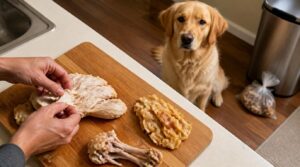
That chicken looks safe on your plate, but bones and skin turn it risky fast for your pup. Debone completely—run your fingers along every piece, checking for splinters that cause internal injury. Peel skin off too; it cuts fat and allergens. Toy breeds especially need zero bone contact. Bag bones tightly and toss them where curious noses can’t reach.
Avoiding Seasonings and Additives

That jar of garlic powder in your spice rack? Keep it far from your dog’s bowl. Garlic and onions damage red blood cells, even in small amounts.
- Skip garlic, onions, nutmeg, and mustard
- Avoid store-bought broths with hidden additives
- Say no to preservatives like sodium nitrite
- Choose unseasoned chicken, always
Fresh herb blends work fine, but check with your vet first.
Boiled Chicken for Upset Stomachs

When your pup’s stomach is off, boiled chicken is often the vet recommended bland diet fix. Simmer plain chicken breast 15-20 minutes until fully cooked, drain the fat, and shred it small.
Pair it with rice for gentle digestion support, feed small meals, and keep water nearby for hydration balance. Watch symptoms closely during recovery meal timing before returning to regular food.
How Much Chicken Can Dogs Eat?
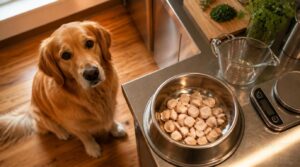
So how much chicken is actually safe for your pup? The right amount depends on your dog’s size, and a few simple rules keep things balanced. Here’s what you need to know before chicken becomes part of the daily bowl.
Serving Size by Dog Size
Since size drives calorie needs, size-based feeding guidelines matter most. Toy breeds like Chihuahuas do well with about a 1/4 cup, while small dogs (3–12 lbs) can handle up to 1 cup daily.
Medium pups fall between 1–1⅓ cups, and large breeds may need 2⅔ to 3+ cups. Giant dogs, think Great Danes, can safely reach 4 cups with moderation in pet feeding always in mind.
Chicken as a Topper
Toppers turn plain chicken into a flavor booster, not just a meal on its own.
- Protein boost: 25–44% protein, dry matter basis
- Flavor enhancement: aroma can increase intake in picky eaters
- Moisture advantage: paté styles run 60–70% moisture
- Nutrient retention: freeze-dried keeps up to 95% of nutrients
- Customizable: mix in pumpkin, rice, or blueberries at home
Portion Control Guidelines
Eyeballing portions leads to trouble, so use a kitchen scale or measuring cup for consistency.
Follow size-based feeding guidelines: extra-small dogs get about a tablespoon, extra-large dogs up to half a cup daily.
Chicken should replace part of a meal, not sit on top of it.
Keep treats under 10% of daily calories, and adjust the rest of the bowl accordingly.
Chicken Bones and Raw Chicken Dangers

Not every chicken danger comes from what’s on the plate. Some risks hide in the bones, the bacteria, or the way it’s cooked. Here’s what every dog owner needs to watch out for.
Choking and Blockage Risks
Chicken bones splinter into sharp shards that cause internal injury from foreign objects, tearing the esophagus, stomach, or intestines. Small breeds face airway obstruction, while big chewers create sharper fragments.
Fragments can migrate quietly for days before triggering intestinal obstruction or gastrointestinal upset. Bones mixed with skin, string, or foil raise choking risk further.
Skip bones entirely—always.
Bacterial Contamination Risks
Why does raw chicken carry so much risk? Testing shows Salmonella in up to 80% of raw samples, with Campylobacter present even more often. Both bacteria survive weeks in fridges, contaminate cutting boards and bowls, and spread through feces—infecting your pup and your family. Cooking to 165°F kills them fast. Skip raw entirely.
Raw chicken can carry Salmonella in up to 80% of samples, so cooking to 165°F is the only way to keep your dog—and family—safe
Fried and Processed Chicken Hazards
That drive-thru chicken nugget Fido’s begging for? Not worth it. Frying creates acrylamide and expert glycation end products, both linked to inflammation. Watch for:
- Heavy breading with hidden salt
- Grease-soaked coatings
- Garlic or onion seasoning
- Preservatives and flavor enhancers
- Excess oil triggering pancreatitis
High sodium, added fat, and ultra-processed ingredients make fried chicken a genuine health gamble, not a harmless treat.
When Chicken Should Be Avoided
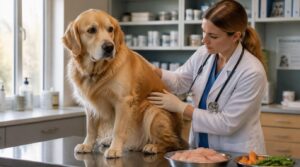
Chicken isn’t the right fit for every dog, and that’s okay. Some pups deal with allergies, health conditions, or sneaky additives that turn a safe meal into a risky one. Here’s when it’s best to leave chicken off Fido’s plate.
Dogs With Chicken Allergies
Some dogs just can’t tolerate chicken, no matter how plain you cook it. Watch for itchy skin, hair loss, or ear infections that keep coming back.
Your vet may recommend an elimination diet trial, cutting chicken for 8-12 weeks, then testing novel proteins like duck or salmon, or hydrolyzed diets, to confirm the culprit and manage things long-term.
Dogs Prone to Pancreatitis
Some pups just can’t handle fatty foods, and their pancreas pays the price. Miniature Schnauzers, Cocker Spaniels, and Poodles carry genetic risks, while obesity and diabetes add fuel. Even lean chicken can trigger trouble if paired with skin or oil.
Chronic cases need lifelong low-fat management around 15% dry matter. Skip holiday scraps entirely, they’re a common acute-episode trigger.
Toxic Additives Like Garlic
Here’s the scary part: garlic doesn’t need to be a big amount to cause garlic toxicity. A 30-pound dog reaches danger around 12 cloves, but powder concentrates things fast.
- Onion additive dangers in broths
- Garlic powder in seasoning blends
- Processed garlic extracts
- Cooked garlic (still toxic!)
- Mixed Allium foods
Akitas and Shiba Inus face extra genetic risk. When in doubt, skip it.
What to Do After a Reaction

So what happens if you give chicken a try and Fido doesn’t handle it well? Don’t panic, but don’t ignore it either. Here’s what to watch for and exactly what to do next.
Recognizing Signs of Allergies
A chicken allergy rarely shows up quietly. Watch for itchy skin, hives, or swelling around the face and paws.
Some dogs vomit or get diarrhea instead. Others develop dull, flaky coats over time.
Skin and coat health often signal a hidden food allergy or chicken intolerance before anything else does, so don’t ignore small changes that linger past a day or two.
Steps to Take Immediately
Once you spot those signs, act fast but stay calm. For mild hives or swelling, call your vet before giving anything, including antihistamines.
If your dog’s had raw chicken or bones, watch closely for vomiting, diarrhea, or lethargy over 48 hours.
Trouble breathing, drooling, or collapse means emergency care now, not later.
Consulting Your Veterinarian
Once your dog’s stable, book a visit. Your vet can run allergy testing or start an elimination diet trial, review health history, and check for pancreatitis risk.
They’ll build a custom feeding plan with a proper symptom monitoring schedule.
- Confirm true allergy vs. one-off upset
- Discuss novel proteins or prescription diets
- Get written guidance before reintroducing chicken
Vet consultation before diet change beats guessing every time.
Frequently Asked Questions (FAQs)
What three meats should dogs avoid?
Before we get to safe prep, let’s talk danger zones. Steer clear of fatty processed meats (pancreatitis risk), seasoned meats with garlic or onion toxicity, and smoked, cured, or canned high-sodium meats causing dehydration and salt poisoning.
Can I give my dog cooked chicken?
Boneless, skinless, plain cooked chicken makes a safe treat or meal topper. Boil or bake it, skip seasonings, and watch your dog’s stool consistency afterward. It’s also a common vet-recommended bland diet ingredient for tummy troubles.
What words do dogs love to hear the most?
It’s not just "treat" — food triggers like "chicken" and "dinner" spike excitement fastest, but praise words ("good boy") and play phrases ("go play") build lasting bonds through tone, training consistency, and rewarding repetition.
What foods are toxic to dogs?
Chocolate, onions, garlic, grapes, raisins, and xylitol top the toxic list. Chocolate and grapes damage organs, onion/garlic destroys red blood cells, and xylitol (in sugar-free gum) crashes blood sugar fast. Even tiny amounts can turn dangerous quickly.
Can dogs eat chicken every day?
Small daily servings of plain, unseasoned chicken are fine, but stick to 10% of daily calories. Keep the rest of the diet balanced, track portions by your dog’s size, and watch for GI upset over time.
Can dogs eat chicken if they are allergic?
If Fido’s already ruffled by chicken, skip it entirely. Once diagnosed, permanent removal from food and treats is required, since chicken allergies don’t fade with time, and reintroducing it risks flaring symptoms right back up.
Can dogs eat chicken bones?
No, never give bones. They’re brittle and splinter easily, risking choking, torn intestines, or blockages. Raw bones also carry bacteria like Salmonella. Instead, offer plain cooked chicken pieces, and always ask your vet before changing your pup’s diet.
Is chicken good for dogs?
Yes, plain cooked chicken is a genuinely nutritious protein source, offering over 90% digestibility, muscle-supporting amino acids, and B vitamins for energy metabolism. It’s why so many dog foods use it. Still, check with your vet before adding it regularly.
Can one eat chicken while on a diet?
Think of chicken as the tortoise in the race: slow, steady, and diet-friendly. Skinless, plain, and grilled, it delivers lean protein with minimal calories, supporting portion control and calorie management without slowing your weight goals down.
Can dogs eat chicken without problems?
In most cases, absolutely, as long as it’s plain, boiled chicken without skin or bones. Introduce it gradually, watch for a digestive tolerance check (loose stool or itching), and keep unseasoned, cooked chicken to occasional meals, not a daily habit.
Conclusion
That chicken dance by the cutting board isn’t just cute, it’s Fido’s honest opinion on dinner.
So can dogs eat chicken? Yes, when it’s plain, cooked, and boneless. Skip the skin, skip the seasoning, and skip the guesswork.
Keep portions modest, roughly 10% of daily calories, and watch closely for any reaction.
Do that, and chicken stays what it should be: a safe, simple protein boost your pup can count on, meal after meal, for years to come.
- https://www.petmd.com/dog/nutrition/what-to-do-if-your-dog-ate-a-chicken-bone
- https://www.airvet.com/blog/is-it-safe-for-my-dog-to-eat-chicken-bones-and-other-kinds-of-bones
- https://boldbynature.com/advice/are-raw-chicken-bones-good-for-dogs
- https://rawfeeding101.com/blogs/dog-nutrition/can-dogs-eat-raw-chicken-bones
- https://www.foundersvet.com/home_cooking.htm