This site is supported by our readers. We may earn a commission, at no cost to you, if you purchase through links.
Your dog stares you down mid-dinner, and those rice noodles suddenly feel like a negotiation. It’s a familiar moment—and before you cave, it’s worth knowing what you’re actually handing over.
Dogs can eat rice noodles in small amounts, but the details matter more than the simple yes. Plain, cooked, and portioned correctly, they’re a harmless occasional treat. Add a sauce, seasoning packet, or a generous serving, and the story changes fast.
What makes rice noodles safe, what makes them risky, and how to serve them the right way—it’s all worth understanding before your dog cleans the bowl.
Table Of Contents
- Key Takeaways
- Can Dogs Eat Rice Noodles?
- Are Rice Noodles Safe for Dogs?
- Nutritional Value of Rice Noodles for Dogs
- Risks and Concerns of Feeding Rice Noodles
- How to Safely Serve Rice Noodles to Dogs
- Healthier Alternatives to Rice Noodles for Dogs
- Frequently Asked Questions (FAQs)
- When to stop feeding a dog three times a day?
- Can dogs have ketchup?
- Can dogs eat rice noodles?
- What are the nutritional benefits of rice noodles for dogs?
- How can rice noodles be prepared for dogs?
- Are there any precautions to take when feeding dogs rice noodles?
- Can rice noodles be part of a balanced diet for dogs?
- Can rice noodles help a dogs upset stomach?
- What dogs should never eat rice noodles?
- How do rice noodles affect diabetic dogs?
- Conclusion
Key Takeaways
- Plain, cooked rice noodles are safe for dogs in small amounts, but they’re low in protein, healthy fats, and essential nutrients, so treat them as an occasional snack rather than a meal.
- Sauces, seasonings, and flavor packets turn a harmless noodle into a real danger—just one tablespoon of soy sauce already blows past your dog’s entire daily sodium limit.
- Dogs with diabetes, obesity, or yeast-related conditions should skip rice noodles entirely, since the high carbohydrate content causes fast blood sugar spikes that are hard to manage.
- If you want to boost the nutritional value, pair a small portion of plain rice noodles with dog-safe mix-ins like cooked chicken, carrot pieces, or green beans—and always check with your vet before making any diet changes.
Can Dogs Eat Rice Noodles?
Yes, dogs can eat rice noodles — but only in small amounts and only plain. As a veterinary nutritionist, I get this question a lot, especially from pet owners who want to share a little of what’s on their plate.
That said, plain ramen noodles follow the same rules — dogs can occasionally eat ramen noodles without seasoning, but the broth and flavor packets are a hard no.
The short answer is that plain, cooked rice noodles aren’t toxic to dogs. They can even work as an occasional training reward when you keep portions tiny.
That said, rice noodles don’t offer much regarding dog nutrition and health. They’re mostly carbohydrates, with very little protein, vitamins, or minerals your dog actually needs. So think of them as an infrequent treat, not a staple — and always keep veterinary guidance in mind before introducing any new food.
Rice is noted for being gentle on sensitive stomachs, making it a suitable carbohydrate source for dogs with digestive issues.
Are Rice Noodles Safe for Dogs?
The short answer is yes — plain rice noodles are generally safe for dogs.
But details really do matter here.
A few key things are worth looking at before you share a bowl with your pup.
Ingredients in Rice Noodles
Rice noodles keep things simple — and actually good news for your dog. Most are made from just a few ingredients:
- Rice flour (80–90% of the mix)
- Tapioca starch for chewiness
- Water, a small salt level, and minimal oil usage
Unlike pasta with wheat flour, eggs, or hidden garlic and onion, plain rice noodles carry far fewer risks. They also provide a modest amount of fiber, about 2 g per cup, which helps digestion and demonstrates low fiber content.
Potential Harmful Additions (Sauces, Spices)
Plain noodles are fine, but the moment you add sauce, things get risky fast.
Soy sauce sodium alone can hit 1,000 mg per tablespoon — way more than your dog’s 200 mg daily limit. Garlic toxicity and onion powder risks are equally serious, damaging red blood cells over time. MSG neurotoxicity and chili spice irritation round out the dangers. Always keep it plain.
Soy sauce alone exceeds your dog’s daily sodium limit in a single tablespoon
How Rice Noodles Compare to Other Noodles
Compared to wheat pasta or udon, rice noodles are actually a gentler choice for dogs. They’re naturally gluten-free, lower in calorie density at about 108 calories per 100 grams, and easier on sensitive stomachs. Their digestibility ease makes them friendlier for canine diet and nutrition overall.
If you’re weighing pasta options for your pup, this guide on safe noodles and spaghetti for dogs breaks down exactly which types to avoid and why rice-based options tend to win out.
The tradeoff? Much lower protein levels — roughly 3 grams per cup versus 7–9 in wheat-based options.
Nutritional Value of Rice Noodles for Dogs
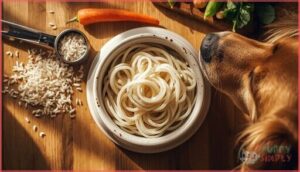
Rice noodles aren’t completely empty regarding nutrition, but they’re not exactly a powerhouse either.
For dogs, what’s inside those noodles matters — and so does what’s missing.
Here’s a closer look at what rice noodles actually bring to the bowl.
Carbohydrates and Energy
Most of what’s in a rice noodle is carbohydrates — about 24 grams per 100g cooked. That’s a lot of quick energy in a small serving.
Your dog’s body breaks down those carbs into blood glucose, which fuels muscles and brain function. But the glycemic index is fairly high, so carb loading with noodles too often isn’t ideal for dog nutrition.
Vitamin and Mineral Content
Nutrition here is honestly pretty thin.
Rice noodles carry trace amounts of vitamin B6, which does support healthy skin and coat, and a small selenium antioxidant role for cell protection.
But the trace mineral profile is modest at best — low calcium levels, minimal vitamin A presence, and barely any B12.
For real canine nutrition and your dog’s full nutritional needs, these numbers won’t move the needle much.
Lack of Essential Dog Nutrients
The real gap comes down to what rice noodles simply can’t provide for canine nutrition and diet.
Your dog’s essential nutrients are mostly missing here:
- Protein Deficiency — only 1.8g per 100g, far below what dogs need
- Fat Deficiency — almost zero omega fatty acids for skin and brain health
- Amino Acid Gaps — low lysine and methionine compromise taurine synthesis
- Fiber Shortage — barely enough to support healthy digestion
These nutritional needs matter more than most owners realize. Taurine deficiency alone links to serious heart issues, making dietary restrictions essential when feeding rice noodles regularly.
Risks and Concerns of Feeding Rice Noodles
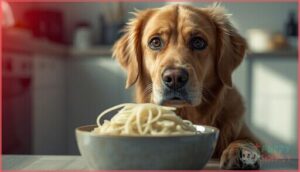
Rice noodles might seem harmless, but there are a few things worth knowing before you share them with your dog.
Too much of even a safe food can cause real problems, and noodles are no exception.
Here are the main risks to keep in mind.
Digestive Upset and Allergies
Even plain rice noodles can stir up canine digestive issues in some dogs. First-timers may experience gas and bloating, soft stools, or mild gastrointestinal issues within hours.
Dogs with food allergies and sensitivities may show immune reactions like skin itching or chronic diarrhea. If symptoms persist, an elimination diet followed by veterinary testing can help pinpoint whether your dog has a true rice allergy or sensitivity.
Risk of Weight Gain and Obesity
Carb-heavy extras can sneak up on your dog’s waistline faster than you’d expect. Cooked rice noodles pack around 100–110 calories per 100 grams, and your dog’s body condition and activity level determine how quickly that tips into a calorie surplus.
long-term obesity prevention, keep these in mind:
- Limit noodles to under 10% of daily calories
- Monitor weight monthly
- Adjust portions based on energy output
Dangers of Instant or Flavored Noodles
Instant noodles — think ramen noodles — are a completely different story from plain rice noodles.
Flavor packets hide onion and garlic powders that trigger onion‑garlic poisoning, while sky‑high salt levels can cause sodium toxicity in even medium‑sized dogs. Fried‑fat pancreatitis is another real risk from oily noodle blocks. Some sauces contain MSG neurotoxicity triggers or hidden xylitol danger. Keep these away entirely.
How to Safely Serve Rice Noodles to Dogs
If you’ve decided to share rice noodles with your dog, how you prepare and serve them makes all the difference.
A few simple steps can keep things safe and easy on their stomach.
Here’s what to keep in mind before you start.
Proper Preparation Methods

Preparing plain cooked noodles for your dog is simpler than you’d think. Follow these four steps for safe results:
- Use a 10:1 water ratio and boil for 2–5 minutes.
- Skip all salt, oils, and spices.
- Do a quick cooling rinse, then cut into 1–2 inch pieces.
- Refrigerate leftovers up to 3 days.
That’s all it takes to make rice noodles a safe food for your pet.
Portion Size and Frequency

Once your noodles are ready, portion size matters more than you might expect. Weight-based servings keep things safe — a small dog under 20 pounds does well with just 1 to 2 tablespoons, while larger dogs can handle up to half a cup.
Calorie tracking helps too, since rice noodles should never exceed 10% of daily intake. Aim for once or twice weekly, spacing servings a few days apart.
Safe Mix-Ins (Vegetables, Lean Proteins)
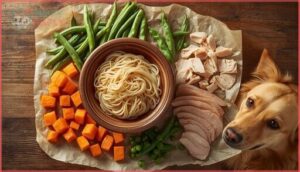
Plain rice noodles get a real nutrition boost when you add the right mix-ins.
Carrot cubes, green bean slices, or plain peas add fiber and vitamins without overwhelming your dog’s system.
For protein, chicken shreds, turkey bits, or lean beef strips work beautifully — just skip the seasoning entirely.
These safe foods for dogs support canine health and meet your pup’s basic dietary needs without any fuss.
Healthier Alternatives to Rice Noodles for Dogs

Rice noodles are fine as an occasional treat, but there are better options if you want to give your dog something that actually does them some good. A few simple, dog-friendly foods can offer more nutrition without the extra carbs.
Here are some healthier alternatives worth considering.
Brown Rice and Whole Grains
Brown rice is one of the best safe foods for dogs when you want a carb that actually does something. Unlike rice noodles, it brings real fiber benefits, solid mineral content, and a strong vitamin profile to your dog’s bowl.
- Fiber: Promotes healthy digestion and gut balance
- Minerals: Manganese and magnesium for bones and muscles
- Gluten-free options: Oats and millet work great for sensitive dogs
Follow portion guidelines — about 1–4 tablespoons depending on size.
Sweet Potatoes and Other Safe Carbs
Sweet potatoes are a powerhouse swap worth knowing about. They deliver a Vitamin A Boost through beta‑carotene, plus Fiber Benefits and Digestive Support, which your dog’s gut will thank you for. As part of Healthy Eating for Dogs, they check all the right boxes for Dog Nutrition and Dietary Needs and Restrictions.
| Safe Carb | Key Benefit |
|---|---|
| Sweet Potato | Vitamin A, fiber, Low Glycemic Energy |
| Pumpkin | Digestive Support, low‑calorie |
| Quinoa | Complete protein, Food Safety for Pets |
| Oatmeal | Slow Carbohydrates, gut health |
Portion Guidelines based on your dog’s size.
Consulting a Veterinarian for Dietary Changes
Before you overhaul your dog’s bowl, loop in your vet. A quick consultation covers vet diet history, allergy screening, and nutrient gap analysis — so nothing slips through.
Your vet can also map out a changeover timeline and weight management plan customized to your dog’s needs. That’s responsible pet ownership in action, and honestly, it’s the smartest move you can make for your dog’s long-term health.
Frequently Asked Questions (FAQs)
When to stop feeding a dog three times a day?
Most dogs stop three meals a day between 4 and 6 months, but breed size guidelines matter.
Always veterinary advice and watch for growth benchmark markers like stable energy and consistent digestion.
Can dogs have ketchup?
Ketchup isn’t safe for your dog. It contains onion powder, excess sugar, and high sodium — all harmful to canine nutrition. Skip it and stick to plain, dog-approved foods instead.
Can dogs eat rice noodles?
Yes, your dog can eat plain cooked noodles in small amounts.
Rice noodles are a safe occasional treat when served without seasoning, but they offer minimal canine nutrition and shouldn’t replace regular meals.
What are the nutritional benefits of rice noodles for dogs?
Like a light snack between meals, rice noodles offer low fat energy, gluten‑free carbs, and trace selenium antioxidant support — modest additions to a balanced canine diet, but never a nutritional cornerstone.
How can rice noodles be prepared for dogs?
Boil plain rice noodles in water for four to six minutes, drain, and chop into bite-sized pieces. Let them cool to room temperature before serving your dog.
Are there any precautions to take when feeding dogs rice noodles?
Always serve rice noodles plain — seasoning avoidance is non‑negotiable.
Check the temperature before serving, watch for allergies, respect portion limits, and get veterinary advice if your dog has gluten intolerance or any underlying health concerns.
Can rice noodles be part of a balanced diet for dogs?
Rice noodles are more like a side dish than a meal — they can’t anchor your dog’s diet.
Canine nutrition demands protein supplementation, healthy fats, and balanced vitamins that rice noodles simply don’t deliver.
Can rice noodles help a dogs upset stomach?
Plain rice noodles can gently soothe a dog’s upset stomach.
As a low‑fat relief option and gentle carb source, they work well as a bland meal pairing alongside plain poached chicken.
What dogs should never eat rice noodles?
Dogs with diabetes, obesity, arthritis, or yeast issues should never eat rice noodles. The high glycemic index spikes blood sugar fast. Arsenic contamination adds long-term risk you shouldn’t ignore.
How do rice noodles affect diabetic dogs?
For a diabetic dog, rice noodles can cause a rapid glycemic spike, increasing insulin demand and blood sugar variability.
Their high carbohydrate load makes weight management harder, so low-carb diets and careful pet nutrition planning are essential.
Conclusion
The best things come in small doses—and that holds true when you’re asking whether dogs can eat rice noodles.
Plain, cooked, and unseasoned, they’re a harmless occasional bite, not a meal replacement.
Your dog’s diet still needs to be built around real nutrition, not table scraps dressed up as treats.
Keep portions small, skip the sauces, and when in doubt, ask your vet.
A little mindfulness at mealtime goes a long way.
- https://isitsafeformydog.com/rice-noodles/
- https://furrygreen.hk/blogs/blog/can-dogs-eat-noodles-a-complete-safety-guide-for-pet-parents
- https://www.dialavet.com/vet-answers/dog-ate-rice-noodles-11045
- https://www.eatthismuch.com/calories/rice-noodles-4887?a=0.5681818181818182%3A0
- https://www.petmd.com/dog/nutrition/can-dogs-eat-rice