This site is supported by our readers. We may earn a commission, at no cost to you, if you purchase through links.

A scrap of onion hitting the kitchen floor takes less than a second—and less than a second for a curious dog to snap it up. Most owners don’t panic. It’s just an onion.
But dogs can’t eat onions raw, and the danger isn’t about upset stomachs. Onions contain organosulfur compounds that systematically destroy red blood cells, and even a modest amount can trigger hemolytic anemia in a medium-sized dog.
The damage often builds silently before any visible symptom appears. Knowing exactly what happens—and how fast—can change how you respond.
Table Of Contents
- Key Takeaways
- Can Dogs Eat Onions Raw?
- Why Are Onions Toxic to Dogs?
- How Much Raw Onion is Dangerous for Dogs?
- Symptoms of Raw Onion Poisoning in Dogs
- What to Do if Your Dog Eats Raw Onion
- How Veterinarians Diagnose Onion Toxicity
- Treatment Options for Onion Poisoning
- Preventing Onion Toxicity in Dogs
- Frequently Asked Questions (FAQs)
- How much onion is toxic to a 35 lb dog?
- Can dogs eat onions?
- Is it bad to eat a lot of onion?
- Can dogs eat onion rings?
- Can a 45 pound dog eat an onion?
- Are onions toxic to dogs?
- Can dogs eat mashed onions?
- What happens if my dog eats a little bit of onions?
- How much onion is toxic to a 10lb dog?
- Will one onion ring hurt my dog?
- Conclusion
Key Takeaways
- Onions destroy your dog’s red blood cells through sulfur compounds that survive cooking, meaning cooked, raw, and powdered forms are equally dangerous.
- The toxic threshold is just 0.5% of your dog’s body weight — for a small dog, that’s barely a tablespoon of raw onion.
- Symptoms like lethargy, pale gums, and dark urine typically don’t appear until days three to five, so damage is already serious by the time you notice anything.
- If your dog eats any amount of onion, log the time, estimate how much they ate, and contact your vet immediately — early action before day three dramatically improves survival odds.
Can Dogs Eat Onions Raw?
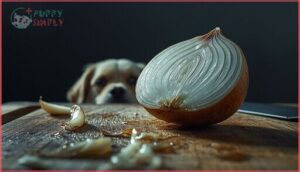
No — dogs can’t eat raw onions, and there’s no safe amount to offer.
Even a small amount can cause real harm, so it’s worth reading up on why onions are toxic to dogs and what to do if they eat one.
Raw onion triggers onion toxicity in dogs regardless of variety: white, yellow, red, or sweet.
All belong to the Allium family, and all carry the same risk.
Even a single medium onion can push a 20‑kilogram dog into a dangerous dose.
Owner awareness campaigns often focus on obvious hazards, but raw onion slips in quietly — through cross contamination risks in shared prep areas, or leftovers without proper ingredient label checking.
Symptoms and treatment depend heavily on how much was eaten, which is why prevention starts with you.
A toxic dose for dogs can be as low as 25 g for a 10 kg dog.
Why Are Onions Toxic to Dogs?

Onions don’t just upset your dog’s stomach — they attack the blood. A few specific compounds are responsible, and understanding them helps explain why even small amounts matter.
Here’s what’s actually happening inside your dog’s body.
Toxic Compounds in Onions
Two main culprits make onions dangerous: N-propyl disulfide and thiosulfate oxidants. Both are sulfur compounds from the allium genus — think onions, garlic, leeks, and chives.
These compounds survive cooking at temperatures up to 200°C, so cooked onions aren’t safer. Sulfide concentration also varies by variety; powdered onion delivers five times more toxicity per gram than fresh, making hidden ingredients especially risky.
This can cause Allium spp toxicosis, leading to hemolytic anemia in dogs.
How Onions Damage Red Blood Cells
Once those sulfur compounds enter your dog’s bloodstream, the damage moves fast.
N-propyl disulfide triggers Heinz Body Formation — basically clumping denatured hemoglobin inside red blood cells. Glutathione Depletion follows, stripping away your dog’s natural antioxidant defenses. Membrane Oxidative Damage stiffens the cell walls. Methemoglobin Production cuts oxygen delivery.
The Hemolysis Timeline peaks around day three to five — that’s full hemolytic anemia.
Cooking Vs. Raw Onion Toxicity
Here’s the hard truth: cooking doesn’t neutralize onion toxicity. Heat stability is the problem — N-propyl disulfide survives boiling, frying, and roasting unchanged.
Cooked onions carry identical toxin concentration to raw. Worse, some cooking methods increase absorption rate. Fried onions release fat-soluble sulfides faster. Dehydrated powders hit fivefold formulation potency.
Raw onions, cooked onions — both cause the same hemolytic damage.
How Much Raw Onion is Dangerous for Dogs?

There’s no “safe” amount regarding onions and dogs — even a small piece can start causing damage. The toxic threshold is lower than most people expect, and several factors affect just how dangerous a dose really is.
Here’s what you need to know.
Toxic Dose Thresholds
Even a small amount of raw onion can cross the line fast. The toxic dose threshold sits at just 0.5% of your dog’s body weight — that’s the Percent Bodyweight Limit guiding every safety margin recommendation.
- A 10 kg dog: dangerous at ~50g raw onion
- Small breeds under 5 kg: at risk from just 25g
- Onion powder’s Powder Potency Multiplier means it’s ~10x more concentrated than fresh
Use a Size-Based Dose Chart to understand your dog’s specific risk. The dose-response relationship is steep — there’s almost no safe buffer with onion toxicity.
Cumulative Effects of Small Exposures
Small daily scraps are deceptively dangerous. Cumulative toxicity builds through Heinz Body Buildup — where N-propyl disulfide repeatedly denatures hemoglobin, triggering Progressive RBC Damage before any symptoms appear.
Even small daily onion scraps silently accumulate, destroying red blood cells before a single symptom appears
Delayed Anemia Onset means you won’t notice trouble until days 3–5. Subtle Symptom Development follows: mild lethargy, pale gums, dark urine. Recovery Timeline stretches 3–4 weeks.
You don’t need to hit toxic dose thresholds for dogs all at once.
Breed and Size Sensitivities
Your dog’s size shapes their risk more than you might think.
- A 3 kg small breed hits the toxic dose with just 15 grams — barely a tablespoon
- Small breed risk is highest because kitchen scraps represent a disproportionate dose
- Large breed exposure requires more onion, but they can gulp leftovers fast
- Puppy vulnerability is elevated due to low body weight and immature systems
- Senior dog sensitivity increases with age-related anemia or kidney disease
HK blood traits — a hereditary condition affecting red cell glutathione — make certain dogs dangerously reactive at doses other dogs tolerate.
Half a percent of a dog’s body weight is the threshold.
That’s not much.
Breed susceptibility to food toxins is real, and onion poisoning in dogs doesn’t discriminate by size alone.
Symptoms of Raw Onion Poisoning in Dogs
Onion poisoning doesn’t always look dramatic at first — the signs can be subtle enough to miss if you don’t know what you’re watching for. Symptoms tend to show up in stages, starting mild and turning serious as your dog’s red blood cells break down.
Here’s what to look for at each point.
Early Warning Signs

The first 24 hours after onion ingestion can look deceptively mild — but your dog is already in trouble. Watch for vomiting, diarrhea, and reduced appetite early on.
Drooling and salivation signal oral irritation. Abdominal tenderness may show as belly stiffness or restlessness. Weakness and unusual panting can appear before anemia is visible.
| Early Sign | What to Watch For |
|---|---|
| Pale Gums | White or grayish tint instead of pink |
| Rapid Heart Rate | Fast pulse even at rest |
| Drooling & Vomiting | Nausea within hours of ingestion |
Advanced Symptoms of Toxicity

If early signs go untreated, things escalate fast. Hemolytic anemia deepens — red blood cells keep breaking apart, and the body can’t compensate. Here’s what severe toxicity looks like:
- Dark urine (hemoglobinuria): Kidneys filter free hemoglobin, turning urine reddish-brown.
- Jaundice: Yellow-tinted gums signal dangerous bilirubin buildup.
- Rapid heart rate and labored breathing: The heart races to deliver dwindling oxygen.
- Collapse and neurological depression: Brain oxygen drops, causing disorientation, weakness, and cardiovascular collapse.
Timeline of Symptom Development

Timing matters here. Initial GI upset — vomiting, drooling, diarrhea — signals symptom onset within hours.
Heinz body formation begins by day one, quietly damaging red blood cells before clinical signs appear.
Anemia onset follows around days three to five, with peak hemolysis hitting hardest by day five.
That’s when collapse risk surges. Early veterinary intervention before day three dramatically improves outcomes.
Recovery monitoring continues for 48–72 hours post-peak.
What to Do if Your Dog Eats Raw Onion

Finding onion in your dog’s mouth — or realizing they got into the scraps — is a gut-drop moment.
The good news is that acting quickly makes a real difference.
Here’s exactly what to do, step by step.
Immediate Actions to Take
The moment you realize your dog has eaten raw onion, act fast — but stay calm. Secure Kitchen Access immediately: close off the trash, counter, and any contaminated area.
Mouth Residue gently with a damp cloth. Log Ingestion Time precisely, because vets use this to guide treatment.
Then Contact Poison Hotline or your veterinarian right away. Don’t induce vomiting or give activated charcoal without professional direction — both require clinical oversight.
Determining Amount Ingested
Once you’ve secured the area, figure out how much your dog actually ate. Portion Size Estimation helps here — compare missing pieces to a whole onion.
A medium onion weighs roughly 150 grams, so a missing third equals about 50 grams.
For cooked dishes, use Recipe Onion Content from the recipe itself.
Food Log Tracking and Weight‑Based Dosage calculations help determine whether the onion amount ingested approaches the toxic dose threshold of 0.5% of a dog’s body weight.
When to Contact a Veterinarian
Once you know the amount ingested, it’s time to decide how fast to act. Contact your veterinarian immediately if your dog shows any of these symptoms of onion toxicity:
- Persistent vomiting, severe lethargy, or elevated heart rate
- Blood in urine or dark discoloration
- Sudden collapse or loss of coordination
Don’t wait — urgent veterinary attention and proper veterinary diagnosis can save your dog’s life.
How Veterinarians Diagnose Onion Toxicity

When you bring your dog in after a suspected onion exposure, your vet won’t just take your word for it — they’ll follow a clear diagnostic process. That process gives them the full picture of what’s happening inside your dog’s body.
Here’s what that usually looks like.
Physical Examination and History
When your vet suspects onion poisoning, the exam moves quickly and deliberately. They’ll start with a mucous membrane check — pale or yellowed gums signal red blood cell damage.
Pulse quality assessment reveals how hard the heart is compensating. Abdominal palpation findings can uncover tenderness from gut irritation.
Equally important: an exposure timeline inquiry and breed susceptibility evaluation help shape the full veterinary diagnosis before bloodwork begins.
Blood Tests and Anemia Markers
Bloodwork tells the real story of what onions are doing inside your dog. A CBC reveals total red blood cell count, hemoglobin depletion, and Packed Cell Volume, which can drop sharply within days.
Your vet will also check:
- Reticulocyte Count — measures bone marrow’s recovery response
- Heinz Body Smear — identifies damaged red blood cells
- Methemoglobin Levels — detects early oxidative hemoglobin damage
- Urine Hemoglobin — confirms internal red cell destruction
Monitoring and Follow-Up Care
Once your dog is stable, monitoring doesn’t stop at discharge. Key Sign Checks — heart rate, breathing, gum color — happen several times daily during hospitalization.
Veterinary care continues at home too: watch urine color tracking for dark or reddish changes, and note Activity Level Assessment and appetite twice daily.
Lab Re-evaluation with bloodwork and CBC usually happens 3–5 days post-exposure, then again at 7–10 days.
Treatment Options for Onion Poisoning

Once your vet confirms onion poisoning, treatment moves quickly — and the approach depends on how much your dog ate and how soon you caught it.
There’s no single fix, but there are clear steps that can make a real difference.
Here’s what treatment generally looks like.
Inducing Vomiting and Activated Charcoal
Time matters most here. Induced vomiting works best within two hours of ingestion — after that, toxins move past the stomach.
Hydrogen Peroxide Dosing follows a simple rule: 1 ml per pound, capped at 45 ml. If that fails, Apomorphine Administration is the clinical next step.
Activated charcoal follows to trap remaining toxins, though Charcoal Aspiration Risk is real — never rush it.
Supportive Care and Fluids
Once vomiting is under control, supportive care becomes your dog’s lifeline. IV Fluid Rates are carefully calibrated — often 2 to 4 times normal maintenance — to protect the kidneys and restore Electrolyte Balance. Your emergency vet will also apply Antiemetic Protocols to reduce nausea. Kidney Monitoring checks urine output every few hours. Expect fluid therapy to run 24 to 72 hours, with Nutritional Support introduced once stabilized.
- IV fluids flush hemoglobin from the kidneys
- Anti-nausea medications like maropitant prevent further dehydration
- Urine output targets at least 1–2 mL/kg/hour
- Electrolyte solutions correct imbalances caused by red blood cell destruction
Blood Transfusions in Severe Cases
When hemolytic anemia drives Packed Cell Volume below 15%, blood transfusions become necessary — not optional. Your emergency vet will run DEA Compatibility Testing first to prevent dangerous reactions.
Packed red cells are given at 6–10 ml/kg, following strict Transfusion Rate Guidelines. Platelet Rich Plasma manages clotting complications.
Post-Transfusion Monitoring tracks vitals every 30 minutes, catching delayed hemolysis early. Supportive care continues throughout.
Preventing Onion Toxicity in Dogs

Prevention is simpler than treatment — and it starts with a few practical habits. Most cases of onion toxicity are entirely avoidable with the right precautions in place.
Here’s what you can do to keep your dog safe.
Keeping Onions Out of Reach
Prevention strategies for pet owners start with thinking like your dog—curious, nose-first, and surprisingly resourceful.
High shelf storage keeps onions above jumping reach. Secure cabinet latches block counter-surfing. Garden fencing barriers protect outdoor beds. Locked trash containers eliminate scrap access. Counter surfing blocks during meal prep close the final gap.
Preventing onion ingestion requires layering these defenses—not relying on just one.
Safe Food Alternatives for Dogs
Once your kitchen is secured, stock it with genuinely safe options.
Carrot sticks scrape plaque and deliver vitamin A.
Blueberry bites offer antioxidants that support aging brains.
Apple slices provide fiber — just remove seeds first.
Turkey chunks supply lean protein for muscle repair.
Plain oatmeal porridge aids digestion gently.
These safe food alternatives for dogs prove your dog’s diet doesn’t need toxic foods for dogs anywhere near the bowl.
Educating Family and Caregivers
Safe snacks handle one side of the equation — but your household has to handle the other.
Clear rule communication starts with one non‑negotiable: no onions, ever, in any form.
- Post Visual Safety Charts on the fridge listing unsafe foods.
- Give sitters Caregiver Checklists covering storage, feeding, and onion poisoning symptoms in dogs.
- Leave Emergency Contact Cards with your vet and Pet Poison Helpline numbers.
- Practice Role‑Play Scenarios with kids so “no” becomes instinct, not hesitation.
Swift veterinary care for poisoned dogs saves lives — preparation saves you from needing it.
Frequently Asked Questions (FAQs)
How much onion is toxic to a 35 lb dog?
For a 35 lb dog, the toxic dose starts around 80 grams — roughly half a percent of body weight. That’s less than one medium onion.
Even small repeated amounts trigger onion poisoning in dogs.
Can dogs eat onions?
No, dogs can’t eat onions — not raw, cooked, or powdered. Veterinary toxicology research confirms every form causes onion toxicity. The entire Allium family risks your dog’s red blood cells.
Is it bad to eat a lot of onion?
Yes — too much onion causes digestive irritation, blood thinning, and nutrient overload even in humans.
For dogs, though, any amount risks red blood cell damage, onion toxicity, and symptoms requiring emergency care.
Can dogs eat onion rings?
No, onion rings are off-limits for dogs.
The fried batter risks and oil pancreatitis aside, every ring still carries onion toxicity — enough to damage red blood cells and trigger serious symptoms.
Can a 45 pound dog eat an onion?
No, a 45 pound dog can’t safely eat an onion. The 102g toxicity threshold sits well below a single medium onion — making even casual scraps a real cumulative risk.
Are onions toxic to dogs?
Absolutely — onion toxicity in dogs is real and serious. These vegetables damage red blood cells through thiosulfate compounds, triggering hemolytic anemia.
Symptoms range from lethargy to collapse. Treatment depends on how much your dog ate.
Can dogs eat mashed onions?
No, mashed onions are just as toxic as raw ones. Cooking doesn’t neutralize thiosulfate compounds — the hidden onion dishes most dangerous because dogs can’t smell or taste the difference.
What happens if my dog eats a little bit of onions?
Even a small bite triggers N-propyl disulfide to begin oxidative stress in red blood cells.
Subclinical hemolysis starts silently — lethargy onset, appetite loss, and urine color change may follow within days.
How much onion is toxic to a 10lb dog?
For a 10 lb dog, toxic dose thresholds for dogs start around 22–23 grams — less than a quarter of a medium onion. That’s a dangerously small safety margin.
Will one onion ring hurt my dog?
One onion ring likely won’t cause serious red blood cell damage in a medium or large dog.
Still, monitor closely and call a veterinary hotline if your dog is small or showing any symptoms.
Conclusion
Think of onion toxicity like a slow leak in a tire—by the time you notice the flat, the damage is already done. Dogs can’t eat onions raw without risk, and even small amounts accumulate quietly before symptoms surface.
You don’t need to fear every kitchen moment, but you do need to act fast when it counts. Know the signs, trust your instincts, and never hesitate to call your vet.
- https://vetster.com/en/conditions/dog/onion-poisoning-allium-toxicosis-in-dogs
- https://gsvs.org/blog/onion-toxicity-dogs-emergency/
- https://www.pdsa.org.uk/pet-help-and-advice/pet-health-hub/conditions/onion-and-garlic-poisoning-in-dogs
- https://wagwalking.com/condition/onions-poisoning
- https://pubmed.ncbi.nlm.nih.gov/9533293/