This site is supported by our readers. We may earn a commission, at no cost to you, if you purchase through links.

A single pistachio might look harmless on the kitchen floor, but for your dog, it holds a world of risks hidden behind that familiar green shell.
These tiny nuts have fueled debates in every dog lover’s home—one side swears a nut or two never hurt, the other has tales of midnight vet calls and upset stomachs. Understanding can dogs eat pistachio goes beyond a yes or no; it means knowing what makes these nuts tricky for pups and how to keep snack time both safe and satisfying for everyone at home.
Table Of Contents
- Key Takeaways
- Can Dogs Eat Pistachios?
- What Are Pistachios?
- Are Pistachios Safe for Dogs?
- Health Risks of Pistachios for Dogs
- Symptoms of Pistachio Consumption in Dogs
- What to Do if Your Dog Eats Pistachios
- Can Puppies Eat Pistachios?
- How to Prevent Pistachio Ingestion
- Safe Alternatives to Pistachios for Dogs
- Veterinary Recommendations for Dog Treats
- Frequently Asked Questions (FAQs)
- Are pistachios bad for dogs?
- Can dogs eat chili pistachios?
- What should I do if my dog ate pistachio nuts?
- How many pistachios can a dog eat a day?
- Can dogs eat pistachio ice cream?
- Can dogs eat pistachios from Aspergillus mold?
- What happens if a dog eats pistachios?
- What nuts are toxic to dogs?
- Can dogs have almonds or pistachios?
- Are pistachios safe for puppies?
- Conclusion
Key Takeaways
- Pistachios are not toxic to dogs, but their high fat content and hard shells can cause choking hazards, digestive upset, or pancreatitis.
- Salted, flavored, or moldy pistachios add extra dangers like sodium overload, allergic reactions, and aflatoxin poisoning.
- Puppies and small dogs face higher risks from pistachios due to sensitive digestion and greater choking hazards.
- For safe snacking, stick with dog-friendly treats like plain fruits or vet-approved protein options rather than pistachios.
Can Dogs Eat Pistachios?
Curiosity is natural regarding sharing snacks with your dog—especially something as tempting as pistachios. While these nuts might seem harmless, pet safety comes first.
For a closer look at the risks and what safe snacking actually means, check out this detailed guide on dogs and pistachios Can Dogs Eat Pistachios? Dangers & Benefits Explained.
Pistachios aren’t toxic, but they bring risks: from choking hazards and pancreatitis to digestive trouble and even pistachio allergy. Their nutritional value is overshadowed by their fat and calorie content, which dogs don’t need.
When you think about healthy snacks, it’s best to look for options designed for your dog’s digestion and well-being. To better understand potential concerns and precautions, review the detailed pistachio safety advice for dogs.
What Are Pistachios?
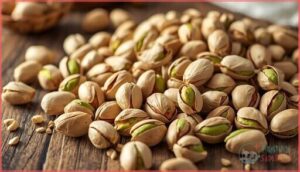
Pistachios are a familiar snack, but there’s more to them than meets the eye.
Before you decide if they’re right for your dog, it’s helpful to understand their background and nutritional value.
Let’s take a closer look at what pistachios offer and how they’re commonly used.
Nutritional Profile of Pistachios
A closer look at pistachios reveals a rich tapestry of nutrients. Their caloric value sits high, with 100 grams packing over 550 calories, mostly from healthy fats. The fat content leans toward monounsaturated and polyunsaturated types, supporting heart health in people but making them risky for canine nutrition.
Pistachios bring a notable macronutrient content: protein, fiber benefits, and a low glycemic load. Mineral density runs deep, especially in potassium and magnesium. Add to this their antioxidant properties—which fight cell damage—and you can see why their nutritional value tempts dog owners.
Yet, nut toxicity in dogs remains a real concern. For more detail on the nutrition attributes of pistachios, see recent scientific studies.
Pistachio Origins and Common Uses
While pistachios offer notable nutritional benefits for people, their story begins thousands of years ago in the Middle East and Central Asia. Pistachio history is rich with cultural significance, from ancient Babylonian gardens to the silk routes of trade.
Today, orchards in California, Iran, and Turkey keep this tradition alive, making pistachios a global snack and key ingredient in foods like baklava and ice cream. For dogs, though, culinary uses that seem harmless—like pistachio shells or mixed nuts—pose real pistachio consumption risks, including nut toxicity in animals and complications for canine nutrition.
Are Pistachios Safe for Dogs?

Before you let your dog snack on pistachios, there are a few important safety factors to think about. Not all pistachios are created equal regarding your dog’s health.
Here’s what you need to watch for.
Pistachio Shell Risks
Did you know one stray pistachio shell can stop a playful dog in its tracks? Shells are far from harmless—they’re a choking hazard, abrasion source, and more.
- Choking blocks air, especially for small dogs.
- Shell irritation can spark gastrointestinal upset in dogs.
- Intestinal blockage from tough shells stalls the gut.
- Dental damage comes from biting hard shells.
- Aflatoxin exposure risks liver trouble.
Salted and Flavored Pistachios
With every shake of a snack bag, salted pistachios tempt not just people, but dogs too. Yet, you’re dealing with more than just nuts—Flavor Enhancers, high Sodium Content, and risky Seasoning stack up fast.
These extras sharply raise dog health risks, fueling choking hazards, pancreatitis, Pistachio Allergies, and promoting Nutrient Imbalance before you realize it.
Mold and Toxin Concerns
Nut storage is where silent trouble often lurks. If you let pistachios sit in humid spots or forget them in an open bag, mold and toxic components like aflatoxin can grow.
To see which fruits and snacks are safe for your dog, check out this in-depth guide on healthy animal treat choices best fruits and snacks for dogs.
Dogs are especially at risk: even a handful of moldy nuts could spark aflatoxin poisoning, setting off liver damage. For peace of mind, practice strict mold prevention.
Health Risks of Pistachios for Dogs

While pistachios might seem harmless, they bring a few important health risks for dogs.
Before offering this snack to your pup, it’s smart to know what could go wrong.
Here’s what you need to watch out for next.
High Fat Content and Pancreatitis
Too much fat intake sneaks up on dogs—like an unexpected storm, it can trigger pancreatitis in even healthy pets.
A sudden surge of fat in a dog’s diet can quickly lead to dangerous pancreatitis, even in otherwise healthy pets
Because pistachios are packed with fat, just a handful may overwhelm your dog’s pancreas, leading to vomiting, belly pain, and lethargy.
For dog health and safety, keep fat intake risks low and always follow canine dietary guidelines that prioritize lean nutrition.
Choking and Blockage Hazards
Think a pistachio’s just a crunchy treat? For dogs, that same nut can spark real trouble. Pistachio shells easily become choking hazards, while whole nuts can cause airway obstruction, esophageal damage, or intestinal blockage.
Here’s what can happen:
- Nut fragmentation lodging in the throat
- Blocked digestion
- Painful esophageal injury
- Dangerous blockage deep in the gut
Staying vigilant is the best choking prevention.
Allergic Reactions
Allergic reactions to pistachios in dogs can pop up in many ways: red, itchy skin, swelling around the face, or even hives after a snack. Sensitive pups might cough or sneeze, while others develop food allergies over time.
If you notice allergic symptoms or food sensitivity, stop pistachios and explore Allergy Testing for better dog allergy management.
Gastrointestinal Upset
Gut health in dogs can spin out of balance quickly after pistachios. Some pups develop digestive issues—vomiting, diarrhea, or gas—within hours, as their stomach struggles with the fat and fiber.
Chewed pistachio shells, meanwhile, risk bowel obstruction and serious stomach problems, while too much fat can provoke pancreatitis or ongoing gastrointestinal upset you can’t safely ignore.
Symptoms of Pistachio Consumption in Dogs

If your dog gets into pistachios, you might notice some changes in their behavior or appetite.
These symptoms are your first clues that something isn’t right.
Here’s what to look for next.
Vomiting and Diarrhea
Flip the script on treat time and you could face real stomach upset. Dogs dealing with gastro issues from pistachios often show vomiting or diarrhea—sometimes both hit hard within hours.
These digestive problems aren’t just messy; they hint at deeper pet health risks, like pancreatitis or severe gastrointestinal upset. Mindful canine nutrition steers clear of snacks that turn joy into discomfort.
Loss of Appetite
When a dog turns away from food after pistachio consumption, it’s a clear signal: something’s off. This loss of appetite often tags along with digestive issues like nausea or belly discomfort.
Appetite changes can quickly become food aversion, especially after vomiting or diarrhea. Left unchecked, interrupted eating habits risk nutrient deficiency, underscoring the broader pistachio consumption risks for dogs and dog health and safety.
Lethargy and Abdominal Pain
When lack of appetite leads to a quiet, withdrawn pup, keep an eye out for these subtle shifts. Sudden lethargy paired with abdominal pain isn’t just a lazy afternoon; it’s often pain management in motion.
Watch for:
- Tense or firm belly
- Reluctance to move
- Whining or sensitivity to touch
- Seeking cool floors
- Lingering digestive problems like diarrhea, vomiting, or loss of appetite
Emergency care matters if these continue.
What to Do if Your Dog Eats Pistachios

If your dog manages to eat pistachios, don’t panic. There are a few practical steps you can take right away. Here’s what to watch for and when you’ll want to call your vet.
Immediate Steps to Take
Sometimes, a pistachio slips past even the most watchful eye. First, spring into Pistachio Removal mode—get the nuts and shells out of reach, practice Safe Storage, and keep your dog away from the scene.
Begin Dog Monitoring right away for any dog digestive issues, like vomiting or diarrhea. Avoid emergency care moves unless a veterinarian or Vet Consultation advises otherwise.
When to Contact a Veterinarian
Knowing when to call your veterinarian saves precious time and worry. Always seek Emergency Care or a Vet Consultation if you see any of these:
- Urgent symptoms—trouble breathing, collapse, or severe vomiting.
- Swallowed pistachio shells, especially in small or young dogs.
- Signs of symptoms of poisoning in dogs after eating moldy nuts.
- Worsening dog digestive issues, despite home care.
Monitoring for Symptoms
Vigilant pet monitoring is essential if your dog ate a pistachio. Symptoms of poisoning in dogs, like vomiting or sudden lethargy, can develop gradually.
Track any digestive issues, such as loose stool or appetite loss, as part of your daily Symptom Tracking. Health risks from dogs eating pistachios vary, so note changes and consult your vet for nutritional advice if concerns appear.
Can Puppies Eat Pistachios?

Puppies bring their own set of needs and risks regarding snacks like pistachios. Before you let your little one try this nut, there are a few important things to think about.
Here’s what matters most for young dogs.
Risks for Young Dogs
Think of a puppy’s digestive system like a new engine that’s just starting to run—it’s sensitive, easily flooded, and quick to stall. Pistachios, despite their popularity, spell trouble for young dogs. Their high fat content can spark major digestive issues, while crunchy shells pose real choking hazards.
Immature systems can’t handle dense foods, making even a small snack risky. Because Puppy Nutrition is so delicate, foods that seem harmless—like pistachios—can trigger gastrointestinal upset in dogs or, in rare cases, toxic reactions. For dog health, caution always outweighs curiosity.
Special Considerations for Puppies
Puppy Nutrition isn’t just a detail—it’s the blueprint for health. In the case of puppies, pistachios are rarely worth the risk. These nuts top the list of choking hazards, especially for small or curious dogs.
Their high fat content piles stress onto immature digestive systems, easily causing gastrointestinal upset in dogs and crowding out more nutritious meals. Toxic exposure is another silent threat, as moldy pistachios can harm a growing puppy’s liver.
For strong growth monitoring, focus on balanced, age-appropriate food and skip human snacks like pistachios altogether.
How to Prevent Pistachio Ingestion

Keeping pistachios out of your dog’s mouth isn’t always easy, but there are practical ways to help.
A bit of planning and attention goes a long way when snacks are on the line.
Here’s what you can do to keep your dog safe.
Safe Storage Tips
Ever noticed how quickly a nosy pup can sniff out snack time? Keep pistachios safe and out of paw’s reach using these five tips:
- Airtight Containers limit moisture and temptation.
- Cool Storage stops mold and spoilage.
- Dry Locations reduce aflatoxin risk.
- Pet Proofing means high shelves and latched cabinets.
- Freshness Checks protect both you and your dog.
Training Dogs to Avoid Human Food
Does your dog stare at your snacks like a seasoned negotiator? Training techniques—like “leave it” and “drop it”—help build impulse control and reinforce food safety.
Practice with tempting treats, and reward healthy alternatives. Teaching your dog to wait patiently keeps toxic foods for pets at bay, supporting canine nutrition and reducing the risks of feeding nuts to dogs.
Cleaning Up Spills
If a pistachio spill hits the floor, quick action matters for pet safety and mess prevention. Shell fragments become a real choking hazard, and dogs sniffing out salty leftovers risk digestive issues.
For effective spill containment and pet health:
- Block off the spill area before cleaning.
- Use a broom, handheld vacuum, or damp towel for floor cleaning.
- Double-check corners for hidden pistachio shells.
Safe Alternatives to Pistachios for Dogs
If you’re searching for safer treats than pistachios, you have plenty of tasty options.
There are snacks that dogs love and that won’t put their health at risk. Let’s take a look at some great alternatives you can try.
Dog-Safe Fruits and Vegetables

Fresh fruits and veggie snacks bring variety and natural nutrition to your routine, offering safe snack alternatives that can support canine wellness when used wisely.
Blueberries, carrots, and green beans are choice picks—pivoting away from toxic foods for pets and keeping pet health concerns at bay.
Prioritizing dog food safety through healthy treats ensures pet nutrition, making safe treats for pets a breeze.
Recommended Healthy Treats

Striking a balance between fun and function, healthy dog treats rooted in quality protein sources—think freeze-dried beef liver, lean chicken, or plain eggs—deliver nutritious rewards that dovetail with your dog’s wellness.
These safe snack alternatives are low in calories but high in flavor, supporting canine nutrition while satisfying the craving for tasty healthy dog snacks and smart dog treat alternatives.
Introducing New Foods Safely

Starting with a safe snack option like a single slice of apple or piece of carrot—then waiting and watching for at least a day—makes introducing new foods safely much simpler. This lets you protect digestive health without guesswork.
Approach food introduction tips as gentle experiments, keeping pet nutrition advice focused on variety, nutritional balance, and preventing your dog from sampling something that doesn’t agree with them.
Veterinary Recommendations for Dog Treats

In the context of treats, a little guidance goes a long way. Giving your dog the right snacks is about more than just taste.
Here’s what veterinarians want you to keep in mind for healthy rewards.
Guidelines for Treat Portions
Ever slice up a pie and notice the balance each piece brings to the whole? The same goes for dog treats in a daily diet.
For safe, healthy snacking, remember:
- Keep treats like pistachios and other dog treats within 10% of your dog’s daily calorie needs
- Use Calorie Calculations for strict Portion Control and true moderation
- Treat Size Limits matter more for small dogs
- Stay focused on overall Nutrient Balance—not just reward moments
Consulting Your Veterinarian
Trust thrives when you communicate openly with your veterinarian. Quick Vet Communication isn’t just insurance for a Pet Emergency—it’s the backbone of good pet health education.
Share snack habits, questions about Nutrition Advice, or changes you catch while Health Monitoring. A strong relationship makes the Diagnosis Process and veterinary care easier, leaving you better prepared for sound veterinary recommendations for dog treats.
Maintaining a Balanced Canine Diet
A balanced diet forms the foundation of Pet Nutrition and Diet Planning for every canine companion. Keeping your dog’s nutritional needs in mind—protein, healthy fats, fiber, and vitamins—helps prevent issues linked to pistachios like digestive upset or weight gain.
The right treats and Healthy Snacking choices support Calorie Management and reduce the health risks often hidden in nuts, shells, and human food alternatives.
Frequently Asked Questions (FAQs)
Are pistachios bad for dogs?
Picture a dog eyeing a fallen pistachio—tempting, but risky. While pistachios aren’t strictly toxic foods for pets, these nuts pack nutritional risks, like high fat and choking hazards, threatening your dog’s health and nutrition.
Can dogs eat chili pistachios?
Dogs should never eat chili pistachios. The spicy coating contains capsaicin, salt, and often garlic or onion powder—ingredients that can cause mouth irritation, digestive upset, and even anemia.
These are clear food hazards for dogs and threaten pet safety.
What should I do if my dog ate pistachio nuts?
Like a warning bell in a quiet night, pistachio toxicity can strike fast. Remove leftover nuts, check your dog’s mouth, and watch for gastrointestinal upset.
Emergency response means quick vet consultation for emergency pet care and food hazards for dogs.
How many pistachios can a dog eat a day?
Pistachio Daily Limits depend on your dog’s size and health. For example, a small dog should get no more than one plain nut, while larger breeds may handle a few, always within strict Feeding Guidelines and Calorie Restrictions.
Can dogs eat pistachio ice cream?
Wondering if your dog can eat pistachio ice cream? It’s best to say no.
Pistachio ice cream for dogs is risky—too much fat and sugar, and possible toxic components that don’t belong in a healthy dog diet.
Can dogs eat pistachios from Aspergillus mold?
Eating pistachios contaminated with Aspergillus mold puts your dog at serious risk for aflatoxin poisoning and Dog Liver Damage.
Even without visible mold, toxic components can trigger gastrointestinal upset in dogs, nut toxicity in animals, and severe Toxicity Symptoms.
What happens if a dog eats pistachios?
You might think a single pistachio snack is harmless, but even a few can cause mild gastrointestinal upset in dogs—think soft stool or gas.
Larger amounts, especially with shells or salt, spike risks of pet emergency, allergies, and long-term nutritional risks.
What nuts are toxic to dogs?
Macadamia nuts are highly toxic foods for dogs, causing sudden weakness and tremors.
Black walnuts carry walnut risks—some even lead to aflatoxin poisoning if moldy.
Moldy nuts, pecans, and hickory nuts threaten dog digestive health and can trigger pancreatitis.
Can dogs have almonds or pistachios?
Almonds and pistachios may tempt your dog’s nose, but these nuts can spell trouble.
For canine wellness and pet safety, skip these snacks—both can trigger nut allergies, gastrointestinal upset, and even dangerous blockages, risking your dog’s nutrition goals.
Are pistachios safe for puppies?
Pistachios aren’t safe for puppies. Their high fat content and tough shells can trigger gastrointestinal upset in dogs or cause choking.
Young puppies have especially sensitive systems—in the context of puppy nutrition, stick to vet-approved treats for puppy care advice.
Conclusion
Playful pups and pistachios may seem a harmless pair, but peace of mind comes from knowing the pitfalls. Shells, salt, and slippery risks hide in every handful.
If you ever wonder, “can dogs eat pistachio?” remember: safety always outweighs surprise. Trust your instincts, choose dog-friendly treats, and let curiosity fuel smarter choices—not midnight worry.
Cherish those snack-time moments, guiding your curious canine with wisdom so every bite, big or small, brings only joy and health home.
- https://www.petmd.com/dog/nutrition/can-dogs-eat-pistachios
- https://fourleafrover.com/blogs/natural-health/can-dogs-eat-pistachios
- https://mywoof.com/blogs/articles/can-dogs-eat-pistachios-what-every-dog-parent-should-know
- https://wagwalking.com/condition/pistachio-poisoning
- https://www.pawlicy.com/blog/can-dogs-eat-pistachios/