This site is supported by our readers. We may earn a commission, at no cost to you, if you purchase through links.
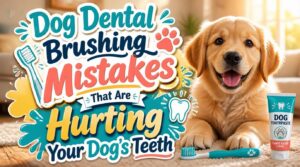
Most owners brush the way they were taught for humans: scrub hard, cover every surface, get it done fast. Dogs pay for that mismatch. A pinned jaw, a squirt of minty human toothpaste, ten seconds of frantic scrubbing—each one teaches your dog that brushing means something to fear, not tolerate.
Periodontal disease affects most dogs by age three, yet home care often fails before it starts. The problem rarely comes from skipping brushing. It comes from dog dental brushing mistakes made during the process itself—wrong pressure, wrong products, wrong pace.
Fix the technique, and the resistance usually fixes itself.
Table Of Contents
- Key Takeaways
- Starting Before Your Dog is Ready
- Using Unsafe or Poorly Fitting Products
- Brushing Too Hard or Incorrectly
- Ignoring Dental Pain Warning Signs
- Treating Brushing as Occasional Care
- Frequently Asked Questions (FAQs)
- Is it okay to never brush your dog’s teeth?
- Is it okay to scrape plaque off dogs’ teeth?
- What percentage of dog owners brush their dog’s teeth?
- How often should I brush my dogs teeth weekly?
- What age should puppies start dental brushing routines?
- Can diet or chew toys affect dental health?
- Are dental wipes an effective brushing alternative?
- How much does professional dog teeth cleaning cost?
- Conclusion
Key Takeaways
- Build trust gradually with short, gentle handling sessions before ever introducing a toothbrush, since rushing full-mouth brushing or forcing the jaw open teaches your dog to fear the process instead of tolerate it.
- Stick to dog-specific, VOHC-approved toothpaste and a properly sized soft-bristle brush, since human toothpaste ingredients like xylitol, fluoride, and sorbitol can seriously harm your dog.
- Brush at a 45-degree angle along the gumline with light pressure and short strokes, keeping sessions under two minutes, since too much force causes bleeding, recession, and lasting gum damage.
- Watch for warning signs like bleeding gums, persistent bad breath, or sudden resistance to brushing, and pair consistent home care with professional cleanings, since chews and wipes alone can’t replace what a toothbrush does.
Starting Before Your Dog is Ready

Most brushing problems start before the brush ever touches a tooth. Your dog needs time to accept handling near the mouth, not a full session on day one. Here’s where owners most often go wrong right out of the gate.
If your dog still tenses up at handling, this step-by-step guide to brushing your dog’s teeth can help you build trust before moving on to spotting dental issues.
Rushing Full-mouth Brushing
If your dog has never had a toothbrush near its mouth, don’t start with the whole set of teeth. Moving too fast spikes stress and resistance.
Brush one easy outer tooth first, session under 60-90 seconds. Rushing full coverage before tolerance builds causes pulling away, head turns, and painful battles nobody wins.
Skipping Touch Desensitization
That single easy tooth only works because your dog already trusts your hands near its mouth. Skip touch desensitization and you’re brushing a stranger’s teeth.
Start with a 5-second lip touch, quiet room, lights dim. Reward with chicken, twice daily for a week—the 7-Day Desensitization Method. Watch for lip licking or head turns; those signals mean pause, don’t push.
Forcing The Jaw Open
Prying a resistant dog’s mouth open damages more than trust. Jaw compression can pinch the mandibular foramen, causing temporary numbness, while overextension strains the TMJ and pterygoid muscles.
Keep opening angles under 45 degrees—30 is plenty for canine brushing. Instead, lift the lower jaw gently with a treat nearby. Forced opening distress often shows as trembling or a stiffened body during brushing.
Missing Clear Stop Signals
Even without forcing the mouth open, you can still miss signals a dog gives before real distress starts. Watch for an ear flick, head turn, or rapid tongue movement—each means stop now. Lip licking and tail tucking count too.
Catching these early, then rewarding calm pauses, builds trust faster than pushing through resistance ever will.
Building Tolerance Gradually
Think of tolerance-building as a 7-Day Desensitization Method, not a weekend crash course. Start with 10-second lip touches, then progress to finger-brush strokes, then a real toothbrush with water.
Reward within 5 seconds each time. Add 10 seconds weekly, capping at 2 minutes by week six. Skipping stages undoes trust you’ve already earned.
Using Unsafe or Poorly Fitting Products
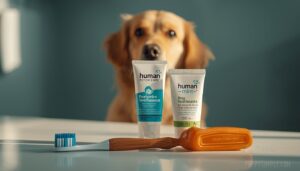
Not every toothbrush or toothpaste on the market belongs in your dog’s mouth. The wrong product can cause more harm than the plaque you’re trying to remove. Here’s what to check before you buy anything.
Human Toothpaste Toxicity Risks
Grabbing your own toothpaste tube is a mistake with real consequences. It’s formulated for spitting, not swallowing, and dogs swallow everything.
Sorbitol causes diarrhea and cramping within 30 minutes. SLS irritates gum tissue, triggering drooling. Peppermint oil can spark tremors or seizures at just 0.2 milliliters.
Since Newfoundlands are prone to sensitive stomachs, sticking with whole-food training treats and checking ingredient labels against a trusted Newfoundland feeding guide can help you avoid these hidden additives altogether.
Always check for a VOHC Accepted seal on dog-specific toothpaste before brushing.
Xylitol and Fluoride Dangers
Two ingredients turn a routine brushing session into an emergency: xylitol and fluoride. Xylitol poisoning symptoms include weakness, seizures, and even coma, often within 20 minutes.
Fluoride ingestion risks include vomiting and toxicity, since dogs swallow instead of spitting. Check every label.
Safe dog toothpaste choices skip both compounds entirely, protecting your dog from human product toxicity.
Oversized Brush Head Discomfort
Bigger isn’t better. A head over 25 mm compresses gum tissue past its natural give, and forcing a 50 mm mouth opening causes clamping.
Watch for:
- Gum compression risk from oversized heads
- Jaw strain warning in short-muzzled breeds
- Mouth opening limit exceeded past 45 mm
- Pressure concentration at the head’s center
- Tissue contact pain along inflamed gums
Soft Canine Toothbrush Selection
Not every dog toothbrush belongs in your dog’s mouth. Choose an ultra-soft, end-rounded bristle head sized for your dog’s mouth, with a non-slip handle for grip and control. Soft bristles clean plaque without bleeding gums; rigid ones cause tissue injury.
Confirm toothpaste compatibility, replace brushes every 3–4 months, and rinse thoroughly after each use. Proper size-based toothbrush selection ensures effective cleaning without causing oral discomfort or gum trauma. size-based toothbrush selection
Finger Brush Pros and Cons
Finger brushes fit snugly over your fingertip, giving you close control for early training acceptance. The soft silicone (about 1.5 cm wide) reduces pressure points, but limitations exist:
- Cleans only ~30% of surfaces, missing molars
- Places your finger near teeth—risky if your dog bites
- Wears out faster under daily use
Use them to start, not finish, your routine.
Brushing Too Hard or Incorrectly
More pressure doesn’t mean cleaner teeth—it usually means sore gums. Good technique matters more than effort, and your dog’s mouth will tell you when something’s off. Here’s what proper brushing actually looks like, step by step.
Excessive Pressure Damages Gums
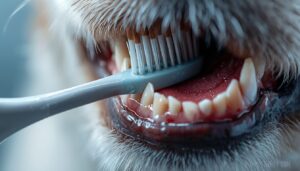
When you press too hard, damage happens fast. Bleeding starts at roughly 200 grams of force, and excessive pressure past 150 grams pulls gum tissue away from the tooth—causing recession that’s irreversible without surgery.
Inflammation triggers within 24 hours, weakening the gum’s seal against bacteria. Enamel wears too, leaving sensitive, discolored bands. Chronic damage cuts attachment strength by 30 percent.
Targeting The Canine Gumline
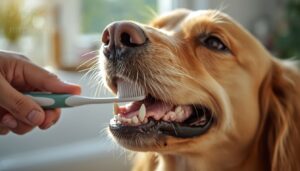
Pressure isn’t the only variable. Angle matters just as much—that’s where most owners miss the plaque hiding at the gum line.
Hold the brush at 45 degrees so bristles touch tooth and gum together.
- Angle bristles at 45 degrees
- Use gentle back-and-forth strokes
- Watch for bleeding or swelling
Skip this angle, and brushing too hard becomes tempting to compensate.
Small Outer-surface Strokes
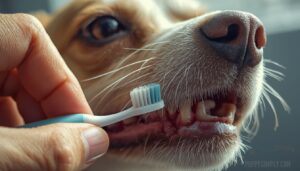
Angle set, now control the stroke itself. Keep each pass to 2-3mm, about one tooth’s width—no wider.
Sweep light strokes only at the gum line, not across the whole crown. Ten strokes per side, roughly 30 seconds per quadrant, is plenty.
Match brush head size to your dog’s mouth. Small dogs need 8-10mm heads; anything larger scrapes gum tissue and invites resistance.
Avoiding Unsafe Plaque Scraping
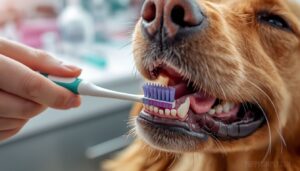
Stroke size handled—now depth. Plaque disclosing solution stains only the outer 1-2mm, your safe brushing depth. Scraping deeper damages dentin and exposes sensitive structures, raising recession rates.
Stop once the dye disappears. Never dig or gouge—gentle plaque removal beats aggressive scraping every time.
- Check disclosing dye before starting
- Stop when stain clears
- Never scrape below the gumline
- Skip abrasive tools
- Reassess technique if bleeding occurs
Keeping Sessions Brief
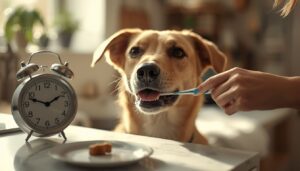
How long is too long? Adult dogs need just 30 seconds to two minutes—medium breeds often need only 45. Use a kitchen timer or app for consistent timing.
Watch for lip licking, panting, or head turns—stop immediately when you see them. End with a treat within 30 seconds.
Increase duration gradually, about 5 seconds weekly. Rushing invites resistance; brief, predictable sessions build lasting cooperation.
Ignoring Dental Pain Warning Signs
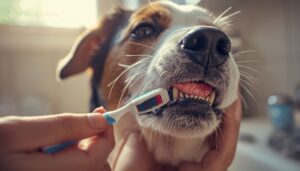
Your dog’s mouth sends signals long before a problem becomes serious. Brushing gives you a front-row seat to catch these signals early, but only if you know what to look for. Watch for these five warning signs at every session.
Bleeding or Swollen Gums
Blood on the brush isn’t a reason to scrub harder — it’s a stop sign. Bleeding or swollen gums mean you’re brushing painful teeth and gums, often from moving too fast or forcing the mouth open.
Blood on the brush isn’t a reason to scrub harder—it’s a stop sign that you’re brushing painful teeth and gums
Try a cold compress, chlorhexidine wipes, soft kibble, and textured chew toys. Watch for gum inflammation signs, and don’t restart brushing until swelling resolves.
Persistent Bad Breath
Why won’t the smell go away no matter how often you brush? Persistent bad breath signals more than food residue — it points to anaerobic bacteria like Porphyromonas gulae, brushing too infrequently, or wrong products (never human toothpaste; xylitol is toxic). Causes include:
- Oral bacteria buildup
- Food residue
- Gut health issues
- Systemic illness
- Undiagnosed disease
Bloodwork and dental exams catch what brushing alone can’t.
Sudden Brushing Resistance
A dog who once tolerated brushing but suddenly fights you is telling you something hurts. Don’t force a resistant dog — that erodes trust and worsens fear response patterns.
| Cause | Type | Action |
|---|---|---|
| Fractured tooth | Pain trigger | Vet exam |
| Prior forced session | Fear response | Desensitize again |
| Wrong brush pressure | Technique issue | Adjust method |
| Bitter toothpaste | Product mismatch | Switch flavor |
| Kidney disease | Medical sensitivity | Bloodwork |
Loose or Painful Teeth
A tooth that wiggles is never normal — it’s the end stage of damage, not the start. Periodontal disease eats away the alveolar bone holding teeth in place, while tooth resorption dissolves structure from inside out.
Watch for one-sided chewing or dropped food. Diagnosis requires dental radiographs, since visible gum disease often hides how much bone is actually gone.
Contacting Your Veterinarian
Know when a warning sign becomes a same-day call: yelping when the mouth is touched, refusal to eat, or discolored tissue. Continuous bleeding warrants contact within 24 hours; persistent bad breath, within 48.
Share your dog’s breed, age, symptom location, and products used. Request professional cleaning, ask about anesthesia bloodwork, and schedule post-procedure follow-up — veterinary dentistry catches what home care misses.
Treating Brushing as Occasional Care
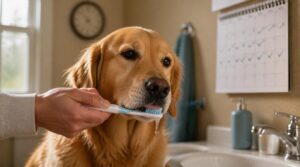
Brushing once in a while won’t protect your dog’s teeth. Plaque builds up fast, and inconsistent habits let it win. Here’s what a real routine looks like, and why it matters more than any single session.
Establishing a Predictable Routine
Rarely does one-off brushing prevent gum disease — consistency is what protects teeth. Brush at the same time daily, same spot, using a phone reminder system.
- fewer battles at the sink
- calmer, trusting dog
- steady plaque control
- visible weekly progress
- peace of mind
Add a visual cue, log sessions, and increase gradually. That’s a sustainable family dental routine.
Rewarding Every Successful Session
A routine keeps teeth clean, but positive reinforcement keeps your dog willing. Reward every session, even a 30-second one, within 10 seconds of finishing so the link stays clear.
Use small, low-calorie treats — cheese cubes or freeze-dried liver work well. Keep the same treat for a few sessions, then adjust value or size if engagement drops.
Tracking Changes Between Brushings
A treat seals the session, but a quick oral examination teaches you more.
Check gum color daily—healthy tissue stays pink, not red. Score plaque weekly with a disclosing tablet, track tooth color shifts, and log behavior signals.
Digital logging catches gingival inflammation, tartar formation, and plaque biofilm buildup early, before they become expensive problems.
Dental Chews Cannot Replace Brushing
That log will expose a hard truth fast: dental chews aren’t pulling their weight. Chews remove only 20-30% of plaque versus brushing’s 80%, and they skip the gumline entirely, where over half of periodontal disease starts.
Dental chews cannot replace brushing—wrong hardness risks fractured teeth, and without VOHC verification, you’re guessing. Biofilm hardens past 48 hours; only bristles disrupt it.
Scheduling Professional Dental Cleanings
Since brushing removes plaque but not hardened tartar, expecting home care to replace professional cleaning is one of the biggest dog teeth brushing mistakes. Schedule a professional dental cleaning every six months, adjusting for risk. Visits include exam, scaling, polishing, and follow-up instructions. This partnership prevents periodontal disease—consistent with American Veterinary Medical Association guidance on scheduling flexibility.
Frequently Asked Questions (FAQs)
Is it okay to never brush your dog’s teeth?
Skipping brushing entirely is like never changing your car’s oil—damage builds quietly until it’s expensive. Plaque hardens into periodontal disease, risking systemic infection, painful extractions, and costly professional cleaning down the road.
Is it okay to scrape plaque off dogs’ teeth?
No — scraping plaque off dogs’ teeth at home risks gum injury and enamel damage. Use a soft canine toothbrush with dog-safe toothpaste instead. Hardened tartar buildup needs veterinary ultrasonic scaling, not DIY scraping tools.
What percentage of dog owners brush their dog’s teeth?
Truth be told, most owners are dragging their feet: only 38% brush weekly, and 45% never brush at all. Toy breeds lead at 51%, while senior dogs lag behind at just 22%.
How often should I brush my dogs teeth weekly?
Aim for three sessions weekly minimum for most adult dogs. Puppies need four to twice-daily brushing; seniors often require four to five. Small and toy breeds, plus wet-food diets, benefit from more frequent brushing to control plaque.
What age should puppies start dental brushing routines?
Start gentle finger brushing at four weeks, once deciduous canines erupt. Watch for readiness behavior signs like relaxed mouth handling before touching teeth. Build tolerance through daily desensitization and positive reinforcement, keeping each session under a minute.
Can diet or chew toys affect dental health?
Yes. High protein kibble and fiber-rich diets cut plaque and tartar buildup, while sugar and starch feed bacteria.
VOHC-approved dental chews and durable chew toy materials scrape enamel safely, but hard treats risk enamel fractures.
Are dental wipes an effective brushing alternative?
Not on their own. Wipes remove up to 70% of surface plaque and reach interdental spots brushing misses, but they can’t scrape calculus. Use them alongside proper toothbrushing with soft bristles for real plaque control—never as a full substitute.
How much does professional dog teeth cleaning cost?
Routine professional cleanings under anesthesia usually run $300 to $700, covering X-rays and plaque removal. Extractions or severe periodontal disease push costs to $1,500 or more. Specialists charge higher fees, especially for senior dogs needing complex care.
Conclusion
Healthy gums build like trust: slowly, through patience, not force. Most dog dental brushing mistakes come from rushing what should be gradual—wrong pressure, wrong pace, wrong products. Fix those, and your dog stops fearing the brush and starts tolerating it, then accepting it.
Check for bleeding gums, bad breath, or sudden resistance between sessions. Brush gently, reward often, and schedule professional cleanings yearly. Small, consistent habits protect your dog’s teeth longer than any single perfect session ever could.
- https://www.fda.gov/consumers/consumer-updates/paws-xylitol-its-dangerous-dogs
- https://www.avma.org/resources-tools/pet-owners/petcare/pet-dental-care
- https://health.clevelandclinic.org/dangers-of-xylitol
- https://www.cascobaydpc.com/blog/the-hidden-dangers-of-xylitol-a-common-artificial-sweetener
- https://www.webmd.com/vitamins-and-supplements/xylitol-uses-and-risks