
This site is supported by our readers. We may earn a commission, at no cost to you, if you purchase through links.

A two-calorie treat and an 86-calorie treat can look identical in a training pouch, and that gap adds up fast during a 20-minute session. Most owners grab whatever bag sits closest to the door, then wonder why their dog packs on weight despite "just doing training treats."
The trick isn’t picking one reward and sticking with it. Dog dental chews for training rewards work differently than jerky bits or freeze-dried liver crumbles, and matching the right texture, calorie count, and chew time to the right moment separates dogs with clean teeth and sharp recall from dogs with neither.
Here’s what actually distinguishes the two.
Table Of Contents
- Key Takeaways
- 10 Best Dog Dental Chews and Training Rewards
- 1. Zuke’s Mini Naturals Chicken Dog Training Treats
- 2. Full Moon Chicken Jerky Dog Treats
- 3. 5. greenies dental dog treats regular
- 4. Whimzees Small Size Natural Dental Chews
- 5. Stewart Freeze Dried Beef Liver Dog Treats
- 6. Honest Kitchen Beef Salmon Dog Treats
- 7. Open Farm Beef Training Treats Soft Chewy
- 8. Cloud Star Tricky Trainers Liver Dog Treats
- 9. Full Moon Essential Beef Savory Bites
- 10. Onward Hound Bison Training Treats for Dogs
- Dental Chews Versus Training Treats
- How We Evaluated Each Reward
- Using Dental Chews Safely
- Frequently Asked Questions (FAQs)
- What are the best high reward treats for dog training?
- Do vets recommend dental chews for dogs?
- What do professional dog trainers use for training treats?
- What is a high-value reward in dog training?
- Can puppies safely have dental chews as rewards?
- How often should dental chews be given weekly?
- Are dental chews safe for senior dogs?
- Can dental chews be used with clicker training?
- Do dental chews expire or lose effectiveness over time?
- Conclusion
Key Takeaways
- Training treats and dental chews serve completely different jobs, so you shouldn’t use one to replace the other—quick, low-calorie bites reinforce commands fast, while dental chews work slowly to scrub plaque and tartar.
- Calorie counts vary wildly between treats that look similar in size, ranging from about 2 calories in something like Zuke’s Mini Naturals up to 86 calories in a full GREENIES dental chew, so portioning matters more than the treat’s appearance.
- Only chews carrying the VOHC seal have passed real clinical trials proving they cut plaque and tartar, so that seal is worth checking for if dental health is your goal rather than just marketing claims.
- Matching a treat to your dog’s size, chewing strength, and any allergies (like choosing bison or salmon over chicken or beef) keeps rewards both safe and effective, so it’s worth reading the ingredient label every time.
10 Best Dog Dental Chews and Training Rewards
I’ve spent years reading ingredient panels and calorie counts so you don’t have to guess. The ten picks below cover everything from VOHC-verified dental chews to single-ingredient training rewards under 5 calories each. Here’s what actually earns a spot in your treat pouch.
Whatever you choose, weigh it against your dog’s size and activity level using a dog feeding schedule based on weight to keep treats from crowding out real nutrition.
1. Zuke’s Mini Naturals Chicken Dog Training Treats
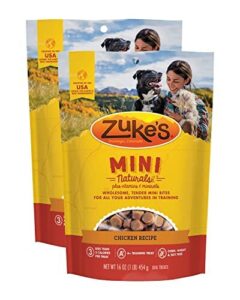
Two calories a treat. That’s the number that matters most here, and it’s why Zuke’s Mini Naturals earns the top training slot: you can reward forty times in one session for roughly 120 calories.
Real chicken leads the ingredient list, with rice and oats behind it, no corn, wheat, or soy filler. Texture runs soft and tearable, though some bags crumble more than expected. At $15.79 for two 16-ounce pouches, cost per treat stays low enough for daily reinforcement work.
| Best For | Dog owners looking for a low-calorie, high-value treat to use during training, grooming, or nail-trim sessions with dogs of any breed or size. |
|---|---|
| Flavor | Chicken |
| Net Weight | 16 oz (Pack of 2) |
| Grain Free | Yes |
| Calorie Content | Under 3 cal |
| Primary Use | Training reward |
| Artificial Additives | None added |
| Additional Features |
|
- Only about 2 calories per treat, so you can reward often without overdoing your dog’s daily calorie count
- Real chicken is the first ingredient, with no corn, wheat, or soy fillers
- Small, soft, resealable pouch makes it easy to carry and use for frequent positive reinforcement
- Some bags arrive harder or crumblier than expected, which can make handling messy
- Not a safe choice for dogs with chicken allergies
- One listing noted an ingredient discrepancy (beef appearing despite the chicken flavor), so it’s worth double-checking the label
2. Full Moon Chicken Jerky Dog Treats
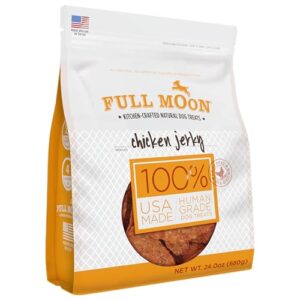
Forty tiny rewards a session sets a high bar. Full Moon plays a different game: 43 calories per piece, made from human-grade chicken, organic cane sugar, vinegar, and rosemary extract.
At $0.75/oz, it beats Zuke’s on cost per ounce, though the higher per-treat calorie count means portioning matters more. Break strips into slivers for training. Texture runs chewy, not crunchy, and some bags arrive harder than expected, so seal bags tightly after opening.
| Best For | Owners of active or adult dogs who want a high-protein, human-grade training treat made with simple, recognizable ingredients. |
|---|---|
| Flavor | Chicken |
| Net Weight | 1.5 lbs |
| Grain Free | Yes |
| Calorie Content | Not specified |
| Primary Use | Training reward |
| Artificial Additives | None added |
| Additional Features |
|
- Made from human-grade, USDA-approved chicken breast with no grains, soy, glycerin, or artificial additives
- Firm, breakable texture makes it easy to portion out for training sessions
- Traceable, regionally sourced U.S. chicken offers more transparency than many competing brands
- Texture can turn overly hard or rubbery if bags aren’t sealed properly after opening
- Some batches arrive tougher to tear or cut without scissors
- Texture consistency varies from batch to batch, which can be frustrating for repeat buyers
3. 5. greenies dental dog treats regular
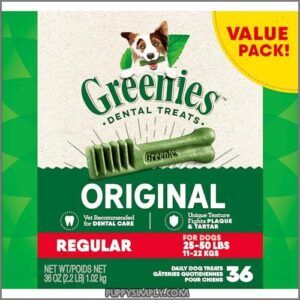
GREENIES shifts the whole conversation from calorie counting to actual dental work. This is the only chew here carrying the VOHC seal, backed by trials showing 40% less plaque and 47% less tartar in 28 days.
At 86 calories each, it’s not a training treat—it’s a once-daily job. Sized for 25-50 lb dogs, roughly $1.48 per chew. Fine print worth reading: wheat flour and gluten lead the ingredient list, so grain-sensitive dogs may need an alternative.
| Best For | Owners of adult dogs weighing 25–50 lbs who want an easy, daily way to support dental health between brushings. |
|---|---|
| Flavor | Original |
| Net Weight | 2.25 lbs |
| Grain Free | Not specified |
| Calorie Content | Not specified |
| Primary Use | Dental care |
| Artificial Additives | Not specified |
| Additional Features |
|
- Clinically shown to cut tartar buildup by 47% and plaque by 40% in just 28 days
- Rawhide-free, easy-to-digest texture that cleans down to the gumline
- Vet-recommended and simple to work into a daily routine
- Not a replacement for brushing or professional dental cleanings
- Aggressive chewers may finish it too fast to get the full dental benefit
- Too small to be effective for dogs over 50 lbs
4. Whimzees Small Size Natural Dental Chews
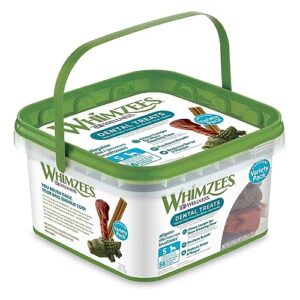
If wheat sensitivities rule out GREENIES, WHIMZEES fills that gap nicely. It’s grain-free and vegetarian, built from potato starch, glycerin, and lupine rather than meat by-products.
Sized for 15-25 lb dogs, one chew a day is the ceiling here—overdo it and constipation becomes a real risk. At $15.82 a box, it undercuts GREENIES on price while keeping ingredients simple enough for dogs with food sensitivities.
Firm texture, longer chew time. Good for daily maintenance, not for stacking multiple rewards in one sitting.
| Best For | Owners of small dogs (15-25 lbs) with wheat sensitivities or food allergies who want a simple, meat-free way to support daily dental health. |
|---|---|
| Flavor | Not specified |
| Net Weight | 29.6 oz |
| Grain Free | Yes |
| Calorie Content | Not specified |
| Primary Use | Dental care |
| Artificial Additives | None added |
| Additional Features |
|
- Grain-free, vegetarian formula with no artificial colors, flavors, or preservatives
- Scientifically proven to reduce plaque and tartar while freshening breath
- More affordable than GREENIES while still keeping ingredients allergy-friendly
- Limited to one chew per day, or it can cause constipation
- Firm texture may be a choking risk for power chewers or dogs that inhale their food
- Not a meal replacement, so it only supplements a dog’s regular diet rather than sustaining it
5. Stewart Freeze Dried Beef Liver Dog Treats
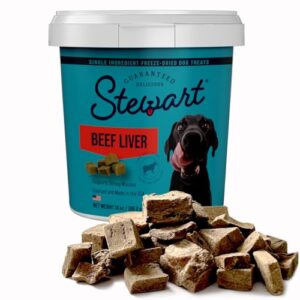
When picky eaters won’t touch kibble, this is the one trainers reach for. Single-ingredient beef liver, USDA-certified, made in Dayton since 1973—nothing to hide on the label.
Broken into pea-sized, soft pieces under 3 calories apiece, it’s a favorite among the best dog training treats for picky, high-energy pups.
At 6 kcal per gram, portion control matters more than the calm packaging suggests. Stick to the 1-4 piece guideline by size.
The odor is strong, honestly kind of rank, but that’s exactly why dogs go nuts for it. Crumbles easily too, which works fine as a topper.
| Best For | Picky eaters, dogs in training, and pets with food sensitivities who need a single-ingredient, high-value reward. |
|---|---|
| Flavor | Beef Liver |
| Net Weight | 14 oz |
| Grain Free | Yes |
| Calorie Content | Not specified |
| Primary Use | Training reward |
| Artificial Additives | None added |
| Additional Features |
|
- Single ingredient (100% USDA-certified beef liver), grain and gluten free, made in the USA since 1973
- High-value reward that works great for training or as a topper to boost meal palatability
- Suitable for dogs and cats of all life stages, with resealable packaging to keep it fresh
- Strong, pungent odor that some owners may find unpleasant
- Crumbles easily, leading to size inconsistency and powder formation
- Calorie-dense, so portion control is needed to avoid overfeeding
6. Honest Kitchen Beef Salmon Dog Treats
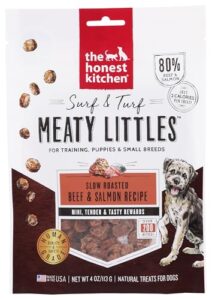
Two proteins in one bite: ranch-raised beef paired with wild-caught salmon, giving you a dual-protein profile most single-source treats can’t match. Each piece runs about 2 calories, so you’re free to reward generously without derailing your dog’s daily intake.
Salmon brings DHA to the table, supporting cognitive function alongside muscle maintenance. Chickpeas and coconut glycerin round out a short, human-grade ingredient list with no artificial preservatives.
Do watch for crushed bits in transit; the tender texture that makes these so palatable also makes them fragile in shipping.
| Best For | Dog owners who want a clean-label, high-value training treat for dogs of any age, including those with sensitive stomachs. |
|---|---|
| Flavor | Salmon/Beef |
| Net Weight | 4 oz |
| Grain Free | Not specified |
| Calorie Content | 2 cal |
| Primary Use | Training/enrichment |
| Artificial Additives | None added |
| Additional Features |
|
- Only about 2 calories per treat, so you can reward frequently without overdoing it
- Dual-protein blend of beef and salmon delivers DHA for brain support plus muscle maintenance
- Human-grade, short ingredient list with no fillers or artificial preservatives
- Treats can arrive crushed or crumbly due to their tender texture
- Premium price may add up for owners who train often or have multiple dogs
- Very small dogs may need treats broken into smaller pieces to avoid overfeeding
7. Open Farm Beef Training Treats Soft Chewy
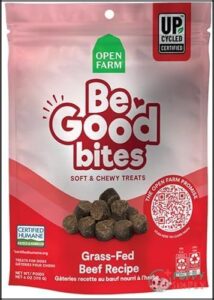
Sustainability meets small-bite convenience here. Under 2.5 calories per treat and roughly 180 per 6-ounce pouch, this is one of the leaner options on this list, with 30% upcycled ingredients giving it an edge for eco-minded owners.
Grass-fed beef leads the formula, and the recipe skips corn, wheat, and soy. That makes it a solid pick for dogs with grain sensitivities who still need frequent, low-calorie rewards during long training sessions.
| Best For | Owners of dogs with grain sensitivities who want a low-calorie, eco-conscious treat for frequent use during training sessions. |
|---|---|
| Flavor | Grass-Fed Beef |
| Net Weight | 6 oz |
| Grain Free | Yes |
| Calorie Content | Under 2.5 cal |
| Primary Use | Training reward |
| Artificial Additives | None added |
| Additional Features |
|
- Under 2.5 calories per treat, making it easy to reward frequently without overfeeding
- Made with 30% upcycled ingredients for a smaller environmental footprint
- Free from corn, wheat, soy, and artificial additives, ideal for sensitive dogs
- Not suitable as a meal replacement, so it only works as a supplemental treat
- Contains coconut glycerin and natural flavors, which may not fit every dog’s dietary needs
- Freshness depends on proper resealing after each use
8. Cloud Star Tricky Trainers Liver Dog Treats
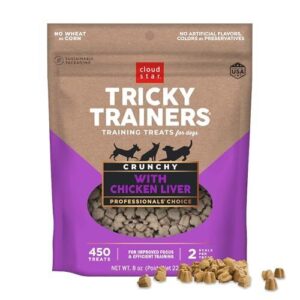
Liver is the secret weapon of dog training, and Cloud Star knows it. Real chicken liver leads the ingredient list here, delivering the aroma and taste that grab attention the second the bag opens.
At roughly 3 calories per treat, you can run long sessions without derailing your dog’s daily intake. The soft, chewy texture breaks apart easily for smaller rewards, and the formula skips wheat, dairy, and soy, making it gentler on dogs with common sensitivities.
| Best For | Dog owners looking for a low-calorie, high-value training treat that works well across all breeds and life stages. |
|---|---|
| Flavor | Chicken Liver |
| Net Weight | 8 oz |
| Grain Free | No |
| Calorie Content | 2 cal |
| Primary Use | Training reward |
| Artificial Additives | None added |
| Additional Features |
|
- Only 2 calories per treat, making it easy to reward frequently without excess weight gain
- Made with real chicken liver and no artificial flavors, colors, or preservatives
- Generous 450 treats per 8 oz pouch means great value for frequent training sessions
- Contains chicken and barley, which may not work for dogs with specific protein or grain sensitivities
- Crunchy texture could be tough for very small dogs or those with dental issues
- Not meant to replace meals — strictly a supplemental training treat
9. Full Moon Essential Beef Savory Bites
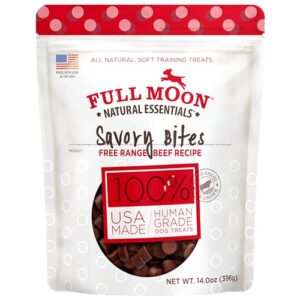
Ranch-raised beef leads the label here, with rosemary extract standing in for artificial preservatives.
Each bite runs about 2–3 kcal, so smaller dogs can rack up rewards without tipping the calorie scale. The soft chew format suits small and medium breeds especially well, though paprika and hickory smoke flavoring add appeal without leaning on grains or fillers.
Just watch bag freshness — like jerky, these can dry out once opened, so reseal tightly between sessions.
| Best For | Dog owners who want an all-natural, grain-free training treat that works well for pups of any age or size. |
|---|---|
| Flavor | Beef |
| Net Weight | 14 oz |
| Grain Free | Yes |
| Calorie Content | Not specified |
| Primary Use | Training reward |
| Artificial Additives | None added |
| Additional Features |
|
- Made with real, USDA-approved free-range beef and no glycerin, grains, corn, wheat, or soy
- Small, slow-cooked batches using natural ingredients like cassava root and rosemary extract for added freshness
- Highly palatable, making it a great motivator for training or as an everyday reward
- Overfeeding may cause stool discoloration or digestive upset, especially in smaller dogs
- Treats can dry out quickly if the bag isn’t sealed properly after opening
- Piece sizes can be inconsistent, so you may need to break them up for precise portion control
10. Onward Hound Bison Training Treats for Dogs
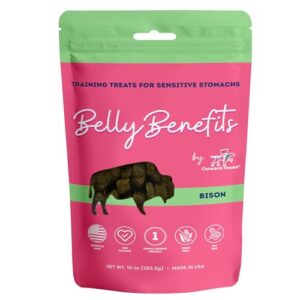
Bison isn’t the flashiest protein, but it’s a smart pick for dogs who react to chicken or beef. Each treat runs about 3.5 calories, so training sessions stay generous without piling on weight.
The ingredient list skips corn, soy, and wheat, which matters if your dog’s stomach is easily upset. Soft texture, single-source protein, made in the USA — solid basics done well.
Just know it’s not formulated for medical conditions like bladder stones, and the premium formulation means a higher price tag.
| Best For | Dogs with sensitive stomachs or protein allergies to chicken or beef, especially puppies, seniors, and small breeds in need of a low-calorie training treat. |
|---|---|
| Flavor | Bison |
| Net Weight | 10 oz |
| Grain Free | Not specified |
| Calorie Content | 3.5 cal |
| Primary Use | Training reward |
| Artificial Additives | Free from common allergens |
| Additional Features |
|
- Made with single-source bison protein and free from corn, soy, and other common allergens
- Low calorie count (3.5 calories per treat) makes it easy to use often during training without weight gain
- Soft, easy-to-chew texture with prebiotic fiber that’s gentle on sensitive digestive systems
- Not veterinarian-approved or designed for specific medical conditions like bladder stones
- Contains animal-based ingredients (bison, bison liver, chicken fat), which won’t suit every dietary preference
- Costs more than standard treats due to its premium, limited-ingredient formula
Dental Chews Versus Training Treats

Not every chew belongs in the same category, even though they all end up in the same treat pouch. Dental chews and training treats solve different problems, and mixing them up costs you calories, time, or both. Here’s how to tell them apart and use each one where it actually earns its keep.
Daily Rewards Versus Special Jackpots
Think of training treats as daily rewards and dental chews as the occasional jackpot.
- Frequent, low-calorie treats build steady reinforcement
- High-value chews suit less frequent, bigger wins
- Session pacing shifts with reward type
Treat frequency drives engagement consistency; jackpot-style rewards spike excitement but demand smarter calorie management and risk assessment before your dog’s next session.
Chew Time and Reinforcement Speed
Speed matters more than you’d think. Reward timing within 1-2 seconds after a command cements learning; wait past 3 seconds and the association weakens.
That’s why a chewy texture consumed in under 2 seconds beats a dense chew every time — short chew duration means faster reinforcement density and more repetitions per session, without extra calories.
Matching Treats to Training Goals
Not every task calls for the same treat. High-value training treats — think Zuke’s Mini Naturals or freeze-dried liver — work best for teaching brand-new behaviors, where treat motivation needs to stay sharp. Once a dog knows "sit" cold, drop to medium-value rewards for maintenance. Match reward timing and treat value level to where your dog actually is in behavior shaping, not where you wish they were.
Using treat variety helps maintain engagement during training sessions by preventing habituation and sustaining motivation. treat variety
When Dental Chews Work Best
Variety keeps sessions interesting, but dental chews earn their spot on a fixed schedule, not as a reward wildcard. Give them post-meal, same time daily, for consistent mechanical cleaning against plaque and tartar buildup.
Save quick-consumed training treats for active positive reinforcement and treat motivation. Timing consistency and size matching make dental chews a maintenance tool, not a training-session substitute.
How We Evaluated Each Reward

Not every treat on a shelf deserves a spot in your training pouch. We put each contender through five practical tests, from ingredient labels to price per piece. Here’s exactly what we looked for, and why it matters for your dog.
Ingredient Quality and Transparency
A short ingredient list tells you more than any marketing claim ever will.
Look for whole proteins listed first, not vague "meat" fillers. Skip anything with BHA, BHT, or hidden additives. Human-grade standards and clear sourcing matter.
- Five or fewer ingredients
- Named protein first
- No artificial preservatives
- Transparent labeling
Calories Per Training Reward
A handful of treats can quietly become a quarter of your dog’s daily calories if you’re not counting.
Calories per treat matter more than treat size suggests — a Zuke’s Mini Naturals piece runs 3 calories, letting 40 rewards fit into 120 calories total.
| Treat Type | Calories Each | Best Use |
|---|---|---|
| Mini soft treats | 1-3 | Rapid-fire training |
| Freeze-dried liver | 2-6 | High-value rewards |
| Jerky strips | 5-15 | Longer sessions |
Match treat size to your session length for real energy balance.
VOHC Dental Efficacy
A VOHC Seal isn’t marketing fluff — it means a product passed real trials. To earn it, a chew must cut plaque or calculus by at least 15% in each trial, hit statistical significance (p A terrier and a Lab don’t just differ in size, their bite force can span from low hundreds of newtons to over 600
Small dogs need softer chews to protect teeth; large breeds need durable options resisting chunking. Match chew resistance to your dog’s actual strength, and always check throat safety before rewarding.
Allergies and Protein Sensitivities
Bite force isn’t the only variable — your dog’s immune system reads ingredient labels too. Food allergy is genuinely immune-mediated, and cross-reactive allergens can trigger reactions even from "new" proteins resembling old ones.
- Try novel protein sources (bison, salmon)
- Stick to single protein treats
- Consider hydrolyzed protein treats for elimination trials
Limited ingredient diet options improve digestibility and simplify troubleshooting when reactions appear.
Weight and Fat Content
Immune system aside, math matters too. Fat delivers 9 calories per gram, so a chew with 8 grams of fat packs 72 calories before protein even counts. Compare that to Zuke’s 3-calorie treats, and frequent training rewards can quietly eat up 10% of daily intake.
Check the label — low-fat formulations (under 8%) protect dogs prone to pancreatitis.
Palatability and Reward Value
Fat content only matters if the dog actually eats the treat fast enough to strengthen behavior. Reward value hinges on flavor, aroma, and texture — chicken or liver often beats bland biscuits. Try a quick treat palatability test: offer two flavors side by side.
- Strong meaty aroma boosts eagerness
- Soft texture speeds consumption
- Consistent size keeps rewards predictable
Limited-Ingredient Reward Options
Palatability aside, some dogs need simplicity above all. Limited ingredient treats built around a single protein source — turkey, salmon, whatever agrees with your dog — cut allergy risk fast.
Look for grain-free recipes with low allergen potential and easy breakability for portion control.
Whether you’re picking training treats or dental chews, fewer ingredients usually means fewer problems.
Using Dental Chews Safely
Picking the right chew is only half the job. How you hand it over matters just as much, since even a great dental chew can cause problems if you’re careless about size, timing, or supervision. Here are five habits worth building into every chew session.
Supervise Every Chewing Session

A dental chew is only as safe as the eyes watching it. Sit within arm’s reach, keep a calm, steady pace, and pull competing toys away so nothing distracts from the reward.
- Watch for coughing, gagging, or excessive drooling
- Stop immediately if breathing looks labored
- Confirm chew size actually fits your dog’s mouth
- Jot down safety notes after each session
- Adjust texture or duration before the next round
Count Chews Toward Calories

Every chew has a calorie count per treat, and skipping that math is how small dogs end up overweight. Zuke’s runs 3 calories per treat; dental chews land higher, 5-20 calories depending on size.
Log chews toward daily calorie tracking the same way you’d log meals. Treats shouldn’t exceed 10 of daily caloric intake — plan treat portion and training reward balance accordingly, using your treat pouch for consistent counts.
Choose The Correct Size

Size mismatches cause most chewing accidents. A chew scaled to your dog’s mouth ensures proper chewing surface matching and jaw strength balance, preventing gulping.
Small dogs need bite-sized pieces; large breeds need chews requiring real jaw work. Check size charts, then use supervised portioning to break oversized pieces down, keeping controlled consumption rate and choking hazard prevention front and center.
Avoid Unsafe Artificial Additives

Flip the bag over before you buy. Skip anything listing BHA, BHT, or ethoxyquin—preservatives linked to digestive upset. Look for mixed tocopherols (vitamin E) instead.
Real meat and veggies should supply color and flavor, not synthetic dyes or flavoring agents. And never, ever choose sweetened chews containing xylitol—it’s toxic to dogs. True additive-free labeling means clear, honest ingredient transparency you can actually verify.
Continue Brushing Your Dog’s Teeth
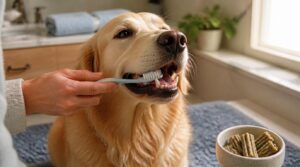
Chews help, but they can’t replace a toothbrush. Think of dental chews and training treats as one layer of your dog’s dental care routine—not the whole plan.
Brush 2-3 times weekly with canine toothpaste, using gentle circles along the gumline. Watch for red or bleeding gums, and keep chews with the VOHC seal in weekly rotation for real mechanical cleaning between brushings.
Frequently Asked Questions (FAQs)
What are the best high reward treats for dog training?
Your best bets are soft, scent-rich morsels under 5 calories each: Zuke’s Mini Naturals, Full Moon Chicken Jerky, and Cloud Star Tricky Trainers. Test protein sources against your dog’s preference, then portion for high-frequency, high-value training reps.
Do vets recommend dental chews for dogs?
Yes, vets endorse VOHC-sealed dental chews backed by clinical data showing up to 30% plaque reduction. They favor real-meat-first ingredients, appropriate sizing, and daily use as part of a broader oral hygiene routine, not brushing’s replacement.
What do professional dog trainers use for training treats?
Like a good coach’s whistle, the right cue cuts through noise.
Trainers lean on high-value rewards: pea-sized, soft, freeze-dried liver or chicken—vet-approved, low-calorie, consistent texture, and suited to each dog’s palate for maximum motivation.
What is a high-value reward in dog training?
A high-value reward is whatever your dog wants most, think chicken over kibble. Preference testing reveals it. Use it for tough cues or distracting environments, delivered instantly, to boost motivation and training session efficiency without overfeeding.
Can puppies safely have dental chews as rewards?
Puppies do better with soft training treats than hard dental chews. Baby teeth and developing jaws need gentle chew textures and supervised chewing sessions.
Check labels for age guidance, and ask your vet before introducing puppy-safe dental treats to prevent choking risk.
How often should dental chews be given weekly?
One a day, seven a week, or two to three for smaller dogs: a weekly chew frequency guide depends on size and calories. Follow packaging, and count every VOHC-approved chew toward daily calorie intake.
Are dental chews safe for senior dogs?
Generally yes, with caveats: pick firm-but-giving textures over rock-hard chews to protect brittle teeth, match size to prevent gulping, favor digestible, VOHC-approved options, and count calories toward their daily limit.
Can dental chews be used with clicker training?
Yes, but choose small, breakable pieces for reinforcement timing. Softer chews suit rapid clicker sequences; harder ones fit as occasional high-value rewards. Track chew size selection and calories, and always supervise sessions for safety.
Do dental chews expire or lose effectiveness over time?
Like bread going stale on the counter, chews harden and lose their bite over time. Past the printed date, mechanical texture and tartar control fade fast. Check for odor, mold, or stiffness — storage matters more than the calendar.
Conclusion
Picture two jars on your counter: one holds two-calorie crumbs, the other holds gum-scrubbing chews that take five minutes to finish. That’s the real choice every session.
The best dog dental chews for training rewards don’t replace quick treats; they complete them, handling plaque between meals while jerky and liver handle split-second timing. Rotate both, watch the calorie math, and your dog ends up with a cleaner mouth and sharper recall than one treat bag could ever deliver.