This site is supported by our readers. We may earn a commission, at no cost to you, if you purchase through links.

Your puppy hits 16 weeks, and suddenly everyone’s asking why those pads are still scattered across your kitchen floor. Here’s the truth: there’s no universal deadline. Bladder control develops on its own timeline, tied to age, breed size, and how consistent your training actually is.
A Chihuahua might need pads until 12 months old. A Labrador could be pad-free by 4 months. Both are normal.
Knowing how long to use puppy training pads comes down to reading your puppy’s signals, not the calendar. Get the milestones right, and you’ll know exactly when it’s time to make the switch outdoors.
Table Of Contents
- Key Takeaways
- Puppy Pad Training Timeline
- Use Pads Until 12–16 Weeks
- Signs Puppies Still Need Pads
- Daily Pad Training Schedule
- Mistakes That Extend Pad Use
- Transitioning From Pads Outside
- Frequently Asked Questions (FAQs)
- When to stop using puppy training pads?
- What is the 10 10 10 rule for potty training puppies?
- How long should it take to puppy pad train a puppy?
- What is the 7 7 7 rule for dogs?
- What type of potty pad works best for puppies?
- How many potty pads does a puppy need daily?
- Can adult dogs be retrained to use pads?
- Is it okay to use pads permanently for small dogs?
- Conclusion
Key Takeaways
- There’s no universal deadline for puppy pad training since bladder control depends on age, breed size, and consistency, with toy breeds sometimes needing pads until 12 months while larger breeds may be pad-free by 4 months.
- Most puppies are ready to transition off pads between 12 and 16 weeks old, but readiness should be confirmed by two full accident-free weeks rather than a fixed calendar date.
- A consistent daily schedule—potty breaks every 1-2 hours, right after waking, and within 5-15 minutes of meals or play—builds the routine that speeds up pad training success.
- Weaning off pads works best as a gradual process, moving the pad 1-2 feet every 2-3 days toward the door and eventually outside, with pads fully removed only after 14 straight accident-free outdoor days.
Puppy Pad Training Timeline

Every puppy moves through pad training at their own pace, but there’s still a general timeline you can count on. Knowing what to expect helps you spot real progress instead of second-guessing every accident. Here’s what that timeline usually looks like, from bladder control to those first outdoor wins.
Understanding how long puppies can hold their pee at each age makes it much easier to set realistic bathroom breaks and celebrate small wins along the way.
Typical Age Ranges
Most puppies need pads somewhere between 8 weeks and 6 months old, though this window shifts based on breed and individual growth curves.
Toy breeds often stretch training well past 4 months, sometimes to a year, while larger pups mature faster.
Age-based training works best when you treat these ranges as flexible guides, not deadlines, since every puppy’s developmental stages unfold on their own timeline.
Bladder Control Development
Full bladder control usually clicks into place around 16 weeks, but the countdown starts much earlier.
A handy rule of thumb: age in months plus one hour equals hold time. So a 4-month-old can usually wait about five hours between breaks.
That said, every pup’s nervous system matures at its own pace, which is why some puppies surprise you either way.
Breed Size Differences
Toy breed puppies burn through energy fast, thanks to a quicker metabolic rate, so their bladders fill sooner too. Larger pups have slower growth plate development, which stretches out the whole potty pad training timeline.
- Toy breeds: frequent breaks, tiny capacity
- Small breeds: faster maturity, quicker control
- Medium/large breeds: slower growth, more patience needed
- Joint stress risks affect large-breed comfort
- Lifespan generally shrinks as size grows
Understanding toy sizing classifications can help you better manage the specific needs of different breeds.
Accident-free Milestones
Accident-free milestones give you real proof of progress, not just a gut feeling. Two straight weeks without indoor mishaps marks the first big step.
Four weeks of solid daytime success comes next, followed by longer stretches once crate confinement grows.
The final goal? Eight weeks including overnight dryness.
Keep a tracking log — it makes measuring readiness so much easier.
Outdoor Readiness Signs
How do you know your pup’s ready for the great outdoors? Watch for two accident-free weeks on the pad first.
Then check conditions: dry ground, decent footwear traction for you both, and mild weather. Skip walks during downpours or extreme heat.
Keep a leash handy and stay visible on trails. Once these signs line up, you can confidently wean puppies off puppy pads and start outdoor potty training.
Use Pads Until 12–16 Weeks
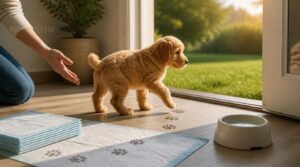
Most puppies are ready to start moving away from pads somewhere between 12 and 16 weeks old. That timing isn’t random, and a few key factors decide when your puppy actually hits that mark. Here’s what to check before you make the switch.
Vaccination Timing Matters
Vaccines drive the timeline more than age alone. Maternal antibodies interfere with early doses, which is why the series uses spaced-out shots to build real protection. Until that series is complete, keep your pup on indoor potty pads to control infection exposure. Skipping doses widens the immunity gap and delays when it’s safe to wean puppies off puppy pads.
Two Accident-free Weeks
Two weeks without a single puddle is your green light. Once your pup hits that mark, you’re seeing real bladder stability, not just luck.
Watch for consistency after meals and naps, not just daytime wins. Keep hydration timing steady, easing off water an hour before bed. If accidents resurface, reset the clock. That’s how you confirm true outdoor readiness before ditching pads.
Small Puppies May Need Longer
Toy breeds run on a faster internal clock than their bigger cousins, and their bodies show it. A tiny bladder capacity paired with quick metabolic rate means more frequent trips, even past 16 weeks.
- Skeletal growth timing lags in small breeds
- Muscle maturation develops slower
- Some pups need pads until 12 months
- Individual development varies widely
Keep disposable or reusable puppy pads handy longer with these pups.
Transition Takes Two–six Weeks
Rome wasn’t built in a day, and neither is a fully potty-trained pup. Budget two to six weeks for the full switch.
Gradual pad relocation toward the door, paired with reinforcing outdoor success, speeds things along. Weather delays happen, so stay patient. Establish clear outdoor cues, monitor progress weekly, and keep moving toward outdoor potty training steady, not rushed, to avoid backsliding into puppy accidents.
Signs Puppies Still Need Pads
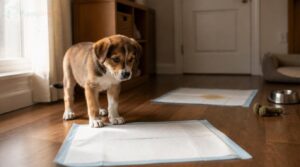
Not every puppy is ready to give up the pad on schedule, and that’s perfectly normal. Your pup will usually tell you they need more time if you know what to look for. Here are five signs that mean you should stick with pads a bit longer.
Frequent Indoor Accidents
Still finding puddles on the floor instead of the pad? That’s your clearest signal.
Frequent accidents mean bladder capacity and routine haven’t caught up yet. Before pulling pads, check these:
- Breaks every 1–2 hours?
- Consistent feeding times?
- Pad in a stable location?
- Immediate rewards given?
If accidents persist, keep using pads—rushing the timeline backfires.
Sniffing and Circling
Watch how your puppy acts before they go, not just where the puddle ends up.
Sniffing is scent sampling, a natural potty negotiation that helps them find the right spot. Circling adds ritual calming behavior and an environmental survey, plus paw gland marking. If these happen away from the pad, your puppy’s cueing themselves toward the wrong location—keep the pad in one consistent spot to guide those instincts correctly.
Whining Near Potty Area
Sniffing tells you where; whining tells you when. That whine near the pad usually means "I need to go now," often paired with pacing.
Decoding whining signals matters: it can flag mealtime urgency, environmental anxiety triggers (loud noises, new smells), or health discomfort. Reward calm behavior instead of the whine itself, and keep your routine consistent to prevent accidents before they start.
Short Bladder Hold Time
Whining tells you when, but a puppy who still can’t wait long between breaks tells you when again, and again. A good rule of thumb: age in months plus one hour. So a 4-month-old should hold roughly five hours. If yours taps out sooner, don’t stress. Fluid intake, activity, stress, and age all shape bladder capacity, so keep those pads down until hold times stretch out naturally.
Unreliable Outdoor Routine
Some days outdoor trips go great. Other days? Rain, wind, or a chilly snap keeps your puppy dodging the yard entirely. Mud, snow, buzzing insects, or noisy traffic can all derail progress, too.
Keep pads down if your puppy:
- Skips potty during bad weather
- Gets distracted outside and forgets to go
- Struggles after travel or schedule changes
- Shows inconsistent signaling after eating
- Avoids new outdoor surfaces seasonally
Daily Pad Training Schedule

Consistency is what makes pad training click. Your puppy learns fastest when bathroom breaks happen at the same moments every day. Here’s the daily schedule that builds that habit.
Every One–two Hours
Think of your puppy’s bladder like a tiny cup, it fills fast. Setting interval timers every one to two hours keeps you ahead of accidents.
| Activity | Break Needed? |
|---|---|
| Playtime | Yes |
| Napping | Yes |
| Eating | Yes |
Monitoring activity levels and predicting digestive timing builds a reliable puppy house training schedule your pup can trust.
After Waking Up
That first stretch and yawn? That’s your cue. Take your pup straight to the potty pad, no detours, since overnight sleep fills that tiny bladder fast.
A quick pad trip right after waking prevents most morning accidents before they happen. Pair it with calm praise, not excitement, and you’ll build a rock-solid morning routine your puppy can count on every single day.
After Meals and Play
Food and fun both trigger nature’s call, usually within 5 to 15 minutes. After meals or a play burst, walk your pup straight to the pad.
Reward instantly when they go. Offer water, but pause playtime briefly after drinking so accidents don’t sneak up mid-game. Consistent timing here builds a potty schedule your puppy can trust.
Before Crate Time
A crate is a resting spot, not a bathroom, so timing matters here. Always visit the pad right before crate time, giving your pup a chance to empty out first.
This habit prevents potty accidents during confinement and builds positive crate associations rather than anxiety. Pair it with a calm cue word, and crate time becomes a trusted, safe retreat instead of a stressful lockup.
Consistent Feeding Times
What goes in on a schedule comes out on a schedule. Feed your puppy at the same two times daily, and you’ll create predictable digestive rhythms that make potty accident prevention easier.
- Set fixed portions, not free feeding
- Feed after waking or play, before crate time
- Track meals to support growth monitoring
- Watch for natural hunger cue training
This routine reduces mealtime anxiety and keeps housetraining efforts on solid, dependable ground.
Mistakes That Extend Pad Use
Even with a solid schedule, small habits can slow your puppy’s progress without you realizing it. Some mistakes seem harmless but send mixed signals that confuse your puppy and stretch out pad training for weeks. Here are five common ones to watch for.
Moving Pads Too Often
Think of the pad like home base — move it constantly, and your puppy never learns where "safe" actually is.
Scent cue stability matters more than convenience. Shifting locations breeds inconsistent potty targets, raises stress, and invites accidents elsewhere. Keep the pad in one spot for 7–14 days minimum. Pair it with wake-ups, meals, and playtime. That consistency builds your housebreaking routine faster than any shortcut ever will.
Skipping Immediate Rewards
Praise your puppy the moment they finish on the pad, not two minutes later while you grab a treat. That gap breaks the connection between behavior and reward.
Consistent, on-the-spot reinforcement builds long-term potty habits faster than occasional jackpots. It also teaches patience, strengthens self-control, and helps your puppy learn that earned rewards come from good choices, not impulsive begging.
Free Feeding All Day
Kibble left out all day sounds convenient, but it wrecks your potty schedule. Grazing vs schedules matters here — free feeding makes digestion unpredictable, so you can’t time bathroom breaks. It also invites weight management risks and multi-pet food competition.
Stick to set meals instead:
- Feed 2–3 times daily
- Track caloric intake
- Watch for kibble spoilage
- Time potty pad breaks after meals
Punishing Potty Accidents
Yelling or rubbing your puppy’s nose in a mess creates fear, not understanding. That fear damages your bond and often backfires, causing hiding instead of learning.
Yelling or nose-rubbing after an accident breeds fear, not understanding, and damages the bond you’re trying to build
| Response | Effect | Better Approach |
|---|---|---|
| Scolding | Fear, hiding | Neutral cleanup |
| Nose-rubbing | Anxiety, distrust | Calm redirection |
| Yelling | Broken bond | Verbal reassurance |
Stay calm, redirect, and reward success instead.
Using Poor Cleaners
Calm redirection only works if the mess is actually gone, scent and all. Old rags or dirty mops spread grime instead of removing it, creating cross-contamination risks and chemical residue buildup. Always use enzyme-based cleaners for real odor control:
- Kills odor-causing bacteria
- Prevents surface damage hazards
- Helps keep pets hygienic
- Reduces respiratory health impacts
Transitioning From Pads Outside
Once your puppy’s got the hang of the pad, it’s time to point them toward the real target: outside. This move works best as a slow handoff, not a sudden switch. Here’s how to walk your pup through each step of the process.
If storms keep delaying outdoor trips, keeping a well-placed indoor potty station stocked with quality training pads can bridge the gap without derailing progress.
Move Pads Gradually
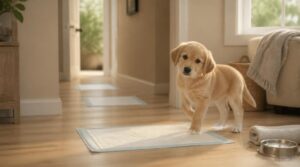
Slow and steady wins this race. Shift the pad 1–2 feet every 2–3 days, watching for hesitation—if your pup pauses, hold that spot longer.
| Day | Pad Position | Watch For |
|---|---|---|
| 1-3 | Original spot | Confidence |
| 4-6 | Halfway | Hesitation |
| 7-9 | Near door | Consistency |
| 10+ | Threshold | Reliability |
Keep the surface texture consistent, and track successes to catch regression early during potty training.
Place Pads Near Door
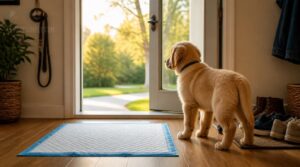
Right by the exit, your pad now doubles as a signpost pointing toward the great outdoors. This doorway pad placement builds the mental link between "gotta go" and "go outside."
- Keep it 2–3 feet from the threshold
- Use non-slip pad security (tape or backing)
- Choose high-contrast pad colors
- Manage entryway traffic so nobody trips
- Add space for turning room
This sets up smooth exit cues ahead.
Shift Pad Outdoors
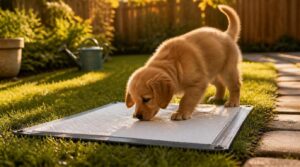
Ready to make the final move? Take the same pad your pup already trusts and place it outside, in the exact spot you want as their permanent bathroom.
A Shift Pad Outdoors setup works well here—outdoor durability, weather resistance, and quick portable setup mean it holds up against rain, sun, and daily use without fuss. This keeps your routine consistent while introducing outdoor potty training.
Reward Outdoor Pottying

The second your puppy finishes outside, the reward window is already closing — you’ve got just a few seconds to make it count.
Pair excited verbal praise with a high-value treat like chicken or cheese, then add a quick play session.
- Reward every single outdoor success
- Keep treats small and tasty
- Praise in a happy, upbeat tone
Skipping this step slows progress and invites more indoor accidents.
Remove Pads Completely

Fourteen straight accident-free days outside means you’re done — pull the pads for good.
Scrub every trace with an enzymatic cleaner so no scent markers lure your puppy back indoors. Keep your outdoor cue word consistent, log successes daily, and watch closely for a full week after removal. If regressions happen, don’t panic — just stick to the outdoor routine and troubleshoot patterns before restarting pads.
Frequently Asked Questions (FAQs)
When to stop using puppy training pads?
Picture your pup trotting to the door instead of the pad, tail wagging with confidence. That’s your cue. Stop once overnight bladder control holds steady, outdoor cue recognition sticks, and two accident-free weeks pass—then start tapering pad availability gradually.
What is the 10 10 10 rule for potty training puppies?
The 10-10-10 rule means taking your puppy out within 10 minutes of waking, eating, or playing. Use a consistent cue, then reward with a high-value treat within seconds — timing matches digestion and short bladder capacity for reliable potty pad or outdoor success.
How long should it take to puppy pad train a puppy?
Like teaching a toddler to use the toilet, it’s a gradual process, not a switch you flip. Most puppies grasp pad basics within 2 to 4 weeks, with full reliability taking 4 to 8 weeks depending on breed and consistency.
What is the 7 7 7 rule for dogs?
It breaks adjustment into 7 days for decompression, 7 weeks building household norms and routine, and 7 months growing long-term trust—paired with exposure to 7 surfaces, objects, locations, and people for controlled variety alongside your potty training routine.
What type of potty pad works best for puppies?
Go with gel filled, leakproof pads featuring odor control technology and non-slip backing. Disposable pads suit busy schedules; reusable ones save money long-term. Skip heavily scented pads if your pup has sensitivities.
How many potty pads does a puppy need daily?
More pads can mean less mess, yet fewer pads often mean faster progress. Most homes use one to two pads per area; small breeds or busy layouts may need extra, while cost and convenience should guide your final count.
Can adult dogs be retrained to use pads?
Yes, adult dogs learn pad habits too, just more slowly than puppies. Use positive reinforcement, a consistent cue like "go potty," and stable pad placement. Rule out medical causes first, especially for senior dogs facing mobility or cognitive decline.
Is it okay to use pads permanently for small dogs?
Absolutely, pad-fection is possible: permanent pad use works great for small breeds, apartment living, or senior dogs. Just manage dependency by keeping pads in a fixed spot and staying consistent with your indoor dog bathroom routine.
Conclusion
Some puppies quit pads in weeks; others need months. That gap isn’t failure, it’s biology. Knowing how long to use puppy training pads means watching your puppy, not the calendar taped to your fridge.
Track accident-free stretches, honor bladder limits, and shift the pad closer to the door each week. One day, you’ll open that door, and your puppy will walk straight past the pad. That’s not luck. That’s consistent training doing exactly what it’s built to do.
- https://petnpet.us/blogs/news/when-to-stop-using-puppy-pads
- https://www.allpetsolutions.co.uk/blogs/pet-advice/how-long-to-use-puppy-pads
- https://www.pets4homes.co.uk/pet-advice/weaning-your-puppy-off-puppy-pads-in-favour-of-toileting-outside.html
- https://www.akc.org/expert-advice/training/the-ins-and-outs-of-potty-pad-training
- https://www.rover.com/blog/puppy-potty-training-timeline