This site is supported by our readers. We may earn a commission, at no cost to you, if you purchase through links.

Most dog owners treats like punctuation—sprinkled in throughout the day without much thought. But timing matters more than most people realize.
Research on animal learning shows that a reward delivered even three seconds too late can confuse a dog about what behavior actually earned it. That gap is the difference between training a dog and accidentally reinforcing whatever they happened to do next.
Knowing when to give dog treats—not just which ones—transforms a handful of chicken pieces into a genuine communication tool between you and your dog.
Table Of Contents
Key Takeaways
- Rewarding your dog within two seconds of good behavior is the difference between teaching the right thing and accidentally reinforcing the wrong one.
- Once a skill is solid, switching to random rewards actually keeps behavior stronger than handing out treats every single time.
- Treats should never exceed 10% of your dog’s daily calories — they add up fast, and the math matters for long-term health.
- Giving a treat while your dog jumps, begs, or barks tells them that behavior works, so timing and consistency are everything.
Give Treats Immediately After Good Behavior

Timing is everything regarding treat-based training. Your dog lives in the moment, so the connection between action and reward needs to happen fast. Here’s how to get that timing just right.
Aim to reward within a second or two of the behavior—check out this Weimaraner cluster training timeline to see how session pacing affects how quickly dogs make that connection.
Reward Within Two Seconds
Within two seconds of good behavior — that’s your window. Dogs can’t connect a reward to something that happened even five seconds ago.
Deliver the treat fast, and your dog links the payoff directly to the right action. Hesitate, and you risk accidentally reinforcing whatever happened next instead.
Use Marker Words
That two-second window is tight — so a marker word buys you breathing room. Say "Yes!" the exact moment your dog sits, and that word becomes a bridge.
It tells your dog, "That’s right, that’s what earned the treat." Keep the same word every session, same tone, same timing. Consistency is what makes it click.
Click Before Treating
A marker word like "Yes!" works well, but a clicker takes timing precision even further. The click lands at the exact moment your dog does the right thing — then the treat follows. That sequence matters.
Click, then treat trains your dog to connect the sound with the behavior, not with food appearing.
Clicker training also strengthens the bond between pet and owner, enhancing cooperation.
Avoid Delayed Rewards
Timing is everything. If the treat arrives even three seconds late, your dog has likely moved on to sniffing the floor or glancing away — and that’s the action getting reinforced, not the sit you asked for.
Delayed rewards break the cause-effect link, your dog needs to learn clearly, slowing progress and quietly teaching the wrong things.
Reinforce The Right Action
Before rewarding, know exactly what behavior you’re reinforcing. Define the precise action first — "sit" means rear end fully lowered, not halfway down.
Use a consistent marker word the moment that exact behavior happens, then deliver the treat predictably. This clarity helps your dog understand the rule quickly and repeat the right action every time.
Use Treats During Training Sessions
Training sessions are where the real magic happens between you and your dog. The way you use treats during practice can either speed up learning or quietly work against it. Here are a few simple habits that make every session count.
Reward Every Correct Response

Every correct response deserves a reward — especially early on. Continuous reinforcement removes all the guesswork for your dog. When every right move earns a treat, your dog learns faster and stays motivated.
Here’s why rewarding every correct response works so well:
- Marker word consistency tells your dog the exact moment they got it right
- A clicker’s sharp sound signals correctness instantly, before the treat even arrives
- Continuous rewards eliminate confusion during early learning
- Withholding treats for wrong responses teaches your dog what doesn’t work
- Predictable reinforcement builds a strong behavioral foundation fast
Once the behavior is reliable, you can start rewarding less often.
Keep Treats Tiny
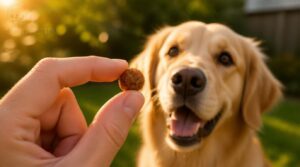
Think of treat size as your secret training weapon. Pea-sized portions — about 6 to 10 millimeters — let your dog swallow quickly and stay focused.
Soft, moist treats disappear in one or two seconds, keeping your rhythm smooth. Tiny pieces also mean calorie-light rewards, so you can repeat 20 to 50 reps without blowing your dog’s daily calorie budget.
Train Before Meals
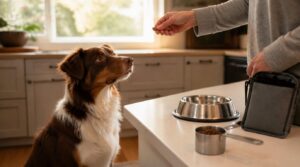
Your dog’s hunger is one of your best training allies. Before a meal, food motivation is at its peak — making treat rewards hit harder and hold attention longer.
- Train 20–30 minutes before breakfast or dinner
- Keep sessions brief and focused
- Coordinate training treats with your dog’s meal schedule
- Reduce meal portions slightly on heavy training days
Practice Short Sessions

Short sessions are your secret weapon. Five minutes of focused training beats a long, exhausting marathon every time. Keep each session tight, target one behavior, and repeat it until your dog nails several reps in a row. Then stop — ideally on a win. That positive ending keeps your dog enthusiastic to come back tomorrow.
| Session Element | Best Practice |
|---|---|
| Session length | 3–5 minutes per session |
| Skill focus | One behavior per session |
| Success reps | Aim for 5–10 correct repetitions |
| Signs to stop | Yawning, distraction, or errors increase |
| How to end | Finish with a known, easy cue |
Use High-value Rewards
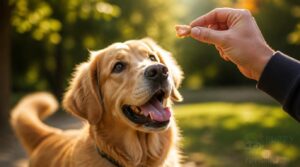
Not all treats are created equal — and your dog knows it. High-value rewards like small pieces of cooked chicken, cheese, or soft training bites tap into food motivation in dogs at its peak. Test two or three options and watch which one your dog grabs fastest. That’s your winner for tough training moments.
- Match reward to difficulty — save the good stuff for new or challenging behaviors.
- Test in distractions — a treat that works at home may need upgrading at the park.
- Hand feed during training — it sharpens reward timing and keeps your dog locked in.
- Rotate treats occasionally — overuse dulls value, so switching prevents treat fatigue.
Reduce Treats After Skills Improve

Once your dog has a skill down solid, it’s time to pull back on the treats — and that’s actually a good thing. Rewarding every single response can quietly create a dog that only performs when food is on the table. Here’s how to wean off treats the right way while keeping those hard-earned skills sharp.
Switch to Random Rewards
Switching from a consistent reward schedule to an intermittent schedule is where reward-based training really clicks. Once skill reliability testing shows your dog performs correctly, gradual probability reduction helps — rewarding some responses, not all. That shift from predictable vs unpredictable reinforcement sustains maintaining motivation levels without fueling training boredom.
| Phase | Reward Timing | Treat Frequency |
|---|---|---|
| Early learning | Every response | Always |
| Building skill | Selective | 1 in 2–3 |
| Reliable behavior | Random | 1 in 4–5 |
Behavior shaping continues throughout — just with fewer treats.
Mix Praise and Play
Once you’re rewarding less often, praise and play fill the gap beautifully. A bright "Yes!" paired with a quick tug session tells your dog the win still matters.
Match your enthusiasm to difficulty — a shaky "sit" gets a calm nod, while a perfect "stay" earns real excitement.
That balance keeps motivation alive without a treat in sight.
Reward Harder Behaviors
Once you’re leaning on praise and play, it’s time to raise the bar a little. Reward harder behaviors more generously than easy ones — your dog’s working for it.
- Reserve high-value reinforcers for tougher cues
- Use successive approximation steps to build difficulty gradually
- Apply marker timing precision exactly when they nail it
Effort deserves the better treat.
Prevent Treat Dependency
Your dog doesn’t need a treat every time — and that’s actually a good thing. Random reward schedules keep behavior strong because your dog never knows when the payoff is coming. That unpredictability builds persistence, not dependency.
Unpredictable rewards build persistence — your dog works harder when the payoff isn’t guaranteed
| Sign of Dependency | Healthier Alternative |
|---|---|
| Refuses commands without food | Practice with praise alone |
| Only works when treat is visible | Hide treats, reward after |
| Loses motivation between sessions | Mix in play and affection |
| Ignores cues if distracted | Use high-value rewards selectively |
Swap food for non-food reinforcers — a quick game, a chest scratch, a cheerful "yes!" These matter more than you might think.
Maintain Learned Commands
Once your dog knows a command cold, the real work is keeping it sharp. Consistent practice in new settings daily prevents skills from fading.
- Repeat cues during walks, meals, and playtime
- Use short, focused repetitions in distracting places
- Reward calm compliance when it matters most
That’s how commands stay reliable — not just in training, but in real life.
Give Treats Within Calorie Limits
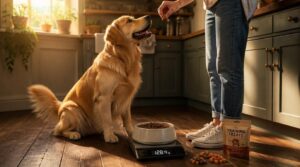
Treats are a great training tool, but calories add up faster than you’d think. Keeping your dog’s treat intake in check is one of the simplest things you can do for their long-term health. Here’s what to keep in mind.
Follow The 10% Rule
Think of your dog’s treat budget like a small slice of pie — no more than 10% of their total daily calories.
For a 20-lb dog needing 350 kcal daily, that’s just 35 kcal reserved for treats.
Going over that limit, even with tiny bites, quietly adds up and raises the risk of obesity, diabetes, and joint strain.
Count Daily Treat Calories
Every treat counts — even the ones you forget. Training bites, dental chews, supplement chews, and table scraps all go into the same daily calorie total.
In multi-person households, pull treats from one shared container so nobody double‑counts.
Multiply treats given by calories per piece, then add each type together. That running number is your real budget snapshot.
Adjust Meal Portions
Treats don’t exist in a vacuum — they’re part of your dog’s total daily caloric intake. When treat calories rise, meal portions need to come down by the same amount.
Weigh kibble with a kitchen scale rather than eyeballing cups. Small adjustments matter. Make changes gradually, since big swings can upset digestion even when total calories are only slightly off.
Choose Low-calorie Bites
Not all treats are created equal — some pack more calories than you’d expect from something so small. Low-calorie bites are your best friend here, keeping calorie density low without killing your dog’s motivation.
Look for options built around lean protein and vegetables like carrots or pumpkin. Aim for treats under 5 kcal each.
Monitor Weight Weekly
Your scale tells a story — make sure you’re reading it. Weigh your dog once a week, before meals, at the same time each day.
A 2% weight shift across two or more weigh-ins means it’s time to adjust portions. Pair that with body condition scoring — checking rib feel and waist shape — to catch changes your scale might miss.
Match Treat Timing to Age
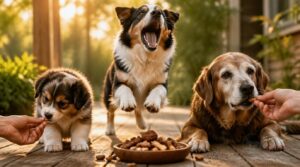
Your dog’s age shapes everything about how you treat them — and that includes the treats you give. A puppy, a healthy adult, and a senior all have different needs regarding texture, ingredients, and timing. Here’s how to match your treat choices to where your dog is in life.
Puppies From Eight Weeks
Eight weeks old is a big achievement — this is when puppy training begins. At this age, your puppy learns fastest when a reward arrives within two seconds of the right behavior. That tight window is everything.
Keep treat sizes tiny, around a pea-sized bite, so your puppy stays focused and finishes quickly without filling up.
Soft Puppy Treats
Soft texture matters more than you’d think. Puppy treats should dissolve easily — their developing teeth and tender gums can’t handle anything hard.
Look for real meat listed first, and check for added DHA, which promotes brain development. Skip anything with artificial sweeteners.
A soft, simple ingredient list keeps digestion smooth and training sessions moving.
Adult Training Rewards
Once your dog graduates from the soft, melt-in-the-mouth puppy stage, their treat needs shift. Adult dogs respond best to whole-protein treats — chicken, beef, or fish listed first.
Keep pieces bite-sized so training momentum never stalls. Use a marker word the instant they nail a cue, then reward immediately. Save high-value treats for harder behaviors.
Senior-friendly Textures
As your dog ages, their teeth tell a different story. Soft, moist textures become your best friend here — they’re easy to chew, break apart quickly, and won’t strain tired jaws.
- Choose gentle bite-sized pieces
- Avoid hard, crumbly options
- Serve treats at warm room temperature
This keeps eating comfortable and swallowing safe for senior dogs.
Joint-support Treat Options
When your dog’s joints start slowing them down, treats can do more than reward — they can support. Look for soft chews with glucosamine, chondroitin, and omega-3 fatty acids like EPA and DHA.
These ingredients support cartilage and comfort. Still, they count toward your dog’s 10% daily calorie limit, so portion carefully and track weight weekly.
Offer Treats for Healthy Routines

Treats aren’t just for training — they fit naturally into your dog’s everyday routines too. A few well-timed rewards can turn daily habits like grooming and crate time into moments your dog actually looks forward to. Here’s how to make treats work within the healthy routines your dog already has.
Dental Chews Once Daily
Think of a dental chew as your dog’s daily two-minute toothbrushing — minus the struggle. Give one chew per day, no more. The mechanical chewing action scrubs tooth surfaces, reducing plaque before it hardens into tartar. It also targets the bacteria behind bad breath, keeping your dog’s mouth fresher between vet visits.
Chew size matters. Too small and it’s a choking hazard; too large and your dog just gulps it whole. Gulping is the real problem — fast eaters miss the mechanical cleaning entirely, since the chew needs sustained contact with teeth to actually work. Look for VOHC-approved products with ridges designed to increase that tooth contact.
Calm Bonding Moments
Not every bonding moment needs a command. Sometimes the most powerful reward-based bonding happens when you simply sit beside your dog in a quiet space, breathe slowly, and let calm build naturally.
Reward your dog with a small treat when they choose to settle near you — that stillness is worth reinforcing.
Grooming Cooperation Rewards
Grooming can feel like a battle — but it doesn’t have to. Use a clicker or verbal marker, the instant your dog holds still, then follow with a treat.
Reward brief moments of calm, not the whole session. Gradually build tolerance by pairing treat placement near the groomed area with each small step forward.
Crate Training Encouragement
The crate shouldn’t feel like a trap — it should feel like a cozy den your dog chooses freely. Toss treats inside so voluntary crate entry happens on your dog’s terms.
Mark calm moments instantly, then reward. Close the door only after your dog moves in and out with ease, building positive crate associations without rushing.
Enrichment Chew Days
Enrichment chew days give your dog a healthy outlet for natural gnawing instincts. Rotate flavors and textures — rubbery, crunchy, rope-like — to keep interest alive.
Always supervise unfamiliar chews and end the session before pieces become swallow-sized. Track those chew calories just like training treats, adjusting meals accordingly so you stay within your dog’s daily 10% treat budget.
Avoid Treating Bad Habits

Treats are powerful — but only when they land at the right moment for the right reason. Hand one over while your dog is jumping, barking, or begging, and you’ve just taught them that bad behavior pays off. Here’s what to watch out for so your rewards always work in your favor.
No Treats for Jumping
Honestly, jumping happens when excitement beats self-control. Skip treats mid-jump—that only fuels dog behavior reinforcement for the wrong move.
- Turn away, cutting off social attention
- Fold arms, preventing accidental contact
- Reward paws-on-floor instead
Consistent household rules make this incompatible behavior training stick, lowering arousal and keeping greetings safe for everyone.
Ignore Begging Behavior
That mealtime stare your dog gives you? Don’t reward it.
Look away, stay quiet, and withhold touch completely. Any attention—even a glance—teaches begging pays off.
| Action | Skip This | Do This |
|---|---|---|
| Eyes | Direct stare | Look away |
| Voice | "No" or name | Stay silent |
| Hands | Push or pet | Keep still |
Expect a brief escalation first, then watch begging fade. Reward calm stillness instead.
Avoid Barking Rewards
Begging fades with stillness—barking follows the same playbook. The doorbell rings, your dog barks, and treats appear? You’ve just rewarded noise.
Instead, spot the trigger, wait for quiet, then mark and reward calm stillness. Time the treat to silence, not sound.
One slip reinforces barking again. Stay consistent, and quiet becomes the behavior that pays.
Don’t Replace Meals
Keeping quiet earns treats — but treats can’t earn a meal.
Commercial dog food is carefully balanced to deliver the right protein, fat, and micronutrients your dog needs daily. Treats aren’t.
Swapping meals for snacks creates nutrient gaps that build up quietly, disrupting digestion and energy.
Keep meals meals, and treats exactly what they’re — rewards.
Skip Unsafe Ingredients
Not all treats are created equal — some hide ingredients that can seriously hurt your dog. Xylitol, BHA, BHT, and propylene glycol are common additives worth avoiding.
Xylitol especially, can trigger life‑threatening low blood sugar, fast. Always flip the bag and read the label.
When in doubt, single‑ingredient treats like freeze‑dried chicken keep things simple and safe.
Frequently Asked Questions (FAQs)
Can treats help anxious dogs during thunderstorms?
Yes, treats can help. Pairing a calming treat with chamomile or L-theanine during a storm gives your dog both a distraction and a positive association with the noise.
Should treats differ based on a dogs breed?
Breed is really just a starting point. What matters more is your dog’s size, health, and digestion. A sensitive stomach or dental issue shapes treat choice far more than breed name ever will.
How do treats affect dogs with food allergies?
Hidden allergen ingredients can sneak into snacks, triggering itching or upset stomachs. Introduce new treats gradually, monitoring allergy symptoms closely. Choose allergen-free dog treats with clear, named ingredients, and call your vet if severe allergies flare up.
Can treats be used to introduce dogs to strangers?
Absolutely, much like easing into cold water one toe at a time.
Barrier training methods and controlled distance interactions let your dog build stranger confidence slowly, using positive reinforcement and training treats as positive association signals to reward good behavior.
Do outdoor environments change how treats should be given?
Outdoors changes everything. Scent drift, wind, and noise compete for your dog’s attention, so treats need faster timing. Watch footing on gravel or wet grass, keep rewards visible in sunlight, and boost reward frequency near big distractions.
Conclusion
A treat handed out too late teaches nothing; a treat handed out at the right second teaches everything.
That’s the gap between confusion and connection.
Once you know when to give dog treats, every small bite becomes a clear message your dog can trust.
You’re not just rewarding behavior anymore, you’re building a language only the two of you share.
Pick up that bag of treats, and use it like the powerful tool it is.
- https://www.luckypremiumtreats.com/blogs/news/the-ultimate-guide-to-training-treats-size-texture-and-timing-tips
- http://nybasset.org/ufaqs/positive-reinforcement-training-your-dog-with-treats-and-praise
- https://www.humaneworld.org/en/resources/positive-reinforcement-training
- https://petnutritionalliance.org/resources/calorie-calculator
- https://www.purina.com/articles/dog/feeding/guides/how-many-treats-per-day-for-dogs