This site is supported by our readers. We may earn a commission, at no cost to you, if you purchase through links.

Most dog owners give a command, wait, and then reward—somewhere between the sit and the snack, the lesson blurs. Dogs don’t process meaning the way we do; they lock onto whatever they were doing at the exact moment reinforcement lands. That half-second gap between behavior and treat? It’s enough to accidentally reward a sniff, a glance away, or a shift in weight.
Positive marker training techniques solve this with a single, precise signal that tells your dog, "That—right there—is what earned it." Once your dog understands what the marker means, training becomes a clear conversation instead of a guessing game.
Table Of Contents
Key Takeaways
- A marker works like a snapshot — it tells your dog the exact moment they got it right, so the reward that follows actually teaches something instead of accidentally rewarding the wrong thing.
- You need to "charge" your marker first by pairing it with treats repeatedly until your dog connects the sound or signal to something good coming — skip this step and the marker means nothing.
- Timing is everything: mark the precise behavior you want, get the reward delivered within three seconds, and practice your click reflex without your dog until it’s sharp and automatic.
- Once a behavior is solid, shift away from rewarding every single repetition and start mixing in praise, play, and random treat schedules to keep your dog engaged without depending on food.
What is Positive Marker Training?

Positive marker training is one of the clearest ways to communicate with your dog — you’re fundamentally giving them a precise "yes, that’s it" at the exact right moment. Before you pick up a clicker or start saying "yes," it helps to understand what a marker actually does and why it works so well. Here’s what you need to know to get started.
If you want to go deeper, marker training techniques for dogs breaks down exactly how to time your signals and build on them step by step.
Marker Meaning Explained
Think of a marker as a bridge signal — it connects the exact moment your dog does something right to the reward that’s coming. It doesn’t mean "treat in your mouth now." It means "that thing you just did? That’s getting paid."
A marker bridges the exact moment your dog succeeds to the reward that follows
This reward prediction is what makes marker training so precise. The marker becomes a conditioned reinforcer through repetition, not assumption.
Trainers can use different marker modalities like mechanical clickers, verbal cues, or visual signals.
Clicker Versus Verbal Marker
So which marker should you actually use — clicker or your voice?
A clicker gives the same sound every time, which builds rock-solid marker consistency. Verbal markers offer handler convenience — no gear, just "yes."
Research shows neither guarantees faster learning speed; dogs adapt to both through positive reinforcement.
- Feel confident choosing what fits your life
- Trust that your dog can thrive either way
- Enjoy training without extra gadgets
- Build a bond through reward and timing
Why Markers Help Dogs
So why bother with a marker at all? Because it gives your dog immediate feedback — the exact second they get it right.
That precision builds behavior precision and speeds up learning acceleration. Dogs trained this way often need fewer reps to learn new skills.
It also boosts confidence and helps behaviors generalize to new places — proof that positive reinforcement through clear communication truly shapes learning.
Marker Versus Reward
Here’s where people get confused: the marker isn’t the reward. It’s a signal that says "yes, that’s it" — the reward (treat, toy, praise) follows right after.
Marker reward timing matters because the gap should stay short and consistent. Over time, thanks to operant conditioning, the marker itself becomes meaningful through the marker charging process.
Choose Your Dog’s Marker Signal

Now comes the fun part: picking what marker works best for you and your dog. Not every signal fits every situation, and that’s okay. Let’s look at your options.
Clickers for Clear Timing
A clicker is basically a tiny camera for your dog’s good behavior — click, and you’ve captured it.
| Clicker | Voice Marker |
|---|---|
| Same sound, every time | Tone varies with mood |
| Cuts through noise | Easy to miss |
| Sharp, instant snap | Slight delay |
| Pairs well with treats | Less precise |
| Builds fast progress | Slower learning |
Noise-sensitive pup? Click inside your pocket to muffle it.
Verbal Markers Like “yes”
Saying "yes" works just as well as a click, if you keep it sharp and consistent. Marker word clarity matters most—same pitch, same tone, every time.
This verbal bridge signal tells your dog a reward’s coming within seconds.
- relief of finally "getting it right"
- excitement building toward the treat
- trust growing with each clear "yes"
- confidence from knowing exactly what worked
That’s positive reinforcement in action.
Hand Signals for Deaf Dogs
What if your dog can’t hear "yes" at all? For deaf dogs, a visual marker replaces sound entirely—often a thumbs-up.
Once the thumbs-up becomes meaningful, you can even start fading food rewards using intermittent reinforcement strategies for lasting dog behavior.
| Element | Why It Matters |
|---|---|
| Hand Shape Clarity | Easy to spot |
| Distance Visibility | Works far away |
| Signal Consistency | Builds trust |
Pair body language with visual cue design for reliable marker training and lasting positive reinforcement.
Whistles, Snaps, Clucks
No clicker handy? Your own mouth and fingers work just as well. A whistle offers great Whistle Projection for long Training Distance, while a snap delivers fast Snap Speed with hands mostly free.
- A sharp whistle cutting through wind
- A quick finger snap before a treat
- A soft cluck with Cluck Variation
All beat background noise with solid Noise Immunity for shaping behaviors.
Tactile Markers and Taps
Can’t hear or see your marker? Feel it instead. A simple shoulder tap works as a mechanical marker for deaf dogs—tap marker consistency in location and pressure matters most.
| Marker | Best For | Key Trait |
|---|---|---|
| Tap | Deaf dogs | Consistent spot |
| Magnetic | Reusable cues | Easy removal |
| Elastic band | Quick swaps | Elastic band benefits |
Touch-based marker signals support shaping behaviors through positive reinforcement, even without sound.
Charge The Marker First
Before your marker means anything to your dog, it’s just a random sound. You need to give it meaning first, and that’s what charging is all about. Here’s how to get that connection going in five simple steps.
Pick a Quiet Room

Before you even pick up that clicker, think about where you’ll train. A quiet room, away from foot traffic, sets the stage for success.
Pick a space with a closed door, soft rugs, and neutral colors. Keep it clutter-free and comfortable. This calm setup helps your dog focus during marker training—no distractions competing with that all-important positive reinforcement.
Mark, Then Reward
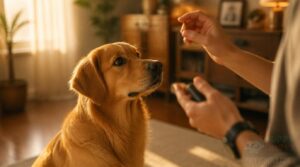
Got your quiet room ready? Good. Now comes the simple part: click (or say "yes"), then immediately give a treat. Order matters here.
This pairing teaches your dog that the marker predicts a reward. A few things to keep in mind:
- Mark first, treat second—always.
- Deliver the reward within a second or two.
- Use the same sound every time.
- Pick treats your dog actually loves.
Repeat Ten to Twenty Times

One repetition won’t cut it. Repeat the click-treat pairing ten to twenty times per session—this builds real anticipation.
| Repetitions | What Happens |
|---|---|
| 1-5 | Dog notices sound |
| 10-15 | Anticipation builds |
| 20 | Marker "charged" |
Keep consistent timing practice across sessions. Watch for that telltale head-turn—it means the marker training is working.
Reward Within Three Seconds

Speed matters here. Once you click, the treat needs to follow within three seconds—any longer and your dog loses the connection. This prompt reward timing keeps clicker training effective by linking sound to snack.
Think of reward latency control as your safety net: immediate reward delivery cements positive reinforcement, while delays muddy the message. Practice this timing and consistency until it feels automatic.
Watch for Happy Anticipation

Timing is only half the job—now watch your dog’s face. A charged marker creates real happy anticipation: brighter eyes, perked ears, quick glances toward your treat hand.
These are reward expectation cues, signs your dog connects the sound with good things coming. If you see this bouncy, enthusiastic energy, marker training is working—your dog’s engagement signals show the bridge to reinforcement is solid and ready for real cues.
Use Precise Marker Timing

Once your dog knows the marker means good things, timing becomes everything. A click that comes a second too late can teach the wrong lesson entirely. Here’s how to nail that split-second precision every time.
Mark The Exact Behavior
Why does the split-second moment matter so much? Because behavior marking accuracy tells your dog exactly what earned the reward—not a second before, not a second after. Clicker training works because of this precision.
For example:
- Mark the paw lift, not the full sit.
- Mark the head turn toward you.
- Mark the moment teeth touch the toy.
Instantaneous signal delivery, paired with reward follow through, builds clear mark and reward training.
Avoid Late Clicks
Ever click a beat too late and watch your dog look confused? That’s a late click talking. Click Timing matters because a delayed marker grabs the wrong moment—maybe your dog already stood up after sitting.
Quick Reaction beats hesitation every time. Watch the behavior, not your treat pouch. Consistent Clicks, delivered the instant it happens, keep marker training honest and your Accurate Snapshot crystal clear.
Keep Your Marker Consistent
Always click the same way, every time. That’s the same sound routine your dog learns to trust.
Switching between a clicker and verbal markers like "yes" creates confusion. Whether you’re doing clicker training or using verbal markers, consistent signal delivery matters. Standardized cue delivery, paired with consistent timing practice, keeps marker training clear—your dog always knows exactly what that signal means.
Reward After Every Mark
Every mark deserves a payoff—no exceptions, especially early on. This is continuous reinforcement, and it builds rock-solid trust in clicker training.
Why it matters:
- Immediate reward timing locks in the connection
- Reward consistency prevents confusion
- Fast treat delivery speed keeps focus sharp
- Reward frequency shapes confidence
- Skipped marks weaken positive reinforcement
Mark it, pay it—every single time during this dog training phase.
Practice Timing Without Your Dog
Want sharper timing? Practice without your dog first. Grab a tennis ball and click the instant it hits the floor—this trains your marker signal reflex.
Keep your food hand still and tucked away. Run short timing drills, 10-20 reps, in a quiet setup. Repeat until your click lands exactly on time, not a half-second late.
Teach Behaviors Step by Step

Once your dog understands the marker, it’s time to put it to work. There’s more than one way to teach a new behavior, and each method fits different situations. Here are five approaches you’ll want in your toolbox.
Lure-and-reward Basics
A treat near your dog’s nose can steer their whole body—that’s the magic of lure-and-reward training.
- Hold treat at nose level
- Move it slowly toward target position
- Mark the moment they follow
- Reward immediately after
- Fade the lure within a few reps
Treat placement matters most early on. Soon, that hand motion becomes a cue—no food required, just positive reinforcement.
Capturing Natural Good Behavior
No luring needed here—just watch and wait. Capturing good behavior means marking moments your dog already does naturally: sitting, lying down, calm glances.
| Dog Does | You Mark |
|---|---|
| Sits quietly | Click + treat |
| Lies down | "Yes" + reward |
| Looks at you | Click |
| Stays calm | Praise |
| Settles down | Treat |
This builds trust through reward timing and everyday moments.
Shaping Small Progress
Capturing rewards what your dog already does. Shaping goes further—you build a brand-new behavior through tiny step training.
Think of teaching "spin": click for a head turn, then shoulders, then a full circle. This gradual progression plan uses successive approximations—small wins stacked toward the goal.
- Start with one tiny movement
- Reward micro behavior rewards generously
- Raise the bar slowly
- Stay patient with incremental reinforcement
- Celebrate every small win
That’s shaping behavior through clicker training and positive reinforcement.
Targeting With Hands or Objects
Shaping builds skills piece by piece, but targeting gives your dog a clear bullseye.
Hand Target Basics start with a nose touch to your palm—click and reward instantly. Object Target Tools, like a lid or pad, work great too. Nail your Nose Touch Criteria, then try Distance Targeting Practice and Target Accuracy Drills.
Targeting exercises sharpen focus through positive reinforcement.
Adding Verbal Cues
Once your dog nails the target every time, words come easy. Say the cue right before your hand moves—that’s Cue Pairing Sequence done right.
Keep Cue Word Consistency so "touch" always means touch. This is Cue Without Lure in action, building toward Cue Generalization Practice through positive reinforcement and reliable marker training across desired behaviors.
Choose Rewards That Motivate

Your marker only works if what follows it actually matters to your dog. Not every reward lands the same way, and what excites one dog might bore another. Here are a few options worth trying out.
High-value Training Treats
Not all treats are created equal — and your dog knows it. For tricky skills or noisy places, reach for aromatic meat rewards like chicken or cheese.
- Pea-sized treats keep sessions fast
- Soft freeze-dried options pack big flavor
- Rotate choices with a treat variety strategy
- Watch calories with a simple control plan
This positive reinforcement keeps your dog ready for the next reward.
Praise and Happy Voice
Smiling while you say "yes" might be your easiest reward yet. Voice pitch consistency matters — keep it higher than your command voice. Happy tone benefits go beyond mood; it sharpens focus and builds emotional connection.
| Tone | Effect |
|---|---|
| Cheerful | More engagement |
| Stern | Less performance |
| Consistent | Faster learning |
| Higher pitch | Signals reward |
| Timely | Strengthens bond |
Praise timing tips: deliver it instantly for real impact.
Toys and Tug Games
Grabbing a tug toy turns your marker into a launchpad for fun. Reward through play works great for dogs who’d rather pull than munch. Follow simple tug game rules: cue "take it," play briefly, then "drop." This builds impulse control while satisfying natural urges.
Always run safety tug checks for fraying before starting — frayed rope can be swallowed.
Petting and Affection
A slow stroke down the back can mean more to your dog than a cookie ever could. Gentle stroke benefits include relaxed muscles and a soft, settled body language.
Mark the moment, then deliver immediate petting reward through calm physical affection. Since pet preference variations exist, watch what your dog actually enjoys — this builds bonding through touch and strengthens reinforcement.
Sniffing and Walk Rewards
Ever notice how your dog’s nose practically drags them down the sidewalk? Use that. A sniff break is a reward straight from nature.
Sniff Break Timing matters: release with "Go sniff!" after loose leash walking.
Try this Walk Structure Design:
- Walk a short stretch
- Mark calm attention
- Use your Reward Release Cue
This Loose Leash Reward captures good behavior through marker training and positive reinforcement.
Fix Common Marker Training Problems

Even with the best timing, things can go sideways. Maybe your dog seems bored, or stuck on treats, or totally checked out around other dogs. Here’s how to spot what’s going wrong and get things back on track.
Dog Ignores The Marker
Your dog hearing the click isn’t the same as your dog caring about the click.
Timing issues are often the culprit—mark too late and you reward the wrong thing. Check reward value too: kibble won’t beat a squirrel.
Watch for cue confusion or marker consistency problems, and manage distractions by practicing somewhere quieter first.
Progress Feels Too Slow
Once timing’s solid but things still crawl, look at how progress shows up. Big skills feel slower without visible milestones along the way.
Break behaviors into smaller pieces:
- Celebrate tiny wins, not just final goals
- Track sessions to spot real progress
- Set closer, reachable checkpoints
Marker training works best when the endpoint feels reachable, not distant.
Dog Only Works for Treats
Checkpoints are great, but what if your dog only moves when treats appear? That’s treat dependency, not real cue association training.
| Sign | Fix |
|---|---|
| Stares at hand | Hide treats |
| Ignores empty-hand cues | Reward thinning |
| Won’t work fasted | Try non-food reinforcers |
| Quits after one try | Vary reinforcement |
| Needs high-value always | Mix praise, toys |
Distractions Ruin Focus
Working fine at home, then falling apart at the park? That’s environmental noise effects plus social interruptions reducing focus fast. Digital distractions impact training too—silence your phone. Internal mind wandering happens in new places. Recovery time delays mean rebuilding focus after each distraction.
Fix it: practice clicker training in low-distraction spots first, then slowly add noise during marker training sessions with solid reinforcement.
Switching to Intermittent Rewards
Once your dog nails a behavior nearly every time, it’s time for a Reward Fade Strategy. Switch from constant treats to a Variable Ratio Schedule—rewarding every second or fourth correct response, randomly.
Mix in Non-Food Reinforcers like praise or play, plus occasional Jackpot Rewards for great reps. This builds Long-Term Retention while keeping your marker training and intermittent reinforcement rock-solid.
Frequently Asked Questions (FAQs)
What are the 7 Lucky Dog Commands?
Brandon McMillan’s 7 Lucky Dog commands are sit, stay, down, come, off, heel, and no — the core skills built to give any rescue dog real control, safety, and good manners at home.
Can marker training help with dog aggression issues?
Yes, marker training can genuinely help with dog aggression issues — but it works best as part of a broader behavior modification plan, not as a standalone fix.
How does marker training differ across animal species?
Each species speaks a different language. Dogs thrive on a quick "yes," dolphins need underwater whistles, and deaf animals rely on visual hand signals — same principle, different delivery.
At what age should puppy marker training begin?
You can start as early as 7–8 weeks old. That’s when puppies begin forming associations. Short, calm sessions focused on simple marker games are all you need to build the foundation.
How long should each marker training session last?
Keep it short — 3 to 5 minutes per session works best. Puppies need even less. Aim for 3 to 4 mini sessions daily, always rewarding within 3 seconds and stopping while your dog still wants more.
Can marker training replace professional behavioral therapy?
No, marker training can’t replace professional behavioral therapy. For aggression, fear, or anxiety, you need a complete treatment plan — one that targets root causes, not just surface behavior.
Conclusion
A single well-timed click can transform a confused, distracted dog into a laser-focused partner who reads your intentions like an open book. That’s not an accident—it’s what positive marker training techniques make possible when you commit to precision over guesswork.
The marker doesn’t just teach behaviors; it builds a shared language between you and your dog. Get the timing right, choose rewards that matter, and watch your dog stop guessing and start truly understanding.
- https://rebarkable.com/clicker-training-vs-marker
- https://leerburg.com/markers.htm
- https://www.happyhounduniversity.com/single-post/training-tip-tuesday-verbal-markers
- https://summerbrookgoldens.com/chapter4-verbal-marker-or-clicker
- https://ridgesidek9norcal.com/how-marker-training-strengthens-bond-with-your-dog