
This site is supported by our readers. We may earn a commission, at no cost to you, if you purchase through links.

Most dog owners choose a bowl based on what looks good next to the water dish—and that’s exactly how plastic ends up doing quiet, long-term damage. Scratched plastic harbors bacteria in ways a quick rinse won’t fix, and some older formulas still leach BPA or phthalates into your dog’s water over time. The bowl your dog eats from twice a day matters more than most people realize.
Stainless steel has earned its reputation in veterinary and food-service settings for the same reason: a nonporous surface that doesn’t absorb odors, resist cleaning, or give bacteria a foothold. But not every stainless bowl is equal, and ceramic has its own case to make. Knowing the real differences helps you match the right bowl to your dog’s habits, size, and health needs.
Table Of Contents
- Key Takeaways
- Are Stainless Steel Bowls Better?
- Why Bowl Material Matters
- Stainless Steel Bowl Benefits
- Stainless Steel Bowl Drawbacks
- Stainless Steel Versus Ceramic
- Stainless Steel Versus Plastic
- Best Bowls by Dog Type
- Cleaning Stainless Steel Bowls
- Top 5 Dog Bowls Compared
- Choosing The Right Dog Bowl
- Frequently Asked Questions (FAQs)
- Conclusion
Key Takeaways
- Stainless steel bowls win on hygiene because their nonporous surface gives bacteria nowhere to hide, unlike scratched plastic or chipped ceramic.
- Plastic bowls carry real chemical risks — BPA and phthalates can leach into your dog’s food, especially when the bowl heats up or gets scratched.
- Ceramic looks great but comes with a hidden catch: if the glaze chips, it can leach lead or cadmium, so always check for lead-free certification before buying.
- Your dog’s specific needs matter — noise-sensitive dogs may do better with heavy ceramic, while seniors with joint issues benefit most from an elevated stainless steel setup with a non-slip base.
Are Stainless Steel Bowls Better?

For most dogs, stainless steel is the safest and most practical bowl material you can choose. That said, the right answer depends on how you weigh hygiene, durability, cost, and your dog’s specific quirks. Here’s how stainless steel stacks up across the comparisons that matter most.
If you want to dig deeper into the tradeoffs, this breakdown of the best dog food bowls by material and use case makes the decision a lot easier.
Best Overall Bowl Material
Choosing the safest, most practical bowl for your dog, stainless steel wins overall. Here’s why it consistently outperforms other materials across the categories that actually matter:
- Hygiene rating — nonporous surface resists bacteria buildup
- Food safety — no BPA, lead, or chemical leaching
- Durability — resists dents, cracks, and daily wear
- Cost-effective — longer lifespan means fewer replacements
- Environmental impact — fully recyclable at end of life
Additionally, highly durable stainless steel bowls resist dents, scratches, and rust, further extending their lifespan.
Stainless Versus Ceramic Bowls
Ceramic bowls look great on the kitchen floor, but glaze safety is the real concern. If the glaze chips, it can leach lead or cadmium into your dog’s water.
Stainless steel has no coating to worry about — its nonporous surface naturally resists bacteria without relying on an intact finish that can crack over time.
Stainless Versus Plastic Bowls
Plastic might seem like an easy, budget-friendly pick, but it comes with real downsides. Scratches trap bacteria, surfaces absorb odors, and some plastics leach BPA or phthalates into your dog’s food.
- Stainless steel dog bowls stay bacteria resistant over time
- Plastic warps with heat, steel doesn’t
- Easy to clean with a quick dishwasher cycle
- Better durability means fewer replacements long-term
When Alternatives Make Sense
Stainless steel wins on most counts, but it’s not the only right answer.
Noise-sensitive dogs may do better with a heavier ceramic bowl that stays quiet on hard floors.
If you’re traveling often, a collapsible stainless option solves the portability problem.
And for tight budgets, a BPA-free, lead-free ceramic can be a practical, nontoxic alternative worth considering.
Why Bowl Material Matters
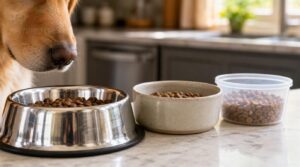
The bowl your dog eats from every single day isn’t just a container — it’s a recurring point of contact with food, water, and whatever materials it’s made from. That distinction matters more than most owners realize. Here’s what you actually need to think about regarding bowl material.
Your dog’s bowl isn’t just a container — it’s daily contact with whatever it’s made from
Daily Food and Water Contact
Your dog’s bowl touches their food and water every single day — so the material it’s made from matters more than most people realize. Stainless steel dog bowls have a nonporous surface that won’t absorb food flavors or odors between meals, keeping things fresher without extra effort. That also means bacterial growth prevention is built into the material itself, not just your cleaning routine.
Easy daily cleaning is another real advantage. A quick wash with hot soapy water — or a run through the dishwasher — is all it takes. The scratch resistant surface stays smooth with regular use, so there are no hidden grooves trapping residue over time.
Chemical Safety Concerns
What your dog eats from matters just as much as what they eat. Food-grade 304 stainless steel won’t leach BPA, phthalates, lead, or cadmium — common concerns with plastic and low-quality ceramic. Its surface passivation creates a protective oxide layer that resists corrosive chemical exposure, even from acidic canned foods.
Key chemical safety factors to evaluate:
- BPA leaching risk is eliminated with stainless steel
- Lead-free materials avoid heavy metal contamination
- Nickel allergy potential exists but remains very low
- Cleaning residue management stays simple — rinse thoroughly after washing
- Chemical leaching drops noticeably compared to scratched plastic
Bacteria and Odor Buildup
Even a spotless‑looking bowl can be hiding a problem. Biofilm — that slimy invisible layer bacteria build inside scratched or porous surfaces — clings between wash cycles and churns out compounds like ammonia and trimethylamine, which explain that unpleasant bowl smell.
Stainless steel’s nonporous surface resists biofilm adhesion far better than plastic or chipped ceramic, keeping odor buildup noticeably lower with regular washing.
Chewing, Tipping, and Cracking
Bowl material takes a real beating during mealtime.
Ceramic is brittle under impact — one bad drop creates cracks, chips, and sharp edges that can cut your dog’s mouth or cause internal injuries.
Stainless steel, by contrast, resists denting and cracking even after repeated chewing or impact, making it the far more chew-resistant, break-resistant choice for determined dogs.
Long-term Replacement Costs
Think of bowl replacement like a slow leak — small costs that quietly add up over time. Stainless steel lasts 3–5 years under daily use, while plastic wears out far sooner.
Fewer replacements mean real long-term cost savings. It’s genuinely budget-friendly pet supplies thinking: pay a little more once, replace less often.
Stainless Steel Bowl Benefits

Stainless steel has earned its reputation as the go-to bowl material for good reason — and it’s not just about looks. There are several practical advantages that make it stand out for everyday dog care. Here’s what puts it ahead of the pack.
Nonporous Hygienic Surface
Stainless steel has one standout quality that often gets overlooked: its surface absorbs nothing. No pores mean no hiding spots for bacteria, food residue, or odor.
After each meal, everything stays on the surface — making it genuinely easy to clean with just soap and water, or a dishwasher cycle. That’s a simple but meaningful win for your dog’s daily hygiene.
Rust-resistant Food-grade Steel
Food-grade stainless steel gets its rust resistance from a passivation layer — a thin oxide film that forms naturally when chromium and nickel react with air. This layer seals the surface against moisture and acidic foods.
Some bowls also include a molybdenum addition, which pushes corrosion resistance even further.
For a dog bowl used daily, that chemistry quietly does a lot of work.
Durable for Daily Use
That chemistry doesn’t just stop corrosion — it also backs up a bowl that’s genuinely built to last. Impact resistance and structural integrity are where stainless steel dog bowls really pull ahead. Drop one, and it bounces. Chew on the rim, and it holds.
- Wear resistance keeps surfaces smooth after years of daily scrubbing
- Corrosion protection prevents rust even with wet food and constant washing
- A nonporous, longlasting pet bowl surface means no cracks hiding bacteria
That extended service life adds up to real value over a dog’s lifetime.
Dishwasher-safe Cleaning
That durability pays off at cleaning time, too. Stainless steel dog bowls are dishwasher safe, so hygiene doesn’t depend on perfect hand-washing.
Place bowls securely on the bottom rack, add a rinse aid to prevent water spots, and use a hot cycle.
To clear mineral deposits, run an occasional vinegar wash cycle. No scrubbing, no guesswork — just consistent, reliable clean.
Long Lifespan and Value
A bowl that survives the dishwasher daily for a decade is quietly one of the best deals in pet ownership. Stainless steel bowls last 5 to 15 years with basic care — far outlasting plastic or ceramic. That’s a genuinely strong durability investment return:
- Reduced replacement costs over time
- Corrosion resistance keeps surfaces food-safe for years
- Manufacturer warranties of 1–5 years reflect real confidence in longevity
- No glaze, no coating — nothing to degrade
Stainless Steel Bowl Drawbacks
Stainless steel bowls are a solid choice for most dogs, but they’re not without their quirks. A few real-world limitations can affect whether they’re the right fit for your dog specifically. Here’s what to keep in mind before you commit.
Noise on Hard Floors
One thing that surprises many dog owners: stainless steel bowls can be genuinely noisy on hard surfaces. A nudge on tile or hardwood produces a sharp clang that travels fast.
For dogs with noise anxiety, that sound alone can turn mealtime stressful. Placing a rubber mat or sound dampening mat underneath reduces most of the racket immediately.
Lightweight Sliding Issues
Lightweight stainless steel bowls have a real sliding problem. Without enough mass, floor friction drops fast — one enthusiastic lick sends the bowl skidding across tile or hardwood.
This directly affects bowl stability during meals.
A slip‑resistant pet dish with a rubber base or anti‑slip features underneath solves most of it, and the added weight distribution reduces sliding noticeably.
Temperature Sensitivity Outdoors
Stainless steel conducts heat fast — leave a bowl in direct sun on a hot day and surface temperatures spike quickly, potentially reaching levels uncomfortable for your dog’s tongue within 10 to 20 minutes. In winter, the same conductivity works against you, accelerating frost buildup.
Moving the bowl to shade or choosing a double-walled insulated model makes a real difference outdoors.
Metallic Smell Preferences
Some dogs simply don’t like the smell of a metallic pet bowl. When skin oils and moisture contact steel surfaces, they trigger volatile compounds that produce a faint but distinct metallic aroma.
Odor preference variability means one dog ignores it completely while another refuses to eat. If your dog hesitates at mealtime, the bowl’s scent may be why.
Low-quality Steel Risks
Not all stainless steel bowls are created equal. Cheap versions often skip food-grade certification, meaning you can’t be sure what’s actually in the alloy.
Key risks with low-quality steel:
- Corrosion pitting traps bacteria after rust forms
- Metal leaching releases iron or chromium into food
- Surface contaminants from poor finishing alter taste
- Structural deformation creates debris-catching gaps
Stainless Steel Versus Ceramic
Ceramic bowls have their fans, and it’s easy to see why — they’re heavy, stylish, and feel a little more "home" than a shiny metal dish.
But when you put them side by side with stainless steel, some real differences show up that matter for your dog’s health and your daily routine. Here’s how the two stack up across the things that actually count.
Hygiene and Bacteria Resistance
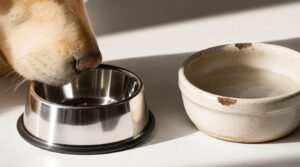
Regarding bacterial contamination, stainless steel has a clear edge over ceramic. Its nonporous material doesn’t absorb moisture or food residue, so bacteria have nowhere to hide.
Ceramic, once the glaze chips or crazes, develops tiny surface pockets — perfect for bacterial adhesion and odor buildup.
For consistent hygiene maintenance, stainless steel is simply the more reliable choice.
Chipping and Cracking Risks
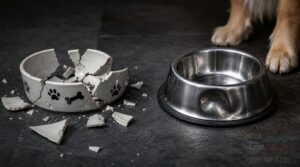
Ceramic bowls look great on Instagram, but they have a serious weakness: brittle failure on impact. Drop one on tile, and you’re likely dealing with sharp fragments — not just a cosmetic ding.
- Thermal shock causes microfractures in ceramic after temperature swings
- Drop testing shows ceramic chips; steel dents
- Edge protection holds in steel, fails in ceramic
- Surface toughness prevents crack propagation in steel
- Break or crack risk is near-zero with stainless
Weight and Stability
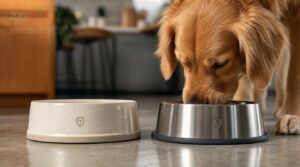
Weight gives ceramic a natural edge here. Its denser construction creates heavy bowl stability that resists pushy eaters without extra accessories. A wide base design spreads force low, keeping the bowl grounded.
Stainless steel dog bowls close the gap fast with a non-slip underside or rubberized feet — and heavy-gauge stainless with a weighted bottom matches ceramic’s staying power reliably.
Decorative Style Options
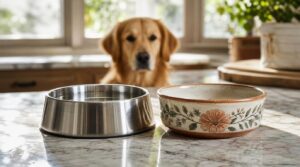
Style is where ceramic pulls ahead.
Decorative patterned motifs, bold color options, and farmhouse-inspired earth tones give ceramic bowls a clear aesthetic edge over stainless steel’s plain metallic look.
Stainless steel does offer brushed or mirror finishes that suit minimalist spaces well — but if you want custom bowls or something that matches your kitchen, ceramic wins easily.
Lead-free Glaze Importance
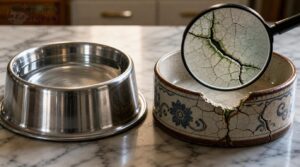
That decorative appeal comes with a catch, though. If you choose ceramic, the glaze matters as much as the look. Some glazes contain lead or cadmium, which can leach into your dog’s food or water — especially when the surface chips or crazes.
- Look for lead-free certification on the label
- Safe glazes use boron zinc glaze formulas instead of toxic fluxes
- Glaze leach testing confirms the surface meets ceramic safety standards
Stainless Steel Versus Plastic
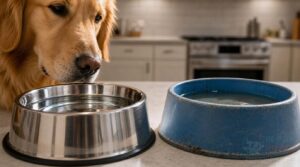
Plastic bowls are everywhere, and it’s easy to see why — they’re cheap, colorful, and light enough to toss in a bag. But that convenience comes with some real trade-offs worth knowing before you buy. Here’s how plastic stacks up against stainless steel across the areas that matter most.
Scratches Trapping Bacteria
Think of a scratched plastic bowl like a cutting board that never quite comes clean.
Micro scratch harborage is a real problem — those tiny grooves trap food particles and fuel scratch bacterial growth that survives standard rinsing.
Stainless steel’s scratch resistance means far fewer of these bacterial hideouts form over time, making it the safer choice for daily food bowl hygiene.
BPA and Phthalate Concerns
Plastic bowls carry a chemical risk that stainless steel simply doesn’t. Many contain BPA and phthalates — compounds that can disrupt hormone balance in dogs over time.
Heat accelerates leaching, so warmed wet food in a plastic dish increases your dog’s exposure.
Stainless steel contains no such chemicals, making it a genuinely nontoxic pet dish material. Always verify bowls are labeled food-grade and BPA-free.
Chewing Damage Risks
Some dogs treat their bowl like a chew toy — and plastic pays the price. Brittle plastic edges crack and splinter under repeated biting, creating sharp fragments that risk tooth fractures and gum damage. Chewing behavior against hard, rough plastic also accelerates enamel loss over time.
- Splintered edges cause cuts and gum irritation
- Repeated chewing increases jaw strain
- Cracked plastic creates sharp, swallowable fragments
Stainless steel’s chew-resistant, durable surface simply holds up better.
Heat Deformation Problems
Heat warps plastic in ways you won’t notice until it’s too late. Plastic bowls deform under heat, losing their shape after hot dishwasher cycles or summer sun. That deformation creates new crevices where bacteria settle.
Stainless steel dog bowls resist these thermal warping effects almost entirely, maintaining their original form through temperature changes that would buckle even a decent‑grade plastic bowl.
Budget Versus Longevity
A plastic bowl might cost $1–$5 upfront, but replacement frequency adds up fast. Stainless steel runs $5–$15 for a basic model — and often lasts years without issues.
- Plastic scratches within weeks
- Scratches mean bacteria, bacteria mean replacements
- Stainless resists daily wear easily
- Total ownership cost favors steel
- Longevity makes it genuinely cost-effective
Best Bowls by Dog Type
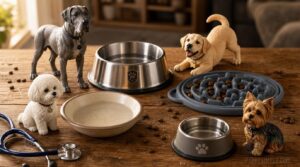
Not every dog eats the same way, and the bowl you choose should reflect that. A pushy Great Dane has different needs than a nervous rescue who startles at loud noises. Here’s what works best for each type.
Large Breeds and Pushers
Large breeds are fundamentally force multipliers at mealtime — and if yours is a pusher, a lightweight bowl just becomes a hockey puck.
Heavy-gauge stainless steel dog bowls with rubber anti-slip bases hold their ground against nose-driven nudging. Pair that with elevated feeder stations and redirect the pushing behavior using consistent cues and positive reinforcement between meals.
Fast Eaters and Gulpers
If pushing is one problem, speed is another — and fast eaters face real health risks. Gulping risk factors include swallowing excess air, bypassing fullness signals, and triggering bloat. Here’s how to slow things down:
- Use slow feeder dog bowls with ridges or mazes.
- Try smaller, more frequent portions.
- Add a calm, distraction-free mealtime setting.
Seniors With Joint Discomfort
Speed isn’t the only mealtime challenge seniors face — joint discomfort in senior dogs changes how they approach the bowl entirely.
Stainless steel dog bowls with non-slip rubber bases keep the bowl steady, so an arthritic dog doesn’t chase it across the floor. Adding elevated dog bowls reduces neck strain, a simple adjustment many vets include in vet‑recommended feeding routines for aging dogs.
Noise-sensitive Dogs
Joint challenges aren’t the only reason to rethink your dog’s bowl setup — noise anxiety in dogs adds another layer entirely.
For noise-sensitive dogs, stainless steel dog bowls can clang loudly on hard floors, which may trigger startle responses. A rubber-based bowl reduces that noise. Pair it with these noise reduction solutions:
- Place the bowl on a mat
- Use Calming Sound Therapy during meals
- Create a Safe Crate Retreat nearby
- Try Noise Desensitization Methods gradually
Outdoor Water Drinkers
Outdoor dogs need a bowl that can handle real-world conditions. Stainless steel dog bowls hold up well outside — they resist rust and corrosion, dry quickly, and are easy to scrub clean daily.
For mosquito prevention, empty and refill the bowl every day. Use automatic refill stations in shaded spots for temperature control, but still clean the reservoir regularly.
Cleaning Stainless Steel Bowls
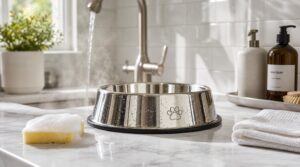
Keeping your dog’s bowl clean is simpler than you might think, and stainless steel makes the job pretty forgiving. A few consistent habits go a long way toward keeping bacteria and grime from building up. Here’s what a solid cleaning routine actually looks like.
Daily Washing Routine
A clean bowl is one of the simplest things you can do for your dog’s health. Follow this daily cleaning protocol to stay on top of hygiene:
- Warm Rinse immediately after each meal to remove residue
- Mild Soap with a soft sponge for daily washing
- Towel Dry completely to prevent water spots
- Vinegar Sanitize weekly for deeper disinfection
- Scratch Inspection during cleaning — replace damaged bowls promptly
Dishwasher-safe Practices
Good news: stainless steel dog bowls are dishwasher safe, making hygiene maintenance genuinely easy.
Place bowls open side down on the top rack for full water contact. Use a fragrance-free, chlorine-free detergent to protect the metal and avoid skin irritation. Set your cycle to reach at least 140°F, then let bowls air dry completely before returning them to your dog.
Avoid Abrasive Scrubbers
Stainless steel dog bowls are easy to clean, but the wrong scrubber can quietly undo that. Abrasive scrubbers and steel wool scratch the surface, creating tiny grooves where bacteria settle.
Stick to soft nylon or microfiber cleaning cloths with mild soap. These gentle cleaning tools preserve both hygiene and material durability — keeping your dishwasher safe dog bowl in good shape far longer.
Remove Food Residue Quickly
The moment your dog finishes eating, the clock starts. Food residue buildup hardens fast on any surface, and stainless steel is no exception. Rinsing with warm water right after meals makes everything easier.
- Use a microfiber cloth for immediate spot cleaning
- Soak in hot, soapy water for 2–4 minutes to loosen stubborn bits
- Apply a vinegar-water rinse to dissolve mineral deposits
- Scrub gently, then rinse thoroughly
- Dry completely to prevent water spots
Replace Scratched Bowls
Even the toughest stainless steel dog bowls develop scratches over time. Build a quick Scratch Inspection Routine — run your fingernail across the interior monthly. If it catches, it’s time to replace it.
Deep grooves trap bacteria that no amount of washing removes. When buying replacements, stick to Safe Replacement Materials like food‑grade 18/8 steel with a Stable Base Design and rubber feet.
Top 5 Dog Bowls Compared
Picking the right bowl gets a lot easier when you can compare real options side by side. The five bowls below cover a range of materials, price points, and features to match different dogs and households. Here’s how they stack up.
1. Gorilla Grip Stainless Steel Dog Bowl
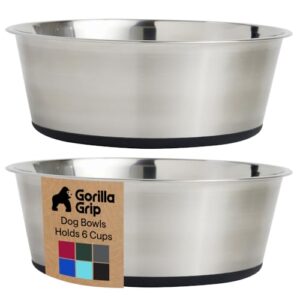
The Gorilla Grip Stainless Steel Dog Bowl is a solid everyday choice for most households. Built from food-grade 304 steel, it’s BPA-free, rust-resistant, and won’t hold onto bacteria or odors the way plastic does.
The silicone base keeps it from skating across hardwood floors and muffles the clanking noise dogs can find startling.
You get two 6‑cup bowls for $24.99 — one for food, one for water — making it a practical, low‑maintenance set worth considering.
| Best For | Pet owners with medium to large dogs who want a durable, easy-to-clean feeding setup that stays put on hard floors. |
|---|---|
| Material | 304 Stainless Steel |
| Dishwasher Safe | Yes |
| Anti-Slip Base | Silicone rubber base |
| Capacity | 6 cups (48 oz) |
| Food Safe | FDA-compliant, BPA-free |
| Units Included | 2 bowls |
| Additional Features |
|
- 304 stainless steel resists rust, bacteria, and odors — a clear upgrade over plastic bowls
- Silicone base grips the floor and cuts down on that annoying clanking during meals
- Two-bowl set for $24.99 is solid value, and both bowls are dishwasher-safe for easy cleanup
- Heavy chewers or enthusiastic eaters may still push the bowls around despite the grip base
- 6-cup capacity can feel small for bigger dogs, so size up if you have a large breed
- Only comes in black, and a few buyers have reported receiving the wrong size — worth double-checking your order
2. Loving Pets Bella Stainless Steel Bowl
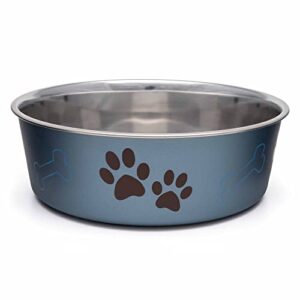
The Loving Pets Bella bowl takes a different approach to the typical all-metal look.
It pairs a food-grade stainless interior with a decorative poly-resin exterior, so it fits in with your home without sacrificing hygiene.
The removable soy-based rubber base keeps it from sliding on hard floors and dampens noise.
At 27 oz, it suits small to medium dogs well.
Remove the rubber base before dishwashing, though—skip that step, and you risk damaging it.
| Best For | Small to medium dogs and cats whose owners want a stylish, hygienic bowl that stays put on hard floors. |
|---|---|
| Material | Stainless Steel / Poly-Resin |
| Dishwasher Safe | Yes (base removed) |
| Anti-Slip Base | Soy-based rubber ring |
| Capacity | 27 oz |
| Food Safe | Veterinarian-recommended |
| Units Included | 1 bowl |
| Additional Features |
|
- Stainless steel interior resists rust, odors, and bacteria—much better than plastic over time.
- The rubber base keeps the bowl from sliding or clanking around during meals.
- Easy to clean—just pop off the rubber base and toss the bowl in the dishwasher.
- 27 oz capacity won’t cut it for larger, thirstier dogs.
- The poly-resin exterior can scratch and show wear with regular use.
- You have to remember to remove the rubber base before dishwashing, or you risk ruining it.
3. Spot Heavy Duty Ceramic Pet Bowl
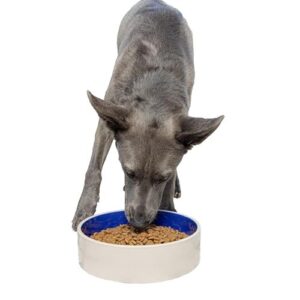
If metal isn’t your dog’s style, the Spot Heavy Duty Ceramic Bowl is worth a look.
This stoneware bowl weighs roughly 3.4 lb and holds 8 cups — solid capacity for larger dogs. The lead-free glaze keeps it food-safe, and the smooth interior resists bacteria buildup. It’s dishwasher safe and easy to hand-wash between meals.
One honest caveat: drop it, and it won’t forgive you. It’s stable, not indestructible.
| Best For | Dog owners with large or messy eaters who need a heavy, stay-put bowl that’s easy to clean and built to last. |
|---|---|
| Material | Ceramic Stoneware |
| Dishwasher Safe | Yes |
| Anti-Slip Base | Heavy weight only |
| Capacity | 8 cups (64 oz) |
| Food Safe | Dishwasher-safe stoneware |
| Units Included | 1 bowl |
| Additional Features |
|
- At 3.4 lb, it stays put — even pushy, enthusiastic eaters won’t send it sliding across the floor
- Dishwasher safe with a smooth surface that doesn’t hold onto food or odors
- Versatile enough to double as a water station for backyard wildlife like birds or ducks
- Drop it once and it may not survive — ceramic cracks and a few buyers have received it broken in shipping
- The dark blue interior makes it tough to see how much water is left at a glance
- The weight that keeps it stable can also scratch floors if you’re not using a mat underneath
4. Bone Dry Medium Ceramic Pet Bowls
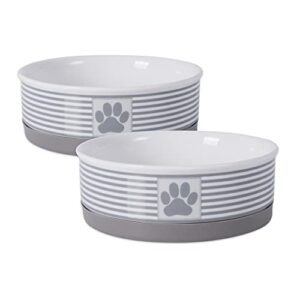
If you want style with safety, the Bone Dry Medium Ceramic Pet Bowls deliver both. Each bowl measures 6 inches wide and holds 1.5 cups — a good fit for small-to-medium dogs, cats, or even rabbits.
The FDA-approved, lead-free glaze is nonporous and resists bacteria.
A silicone ring on the base keeps it planted on tile or hardwood. At $18.88 for two, it’s practical. Just note: the ring can loosen after repeated dishwasher runs.
| Best For | Pet owners with small-to-medium dogs, cats, or smaller animals like rabbits who want durable, easy-to-clean bowls that look good in the home. |
|---|---|
| Material | Porcelain Ceramic |
| Dishwasher Safe | Yes |
| Anti-Slip Base | Silicone non-skid ring |
| Capacity | 1.5 cups (12 oz) |
| Food Safe | FDA food-safe, Prop 65 |
| Units Included | 2 bowls |
| Additional Features |
|
- Porcelain ceramic feels solid and premium, and it blends in with home décor rather than looking like a typical pet bowl.
- The silicone non-skid ring keeps the bowl from sliding around on tile or hardwood — great for pets that eat fast or get excited at mealtime.
- Dishwasher and microwave safe, so cleanup is genuinely easy and the bowls stay sanitary.
- The silicone ring can loosen or detach after repeated dishwasher cycles, which means you may need to reattach it or hand-wash to keep it in place.
- At 1.5 cups per bowl, it’s not a great fit for large or high-appetite dogs who need bigger portions.
- Some buyers have reported chips or cracks from shipping, so it’s worth inspecting them when they arrive and contacting the seller if there’s damage.
5. Loving Pets Bamboo Pet Bowl
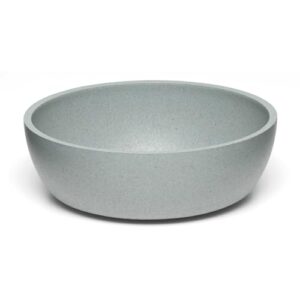
For pet owners who prioritize sustainability, the Loving Pets Bamboo Bowl offers a genuinely eco-friendly alternative. It’s made from real bamboo, features a skid-free rubber base, and is dishwasher safe (top rack, rubber base removed).
It comes in small, medium, and large sizes across three neutral colors.
The catch? Aggressive chewers can damage bamboo, and it’s not microwave safe.
It’s a solid choice for calm eaters who won’t gnaw the bowl itself.
| Best For | Pet owners who care about sustainability and have calm, non-aggressive eaters — dogs or cats at any life stage. |
|---|---|
| Material | Bamboo |
| Dishwasher Safe | Yes (top rack, base removed) |
| Anti-Slip Base | Rubber base |
| Capacity | Up to 9.5 cups (76 oz) |
| Food Safe | Food-safe bamboo |
| Units Included | 1 bowl |
| Additional Features |
|
- Made from real bamboo, so it’s a genuinely eco-friendly pick
- Non-slip rubber base keeps the bowl in place and cuts down on mealtime mess
- Dishwasher safe and easy to clean with no odor buildup
- Aggressive chewers can damage the bamboo — not built for gnawers
- The rubber base has to come off before it goes in the dishwasher
- Not microwave safe, and the largest size may still fall short for big breeds
Choosing The Right Dog Bowl
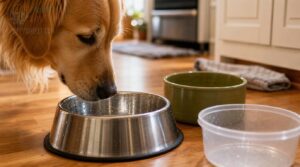
Every dog is different, and the bowl that works for your neighbor’s lab might not suit your anxious whippet or your senior golden with a creaky neck. Getting the choice right comes down to a handful of practical factors — materials, size, stability, and how the bowl fits into your dog’s daily routine.
Here’s what to keep in mind before you buy.
Pick Food-grade Materials
Not all bowls marketed as "safe" actually meet food-grade standards.
Look for food-grade stainless steel — specifically 304 or 316 — which carries FDA or EU certification confirming non-toxic surface limits for heavy metals.
If you’re considering plastic, confirm it’s BPA-free. Ceramic should be explicitly lead‑free glazed.
That one label check protects your dog every single day.
Match Size to Meals
A bowl that’s too large invites overfeeding — and one that’s too small turns mealtime into a scramble. Match bowl capacity to your dog’s daily portion, not their full day’s food at once.
Most adult dogs eat two measured meals spaced 8–12 hours apart. For fast eaters, a slow feeder insert keeps pace in check without switching bowls entirely.
Choose Anti-slip Bases
Sliding bowls are a small problem that adds up fast. A slip-resistant silicone base or rubber base grip keeps the bowl locked in place — even when your dog eats like they’re racing a clock.
- Silicone ring stability reduces sliding by up to 40%
- Non-slip foot options extend 6–8 mm for floor grip
- Base height options range 10–20 mm to cut spill risk
- Rubber grips withstand dishwasher cycles without breaking down
- Material compatibility covers wood, tile, and laminate floors
Antislip features and heavy dog bowl stability aren’t optional extras — they’re practical basics worth checking before you buy.
Consider Elevated Feeders
Elevated feeders are worth a serious look if your dog bends awkwardly to reach their bowl.
Ergonomic height settings — ideally at elbow height when standing — reduce neck and joint strain greatly.
For seniors or arthritic dogs, an adjustable height mechanism makes a real difference.
Stainless steel elevated designs offer durability and heat resistance, and many space-saving designs fit neatly into smaller rooms.
Balance Safety and Style
Safety and style don’t have to be a trade-off. Stainless steel dog bowls hit the sweet spot — a safe material with a stylish design that holds up over time. Look for these three features:
- A sleek protective base with a stylish anti-slip grip
- A modern safe finish and elegant safety features that resist wear
- A balanced weight design for both durability and decorative appearance
Frequently Asked Questions (FAQs)
Can stainless steel bowls affect dog allergies?
Yes, stainless steel dog bowls can occasionally trigger reactions. Nickel sensitivity is the usual culprit, not the steel itself. Scratched bowls increase scratch exposure and metal leaching, which may cause contact dermatitis around your dog’s muzzle.
How often should dog bowls be replaced?
Replace stainless steel bowls every few years, or sooner if you spot rust, deep scratches, or pitting. Plastic bowls need replacing much faster — often within months.
Are wide or deep bowls better for dogs?
Neither shape wins outright — it depends on your dog. Wide bowls suit broad muzzles and reduce neck strain. Deep bowls contain portions and slow fast eaters, lowering bloat risk.
Do bowl colors impact a dogs appetite?
Bowl color has a small but real effect. Dogs see yellow and blue best, so high-contrast bowls help them locate food faster. Scent and routine, though, drive appetite far more than color ever will.
What bowl size is right for my dog?
Size matters more than most owners think. Match your dog’s weight to the right diameter: 4–6 inches for small dogs, up to 10–12 inches for giant breeds. Aim for 5–3 inches deep.
Conclusion
The bowl sitting on your kitchen floor right now is either protecting your dog or quietly working against them—that’s the choice hiding in plain sight. Asking whether stainless steel bowls are better for dogs leads most owners to the same answer: yes, for most situations.
A nonporous surface, easy cleaning, and no chemical leaching makes stainless the practical default.
Match the bowl to your dog’s needs, and feeding time stops being a guessing game.
- https://wasatchpup.com/blogs/guides/the-importance-of-stainless-steel-bowls-for-dogs-a-health-and-hygiene-perspective
- https://pawhootz.com/dog-and-cat-bowls-which-one-is-best
- https://www.batteryparkvets.com/blog/should-i-use-a-ceramic-plastic-or-stainless-steel-food-bowl-for-my-pet
- https://us.e-cloth.com/blogs/diy-methods/dog-bowls
- https://www.seaportanimalhospital.com/blog/should-i-use-a-ceramic-plastic-or-stainless-steel-food-bowl-for-my-pet