
This site is supported by our readers. We may earn a commission, at no cost to you, if you purchase through links.

Watching an older dog struggle to reach a floor bowl—back hunched, front legs splayed—reveals something is wrong before any diagnosis does. That posture strains aging joints, making mealtime painful. Elevated bowls can change that picture, offering relief by reducing physical stress during feeding.
However, the solution isn’t universal. While raised feeders benefit many dogs, they pose risks for deep-chested breeds prone to bloat, a serious condition. Knowing which camp your dog falls into makes all the difference, ensuring comfort without compromising health.
Table Of Contents
Key Takeaways
- Elevated bowls help seniors and dogs with joint or neck pain, but deep-chested breeds like Great Danes face a real risk of bloat that makes them a poor fit.
- The right height isn’t guesswork — measure from the floor to the withers, then subtract 4 to 6 inches, and start lower if you’re unsure.
- Your vet’s input matters as your dog’s breed, eating speed, and health history all shape whether a raised feeder helps or hurts.
- A good elevated feeder needs a non-slip base, stainless steel or BPA-free bowls, and a slow-feed insert if your dog tends to gulp.
Elevated Bowls Help Some Dogs
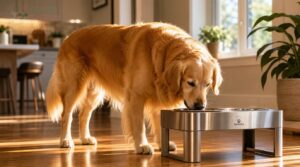
Elevated bowls aren’t a one-size-fits-all solution, but for certain dogs, they make a real difference at mealtime. The right setup can ease discomfort, improve posture, and make eating feel less like a chore.
For older dogs especially, elevated bowls designed for senior dogs with adjustable height settings can take real pressure off arthritic joints and stiff necks.
Here’s a look at which dogs tend to benefit most.
Seniors With Stiff Joints
As dogs age, joints lose lubrication and muscle flexibility naturally declines — much like in older humans.
For senior dogs managing arthritis, an elevated bowl reduces how far they must bend down. That shorter reach eases pressure on hips, shoulders, and knees.
Pair it with weight management, low impact exercise, and solid nutrition support, and you’re giving joint health in senior dogs real, daily relief.
Dogs With Neck Pain
Joint pain doesn’t stop at the hips. Neck pain — often from intervertebral disc disease or neck strain in dogs — makes reaching a floor bowl genuinely uncomfortable.
Signs worth noting during a Neck Pain Assessment:
- Reluctance to lower the head toward the bowl
- Yelping or stiffening during meals
- Reduced appetite without obvious cause
- Rigid, guarded posture while eating
- Improved relaxed eating after bowl elevation
Raising the bowl shortens that painful range of motion. Combined with Collar Alternatives like harnesses, Gentle Stretching routines, and vet-guided Imaging Diagnostics, elevated dog bowls offer real postural support for dogs managing neck and back strain. Observing a head held low posture can help identify underlying neck issues.
Large Breed Comfort
Large breeds carry a lot of weight on their frames — and that makes dog feeding posture more than a comfort question. Elevated dog bowls offer real Joint Pressure Relief by positioning the dish near elbow height, reducing the downward reach that stresses hips and shoulders.
| Large Breed Benefit | Why It Matters |
|---|---|
| Hip Dysplasia Aid | Less bending eases dysplastic joint strain |
| Post‑Surgery Comfort | Controlled posture aids recovery |
| Weight‑Balanced Design | Stable stands prevent bowl tipping |
| Anti‑Fatigue Padding | Non-slip bases protect joints on hard floors |
| Bloat Prevention Strategies | Slow-feed inserts reduce air gulping |
Canine joint health improves when meals don’t demand awkward stretching.
Easier Eating Posture
Proper feeding height ergonomics matters more than most owners realize. Maintaining the correct height ensures your dog’s head remains in natural alignment — avoiding both a sharp downward dip and an awkward upward stretch. A stable feeding position supports a neutral spine and consistent bite angle, making swallowing more comfortable.
- Head alignment stays level, reducing neck flexion
- Neutral spine minimizes postural alignment strain during meals
- Consistent bite angle helps food move smoothly
- Reduced paw strain from less compensatory reaching
- Dog feeding posture stays relaxed from first bite to last
When Floor Bowls Work
Not every dog needs a raised setup. For small breeds with no joint issues, floor-level bowls often support natural posture just fine. Ground-level digestion works well when a dog’s body proportions allow easy reach without strain.
For most small dogs, a simple floor-level bowl is all they need — check out this guide on choosing the right dog bowl size to find the best fit for your pup’s breed and build.
| Dog Type | Floor Bowl Works When |
|---|---|
| Small breeds | No neck or joint pain |
| Young healthy dogs | Normal postural alignment during meals |
| Calm eaters | Low-energy bites, no gulping |
| Confident dogs | Sensory familiarity reduces mealtime stress |
Stable base feeding at floor level remains a practical, comfortable choice for many dogs.
What Vets Say About Raised Bowls

Most vets do not give a blanket yes or no on elevated bowls — it really depends on your dog. Before you buy one, there are a few things your vet will want you to think through.
Here’s what they usually look at.
Health Needs Come First
Before choosing an elevated bowl, your vet needs to see the full picture. A dog’s medical history, mobility, and chronic conditions all shape whether raising the food dish helps or hurts.
Here’s what a proper health-first evaluation covers:
- Medical History Review – flags past injuries, arthritis, or joint strain
- Individual Mobility Assessment – checks how comfortably your dog lowers its head
- Chronic Condition Screening – identifies issues like hip dysplasia affecting senior dogs
- Pain Indicator Monitoring – spots hesitation or posture shifts during meals
Ask About Bloat Risk
Bloat risk — clinically known as gastric dilatation-volvulus — is the crucial question to discuss with your vet before using an elevated bowl.
| Risk Factor | Lower Risk | Higher Risk |
|---|---|---|
| Meal frequency | Two or more meals daily | Single large meal |
| Portion size | Small, measured portions | Large, overfilled bowl |
| Pre-meal exercise | Rest before eating | Vigorous activity beforehand |
| Water timing | Sips between bites | Heavy drinking right after |
| Stress reduction | Calm, quiet mealtime | Anxious or rushed eating |
Deep-chested breeds face the steepest danger. Fast eating and bloat are closely linked, so consult your vet about adding a slow-feed insert.
Not for Every Dog
Raised bowls aren’t a one-size fix. Deep-chested breeds carry a real GDV bloat risk, so breed matters enormously here.
Dogs without mobility constraints or neck and joint strain often do just fine with a floor bowl. Senior dogs on slippery flooring may actually struggle with stand placement.
Weight control, dental considerations, and training adaptation all shape the decision.
Your vet knows your dog’s full picture — trust that conversation.
Watch Eating Speed
Bowl height quietly shapes how fast your dog eats. Watch for head bob frequency and bite interval timing — rapid, repeated motions often signal gulping.
Track meal duration using a simple timer across several feedings. Visual bite patterns tell you a lot.
If food intake speed increases after switching bowls, consider slow feeder dog bowls to support preventing rapid eating through controlled slow feeding.
Monitor Comfort Changes
Your dog’s body tells you plenty during mealtime — you just have to watch. Check for neck angle changes, shoulder tension, or feeding pauses that weren’t there before.
Post-meal stiffness and body sway are also worth noting. These signals often reveal whether the current height is helping with mealtime comfort for dogs.
Adjustable feeding height lets you dial in dog posture improvement and canine joint pain relief as needs shift.
Risks of Elevated Dog Bowls

Elevated bowls aren’t the right fit for every dog, and in some cases they can actually do more harm than good.
A few specific risks are worth knowing before you make a decision. Here’s what to watch out for.
GDV and Bloat Concerns
One of the most serious concerns with elevated feeders is their possible link to gastric dilatation-volvulus (GDV), a condition where the stomach fills and twists. This risk underscores the importance of smart feeding schedules, careful hydration timing, and anxiety reduction around meals for large breed dogs.
Elevated feeders may trigger GDV, making smart feeding schedules and calm mealtimes critical for large breeds
Stomach volume plays a critical role: if a dog eats rapidly or gulps water immediately after eating, the risk of canine bloat increases. Factors like feeding frequency and portion control also influence this danger.
Watch for bloat warning signs, including restlessness, unproductive retching, or a swollen abdomen. Early detection and veterinary intervention are vital to prevent life-threatening complications.
Deep-chested Breed Risks
Deep-chested breeds like Great Danes, Dobermans, and Boxers already carry a higher canine bloat risk due to their thoracic pressure dynamics. Raised dog bowls can compound this.
Watch for these warning signs specific to these breeds:
- Respiratory compression from chest anatomy changes during eating
- Collar neck loading increasing strain during head extension
- Esophageal reflux triggered by altered swallowing angles
- Heat stress worsening air-gulping episodes
- Stomach torsion risk rising with rapid intake
Always consult your vet before choosing raised dog bowls for deep-chested dogs.
Bowls Set Too High
Getting the height wrong in either direction causes problems. If the bowl sits above your dog’s lower chest, they’ll crane their neck upward — that’s neck extension pain happening in real time. It pushes shoulder joint stress through the front legs and creates visual distraction during meals.
Match the bowl to their withers, subtract 4 to 6 inches, and don’t guess.
Unstable Feeder Stands
Height isn’t your only concern — the stand itself matters just as much. A shaky feeder can undo every ergonomic benefit you’ve worked toward.
- Footprint Stability: A narrow base increases tip-over risk on tile or laminate
- Weight Distribution: Uneven legs shift load and cause wobbling during meals
- Joint Looseness: Plastic fasteners loosen over time, making adjustable stands unpredictable
- Mechanism Wear: Height-locking parts degrade, causing sudden shifts
- Swivel Instability: Rotating connectors add rotational movement under lateral pressure
A rubber base and wide fixed stands are your safest starting point.
Fast Eating Problems
Elevated bowls don’t cause fast eating — but they won’t slow it down either. Dogs gulp food for many reasons: Gulping Anxiety, Competition Feeding among housemates, or Inconsistent Meal Times that create urgency.
Rapid eating leads to Air Swallowing, bloating, and digestive discomfort. A slow-feeder insert helps regulate food intake and Portion Control. Pair it with slow eating techniques for real results.
Choosing The Right Bowl Height
Getting the height right makes all the difference between a bowl that helps and one that hurts. It’s not guesswork — there’s a simple way to find your dog’s ideal feeding height.
Here’s what to check before you buy or adjust anything.
Measure Floor to Withers
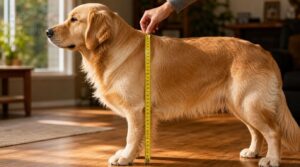
Start at the withers — the bony peak where your dog’s neck meets its shoulders. That’s your dog’s height reference point for any feeding height decision.
Here’s your measurement guide in three steps:
- Stand your dog in a natural, relaxed stance.
- Use a flexible tape for accurate tape placement, held vertically from the floor to the withers.
- Run repeatability checks by measuring twice and recording both readings.
Subtract Four to Six Inches
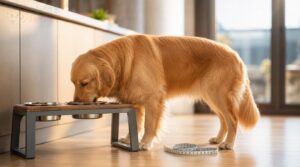
Once you have your withers measurement, subtract four to six inches—that is your dog feeding height target.
This adjustment range manages neck angle optimization naturally, keeping your dog’s head in a neutral spine position without forcing chin-up straining.
Think of it as comfort calibration: incremental testing across that band helps you find the exact height tuning that suits your individual dog.
Choose Lower if Unsure
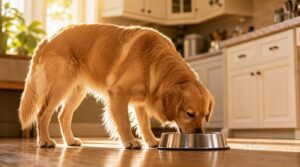
When in doubt, start low. A conservative elevation start protects your dog while you figure out the proper height. Use a lower first trial, then watch for comfort signals over several meals — this is your comfort feedback loop in action.
Signs the lower setting is working:
- Neck stays in a neutral spine position while eating
- No head bobbing or repeated pausing between bites
- Willingness to approach the bowl without hesitation
- Reduced tipover risk from calmer, steadier eating movements
- Senior dogs eat at a relaxed, even pace throughout the meal
Adjust incrementally upward only if your dog looks comfortable and bloat prevention remains your priority. Gradual height reduction or increase — one inch at a time — keeps changes manageable.
Adjustable Puppy Feeders
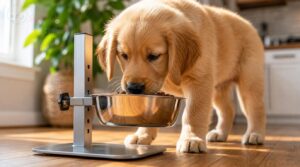
Puppies grow fast — what fits at eight weeks won’t at six months. Adjustable height bowls solve this directly. Rather than replacing feeders every season, you simply raise the bowl in 1-inch increments as your pup grows.
| Feature | Why It Matters |
|---|---|
| Growth tracking | Matches height to each development stage |
| Programmable timers | Enables portion precision for multiple daily meals |
| Anti-pinch safety | Protects curious noses during height adjustments |
| Travel portability | Foldable adjustable feeding equipment suits life on the go |
Adjustable feeder options also extend product lifespan considerably.
Separate Multi-dog Setups
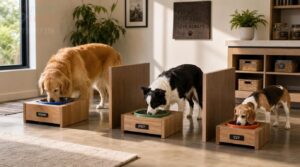
Multiple dogs, one feeding area — that’s a recipe for chaos without the right setup. Individual feeding stations give each dog their own space and reduce food aggression noticeably.
- Use staggered height zones to match each dog’s size
- Install barrier gate systems between side-by-side kennels
- Assign color-coded bowls so dogs learn their spots
- Choose adjustable feeder options and elevated feeding stations for dog behavior modification
Best Elevated Bowl Features
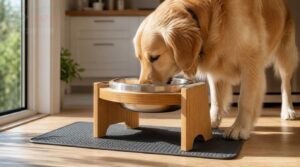
Not every elevated feeder is built the same, and the details really do matter. The right bowl can make mealtime safer, cleaner, and more comfortable for your dog.
Here are the key features worth looking for.
Stainless Steel Bowls
Most veterinary nutritionists recommend stainless steel bowls for elevated feeders — and for good reason. Made from food-grade alloy with built-in corrosion resistance, they won’t rust or leach chemicals into your dog’s food.
The mirror finish resists bacterial buildup, ensuring a hygienic surface, while the rolled rim protects sensitive muzzles during feeding.
Additionally, these bowls are dishwasher safe, simplifying daily cleaning. For dog ergonomics, this combination of durability, safety, and practicality is hard to beat.
BPA-free Safe Materials
Not all plastic bowls are equal. If you’re choosing plastic over stainless steel, look for food-contact certified options made from heat-stable polymers.
Here’s what to look for:
- Polypropylene durability — withstands repeated dishwasher cycles without warping
- Tritan clarity — tough, shatter-resistant, and genuinely BPA-free
- HDPE resistance — holds up against acids in wet pet foods
- Third-party certification — confirms safe chemical migration levels
- No bisphenol alternatives — some replacements carry similar risks
Non-slip Wide Base
Material safety matters, but so does staying put. A wide footprint width keeps the stand grounded when your dog leans in or nudges the bowl mid-meal. Look for skid-resistant feet and traction materials like silica-infused rubber — they grip tile and hardwood equally well.
Anti-tip geometry and a wear-resistant base mean the station holds firm, even on slippery floors.
Easy Cleaning Design
A stable base keeps meals tidy — but a hygienic design keeps them safe. Non‑porous surfaces and tool‑free disassembly simplify cleaning and maintenance between meals.
Removable bowl inserts drop straight into the dishwasher, while angled spill deflection channels direct runoff away from crevices.
An antimicrobial coating reduces bacteria between washes, ensuring your dog’s elevated bowl stays consistently clean and the feeding area genuinely cleaner.
Slow-feed Insert Options
Pair your elevated bowl with a slow feeder insert to address canine digestion issues head-on. A Spiral Maze design forces your dog to navigate turns, while a Ridge Pattern disrupts fast lapping. These features directly combat rapid eating habits.
Adjustable Height options support feeding ergonomics for pets of different sizes, ensuring comfort during meals. A Non-Slip Base prevents shifting mid-meal, maintaining stability throughout use.
All components are Dishwasher Safe, making cleanup simple and hygienic.
Frequently Asked Questions (FAQs)
What do vets say about elevated dog bowls?
Vets don’t give a one-size-fits-all answer. Most evaluate your dog’s specific health profile first — joint condition, breed, and eating habits — before making any vet recommendation for feeders.
Why should dogs not eat from a raised food bowl?
Raised bowls can trigger aerophagia risk, bloat propensity, and gastric dilatation-volvulus in deep-chested breeds.
Neck overextension, jaw fatigue, gagging episodes, and disrupted digestion and swallowing also occur, while joint pressure worsens with incorrect height.
Can elevated bowls help dogs with megaesophagus?
For dogs with megaesophagus, elevated dog bowls can help — but severity matters. Mild cases may benefit from a raised bowl.
Severe cases need vertical feeding angle support, like a Bailey chair.
How often should elevated bowl height be adjusted?
Puppy growth checks matter every 2–3 months. Senior annual reviews ensure aging joints remain comfortable. These regular check-ups address developmental and age-related needs.
Trigger-based adjustments respond to sudden posture changes, maintaining comfort during unexpected shifts.
Use incremental height shifts and routine re-measurements with adjustable height bowls to align with your dog’s evolving height reference, ensuring consistent ergonomic support.
Can puppies use elevated feeders from the start?
Yes, but with caution. During the growth stage, floor-level bowls are usually safest.
If you use elevated feeders, proper height and adjustable height bowls matter most for puppies’ posture development and energy expenditure.
Conclusion
Like Goldilocks searching for what’s just right, finding the answer to whether elevated dog bowls are good for dogs depends entirely on your individual pet.
A senior with stiff joints may thrive with a raised feeder. A deep-chested Great Dane may face serious risk.
Measure carefully, consult your vet, and watch how your dog eats and moves.
The bowl that fits your dog’s body is always the right one.
- https://www.dogids.com/blog/benefits-of-elevated-dog-bowls
- https://www.vin.com/apputil/content/defaultadv1.aspx?pId=22915&catId=124661&id=8896712&ind=266&objTypeID=17
- https://officialdoghouse.com/pages/benefits-of-elevated-dog-feeder?srsltid=AfmBOorAqWVaHYryQINYDhUzpfKoQnfatAtjxd8iiDRznNcuUlKep2up
- https://www.purelypetsinsurance.co.uk/blogs/should-dogs-eat-from-raised-bowls/
- https://www.barneysranch.com/the-perfect-dog-food-bowl/