This site is supported by our readers. We may earn a commission, at no cost to you, if you purchase through links.

A dog that spends 45 minutes methodically working kibble out of a puzzle feeder isn’t just entertained—it’s doing the canine equivalent of a crossword puzzle, with real neurological benefits.
But here’s what most owners miss: more isn’t better. Overdo puzzle time and you’ll end up with a frustrated, mentally exhausted dog who starts avoiding the feeder entirely.
Most dogs thrive with one or two sessions daily, totaling 30 to 60 minutes, timed around meals to keep motivation high. Getting that balance right depends on your dog’s age, breed, and health—and the difference between a session that energizes and one that overwhelms often comes down to minutes.
Table Of Contents
Key Takeaways
- Most dogs thrive with one or two puzzle feeder sessions daily, each running 10–20 minutes, for a total of 30–60 minutes of mental enrichment.
- Your dog’s age significantly impacts needs—puppies require 3–5-minute micro-sessions, adults need consistency, and seniors benefit from gentle 15–30-minute splits.
- Halt sessions immediately if you observe panting, lip licking, or tail tucking—these signals indicate the puzzle is too challenging or prolonged.
- Puzzle feeders enhance your dog’s routine but cannot replace walks, interaction, or tailored exercise based on their energy and health.
How Often Should Dogs Use Puzzle Feeders?
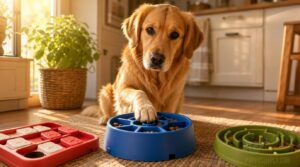
Most dogs do best with one or two puzzle feeder sessions a day — but the right frequency really depends on your dog’s age, energy level, and health.
If you’re still figuring out which style suits your dog, dog puzzle feeders for smart or easily bored dogs can give you a solid starting point for matching the challenge level to your pup’s needs.
A few key factors shape how you structure that time. Here’s what to keep in mind before you settle into a routine.
Standard Daily Frequency
Most dogs do well with puzzle feeder use once or twice daily — that’s your baseline for routine consistency. Spread across Morning Session Timing and Evening Session Timing, this adds up to 30 to 60 minutes of puzzle toy activity per day.
Key daily playtime guidelines to follow:
- Use short focused sessions, not marathon problem-solving blocks
- Apply Calorie Accounting — puzzle food counts toward daily intake
- Build Frequency Adjustments around stress, illness, or low-activity days
- Keep the schedule predictable; dogs thrive on routine consistency
- Match once or twice daily use to your dog’s regular meal windows
Ideal Session Length
Each session should run 10–20 minutes — short focused sessions that end while your dog still looks motivated. Watch for engagement cues like active sniffing and calm problem-solving, and stop at the first stress indicators: panting, lip licking, or wandering.
Reset intervals between sessions matter too. A good treat finish rate signals the right duration. That’s your practical duration guideline.
Consistent training benefits from weekly sessions are most common for steady progress.
Total Enrichment Time
Think of total enrichment time as your dog’s mental workload for the day — not just clock time. Most dogs do well with 30 to 60 minutes of puzzle toy activity per day, spread across once or twice daily sessions.
Environmental distractions, resource competition with other pets, and mental fatigue all shorten effective limits.
A smart pacing strategy keeps your daily enrichment routine sustainable without burning them out.
Meal-Based Puzzle Use
One simple way to hit that 30 to 60 minutes of puzzle toy activity per day without adding extra calories is to replace a regular bowl with a slow feeder bowl or food dispensing toys at set mealtimes. Meal Motivation is built in; your dog already expects to eat.
Use measured portions for calorie portioning, choose textures that fit your feeder’s openings, and wash feeders after every use.
When to Skip Sessions
Medical emergencies, vomiting, fever, or severe lethargy all call for rest, not cognitive enrichment. Environmental stressors like thunderstorms or fireworks trigger anxiety in dogs, making sessions counterproductive. Recent trauma, resource guarding, or excessive fatigue are equally valid reasons to pause. When your dog can’t settle or engage, skipping protects both the session’s value and your dog’s trust.
Most Dogs: Once or Twice Daily
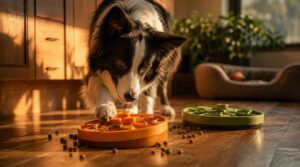
For most dogs, once or twice a day is the sweet spot—enough to engage their brain without wearing them out. Sessions work best when they’re short, purposeful, and built into your dog’s existing routine.
Here’s what that actually looks like in practice.
Ten to Twenty Minutes
Most puzzle feeder sessions work best in a 10–20 minute enrichment window — short enough to stay engaging, long enough to matter. That’s your sweet spot for mental stimulation for dogs using interactive feeding toys.
Monitor your timing cues: if your dog finishes in under 10 minutes, adjust portion sizing or difficulty. This ensures the activity remains challenging and effective.
Pace control keeps feeding enrichment feeling like a rewarding challenge, not a chore.
Gradually spacing out rewards as your dog gains confidence follows the same logic behind positive reinforcement training principles—early wins build the foundation for longer streaks later.
Split Daily Sessions
Splitting your dog’s daily enrichment into two sessions — separated by several hours — delivers better results than one longer block. Timing consistency matters: schedule each 10–20 minute puzzle toy session around mealtimes, when motivation runs highest.
Portion allocation remains the same total daily amount, just divided across both sessions.
Varied puzzle types between sessions — one slow-dispensing, one more interactive — keep your daily enrichment routine genuinely fresh.
Watch Your Dog’s Energy
Your dog’s energy level before and after a session tells you more than any timer. Calmness indicators — relaxed ears, slower breathing, and a willingness to settle — signal healthy mental fatigue after puzzle toys.
If panting or restlessness persists, that’s energy burnout, not engagement. Treat post-play recovery as a sign that a dog that can’t unwind needs shorter cognitive stimulation sessions next time.
Avoid Overfeeding Treats
Treats count — and they add up faster than you’d think. Calorie budgeting isn’t optional when food puzzles are part of your daily routine; it’s how you keep food-based enrichment from quietly causing pet obesity.
- Cap treats at 10% of daily calories
- Subtract puzzle treat calories from the main meal — that’s your meal adjustment strategy
- Choose low-calorie alternatives like kibble pieces for portion control
- Follow a consistent snacking schedule to avoid accidental overfeeding
Treat portion sizing matters every session.
Balance With Walks
Walks and puzzle feeders aren’t separate — they’re a system. Match your walk intensity and cooldown duration to maximize each session.
| Walk Type | Puzzle Timing |
|---|---|
| Brisk walk | Wait 15–20 min cooldown |
| Slow, steady walk | Start puzzle within 5–10 min |
| High-distraction area | Allow full cooldown first |
| Quiet neighborhood route | Shift smoothly post-walk |
| Increased distance day | Keep puzzle session shorter |
Walk Timing Sync keeps energy levels balanced — physical exercise complements mental stimulation, not competition.
Adjust Frequency by Age
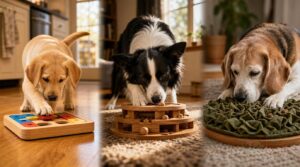
Age changes everything regarding puzzle feeders — what works for a bouncy six-month-old Lab won’t suit a ten-year-old Beagle with stiff joints. Your dog’s life stage should shape how long each session runs, how often you offer puzzles, and how complex those puzzles get.
A dog’s life stage should shape every puzzle feeder decision, from session length to complexity
Here’s how to dial in the right frequency for every age and health situation.
Puppies Need Short Sessions
Puppies have a notoriously short attention span — most can’t sustain focus beyond 5–10 minutes before fatigue sets in. Skip the 10–20 minute puzzle toy sessions that adults handle easily. Instead, use micro bursts of 3–5 minutes with feeding puzzles, timed around meals for ideal reward timing.
Watch for these fatigue signals:
- Pawing at the puzzle then walking away
- Losing interest mid-session
- Whining or barking at the feeder
- Sniffing around instead of engaging
Match difficulty progression to confidence, not age.
Adult Dogs Need Consistency
Unlike puppies, adult dogs thrive on predictability. Cue consistency — same word, fixed feeding spot, predictable supervision — transforms puzzle feeders from a novelty into a reliable daily enrichment routine for dogs. Aim for once or twice daily with a stable feeder design.
| Element | Consistent | Inconsistent |
|---|---|---|
| Routine timing | Focused engagement | Confused appetite |
| Feeder placement | Faster solving | Hesitant start |
| Supervision level | Safe, trackable | Frustration risk |
Mental stimulation lands harder when the structure holds.
Seniors Need Gentle Puzzles
Older dogs still need mental stimulation — just at a gentler pace. Aim for 15–30 minutes daily, split into short intervals. This approach ensures engagement without overexertion.
Low-impact designs with soft, chewable materials and larger grip pieces work best, especially for dogs with joint stiffness. These features accommodate physical limitations while maintaining interactivity.
A calm environment helps reduce stress, fostering focus during enrichment activities. Use adjustable difficulty levels to keep sessions manageable yet stimulating — ensuring engagement without frustration.
Post-Surgery Dogs Need Limits
Recovery changes everything. After surgery, controlled stimulation isn’t optional — it’s part of healing. Feeding puzzles and slow feeding tools can help with stress reduction for dogs, but only within strict limits.
Here’s how to keep puzzle use safe:
- Cap sessions at 5 minutes daily
- Prioritize incision protection — skip anything causing scrambling
- Time sessions around medication timing for calm engagement
- Check bandage safety before every use
Restricted movement applies to puzzle intensity too — 15 minutes a day is the ceiling, not the floor.
Adjust for Health Issues
Chronic conditions call for extra attention to detail. A dog managing joint pain may slow down noticeably during puzzle sessions — that’s a signal, not stubbornness.
Match your feeding schedule planning to medication timing, keep portions measured for pet obesity prevention and calorie tracking, and choose allergy-compatible foods.
Hydration support matters too — fresh water should always sit nearby.
Feeding puzzles, used thoughtfully, genuinely support dog health and wellbeing.
Match Feeders to Your Dog
Not every puzzle feeder works for every dog — breed, size, and jaw strength all shape what actually fits your dog’s needs.
Picking the wrong one leads to frustration, boredom, or worse, a safety hazard.
Here’s how to match the right feeder to your dog’s profile.
High-Energy Breeds

High-energy breeds run on a work drive that doesn’t switch off easily—so puzzle toys aren’t optional, they’re essential for energy level management. Aim for 20–30 minutes of mental stimulation daily, paired with physical exercise.
Drive channeling through feeding puzzles keeps motivation management on track, enhances agility integration, and prevents burnout from under-stimulation redirecting into destructive behavior.
Small Dog Feeders

Small dogs require feeders scaled to their size and energy levels—oversized puzzles often lead to frustration. The right setup provides genuine behavioral enrichment without overwhelming them.
Consider these three feeder types:
- Gravity dispensers for steady, low-stress kibble access
- Timed feeding units for portion control
- Smart connectivity feeders with app scheduling
Add modular bowls or treat toppers to layer in mental stimulation and anxiety reduction for dogs daily.
Large Dog Feeders

Large breeds need feeders built to match their size and strength. Look for hopper capacity in the 8–20 pound range, reinforced durable construction with anti-tip design, and adjustable bowl height to protect joints.
Smart scheduling with app control keeps portions consistent across busy days. Combined with feeding puzzles and food-based enrichment, these features turn mealtime into genuine mental stimulation and effective dog enrichment toys for high-energy breeds.
Brachycephalic Dog Designs

Flat-faced breeds like pugs and French bulldogs need puzzle toys designed around their anatomy. A wide shallow bowl or nose-friendly maze keeps frustration low and airflow unrestricted. Choose designs that avoid forcing awkward snout angles, prioritizing comfort and accessibility.
Opt for breathable material with an adjustable opening—never deep compartments. Low-impact feeding puzzles still deliver real dog mental stimulation without overexertion. Toy material safety matters too: avoid anything that traps moisture near sensitive airways, as these breeds require extra care for respiratory health.
Strong Chewer Options

Power chewers need toys that survive the session. Elk antlers offer real antler durability—lasting weeks even on an 80-pound dog—while braided bully sticks bring bully stick benefits like high protein and reduced splintering.
Nylon chew health perks include dental abrasion, and collagen joint support makes those rolls a smart dual-purpose pick.
Resin antler alternatives and toy material safety round out your options for sustainable canine enrichment.
Signs of Too Much Puzzle Time

More isn’t always better — even with something as beneficial as puzzle feeders. Your dog’s body language during and after a session tells you a lot about whether you’ve hit the sweet spot or crossed a line.
Watch for these signs that it’s time to scale back.
Panting or Lip Licking
Panting and lip licking during puzzle time aren’t quirks—they’re stress signals worth taking seriously. Both can reflect heat stress, anxiety, nausea, or even pain indicators that your dog can’t verbalize.
If you notice these together, that’s your cue to pause the session. Mental stimulation should leave your dog calm, not unsettled. When these signs appear repeatedly, consult your vet.
Tail Tucking
A tucked tail is another stress signal worth knowing. Fear indicators and pain signals can look identical during puzzle time—your dog might just be concentrating hard, but context tells the difference. Watch for pattern changes: if tail tucking appears session after session, that’s a dog’s anxiety reduction telling you to scale back the difficulty or duration of food-based enrichment.
Quitting Too Quickly
Beyond watch how fast your dog walks away, observe how quickly they lose interest in puzzle toys. If they quit puzzle toys within two minutes, consistently, this is not boredom—it typically indicates a motivation mismatch.
Common causes include reward sizes too large to extract, puzzle complexity increasing too rapidly without proper training, or environmental distractions. Mental stimulation only works when the dog believes effort pays off.
Frustration or Barking
Quitting fast is one signal—barking is another. When frustration triggers occur, your dog isn’t misbehaving; a barrier, real or imagined, is blocking what they expect.
Watch for bark escalation paired with body language cues like stiff posture or spinning. These stress signals mean the puzzle is too hard.
Drop the difficulty immediately—calming strategies work faster than pushing through.
Losing Interest Repeatedly
Repeated disengagement—days in a row where your dog walks away early or ignores the feeder entirely—isn’t laziness. It’s feedback. Dogs learn puzzle patterns fast, and once the challenge disappears, so does the motivation.
Puzzle Rotation, Reward Variation, and Difficulty Scaling are your core boredom mitigation tools. Rotate toys every one to two weeks, adjust session timing closer to meals, and introduce fresh challenges regularly.
This approach protects long-term mental stimulation and prevents behavioral issues.
Make Puzzle Feeders Safe Daily
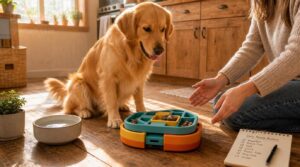
Getting the most out of puzzle feeders isn’t just about frequency—it’s also about doing it safely every single day. A few simple habits keep sessions productive and your dog out of harm’s way.
Here’s what to build into your routine.
Start With Easy Puzzles
Easy puzzles as the foundation—skip them, and the whole structure wobbles. Start with simple compartments and clear openings so your dog connects effort with reward quickly.
Frequent rewards during early sessions build confidence and reinforce a consistent routine. Positive reinforcement here isn’t just encouragement; it’s how cognitive development truly begins.
Easy puzzle toys and feeding puzzles make mental stimulation feel like winning, not working.
Use Kibble Strategically
Kibble isn’t just filler—it’s a precise tool for calorie budgeting and portion control when loaded into feeding puzzles. Load only what fits your dog’s daily ration, and you’ve turned interactive feeding into hunger pacing without adding extra calories.
- Replace high-calorie treats with puzzle-loaded kibble for food-based enrichment
- Use kibble consistency to predict how long the slow feeder stays engaging
- Feed puzzles before meals to prevent food guarding around the bowl
Increase Difficulty Slowly
Jumping difficulty levels too fast is one of the most common mistakes with puzzle toys. Use the Ladder Training Method—solve first, then raise the bar.
Gradual Mechanism Change, like shifting from open scoops to sliding covers, builds problem-solving without panic.
Progressive Compartment Addition and Controlled Friction Increase keep mental stimulation and food-based enrichment effective; following solid dog enrichment guidelines for Stepwise Reward Adjustment.
Inspect Before Every Use
A quick Visual Damage Check before every session takes under a minute—and it’s the difference between safe enrichment and an emergency vet visit. Run your fingers along your food puzzle balls and interactive toy feeder for cracks, frayed edges, or loose parts. Test Mechanism Smoothness, confirm Food Path Cleanliness, verify Safety Locks Test function, and complete Material Toxicity Verification.
Following these dog enrichment guidelines keeps feeding puzzle effectiveness high while preventing destructive behavior.
Clean Feeders Regularly
Dirty feeders are a hidden saboteur of feeding puzzle effectiveness—mold and bacteria build up fast, especially in grooved food puzzle balls and interactive toy feeders.
Wash everything with mild soap and warm water after every few uses, rinse thoroughly, and air-dry completely before reassembly. For DIY feeding puzzles, check material compatibility first.
A simple weekly sanitation schedule keeps pet nutrition management on track.
Frequently Asked Questions (FAQs)
What is the 3-3-3 rule for dog anxiety?
The 3-3-3 rule for dog anxiety uses Gradual Desensitization through Distance Buffer (3 feet), Exposure Duration (3 minutes), and Repetition Frequency (3 times daily).
This approach builds Safety Zones that support calm behavior modification without overwhelming your dog.
What is the 90/10 rule for dogs?
The 90/10 rule means 90% of your dog’s daily calories come from complete food, and only 10% from treats—so an 800-calorie dog gets just 80 treat calories daily.
Can puzzle feeders replace interactive playtime with owners?
Puzzle feeders deliver mental stimulation, but they can’t replace owner bonding.
Training reinforcement, social play balance, and the human-dog bond all require direct owner-pet interaction that interactive dog toys simply don’t provide.
Do puzzle feeders help dogs with separation anxiety?
Yes — puzzle toys can ease separation anxiety by redirecting anxious energy into scent-based puzzles and mental stimulation. Routine consistency and departure cue pairing create mental fatigue benefits, helping reduce dog anxiety during owner’s absence simulation.
Which treats work best inside puzzle feeders?
Kibble works well for daily use, but a thin smear of peanut butter or soft cheese boosts food motivation and engagement.
Carrots and apple pieces offer low-calorie options with satisfying crunch.
Should dogs use puzzle feeders outdoors or inside?
Both work well—your indoor environment offers better supervision and noise reduction, while outdoor space adds novelty.
Weather constraints and surface hygiene tip the balance; most days, inside simply keeps puzzle toys cleaner and mental stimulation more controlled.
Conclusion
You don’t need a complex routine to get this right. Knowing how often dogs should use puzzle feeders—once or twice daily, in focused 10–20 minute sessions—gives you a clear, manageable starting point.
Watch your dog’s body language, adjust for age and breed, and treat the feeder as a tool, not a toy. This ensures the experience remains engaging and beneficial.
When you match frequency to your dog’s actual needs, the puzzle feeder stops being guesswork and starts delivering real, daily benefit.
- https://www.akc.org/expert-advice/health/why-do-dogs-sleep-so-much/
- https://rstyle.me/+uflSarTaG61NaWK4TSearA
- https://dognosticseducation.com/about-us/faculty/
- https://getodie.com/blog/what-it-actually-takes-to-care-for-a-dog-after-surgery/
- https://www.sustainablevet.org/blog/dog-soft-tissue-surgery-care