This site is supported by our readers. We may earn a commission, at no cost to you, if you purchase through links.
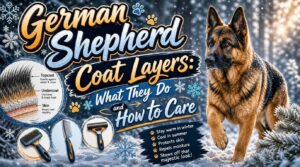
A German Shepherd standing in a snowstorm loses less body heat than most dogs twice its size—not because of some metabolic trick, but because of an engineering solution built into every strand of fur.
Those German Shepherd coat layers aren’t just hair. They’re a two-part system: a dense, wool-like undercoat that locks air against the skin, and a coarse outer layer of guard hairs that deflects rain, blocks debris, and scatters UV radiation before it ever reaches the surface.
Understanding how these layers work together changes how you groom, what tools you reach for, and why shaving—quietly backfire.
Table Of Contents
Key Takeaways
- Your German Shepherd’s double coat is a two-part thermal system — a dense undercoat traps air for insulation while coarse guard hairs block water, UV rays, and debris — and both layers need to stay intact to work.
- Shaving a double coat doesn’t cool your dog down; it strips the built-in temperature regulation, leaving skin exposed to sunburn and heat stress while regrowth comes back patchy and unreliable.
- Seasonal shedding is driven by daylight cycles, not just temperature, so expect two major coat blows per year lasting 2–6 weeks, with daily brushing being non-negotiable during peak shedding.
- Dull fur, bald patches, persistent mats, or signs of parasites in the undercoat aren’t just grooming problems — they’re early warning signals of nutritional gaps, hormonal issues, or skin conditions that warrant a vet visit.
German Shepherd Coat Layers Explained
Your German Shepherd’s coat isn’t just fur — it’s a two-part system doing quiet, constant work. Each layer has its own job, and understanding them makes caring for your dog much easier.
Knowing how each layer works makes brushing a double-coated dog far more effective than just running a comb through the top.
Here’s a closer look at what those layers actually are.
Dense Soft Undercoat
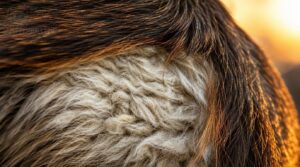
Think of your German Shepherd’s undercoat as thermal underwear — a dense, woolly layer sitting right against the skin. It works through microclimate dynamics, trapping air to regulate body temperature in both cold and heat.
Genetic thickness determines how much insulation your dog naturally carries, and that directly affects shedding volume seasonally.
Hydration effects and allergy susceptibility also tie closely to undercoat health, making regular use of deshedding tool and undercoat rakes essential.
A dense undercoat provides primary thermal insulation by trapping air.
Coarse Outer Guard Hairs
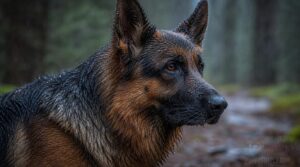
If the undercoat is thermal underwear, guard hairs are the weatherproof shell over it. These keratin-based fibers have a nearly straight hair shaft structure that keeps them projecting outward, which gives your German Shepherd’s outer coat its firm, coarse feel. Their pigment distribution creates that signature saddle coloring.
Here’s what they actively do:
- Repel water before it soaks through
- Block dirt and debris from reaching skin
- Shield against UV exposure and minor abrasions
How Both Layers Work Together
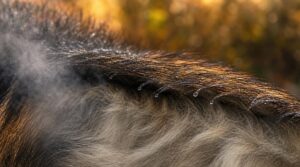
Guard hairs and undercoat function as a unified system, not independently. The topcoat guard hair acts as a wind barrier and manages moisture channeling away from skin, while the undercoat provides insulation and temperature regulation in the sheltered layer beneath.
Together, they create layered insulation with genuine airflow regulation. Warm air remains trapped close to the dog’s body, and temperature buffering maintains a stable skin microclimate through weather shifts.
Why German Shepherds Are Double-Coated
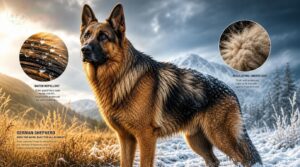
This double coat isn’t accidental — it’s the result of ancestral breed selection shaped by centuries of working dog heritage across highly variable climates. Evolutionary climate adaptation built a thermal efficiency advantage directly into the breed’s biology.
The German Shepherd’s double coat is no accident — centuries of working heritage forged a living thermal system
Your German Shepherd’s guard hair function and protection, combined with undercoat insulation and temperature regulation, give this dog a protective layering purpose that no single-layer coat could replicate.
What Guard Hairs Do
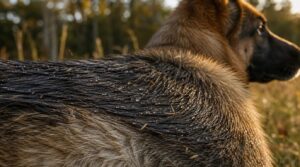
Guard hairs are the outer layer you actually see when you look at your German Shepherd, and they’re doing a lot more than just looking good. Think of them as your dog’s first line of defense against the outside world.
Here’s what those coarse, flat-lying hairs are working to protect against every single day.
Water and Dirt Resistance
Your dog’s guard hairs act like a weatherproof jacket — water beading off the outer layer before it soaks through. That protective outer layer also manages dirt shedding well; dry debris usually sits on the coarse guard hairs rather than working inward.
Good drying airflow through a well-brushed coat boosts mud resistance, while the friction protection those guard hairs provide shields skin from grit and scrapes.
UV and Weather Protection
Beyond rain and mud, your German Shepherd’s weatherproof outer layer quietly manages UV exposure too. Those UV guard hairs scatter and absorb ultraviolet radiation before it reaches the skin — acting as a built-in sunshield.
The undercoat insulation and temperature regulation work alongside this, buffering against wind chill and heat stress. Together, they form a reliable weather resistance system your dog was born with.
Protection From Minor Scrapes
Your German Shepherd’s outer coat does more than look good — it’s a quiet defense system working every trail run and backyard romp. Guard hair resilience and undercoat cushioning combine in a double coat structure and function that shields skin from everyday friction:
- Friction distribution spreads scrape force across multiple hair strands
- Debris shielding traps grit before it contacts skin
- Guard hair function and protection deflects rough surfaces via stiff, coarse shafts
- Undercoat cushioning compresses on impact, buffering direct abrasion
- Mat prevention keeps the outer coat gliding smoothly rather than pulling skin
German Shepherd coat structure fundamentally turns minor scrapes into non-events for skin health.
Why Guard Hairs Stay Year-Round
Unlike the undercoat, which thins and thickens with the seasons, guard hairs stay put year-round — and that’s by design. Genetic programming keeps the outer coat stable, ensuring your dog always has persistent protection against weather, debris, and UV exposure.
This structural integrity isn’t accidental; it’s the evolutionary purpose of double coat structure and function. The stability guarantees protection never has a gap, maintaining guard hair function across all seasons.
What The Undercoat Does
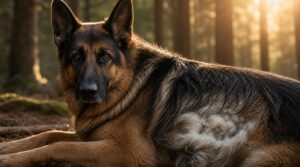
The undercoat is where most of the real thermal work happens. It’s not just fluff — it’s an active system that adapts to temperature, season, and your dog’s environment.
Here’s what it actually does.
Air Trapping and Insulation
Think of the undercoat as a built-in sleeping bag. Dense, fine fibers create lofted air pockets — tiny still-air zones with remarkably low thermal conductivity. This fiber convection resistance keeps heat from escaping too quickly.
The thermal boundary layer right against your dog’s skin stays stable as long as the coat maintains loft.
Compression or moisture insulation loss collapses that air layer, reducing double coat insulation quickly.
Winter Warmth Regulation
In winter, your German Shepherd’s undercoat works as a natural heat retention strategy — thickening seasonally to trap more still air against the skin. The guard hairs contribute to wind chill mitigation by blocking direct airflow, preserving that insulating loft underneath. This breathable coat system lets the coat regulate warmth during outdoor activity.
Indoor adaptation warmth depends on the undercoat staying clean, dry, and unmatted.
Summer Heat Release
In summer, the coat actually flips roles. As the undercoat thins, airflow enhancement improves — warm air escapes rather than staying trapped. Your dog’s thermal regulation depends on this three-part system working together:
- Panting efficiency drives evaporative cooling techniques through the airways
- Peripheral blood flow moves heat toward the skin surface
- Airflow through the thinned undercoat enhances their heat tolerance
- Guard hair function in a German Shepherd’s outer coat buffers direct solar radiation
- Humidity reduces the effectiveness of temperature regulation in hot, wet conditions
Why Undercoat Density Changes Seasonally
Daylight itself drives this cycle. As days lengthen in spring, photoperiod hormones signal follicles to shed dense undercoat insulation. When days shorten in fall, those same signals rebuild it.
Temperature regulation, humidity effects, and your dog’s energy allocation all fine-tune the timing.
Higher parasite pressure during warmer months makes lighter, easier-to-groom undercoat even more practical than.
German Shepherd Coat Types
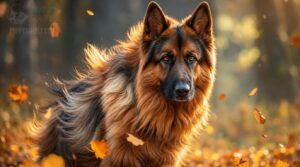
Not all German Shepherds have the same coat, and the differences go beyond just looks. Knowing which type your dog has shapes how you groom, how often, and what tools you need.
There are three coat types worth understanding before anything else.
Plush Coat
The medium haired plush coat is the middle ground you didn’t know you were looking for. Its visible hair length creates a cushioned silhouette without the high-maintenance demands of a full long coat. Notice these three distinct traits:
- Soft neck feel from denser guard hairs
- Subtle body drape along the backline
- Heat regulation nuance through intact undercoat insulation
It’s still a full double coat — just fuller.
True Long Hair Without Undercoat
On the opposite end of the plush coat sits the single long coat — a breed-specific long-haired variation where the undercoat is minimal or absent entirely. The long-haired German Shepherd with this coat length classification carries flowing guard hairs that produce smooth coat drape aesthetics, but loses the thermal buffer.
Top-hair shedding replaces seasonal blows, and without an undercoat, mat prevention techniques become your primary grooming focus.
Differences in Feathering and Texture
Feathering appears along the backs of the legs and the tail’s underside, with density varying based on guard hair length and condition. Leg feathering tangles faster due to longer strands catching debris easily.
Tail fringe develops a soft, brush-like appearance as undercoat softness fills in beneath it. Guard hair curls create subtle waves, making feather density appear fuller and less uniform.
Coat Length Genetics
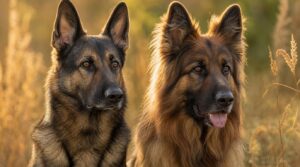
Your German Shepherd’s coat type isn’t random — it comes down to genetics, and the rules are simpler than you might expect. One gene controls whether your dog ends up with a stock, plush, or long coat.
Knowing how it works helps you understand what you’re working with. Here’s what that gene is actually doing.
Long Coat Recessive Inheritance
Long coats in German Shepherds aren’t random — they trace back to recessive FGF5 variants, meaning a longhaired German Shepherd must inherit two copies of the recessive allele. Carrier testing reveals which dogs carry one hidden copy. Here’s how breeding genetics of coat length plays out:
- S/S dogs — short-coated, can’t pass long-hair variants
- S/L carriers — look short-coated but carry one FGF5 variant
- L/L dogs — express the long coat phenotype fully
- Carrier × Carrier pairings — produce ~25% long-coated offspring
- Pedigree probability analysis — helps breeders anticipate genetic anomalies leading to single long coats in German Shepherds
Breeding strategies that include carrier testing reduce surprises and support informed decisions around German Shepherd coat structure.
Why Plush Coats Are Phenotypic Variations
Plush coats don’t follow a separate genetic switch — they emerge from keratin gene variants that alter hair shaft texture and growth pattern synergy, without changing coat length inheritance. Think of it as a texture-length combo layered onto the standard genotype.
Environmental grooming impact also shapes visible softness perception, making two dogs with identical genetics look noticeably different depending on how their coats are maintained.
Seasonal Coat Blowing
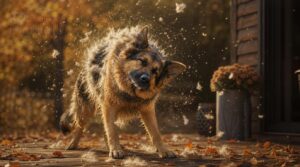
Twice a year, your German Shepherd goes through what owners call "blowing coat" — a seasonal shedding event that makes daily fur feel like a full-time job. It’s more predictable than it seems once you know what to expect.
Here’s a breakdown of how the cycle works and which dogs shed the most.
Spring Undercoat Shedding
Every spring, your German Shepherd basically sheds a sweater. Daylight influence—not just rising temperatures—triggers this spring coat blow, usually beginning around March.
Seasonal shedding patterns follow a predictable rhythm: three to eight weeks of progressive undercoat clump removal, peaking mid-cycle.
Watch for these signs you’re at peak shedding:
- Soft, dense clumps are released during brushing
- A sharp increase in fur on floors and furniture
- Undercoat insulation and temperature regulation shift as the winter layer is released
- Daily grooming yields noticeably more hair than usual
Fall Undercoat Replacement
Fall works in reverse of spring — shortening daylight triggers your German Shepherd’s fall coat blow, swapping the lighter summer undercoat for a denser winter layer.
During peak shedding weeks, you’ll notice an undercoat texture shift: softer, finer fur releasing in clumps beneath the guard hairs.
Climate control’s influence matters here — indoor dogs often shed more gradually.
Brushing technique adjustments, like targeting deeper layers, support undercoat insulation and temperature regulation through the seasonal shedding shift.
Typical Blow Coat Duration
Most German Shepherds blow out their coats for 2–6 weeks, though this represents an average timeframe. Genetic variability, age-related changes, and climate can significantly extend or shorten this window—sometimes stretching to 3 months.
Longer-coated dogs typically experience 6–12 weeks of seasonal shedding cycles, including intense blowout periods. These extended phases demand consistent grooming to manage heavy fur loss.
Understanding your dog’s unique shedding pattern is critical. This knowledge enables owners to build a realistic grooming and planning timeline, ensuring preparedness before peak shedding season begins.
Indoor Shedding Patterns
If your dog lives mostly indoors, expect a different rhythm. Stable temperatures and artificial lighting cues can blur those seasonal shedding patterns in German Shepherds, spreading the undercoat release more evenly across the year. HVAC airflow keeps loose fur circulated longer, while carpet hair retention and fabric friction means hair turns up everywhere.
Consistent shedding control starts with regular brushing and vacuuming.
Which Coat Types Shed Most
Not all coat types shed equally — undercoat density drives the volume. Here’s a quick breakdown:
- Plush coat shedding tops the list, with dense-undercoat dogs releasing the most fur during seasonal blowouts.
- Long-hair feather shedding follows closely, as loose hair catches in feathered areas around the ears and tail.
- Stock coat release is lightest, though density-driven shedding still occurs year-round.
Brushing by Coat Type
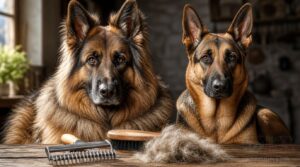
Not every German Shepherd coat plays by the same rules, and that goes for brushing too. How often you brush depends almost entirely on what kind of coat your dog is working with.
Here’s what each coat type actually needs.
Plush Coat Brushing Frequency
Plush coats need brushing more often than most owners expect. Aim for 2–3 sessions weekly as your baseline grooming schedule, but build in a morning refresh routine and post‑play brushing after outdoor time to clear debris before it settles.
Winter frequency boosts apply during blowing periods — daily short sessions work better than occasional marathon grooms. Heated air keeps shedding steady year‑round, so indoor climate effects also matter.
Long-Haired Coat Brushing Frequency
Long-haired German Shepherds require noticeably more frequent grooming compared to plush coats. Aim for 3–4 sessions weekly as your baseline — Seasonal Frequency Adjustments are crucial, as peak shedding may demand increased attention.
Tool Selection Impact is significant: a rake paired with a wide-tooth comb efficiently penetrates dense layers, making Mats Prevention Strategies manageable rather than daunting.
Consistent grooming, tailored to coat length, safeguards skin health and upholds a Health Benefits Routine worth maintaining.
Daily Grooming During Coat Blow
During a seasonal coat blowout, daily brushing becomes non-negotiable. Zone Prioritization—target the back, sides, and belly first, as these areas shed the most. Apply moderate Brushing Pressure using gentle strokes in the hair’s growth direction.
Practice Tool Switching: Rake the undercoat, then follow with a slicker brush to ensure thorough grooming.
Post-Walk Grooming helps catch extra debris, while proper Drying Techniques prevent mat formation, maintaining a healthy coat.
Detangling Feathered Areas
Feathering on the thighs, tail, and behind the forelegs tangles fastest due to constant friction from movement.
Begin with knot localization: Part the feathering to identify where each mat originates before using a comb. Apply a pre-dampening spray, then work in small sections, applying gentle pressure from tips toward the root to avoid damage.
Debris pocket removal eliminates trapped grit, preventing mats from reforming.
Best Tools for Coat Layers
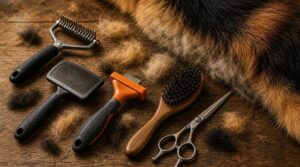
Using the right tools makes a real difference when you’re managing a double coat — the wrong brush can miss half the shedding and leave your dog uncomfortable. Each layer of the coat has its own grooming needs, so a single tool rarely covers everything.
Here’s what actually works for keeping both layers healthy and under control.
Undercoat Rakes
An undercoat rake is the workhorse of grooming tools for double coat management. Dual-Row Tines lift dense fur and catch fine loose hair in one pass, with a wider primary row and a narrower secondary row.
Rounded Pin Tips protect the skin, while Stainless Steel Construction ensures durability and rust resistance. Adjustable Tension settings accommodate varying coat densities, optimizing performance for different breeds.
A Self-Cleaning Mechanism streamlines undercoat removal, maintaining efficiency during grooming sessions.
Slicker Brushes
A slicker brush is your second line of defense after the rake. Its stainless pin tips—usually 8–12 mm long—penetrate your German Shepherd’s coat structure to lift loose guard hairs and surface undercoat without tugging. Adjustable bristle stiffness lets you match pressure to coat density.
For optimal results, use the moist brush technique post-bath:
- Work from shoulders to rump in short, even strokes.
- Keep the ideal brushing time to 3–5 minutes per session.
- Apply brush cleaning methods between passes to maintain pin efficiency.
- Check the skin for redness—that’s your coat health assessment in real time.
Wide-Tooth Combs
Wide-tooth combs — with teeth spaced 4–9 mm apart — are your finishing pass after the rake and slicker brush. They glide through feathered areas on ears and legs without snapping guard hairs.
Look for ergonomic grips, anti-static finishes for static reduction, and dual-sided teeth for versatility. Material choices matter too: wood stays gentle; plastic is lightweight.
Keep your cleaning routine simple — remove hair, rinse, done.
Detangling Sprays
Detangling sprays are your quiet helper when a comb meets resistance. Look for formulas with slip agents like dimethicone and conditioning polymers that reduce friction between guard hairs without weighing down the double coat.
Apply a light mist to feathered areas before combing, working from tip to base. Fine hair formulas with UV protection work well; avoid heavy leave-ins that flatten the undercoat.
High-Velocity Dryers
Once detangling sprays reduce friction, a high-velocity dryer takes over where combs leave off. These units push airflow exceeding 60 mph, reaching the undercoat insulation layer within seconds and cutting drying time significantly.
Temperature sensors and noise reduction design enhance safety and minimize stress for your dog. This makes the dryers ideal for seasonal coat blow management, offering unmatched efficiency:
- Remove up to 70% of loose undercoat
- Airflow efficiency penetrates guard hair protection without heat damage
- Energy efficiency motors keep power draw low
- Regular filter cleaning tops the list of maintenance tips
Tools to Avoid Overusing
High-velocity dryers do the heavy lifting, but even good tools cause problems when overused. Here’s what to watch:
| Tool | Overuse Risk | Better Approach |
|---|---|---|
| Slicker brush | Brush Overlap, Excessive Pressure | One pass per section only |
| Detangling spray | Product Saturation on guard hairs | Target feathering areas only |
| Undercoat rake | Wrong Tool Placement on feathering | Skip delicate, longer hair zones |
Never shave a double coat — not even in summer. The FURminator and undercoat rake both lose value through unnecessary frequency; use them when shedding is visible, not by calendar.
Shaving Double Coats
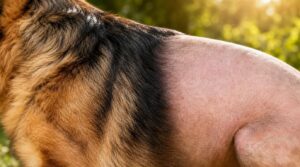
Shaving a German Shepherd might seem like the obvious fix for summer heat, but it actually works against the coat’s built-in design.
Those two layers do more than most people realize — and removing them creates problems that regular brushing never would.
Here’s what you need to know before reaching for the clippers.
Why Shaving Removes Natural Insulation
Shaving seems like a quick fix for summer heat — but it actually backfires. Your German Shepherd’s double coat works like a thermos: remove it, and thermal regulation collapses.
Here’s what shaving triggers:
- Boundary Layer Loss — still air trapped near the skin disappears, accelerating increased heat conduction.
- Guard Hair Reduction — structural coat elevation vanishes, exposing skin to direct airflow.
- Regrowth Insulation Gap — uneven regrowth leaves patchy, unreliable insulation for months.
Never shave a double coat.
Overheating and Sunburn Risks
Once that coat is gone, your dog’s skin sits exposed to direct UV radiation — and yes, dogs can sunburn. Without guard hair function and protection, UV rays hit the skin directly, raising the risk of early heatstroke signs: panting, glazed eyes, stumbling.
Heat regulation in dogs depends on intact guard hair function. When this protection is compromised, thermal regulation becomes critical.
Shade seeking behavior, hydration importance, and cooling vest use become your backup plan to mitigate risks.
Possible Coat Regrowth Problems
Even after one clipping, some German Shepherds experience patchy regrowth — undercoat returns first while guard hairs lag noticeably behind. Over-clipping effects compound quickly with repeated sessions. Watch for:
- Follicle damage from inflammation or prior matting
- Skin allergies disrupting the normal hair growth cycle in dogs
- Nutrient deficiencies reducing protein available for new shaft growth
Health conditions causing abnormal shedding or poor skin health can make full recovery unpredictable.
Safer Summer Coat Management
Instead of shaving, a few targeted habits that keep your German Shepherd’s double coat functioning properly during summer. Morning brushing removes overnight loose undercoat before heat builds, while a damp cloth wipe after outdoor play clears debris that traps warmth. Sunshade strategies—ensuring shade access during peak hours—reduce heat stress more effectively than any blade.
| Strategy | Why It Works |
|---|---|
| Morning Brushing | Clears loose undercoat before daily heat peaks |
| Damp Cloth Wipe | Removes heat-retaining debris without disrupting coat structure |
Partial trim guidance from a professional groomer targets only excess feathering, preserving the undercoat’s heat tolerance. Heat-reduced drying after baths prevents matting without compromising the German Shepherd’s coat structure.
When Veterinary Clipping May Be Needed
There are specific situations where a vet will clip your German Shepherd’s coat — and it’s always targeted, never broad shaving.
- Surgical site clipping clears a precise area for safe incision access
- Medication access clipping lets topical treatments reach skin past dense fur
- Diagnostic skin clipping exposes rashes or lesions for accurate sampling
- Mat removal clipping protects skin hidden under tight, moisture-trapping mats
- Hot spot clipping opens airflow to inflamed areas and defines treatment margins
Coat Health Warning Signs
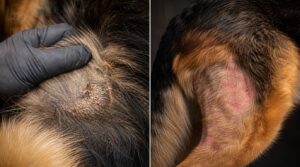
Your German Shepherd’s coat can quietly signal when something’s wrong — if you know what to look for.
Catching these signs early often means faster treatment and less discomfort for your dog.
Here are the key warning signs to watch during every grooming session.
Dull or Thinning Fur
A dull or thinning coat is your dog’s way of waving a flag. Hormonal Disorders like hypothyroidism or Cushing’s disease disrupt normal hair follicle cycles, dulling fur well before other symptoms appear.
Vitamin deficiency, fungal infection, and allergic dermatitis can similarly impair coat health. These conditions often manifest through persistent dullness or thinning, signaling deeper issues.
Fatty acid supplementation aids nutrition for coat health, but persistent dullness requires Medical Evaluation. A dog’s coat health frequently mirrors its overall wellbeing, making professional assessment critical.
Bald Patches and Excessive Shedding
Bald patches in German Shepherds are more than cosmetic concerns — they serve as critical indicators of underlying health issues. Several distinct conditions can trigger them, including:
- Autoimmune Alopecia, which targets hair follicles directly, causing smooth, round patches
- Dermatophyte Infection (ringworm), characterized by scaly, inflamed edges around bare skin
- Hormonal Imbalance stemming from thyroid dysfunction, leading to diffuse follicle cycling disruptions
Stress shedding and nutritional deficiencies can exacerbate hair loss beyond normal levels. If patches spread or fail to regrow, prompt veterinary consultation is essential.
Mats, Moisture, and Hot Spots
Mats don’t just look messy — they’re a skin health problem waiting to happen. Friction Zones like the armpits, elbow bends, and behind the ears are where matting and tangles develop fastest, especially after your dog gets wet.
Moisture Retention inside a dense double coat keeps skin damp for hours, and damp plus friction equals Hot Spot Triggers.
| Location | Risk Factor | Prevention |
|---|---|---|
| Behind ears | Collar friction | Daily combing |
| Armpits | Strap rubbing | Mat prevention brushing |
| Hind leg folds | Movement friction | Drying techniques post-swim |
Use grooming tools for double coat layers — an undercoat rake plus thorough blow-drying — to eliminate trapped moisture before skin irritation takes hold in dogs.
Parasites Hidden in Dense Undercoat
The same dense undercoat that traps moisture and triggers hot spots also gives parasites somewhere to hide. Fleas prefer the belly and base of the tail — classic flea egg buildup zones. Ticks find tick attachment hotspots near soft skin under thick fur. Mite burrowing zones sit close to the skin, invisible until irritation worsens.
Three undercoat inspection methods worth building into your routine:
- Part fur with your fingers at least weekly, reaching down to the skin level
- Run an undercoat rake through the full coat, watching for black specks or tiny moving dots
- Check during seasonal parasite spikes — spring and fall — when parasite infestations causing shedding tend to peak alongside natural coat blow
Nutrition and Hydration for Coat Quality
What your German Shepherd eats reflects in their coat. High-quality animal proteins supply the amino acids keratin needs to grow strong. Essential fatty acids—omega-3 and omega-6—keep the skin barrier intact and add visible sheen. Zinc and antioxidants promote healthy follicle function, while biotin maintains normal hair structure. Fresh water daily matters too; dehydrated skin makes fur look dull fast.
When to Contact a Veterinarian
Good nutrition sets the foundation, but some signs go beyond grooming fixes. Contact your veterinarian if you notice breathing distress, acute pain, toxic ingestion, uncontrolled vomiting, or urination failure — these are emergencies.
For coat-related concerns, a veterinary skin check is warranted when you spot bald patches, persistent skin allergies, or abnormal shedding, which can signal thyroid problems or allergies in German Shepherds.
Frequently Asked Questions (FAQs)
Can German Shepherds swim with their double coat?
Yes, they can — and their double coat actually helps. The undercoat traps air for buoyancy and thermal regulation, while guard hairs resist soaking.
Just expect drying challenges and skin irritation risk afterward.
Do coat layers change as puppies mature?
Yes — the puppy-to-adult progression is real and noticeable. Guard hair emergence and maturing undercoat thickness both shift between 4–12 months, often alongside puppy shedding spikes and color shift timing.
How does stress affect German Shepherd shedding?
Stress acts like a silent shed trigger. Stress hormones disrupt follicle cycles, driving anxiety hair loss beyond seasonal shedding.
Chronic stress’s effects include skin inflammation, grooming feedback loops, and worsening skin irritation in dogs, reduces overall dog coat health.
Are certain coat colors linked to specific textures?
Not really. Coat color and texture are genetically separate traits — pigment independence means a sable or black-and-tan dog can feel coarse or silky based on undercoat density, not color.
Does spaying or neutering impact coat quality?
Spaying or neutering can shift coat quality—not in every dog, but in roughly 1 in 5.
Expect softened guard hairs, increased undercoat density, and an irregular shedding cycle from hormone-driven coat changes.
Conclusion
Every choice you make at the brush—or the clipper—shapes what your dog’s coat can do next season. German Shepherd coat layers aren’t decorative; they’re functional architecture refined over generations of working in harsh conditions.
Respect the system: rake the undercoat, protect the guard hairs, and skip the shave. Dogs that receive coat-appropriate care tend to thermoregulate better, shed more predictably, and develop fewer skin issues as they age.
That’s not coincidence—it’s biology working the way it was built to.
- https://www.groomitools.com/blog/guides/german-shepherd-dog-coat-types-ultimate-guide/
- https://www.akc.org/expert-advice/health/how-to-groom-a-double-coated-dog/
- https://www.ukcdogs.com/german-shepherd-dog
- https://www.germanshepherds.com/threads/difference-between-standard-coat-and-plush-coat.638297/
- https://nativepet.com/blogs/health/do-german-shepherds-shed?srsltid=AfmBOorlbHnGk0_9YR0QnMOAWWg5dX3ai8YVALUhIb68LnTep32wGvzF