This site is supported by our readers. We may earn a commission, at no cost to you, if you purchase through links.
Walk into any pet store, and the toy aisle alone can stop you cold—hundreds of options, zero instructions. The wrong choice isn’t just wasteful; a toy sized for a Labrador can become a choking hazard for a Chihuahua, and a flimsy plush won’t survive five minutes with a determined Pit Bull.
Dogs aren’t a one-size-fits-all species, and their toys shouldn’t be either. Knowing how to choose the right toy comes down to key factors: size, age, play style, and safety. Get those right, and you’ll find toys your dog actually uses—and that keep them safe while they do.
Table Of Contents
Key Takeaways
- Matching a toy to your dog’s size, age, and play style isn’t optional — it’s the difference between a safe, engaging toy and a real choking or injury risk.
- Always check that toys are made from non-toxic, certified materials like food-grade rubber or BPA-free nylon, and toss anything that cracks, frays, or smells strongly of chemicals.
- Puzzle and treat-dispensing toys do double duty — they keep your dog mentally sharp and curb destructive chewing by giving it something productive to focus on.
- Rotating toys every one to two weeks, cleaning them after outdoor play, and doing a quick damage check before each session keeps your dog both safe and genuinely interested in its toys.
Match Toys to Your Dog’s Needs
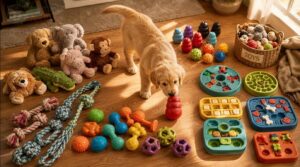
Not every toy works for every dog, and that’s actually a good thing. The right fit depends on a few key factors unique to your pup. Start here before anything else.
Knowing your dog’s personality and play style makes all the difference, and this guide to interactive dog toys for first-time owners walks you through exactly how to find that match.
Consider Your Dog’s Age, Size, Breed, and Energy Level
Before you reach for that toy, think about what your dog actually is. Developmental milestones, breed play tendencies, and your dog’s energy curve management all shape what works. A Border Collie needs herding-style chase games, while a senior Basset requires gentle, size-adjusted grip toys. Understanding the socialization period benefits ensures age-appropriate toy selection. Age-specific activity and size-appropriate toys aren’t optional extras — they’re the foundation of safe, satisfying play.
- Breed tendencies: Working breeds need 60–120 minutes of daily play plus mental challenges
- Energy matching: High-energy dogs thrive with movement-based puzzle toys; low-energy dogs prefer soft, calm options
- Size guidelines: Small dogs need toys under 4 inches; large breeds require heavy, durable builds
Choose Puppy-safe Toys for Teething and Gentle Chewing
Puppies aren’t just small dogs — their gentle bite texture and developing teeth and gums require toys that soothe without causing damage. Food-grade silicone or soft natural rubber with raised ridges massage sore gums effectively. Prioritize materials that offer comfort during teething stages.
Safety is paramount: Muzzle-sized toys prevent swallowing hazards, so ensure the toy is larger than your pup’s mouth. Flavor infusion also helps redirect chewing behavior toward appropriate items, reducing destructive habits.
| Feature | What to Look For | What to Avoid |
|---|---|---|
| Nontoxic materials | Food-grade silicone, soft natural rubber | Phthalates, lead, chemical coatings |
| Dog toy material safety | One-piece, certified non-hazardous | Detachable parts, loose squeakers |
| Teething toys texture | Raised ridges, gentle grooves | Hard surfaces, sharp edges |
| Comfort toys softness | Pliable, flexible build | Toys that collapse or crack |
| Puppy toys size | Larger than muzzle width | Anything small enough to swallow |
Pick Softer Toys for Senior Dogs With Sensitive Teeth
As dogs age, their teeth and gums become more sensitive — what worked at three years old can cause real discomfort at ten.
Soft bite resistance matters here. Choose non-abrasive materials like soft rubber or plush toys that yield gently under pressure.
- Favor mouth-friendly shapes with rounded edges
- Use gentle scent cues like chicken to encourage light chewing
- Prioritize dental comfort with soft material that won’t fracture aging teeth
Select Larger, Durable Toys for Big or Strong-jawed Dogs
Big dogs aren’t just heavier — their jaw strength compatibility with standard toys is almost non-existent. A toy that lasts a Chihuahua months can be destroyed in minutes. For large and giant breed dog toys, look for hard chew toys with ballistic nylon shells or reinforced rubber, like KONG Extreme XXL.
Weight capacity, impact resistance, waterproof design, and brand warranty all matter here.
Avoid Toys Small Enough to Become Choking Hazards
Size is one of the most critical factors in dog toy safety. A good rule of thumb: if a toy can pass through a toilet paper roll, it’s too small. Follow minimum diameter guidelines — toys should exceed three inches across.
For hands-on guidance, chew toys sized right for bored dogs can help you find options that clear that three-inch threshold without sacrificing fun.
Run a quick dimension verification routine before each play session. These small parts tester checks help you spot choking hazards before they become emergencies.
Choose Toys by Play Style
Every dog has a favorite way to play — and the right toy makes all the difference. Matching a toy to your dog’s natural play style keeps them engaged, happy, and out of trouble.
Here are the main play styles to know so you can pick the best fit.
Fetch Toys for Dogs That Love Chasing

Some dogs don’t just enjoy chasing — they live for it. If yours is one of them, the right fetch toy makes all the difference. Look for these key features:
- Neon visibility — neon orange or yellow rubber balls help your dog track throws on grass or sand
- Aerodynamic shape — disc toys and perforated flight designs travel farther and more accurately
- Floating capability — great for water-loving dogs during outdoor toy sessions at lakes or pools
- Launcher compatibility — ball launchers extend distance while protecting your arm during long fetch games
Always match the dog ball size to your dog’s jaw width for safety.
Tug Toys for Interactive, High-energy Play

Tug toys are built for high-energy dogs that need a real outlet. Look for bungee shock absorption — they protect your wrists and your dog’s teeth during hard pulls. Multi-handle designs give you better control and keep hands away from snapping jaws. Handle ergonomics matter too, so sessions stay comfortable for longer.
Interactive play for dogs burns serious energy and builds trust between you both.
Chew Toys for Dogs With Strong Chewing Habits

Some dogs treat every toy like it’s their last meal. For heavy chewers, safe chew toys with wear indicators—like GoughNuts’ visible red inner layer—tell you exactly when to replace them.
Look for flavor-locking designs that sustain interest, warranty guarantees backing chew durability, and sustainable materials supporting healthy jaw development. Durable pet toys also double as dental health tools for dogs.
Plush Toys for Dogs That Like Carrying or Cuddling

Some dogs just need something to hold onto. Plush toys offer emotional comfort and a sense of security—especially for dogs that carry, hug, or curl up with a favorite companion. Look for these cuddle-friendly features:
- Cuddle-friendly shapes like bears or lambs for easy carrying
- Lightweight weight distribution under 8 ounces
- Therapeutic features like gentle heartbeat elements
- Durable, scented fabrics with reinforced stitching
- Seasonal designs in soft, non-toxic materials
Squeaky Toys for Dogs Motivated by Sound

Some dogs treat every squeak like a jackpot reward. That sound-triggered response is real — auditory enrichment benefits focus and curbs boredom.
Look for squeaker durability design with reinforced casings, varied squeak tones to hold interest longer, and noise level control for sensitive ears.
Options like Hartz Squeakerz pair interactive dog toy fun with sound-triggered training potential, all within solid safety guidelines for dog toy use.
Pick Safe, Durable Materials

The material a toy is made from matters more than most people realize. A fun-looking toy can still be a health risk if it’s built with the wrong stuff.
Here’s what to look for — and what to leave on the shelf.
Look for Non-toxic Rubber, Nylon, or Reinforced Fabric
The material your dog’s toy is made from matters more than you might think. Safe picks share a few things in common:
- Food-grade rubber — natural or synthetic, it’s flexible, durable, and low-odor
- Certified BPA-free rubber toys — reduces harmful chemical exposure during chewing
- Nylon tensile strength — nylon-reinforced toys hold up to strong jaws and fetch sessions
- Reinforced fabric with fabric sealant safety — resists saliva, snags, and fraying
- Third-party certification — confirms toy material safety meets recognized safety guidelines for dog toy use
Look for materials with durability in dog toys that carry FDA-compliant or EU safety marks.
Avoid Toys With Lead, Phthalates, Cadmium, or Strong Chemical Smells
Toy material safety really matters: Some toys contain lead, cadmium, or phthalates, as phthalate-free plastics aren’t the norm everywhere. Always prioritize products with certification labels and verified heavy metal testing to confirm lead-free standards are met.
A strong chemical smell indicates off-gassing, requiring immediate action. Air out new toys for 48 hours to reduce harmful emissions and ensure safer play environments.
Regularly inspect toys for wear, as damaged items may expose hazardous materials. Stay informed about regional safety regulations, as standards vary globally.
Choose Sturdy Stitching and Secure Parts
Once you’ve checked for toxic materials, take a close look at how the toy is built. Reinforced bartacks at stress points, double-stitched seams, and overlock edging all signal real toy durability. Edge piping adds extra resistance where tearing usually starts.
Zipper fasteners should feel solid, not loose. These construction details are quiet but important safety considerations for dog toys — they’re what holds everything together during rough play.
Avoid Detachable Pieces, Loose Squeakers, and Fragile Decorations
Beyond seams and zippers, watch for anything that pulls off easily. Buttons, plastic eyes, and hanging tassels are common hazards — once loose, they become swallowing risks.
Look for enclosed squeaker housing so your dog can’t dig out the squeaker. Reinforced decorative stitching and detachable-free construction keep ornaments bonded to the toy. These aren’t small details — they’re real choking prevention.
Replace Toys That Crack, Splinter, Tear, or Fray
Even a beloved toy becomes a hazard when it starts to break down. Watch for cracks larger than 1 cm, frayed seams, or softened rubber — these are clear material fatigue indicators. Don’t wait for full fragmentation risk to build.
Run scheduled toy audits before each play session, follow manufacturer warranty replacement policies, and discard anything compromised.
Your dog’s safety depends on it.
Add Puzzle and Treat Toys
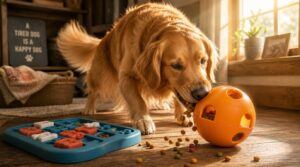
If your dog often gets bored or chews things they shouldn’t, puzzle and treat toys can make a real difference. These toys keep your dog’s brain busy and give them something productive to focus on.
Here’s what to keep in mind when adding them to your dog’s routine.
Use Treat-dispensing Toys for Mental Stimulation
Treat-dispensing toys do more than keep your dog busy — they deliver real cognitive enrichment. Your dog has to think, nudge, and problem-solve to earn each bite. This builds impulse control and focus without a single formal command.
Treat-dispensing toys turn every snack into a problem-solving session, building impulse control one nudge at a time
To maximize engagement, try flavor rotation to keep things fresh, or use the freeze-challenge method: stuff and freeze the toy for a longer mental workout.
Start Puzzle Toys at an Easy Difficulty Level
Start with beginner puzzle selection — toys labeled Level 1 with just three to five compartments. Short session pacing matters here: keep each round under five minutes so your dog stays confident, not frustrated.
Use small treats for quick feedback rewards, and log each achievement to track growth. This ensures progress is measurable while reinforcing positive behavior.
This confidence-building approach turns mental stimulation toys from a challenge into something your dog genuinely enjoys.
Choose Food-based Toys for Scent-driven Dogs
Some dogs live through their nose first. If your dog is always sniffing everything, food-based toys and interactive treat dispensers are your best match. Look for treat-dispensing toys with removable scent chambers so you can swap natural scent infusions without buying new ones.
Rotate flavors every few weeks to keep interest fresh, and always check allergen labels before introducing anything new.
Use Puzzle Toys to Reduce Boredom and Destructive Chewing
A bored dog is a busy dog — usually busy chewing your furniture. Puzzle toys break that cycle by giving your dog real mental stimulation to work through.
Use Progressive Challenge Levels and Rotational Puzzle Sets to keep things fresh and prevent habituation.
Interactive Puzzle Paths with treat dispensing toys tap into Feedback Loop Training, making problem-solving rewarding.
This is one of the most effective tools for Preventing Boredom and Destructive Chewing.
Supervise Dogs With Treat Toys to Prevent Accidental Swallowing
Even the safest treat-dispensing toys need a watchful eye. Continuous owner watch during supervised treat sessions isn’t optional — it’s how you catch problems before they become emergencies.
- Stop play at the first sign of cracking or loose parts
- Watch for swallowing warning signs like gagging or pawing at the mouth
- Keep emergency vet readiness top of mind
- Remove the toy the moment treats are gone
Rotate, Clean, and Inspect Toys
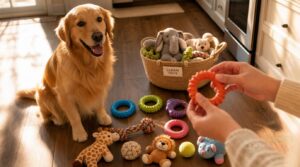
Getting a toy is only half the job — keeping it safe and interesting is the other half.
A little routine goes a long way in protecting your dog and keeping playtime fresh. Here’s what to do to stay on top of it.
Rotate Toys Regularly to Keep Them Interesting
Your dog loses interest in the same toys fast—that’s just how their brains work. A simple toy rotation schedule every one to two weeks keeps things fresh without buying anything new.
Stick to a toy batch size of four to six at a time to maintain novelty. Use labeled storage bins to organize rotated toys and simplify swaps.
Monitor for cues like ignored toys, and adjust the rotation schedule accordingly to sustain engagement.
Store Unused Toys Out of Sight to Refresh Novelty
Rotation only works if your dog can’t see what’s coming next. Store unused toys on a high shelf or in labeled, opaque bins — out of sight really does mean out of mind.
A scheduled refresh every one to four weeks, using a simple labeled inventory, makes old toys feel brand new again. Themed sets make swapping even easier.
Wash Outdoor Toys After Play Sessions
Cleaning dog toys is simple: start with a gentle wash using mild dish soap and warm water after every outdoor session. A vinegar disinfecting rinse (one part vinegar to three parts water) effectively combats bacteria, while sunlight drying offers a natural way to speed up the process.
For heavily used outdoor toys, schedule a weekly deep clean to maintain hygiene and durability.
Keep Toys Dry to Prevent Mold and Mildew
After washing, don’t let toys sit damp — that’s when mold takes hold. Quickly towel-dry each toy first, then let them finish drying with airflow on a rack. Wipe seams and crevices where moisture hides.
Use ventilated storage like mesh bins, and include desiccant packs to absorb lingering humidity. This prevents trapped moisture in enclosed spaces.
Moisture-wicking materials dry faster, so prioritize them for mold prevention in toys. This choice helps maintain dryness during regular use and cleaning.
Inspect Toys Before Each Use for Damage or Missing Pieces
Before tossing your dog a toy, take 10 seconds to run through this quick toy inspection checklist:
- Sharp edge check — feel for cracks or splits in plastic or rubber
- Loose component test — tug on eyes, buttons, and squeakers
- Crack inspection — squeeze rubber to test elasticity; stiff or brittle rubber fails the rubber elasticity test
- Surface wear check — look for frayed seams or peeling paint
Damaged toys break toy safety standards fast. Toss anything questionable.
Frequently Asked Questions (FAQs)
How to find the right toy for your dog?
Finding the right toy starts with knowing your dog — their age, size, breed, and energy level.
Selecting the Right Dog Toys means matching toy size guidelines to your dog’s needs, personality, and play style.
How often should I replace my dogs toys?
Think of dog toys like medieval armor — even the toughest gear wears out.
Replace plush toys every one to two weeks, and rubber every four to eight weeks, and always follow wear indicators like cracks or fraying.
Can dogs share toys with other pets safely?
Yes, dogs can share toys with other pets, but keep a few things in mind. Watch for resource-guarding signals, clean shared toys after each use, and ensure the toy’s size and material work safely for both animals.
Are homemade dog toys a safe alternative?
Homemade dog toys sound thrifty, but economic viability only holds if you get the safety right. Use non-toxic materials, strong stitch strength, and meet basic hygiene standards — or skip it entirely.
How many toys does my dog actually need?
Most dogs do well with 4 to 8 toys total. That’s your household toy limit — enough variety without clutter. Rotate 2 to 3 at a time to maintain interest.
Do dogs prefer certain colors in their toys?
Like a painter choosing the right palette, color matters more than you’d think. Dog toy studies show your pup sees blue and yellow best — so skip red and go bright.
Conclusion
Studies show that dogs who play regularly are less likely to develop destructive behaviors at home. That’s not a coincidence—it’s what the right toy does.
Knowing how to choose the right toy means looking past the cute packaging and focusing on what actually fits your dog’s size, age, and play style. A well-matched toy isn’t just fun—it’s one of the simplest ways to keep your dog safe, happy, and mentally sharp.
- https://rainwalkpetinsurance.com/healthydogtoys/
- https://www.thenaturaldogonline.com/content/how-to-choose-the-right-toy-for-your-dogs-size-and-breed
- https://shopyomp.com/blogs/magazine/choosing-the-right-dog-toys-for-different-breeds-and-ages?srsltid=AfmBOopkbhLFmxhDMosJNw2p76chSPj80LZT-O4Z0VPn3BNpI1VqHj9B
- https://www.hartz.com/dog-toys-101-a-comprehensive-guide/
- https://wearethecure.org/chews-wisely-a-guide-to-safe-dog-chews-and-non-toxic-toys/