This site is supported by our readers. We may earn a commission, at no cost to you, if you purchase through links.
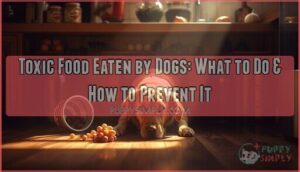
A dog can go from curious to critically ill in under two hours—and the culprit is often something sitting on your kitchen counter. Grapes, onions, xylitol-sweetened peanut butter: these aren’t obscure poisons locked in a cabinet.
They’re everyday foods your dog encounters the moment your back turns.
Toxic food eaten by dogs accounts for thousands of emergency vet visits each year, yet most pet owners don’t realize the danger until symptoms appear.
Knowing which foods trigger organ failure, which signs demand immediate action, and how to lock down your home beforehand can mean the difference between a close call and something far worse.
Table Of Contents
Key Takeaways
- Everyday foods like grapes, xylitol-sweetened peanut butter, and onion powder can trigger organ failure in dogs within hours, often before any obvious symptoms appear.
- Some toxic reactions—especially from garlic, raisins, and fatty foods—develop silently over days, making immediate vet contact critical even when your dog seems fine.
- If your dog eats something toxic, your first moves are removing access, identifying exactly what and how much was eaten, and calling your vet or the Pet Poison Helpline (855-764-7661) right away.
- Most poisoning incidents are preventable through locked storage, label scrutiny for hidden xylitol, and a consistent no-table-scraps rule backed by safe treat alternatives.
Foods Most Toxic to Dogs
Some foods that seem completely harmless to us can send a dog to the emergency vet within hours. The danger usually comes down to specific compounds your dog’s body simply can’t process the way yours can.
Knowing which specific foods are poisonous to dogs could genuinely save your pet’s life before symptoms even start.
Here are the foods that top every veterinarian’s watch list.
Chocolate and Cocoa Products

Chocolate is one of the most common poisoning culprits—and one of the most misunderstood. Theobromine toxicity occurs because dogs metabolize this compound far more slowly than humans do, letting it accumulate and overstimulate the heart and nervous system.
Dark chocolate danger is real at smaller doses, while cocoa powder concentration makes even a tablespoon hazardous. Add fat pancreatitis risk and caffeine toxicity in pets, and you’re dealing with layered harm.
Always check chocolate packaging safety before assuming "just a little" is fine.
Grapes and Raisins

Grapes and raisins sit in a different danger category—raisin concentration means the toxic dose is far lower by weight than fresh fruit, so portion size isn’t a buffer. The drying process leads to sugar and calorie concentration, making raisins more potent per weight.
Renal toxicity can develop before your dog shows obvious distress. Kidney failure caused by grapes and raisins progresses quickly, making early detection everything. Don’t wait for symptoms—any dog poisoning involving these toxic foods demands immediate veterinary attention.
Onions, Garlic, Leeks, and Chives

Unlike grapes, this danger hides in everyday cooking. Every member of the Allium family—onions, garlic, leeks, chives—contains organosulfur compounds that trigger thiosulfate toxicity, causing red blood cell damage and hemolytic anemia.
Cumulative exposure makes this especially deceptive; small, repeated amounts quietly compound.
Small dog vulnerability is real here—a garnish-sized portion can matter.
Any confirmed ingestion warrants a call to your vet.
Xylitol in Sugar-free Products

Allium compounds damage slowly—xylitol moves fast. This artificial sweetener triggers a sudden insulin release in dogs within 30–60 minutes, driving blood sugar dangerously low.
Dose sensitivity is real: even one piece of sugar-free gum can cause hypoglycemia in a small dog. Repeated or larger doses risk liver failure.
Xylitol is a natural sugar alcohol that doesn’t cause tooth decay in humans.
Watch for xylitol in:
- Sugar-free gum and mints
- Some peanut butters
- Toothpaste and mouthwash
- Sugar-free candies and baked goods
- Cough syrups and vitamins
Alcohol and Raw Yeast Dough

Raw yeast dough is a double threat: live yeast activity continues inside your dog’s warm stomach, causing fermentation gas buildup and stomach distension risk that can become a veterinary emergency.
ethanol absorption occurs as fermentation produces alcohol, triggering alcohol poisoning in dogs.
Dextrose rescue therapy and IV fluids support recovery—but preventing access to unbaked dough is always the safer first move.
Macadamia Nuts and Moldy Walnuts

Eating even a small handful of macadamia nuts can leave your dog wobbly, weak, and running a fever within 12 hours — classic Macadamia Weakness that signals a veterinary emergency care situation.
Watch for these signs after exposure:
- Hind-limb weakness and ataxia from muscle and nervous system involvement
- Vomiting, tremors, and hyperthermia with rapid Toxin Onset
- Pancreatitis Risk from the nuts’ high fat content
- Walnut Tremors from Mycotoxin Origin — specifically penitrem A produced by Penicillium mold
- Mycotoxins in moldy food can trigger seizures within 2–3 hours
Preventing dog poisoning means treating these as toxic human foods for dogs — no exceptions.
Avocado, Pits, and Stone Fruits
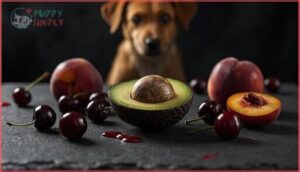
Avocados seem harmless, but persin toxicity from the leaves, skin, and seed can cause vomiting, diarrhea, and rare avocado heart effects in dogs. The real danger, though, is mechanical obstruction from the pit.
| Fruit | Primary Risk |
|---|---|
| Avocado | Persin toxicity, pit obstruction |
| Cherries/Peaches | Cyanide risk from chewed fruit pits and seeds |
| Plums/Apricots | Intestinal blockage, cyanide poisoning |
Practice pit storage safety — secured trash prevents accidental access.
Coffee, Tea, and Energy Drinks

Your morning coffee habit can become a serious threat if your dog sneaks a sip. Caffeine toxicity in pets triggers rapid heart rate, tremors, and seizures — and caffeine toxicity levels scale with body weight, so small dogs face higher risk from less.
Tea carries similar xanthine compounds, while energy drink containers can spill large doses fast.
Guarana stimulant, sugar-free syrups, and milk cream intolerance add compounding risks.
Hidden Food Dangers at Home

Some of the biggest threats to your dog aren’t hiding in the pantry—they’re sitting right on your counter or tucked in your purse.
Everyday items you’d never think twice about can cause serious harm if your dog gets into them.
Here’s what to watch for around the house.
Sugar-free Gum, Candy, and Mints
Sugar-free gum, candy, and mints are quietly dangerous—not just because of xylitol, but because of everything else packed inside them. Gum base risks include choking and stomach irritation, while artificial sweeteners like sorbitol trigger GI upset through osmotic diarrhea.
Watch for these hidden hazards:
- Xylitol causes rapid hypoglycemia within 30 minutes
- Chewing stick choking risk increases with multiple pieces swallowed
- Mint flavor irritation can inflame your dog’s digestive tract
- Binding agent effects and sorbitol together compound gastrointestinal distress
Peanut Butter With Xylitol
Peanut butter seems like the perfect treat, but some jars are a hidden threat. Brands marketed as sugar-free or low-calorie often use xylitol—sometimes labeled birch sugar—as an artificial sweetener.
Even a small lick can trigger rapid hypoglycemia in dogs within 30 to 60 minutes. Your first aid response is simple: check the label immediately, secure the jar, and call your vet.
Sauces With Onion or Garlic Powder
Sauces are a stealth seasoning risk your dog doesn’t need. Barbecue sauce, gravies, and marinades routinely hide onion or garlic powder—and powdered toxin potency is no joke. One teaspoon of garlic powder rivals eight fresh cloves, making garlic more potent than most owners expect.
Watch for these sources:
- Jarred pasta and stir-fry sauces
- Gravy packets and soup mixes
- Restaurant leftovers and takeout drippings
Repeated small exposures enable cumulative toxin build-up, quietly triggering hemolytic anemia days later. Always check sauce labels before any drips reach your dog.
Fat Trimmings, Bacon, and Greasy Leftovers
Bacon and fat trimmings might seem like harmless treats, but they’re among the sneakiest toxic foods for dogs. High-fat scraps trigger pancreatitis from high-fat foods within hours, causing severe abdominal pain and vomiting.
Bacon’s sodium toxicity risk is real too—roughly 1,800 mg per 100 grams can dehydrate your dog fast.
Long-term effects include obesity, metabolism disruption, and chronic pancreatitis.
Cooked Bones and Table Scraps
Cooked bones carry risks that go beyond what most people expect. Cooking removes collagen, leaving bones brittle and prone to bone splinter injuries that puncture the esophagus or cause internal perforations within hours.
Choking hazards and digestive blockages follow fast—especially with poultry bones.
Table scraps add seasoning toxicity through garlic powder and onion bits, compounding food toxicity and preventing accidental ingestion of harmful foods starts with keeping the plate to yourself.
Desserts, Ice Cream, and Flavored Snacks
Desserts look harmless, but they’re some of the most hazardous foods your dog can get into. Watch for these specific risks:
- Chocolate contains theobromine that dogs can’t metabolize safely.
- Ice cream lactose triggers stomach upset, while sugar‑free versions carry xylitol.
- Dessert sprinkles toxicity and candy bar additives often include artificial sweeteners.
- Frozen yogurt risks mirror ice cream—dairy plus hidden xylitol compounds, the danger.
Trash, Compost, and Dropped Foods
Your yard and trash cans are silent hazards. Moldy walnuts, fallen fruit, and decomposing scraps harbor tremorgenic mycotoxins that trigger seizures within hours. Compost containment and yard fruit management aren’t optional—they’re essential.
| Source | Risk |
|---|---|
| Trash bins | Grapes, onions, moldy food |
| Compost piles | Mycotoxins, ethanol, toxic scraps |
| Fallen yard fruit | Mold, fermentation, cyanogenic pits |
Secure trash bins and supervise your dog outside.
Signs a Toxic Food Was Eaten

When a dog eats something toxic, its body usually doesn’t stay quiet about it. signs can range from obvious and immediate to subtle and slow-building, depending on what it ingested.
Here’s what to watch for.
Vomiting and Diarrhea
Vomiting and diarrhea are often your dog’s body raising an alarm. These gastrointestinal symptoms can appear within hours of ingestion, and the pattern matters — vomiting usually hits first, followed by loose or watery stools.
Watch for these red flags alongside vomiting patterns and diarrhea causes:
- Repeated vomiting preventing any fluid intake
- Watery diarrhea accelerating dehydration risk
- Weakness signaling electrolyte imbalance
Fluid therapy options and first aid for dog poisoning start with recognizing symptoms of poisoning early.
Drooling, Panting, and Restlessness
Before vomiting even starts, Nausea Indicators like heavy drooling and lip-licking can signal canine poisoning in progress.
Toxin Drooling often pairs with Anxiety Triggers such as restlessness and pacing, making recognizing canine poisoning symptoms tricky.
Pain Panting — shallow, relentless breathing even at rest — and Heatstroke Signs like brick‑red gums are clinical signs of canine poisoning, demanding emergency response for pet poisoning, immediately.
Lethargy, Weakness, and Collapse
When a dog shifts from drowsy to unable to stand, that’s no longer fatigue — those are clinical signs of toxicity demanding immediate action.
Circulatory Failure, Metabolic Acidosis, and Respiratory Depression can all strip muscle function rapidly.
Weakness that progresses to collapse within hours signals serious Neurological Impairment or Cardiac Arrhythmias.
These signs of poisoning in dogs mean you should call your emergency pet poison hotline now.
Tremors, Seizures, and Poor Coordination
Tremors, seizures, and poor coordination are central nervous signs you can’t afford to wait on.
Xylitol causes hypoglycemia seizures within 30–60 minutes, while mycotoxin tremors from moldy food hit fast and worsen quickly.
Electrolyte imbalance from salt toxicity and neurologic toxin effects from chocolate both drive clinical signs of toxicity that can escalate to collapse without warning.
Pale Gums and Anemia Symptoms
Pale gums are one of the clearest gum color indicators that something serious is happening inside your dog’s body. Hemolytic anemia from onions and garlic destroys red blood cells, cutting oxygen delivery to essential organs—sometimes days after exposure.
Watch for these anemia warning signs:
- White, gray, or pale pink gums
- Unusual fatigue or reluctance to move
- Rapid breathing or elevated heart rate
- Xylitol-related liver injury affecting clotting
- Collapse during mild exertion
Blood test interpretation confirms anemia through hematocrit and red blood cell counts, guiding recovery monitoring.
Increased Thirst and Urination
Beyond pale gums, watch for a sudden spike in thirst or urination—both signal serious internal stress.
Grapes and raisins trigger kidney failure, disrupting kidney function and fluid balance. Caffeine and excess salt can cause similar renal strain.
Diabetes mellitus, diabetes insipidus, and dehydration effects all mirror these signs, making any hormonal imbalance or renal failure a genuine emergency.
Delayed Symptoms After Ingestion
Not every toxic reaction announces itself right away. With onions and garlic, hemolytic anemia can quietly build for 3 to 5 days before your dog looks visibly sick. Onset timelines vary widely, and silent internal harm is exactly why missed treatment opportunities are so dangerous.
Some dog poisons work in silence, causing irreversible harm days before a single symptom appears
- Grapes and raisins can trigger kidney failure within 24–72 hours, even if vomiting appears mild at first.
- Xylitol causes rapid hypoglycemia within 30–60 minutes, but liver damage may not surface until 24–48 hours later.
- Onions and garlic cause hemolytic anemia with subtle warning cues that don’t fully appear for several days.
- Yeast dough keeps producing ethanol as it expands, creating a worsening condition risk that compounds over hours.
- Pancreatitis from fatty foods often develops 1–2 days after ingestion, well after the meal is forgotten.
What to Do Immediately

Panic is the enemy here—what you do in the next few minutes genuinely matters. clear, short list of steps that can make a real difference for your dog’s outcome.
as calmly and quickly as you can.
Remove Access to The Food
The moment you realize your dog ate something toxic, your first move is physical separation—get your dog away from the food source immediately. Use a calm, firm voice or a trained "leave it" command rather than grabbing at their mouth.
| Action | Why It Matters |
|---|---|
| Use Baby Gates or closed doors | Blocks reaccess during cleanup |
| Leash During Cleanup | Prevents the dog from returning |
| Elevated Trash Bins | Eliminates secondary scavenging risk |
| Pet-proof Cabinets / Secure Food Storage | Reduces future accidental ingestion |
Wipe the area with a pet-safe disinfectant—residual odors can draw them right back.
Identify What Your Dog Ate
Once your dog is safe, shift your focus to identifying exactly what they ate. Check the product packaging right away—an ingredient check can confirm xylitol, onion or garlic powder, or cocoa content in seconds.
Common foods toxic to dogs like grapes, raisins, chocolate, and xylitol-containing products leave clear timeline clues and quantity assessment markers on labels that help your vet act fast.
Estimate The Amount and Timing
Two details your vet needs immediately are how much your dog ate and when. Accurate portion counting and weight approximation help determine whether a toxic dose threshold was crossed. Time since ingestion shapes the entire treatment window.
- Count pieces, servings, or missing volume from the package
- Compare remaining contents to estimate total consumed
- Note symptom onset time relative to last known food access
- Track multiple exposure events if access repeated over hours
- Record clinical signs alongside each estimated timing window
Call Your Veterinarian Right Away
Once you’ve identified what your dog ate, call your veterinarian immediately — time genuinely determines what treatment options are still available.
Provide accurate details: share your dog’s weight, report ingestion time, and describe symptoms clearly.
Ask about transport so the clinic can prepare.
Emergency veterinary care moves faster when you arrive with the right information already communicated.
Contact a Pet Poison Hotline
If your vet isn’t immediately reachable, the Pet Poison Helpline (855-764-7661) provides 24/7 service for emergency response for canine poisoning — as does ASPCA Poison Control. Both charge an incident fee (~$89), which covers follow-up support for that case.
Have these pet details ready:
- Pet’s species, breed, age, and weight
- What was eaten and estimated amount
- Time since exposure
- Any symptoms present
Note the Georgia rule: direct guidance isn’t available to Georgia pet owners — your vet must contact the poison control hotline directly.
Do Not Induce Vomiting Unless Told
Reaching for hydrogen peroxide feels instinctive, but inducing vomiting without veterinary assessment can cause aspiration pneumonia or worsen the injury. Vomiting contraindications exist for corrosives, petroleum products, and seizure‑prone dogs.
Absorption timing matters, too — after a short window, vomiting rarely helps.
Emergency veterinary care and the pet poison helpline can recommend alternative decontamination methods that actually match what your dog ate.
Save Packaging for The Vet
That wrapper is more valuable than you think. Snap a photo of the ingredient list and barcode scan before your vet arrives — packaging reveals the exact compound, net weight, and expiration date, helping calculate your dog’s toxic dose fast.
Manufacturer contact details can confirm unlisted ingredients like xylitol. The Pet Poison Helpline and ASPCA Poison Control Hotline, both rely on food ingredient labeling importance when guiding veterinary advice on canine toxic foods.
How to Prevent Another Poisoning

Once your dog is safe, the next step is making sure it doesn’t happen again. Small changes around the house can cut the risk dramatically. Here’s what actually works.
Store Toxic Foods Out of Reach
Think of your kitchen as a hazard zone, your dog is constantly mapping by smell.
Childproof containers with locking lids, high shelf placement above counter height, and locked trash bins all reduce access to toxic ingredients.
Add fridge door locks if your dog nudges the refrigerator open, and install barrier gates to block kitchen entry entirely when you’re not supervising.
Read Labels for Hidden Xylitol
Securing your pantry matters, but the real risk often hides inside ingredient lists.
Xylitol appears under alternate sweetener names like "birch sugar," "E967," or "meso-xylitol," so ingredient list scrutiny is non-negotiable.
Check inactive ingredients on vitamins and medications too. Any product labeled sugar-free deserves a careful read—preventing accidental ingestion of harmful foods starts with knowing exactly what you’re looking at.
Keep Counters and Trash Secured
Label-reading protects what goes in the pantry—but your kitchen layout determines what your dog can physically reach.
Lidded Trash Bins, Magnetic Cabinet Locks, and Pet‑Proof Counter Covers form the core of a Dog‑Safe Kitchen Layout built around preventing accidental ingestion of harmful foods.
- Use Elevated Trash Placement or a latched cabinet to block bin access
- Install magnetic locks on lower cupboards storing raisins, gum, or sauces
- Cover counters and wipe surfaces immediately after cooking
- Keep pet safety and hazard reduction in mind when redesigning storage
Avoid Sharing Human Foods
Even a locked kitchen can’t protect your dog at the dinner table.
Meal Timing Strategies help here—feed your dog their meal while you eat yours, so they’re less focused on your plate. Dog-Safe Plate Policies and Barrier Training Methods reinforce this, while Reward Substitution Techniques replace table scraps with approved treats, cutting off the most common path to prevent accidental ingestion of harmful foods.
Teach Family Which Foods Are Unsafe
A Family Communication Plan matters just as much as a locked pantry. Walk every household member—especially children—through Label Reading Basics on products like peanut butter and gum, and establish clear Pet-safe Kitchen Zones where no human foods touch dog level.
Child Food Education doesn’t need to be complicated; a simple list of human foods toxic to dogs, posted on the fridge, prevents accidental ingestion of harmful foods before it starts.
Use Safe Dog Treat Alternatives
Replacing risky table scraps with safe snack alternatives for dogs doesn’t require much effort.
Fruit bite-sized treats like blueberry training rewards or apple slices, veggie chew sticks such as carrots and green beans, frozen cucumber slices, and pumpkin puree bites all satisfy your dog’s snack drive without the toxicity risk.
These simple swaps make preventing accidental ingestion of harmful foods a lot more practical.
Create a Dog-proof Kitchen Routine
dog-proof kitchen routine starts with simple, consistent habits.
Use secure cabinet locks on low-level storage, and establish a designated dog-free zone during meal prep—a baby gate works well.
Practice scheduled floor sweeps after every meal, keep your dog on a leash during cooking, and use pet-safe waste disposal with locking lids.
These steps make preventing accidental ingestion of harmful foods genuinely achievable.
Frequently Asked Questions (FAQs)
What happens if my dog eats a toxic food?
When a dog eats something toxic, the body reacts fast—triggering gastrointestinal irritation, metabolic collapse, or neurological impact depending on the substance.
Organ failure, hemolytic anemia, and cardiac arrhythmia can follow.
What are the top 10 toxic things for dogs?
Chocolate, xylitol, grapes, onions, macadamia nuts, alcohol, garlic, avocado, cooked bones, and caffeine top the list — triggering everything from seizures and kidney failure to hemolytic anemia, pancreatitis risk, and obstruction hazards.
Can toxic food affect puppies differently than adults?
Yes, puppies face higher risk due to weight-based toxicity, developing organ vulnerability, and rapid symptom onset.
Their smaller size and immature metabolism mean even tiny amounts can trigger faster, more severe reactions than in adult dogs.
Are certain dog breeds more sensitive to toxins?
Yes and no. Breeds like Akitas carry RBC oxidative sensitivity, making garlic far deadlier for them. Collies with the MDR1 gene defect face amplified neurotoxic risk from certain compounds.
How do vets treat poisoning after the dog arrives?
Vets start with airway management and IV fluid therapy, stabilize essential signs, use activated charcoal for decontamination, provide seizure control if needed, and administer antidotes when available.
Supportive care and ongoing monitoring guide emergency response for canine poisoning.
Is pet insurance helpful after a poisoning incident?
Pet insurance can be a financial lifeline after a poisoning incident.
Active accident-and-illness plans generally cover emergency exams, IV fluids, and hospitalization, with reimbursement rates reaching up to 90% depending on your coverage limits.
Conclusion
Your dog’s next snack shouldn’t be a gamble. While they’d happily trade your tax returns for a grape, their curiosity can cost them—and you—dearly.
Toxic food eaten by dogs isn’t just a vet’s problem; it’s a preventable tragedy waiting in your pantry.
Lock down the xylitol, ditch the chocolate, and stop treating your trash like a buffet.
Your dog’s life depends on your vigilance, not their self‑control.
Act now—because “oops” isn’t a cure.
- https://vcahospitals.com/know-your-pet/chocolate-poisoning-in-dogs
- https://www.merckvetmanual.com/toxicology/food-hazards/chocolate-toxicosis-in-animals
- https://www.petmd.com/dog/chocolate-toxicity
- https://www.vettimes.com/news/vets/small-animal-vets/canine-grape-toxicosis
- https://animalemergencyservice.com.au/blog/toxic-foods-for-dogs-cats/