This site is supported by our readers. We may earn a commission, at no cost to you, if you purchase through links.

Most puppies don’t resist the crate because they hate small spaces—they resist it because nothing good has ever happened there.
That single shift in perspective changes everything about how you approach training.
The treat you choose, when you use it, and how you use it can turn a wire box into the one spot your puppy actually wants to retreat to, especially at bedtime when you need calm the most.
Puppy training treats for crate training and bedtime work best when they’re matched to the moment—high-value enough to compete with the chaos of a new home, small enough to deliver quickly, and clean enough to give a dozen times a day without consequence.
The ten options ahead cover every scenario, from first-night jitters to solid overnight routines.
Table Of Contents
- Key Takeaways
- Why Treats Matter for Crate Training Puppies
- Key Qualities of Effective Puppy Training Treats
- Safe and Nutritious Ingredients for Puppies
- Types of Puppy Treats for Training and Bedtime
- Choosing The Right Treats for Crate Training
- How to Use Treats in Crate Training Routines
- Portion Control and Treat Safety for Puppies
- Top 10 Puppy Training Treats for Crate Training
- 1. The Honest Kitchen Beef Salmon Dog Treats
- 2. Open Farm Soft Beef Training Treats
- 3. Cloud Star Tricky Trainers Dog Treats
- 4. Full Moon Natural Beef Dog Treats
- 5. Onward Hound Soft Bison Training Treats
- 6. Polkadog Salmon Training Treats
- 7. Stella Chewy Freeze Dried Raw Beef Treats
- 8. Zukes Mini Naturals Chicken Training Treats
- 9. Pet Botanics Bacon Training Treats
- 10. Badlands Ranch Freeze Dried Beef Liver Treats
- Common Mistakes When Using Training Treats
- Frequently Asked Questions (FAQs)
- Conclusion
Key Takeaways
- Treats work best for crate training when they’re small, soft, and reserved exclusively for crate time — that exclusivity builds a scent-and-reward association your puppy can’t ignore.
- Low-calorie options like Zuke’s Mini Naturals or Pet Botanics Bacon Treats let you reward frequently without blowing past the 10% daily calorie rule that protects your puppy’s long-term health.
- Timing and consistency matter more than treat quality alone — rewarding silence after 10–15 seconds of calm behavior, then gradually stretching those intervals, is what actually shapes a puppy who settles on cue.
- Ingredients like xylitol, chocolate, and allium vegetables can cause serious harm fast, so always read labels and choose vet-approved treats with clean, recognizable proteins and no artificial preservatives.
Why Treats Matter for Crate Training Puppies
Treats play a big role in helping your puppy feel safe and comfortable in the crate. The right reward can turn crate time into a positive, calming routine and build trust between you and your pup.
For more ideas on gentle reward-based routines, this guide to basic puppy obedience and crate training games is super helpful.
Here’s what you need to know about how treats can shape crate training and bedtime habits.
Building Positive Crate Associations
Dropping a treat just inside the crate doorway sounds simple, but that small act starts building a real association. Your puppy begins linking crate scent markers, visual cue placement, and positive reinforcement together into one clear message: this space is safe.
Gradual door closure, paired with reward timing variability and consistent dog treats, turns crate training from something stressful into something your puppy actually chooses. A properly sized crate provides a safe space for your puppy.
Encouraging Calm Bedtime Behavior
When you pair Soft Training Treats with Bedtime Music and Dim Lighting, you’re teaching your puppy that calm is rewarded. Aromatherapy Scents and a Consistent Schedule, along with Pre‑sleep Exercise, help set the stage for peaceful nights. Positive Reinforcement through RewardBased Training makes crate time feel safe, so your puppy learns to settle quietly at bedtime.
- Soft treats signal quiet time
- Dim lights cue relaxation
- Music masks household noises
Including calming treats for puppies can further ease the shift to bedtime.
Strengthening Puppy-Owner Bonds
When you use hand feeding or gentle touch sessions during Puppy Training, you’re showing your puppy that your presence always means safety and reward.
Eye‑contact training and playful grooming with high‑value Dog Treats make crate time feel like a shared adventure.
Shared walks and Positive Reinforcement build trust, anchoring Dog Health and crate routines in your daily bond.
| Activity | Bond Strength |
|---|---|
| Hand feeding | High |
| Playful grooming | Moderate |
| Eye‑contact training | High |
| Shared walks | High |
| Gentle touch sessions | Moderate |
Key Qualities of Effective Puppy Training Treats
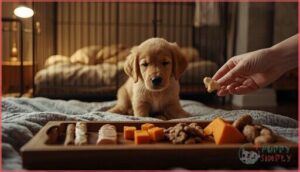
Not every treat earns a puppy’s full attention — and during crate training, that difference really matters. The right treat checks three specific boxes: size, flavor, and nutrition.
Here’s what to look for before you buy.
Size and Texture Considerations
Size matters more than you might think. Aim for pea‑sized bites — roughly the size of a pencil eraser — so your puppy swallows quickly and stays focused.
Soft chewy consistency beats crunchy every time; hard biscuits interrupt training flow and risk choking in the crate. Choose treats with calorie‑light portions and texture dissolves quickly on contact, avoiding crumbly risk avoidance issues that can scratch sensitive gums.
High-Value Flavors and Appeal
When your goal is positive reinforcement, flavor and palatability are everything.
Bacon Aroma grabs attention fast, while Liver Intense treats hold focus through the toughest crate training moments.
Salmon Appeal suits sensitive pups with a fishy punch, and Cheese Lure tempts even picky eaters.
For adventurous puppies, Exotic Game Flavors like duck or venison make crate time truly rewarding.
Low Calorie and Healthy Ingredients
Every calorie in a training treat needs to earn its place.
Look for lean protein sources like chicken breast or salmon, plus veggie fillers such as pumpkin or carrots that double as fiber-rich additives.
Antioxidant boosters like blueberries keep things nutritious without spiking the calorie count.
Low-calorie commercial bases, like Zukes at just 2 calories each, make healthy ingredients and smart puppy crate training completely compatible.
Safe and Nutritious Ingredients for Puppies

What goes into a treat matters just as much as how you use it.
Puppies have sensitive stomachs, so the ingredients you choose can either support their growth or set them back.
Here’s what to look for — and what to leave on the shelf.
Best Proteins for Puppy Treats
Imagine rewarding your puppy with treats packed full of muscle-building power—venison protein benefits, rabbit hypoallergenic protein, and kangaroo lean protein are standout options for crate training.
Salmon omega benefits boost brain health, while egg protein growth helps strong bodies.
Choosing nutritionally balanced, vet approved proteins for puppy treats means every bite reinforces positive reinforcement and keeps your training routine safe and effective.
Healthy Fruits and Vegetables
Fruits and vegetables can quietly do a lot of heavy lifting in your puppy’s treat lineup.
Blueberries and carrots make excellent Vitamin‑Rich Bites and Low‑Sugar Options — small, nutritionally balanced, and easy to prep. Add cooked sweet potato or plain pumpkin for Fiber‑Rich Additions that keep digestion steady. These healthy snacks double as practical dog training treats without loading up on calories.
Ingredients to Avoid for Puppies
Some ingredients don’t just cause tummy trouble — they can seriously hurt your puppy.
Xylitol Toxicity kicks in fast, causing seizures within 30 minutes. Chocolate Theobromine damages the heart even in small amounts. Allium Dangers from onions and garlic destroy red blood cells. Watch for Artificial Preservatives like BHA and Grain Fillers that hurt digestibility.
Always choose vet-approved, allergy-friendly puppy treats with clean labels.
Types of Puppy Treats for Training and Bedtime
Not all puppy treats are created equal, and the type you choose can make or break a training session. For crate training and bedtime routines, a few categories tend to work better than others.
Here’s what you need to know before picking the right one for your pup.
Soft Training Treats

Soft training treats are the top choice for crate training, and here’s why they work so well. Their texture benefits make rewards instant — no prolonged chewing, just quick swallowing, so your puppy stays focused. Look for ingredient transparency and smart flavor pairing to keep motivation high.
- Gentle on sensitive gums under 3 months
- Under 3 calories helps low calorie density
- Moist texture leaves no greasy residue
- Pea-sized pieces fit all puppy breeds
- Soft puppy treats reinforce positive reinforcement instantly
Freeze-Dried Meat Treats
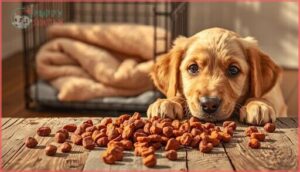
Freeze-dried meat treats punch above their weight in puppy training and crate training. With protein retention near 98% and calorie density around 2–5 calories per piece, they reward without overfeeding.
They’re also naturally allergen-free options for sensitive pups.
Impressive shelf life means you always have dog training treats ready, and their pea-sized crumble makes every crate session precise and mess-free.
Long-Lasting Chews for Bedtime

Long-lasting chews take bedtime crate training a step further than quick reward bites.
For safe nighttime use, keep these Chew Size Guidelines in mind:
- Choose digestible ingredients like beef tendon or rabbit ears
- Follow calorie management — count chews within the 10% daily limit
- Prioritize softness vs. durability to protect puppy teeth
- Supervise initial supervised nighttime use before leaving chews unsupervised
- Pick puppy treats sized longer than your pup’s mouth
Homemade Vs. Store-Bought Options
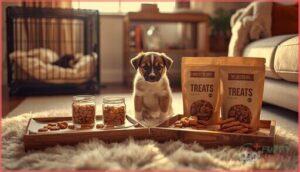
Both options have real merit for crate training and reward-based training strategies.
Homemade puppy treats win on ingredient transparency and allergy management — you control exactly what goes in.
Store-bought puppy training treats offer shelf stability and convenience when life gets busy.
Cost efficiency often favors homemade batches, but flavor intensity can actually run higher in commercial formulas engineered for maximum palatability.
Choosing The Right Treats for Crate Training

Not every treat belongs in the crate — some are better saved for that exact moment.
The right picks can make your puppy see their crate as a place worth going into, and even help them wind down at bedtime.
Here’s what to reach for.
Special Treats Reserved for Crate Time
Think of one treat as your crate’s secret handshake. Reserving an exclusive flavor cue — something your puppy never gets elsewhere — builds powerful scent association training around the crate door. Here’s how to make it work:
- Apply timed reward consistency: give the treat only when all four paws are inside.
- Use a limited quantity strategy to keep the reward special.
- Store it in dedicated crate-only packaging so the smell alone signals what’s coming.
Calming Treats for Nighttime
Nighttime is when puppy anxiety peaks — and the right calming treat can make all the difference. Ingredients like chamomile, L-Theanine, and melatonin target calming mechanisms naturally, easing restlessness without sedation.
For puppy training, dosage guidelines matter: most products recommend one chew for puppies under 25 pounds, given 30 minutes before crate time. Always check ingredient safety and follow veterinary recommendations before introducing any calming puppy treats.
How to Use Treats in Crate Training Routines

Knowing which treats to buy is only half the battle—how you use them makes all the difference.
A solid crate routine built around the right rewards can turn bedtime from a struggle into something your puppy actually looks forward to.
Here’s exactly how to make treats work for you.
Rewarding Calm and Quiet Behavior
Quiet isn’t an accident; you create it with timing and consistency.
Calm puppy quiet is trained, not random; it comes from consistent, well-timed rewards
Use Quiet Cue Timing by waiting 10–15 seconds of silence, then, in a Calm Voice Tone, mark “quiet” and drop Puppy Training Treats.
Layer in Intermittent Reward Schedule and RewardBased Training Strategies for Patience Building, shaping Dog behavior with Silent Crate Signals, Positive Reinforcement Techniques, and Crate Training Benefits.
Establishing a Bedtime Crate Routine
During Crate Introduction and Puppy Preparation, build bedtime routines: a potty break, then lead your puppy to the crate.
Place puppy training treats on the bed inside, pair them with a bedtime cue, and add calming techniques so nighttime transitions feel safe.
This helps puppy development, delivers crate training benefits, guides dog treat selection, and anchors positive reinforcement training for puppies.
Timing and Frequency of Treat Rewards
Timing is everything in reward-based training. Start by treating every 10 to 15 seconds of quiet behavior, then stretch those reward intervals over several days using progressive timing.
Once your puppy masters a fixed schedule, shift to variable ratio rewards — unpredictable treats actually strengthen behavior faster. Keep training sessions to 5 to 10 minutes, and use your treat countdown to stay within daily limits.
Portion Control and Treat Safety for Puppies
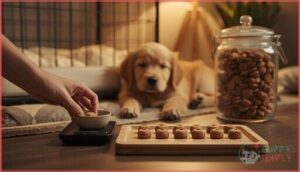
Treats are a powerful training tool, but it’s easy to go overboard without realizing it.
Keeping portions in check protects your puppy’s health and makes sure treats stay meaningful as rewards.
Here’s what you need to know about feeding treats safely.
Following The 10 Percent Rule
Treats should never crowd out your puppy’s real nutrition — and the 10 percent rule keeps that balance intact. Most vets agree that training rewards shouldn’t exceed 10 percent of daily calories, which protects against the obesity affecting nearly 60 percent of U.S. dogs.
- Calorie budgeting before each day’s crate sessions
- Choose low-calorie treats to stretch your treat portioning further
- Apply activity-based limits — active puppies burn more, but the rule still applies
- Make growth adjustments weekly as your puppy’s calorie needs shift
- Seek veterinary guidance to confirm your vet-approved treat plan stays on track
Adjusting Treat Size and Frequency
Size matters more than you’d think. For toy breeds under 12 pounds, cut treats to half the size you’d give a small adult dog — think rice-grain portions.
As your puppy moves through training phases, shift your reward schedules from continuous to variable. Small bite-sized pieces and low‑calorie treats keep calorie control intact without shortchanging your puppy’s monitoring or motivation.
Monitoring for Allergies or Sensitivities
Even with perfect portion control, the wrong ingredients can quietly cause problems. Watch for these red flags after introducing any new treat:
- Skin Symptom Checklist: red paws, belly rashes, or ear discharge
- Digestive Reaction Tracking: vomiting or loose stools within 24 hours
- Ingredient Sensitivity Log: note every new ingredient and the date introduced
- Elimination Diet Timeline: remove suspects for 8–12 weeks, vet‑supervised
- Vet Allergy Testing: a DVM can confirm triggers through hydrolyzed or novel‑protein trials
Beef affects roughly 34 percent of allergic dogs — so vet‑approved, allergy‑friendliness matters when choosing puppy health‑focused treats.
Top 10 Puppy Training Treats for Crate Training
Finding the right treat can make crate training click faster than almost anything else.
These ten options stood out for their quality ingredients, puppy-friendly size, and real training value.
Here’s what made the cut.
1. The Honest Kitchen Beef Salmon Dog Treats
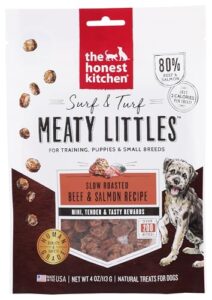
For crate training and bedtime, you want a treat that works hard for every calorie. The Honest Kitchen Beef & Salmon Meaty Littles give you tiny, soft bites with only 2 calories each, so you can reward frequently without blowing past the 10 percent rule.
They’re human‑grade, wheat‑free, and about 28 percent protein with salmon for natural DHA to support brain health.
The rich beef‑and‑fish aroma is high value for most puppies, though some people find it pretty strong.
| Best For | Dog owners who want a low-calorie, high-quality treat for training sessions, especially pups with sensitive stomachs or food allergies. |
|---|---|
| Primary protein | Beef and salmon |
| Texture | Small crunchy bites |
| Calories | 2 cal each |
| Life stage | All life stages |
| Training use | Enrichment training |
| Diet note | Wheat-free, non-GMO |
| Additional Features |
|
- Only 2 calories per treat, so you can reward freely without overdoing it
- Human-grade ingredients with no GMOs, fillers, or artificial anything
- DHA from salmon supports brain health — great for puppies learning new things
- The salmon smell is strong — not great if you’re pregnant or scent-sensitive
- Bags sometimes arrive crushed, leaving you with a crumbly mess
- Pricier than a lot of other training treat options out there
2. Open Farm Soft Beef Training Treats
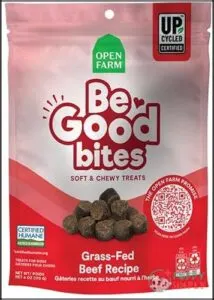
If you want something a little more ingredient-focused, Open Farm’s Soft Beef Training Treats are worth a close look.
Each bite clocks in at just 2.4 calories, and the first ingredient is humanely raised, grass-fed beef.
The bag holds around 180 soft, chewy pellets that break apart easily mid‑session.
You also get sweet potato, blueberries, and pumpkin rounding out the recipe.
The resealable pouch keeps things fresh, which matters when you’re pulling these out night after night for bedtime crate routines.
| Best For | Pet parents who want low-calorie, ethically sourced beef training treats with simple, traceable ingredients for regular training sessions. |
|---|---|
| Primary protein | Turkey and beef |
| Texture | Soft chewy pellets |
| Calories | 2.5 cal max |
| Life stage | Adult dogs |
| Training use | Long sessions |
| Diet note | Non-GMO grains |
| Additional Features |
|
- Bite-sized, soft, and chewy treats with under 2.5 calories each, perfect for long training sessions without overfeeding.
- Made with humanely raised, grass-fed beef plus non-GMO fruits and grains, with 100% traceable ingredients from source to pouch.
- Resealable pouch keeps the treats fresh and makes them easy to grab for on-the-go or nightly training routines.
- Higher price point at USD 14.85 for a 6oz pouch, which can add up if you train often.
- Some people feel the amount of treats in the bag is limited for the cost.
- Includes ingredients like coconut glycerin and molasses, and may not work for dogs with sensitivities to turkey, grains, or similar ingredients.
3. Cloud Star Tricky Trainers Dog Treats
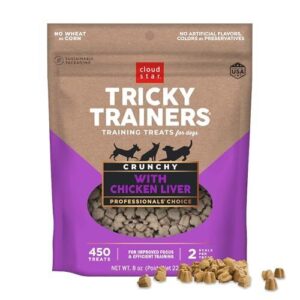
Cloud Star Tricky Trainers have been a go-to for professional trainers since 1999, and it’s easy to see why.
The chewy liver version leads with pork liver and clocks in at just 3 calories per treat. The crunchy cheddar option runs even lower at 2.5 calories. Both skip artificial flavors, colors, and preservatives.
You can break the soft version into smaller pieces mid-session without a mess, which makes them practical for long crate training nights.
| Best For | Dog owners who do a lot of training sessions and want a low-calorie, natural treat that works for any breed or life stage. |
|---|---|
| Primary protein | Chicken liver |
| Texture | Crunchy bite-size |
| Calories | 2 cal each |
| Life stage | All life stages |
| Training use | Behavior rewards |
| Diet note | No wheat corn soy |
| Additional Features |
|
- Only 2 calories per treat, so you can reward freely without worrying about overfeeding
- Made with real chicken liver — most dogs go crazy for the smell and taste
- No wheat, corn, soy, dairy, or artificial anything, which is a win for sensitive pups
- The crunchy texture and small size don’t work for every dog
- A few customers had shipping headaches, including surprise signature requirements
- Dogs with liver or protein sensitivities may need to sit this one out
4. Full Moon Natural Beef Dog Treats
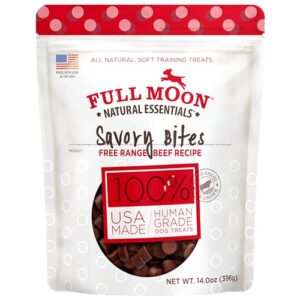
Full Moon Natural Beef treats are built differently than most store-bought options. The beef comes from USDA-approved, free-range cattle raised on family farms, cooked in small batches in human-grade kitchens. No corn, wheat, soy, glycerin, or artificial preservatives — just recognizable ingredients.
At roughly 2 kilocalories per bite, they fit easily within your puppy’s 10 percent daily treat limit. The smoky, savory aroma from hickory and paprika makes them genuinely high-value, which means your puppy stays focused during crate training sessions.
| Best For | Dog owners who want clean, high-quality treats for training or everyday rewards — especially those with pups sensitive to grains, fillers, or artificial ingredients. |
|---|---|
| Primary protein | Beef |
| Texture | Chewy morsels |
| Calories | Not specified |
| Life stage | All life stages |
| Training use | General training |
| Diet note | Grain and soy-free |
| Additional Features |
|
- Made with real, human-grade ingredients from USDA-approved free-range beef — no mystery meat here.
- Free from corn, wheat, soy, glycerin, and artificial preservatives, making them a solid pick for dogs with sensitive stomachs.
- Works for all life stages and sizes, so you’re not buying separate treats as your dog grows.
- Pricier than most store-bought options, which can add up if you’re treating frequently.
- Overfeeding can cause digestive issues or change stool color, so moderation is key.
- The bag needs to be properly sealed after each use, or the treats dry out fast.
5. Onward Hound Soft Bison Training Treats
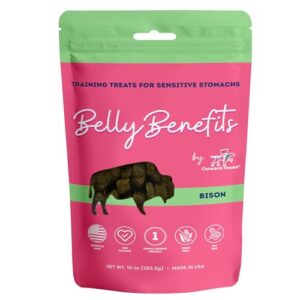
Bison isn’t your typical training treat protein, and that’s exactly what makes Onward Hound stand out.
Each soft bite delivers just 3.5 calories, so you can reward frequently without blowing past your puppy’s daily calorie budget. The single-source bison protein is easier on sensitive stomachs than beef or chicken, and the corn‑free, soy‑free formula keeps allergen exposure low.
At roughly 250 treats per bag, you’ve got plenty for consistent crate sessions — plus resealable packaging keeps them fresh throughout.
| Best For | Dogs with food sensitivities, puppies, seniors, and small breeds who need a low-calorie, hypoallergenic treat for frequent training sessions. |
|---|---|
| Primary protein | Bison |
| Texture | Soft easy-chew |
| Calories | 3.5 cal each |
| Life stage | All ages |
| Training use | Positive training |
| Diet note | Corn-free hypoallergenic |
| Additional Features |
|
- At just 3.5 calories each, you can treat generously without worrying about weight gain
- Single-source bison protein is a smart pick for dogs that react badly to common proteins like beef or chicken
- The corn-free, soy-free formula plus prebiotic fiber makes these genuinely gentle on sensitive stomachs
- Dogs with molasses sensitivities could have digestive trouble, so check the ingredient list carefully
- They’re pricier than most training treats on the market, which adds up fast with heavy use
- Once you open the bag, returns aren’t really an option if your dog doesn’t take to them
6. Polkadog Salmon Training Treats
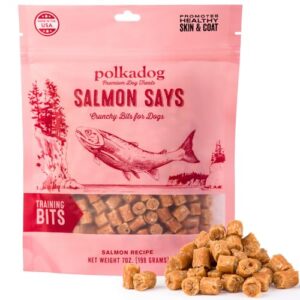
Salmon-powered simplicity is what sets Polkadog apart. With three ingredients — salmon, brown rice, and potato flour — these training bits are a smart pick for puppies with food sensitivities or allergy‑prone stomachs.
Each piece clocks in at about 3 calories, so frequent crate rewards won’t derail your puppy’s nutrition plan. The slow‑dehydrated texture is crunchy enough to keep pups interested without turning into a long chew. Handcrafted in Boston, they’re free from artificial preservatives and easy to keep right next to the crate.
| Best For | Dogs with food sensitivities or allergies who need a low-calorie treat for frequent training sessions. |
|---|---|
| Primary protein | Salmon |
| Texture | Crunchy training bits |
| Calories | Not specified |
| Life stage | All life stages |
| Training use | Reinforcement training |
| Diet note | Limited-ingredient hypoallergenic |
| Additional Features |
|
- Only three simple ingredients — great for sensitive or allergy-prone stomachs
- Low-calorie at around 3 calories per piece, so you can treat freely without guilt
- Made in the USA with no artificial preservatives
- Pricier than a lot of other training treats on the market
- Only comes in small package sizes, which adds up fast for heavy trainers
- Dogs with severe allergies may still react, so check with your vet first
7. Stella Chewy Freeze Dried Raw Beef Treats
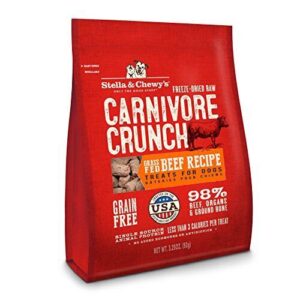
Raw beef flavor hits differently when you’re trying to win over a skeptical pup.
Stella & Chewy’s freeze-dried treats are made from 98% grass-fed beef with organs and bone — no fillers, no grains, just concentrated meat your puppy can actually smell from across the room.
At 99 kilocalories per ounce, they’re calorie-dense, so break them into tiny pieces for crate rewards.
The soft, crumbly texture makes that easy.
Simple ingredients, serious motivation.
| Best For | Dog owners with picky eaters, senior dogs, or puppies in training who want a clean, high-protein treat with minimal ingredients. |
|---|---|
| Primary protein | Beef and organs |
| Texture | Soft freeze-dried |
| Calories | Not specified |
| Life stage | All ages |
| Training use | Motivating rewards |
| Diet note | Grain-free limited-ingredient |
| Additional Features |
|
- 98% grass-fed beef with organs and bone — real nutrition, no fillers or junk
- Soft, crumbly texture makes it easy to break into small training pieces
- Shelf-stable and no refrigeration needed, so storage is simple
- Pricey at $14.99 for just 3.25 oz, especially if your dog goes through them fast
- The crumbly texture can get messy, making them less practical for on-the-go use
- Some dogs just aren’t impressed — not every pup is motivated by freeze-dried beef
8. Zukes Mini Naturals Chicken Training Treats
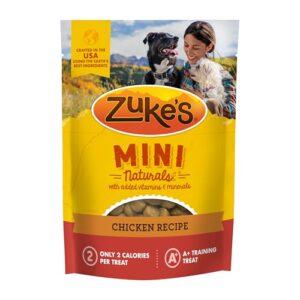
Mini Naturals are a go-to for good reason. At 2 calories per treat, you can reward your puppy a lot without worrying about blowing their daily calorie budget.
They’re made with real chicken as the first ingredient, plus oats, cherries, and turmeric — nothing artificial, no corn, wheat, or soy.
The soft, chewy texture tears apart easily mid-session, which matters when you need a quick reward for calm crate behavior. Small, mess-free, and genuinely motivating.
| Best For | Puppy owners and small dog parents who want a low-calorie, natural treat that’s easy to break up during training sessions. |
|---|---|
| Primary protein | Chicken |
| Texture | Soft chewy |
| Calories | 2 cal each |
| Life stage | All life stages |
| Training use | Everyday rewards |
| Diet note | No corn wheat soy |
| Additional Features |
|
- Only 2 calories per treat, so you can reward often without overdoing it
- Real chicken as the first ingredient, with no corn, wheat, or soy
- Soft and chewy — easy to tear into smaller pieces on the fly
- Can dry out fast if the bag isn’t sealed tight after each use
- Some owners wish the meat was human-grade quality
- Shipping can take up to 3 weeks, so don’t wait until you’re running low
9. Pet Botanics Bacon Training Treats
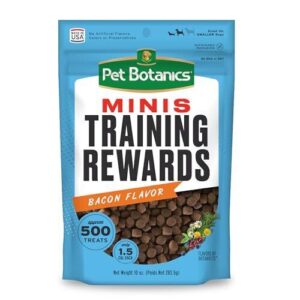
Few treats hit a puppy’s nose quite like bacon, and Pet Botanics leans into that hard. Pork liver is the first ingredient, backed by real bacon and natural smoke flavor — a combination that’s tough for even picky puppies to ignore.
Each mini treat comes in at just 1.5 calories, so you can reward frequently during crate sessions without overshooting daily limits. They’re soft enough to pinch apart for tiny puppies, and they won’t crumble in your pocket between sessions.
| Best For | Small dogs and puppies who need a high-reward, low-calorie treat for training sessions and interactive play. |
|---|---|
| Primary protein | Pork and bacon |
| Texture | Soft mini chews |
| Calories | 1.5 cal each |
| Life stage | All ages |
| Training use | Small-dog training |
| Diet note | No artificial additives |
| Additional Features |
|
- Bacon and pork liver combo is hard for even picky dogs to resist
- At 1.5 calories each, you can treat generously without guilt
- Soft texture makes them easy to pinch apart for tiny mouths
- The smell is strong — not everyone’s favorite to carry around
- Not ideal for dogs with pork or protein sensitivities
- Very small puppies may still need the treats broken down further
10. Badlands Ranch Freeze Dried Beef Liver Treats
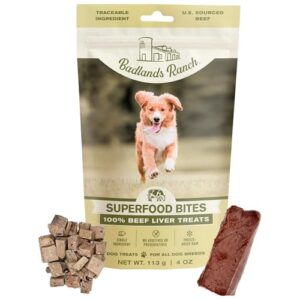
If bacon gets tails wagging, beef liver sends puppies into overdrive.
Badlands Ranch keeps it simple — 100% freeze-dried USA beef liver, nothing else. No fillers, no preservatives, just pure protein at 58% minimum.
The bite-sized pieces are soft enough for young puppies and strong-smelling enough to cut through distractions during crate training.
At 3,600 kcal/kg, portion awareness matters, but used sparingly, they make a powerful high-value reward that puppies genuinely work for.
| Best For | Dog owners who want a clean, single-ingredient treat for training or daily rewards — especially great for pups with sensitive stomachs. |
|---|---|
| Primary protein | Beef liver |
| Texture | Crunchy chunks |
| Calories | Not specified |
| Life stage | All ages |
| Training use | High-value rewards |
| Diet note | Single-ingredient, additive-free |
| Additional Features |
|
- 100% USA beef liver with zero additives — what you see is what you get
- High protein and strong smell make it a killer high-value training reward
- Works for dogs of all ages and sizes, puppies included
- $15.99 for under 4 ounces is a tough sell, especially if the bag arrives half-empty
- High calorie density means you have to watch how many you hand out
- Some dogs need the treats soaked in water first to avoid digestive issues
Common Mistakes When Using Training Treats

Even with great treats and good intentions, it’s easy to use rewards in ways that actually slow your puppy’s progress.
A few very common patterns tend to cause the most trouble during crate training and bedtime.
Let’s quickly look at the main mistakes to watch for so you can avoid them from the start.
Overfeeding or Oversized Treats
One of the most common slip-ups is ignoring calorie counting and portion guidelines. A 10‑pound puppy needs no more than 40 treat calories daily — that’s a small handful of small bite‑sized pieces.
Oversized treats become choking hazards, while frequent overfeeding raises real weight gain risks. Stick to low‑calorie treats with clean ingredients, and always check for allergy‑friendliness before rewarding.
Inconsistent Treat Rewards
Keeping portions in check is only half the picture; how and when you use Puppy Training Treats matters just as much.
Timing Variability during Crate Sessions weakens Cue Predictability and scrambles your Reward Systems.
Puppies start offering Escalation Behaviors like barking or scratching; Trust Erosion sets in, and inconsistent Owner Coordination quietly stalls Puppy Training and bedtime training rewards progress.
Relying on Low-Value Treats
After inconsistent timing, using bland Training Treats creates a new problem: Motivation Decline.
Plain kibble rarely beats crate distractions, so Stress Competition wins and Skill Acquisition Delay shows up.
Because the Reward Quality Gap is so wide, you hand out more Small BiteSized Pieces, leading to Calorie Overconsumption, weaker Rewardbased training, and slower Puppy Training progress even with LowCalorie Treats.
Frequently Asked Questions (FAQs)
What should be in a crate with a puppy at bedtime?
Stock the crate with soft crate bedding, a snuggle toy, a white‑noise fan nearby, and dim night‑light lighting. Keep temperatures between 20–24°C for comfort and restful sleep.
What is the 10 10 10 rule for puppy training?
Picture a cassette-tape stopwatch: 10-10-10 Puppy Training sets structured 10-minute Session Length with Puppy Training Treats, play, Play Balance, and rest.
Rest Importance, Cycle Repetition, Attention Span, Training Treats, Puppy Training Techniques, Dog Training Methods.
Can I use treats when leaving home?
Yes, use Puppy Training Treats as Departure Timing rewards.
with Treat Portion Limits for Dog Health, Calm Cue Pairing for Anxiety Prevention, strict Safety of Loose Treats in Puppy Crate Training, and Vetapproved Training Treats.
How do I phase out crate treats?
Think of treats as training wheels — helpful at first, but meant to come off.
Shift to a random reward schedule, add non‑food reinforcement like praise, and practice calm behavior timing until confidence replaces the cookie.
What if my puppy guards crate treats?
Puppy guards treats? Identify Guarding Triggers, adjust Owner Body Language, Dog Behavior.
Use Distance Training and Desensitization Techniques with Training Treats and Puppy Training Treats, Stress Reduction Strategies, supporting Puppy Crate Training and Puppy Training.
How should I store homemade puppy treats?
Warm on the pan, safe in the jar—homemade treats need everyday pet care: follow Cooling Duration, Container Materials, Texture-Based Storage, track Shelf-Life Indicators, use Labeling Practices, offer puppy treats and training treats for dog health.
Can multiple puppies share the same treat routine?
Absolutely.
Multiple puppies can share the same treat routine using Turn‑Taking Rewards, Shared Crate Timing, and Individual Calorie Tracking — just keep Energy‑Based Scheduling and Allergy‑Safe Portions separate for each pup.
Conclusion
What separates a puppy who settles easily at night from one who whimpers for hours? Often, it’s just the right treat used at the right moment.
The best puppy training treats for crate training and bedtime don’t just reward behavior—they reshape how your puppy feels about that space entirely. Start small, stay consistent, and let the treats do the heavy lifting. Your puppy’s crate should feel like a choice, not a sentence.
- https://www.onespoileddog.com/blogs/news/best-dog-treats-to-use-during-crate-training
- https://bullybunches.com/blogs/news/puppy-crate-training-dos-and-donts
- https://pupford.com/blogs/all/how-many-treats-per-day-dog
- https://trade.ancodogtreats.co.uk/features/puppies-over-8-weeks
- https://platopettreats.com/blogs/blog/best-treats-for-crate-training-a-puppy-without-creating-bad-habits-a-dog-lovers-guide-to-success