
This site is supported by our readers. We may earn a commission, at no cost to you, if you purchase through links.

Most puppies don’t fail leash training because they’re stubborn—they fail because nobody told them what "good" looks like. A puppy pulling toward every squirrel and sniffing stranger isn’t misbehaving; it’s just working with the information it has.
The right treat changes that equation fast.
When you pair calm, loose-leash walking with something your puppy genuinely loves, you stop competing with the world and start winning.
Choosing the best puppy training treats for leash training walks comes down to size, ingredients, and timing—and the options worth your money might surprise you.
Table Of Contents
- Key Takeaways
- Why Use Treats for Leash Training Walks
- What Makes a Great Puppy Training Treat
- How to Choose The Right Treats for Your Puppy
- Top 10 Puppy Training Treats for Leash Walks
- 1. Wellness Grain Free Puppy Treats
- 2. Blue Buffalo Puppy Training Treats
- 3. Wellness Soft Lamb Salmon Puppy Treats
- 4. Buddy Biscuits Bacon Training Treats
- 5. Blue Buffalo Soft Chicken Training Treats
- 6. Pupford Soft Chewy Chicken Training Treats
- 7. Blue Buffalo Salmon Training Treats
- 8. Blue Dog Bakery Perfect Trainers Beef Treats
- 9. Blue Buffalo Puppy Soft DHA Treats
- 10. Buddy Chicken Training Bites
- Tips for Using Treats Effectively on Walks
- Common Leash Training Challenges and Solutions
- Frequently Asked Questions (FAQs)
- Conclusion
Key Takeaways
- Treats work best as a communication tool, not a bribe — rewarding calm walking within 1–2 seconds tells your puppy exactly what earned the praise.
- The best training treats are soft, pea-sized, and under 3 calories each, so you can reward often without filling your pup up or throwing off their daily calorie balance.
- High-value flavors like chicken, salmon, or liver cut through outdoor distractions fast, and rotating proteins keeps your puppy genuinely motivated session after session.
- Treats shouldn’t exceed 10% of your puppy’s daily intake, so adjust meal portions on heavy training days to keep their weight and nutrition on track.
Why Use Treats for Leash Training Walks
Treats aren’t a bribe — they’re a communication tool your puppy actually understands. right reward at the right moment tells your pup exactly what you want, faster than any correction ever could.
Nail the one-second window every time by studying these puppy reward timing and interaction techniques that make the lesson click instantly for your pup.
Here’s what treats do for your walks and why they work so well.
Positive Reinforcement and Puppy Motivation
Treats are your puppy’s clearest motivation signal during leash walking. When you deliver a high-value treat within 1–2 seconds of calm walking, that reward timing creates instant cue association — your puppy learns exactly what earned the reward.
Positive reinforcement works because puppies repeat what pays off.
Mixing treat variety keeps their energy management steady and the whole reward system genuinely exciting.
Consistently applying a treat hierarchy strategy helps tailor rewards to individual dogs and maximizes motivation.
Building Good Leash Manners With Rewards
Good reward timing builds the habit fast. Feed the treat right at your hip — that’s the sweet spot for treat placement that keeps your pup beside you, not ahead.
Start with near-constant positive reinforcement, then use schedule variation as leash walking improves.
Weaving in play integration adds excitement without chaos. Gradual fading of training treats over time locks in the rewarding behavior naturally.
clear expectations and consistent routines are essential for reliable leash training.
Reducing Stress and Distractions During Walks
Once your pup walks calmly beside you, the next challenge is the outside world. New sights and sounds can spike stress quickly. That’s where treats become your best tool.
- Use High-Value Trigger Rewards — chicken or cheese — right when a distraction appears
- Try the Scatter Feeding Technique on grass to shift focus from reacting to sniffing
- Offer Lickable Calm Treats like peanut butter tubes to naturally slow breathing
- Practice Pre-emptive Stress Blocking by treating before your pup locks onto a trigger
- Pair Calm Cue Training with a word like "focus" to reinforce rewarding behavior during leash walking
What Makes a Great Puppy Training Treat
Not every treat will cut it when you’re trying to keep a puppy focused mid-walk.
The best ones share a few key qualities that make training faster and less frustrating.
Here’s what to look for.
Ideal Size and Soft Texture for Puppies

Size matters more than you might think. For leash walking, pea-sized treats with a soft mouth-friendly texture work best — your puppy swallows them in one or two seconds, keeping the training rhythm tight.
Low-calorie portioning means you can reward frequently without overfeeding. That rapid consumption benefit also promotes gentle oral development in puppies under four months, protecting sensitive teeth and gums.
High-value Flavors to Maintain Focus

Flavor is your secret weapon in puppy leash training. High‑value treats with strong aroma intensity — think liver, salmon, or real chicken — cut through outdoor distractions fast.
Positive reinforcement training works best when your reward systems for dog training feel genuinely exciting to your pup.
Try flavor rotation with novel proteins like duck or rabbit when familiar options stop landing.
High‑Value Timing matters: save your best treats for the hardest moments.
Healthy, Natural Ingredients for Frequent Use
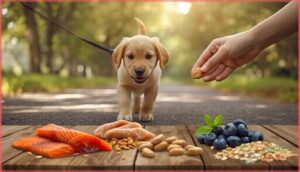
When you’re rewarding your puppy dozens of times per walk, ingredients matter. Look for treats built on Single-Protein Sources like chicken or salmon — they’re easier to digest and less likely to upset sensitive stomachs.
Digestible Carbohydrates, Natural Preservatives, and Functional Nutrients like DHA support focus and growth without the junk. Low Calorie Density keeps daily totals in check.
Easy Handling and Portability for Walks
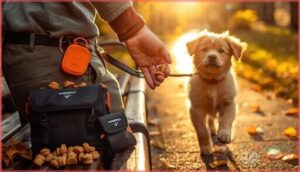
Grabbing a treat mid-walk shouldn’t feel like a scavenger hunt.
That’s why easy handling matters as much as what’s inside the bag.
A compact pouch design with magnetic belt clips keeps high-value treats within reach in under a second.
Waterproof carry cases protect rewards during rainy sessions, while quick-dispense mechanisms and lightweight wrist holders make reward-based training and puppy leash training tips actually work in real life.
How to Choose The Right Treats for Your Puppy
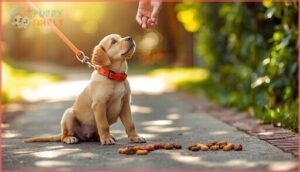
Not every treat works for every puppy, and picking the wrong one can actually slow down your training progress. A few simple things — like pup’s size, food sensitivities, and what flavors get their tail wagging — make all the difference.
Here’s what to keep in mind before you grab a bag off the shelf.
Matching Treat Size to Puppy Breed and Age
Not all treats are created equal — and breed-specific portions matter more than most owners realize. A toy puppy under 5 kg needs pea-sized pieces, while medium breeds handle half-thumbnail chunks just fine.
Age-based scaling matters too: 8-to-12-week-old pups need soft, rice-grain bits for developing teeth. Stick to treats under 3 calories each to stay within calorie limits and keep leash walking sessions productive.
Considering Dietary Needs and Sensitivities
Some puppies carry hidden sensitivities that only show up when the wrong treat hits their bowl. Chicken triggers reactions in up to 20% of pups, so allergy-safe proteins like duck, rabbit, or venison are smart swaps.
Look for limited-ingredient treats and grain-free options when wheat or corn causes issues. Low-fat formulations keep frequent positive reinforcement sessions healthy without sneaking in extra calories.
Rotating Flavors to Keep Training Engaging
Your puppy’s nose knows the difference — and that’s your secret weapon. A simple Flavor Rotation Schedule keeps every session feeling fresh and maintains motivation through weeks of leash walking practice.
- Alternate chicken, salmon, and beef for Scent Variety Benefits
- Use Novelty Reward Timing when introducing harder skills
- Try Seasonal Flavor Swaps to sustain long-term engagement
- Deploy HighValue Treats in distracting outdoor environments
- Rotate three to five options as core Motivation Boost Strategies
Variety turns positive reinforcement into something your puppy genuinely looks forward to.
Avoiding Overfeeding and Weight Gain
Variety keeps training fun, but balance keeps your puppy healthy.
Calorie Budgeting matters more than most owners realize — treats shouldn’t exceed 10% of daily intake. That’s roughly 32 calories for an 11-pound pup.
Lean on Low-Calorie Treat Selection like Charlee Bear at under 3 calories each, practice Treat Portion Control with pea-sized pieces, and do Weekly Weight Checks to stay on track.
Top 10 Puppy Training Treats for Leash Walks
With so many options on shelves, picking the right treat can feel overwhelming.
These ten picks stand out for their soft texture, quality ingredients, and puppy‑friendly size — everything that makes leash training actually work.
Here’s what made the cut.
1. Wellness Grain Free Puppy Treats
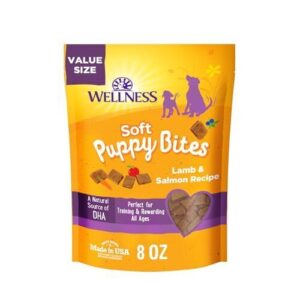
Wellness Soft Puppy Bites in Lamb & Salmon is a treat that earns a spot in your training pouch. These grain‑free, bite‑sized pieces are soft enough for young teeth and small enough to reward repeatedly without overfeeding.
The salmon provides DHA to support your puppy’s growing brain — which matters during those early learning windows. No corn, wheat, or soy means fewer gut issues mid‑walk. At around 3,200 kcal/kg, keep portions small and adjust meals accordingly.
| Best For | Puppy owners looking for a soft, grain-free training treat that supports brain development during those early months. |
|---|---|
| Texture | Soft & bite-sized |
| Corn-Free | Yes |
| Soy-Free | Yes |
| Artificial Additives | None |
| Primary Protein | Lamb & Salmon |
| Life Stage | Puppy |
| Additional Features |
|
- Salmon-based DHA gives your pup’s brain a real boost during the most important learning stage
- Soft and bite-sized — perfect for rapid-fire training rewards without filling them up too fast
- No corn, wheat, or soy, so it’s easier on sensitive puppy stomachs
- Some buyers have reported finding hard, translucent shards in the bag — a legit safety concern worth knowing about
- Only for puppies under one year, so you’ll need to switch things up once they grow out of that window
- Not a fit for pups with allergies to lamb, salmon, or chickpeas
2. Blue Buffalo Puppy Training Treats
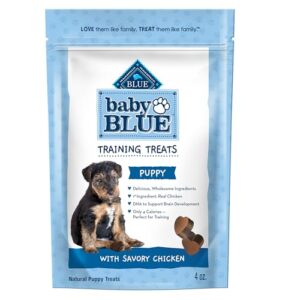
Blue Buffalo’s Baby Blue Savory Chicken treats are a solid next pick.
Real chicken is the first ingredient, and each soft, bite-sized piece clocks in at around 4 calories — low enough to reward often without guilt.
The added DHA helps brain development, which is a genuine plus during early training.
No corn, wheat, or soy keeps sensitive stomachs happy on long walks.
They’re tender enough for small mouths and easy to break into halves for extended sessions.
| Best For | Puppy owners who want a clean-ingredient, low-calorie treat that supports brain development during early training sessions. |
|---|---|
| Texture | Soft & bite-sized |
| Corn-Free | Yes |
| Soy-Free | Yes |
| Artificial Additives | None |
| Primary Protein | Chicken |
| Life Stage | Puppy |
| Additional Features |
|
- Real chicken is the first ingredient — no fillers, no by-products, no artificial anything
- Added DHA gives young pups a cognitive boost right when they’re learning the most
- Soft and bite-sized, so they’re easy to break down for longer training sessions without overfeeding
- They can get crumbly, which means a little mess in your pocket or treat bag
- Not the best fit for dogs with food sensitivities — worth checking the full ingredient list first
- Highly food-motivated dogs might need something with a stronger smell or flavor to stay locked in
3. Wellness Soft Lamb Salmon Puppy Treats
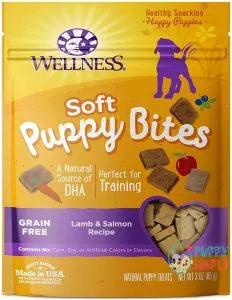
If your pup turns their nose up at chicken, switching proteins can reignite that training spark. Wellness Soft Lamb & Salmon Puppy Treats bring two novel flavors that naturally hold attention longer on distracted walks.
Each treat is only 6 calories, soft enough for teething mouths, and tears apart easily for smaller rewards. The added DHA enhances brain development while real lamb and salmon — no meat by‑products — keep ingredients clean. Grain‑free and gentle on sensitive stomachs, too.
| Best For | Puppy owners who want a clean, soft training treat that’s easy on sensitive stomachs and works well for pups who aren’t into chicken. |
|---|---|
| Texture | Soft & chewy |
| Corn-Free | Yes |
| Soy-Free | Yes |
| Artificial Additives | None |
| Primary Protein | Lamb & Salmon |
| Life Stage | Puppy |
| Additional Features |
|
- Made with real lamb and salmon — no meat by-products, artificial colors, or flavors
- Soft and easy to break apart, great for teething puppies and small-bite rewards
- Grain-free with added DHA to support brain development, joints, and immune health
- A few users have reported finding hard translucent shards in the bag, which is a quality control red flag
- The smell can be a bit strong — not ideal if you’re sensitive to fishy odors
- Only formulated for puppies under one year, so you’ll need to switch treats as they grow
4. Buddy Biscuits Bacon Training Treats
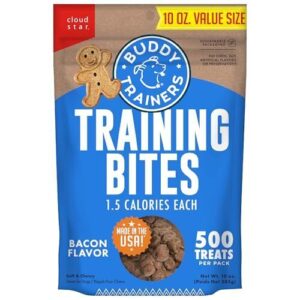
Few treats come close to the sheer excitement most dogs show for bacon. Buddy Biscuits Bacon Training Bites tap into that instinct with pork liver as the first ingredient and real bacon flavor throughout.
At just 1.5 calories each, you can reward generously without watching the scale. The soft, chewy texture means even young puppies chew and swallow fast — no training pause needed. With 500+ bites per bag and no corn, soy, or artificial flavors, they’re a smart staple for leash walks.
| Best For | Dog owners who train frequently and want a low-calorie, natural treat that works for puppies and adult dogs alike. |
|---|---|
| Texture | Soft & chewy |
| Corn-Free | Yes |
| Soy-Free | Yes |
| Artificial Additives | None |
| Primary Protein | Pork Liver |
| Life Stage | All stages |
| Additional Features |
|
- Pork liver and real bacon flavor make these a big hit with most dogs
- Only 1.5 calories each, so you can treat freely during long training sessions
- 500 per bag with a resealable pouch — great value and stays fresh
- The small size can be tricky to handle, especially with bigger dogs
- Pricier than a lot of other training treat options out there
- If you don’t seal the pouch properly, freshness drops fast
5. Blue Buffalo Soft Chicken Training Treats
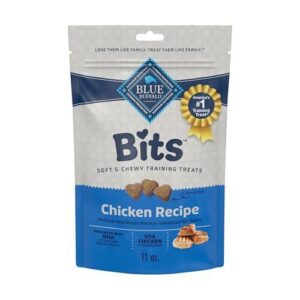
Chicken tops the list of flavors dogs go crazy for — and Blue Buffalo Blue Bits lean into that hard. Real deboned chicken is the first ingredient, and at roughly 4 calories per heart-shaped bite, you can reward freely without overdoing it.
They’re soft enough for puppies to chew fast and small enough to give repeatedly on a walk. No corn, wheat, soy or artificial preservatives. Plus, added DHA helps your puppy’s brain development right alongside their leash manners.
| Best For | Dog owners who want a natural, protein-first treat for training sessions at any life stage — especially puppy owners focused on brain development. |
|---|---|
| Texture | Soft & moist |
| Corn-Free | Yes |
| Soy-Free | Yes |
| Artificial Additives | None |
| Primary Protein | Chicken |
| Life Stage | All stages |
| Additional Features |
|
- Real chicken is the first ingredient, so you know exactly what your dog is eating
- Soft, heart-shaped bites are easy to give fast during training, even for small mouths
- Added DHA supports cognitive development while your pup learns the ropes
- Only one flavor option, so picky dogs don’t have much to choose from
- A bit pricey compared to basic training treats on the market
- Dogs with chicken sensitivities will need to look elsewhere
6. Pupford Soft Chewy Chicken Training Treats
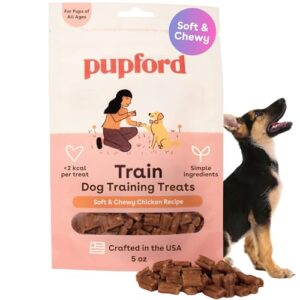
At under 2 calories per piece, Pupford’s Soft Chewy Chicken Treats let you reward generously without worrying about your pup’s waistline. Made with real chicken, sweet potato, and honey — no artificial additives — each soft bite gets eaten fast, so your walk keeps moving.
The strong chicken aroma holds your puppy’s focus even when distractions hit.
You can easily break pieces smaller for tiny mouths, stretching each pouch further.
Made in the USA and resealable for freshness.
| Best For | Dog owners who train frequently and want a low-calorie, real-ingredient treat that works for puppies and senior dogs alike. |
|---|---|
| Texture | Soft & chewy |
| Corn-Free | Yes |
| Soy-Free | Yes |
| Artificial Additives | None |
| Primary Protein | Chicken |
| Life Stage | All stages |
| Additional Features |
|
- Under 2 calories per treat, so you can reward often without overfeeding
- Made with real chicken, sweet potato, and honey — no artificial junk
- Soft texture and strong aroma keep dogs focused and motivated during training
- May be too large for very young puppies and need cutting down
- Strong smell right out of the bag (though it fades quickly)
- Not a good fit for dogs with a chicken sensitivity
7. Blue Buffalo Salmon Training Treats
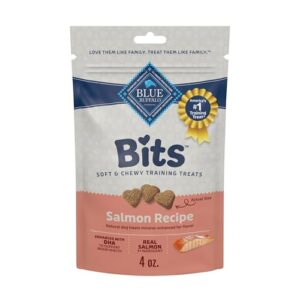
Salmon lovers, this one’s for your pup. Blue Buffalo’s Salmon Training Treats put real salmon first — no by‑product meals, no corn, wheat, or soy.
Each soft, heart‑shaped bite clocks in at 4 calories, so you can reward often without guilt. The added DHA helps your puppy’s developing brain, which matters most during those early training weeks.
They’re moist, chewy, and easy to break apart. Small enough to keep your walk moving, tasty enough to hold attention.
| Best For | Dog owners who want a high-quality, salmon-based treat for training puppies or adult dogs of any size. |
|---|---|
| Texture | Soft & moist |
| Corn-Free | Yes |
| Soy-Free | Yes |
| Artificial Additives | None |
| Primary Protein | Salmon |
| Life Stage | All stages |
| Additional Features |
|
- Real salmon is the first ingredient — no poultry by-products, corn, wheat, or soy
- Added DHA supports brain development, making it great for puppies in early training
- Soft, moist texture is easy to break apart and perfect for quick rewards during training sessions
- Only comes in a 4 oz bag, which goes fast if you have a large or multiple dogs
- Pricier than a lot of other training treat options on the market
- Not a good fit for dogs with ingredient sensitivities or specific dietary needs
8. Blue Dog Bakery Perfect Trainers Beef Treats
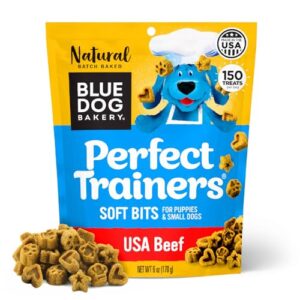
Beef works. For puppies that go wild for a meaty smell, Blue Dog Bakery Perfect Trainers are hard to beat.
Each treat is soft, chewy, and just 3 calories — meaning you can reward dozens of times on a single walk without worrying about overfeeding.
Made with real beef and all-natural ingredients, no artificial anything.
They’re small enough to deliver fast, right at the moment good behavior happens. That timing is everything in leash training.
| Best For | Puppy owners and small dog parents who want a low-calorie, beef-flavored treat that’s easy to use during training sessions. |
|---|---|
| Texture | Soft & chewy |
| Corn-Free | Yes |
| Soy-Free | Yes |
| Artificial Additives | None |
| Primary Protein | Beef |
| Life Stage | All stages |
| Additional Features |
|
- Only 3 calories per treat, so you can reward freely without guilt
- Made with real USA beef and all-natural ingredients — no artificial anything
- Small and soft enough for puppies, small dogs, or dogs with sensitive teeth
- Some dogs (or owners) may find them a bit crumbly to handle
- Not a great fit if your dog isn’t into beef flavor
- Softness can vary — a few buyers found them firmer than expected
9. Blue Buffalo Puppy Soft DHA Treats
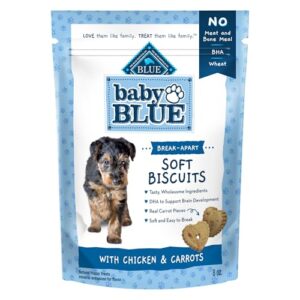
Brain food and a training reward in one — that’s a solid combo. Blue Buffalo Baby BLUE Soft Biscuits are built with real chicken as the first ingredient, plus DHA to support your puppy’s developing mind.
Each biscuit is soft enough to break into smaller pieces fast, so rewards land right when they should. No corn, wheat, soy, or artificial anything. With omega-3 and omega-6 fatty acids supporting skin and coat health, these treats pull double duty on every walk.
| Best For | Puppy owners who want a soft, easy-to-break treat that doubles as a brain-boosting reward during training. |
|---|---|
| Texture | Soft & tender |
| Corn-Free | Yes |
| Soy-Free | Yes |
| Artificial Additives | None |
| Primary Protein | Chicken |
| Life Stage | All stages |
| Additional Features |
|
- Real chicken is the first ingredient — no fillers, no by-products, no corn, wheat, or soy
- DHA supports brain development while omega-3 and 6 keep skin and coat healthy
- Soft texture breaks apart quickly, so treats hit at just the right training moment
- Breaking pieces apart can leave crumbles, which gets messy fast
- Treat size means you’ll almost always need to break them down before use
- Price can swing depending on where you buy
10. Buddy Chicken Training Bites
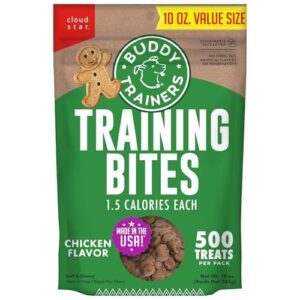
If DHA treats give your puppy’s brain a boost, Buddy Chicken Training Bites keep the momentum going with sheer practicality.
Each soft, chewy bite clocks in at just 1.5 calories, and you get over 500 in a single 10 oz bag — that’s a lot of rewarded steps.
Pork liver leads the ingredient list, so the smell alone grabs attention fast. No corn, soy, or artificial flavors.
Small enough to reward every few strides without slowing training down.
| Best For | Dog owners who train frequently and want a low-calorie, clean-ingredient treat that works for dogs at any life stage. |
|---|---|
| Texture | Soft & chewy |
| Corn-Free | Yes |
| Soy-Free | Yes |
| Artificial Additives | None |
| Primary Protein | Chicken |
| Life Stage | All stages |
| Additional Features |
|
- Only 1.5 calories per treat, so you can reward often without worrying about overfeeding
- 500 treats per bag means you’re set for a long stretch of training sessions
- No corn, soy, artificial flavors, or preservatives — simple and clean
- Not a fit for dogs with chicken sensitivities or specific dietary restrictions
- Picky dogs might not take to the flavor — every dog is different
- Needs proper storage once opened or the soft texture won’t last
Tips for Using Treats Effectively on Walks
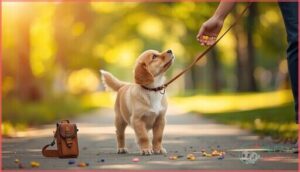
Treats only work well when you use them the right way. Few simple habits can make a real difference in how fast your puppy learns.
Here’s what to keep in mind on every walk.
Timing Rewards for Desired Behaviors
Timing is everything in reward-based training. The immediate reward window — just one to three seconds after the behavior — is where the magic happens.
When your puppy walks nicely beside you, treat that exact moment. Use step-based timing early on, rewarding every few steps, then shift to an intermittent reward schedule as skills grow.
Behavior-specific cueing and fading treat frequency keep leash walking sharp long-term.
Keeping Treats Accessible During Training
Once timing is sharp, your setup needs to match it. A belt-mounted pouch with magnetic closures means you’re never fumbling — just one quick touch and it’s open. Quick-access compartments and hands-free dispensing keep your focus on your puppy, not your pockets.
- Treats stay visible with black-lined interiors
- Magnetic seals open in under a second
- Belt clips attach to any waistband instantly
- Separate compartments sort high and low-value rewards
- Hands-free leash training keeps both hands free for control
Mixing Treat Values for Different Challenges
Not every step on a walk earns the same reward. Value Tier Matching means your pocket tells the story — kibble for easy heeling, soft treats for sidewalk practice, and tiny chicken bits when a dog walks past. Adaptive Reward Levels approach, paired with Variable Reward Scheduling, keeps leash walking fresh. Your puppy never knows when the jackpot’s coming.
Match rewards to the moment — kibble for easy wins, chicken for the tough ones
| Challenge Level | Treat Type |
|---|---|
| Backyard practice | Kibble or dry biscuit |
| Quiet sidewalk walk | Soft training treat |
| Mild distraction (people) | Semi-moist treat |
| Passing dogs or bikes | Chicken or cheese bits |
| Busy street or pet store | Highest-value reward |
Adjusting Meal Portions Based on Treat Use
Treats add up fast. If your puppy’s daily calorie budget allows only 10 percent from training treats, portion scaling becomes essential — reduce meal sizes to match what you’re rewarding on leash walking sessions.
Weigh out kibble for positive reinforcement, track treat calories for nutrient balance, and monitor weight weekly.
Meal timing matters too: smaller dinners on heavy training days keep things balanced.
Common Leash Training Challenges and Solutions
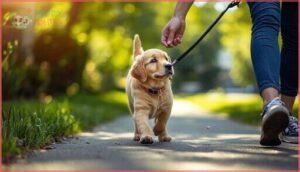
Every puppy hits a rough patch during leash training — that’s just part of the process.
The good news is that most common problems have simple, treat-based fixes you can start using right away. Here’s how to work through the challenges you’re likely to face.
Addressing Pulling and Lunging With Treats
Pulling and lunging can make walks feel like a tug-of-war — but treats change the game fast. Use high-value lures like chicken or cheese the moment tension hits, not after.
- Gentle leash tension, reward instantly when your puppy yields.
- U-turn lure — reverse direction, treat only after the leash slackens.
- Counter-condition triggers by feeding treats before your puppy notices them.
- Loose-leash steps gradually, rewarding every 5 calm strides.
Managing Distractions and Overstimulation
When the world feels too big, your puppy’s brain simply overloads. Smart Route Selection Strategy and Quiet Walk Times — think early mornings before traffic builds — cut that Sensory Load Management challenge in half before you even step outside.
| Challenge | Strategy | Tool |
|---|---|---|
| Dog distraction | Distance + treat | High‑Value Treat Timing |
| Street noise | Pause and reward calm | Focus Cue Training |
| New environments | Familiar loop routes | Route Selection Strategy |
Positive Reinforcement Techniques paired with Leash Training consistency reshape Dog Behavior Modification fast.
Troubleshooting Treat Refusal or Loss of Interest
Your puppy suddenly snubbing treats isn’t stubbornness — it’s a signal.
Check Stress Indicators first: pinned ears or a tucked tail means the environment is too intense.
Try Hunger Timing by walking before meals.
Apply Flavor Rotation across sessions to rebuild excitement.
Keep Session Length under ten minutes.
If refusal persists at home too, schedule a Veterinary Check.
Progressing to Advanced Leash Walking Skills
Once your puppy walks calmly on a loose leash, it’s time to raise the bar.
- Fading Food Rewards – Shift from treating every step to rewarding longer, cleaner stretches.
- Increasing Distance – Add two to three loose-leash steps per session.
- Tight Heel Position – Guide your puppy beside your leg using positive reinforcement.
- Distraction Proofing – Start on quiet streets, then build toward busier areas.
- Off-Leash Foundations – Practice leash walking manners inside a fenced yard first.
Frequently Asked Questions (FAQs)
When should leash training officially begin for puppies?
Start leash training as soon as your puppy comes home — around 8 weeks old.
Early indoor acclimation builds comfort fast.
Short sessions, positive reinforcement, and patience set the foundation for confident leash walking later.
How long should each leash training session last?
How long is too long? Keep sessions short — 2 to 5 minutes for young pups. Watch for fatigue signs like yawning. Age-based durations and gradual increments build focus through consistent practice.
Which leash or harness type works best for puppies?
For most puppies, a front clip lead works best — it gently steers them sideways when they pull.
Back clip leads suit calmer dogs.
Dual clip options grow with your pup’s leash training progress.
How do you transition from treats to verbal praise?
Think of it as treat weaning — gradual treat fading paired with cue consistency keeps progress steady. Once your puppy walks nicely 80–90% of the time, swap treats for well-timed praise.
Conclusion
The right treat isn’t just a snack—it’s a signal. It tells your puppy, “That’s exactly what I wanted.”
Over time, those small moments build something real: a dog that walks beside you instead of dragging you down the block.
The best puppy training treats for leash training walks work because they make good behavior worth repeating.
Start simple, stay consistent, and watch how quickly your puppy figures out the game.
- https://leashandlearnnyc.com/a-comprehensive-guide-to-the-best-dog-training-treats-of-2024/
- https://www.rover.com/blog/reviews/puppy-training-treats/
- https://www.enlightenedhounds.com/post/rewarding-for-loose-leash-walking
- https://www.purina.com/articles/dog/feeding/guides/how-many-treats-per-day-for-dogs
- https://k9connoisseur.com/blogs/news/high-value-dog-training-treats