This site is supported by our readers. We may earn a commission, at no cost to you, if you purchase through links.
A dog can reach a toxic threshold from onion powder measured in teaspoons, not pounds—a detail most pet owners discover only after the damage has already begun. The organosulfur compounds responsible don’t care whether the onion was raw, sautéed, or slow-cooked into a gravy; heat leaves them chemically intact and fully active once your dog ingests them.
What makes onion poisoning dogs symptoms so deceptive is the delay. Your dog may seem fine for two to three days while oxidative damage quietly destroys red blood cells from the inside. By the time pale gums, labored breathing, or dark urine appear, the anemia is already well underway.
Knowing what to watch for—and when to act—changes the outcome entirely.
Table Of Contents
- Key Takeaways
- Onion Poisoning in Dogs: Why It Happens
- How Much Onion is Toxic to Dogs?
- Onion Poisoning Symptoms in Dogs Timeline
- Serious Symptoms of Onion-Induced Anemia
- What to Do if Your Dog Ate Onion
- Frequently Asked Questions (FAQs)
- How much onion does it take for a dog to be sick?
- Are certain dog breeds more prone to complications?
- How is onion toxicity different from garlic toxicity?
- Can dogs recover fully after severe onion poisoning?
- Is onion powder more dangerous than fresh onions?
- Is onion toxicity reversible with early veterinary treatment?
- What does hemoglobinuria look like in affected dogs?
- Are certain dog ages more vulnerable to onion toxicity?
- Conclusion
Key Takeaways
- Onion powder is 20–25 times more concentrated than raw onion, meaning a single teaspoon delivers enough toxic organosulfur compounds to trigger hemolytic anemia in your dog.
- Symptoms can be deceptively delayed by two to three days while red blood cell destruction progresses silently, so don’t wait for visible signs before calling your vet.
- All Allium species—garlic, leeks, and chives included—carry the same threat, and cooking doesn’t neutralize the compounds responsible for the damage.
- Small breeds, Japanese breeds like Akitas and Shiba Inus, puppies, and senior dogs face disproportionately higher risk due to limited physiological reserves and genetic red blood cell fragility.
Onion Poisoning in Dogs: Why It Happens

Onions aren’t dangerous to dogs by accident—there’s a specific biological reason behind the harm. Every member of the Allium family carries compounds that your dog’s body simply can’t handle safely. Here’s what makes these foods so problematic, and why the risk is harder to avoid than most owners realize.
What makes it even trickier is that everyday foods dogs should avoid include hidden forms of onion and garlic that most owners never think to check.
Toxic Allium Compounds
The danger in onions isn’t the onion itself — it’s a family of organosulfur compounds like diallyl disulfide and dipropyl disulfide that your dog’s body converts into reactive oxidants. These compounds bind directly to hemoglobin inside red blood cells, triggering oxidative hemolytic damage that the erythrocyte’s natural defenses simply can’t outpace.
The result is a cascade your dog can’t reverse on its own.
Onions, Garlic, Leeks, Chives
Those reactive oxidants don’t come from onions alone. Every member of the Allium genus — garlic, leeks, and chives included — carries the same organosulfur threat, just in varying concentrations. Garlic is the most potent of the group.
Whether you’re cooking with a mild leek or finishing a dish with fresh chives, all Allium species are toxic to your dog.
Raw, Cooked, and Powdered Forms
The form onion takes when it reaches your dog — raw, cooked, or powdered — doesn’t change its toxicity. All three forms retain organosulfur compounds capable of causing canine hemolytic anemia.
What does change is how quickly and completely those compounds are absorbed. Onion powder’s fine particle size dramatically increases surface area, accelerating contact with digestive fluids and delivering a far more concentrated dose than chopped raw onion.
Why Cooking Does Not Help
Cooking changes texture, flavor, and water content — but it doesn’t neutralize organosulfur compounds. These molecules are heat-stable, meaning boiling, sautéing, or baking leaves them chemically intact.
Once absorbed, they target red blood cells directly, triggering canine hemolytic anemia through a systemic process your dog’s body can’t escape simply because the onion was cooked first.
Cumulative Exposure Risks
Even one small bite rarely causes immediate crisis — but repeated ingestion steadily builds body burden accumulation your dog can’t reverse between meals:
- Red blood cell damage compounds silently over time
- Oxidative injury persists and deepens after each exposure
- Cumulative toxin exposure crosses dangerous thresholds gradually
Delayed symptom onset means onion poisoning may already be progressing before you notice anything wrong.
How Much Onion is Toxic to Dogs?

The answer isn’t a simple number — it depends on your dog’s size, the form of onion involved, and how often they’ve been exposed. Even small amounts can cross the line into dangerous territory faster than most owners expect. Here’s what you need to know about the thresholds that matter most.
Toxic Dose by Body Weight
The toxic threshold for onion ingestion sits at 15–30 grams per kilogram of body weight — meaning the risk isn’t fixed; it scales directly with your dog’s size. A 30 kg Labrador can tolerate far more than a 5 kg Chihuahua before crossing into dangerous territory.
Smaller dogs are especially vulnerable since even modest amounts can trigger the signs of severe anemia in dogs that demand immediate veterinary attention.
Toxicologists express this as milligrams per kilogram (mg/kg) because the same handful of onion delivers a proportionally heavier dose to a lighter animal.
Small Dog Risk
Small dogs face a steeper climb to safety. Less body mass means any onion amount represents a proportionally higher dose — a teaspoon that a Labrador shrugs off can push a Chihuahua past the toxic threshold entirely.
Watch for these compounding risk factors:
- Smaller blood volume affected faster
- Rapid onset of weakness before owners notice
- Lower absolute ingestion needed to trigger hemolysis
- Physiological reserve is limited, accelerating collapse
- Cumulative small exposures quietly build dangerous dose levels
Furthermore, understanding household hazards is essential for preventing accidents and ensuring the dog’s safety.
Onion Powder Concentration
Onion powder is roughly 20–25 times more concentrated than raw onion by weight — because drying strips moisture while preserving every sulfur compound responsible for oxidative hemolysis. One teaspoon carries the toxic load of an entire onion.
One teaspoon of onion powder carries the toxic load of an entire onion — 20 to 25 times more concentrated than fresh
That’s why seasoning blends, gravies, and spice rubs deserve the same caution as whole alliums. Accurately measuring dosage matters; even small grams of powder can breach canine toxicity thresholds fast.
Repeated Small Exposures
Cumulative poisoning doesn’t require a single dramatic incident. When your dog repeatedly gets small amounts of onion through table scraps, seasoned leftovers, or hidden allium species in spice blends, each dose adds oxidative stress to red blood cells — and those effects compound.
That gradual accumulation can trigger full hemolytic anemia before you’ve even registered a pattern.
Breed Sensitivity Factors
Not every dog processes onion toxins identically. Genetic predisposition matters — especially in Japanese breeds like Akitas and Shiba Inus, which show heightened sensitivity due to lower antioxidant capacity and reduced red blood cell durability.
Five factors that shape breed-specific susceptibility:
- Lower baseline antioxidant defenses
- Reduced red blood cell durability
- Preexisting anemia or illness
- Slower individual toxin metabolism
- Smaller body mass
Onion Poisoning Symptoms in Dogs Timeline

Onion poisoning doesn’t hit all at once — the symptoms tend to unfold in stages, which makes knowing the timeline so important. Some signs appear within hours, while others don’t surface until a few days later when anemia begins to take hold. Here’s what to watch for and when.
Symptoms Within 1–24 Hours
Within the first day of exposure, your dog may show early GI irritation — drooling, lip licking, restlessness, or reluctance to eat — before anything more obvious develops.
What’s easy to miss is that red blood cells are already sustaining oxidative damage beneath the surface. Subtle weakness or heavy panting can signal that oxygen delivery is quietly failing, even when symptoms still look mild.
Vomiting and Diarrhea
Vomiting can begin within hours of ingestion, as the GI mucosa reacts to organosulfur irritants by triggering the brainstem’s vomiting reflex. Each episode compounds the risk, because repeated vomiting strains the airway and raises the danger of aspiration pneumonia
Diarrhea follows as intestinal inflammation accelerates gut motility, flushing water and electrolytes — sodium, potassium — before absorption can occur. Dehydration and electrolyte loss progress quietly but quickly, and both demand veterinary attention.
Loss of Appetite
After vomiting clears the stomach, many dogs simply stop eating — and that refusal often signals early toxicity signs rather than ordinary digestive fussiness.
Watch for these patterns of monitoring food refusal:
- Approaching the bowl with interest, then turning away without eating
- Declining meals alongside quiet, withdrawn behavior
- Nutritional intake decline worsening progressively across one to five days
Gastrointestinal distress suppresses appetite early, but don’t let the calm fool you. As onion poisoning advances internally, anemia-related lethargy compounds the disinterest in food — and emergency veterinary treatment becomes increasingly time-sensitive.
Weakness and Lethargy
Loss of appetite quietly gives way to something more visible — a dog that struggles to stand.
Reduced stamina levels and unsteady gait patterns signal advancing dog poisoning. You’ll notice slow movement response, decreased playfulness, and reduced grooming habits as anemia takes hold.
| Sign | What You’ll See | Onset |
|---|---|---|
| Weakness | Difficulty rising, poor footing | Days 1–3 |
| Lethargy | Dull demeanor, minimal response | Hours 1–24 |
| Reduced stamina | Tires after minimal movement | Days 2–4 |
Onion poisoning lethargy reflects falling oxygen delivery — not ordinary tiredness.
Delayed Anemia Signs
The real danger with onion toxicity doesn’t announce itself immediately. Oxidative hemolysis progresses silently for one to five days, as Heinz body formation steadily compromises red blood cell integrity and oxygen transport failure sets in.
By days three to five, hemoglobinuria detection — that dark reddish-brown urine — signals significant red blood cell damage has already occurred, often before you’ve connected it to what your dog ate days earlier.
Serious Symptoms of Onion-Induced Anemia

When onion poisoning progresses beyond the initial stomach upset, the signs that follow are far more serious — and they’re your clearest warning that your dog’s red blood cells are under attack. Hemolytic anemia doesn’t announce itself loudly at first, but by days two through five, the body’s struggle to carry oxygen becomes impossible to miss.
Watch for these specific symptoms that signal your dog needs emergency care immediately.
Pale or Yellow Gums
Gum color is one of the most reliable windows into your dog’s internal state. Lift the upper lip in good light — healthy gums are bubble-gum pink; anything pale, white, or yellow signals that hemolysis is underway, stripping red blood cells of their oxygen-carrying capacity.
Yellow discoloration specifically points to jaundice from bilirubin buildup, a direct consequence of accelerating RBC destruction from onion poisoning.
Rapid Breathing or Panting
When red blood cells rupture from onion poisoning, your dog’s body compensates by breathing faster — pushing harder to deliver oxygen that damaged blood simply can’t carry.
Watch for:
- Panting unrelated to heat or exercise
- Visible respiratory effort at rest
- Breathing that worsens over hours
This isn’t normal panting. Labored breathing alongside weakness signals dangerous anemia progression requiring immediate veterinary care.
Dark Reddish-Brown Urine
Urine that turns dark reddish-brown is one of onion poisoning’s most telling signs — it means hemoglobin from ruptured red blood cells has spilled into your dog’s urine, a condition called hemoglobinuria.
Unlike darker urine from dehydration, this discoloration won’t clear with water. It signals active hemolytic anemia and usually appears around day three post-exposure, requiring immediate veterinary attention.
Collapse or Severe Weakness
When anemia becomes severe, your dog’s body can no longer compensate — and collapse follows fast. Red blood cell destruction from onion poisoning starves tissues of oxygen, triggering circulatory shock that can drop a dog to the ground without warning.
Combined with dehydration from vomiting, the drop in blood volume makes recovery far harder.
If your dog can’t stand, that’s an emergency.
Signs of Oxygen Loss
When red blood cell destruction reaches a critical threshold, oxygen delivery collapses — and your dog’s body broadcasts that failure visibly.
Watch for bluish or pale gums, rapid shallow breathing, and a racing heart rate all appearing together.
Disorientation or restlessness signals that the brain itself is oxygen-starved. These signs mean Heinz body anemia has progressed beyond compensation. Get to a vet immediately.
What to Do if Your Dog Ate Onion
If your dog just got into onions, the next few minutes genuinely matter. What you do—and what you don’t do—can make a real difference in how this plays out. Here’s exactly what to do, step by step.
Call Your Veterinarian Immediately

Don’t wait for symptoms to worsen. Allium species toxicosis can progress silently, and red blood cell damage often peaks days after ingestion — well past the window when early intervention makes the biggest difference.
Call your veterinarian within two hours of suspected exposure. Have the quantity eaten and timing ready. Your vet’s triage decision determines whether home monitoring is safe or emergency care is needed immediately.
Estimate Amount Eaten

Your vet will need a rough quantity — form matters as much as amount. Onion powder is 20–25 times more concentrated than fresh onion, so even a teaspoon carries significant toxic load.
For mixed dishes, estimate the onion fraction specifically, not total food weight. If exposure was repeated, sum every episode — cumulative intake, not single-event intake, determines allium species toxicosis risk.
Do Not Use Home Remedies

Once you know what your dog ate, resist the urge to manage this at home. Attempting to force vomiting, administering activated charcoal, or offering "soothing" kitchen remedies can worsen nausea, cause aspiration, or mask clinical signs that help your vet gauge severity.
Onion-induced Heinz body anemia develops silently — without bloodwork tracking red blood cell decline, a dog can collapse before you realize how serious things have become.
Veterinary Tests and Treatment
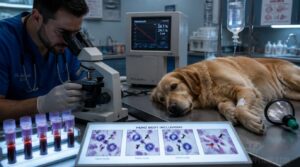
Bloodwork confirms what home care can’t. Your vet will order:
- Blood smear analysis — detects Heinz bodies
- Monitoring hematocrit levels — tracks decline
- Urinalysis for hemoglobin pigment
- Kidney panels for organ stress
Intravenous fluid therapy stabilizes circulation. Oxygen support treats hypoxia. Critical Heinz body anemia may need a blood transfusion. Antioxidant treatment options like vitamin E limit further red blood cell damage.
Prevent Future Onion Exposure

After your dog recovers, the kitchen becomes your first line of defense. Store all onions, garlic, and spice blends in sealed containers out of reach, and fit trash bins with locking lids.
Before sharing any human food, scan labels for "onion powder," "dehydrated onion," or "chives." Even small repeated exposures accumulate.
Prevention isn’t complicated — it just requires consistency.
Frequently Asked Questions (FAQs)
How much onion does it take for a dog to be sick?
Ironically, it doesn’t take much at all. Onion toxicity starts at roughly 5 grams per kilogram of body weight — for a 20 kg dog, that’s only 100 grams, barely half a medium onion.
Are certain dog breeds more prone to complications?
Yes — some breeds are more vulnerable than others. Japanese breeds like Akitas and Shiba Inus carry a genetic predisposition that makes their red blood cells more fragile, putting them at much higher risk.
How is onion toxicity different from garlic toxicity?
Garlic carries 3 to 5 times the organosulfur potency of onion, triggering faster hemolysis and greater oxidative stress in red blood cells. Both harm dogs, but garlic is the sharper blade.
Can dogs recover fully after severe onion poisoning?
Full recovery is absolutely possible when treatment begins promptly. Most dogs return to normal blood values within 2 to 3 weeks, provided red blood cell replacement proceeds without complication and veterinary support remains consistent throughout.
Is onion powder more dangerous than fresh onions?
Onion powder is much more dangerous per gram than fresh onion. Dehydration strips away water, concentrating the same toxic organosulfur compounds into a fraction of the volume — meaning one teaspoon can match an entire onion’s toxic load.
Is onion toxicity reversible with early veterinary treatment?
Early veterinary care can meaningfully limit red blood cell destruction, though it doesn’t reverse damage already done. Decontamination timing determines how much toxin enters the bloodstream — the sooner treatment starts, the better the prognosis.
What does hemoglobinuria look like in affected dogs?
Dark as rust, hemoglobinuria turns a dog’s urine red, pink, or reddish-brown — sometimes leaving visible staining on concrete or snow where your dog urinates regularly.
Are certain dog ages more vulnerable to onion toxicity?
Yes — puppies and senior dogs face the greatest risk. Puppies have immature red blood cell systems; seniors lack physiologic reserve to compensate for anemia. Both age extremes decompensate faster when oxygen delivery drops.
Conclusion
Onion poisoning dogs symptoms move like a slow tide—invisible at first, devastating by the time they reach the shore. The danger is already present before your dog shows a single sign.
A teaspoon of powder, a shared plate, a well-meaning scrap—each carries real consequence.
Know the timeline. Trust the delay. If onions entered the picture, don’t wait for confirmation. Call your vet now. That call is the only intervention that matters.
- https://campfiretreats.com/blogs/campfire-tales/can-dogs-eat-onions
- https://www.pdsa.org.uk/pet-help-and-advice/pet-health-hub/conditions/onion-and-garlic-poisoning-in-dogs
- https://www.4pawsveterinaryhospital.com/resources/blog/march-2024/onion-and-garlic-toxicities-in-pets
- https://www.dvm360.com/view/toxicology-brief-allium-species-poisoning-dogs-and-cats
- https://www.msdvetmanual.com/toxicology/food-hazards/garlic-and-onion-allium-spp-toxicosis-in-animals