This site is supported by our readers. We may earn a commission, at no cost to you, if you purchase through links.

Most dog owners know chocolate is off-limits—but that knowledge barely scratches the surface of what’s sitting in your kitchen right now that could seriously harm your dog.
Grapes look harmless. Garlic smells like dinner. A small piece of macadamia nut seems inconsequential.
Yet these everyday household foods can trigger kidney failure, neurological collapse, or dangerous drops in blood sugar in dogs, sometimes from a single exposure.
The biology behind it is straightforward: dogs metabolize many compounds completely differently than humans do, and what your body processes without issue can overwhelm theirs.
Knowing exactly which foods pose a real threat—and why—could save your dog’s life.
Table Of Contents
Key Takeaways
- Many common foods like chocolate, grapes, onions, garlic, and xylitol-containing products can cause severe or fatal reactions in dogs, even in small amounts.
- Dogs process certain compounds much more slowly than humans, so ingredients that seem harmless to you—like macadamia nuts or apple seeds—can quickly reach toxic levels in their bodies.
- A dog’s size, breed, and age dramatically influence how much of a harmful food it takes to trigger poisoning, with small dogs and puppies at highest risk from even tiny exposures.
- Quick action—such as safe food storage, teaching household members not to feed table scraps, and knowing emergency signs—can make the difference between life and death if your dog is exposed to a toxic food.
Why Some Household Foods Harm Dogs
Your dog’s body simply doesn’t process food the way yours does, and that difference can turn an ordinary snack into a serious health risk.
That’s especially true for processed foods like nuggets, where hidden ingredients can quietly harm your dog before you even notice a problem.
A few key factors explain why certain foods that are perfectly safe for you can be dangerous — even deadly — for your dog.
Here’s what you need to understand before we get into the specifics.
Differences in Canine and Human Metabolism
Dogs don’t process food the way you do — and that gap can be life‑threatening. Their liver expresses higher CYP2B11 levels and greater CYP2D15 dominance, meaning certain compounds linger far longer in their system. Consider what this means practically:
- Theobromine clearance is dangerously slow in dogs
- Xylitol absorption rate peaks within 30 minutes, triggering severe insulin spikes
- Alcohol metabolism pathways differ, offering less protection
- Dog metabolism struggles with grapes and compounds in onions, garlic, and chives
- Xylitol and theobromine accumulate to toxic levels quickly
rapid hypoglycemia in dogs after xylitol ingestion.
Common Toxins Found in Everyday Foods
Your kitchen holds canine health risks than you might expect. Several everyday ingredients carry compounds that dogs simply can’t neutralize safely.
| Toxin | Found In |
|---|---|
| Theobromine Levels | Chocolate, cocoa |
| Xylitol Sweeteners | Gum, peanut butter |
| Cyanide Seeds | Apple seeds, peach pits |
| Allium Blood Damage | Onions, garlic powder |
Mycotoxin risks also hide in moldy foods — another household hazard worth watching closely. Remember that Lilies are deadly to felines can cause acute kidney failure in cats.
How Toxicity Levels Vary by Dog Size and Breed
Size matters more than most owners realize. A small dog under 10 pounds can show toxic reactions from just 0.1 ounces of dark chocolate — while a larger breed might tolerate far more.
Weight-based thresholds and breed-specific metabolism both shape how dangerous a food becomes.
Akitas and Shibas, for example, face higher canine health risks from onions due to genetic enzyme differences that limit their natural defenses.
Fruits and Vegetables Dangerous to Dogs
It’s easy to assume that fruits and vegetables are always a healthy choice — even for dogs.
But some of the most common produce in your kitchen can quietly cause serious harm.
Here’s what you need to watch out for.
Grapes and Raisins

Even a small handful of grapes can trigger acute kidney injury in your dog — and raisins are even more concentrated in tartaric acid, the compound behind this toxicity.
Since many berries also rank among fruits toxic to dogs that owners often overlook, it’s worth knowing which ones are safe before sharing your snacks.
Dosage thresholds are dangerously low: just three grapes risk renal damage in small dogs.
Treatment protocols include IV fluids and close monitoring.
Your best prevention strategy? Keep grapes and raisins completely out of reach.
Avocados
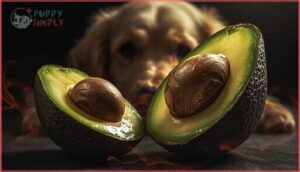
Avocados sit in a gray zone regarding toxic foods for dogs. Persin toxicity is mainly concentrated in the skin, leaves, and pit — not the flesh.
Still, pit choking risk is serious; that smooth, dense seed can lodge in your dog’s throat or gut quickly. Skin digestion issues are common too.
strict portion guidelines — one teaspoon per ten pounds — and watch for weight‑gain concerns over time.
Cherries, Peaches, and Plums

Stone fruits like cherries, peaches, and plums hide real danger in their pits.
Chewed pits release cyanide, triggering cyanide symptoms such as bright red gums, labored breathing, and collapse.
Pit obstruction risks are equally serious — a swallowed pit can block your dog’s intestines entirely.
Moldy pit mycotoxins cause seizures, while fermented fruit dangers include disorientation.
Safe fruit flesh guidelines allow only pit‑free portions in small amounts.
Onions, Garlic, and Mushrooms
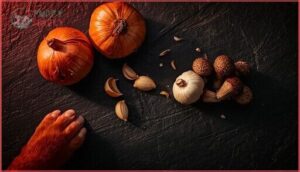
Onions, garlic, and chives share the same sulfur toxin mechanism — and it’s quietly dangerous. These Allium vegetables trigger Heinz body anemia by destroying your dog’s red blood cells, even in cooked or powdered form. Cumulative garlic dose matters too; daily table scraps can reach harmful levels over time.
Onions, garlic, and chives quietly destroy your dog’s red blood cells, causing anemia even from small amounts or daily table scraps
Wild mushroom identification is equally critical, since delayed liver failure can develop days after ingestion.
Citrus Fruits (Lemons, Oranges)

Lemons sit firmly in the avoid category, while oranges occupy a grayer zone.
Lemon pulp’s acidity causes vomiting and drooling, and the peel carries concentrated limonene — a compound with genuine essential oil toxicity that can stress your dog’s liver and kidneys. Psoralen skin sensitivity is another real concern if your dog chews citrus plants outdoors. Small, peeled orange segments are safer but should stay occasional treats.
Apple and Apricot Seeds

Apple flesh is perfectly safe — the seeds are a different story. Each seed contains amygdalin, which releases cyanide when chewed, directly disrupting cellular respiration and starving important organs of oxygen. Here’s what to know:
- Cyanide Mechanism: Binds mitochondrial enzymes, blocking oxygen use at the cellular level.
- Dose Thresholds: Smaller dogs reach dangerous levels with far fewer seeds.
- Seed Processing Risks: Crushed or chewed seeds release considerably more toxin than intact ones.
- Apricot Kernels: Far more concentrated than apple seeds — even a few can cause collapse.
- Alternative Treats: Slice apples seedless; offer carrots or plain cooked chicken instead.
For canine nutrition and pet safety, always core apples before sharing.
Nuts, Seeds, and Sweets to Avoid
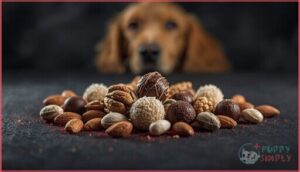
Nuts, seeds, and sweets might seem like harmless snacks, but for dogs, they can cause serious harm — sometimes after just a small amount.
Some trigger neurological symptoms, others strain the digestive system, and a few can be outright life‑threatening.
Here’s what you need to keep out of your dog’s reach.
Macadamia Nuts and Walnuts
Even a small handful of macadamia nuts can trigger serious neurological signs in your dog—weakness, tremors, and vomiting—within 12 hours. Dose thresholds are surprisingly low: just 2.4 grams per kilogram of body weight.
Walnuts carry their own threat through high fat content and mold-produced mycotoxins that cause seizures. Both nuts demand immediate veterinary care. For pet safety, stick to alternative snacks like plain carrots instead.
Almonds and Pistachios
Almonds and pistachios aren’t acutely toxic like macadamia nuts, but don’t let that reassure you too much.
Almonds pose real choking hazard risks and can trigger pancreatitis from their high fat content.
Pistachios carry similar pancreatitis risk plus weight gain concerns.
Salted versions risk salt toxicity, and any "sugar-free" almond butter may contain xylitol exposure—genuinely one of the deadliest toxic foods for dogs.
Skip both entirely.
Chocolate and Caffeinated Foods
Chocolate is one of the most well-known toxic foods for dogs — and for good reason. Theobromine levels vary dramatically by type: dark chocolate delivers over 400 mg per ounce, while milk chocolate sits around 44–64 mg.
Dogs’ caffeine sensitivity compounds the danger.
The symptom timeline moves fast — vomiting and restlessness first, then seizures.
Dose thresholds are low. Treatment protocols require immediate veterinary care.
Moldy Foods and Mycotoxins
Seizures don’t only come from chocolate.
Moldy bread dangers are just as real — penitrem‑A toxicity from moldy cheese or bread can trigger tremors within hours.
Aflatoxin liver harm follows exposure to Aspergillus mold on nuts and grains, while fusarium vomitoxin risk hits dogs that raid garbage.
Food toxicity from mold is unpredictable, so pet safety means sealed bins and immediate poison control calls.
Meat, Dairy, and Processed Food Hazards

Meat and dairy might seem like natural treats for your dog, but some of the most common options at your dinner table can do real harm.
Processed foods are another concern that often flies under the radar.
Here’s what you need to watch out for.
Cooked Bones and Fat Trimmings
Cooked bones might seem like a natural treat, but they’re among the most deceptive canine health risks in your kitchen. Cooking strips collagen from bones, making them brittle — prime candidates for bone splintering risks that cause oral injury and digestive obstruction signs like regurgitation or blocked bowels.
Fat trimmings aren’t safer; even a small portion can trigger pancreatitis symptoms within 48 hours.
Stick to vet-approved safe chew alternatives instead.
Raw Fish and Bacon
Feeding your dog raw fish or bacon might seem harmless, but both carry serious risks worth understanding.
- Thiaminase Toxicity: Raw herring and smelt destroy vitamin B1, causing weakness and seizures within weeks
- Salmon Fluke Infection: Untreated salmon poisoning kills 90% of dogs within 10 days
- High Fat Pancreatitis: One bacon strip can trigger painful inflammation within 48 hours
- Sodium Overdose Risk: A single strip delivers up to 240 mg sodium — dangerous for small dogs
- Safe Cooking Practices: Heat eliminates parasites, bacteria, and thiaminase entirely
Regarding raw meat and fatty or salty foods, cooking isn’t optional — it’s protective.
Processed Meats (Deli, Hot Dogs)
That hot dog you’re about to toss to your dog might seem like a harmless treat, but processed meats carry serious risks. High sodium levels — over 500 mg per hot dog — far exceed canine dietary needs.
Toxic seasonings like garlic and onion powder damage red blood cells.
Choking hazards, pancreatitis risk from fat, and bacterial contamination from listeria make dog food safety a genuine concern here.
Milk and Dairy Products
Milk seems harmless, but most adult dogs can’t digest lactose properly, and even a small bowl can cause bloating, cramps, and diarrhea within hours. Watch out for these dairy dangers:
- Dairy-induced pancreatitis from butter, cream, or full-fat cheese
- Xylitol sweeteners hidden in flavored yogurts — deadly even in tiny amounts
- High sodium in aged cheeses damaging dog health over time
Probiotic yogurt or low-fat cheese in tiny portions are safer choices.
Preventing and Responding to Food Poisoning

foods are dangerous is only half the battle — the other half is make sure your dog never gets to them in the first place. And if something does go wrong, how fast you respond can make all the difference.
Here’s what every dog owner should have in place.
Safe Storage and Trash Security
Your kitchen is dog’s biggest unseen hazard.
Store chocolate, grapes, and xylitol products in high cabinets, and use airtight treat containers to block tempting smells.
Locking trash cans—including motion-sensor bins—prevents counter-surfing and bin-raiding.
Install baby-gate barriers during meal prep to limit access.
These dog food safety tips and pet care and safety habits are straightforward household hazard fixes that genuinely save lives.
Educating Family and Guests
Even well-meaning guests can become household hazards without clear no-feeding rules in place.
Teach kids through simple safety games—"no grapes, no chocolate, no gum" is easy to remember. Post visual warning signs near the dining area.
Give guests a short communication script: "Please ask before feeding the dog."
Reinforcing leave-it training alongside food toxicity awareness makes pet safety and dog health a shared household responsibility.
Recognizing Signs of Poisoning
Your dog’s body often signals distress before things turn critical. Watch for vomiting patterns that repeat within hours, diarrhea onset within 2–24 hours, and lethargy changes like hiding or sudden weakness.
More serious signs—neurological tremors, seizures, or gum color changes from pink to pale or yellow—mean toxic foods for dogs have reached a dangerous threshold. These are veterinary emergency care situations, not wait-and-see moments.
Emergency Steps and Veterinary Contacts
Once you spot those warning signs, your immediate home actions matter. Move your dog away from the food, stay calm, and don’t induce vomiting without guidance—it can cause more harm.
- Call ASPCA Poison Control at 888-426-4435
- Follow poison hotline procedure before heading out
- Bring packaging for symptom triage at the clinic
- Keep vet phone numbers saved in advance
- Emergency clinic prep means leaving within minutes
Pet owner responsibility starts before the crisis.
Safe Human Foods for Dogs
Not every human food is off the table.
Safe Berry Snacks like blueberries and apple slices give your dog antioxidants without risk.
For Veggie Crunch, try carrots or cucumber.
Lean Protein options like plain cooked chicken support Dog Health and Nutrition.
Grain Options such as plain rice ease upset stomachs.
Smart Pet Owner Responsibility means knowing what helps, not just what harms.
Frequently Asked Questions (FAQs)
What is the number one most toxic food for dogs?
Chocolate tops the list of toxic foods for dogs.
Theobromine and caffeine — methylxanthine toxicity agents — overwhelm a dog’s slower metabolism, making even one ounce of baking chocolate dangerous depending on dose‑weight ratio.
What household foods are poisonous to dogs?
Common poisonous substances hiding in your kitchen include xylitol sweeteners, seasoned table scraps, grapes, chocolate, onions, and cooked bones.
Veterinary guidance is clear: even small amounts can seriously harm your dog.
Can dogs develop food allergies over time?
Yes, dogs can develop food allergies over time through immune sensitization, even to proteins they’ve eaten for years. Veterinary testing and an elimination diet help identify triggers, supporting long-term canine health.
Are certain dog breeds more food-sensitive?
Certain breeds like West Highland White Terriers, Boxers, and French Bulldogs show higher breed allergy prevalence.
due to genetic immune traits and atopic dermatitis links, making food allergies in dogs a real, breed-specific concern.
How do toxins affect puppies versus adult dogs?
Puppies face greater toxin risks due to immature organ maturity and higher metabolic rate. Their dose per kilogram climbs fast, weakening immune response and causing long-term effects on canine metabolism and toxicity tolerance.
What household plants are toxic to dogs?
Like hidden traps, toxic plants such as Sago Palm, Philodendron, Pothos, Dieffenbachia, and Peace Lily quietly threaten canine health.
They cause anything from Philodendron oral irritation to fatal liver failure from Sago Palm toxicity.
Conclusion
Many dog owners assume poisoning only happens from large amounts—that theory doesn’t hold up. Even small exposures to certain household foods harmful to dogs can trigger irreversible organ damage before symptoms become obvious.
Your kitchen isn’t inherently dangerous, but it demands the same awareness you’d apply to any hazard around a child.
Store carefully, share wisely, and trust your instincts when something seems off.
When in doubt, your veterinarian is always the right call.
- https://vcahospitals.com/know-your-pet/chocolate-poisoning-in-dogs
- https://www.bluecross.org.uk/advice/dog/foods-poisonous-to-dogs
- https://www.aspca.org/pet-care/aspca-poison-control/people-foods-avoid-feeding-your-pets
- https://domespharma.co.uk/pet-owner-advice/pet-dangers-xylitol/
- https://sashvets.com/pet-advice/dog-ate-grapes-raisins/