This site is supported by our readers. We may earn a commission, at no cost to you, if you purchase through links.
Most puppy owners know to keep chocolate out of reach—but grapes, garlic, and even a bite of avocado can be equally devastating, and far fewer people realize it. Puppies process toxins differently than adult dogs, and their smaller, still‑developing systems make them far more vulnerable to foods that seem completely harmless on your kitchen counter.
A single grape has triggered kidney failure in puppies. That’s not an exaggeration.
Knowing which dangerous foods for puppies to avoid—and recognizing the warning signs early—can genuinely save your dog’s life before a snack becomes an emergency.
Table Of Contents
- Key Takeaways
- Why Certain Foods Are Dangerous for Puppies
- Common Toxic Foods Puppies Must Avoid
- Harmful Fruits and Vegetables for Puppies
- Dangerous Sweets and Sugar Substitutes
- Risky Pantry Items and Baked Goods
- Signs Your Puppy Ate a Toxic Food
- Immediate Steps After Toxic Food Exposure
- Preventing Accidental Food Poisoning in Puppies
- Essential Toxic Foods Chart for Puppy Owners
- Frequently Asked Questions (FAQs)
- Which foods are poisonous to dogs?
- Can dogs eat fruit & vegetables?
- What foods can kill a dog if he eats alcohol?
- Is caffeine toxic to dogs and cats?
- Can puppies eat human baby food safely?
- Are essential oils toxic to puppies?
- Which bones are safe for puppies to chew?
- Can puppies drink flavored or vitamin water?
- Are puppy-specific treats always guaranteed safe?
- Conclusion
Key Takeaways
- Puppies are far more vulnerable than adult dogs to common foods like grapes, garlic, and xylitol because their livers, kidneys, and digestive systems are still developing, meaning that even tiny amounts can trigger kidney failure, seizures, or death.
- Xylitol (found in sugar‑free gum and candy) and grapes/raisins are among the most immediately life‑threatening foods, capable of causing blood sugar collapse or kidney failure within hours of a single small exposure.
- Recognizing early warning signs — repeated vomiting, sudden lethargy, tremors, or labored breathing — is critical, since puppies cannot communicate distress and toxic reactions can escalate quickly without visible dramatic symptoms at first.
- When toxic ingestion is suspected, do not wait for symptoms to worsen: remove the food, call ASPCA Poison Control (888‑426‑4435) or your vet immediately, and have the packaging, ingestion time, and your puppy’s weight ready to share.
Why Certain Foods Are Dangerous for Puppies
Some foods are much harder on a puppy’s body than on an adult dog’s, because their digestive system is still developing. This makes them more sensitive to certain toxins, so even a small bite of the wrong thing can cause serious trouble.
That’s why knowing what to watch for when your puppy has diarrhea but seems playful can help you catch a problem before it gets serious.
Next, we’ll look at the main ways these foods can affect your puppy’s body, so you know what to watch for.
Puppies’ Developing Digestive Systems
Although your puppy seems ready for table scraps, its gut is built for milk, not human meals. Limited Enzyme Maturation, weak Muscularis Development, and high Intestinal Permeability let toxic foods upset canine nutrition and dog health quickly.
- Brush Border Enzymes stay low.
- Microbiome Shifts follow new foods.
- Upsets can trigger pet poisoning.
- Small mistakes threaten dog safety.
- Choose gentle foods.
Increased Sensitivity to Toxins
On top of a gut that’s still learning new foods, your puppy’s immature liver and reduced kidney clearance mean toxic foods stay in the body longer.
Slower toxin metabolism and low body mass let small scraps reach dangerous levels fast.
A leakier blood‑brain barrier exposes the brain, so toxicity symptoms suddenly appear, turning a taste into pet poisoning and threatening dog health and canine nutrition.
Veterinary care can detect liver toxins early, as vomiting is a common symptom of liver toxicity in dogs.
Long-term Health Impacts
Those risks don’t disappear once your puppy recovers. Toxic food exposure can quietly leave lasting damage behind — kidney disease, liver dysfunction, even neurological sequelae like seizures or coordination problems.
Repeated exposure raises the chance of pancreatic insufficiency and stunted growth in young dogs.
Toxic food awareness isn’t optional; it’s how you protect your puppy’s long-term canine health from food toxicity risks.
subclinical toxin exposure effects can also lead to liver damage over time.
Common Toxic Foods Puppies Must Avoid

Some foods that seem completely harmless to us can hit a puppy’s system hard and fast.
Because puppies are smaller and still developing, even a small amount of the wrong thing can turn into a serious emergency.
Here are the most important toxic foods to keep far away from your pup.
Grapes and Raisins
most dangerous toxic foods your puppy can get into — and the scary part is that even one or two can trigger kidney failure.
The exact toxin identification remains unclear to researchers, but symptoms timeline moves fast: vomiting often starts within hours.
Treatment options work best when caught early, so prevention strategies like storing these snacks well out of reach are essential for your dog’s health.
Chocolate and Caffeine
Because Chocolate feels like a harmless indulgence, it’s easy to forget how severe Theobromine Toxicity can be for Dog Health, especially in bodies with low Dose Thresholds.
Puppies metabolize Theobromine and Caffeine slowly, so Caffeine Symptoms and Puppy Heart Effects like pulses, tremors, and seizures can follow.
Choose fruits, puppy biscuits, or veggies as Safe Treat Alternatives, not Toxic Foods.
Onions, Garlic, and Chives
Although they seem harmless in meals, onions, garlic, chives, and other Allium toxicity sources can damage puppy’s red blood cells.
Cumulative exposure—from soups, sauces, or leftovers—may trigger Anemia symptoms like pale gums, weakness, and rapid breathing.
For Pet safety, skip toxic substances, use safe seasoning alternatives, and seek prompt veterinary treatment options for suspected canine health risks in puppies.
Avocado and Persin
Since puppies are still growing, Avocados sit firmly on your Toxic Foods list, because persin and the Persin Mechanism can upset the stomach and intestines and increase Digestive Impact.
Even small tastes may trigger Toxicity Symptoms such as vomiting, diarrhea, or weakness, so Safe Serving Limits really mean none. Protect Dog Safety and Pet Health by offering Alternative Safe Fruits.
Macadamia Nuts and Walnuts
With macadamias, you mainly worry about neurological symptoms, not kidney impact, while walnuts tend to trigger stomach upset and potential digestive blockage.
Remember these five risks:
- Weakness and tremors
- Vomiting
- Allergic Reactions
- Pancreatitis
- Long-term Joint Issues from obesity
Cherries, Peaches, and Plums (pits and Stems)
Cyanide Release Mechanism can be triggered by cherry, peach, and plum pits and stems, turning treats into toxic foods loaded with cyanide. For pet safety and dog health and nutrition, treat them like you would persin avocado: off limits unless you control every bite.
| Symptoms of Ingestion | Safe Fruit Preparation | Emergency Treatment Steps |
|---|---|---|
| vomiting | seedless slices | call vet |
| Kidney Failure Risk | – | – |
Harmful Fruits and Vegetables for Puppies
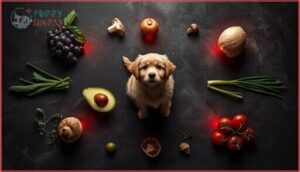
Some fruits and vegetables that seem harmless to us can be surprisingly risky for a growing puppy.
A few contain natural toxins or hard parts that can damage their stomach, intestines, or other organs.
Below, you’ll see specific items to watch for so you know exactly what to keep off your puppy’s menu.
Raw Potatoes and Potato Plants
You might not expect a potato to act like a landmine for your puppy.
Raw potatoes, green sprouts, peels, and leaves can cause Glycoalkaloid Toxicity and food toxicity, leading to Digestive Upset and other serious canine health risks.
Because Resistant Starch is tough to digest, focus on Safe Storage and pet poisoning prevention to protect dog health from toxic foods.
Persimmon Seeds
After potatoes, persimmon seeds are Toxic Foods for your puppy’s gut.
Their 1–2 cm Seed Size Impact and Hard Coating Risks mean they can lodge in the throat, causing Puppy Airway Blockage, or sit in the intestines where Fibrous Seed Digestion fails, leading to Phytobezoar Formation, Food toxicity, Canine health risks, and Dog health problems without prompt Pet poisoning prevention.
Toxic Mushroom Varieties
Just like persimmon seeds can block the gut, wild Mushrooms can quietly threaten dog health from the inside out.
Death Cap and Galerina Marginata contain amatoxins that destroy the liver and often cause fatal food poisoning.
Fly Agaric, Inocybe Species, and Clitocybe Rivulosa act on the brain and nerves, powerful poisonous substances you must treat as absolute toxic foods always.
Fruit Pits and Seeds Containing Cyanide
Fruit pits carry a hidden danger called amygdalin metabolism — when your puppy chews a cherry, peach, or plum pit, the enzyme activation process converts amygdalin into hydrogen cyanide.
Pit crushing risks are real because puppies explore everything with their teeth.
Even apple seeds accumulate toxicity in quantity.
Their lower puppy dose threshold makes storage safety practices non‑negotiable.
Keep all stone fruits well out of reach.
Dangerous Sweets and Sugar Substitutes

Sweets might seem harmless to share with your puppy, but some are far more dangerous than you’d expect. A few common ingredients — ones hiding in everyday treats — can cause serious harm, even in tiny amounts.
Here’s what you need to know about the sweets and sugar substitutes that should never reach your puppy’s bowl.
Xylitol in Gum and Candy
Hidden in sugar‑free treats, xylitol is one of the most dangerous sweeteners your puppy can meet.
Fast puppy metabolism means gum xylitol levels can crash blood sugar in 30 minutes, so tiny doses become medical emergencies.
In puppies, xylitol can collapse blood sugar within 30 minutes, turning a single piece of gum into a medical emergency
- Builds Toxic Food Awareness.
- Clarifies Candy Sweetener Risks.
- Details xylitol Dose Thresholds.
- Stresses rapid Emergency Treatment.
- Dog Health and Nutrition, Pet Care, Food Toxicity.
Ice Cream and Dairy Treats
Think of a scoop of ice cream as a storm in your puppy’s belly.
Pups develop Lactose Intolerance after weaning, so dairy causes diarrhea, gas, and Gut Flora Disruption. High Fat Pancreatitis risk is real, and treats drive Caloric Weight Gain, Food allergies, Allergic Skin Reactions, and long‑term serious Food toxicity that undermines Pet safety, Pet nutrition, and Canine health.
Excessive Sugar Risks
Because puppies are so small, even modest sugar can snowball into trouble.
Sugary snacks like Chocolate, Candy, Dried Fruit, and Raisins drive Gastrointestinal upset at first, then Puppy obesity, Dental decay, and eventually Diabetes onset as the pancreas wears out.
In some pups, rich sweets trigger a painful Pancreatitis flare and full‑body food poisoning that needs urgent veterinary care today.
Risky Pantry Items and Baked Goods

Your kitchen pantry might seem harmless, but some everyday staples can be surprisingly dangerous for puppies.
Things you bake with or snack on regularly could cause serious harm if your pup gets into them. Here’s what to watch out for.
Raw Bread Dough
Raw bread dough is deceptively dangerous. Once swallowed, yeast fermentation kicks off inside your puppy’s warm stomach, causing stomach bloating that can turn painful fast.
Worse, alcohol toxicity follows as ethanol enters the bloodstream, causing staggering and even seizures.
Don’t wait for symptoms — call your vet immediately. Surgical removal may be needed, and cold water intervention alone won’t save them.
Baking Soda, Powder, and Nutmeg
Baking soda, baking powder, and nutmeg sit quietly in your pantry — but they’re genuinely dangerous for puppies. Dosage thresholds are surprisingly low: just 3 tablespoons of baking soda can trigger electrolyte imbalance and metabolic acidosis in a 10‑pound pup.
Baking powder adds gas bloat risk. Nutmeg’s myristicin effects cause hallucinations and tremors lasting up to 48 hours. Keep these locked away.
High-fat Foods Like Bacon
Bacon might smell irresistible, but it’s one of the worst things your puppy can eat. Fat trimmings and processed meats like bacon are serious pancreatitis triggers — a single slice can spark acute inflammation within 48 hours.
Enzyme strain from high-fat overload, gastrointestinal irritation, sodium overload, and obesity acceleration all compound quickly in a developing pup. Skip it entirely.
Salty Snacks and Chips
A small handful of chips might seem harmless, but the sodium overload hits puppy kidneys fast. One medium serving contains 390 mg of sodium — nearly double what a 33‑pound dog should get daily.
Kidney strain sets in quickly, triggering dehydration effects and a puppy thirst surge that worsens the cycle. Flavor additive toxicity from onion or garlic powders adds another layer of real pet health risk.
Signs Your Puppy Ate a Toxic Food

Puppies can’t tell you when something’s wrong, so your eyes become their best defense.
Toxic reactions don’t always look dramatic at first — some signs are subtle and easy to miss.
what to watch for if you think your puppy got into something they shouldn’t have.
Vomiting and Diarrhea
Vomiting and diarrhea are your puppy’s earliest red flags — often appearing within hours of eating chocolate, onions, garlic, grapes, or raisins. These symptoms signal your puppy’s body fighting back against toxins. Watch for:
- Repeated vomiting after triggering food types
- Loose or bloody diarrhea indicating fluid loss management needs
- Signs of electrolyte imbalance like sunken eyes or dry gums
- Veterinary diagnostic tests may be needed to confirm poisoning
- Home care strategies should never replace professional guidance
Lethargy or Weakness
Beyond vomiting and diarrhea, watch for a sudden energy loss that leaves your puppy unwilling to play or even stand.
Toxins from chocolate, xylitol, onions, and garlic trigger muscle fatigue and lethargic behavior surprisingly fast.
You may notice reduced mobility, dull coat, or unusual stillness.
That quiet withdrawal isn’t rest — it’s your puppy’s body signaling real toxicity.
Seizures and Tremors
Seizures and tremors are serious brain damage indicators — and they can appear fast.
Neurological toxicity from chocolate, caffeine, and xylitol floods your puppy’s nervous system, disrupting electrolyte imbalance and triggering muscle spasms without warning. Theobromine and alcohol from fermented substances work similarly.
Watch for:
- Uncontrolled full-body shaking
- Paddling legs or sudden collapse
- Loss of consciousness
- Repeated convulsions needing emergency treatment protocols immediately
Breathing Difficulties
When the nervous system is overwhelmed, breathing often follows.
Chocolate, caffeine, alcohol, and onions or garlic can all affect your puppy’s respiratory rate — sometimes causing Asthma-like Symptoms, Pulmonary Edema, or even Respiratory Acidosis.
Watch for Airway Obstruction signs: labored panting, open-mouth breathing, or blue-tinged gums.
Breathing Rate Monitoring matters here — rapid or shallow breaths mean your vet needs to know now.
Immediate Steps After Toxic Food Exposure

When your puppy gets into something toxic, the next few minutes really do matter. Staying calm and moving through the right steps quickly can make all the difference in how well your puppy recovers.
Here’s exactly what to do.
Remove Food and Prevent Further Access
The moment you realize your puppy has eaten something toxic, every second counts. Your first job is simple: stop any further exposure.
- Gently remove food from your puppy’s mouth, then use a damp cloth for an immediate mouth rinse to wipe residue from gums and tongue.
- Practice pet owner responsibility by securing cabinet locks, installing a kitchen gate, and using dog-proof trash cans.
- Isolate your puppy in a safe space, keeping supervision strategies consistent until help arrives.
Call Your Veterinarian or Emergency Clinic
Once your puppy is safe, call your vet or an emergency clinic immediately. Two reliable Emergency Hotline Numbers are available around the clock: the ASPCA Poison Control at 888‑426‑4435 and Pet Poison Helpline at 855‑764‑7661. Both connect you to toxicology experts who handle thousands of cases yearly.
| Contact | Availability | Fee |
|---|---|---|
| ASPCA Poison Control | 24/7 | Free |
| Pet Poison Helpline | 24/7 | $89/incident |
| Local Emergency Vet | Nights & Holidays | Varies |
Emergency veterinary care moves faster when you’re prepared to provide Toxin Details, Exact Ingestion Time, and your Puppy’s Weight Info upfront.
Provide Details of What and How Much Was Eaten
Every detail you share helps your vet act faster. Tell them exactly what your puppy ate — dark chocolate, xylitol gum, onions, grapes, or raisins — and show the packaging for accurate food identification.
Portion estimation and ingestion timing matter enormously, since weight-based dosing determines treatment urgency. A 2 kg puppy eating even a few raisins can hit dangerous thresholds quickly. Packaging documentation can save precious minutes.
Preventing Accidental Food Poisoning in Puppies

Most cases of puppy food poisoning happen at home — and they’re almost always preventable.
A few simple habits can make a real difference in keeping your puppy safe. Here’s where to start.
Safe Food Storage Tips
Where you store food matters just as much as what you store. Keep toxic substances like chocolate, grapes, and xylitol gum in high cabinets that your puppy can’t reach.
Use locking containers for pantry items and practice label rotation so nothing expires unnoticed. Temperature control and moisture management protect dog food quality too — heat and humidity invite mold, spoilage, and real pet safety risks.
Dog-proofing Your Kitchen and Trash
Your kitchen is the most dangerous room in your house for a curious puppy.
A secure trash can with a locking lid is your first line of defense — combined with pet‑proof cabinet locks, odor‑reducing lids, and child‑gate barriers to block kitchen access entirely.
Simple dog safety habits make a real difference:
- Move your trash inside a latched cabinet
- Install child‑gate barriers across kitchen doorways
- Use odor‑reducing lids to minimize food smells that attract puppies
- Place counter edge barriers to prevent food from falling within reach
- Keep pet food and safety in mind by crating your puppy during meal cleanup
These small steps cut your puppy’s exposure to toxic foods and substances dramatically.
Educating Family and Guests
Even well-meaning guests can accidentally become the biggest risk to your puppy’s safety.
Before any gathering, share a quick Guest Briefing — a Food Safety Card or Printed Chart listing foods toxic to dogs. Post Rule Signage near the dining area, and explain your Puppy Feeding Policy clearly.
Good canine nutrition advice and pet care and safety awareness start with the people in your home.
Essential Toxic Foods Chart for Puppy Owners
Having everything in one place makes a real difference when seconds count. This chart pulls together the most important information you’ll need — dangerous foods, warning signs, and who to call.
Keep it somewhere easy to find, like on your fridge or saved on your phone.
Quick Reference Table of Dangerous Foods

A quick-reference table cuts through the noise when you need answers fast.
Use the column headings below to check toxin levels, portion sizes, and age‑specific risk at a glance.
| Food | Why It’s Dangerous |
|---|---|
| Chocolate & Xylitol | High toxin levels; even tiny amounts harm puppies |
| Grapes & Raisins | Kidney failure risk regardless of portion sizes |
| Onions, Garlic & Macadamia Nuts | Concentrated toxins with elevated age‑specific risk for young dogs |
Symptoms to Watch For

Knowing the table above is only half the battle — recognizing symptoms early can be the difference between a scare and a genuine veterinary emergency care situation.
| Symptom | Linked Toxin | Onset |
|---|---|---|
| Pale Gums & Oral Ulcers | Onions, Chives | 1–3 days |
| Excessive Drooling & Abdominal Pain | Garlic, Acidic Foods | Within hours |
| Hyperactivity Tremors & Collapse | Chocolate, Xylitol | Under 2–12 hours |
Catching these canine health risks early protects your puppy’s pet health before food poisoning advances.
Emergency Contact Numbers

Save these numbers now — before you ever need them.
| Resource | Contact | Availability |
|---|---|---|
| ASPCA Hotline | 888-426-4435 | 24/7 Emergency Line |
| Pet Poison Helpline | 855-764-7661 | 24/7, $89/case |
| Regional Poison Center (Saxony) | 0361 730730 | 24/7 Emergency Line |
Local Vet On-Call services and veterinary emergency care are just one call away. Pet owner education and awareness starts with having these saved in your phone — because in a poisoning every minute counts for your puppy’s pet health.
Frequently Asked Questions (FAQs)
Which foods are poisonous to dogs?
Several foods are toxic to dogs and pose serious canine health risks.
Kidney failure triggers include grapes, while cyanide sources like cherry pits threaten breathing.
Xylitol causes liver toxicity, and macadamia nuts produce neurological signs quickly.
Can dogs eat fruit & vegetables?
Yes — but only the right ones.
Apples, carrots, and blueberries make great safe fruit options in small portions.
Avoid grapes, raisins, onions, garlic, and avocados entirely.
Always wash produce and introduce new foods slowly.
What foods can kill a dog if he eats alcohol?
Alcohol toxicity hits dogs fast.
Ethanol‑rich beverages, hand sanitizer exposure, fermenting dough hazards, methanol‑containing fluids, and alcohol‑infused treats all pose serious dog health risks requiring immediate veterinary care to prevent fatal food poisoning.
Is caffeine toxic to dogs and cats?
Caffeine is absolutely toxic to both dogs and cats.
Even small doses cross the toxicity threshold fast — triggering restlessness, rapid heart rate, and seizures.
Veterinary guidance and prompt treatment are essential for protecting your pet’s health.
Can puppies eat human baby food safely?
some baby foods are safe in small amounts, but most don’t meet puppy needs.
protein adequacy, calcium deficiency, and hidden toxins like xylitol or garlic powder make ingredient transparency and portion control essential for canine health.
Are essential oils toxic to puppies?
Think of your puppy’s liver as a tiny, still-learning filter — essential oils flood it faster than it can cope.
So yes, essential oils are genuinely toxic to puppies, triggering Liver Enzyme Overload, Neurological Symptoms, Inhalation Respiratory Risks, and Skin Absorption Burns.
Which bones are safe for puppies to chew?
Raw knuckle bones, Nylabone puppy chews, yak milk chews, and beef trachea are safe options.
Always supervise chewing sessions.
Cooked bones splinter dangerously — stick to supervised raw bones for your puppy’s health safety.
Can puppies drink flavored or vitamin water?
puppies shouldn’t drink flavored or vitamin water.
Artificial Sweetener Risks, Acidic Drink Effects, and Vitamin Overdose Concerns make these drinks genuinely dangerous.
Plain water is always the safest, healthiest choice.
Are puppy-specific treats always guaranteed safe?
Not quite. Puppy-specific treats face regulatory loopholes, contamination recalls, harmful additives, allergen risks, and digestive concerns that affect dog food safety and pet nutrition
— so always check labels and watch for toxicity signs.
Conclusion
Your kitchen holds a thousand hidden dangers for a curious puppy—and now you’re equipped to recognize every single one. Understanding which dangerous foods for puppies can cause real harm means you’re already ahead of most pet owners.
Don’t wait for a scary moment to review what’s stored in your pantry or left on the counter. The best protection you can give your puppy isn’t a reaction—it’s the knowledge you carry before anything ever goes wrong.
- https://www.scottsdaleveterinaryclinic.com/services/blog/chocolate-xylitol-and-grapes-why-these-favorites-are-dangerous
- https://www.vpisglobal.com/2014/12/02/revised-treatment-doses-for-chocolate/
- https://www.webmd.com/pets/dogs/why-dogs-cant-eat-grapes
- https://www.petmd.com/dog/nutrition/can-dogs-eat-grapes
- https://pubmed.ncbi.nlm.nih.gov/20473849/