
This site is supported by our readers. We may earn a commission, at no cost to you, if you purchase through links.

About 10 to 20 percent of people are allergic to pets, yet dog ownership keeps climbing.
For allergy sufferers, that tension feels familiar—you want a dog, but your immune system has other plans.
The good news is that your sneezing fits and itchy eyes don’t automatically rule out dog ownership.
Certain breeds shed far less dander, the microscopic protein particles that actually trigger allergic reactions—not the hair itself, a detail most people get wrong.
Managing allergies with hypoallergenic dogs takes more than picking the right breed, though.
The right grooming habits, home setup, and a few smart tools make the real difference.
Table Of Contents
Key Takeaways
- Dander — not dog hair — is the real allergy trigger, and breeds like Poodles, Bichon Frises, and Portuguese Water Dogs produce significantly less of it due to coat type and genetics.
- No dog is truly allergen‑free; the "hypoallergenic" label has no federal standard, and a 2011 study found allergen levels surprisingly similar across breed types.
- Regular grooming — brushing, bathing every three to six weeks, and professional cleaning — can cut airborne dander by up to 84 percent, making it your most powerful daily tool.
- Combining smart home strategies (HEPA purifiers, bedroom barriers, hard flooring) with medical options like antihistamines or allergy shots gives you real, lasting control over symptoms.
Best Hypoallergenic Dog Breeds for Allergy Sufferers
Not every dog will work for every allergy sufferer, but some breeds are a much safer bet than others.
Breeds like Poodles and Portuguese Water Dogs tend to shed less and produce fewer allergens—here’s a solid rundown of hypoallergenic dog breeds worth considering for allergy sufferers.
The key is knowing which ones consistently produce less dander and shed minimally.
Here are eight breeds worth considering if allergies are part of your equation.
Poodles and Poodle Mixes

Poodles are one of the most allergy friendly dogs you’ll find. Their single-layer, curly coat traps dander instead of releasing it into the air — a genuine advantage for sensitive households.
Size variations range from 4‑pound toys to 70‑pound standards, with lifespan differences to match.
Poodle mixes like Labradoodles inherit similar low shedding breeds traits. Their training intelligence makes daily grooming routines easier to establish early.
The original Labradoodles were created as guide dogs for the blind, reflecting their guide dog origins.
Bichon Frise

The Bichon Frise is another standout among allergy friendly dogs.
Their curly double coat traps loose hair and dander close to the body, keeping allergens off your furniture.
These low shedding breeds live 13 to 15 years and stay small — under 7 kilograms.
Temperament traits lean cheerful and affectionate, with notable training ease.
Daily brushing is your non-negotiable dog grooming tip here.
The breed’s French aristocratic origins are detailed on the pedigree site.
Portuguese Water Dog

Another allergy friendly option worth knowing: the Portuguese Water Dog. Their single-layer, low shedding coat releases far less dander than most breeds.
They’re athletic dogs with webbed feet and impressive swimming ability, needing 45 to 60 minutes of vigorous daily exercise to match their energy levels. Watch for hip dysplasia and eye health issues, and keep up with regular dog grooming tips to stay ahead of allergens.
Schnauzer

Schnauzers make a strong case among hypoallergenic dogs. Their double coat structure — wiry outer layer, soft undercoat — traps loose hair and dander close to the body, keeping allergens off your floors.
- Low shedding across all three size variants: Miniature, Standard, and Giant
- Allergy friendly coat that grows continuously, not seasonally
- Professional grooming every 4–8 weeks keeps dander controlled
- Temperament traits vary by size — Miniatures are sociable; Giants need experienced handling
Maltese

low shedding dogs match the Maltese for allergy sufferers. This toy breed weighs just 4–7 pounds, making it one of the most manageable hypoallergenic dog breeds for small homes.
| Feature | Details |
|---|---|
| Size & Weight | 4–7 lbs, 7–9 inches |
| Lifespan & Health | 12–15 years; watch for heart disease |
Daily brushing keeps dander low and your allergies calmer.
Afghan Hound

The Afghan Hound surprises many allergy sufferers — this elegant hypoallergenic dog sheds far less than most dog breeds. Its silky single coat traps dander close to the body until grooming removes it.
- Temperament Traits: calm, independent, bonds closely with family
- Exercise Needs: 40–120 minutes daily outdoors
- Skin Sensitivities: prone to dermatitis; use gentle shampoo
- Health Concerns: hypothyroidism, sensitive to anesthesia
Consistent dog grooming keeps your allergies manageable.
American Hairless Terrier

The American Hairless Terrier has a fascinating origin story — born from a single hairless puppy in 1972, Louisiana. Since it produces virtually no shed hair, it’s one of the most practical low shedding dog breeds for managing dog allergies.
Its temperament traits include curiosity and loyalty.
Skin care matters most here: weekly baths and sunscreen keep bare skin healthy and allergen levels low.
Chinese Crested

The Chinese Crested is a standout among low shedding dog breeds — especially the Hairless variety, which leaves almost no hair on your furniture. For pet allergy relief, that’s a real win.
- Skin Care Needs: Weekly baths remove dander from exposed skin.
- Dental Health: Daily brushing prevents early tooth loss.
- Eye Conditions: Screen for retinal atrophy regularly.
Temperament traits are gentle and affectionate, with modest exercise requirements of 30–45 minutes daily.
How Hypoallergenic Dogs Reduce Allergies

Hypoallergenic dogs don’t eliminate allergens entirely, but they do produce noticeably less of what triggers your symptoms.
Understanding why comes down to a key factors — coat type, genetics, and what "hypoallergenic" actually means.
Here’s what’s really going on beneath the fur.
Non-Shedding and Low-Dander Coat Types
Think of your dog’s coat like a slow-draining sink — the less it sheds, the less dander builds up around you. Hypoallergenic breeds benefit from a longer hair growth cycle, meaning low shedding dogs release fewer allergens over time.
Curl texture benefits matter too: tight curls trap pet dander close to the skin.
A single coat advantage and regular trimming frequency impact how much allergen reaches your air.
Genetics and Breed Variability
Not all dogs within the same breed trigger allergies equally — and genetics explain why.
- MC5R variants regulate skin oil production, with certain genotypes producing less hair shedding
- FGF5 mutations extend hair growth cycles, keeping loose hairs trapped rather than airborne
- RSPO2 furnishings create low-shedding wavy coats that shed roughly 50% less
- Can f 1 levels vary up to 100-fold between individual dogs of the same breed
- Selective breeding strategies targeting low Can f 1 in saliva can meaningfully reduce your allergen exposure
Limitations of “Hypoallergenic” Claims
Genetics shape how much allergen a dog produces — but that doesn’t mean hypoallergenic is a reliable label. Regulatory gaps mean no federal standard governs that term, leaving room for marketing misuse.
A 2011 study found allergen levels virtually identical across hypoallergenic and regular breeds. Consumer misconceptions run deep here.
A 2011 study found allergen levels virtually identical between hypoallergenic and regular dog breeds
| What People Assume | What Research Shows |
|---|---|
| Hypoallergenic = allergen-free | Allergen variability remains between dogs |
| Breed determines safety | Testing inconsistencies make predictions unreliable |
Essential Grooming Tips to Minimize Allergens

Grooming isn’t just about keeping your dog looking good — it’s one of the most effective ways to keep allergens under control.
How often you brush, how you bathe, and where your dog sleeps all make a real difference.
Here are the grooming habits worth building into your routine.
Brushing Frequency and Techniques
How often you brush makes a real difference for dander reduction. Curly nonshedding coats like Poodles need near‑daily attention, while wire coats do fine a few times a week.
- Sectional Brushing Schedule: Work skin‑to‑tip in small sections for mat‑prevention strategies
- Tool Selection Guide: Slicker brushes for curly coats, soft pins for sensitive‑area care
- Skin Health Monitoring: Spot redness early during every session
Bathing Routines for Hypoallergenic Breeds
Brushing gets the loose hair, but bathing is where real dander reduction happens.
For most hypoallergenic dogs, a bath every three to six weeks works well — but if your allergies flare easily, weekly bathing cuts surface allergens considerably.
Use lukewarm water and a shampoo with colloidal oatmeal or aloe vera.
Before the bath, wipe your dog down with a damp microfiber cloth for pre-bath dander control.
Always dry the coat completely afterward.
Professional Vs. At-Home Grooming
Once bathing is handled, the next question is who does the grooming? Professional dog grooming can reduce dander by up to 84 percent — real allergy relief that’s hard to match at home.
That said, at-home grooming costs roughly 157 dollars yearly versus 50 to 90 dollars per professional visit.
For hypoallergenic dogs, combining both approaches gives you the best allergen reduction strategies without breaking the budget.
Cleaning Dog Beds and Toys
Your dog’s bed is a hidden dander hotspot. Vacuuming beds weekly with a pet-hair vacuum pulls out embedded allergens before hot-water washes (above 55°C) finish the job.
Use hypoallergenic, fragrance-free detergents — enzyme-based formulas break down dog allergens effectively.
For plush toy sanitizing, a vinegar soak works well.
Always apply complete drying techniques to prevent mold, supporting real indoor air quality improvement and lasting allergy relief.
Allergy Management Strategies for Dog Owners
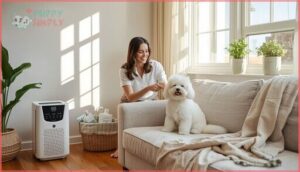
Grooming does a lot of the heavy lifting, but it’s only part of the picture.
How you manage your home and your health matters just as much.
Here are a few practical strategies that can make a real difference.
Limiting Dog Access in The Home
Think of your home as a map — some zones belong to your dog, others belong to you. Setting up no‑dog zones, especially with bedroom barriers, gives your immune system a real break overnight. Pet gates work well for open layouts, while crate confinement keeps dander contained to one spot.
- Hard‑floor areas are easier to clean and trap less dander
- Closed bedroom doors cut overnight allergen exposure substantially
- Consistent household rules prevent accidental zone contamination
Improving Indoor Air Quality
Clearing the air — literally — makes a real difference when you live with hypoallergenic dogs. Even low-shedding breeds release some pet dander, so indoor air quality needs active management.
| Solution | How It Helps | Key Detail |
|---|---|---|
| HEPA Air Purifiers | Captures 99.97% of pet dander | Cleans 448 sq ft in 29 min |
| MERV HVAC Filters | Traps dander, saliva proteins | Replace every 1–3 months |
| Hard Surface Flooring | Releases 90% less trapped dander | Easier to sweep clean |
| Dehumidifier Moisture Control | Stops dust mites alongside allergens | Keep humidity at 35–50% |
| Whole-House Ventilation | Dilutes indoor dog allergens | Clean HRV cores cut allergens 80% |
Layer these strategies for the strongest allergy management results.
Personal Hygiene After Pet Contact
Your body picks up pet dander the moment you touch your dog — and carries it everywhere you go. A simple hygiene routine cuts that allergen trail short.
- Handwashing Technique: Scrub with soap for 20 seconds after every pet interaction.
- Face Cleaning: Rinse your face after cuddling to remove dander from lashes and skin.
- Shower Routine: Shower after long play sessions — dander clings to hair and transfers to bedding.
- Clothing Laundry: Wash pet clothes in hot water separately; use a lint roller between washes.
- Personal Item Disinfection: Wipe down your phone, glasses, and watch — dander hides there too.
These small habits make managing pet allergies noticeably easier.
Medical Options: Medications and Immunotherapy
Sometimes, grooming and cleaning aren’t enough on their own. That’s where medical options step in.
Antihistamine types like cetirizine and loratadine ease sneezing and itchy eyes daily. Nasal steroid sprays reduce inflammation over time. For lasting allergy management, immunotherapy injections — allergy shots — gradually retrain your immune system. Sublingual immunotherapy offers a needle‑free path. Severe cases may need biologic treatment targeting IgE directly.
Top Products for Managing Allergies With Dogs
The right tools make a real difference when you’re managing dog allergies at home.
A good vacuum, air purifier, and grooming gear can cut down on dander before it ever becomes a problem.
Here are four products worth having on your radar.
1. Eureka PowerSpeed Upright Vacuum Cleaner
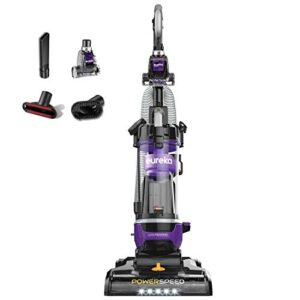
Pet dander doesn’t stand a chance against the right vacuum.
The Eureka PowerSpeed captures 99.97% of particles as small as 0.3 microns — including dander and pollen — so allergens don’t recirculate back into the air you breathe.
Its 960-watt motor lifts embedded pet hair from carpets, upholstery, and hardwood floors with ease.
The five-floor height adjustment and included pet turbo tool make it practical for whole-home use.
At 12.3 pounds with a 25-foot cord, it’s a solid everyday option.
| Best For | Pet owners and allergy-prone households looking for a reliable, whole-home vacuum that handles hair, dander, and everyday messes across multiple floor types. |
|---|---|
| Pet Hair Removal | Captures pet hair on multiple surfaces |
| Allergen Control | Washable foam filter traps allergens |
| Ease of Use | Auto cord rewind and on-board tools |
| Multi-Surface Use | Carpet, hardwood, tile, upholstery |
| Low Maintenance | Washable filter and large dust cup |
| Pet Suitability | Includes dedicated pet tool accessory |
| Additional Features |
|
- The 960-watt motor and pet turbo tool dig deep into carpets and upholstery to pull out embedded pet hair
- XL 2.1-liter dust cup means fewer trips to empty it mid-clean
- Five-floor height adjustment makes it easy to switch between carpet, hardwood, and tile without missing a beat
- At 12.3 pounds, it’s not the lightest option — could be tough for anyone with mobility concerns
- The corded design (25 feet) can feel limiting in larger spaces or multi-story homes
- The roller brush and belt need regular maintenance or you’ll run into performance issues down the road
2. Afloia Air Purifier for Pets
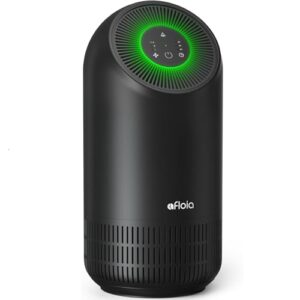
vacuum manages what’s on your floors — but dander floats. Afloia Air Purifier earns its place.
Its 3-stage filtration system captures 99.99% of airborne particles, including pet dander as small as 0.03 microns, while the activated carbon layer addresses odors.
It filters a 220 sq ft room four times per hour and runs at just 24 decibels in sleep mode — quiet enough for your bedroom. cleaner air makes a real difference for allergy sufferers sharing space with a dog.
| Best For | Pet owners and allergy or asthma sufferers who want cleaner, fresher air at home. |
|---|---|
| Pet Hair Removal | Filters pet hair and dander from air |
| Allergen Control | Removes 99.99% of pet dander and pollen |
| Ease of Use | Customizable speed and timer settings |
| Multi-Surface Use | Bedrooms, living rooms, offices, kitchens |
| Low Maintenance | Filter replacement every 4–6 months |
| Pet Suitability | Eliminates pet odors and dander |
| Additional Features |
|
- Catches 99.99% of airborne particles — dander, dust, pollen, mold, you name it
- Filters a 220 sq ft room four times an hour, so air stays consistently clean
- Quiet enough for the bedroom and works in spaces up to 880 sq ft
- Filter replacements every 4–6 months add ongoing costs
- Noise might bother light sleepers, even if it’s more of a white noise hum
- You have to register the warranty within a week of buying or you lose coverage
3. GoPets Self Cleaning Slicker Brush
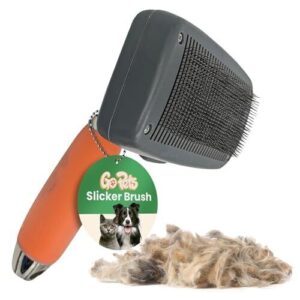
Cleaner air helps, but dander also hides in your dog’s coat. That’s where the GoPets Self Cleaning Slicker Brush earns its keep. Its 672 fine bent wire bristles reach deep into the undercoat, pulling out loose hair, dirt, and skin flakes before they scatter around your home.
The wide 4-inch head covers more ground per stroke, saving you time. Done brushing? One press of the self-cleaning button drops the collected fur straight into the trash.
| Best For | Pet owners who deal with shedding and want a quick, easy-to-clean brush for everyday grooming across all coat types. |
|---|---|
| Pet Hair Removal | Removes loose fur and dander |
| Allergen Control | Reduces dander and loose fur |
| Ease of Use | Self-cleaning retractable bristles |
| Multi-Surface Use | All coat types and breeds |
| Low Maintenance | Self-cleaning bristle mechanism |
| Pet Suitability | Suitable for all breeds and coats |
| Additional Features |
|
- The self-cleaning button makes cleanup effortless—just press and the fur falls right off
- The wide 4-inch head covers more coat per stroke, so grooming sessions go faster
- Works on cats and dogs alike, no matter the breed or coat length
- No instructions included, so you might need a few tries to figure out the best technique
- Not the best pick for dogs with seriously thick or heavily matted coats
- Lighter builds may find the 8.4-ounce weight a little heavy after extended sessions
4. Oneisall Dog Hair Clipper Set
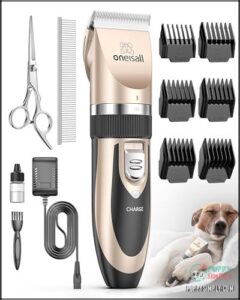
Regular brushing catches loose fur, but keeping coats trimmed short is what really cuts down on dander buildup.
Oneisall Dog Hair Clipper Set makes that easy at home.
It runs below 50 dB, so anxious dogs stay calm.
Six guide combs (3–18mm) let you control coat length precisely.
The cordless design gives up to 150 minutes per charge, and the removable blade head snaps off for quick cleaning.
Shorter coats mean less dander clinging to furniture and bedding.
| Best For | Pet owners with dogs or cats that have thick coats and get stressed during grooming sessions. |
|---|---|
| Pet Hair Removal | Trims and reduces pet hair |
| Allergen Control | Blade guard reduces loose hair spread |
| Ease of Use | 6 guide combs for simple trimming |
| Multi-Surface Use | Dogs and cats with thick hair |
| Low Maintenance | Removable cutter head for easy cleaning |
| Pet Suitability | Safe blade design for pet grooming |
| Additional Features |
|
- Runs below 50 dB, so anxious pets stay calm and relaxed during grooming
- Six guide combs give you real control over coat length without guessing
- Cordless and easy to clean — the blade head pops right off
- Not ideal for very long or matted coats — you may need scissors first
- Battery life isn’t specified, so it’s hard to know what you’re working with
- Results depend a lot on your skill level, especially if you’re new to grooming
Frequently Asked Questions (FAQs)
Can children with allergies safely own hypoallergenic dogs?
Yes, many children with mild allergies can safely live with a low-shedding dog.
The key is choosing the right breed, controlling your home environment, and working closely with your child’s allergist.
How do allergies to dogs develop over time?
Dog allergies develop gradually.
Your immune system first encounters dog proteins in dander or saliva, quietly building IgE antibodies.
Over time, repeated exposure makes reactions stronger, faster, and harder to ignore.
Can two hypoallergenic dogs produce more allergens together?
Two isn’t always better than one.
Yes, hypoallergenic dogs together produce more allergens — both contribute dander, saliva, and urine proteins like Can f 1, quietly raising your home’s total allergen load.
Are outdoor environments safer for allergy sufferers with dogs?
Outdoor air naturally dilutes dander, so symptoms are usually milder outside. Open spaces disperse allergens fast, unlike indoors where they linger for hours. Short outdoor visits give you real relief.
Conclusion
Take Sarah—lifelong allergy sufferer, now living comfortably with a Bichon Frise. She didn’t get lucky. She picked the right breed, vacuumed twice a week, and kept her bedroom a dog-free zone.
Managing allergies with hypoallergenic dogs isn’t about finding a magic solution—it’s about building the right habits around the right dog. Do that consistently, and your immune system won’t have the final say on whether you get to own one.
- https://www.aaaai.org/tools-for-the-public/conditions-library/allergies/dog-myths
- https://www.thermofisher.com/allergy/wo/en/living-with-allergies/understanding-allergies/pet-dander-allergy-what-causes-it-and-how-to-find-relief.html
- https://www.petmd.com/dog/general-health/hypoallergenic-dogs
- https://www.dwightvet.com/hypoallergenic-dog-breeds-allergy-relief/
- https://www.airoasis.com/blogs/articles/how-do-air-purifiers-help-with-pet-dander