This site is supported by our readers. We may earn a commission, at no cost to you, if you purchase through links.
one in five dogs suffer from some form of skin allergy—and most owners don’t realize it until the scratching becomes impossible to ignore.
Your dog can’t tell you its skin burns after a bath, but the relentless paw licking, the red patches behind the ears, the dull coat that no amount of brushing fixes—those signs speak clearly.
What’s harder to see is how often well‑meaning grooming routines make things worse.
Many popular shampoos contain sulfates, synthetic fragrances, and preservatives that strip your dog’s natural skin barrier, turning a simple bath into a trigger.
Thoughtful hypoallergenic dog skin care changes that equation, giving sensitive dogs real relief instead of a temporary rinse.
Table Of Contents
- Key Takeaways
- Why Hypoallergenic Skin Care Matters for Dogs
- Key Ingredients in Hypoallergenic Dog Shampoos
- Choosing The Right Hypoallergenic Dog Shampoo
- Bath Time Tips for Sensitive Dogs
- Additional Skin Care Solutions for Allergy-Prone Dogs
- Maintaining Healthy Skin Between Baths
- Frequently Asked Questions (FAQs)
- What is a good hypoallergenic dog treat?
- How often should hypoallergenic shampoo be used?
- Can hypoallergenic shampoos be used on puppies?
- Are hypoallergenic products safe for all breeds?
- Do hypoallergenic shampoos interfere with flea treatments?
- What certifications should hypoallergenic dog shampoos have?
- Conclusion
Key Takeaways
- Many common dog shampoos contain sulfates, synthetic fragrances, and parabens that strip your dog’s natural skin barrier and can trigger or worsen allergic reactions over time.
- Switching to a pH-balanced, hypoallergenic shampoo with soothing natural ingredients like oatmeal, aloe vera, or lemongrass gives your sensitive dog real relief without the harsh side effects.
- Skin care between baths matters just as much as the wash itself — regular brushing, spot cleaning, and omega-3 supplements all work together to keep your dog’s skin calm and healthy.
- Since "hypoallergenic" has no legal definition, look for shampoos with verifiable certifications like USDA Organic, veterinary endorsement, or dermatologist approval to ensure you’re actually getting a safe, gentle formula.
Why Hypoallergenic Skin Care Matters for Dogs
Your dog’s skin is trying to tell you something — and it’s worth listening.
From dry flakes to dull fur, issues often start at the surface — and the right dog washing and bathing shampoo can make a real difference.
Not every shampoo is built for a pup who scratches, flakes, or reacts to the wrong ingredients.
Here’s what you need to know about why hypoallergenic skin care matters for your sensitive dog.
Common Dog Skin Allergies and Sensitivities
Your dog’s skin tells a story — and when it’s itchy, red, or inflamed, it’s worth listening. Four common culprits affect allergy‑prone and sensitive skin dogs:
- Flea Allergy – A single bite triggers intense itching, especially near the tail.
- Atopic Dermatitis – Pollen, mold, and grass cause chronic rashes and ear infections.
- Food Sensitivities – Beef, dairy, and wheat drive year‑round itching and paw licking.
- Contact Irritants – Shampoos with sulfates and fragrances inflame skin on contact.
Breed predisposition matters too — Labradors, Bulldogs, and Shar‑Peis face higher risk. That’s why veterinary recommendations for dog shampoos consistently point toward hypoallergenic dog shampoo and soothing dog shampoos for itching as your first line of defense.
Understanding flea allergy dermatitis helps owners identify common causes.
Risks of Using Regular Dog Shampoos
Knowing what’s in your dog’s shampoo matters more than most owners realize.
Regular formulas often rely on Harsh Surfactants that strip protective oils, causing irritation in allergy‑prone and sensitive‑skin dogs. Synthetic Fragrances hide dozens of chemicals. These fragrances can contain phthalates that disrupt a dog’s endocrine system. pH Imbalance weakens the skin barrier. Preservative Toxicity from parabens builds up over time. Microbiome Disruption follows repeated washing.
| Ingredient Risk | Effect on Skin | Better Alternative |
|---|---|---|
| Sulfates | Strips natural oils, causes dryness | Sulfate‑free formulas |
| Synthetic Fragrances | Triggers redness and hives | Fragrance‑free options |
| Parabens | Hormone disruption over time | Paraben‑free shampoos |
| pH-Disrupting Agents | Weakens skin barrier | pH‑balanced cleansers |
| Harsh Preservatives | Burning, scaling, toxic buildup | Natural preservative systems |
Benefits of Hypoallergenic Products
Switching to a hypoallergenic dog shampoo makes a real difference for your sensitive pup. Here’s what your dog actually gains:
- Reduced Irritation — mild surfactants clean without stripping natural oils
- Strengthened Barrier — pH balanced formulas protect against microbes and allergens
- Allergy Relief — natural ingredients rinse away pollen and dust triggers
- Comfort Bathing — fragrance‑free, tear‑free washes reduce bath‑time stress
- Coat Shine — moisturizing agents like aloe restore softness and luster
Key Ingredients in Hypoallergenic Dog Shampoos

Regarding your sensitive pup, what’s in the bottle matters just as much as how often you use it.
Looking at the ingredients list is a great first step, but choosing the right dog shampoo for your pup’s skin and coat goes deeper than that.
The right shampoo works with your dog’s skin, not against it — and that starts with knowing which ingredients actually help and which ones cause more harm than good.
Here’s what to look for (and what to leave on the shelf).
Natural Soothing Agents (Aloe, Lemongrass, Oatmeal)
The best hypoallergenic dog shampoos work because of what’s inside them.
Aloe cooling properties calm inflammation and fight bacteria on irritated skin, while Lemongrass antimicrobial action clears pores and neutralizes odor naturally. Oatmeal’s moisture barrier locks in hydration, soothing your pup’s itch from the outside in.
Together, these Plant‑Based anti‑inflammatory, herbal fragrance‑free natural ingredients make every bath genuinely therapeutic for sensitive skin.
Ingredients to Avoid (Sulfates, Parabens, Fragrances)
Not all "gentle" labels tell the whole story.
Sulfate irritation strips your dog’s natural oils, while paraben hormone risks build up silently with repeated use.
Fragrance dermatitis triggers itching and redness — even from plant‑based scents.
Hidden surfactant harshness hides behind vague "coconut-derived" terms.
Your label reading tips: look for sulfate‑free, paraben‑free, and fragrance‑free claims backed by a short, transparent natural ingredients list on every hypoallergenic shampoo you choose.
PH Balance and Skin Health
Your dog’s skin sits at a pH between 6.5 and 7.5 — quite different from human skin.
A pH-balanced, hypoallergenic shampoo promotes Barrier Lipid Preservation and Microbiome Stability by cleansing without stripping natural oils.
Acidic Alkaline Effects from poorly matched products can trigger itching within days.
pH-Optimized Formulation with moisturizing natural ingredients keeps sensitive skin protected, calm, and healthy between baths.
Choosing The Right Hypoallergenic Dog Shampoo

Not all hypoallergenic shampoos are created equal, and picking the wrong one can leave your pup just as itchy as before.
Your dog’s skin type and your vet’s input both play a bigger role in this decision than most people realize.
Here’s what to look at when narrowing down your options.
Assessing Your Dog’s Skin Type
Your dog’s skin tells a story — you just need to know how to read it.
Start with Visual Skin Clues: part the fur and look for flakes, redness, or grease.
Follow up with Touch Texture Checks, running your fingers along the coat to feel tightness or oiliness.
Test Hydration Elasticity by gently pinching the neck skin — it should snap back immediately.
Factor in Breed Coat Influence, Irritation Odor Patterns, and choose a hypoallergenic shampoo with natural ingredients to support lasting skin hydration.
Vet-Approved and Dermatologist-Recommended Options
Not all shampoos marketed as hypoallergenic are created equal — and that’s exactly why veterinary endorsements matter.
When canine allergies are driving your dog’s discomfort, look for options backed by dermatology certifications and clinical trials, like Veterinary Formula Clinical Care or Virbac Epi‑Soothe.
These vet‑approved formulas skip sulfates, parabens, and fragrances that trigger sensitive skin.
For persistent cases, allergy testing and prescription formulas from a dermatological care specialist can pinpoint the right solution for your pup.
Bath Time Tips for Sensitive Dogs
Bath time doesn’t have to be stressful — not for your pup, and not for you.
With a few simple adjustments, you can turn grooming into a calm, skin-friendly routine your dog actually tolerates.
Here’s what to keep in mind before, during, and after every wash.
Pre-Bath Skin Checks

Before your pup ever touches the water, a quick visual scan zones in on what’s really going on with their skin. Part the fur at the neck, belly, armpits, and tail base for a clear skin color assessment.
Then run a flea comb through the coat.
Watch for:
- Red, warm hot spots signaling allergy-prone flare-ups
- Flea dirt or live parasites needing vet-approved treatment
- Sensitivity flagging — flinching means hands off that area
- Open sores that make bathing unsafe today
Proper Shampoo Application Techniques

Think of bath time as a prescription routine — every step matters. Dilute your hypoallergenic dog shampoo at a 10:1 ratio using warm water, then start with targeted areas like paws, armpits, and belly where sensitivity is greatest.
Use fingertip massage pressure in gentle circles, and let pH balanced, tear‑free and soap‑free formulas sit for 10 minutes.
Always shield eyes throughout.
Rinsing and Drying for Sensitive Skin

Once the shampoo has done its work, rinsing becomes just as important as the wash itself. Use lukewarm rinsing — around 30–35°C — to protect your dog’s skin barrier. Your thorough rinse technique should focus on armpits, groin, and paws where residual moisture management matters most.
- Rinse until water runs completely clear
- Pat dry with a microfiber towel — gentle towel drying prevents friction flares
- Use safe blow-dry practices on the lowest heat setting, keeping the nozzle several inches away
Additional Skin Care Solutions for Allergy-Prone Dogs
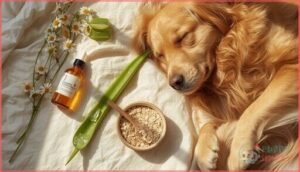
Bathing your pup with the right shampoo is a great start, but keeping sensitive skin calm takes a little more than bath time alone.
A few simple additions to your routine can make a real difference between constant scratching and a comfortable, happy dog.
Here are some of the most effective extra steps you can take.
Moisturizing and Leave-in Conditioners
Keeping dog’s skin moisturized between baths is just as important as the bath itself. Hypoallergenic leave-in conditioners deliver a real hydration boost while supporting barrier repair, helping block allergens before they cause trouble.
Look for natural ingredients like aloe vera and oatmeal for allergy relief and detangling benefits. With regular application frequency, your furry friend’s coat stays soft, calm, and manageable.
Diet and Supplements for Skin Health
What you put in your dog’s bowl matters just as much as what goes on its coat.
Omega‑3 Benefits show up fast — fish oil reduces skin inflammation within four to six weeks.
Fish oil’s omega-3s can visibly reduce your dog’s skin inflammation in as little as four to six weeks
Novel Protein Sources like duck or rabbit calm immune reactions from common allergens.
Zinc Supplementation, Probiotic Therapy, and Vitamin E Support round out a plant‑based formula built on natural ingredients, your sensitive pup genuinely needs.
Managing Environmental Allergens
What your dog eats builds the foundation, but the world outside your front door can undo it fast. Pollen, dust, and mold cling to fur like velcro.
Try Low‑Pollen Walks during off-peak hours, run HEPA Air Filtration in shared rooms, and wash Allergen‑Resistant Bedding weekly. Regular Vacuuming and Humidity Control around 40–50% round out your hypoallergenic allergy management and dog skin care solutions.
Maintaining Healthy Skin Between Baths

Bath time is only part of the picture regarding your sensitive pup’s skin health.
What happens between washes matters just as much — and the good news is, it doesn’t take much to stay on top of it.
Here are three simple habits that can make a real difference.
Regular Brushing and Coat Maintenance
Brushing your pup between baths isn’t just about looks — it’s one of the most effective grooming solutions for sensitive dogs. Aim for brushing frequency of 2–3 times per week using soft bristle tools that won’t irritate reactive skin.
Regular deshedding improves coat airflow management, spreads natural oils, and gives you a chance for quick skin spot checks to catch redness before it worsens.
Spot Cleaning for Irritation Relief
Sometimes a full bath isn’t what your pup needs — spot cleaning steps in beautifully for quick irritation relief. Use hypoallergenic Spot Wipes with soothing ingredients like aloe vera, or gentle Antiseptic Solutions diluted to safe concentrations to calm hot spots without over‑drying.
- Apply Cool Compresses for 15–20 minutes to reduce swelling
- Use Targeted Sprays once or twice daily after cleaning
- Stick to soft dabbing motions — never rub irritated skin
- Maintain Routine Frequency: clean problem areas after every outdoor walk
Monitoring for Signs of Skin Issues
Catching skin problems early makes all the difference for your allergy‑prone pup. Check these key signs daily:
| What to Watch | Why It Matters |
|---|---|
| Itching & licking patterns | Signals irritation or allergies |
| Redness & coat color changes | Early hot spot detection |
| Dryness & flaking | Damaged skin barrier warning |
| Pain response observation | Indicates possible infection |
Daily skin checks give you the upper hand before small issues become serious ones.
Frequently Asked Questions (FAQs)
What is a good hypoallergenic dog treat?
A good hypoallergenic dog treat uses Limited Ingredients, a Novel Protein like venison or duck, or Hydrolyzed Protein.
Avoid common Allergens, choose natural ingredients, and always use Gradual Introduction to protect your allergy-prone pup’s health.
How often should hypoallergenic shampoo be used?
Most dogs do well with a hypoallergenic dog shampoo bath every 3 to 4 weeks. Your vet can adjust that based on breed-specific intervals, skin condition, and seasonal bathing schedule.
Can hypoallergenic shampoos be used on puppies?
Yes — most hypoallergenic dog shampoos are safe for puppies over 6 weeks old. Their delicate skin pH and thin skin barrier make gentle, fragrance-free, vet-approved formulas the only smart choice.
Are hypoallergenic products safe for all breeds?
Not quite.
While hypoallergenic formulas suit most breeds, breed-specific sensitivities mean Bulldogs, Retrievers, and wrinkled breeds each respond differently.
Veterinary testing protocols help identify the right fit for your allergy-prone dog.
Do hypoallergenic shampoos interfere with flea treatments?
Most hypoallergenic dog shampoos won’t interfere with spot-on flea treatments. Their pH-balanced, sulfate-free formulas guarantee flea efficacy stays intact — just wait 48 hours after application before bathing your pup.
What certifications should hypoallergenic dog shampoos have?
Ironically, "hypoallergenic" isn’t legally defined — any brand can use it freely. Look for USDA Organic, Cruelty-Free, IFRA-Compliant, pH-Balanced, and Veterinary-Endorsed seals to actually confirm your pet shampoo’s safety and gentleness.
Conclusion
simplest change often delivers the biggest relief—and that’s exactly what thoughtful hypoallergenic dog skin care offers your sensitive pup.
Swapping one harsh shampoo for a gentle, pH-balanced formula with soothing oatmeal or aloe can quiet the scratching, restore a healthy coat, and give your dog real comfort between baths.
Watch for early signs, stay consistent with your routine, and trust what your dog’s skin is telling you.
Relief isn’t complicated—it just requires the right attention.
- https://southmiamivetsandpets.com/blog/1371074-the-best-grooming-treatments-for-pets-with-sensitive-skin
- https://hypoallergenicdog.pro/publ/managing_dog_allergies/best_hypoallergenic_dog_shampoos_complete_guide_for_allergy_sufferers/4-1-0-25
- https://www.houndsy.com/blogs/modern-tails/how-to-care-for-a-hypoallergenic-dog-a-comprehensive-guide-for-pet-owners
- https://www.akc.org/expert-advice/health/dog-skincare/
- https://canineboardinglodge.com.au/hypoallergenic-dog-grooming/