This site is supported by our readers. We may earn a commission, at no cost to you, if you purchase through links.
Your dog’s brain craves work just as much as their body craves exercise. Without regular mental challenges, even well-exercised dogs can develop anxiety, destructive behaviors, and cognitive decline.
That’s why dogs need puzzle toys for enrichment—these simple tools tap into your dog’s natural problem-solving instincts, transforming idle time into brain-building activities that keep them sharp, happy, and calm. Think of puzzle toys as a gym membership for your dog’s mind, strengthening neural pathways while preventing the boredom that leads to chewed furniture and excessive barking.
The right puzzle toy doesn’t just entertain your pup; it nurtures their cognitive health across every life stage, from playful puppies building new skills to senior dogs maintaining mental agility.
Table Of Contents
- Key Takeaways
- Why Dogs Need Puzzle Toys for Enrichment
- Key Benefits of Puzzle Toys for Dogs
- Choosing The Right Puzzle Toy for Your Dog
- Top Puzzle Toys for Dog Enrichment
- Frequently Asked Questions (FAQs)
- What are the benefits of puzzle toys for dogs?
- Why do dogs need enrichment toys?
- What are the 5 types of enrichment for dogs?
- Can puppies use puzzle toys safely?
- How often should I replace puzzle toys?
- What if my dog ignores puzzle toys?
- Are puzzle toys safe for aggressive chewers?
- Can multiple dogs share one puzzle toy?
- Conclusion
Key Takeaways
- Dogs need mental challenges just as much as physical exercise because without regular brain workouts, they develop anxiety, destructive behaviors, and cognitive decline that no amount of walking can fix.
- Puzzle toys tap into your dog’s hardwired foraging instincts, transforming idle time into problem-solving sessions that build neural pathways, reduce stress hormones, and prevent boredom-driven destruction like chewing and excessive barking.
- The right puzzle toy matches your dog’s age, size, breed traits, and skill level—start with challenges they can solve in two minutes to build confidence, then gradually increase difficulty as they hit 80 percent success rates.
- Rotating puzzle toys every two to four weeks keeps your dog engaged and prevents overstimulation, while slowing down fast eaters reduces bloating and turns mealtimes into enriching activities that last 30-plus minutes instead of two-minute gulps.
Why Dogs Need Puzzle Toys for Enrichment
Your dog’s brain needs a workout just as much as their body does. Without mental challenges, even the most well-exercised pup can develop stress, anxiety, and those frustrating behaviors that leave you wondering what went wrong.
Breeds like Australian Shepherds demand consistent attention through interactive games and problem-solving activities that keep their sharp minds engaged.
Here’s why puzzle toys aren’t just fun extras—they’re essential tools for your dog’s mental health and overall happiness.
The Importance of Mental Stimulation for Dogs
Mental stimulation engages your dog’s brain through problem solving and challenges that strengthen canine intelligence and brain health. Just like physical exercise tires muscles, puzzle toys work your dog’s mind, supporting cognitive development and mental wellness.
You’re building neural pathways, improving focus, and enhancing dog problem solving skills. The bottom line? Canine mental health depends on regular enrichment activities that keep those cognitive gears turning.
Without enough mental stimulation and enrichment, dogs can become bored and develop behavioral issues.
Preventing Boredom and Destructive Behaviors
Boredom fuels destructive behaviors like chewing, pacing, and excessive barking. When your dog lacks mental stimulation through interactive play and problem solving, those natural canine enrichment needs find unhealthy outlets.
Puzzle toys offer behavioral therapy by redirecting energy into productive challenges. Rotating interactive toys every three to seven days keeps boredom prevention fresh, giving your dog’s mind the canine mental health workout it craves.
Supporting Cognitive Development and Health
Beyond curbing unwanted habits, dog puzzle toys actively build your dog’s cognitive abilities. Problem solving exercises strengthen memory, sharpen attention, and boost canine cognitive development across all life stages.
Think of it as brain health insurance—regular mental stimulation promotes neuroplasticity, forming new neural pathways that support canine development. For senior dogs especially, cognitive training helps maintain mental wellness and slows age-related decline.
Encouraging Natural Foraging and Problem-Solving
Here’s the thing: your dog’s ancestors didn’t eat from bowls. They foraged, sniffed, and problem-solved to survive.
Your dog’s ancestors didn’t eat from bowls—they foraged, sniffed, and problem-solved to survive
Puzzle toys tap into that hardwired instinct, turning mealtime into interactive play that mirrors natural scavenging behaviors. When your dog nudges compartments or paws at treat-dispensing toys, they’re engaging canine cognition through foraging techniques—exactly what their brain craves for complete mental stimulation and enrichment.
Many of these benefits are supported by the value of foraging activities for dogs in promoting natural instincts and reducing anxiety.
Key Benefits of Puzzle Toys for Dogs
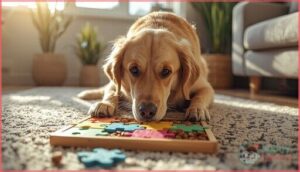
You already know puzzle toys keep your dog’s brain busy, but the perks go way beyond just passing the time. From calming anxious pups to slowing down speed-eaters, these toys work wonders for your dog’s physical and emotional health.
Here’s a closer look at the key benefits you can expect when you make puzzle toys part of your dog’s daily routine.
Reducing Stress and Anxiety
Puzzle toys offer powerful anxiety reduction by redirecting your dog’s nervous energy into problem-solving work. Here’s how they support canine mental health:
You can load a durable KONG toy with treats or peanut butter and freeze it to create hours of calming, focused activity for anxious dogs.
- Engaging puzzles lower cortisol and ease tense muscles, similar to how calming techniques reset arousal levels
- Regular use creates predictable routines that reduce uncertainty-driven stress
- Problem-solving triggers natural foraging behaviors, shifting anxious patterns toward exploratory play
This daily stress relief builds emotional balance over time.
Enhancing Overall Wellbeing and Happiness
When your dog works through mental challenges, you’re building more than skills—you’re nurturing genuine canine happiness. Pet mental wellbeing thrives on variety and purpose, not just kibble and walks.
Regular mental stimulation creates confident, content dogs who sleep better and approach life with brighter energy.
| Daily Activity | Impact on Dog Wellness |
|---|---|
| Puzzle toys 10–15 min | Boosts mood, reduces anxiety |
| Varied enrichment tasks | Increases life satisfaction scores |
| Problem-solving games | Enhances pet enrichment and vitality |
Promoting Slow Feeding and Healthy Eating Habits
Frequently, treat-dispensing toys and slow feeders turn mealtimes into beneficial enrichment sessions. Food puzzle benefits extend beyond fun—puzzles stretch a two-minute bowl gulp into eight minutes of steady eating, supporting healthy digestion and nutrient absorption.
Slow eating mechanisms reduce bloat risk, while meal portioning through food-dispensing toys helps maintain ideal weight. You’re building better eating habits with every puzzle-based meal.
Strengthening Bond Between Dog and Owner
Collaborative puzzle solving transforms you from food provider into trusted teammate. When you guide your dog through shared learning moments, those bonding exercises create canine connection rooted in mutual achievement.
Playtime activities centered on dog enrichment foster owner interaction that’s purposeful, not just passive. You’re practicing dog training while strengthening dog behavior patterns—and your dog sees you as the one who makes good things happen, which bolsters canine mental health through secure attachment.
Choosing The Right Puzzle Toy for Your Dog
Not all puzzle toys are created equal, and the wrong choice can leave your dog frustrated or bored. The key is matching the toy to your dog’s unique needs, abilities, and personality.
Here’s what to keep in mind when you’re browsing the options.
Considering Age, Size, and Breed
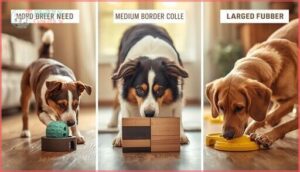
Not every dog enrichment strategy works the same. Size matters too—small breeds need low-height mats they can reach, and large dogs require sturdy materials.
Your puppy’s development needs smaller puzzle toys with gentler challenges, while seniors with arthritis benefit from easier openings.
Breed traits also shape canine learning: herding dogs crave fast-paced problem-solving, while toy breeds prefer frequent, gentle rewards that support dog mental health and natural dog behavior.
Matching Puzzle Difficulty to Skill Level
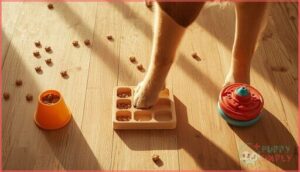
Start with a puzzle that builds confidence within two minutes—think familiar shapes and scents. Track your dog’s success rate, then increase difficulty only after they hit 80 percent in three consecutive tries.
Puzzle gradation matters: add compartments one at a time to extend solving time by 20 to 40 percent. Skill assessment guides cognitive challenges, supporting canine learning and problem solving with treat dispensing toys matched to your dog’s intelligence.
Factoring in Your Dog’s Play Style and Preferences

So once your dog’s hitting their puzzle targets, match the toy to their play personality. Chasers crave bright, fast-moving treat-dispensing toys with quick rewards. Foragers prefer layered compartments and scent challenges in interactive dog toys. Chewers need durable rubber puzzle toys that withstand gnawing while supporting dog mental health. Cuddlers thrive with plush, gentle options. Social dogs shine during cooperative dog enrichment games with you.
Rotating Toys for Ongoing Engagement
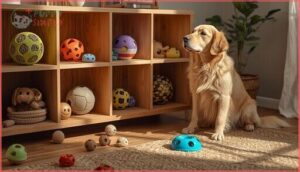
Here’s how Toy Rotation Benefits keep your dog engaged: swap puzzle toys every two to four weeks to maintain novelty and curiosity. Treat Dispensing Toys stay fresh when they’re not constant fixtures.
This Toy Refreshment Techniques approach prevents overstimulation, fosters ongoing learning through varied Interactive Dog Toys, and strengthens Dog Mental Health. Rotation Schedules match your dog’s energy—shorter cycles for puppies, longer for selective players.
Top Puzzle Toys for Dog Enrichment
So here’s the thing: not all puzzle toys are created equal. Some are built for beginners, others for canine Einsteins, and a few strike that perfect balance between challenge and fun.
Let’s look at five standout options that deliver real enrichment without the frustration.
1. Outward Hound Dog Brick Puzzle Toy
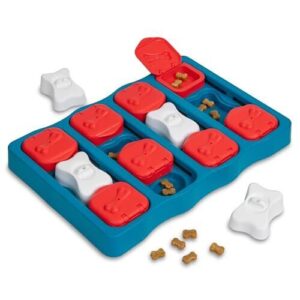
If your dog’s ready to level up from basic treat-dispensing toys, the Outward Hound Dog Brick might be your next move. This intermediate puzzle features three different hiding spots—sliding doors, flip-up lids, and removable bone pieces—so your pup can’t just muscle through it.
The variety keeps them engaged across multiple play sessions. It holds about 3/4 cup of kibble, works well for dogs over 15 pounds, and doubles as a slow feeder.
Just supervise playtime, since those white bone pieces can become choking hazards if detached.
| Best For | Dogs who’ve outgrown basic treat toys and need a step-up challenge that keeps them mentally engaged without being impossible. |
|---|---|
| Material | Plastic |
| Age Range | All life stages |
| Easy to Clean | Yes |
| Durability | Durable but not indestructible |
| Weight | 1.2 pounds |
| Primary Use | Treat puzzle and slow feeder |
| Additional Features |
|
- Three different puzzle types in one toy (sliding doors, flip lids, removable bones) keep dogs interested across multiple sessions
- Doubles as a slow feeder for fast eaters while holding up to 3/4 cup of kibble
- Works for a wide range of dog sizes and made from food-safe, BPA-free materials
- Requires supervision since white bone pieces can detach and become choking hazards
- Flaps pull off easily and it’s not built for aggressive chewers
- May be too simple for very smart dogs or those experienced with puzzle toys
2. Paw5 Snuffle Mat For Dogs
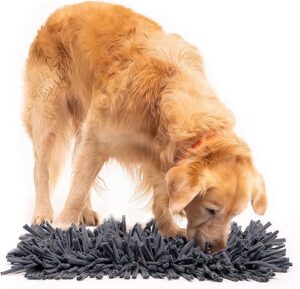
For dogs who live to sniff out their next meal, the Paw5 Wooly Snuffle Mat engages that natural foraging drive. The 12-by-18-inch mat uses long woolly strands to hide kibble or treats, turning mealtime into a full-blown scavenger hunt.
It’s machine washable, features non-slip backing, and works for most breeds—just scatter treats deeper in the fibers to ramp up the challenge.
Plus, it slows down speed eaters, reducing bloating and that post-meal gulping you’d rather avoid.
| Best For | Dogs who eat too quickly or need mental stimulation through natural foraging activities. |
|---|---|
| Material | Cotton |
| Age Range | All life stages |
| Easy to Clean | Hand or machine washable |
| Durability | Durable |
| Weight | 9.2 ounces |
| Primary Use | Snuffle mat and foraging |
| Additional Features |
|
- Machine washable and made from non-toxic organic cotton that’s safe and easy to maintain
- Slows down fast eaters, which helps prevent bloating, vomiting, and gulping issues
- Engages dogs’ natural sniffing instincts while doubling as an interactive toy or bed
- Takes significant time to prepare by hiding treats and clean after each use
- Can be pricey compared to standard feeding mats or bowls
- Requires air drying after washing, which can take a while before it’s ready again
3. Woof Pupsicle Interactive Dog Toy
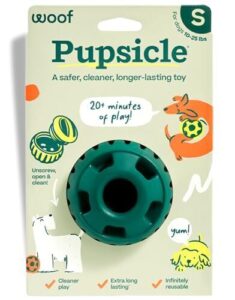
If your pup often inhales meals in seconds, the Woof Pupsicle keeps them busy for 30-plus minutes. This natural rubber toy opens in the middle for mess-free filling with kibble, soft treats, or pre-made pops.
The weighted base prevents tipping, and drool-catching slots keep floors cleaner. It’s dishwasher safe, non-toxic, and comes in sizes for small dogs (around 2.9 inches) up to extra-large breeds.
Just fill, freeze if you like, and watch your dog work for every lick.
| Best For | Dogs who eat too fast or need mental stimulation to stay calm and entertained throughout the day. |
|---|---|
| Material | Rubber |
| Age Range | All life stages |
| Easy to Clean | Yes |
| Durability | Durable natural rubber |
| Weight | 5.92 ounces |
| Primary Use | Interactive treat dispenser |
| Additional Features |
|
- Keeps dogs occupied for 30 minutes, reducing boredom and anxiety
- Easy to fill and clean with a middle opening that’s dishwasher safe
- Weighted base and drool-catching slots prevent mess and tipping
- Pricier than most standard dog toys on the market
- Some dogs might chew through it faster than expected
- The rubber pieces can be tricky to screw together tightly
4. Woof Pupsicle Dog Treats
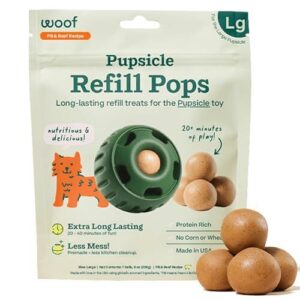
Shelf-stable and ready to go, these pre-made pops pair perfectly with the Pupsicle toy for instant enrichment. Each treat blends beef or chicken with peanut butter and beef tallow, lasting 30-plus minutes of licking and chewing.
Small pops deliver around 90 calories, while large ones offer 180 for bigger dogs. They’re made in the USA with high-quality ingredients and no refrigeration needed.
The downside? They can get pricey for daily use, and some dogs ignore them or find the texture too sticky.
| Best For | Dog owners who want a mess-free, long-lasting treat to keep their pup entertained during hikes, car rides, or when they need some quiet time at home. |
|---|---|
| Material | N/A (Consumable) |
| Age Range | All life stages |
| Easy to Clean | N/A |
| Durability | Long-lasting treats |
| Weight | N/A |
| Primary Use | Long-lasting dog treats |
| Additional Features |
|
- Keeps dogs busy for 30 minutes with high-quality ingredients like peanut butter and beef
- Shelf-stable and pre-made, so no prep work or refrigeration needed
- Works for all dog sizes and life stages
- Gets expensive if you’re using them daily
- Some dogs lose interest or find the texture too sticky
- Can become a choking hazard or paste-like mess without the Pupsicle toy
5. Woof Pupsicle Treat Mold
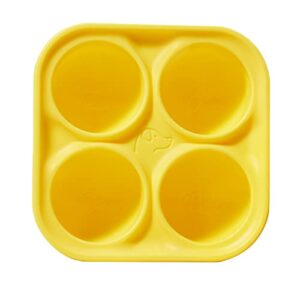
Making your own frozen treats just got easier. This BPA-free silicone mold lets you fill four cavities with wet food, broth, yogurt, or peanut butter, then freeze them for the Pupsicle toy. Each pop takes four to six hours to solidify and works out to about 1-2 ounces.
It’s dishwasher safe, flexible, and color-coded to match your toy size. The catch? It’s a bit flimsy when full, so you’ll need steady hands getting it into the freezer without spilling.
| Best For | Dog owners who want to save money on treats while customizing healthy frozen snacks for their pup’s Pupsicle toy. |
|---|---|
| Material | Silicone |
| Age Range | All life stages |
| Easy to Clean | Dishwasher safe |
| Durability | Reusable |
| Weight | 1.6 ounces |
| Primary Use | Treat mold for Pupsicle |
| Additional Features |
|
- Dishwasher safe and reusable, making cleanup a breeze
- Works with a variety of ingredients like wet food, broth, yogurt, and peanut butter so you can tailor treats to your dog’s preferences
- Color-coded to match Pupsicle toy sizes for easy pairing
- Flimsy material makes it tricky to carry when full without spilling
- Only makes four treats at a time, which might not be enough if you have multiple dogs or want to batch-prep
- No larger size option available for those who need more capacity
Frequently Asked Questions (FAQs)
What are the benefits of puzzle toys for dogs?
Your dog’s brain crave a workout just like their body does. Puzzle toys deliver exactly that—boosting mental sharpness, calming anxiety, slowing mealtime munching, and strengthening the bond you share through play.
Why do dogs need enrichment toys?
Think of your dog’s brain like a muscle—it needs regular workouts to stay sharp. Enrichment toys channel natural instincts, prevent boredom-fueled destruction, and offer anxiety-soothing challenges that tire minds as effectively as physical exercise tires bodies.
What are the 5 types of enrichment for dogs?
Enrichment falls into five categories: social (interactions with people and pets), occupational (training and jobs), physical (exercise and play), sensory (scents and textures), and nutritional (puzzle feeders and foraging games).
Can puppies use puzzle toys safely?
Yes, puppies can enjoy puzzle toys safely when you supervise play and choose age-appropriate designs. Start with simple challenges and always inspect toys for loose parts. Match the difficulty to your puppy’s developing skills.
How often should I replace puzzle toys?
It depends on the material. Plush toys wear out fastest, so swap them every two to four weeks.
Rubber puzzle toys last longer—usually two to six months with regular cleaning and inspection.
What if my dog ignores puzzle toys?
Like trying to sell a dog on a cold bath, puzzle disinterest happens.
Start with sniffing-based toys, use high-value treats, and keep sessions short. Adjust difficulty, reduce distractions, and consider consulting a trainer if avoidance persists.
Are puzzle toys safe for aggressive chewers?
They can be, but you’ll need tougher materials like high-grade rubber or reinforced nylon.
Always supervise early sessions, inspect for cracks regularly, and choose toys much larger than your dog’s muzzle.
Can multiple dogs share one puzzle toy?
Ironically, dogs who don’t always share their dinner bowls can actually share puzzle toys—but only with supervision.
Watch for resource guarding, provide enough space, and consider using separate puzzles to keep playtime peaceful and productive.
Conclusion
Remember the old saying: an idle mind is the devil’s playground. For your dog, that playground is your couch, your shoes, and your sanity.
Understanding why dogs need puzzle toys for enrichment isn’t just about preventing destruction—it’s about honoring their intelligence and giving their sharp brains the challenges they deserve.
So grab a puzzle toy, watch those problem-solving skills shine, and enjoy the calm, happy companion that comes with a mentally satisfied pup.