This site is supported by our readers. We may earn a commission, at no cost to you, if you purchase through links.

Your dog drops a paw on your knee, and somehow it works every time—you stop what you’re doing and give them exactly what they want. That’s not a coincidence. Dogs are remarkably good at reading people, and that gentle paw press is one of their most refined communication tools.
The behavior starts in puppyhood, when pawing triggers milk flow and physical contact means survival. But as dogs grow, pawing evolves into something far more nuanced—a vocabulary built through repetition, timing, and your responses. Hunger, anxiety, boredom, affection—a paw can carry all of it.
Knowing the difference changes everything about how you respond.
Table Of Contents
- Key Takeaways
- Why Dogs Give You Their Paw
- They Want Something From You
- Pawing Can Show Affection
- Pawing May Signal Stress
- Responding to Pawing Correctly
- Frequently Asked Questions (FAQs)
- Why do dogs paw at you?
- Why does my dog paw at my legs?
- Why is my dog pawing me for attention?
- Why does my dog give me a paw without asking?
- What does it mean when a dog gives you their paw without you asking?
- Why do dogs extend their paws?
- Why do dogs give their paws without asking?
- What if a dog puts a paw on You?
- Why does my dog give me a paw when I eat?
- Do dogs paw?
- Conclusion
Key Takeaways
- Your dog’s pawing isn’t random — it started as a survival instinct in puppyhood and was shaped into a habit by every reaction you’ve ever given it.
- One paw tap can mean a dozen different things, from "I’m hungry" to "I’m scared," so the context around the gesture matters more than the gesture itself.
- How you respond to pawing is what teaches your dog to keep doing it, so rewarding calm behavior and staying consistent is the only way to shape it for the better.
- When pawing feels sudden or frantic — especially paired with panting or other physical changes — it can be a health or anxiety signal worth taking seriously.
Why Dogs Give You Their Paw

When your dog reaches out and taps you with their paw, there’s always a reason behind it. That gesture didn’t appear out of nowhere.
Dogs have actually developed this habit because they learned it gets a response from you — the full story behind why dogs offer their paw unprompted goes deeper than most people expect.
Its roots trace back to puppyhood, and it’s been shaped by every response you’ve ever given. This behavior reflects a history of interaction and reinforcement.
Learned Communication Cue
When your dog taps your hand, it’s not random — that’s a learned communication cue shaped by reinforcement training and behavioral conditioning. Through signal shaping and reinforcement timing, your dog discovered that pawing gets a response.
Owner consistency strengthens the dog paw request over time, while cue generalization spreads it to new situations. Without consistency, cue extinction can weaken the behavior just as fast.
Early Puppy Instinct
Before your dog ever learned that pawing gets your attention, that behavior was already hardwired in. Through milk kneading against their mother, puppies discovered that pressing a paw forward brings comfort and nourishment. Litter bonding, puppy play stimulation, and exploratory pawing during the fear window all deepened this instinct. It’s the most natural form of communication they’ve ever known — long before you entered the picture.
Before you ever appeared, puppies learned that a paw pressed forward brings comfort
Early development benefits from the critical socialization period between 4 and 12 weeks.
Human Response Reinforcement
Here’s the thing — your reaction teaches your dog everything. The moment you make eye contact, smile, or reach out after that paw lands, you’re reinforcing the behavior without realizing it. Immediate Praise Timing and a Consistent Reward Schedule shape this fast.
- Selective Attention Delivery strengthens the habit
- Variable Reinforcement makes it surprisingly hard to stop
- Extinction Strategies require patience and consistency
Context Matters Most
But here’s what ties it all together — context. The same paw tap can mean something totally different depending on what’s happening around you.
Pre-paw Timing and Environmental Triggers—like a leash, doorway, or your seated posture—reveal a lot about a dog’s intent before contact. Goal-oriented Cueing, Owner Posture, and Situational Expectation further shape pawing behavior, whether it’s seeking attention, signaling anxiety cues, comfort-seeking, or simply expressing canine body language.
They Want Something From You
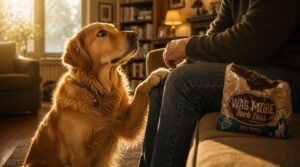
Most of the time, when your dog taps you with a paw, there’s a pretty clear reason behind it. Dogs are surprisingly good at figuring out what works to get what they need from you.
Here are some of the most common things your dog is actually asking for.
Asking for Attention
Sometimes your dog isn’t hungry or scared — they just want you. That gentle tap on your leg? It’s classic attention-seeking behavior, and it works because you respond.
Watch for these Passive Request Patterns:
- A soft paw press when you stop petting
- Subtle Cue Escalation — one tap, then another, then a stare
- Proximity Dependent Pawing that only happens when you’re within reach
Owner Availability Sensitivity drives this. They want your attention most when you’re right there.
When separation feels hard, exploring whether dog crates help anxious dogs can reveal simple ways to give them a sense of security even when you step away.
Requesting Food or Treats
When your dog’s paw lands on your knee near the kitchen, that is Paw Triggered Conditioning at work — they have learned that pawing in the right spot gets food. Timing Cues and Location Preference sharpen this fast. Here’s how food motivation shows up:
| Signal | What It Means | Your Response |
|---|---|---|
| Paw near treat jar | Treat Anticipation is active | Redirect to "sit" first |
| Paw plus steady stare | Direct food request behavior in dogs | Reward calm, not the paw |
| Pawing after meals | They are hungry or testing limits | Stick to scheduled feeding |
| Kitchen-area pawing | Location Preference for food begging | Move, don’t reward placement |
| Repeated paw taps | Owner Response Patterns are being tested | Stay consistent every time |
Needing to Go Outside
When your dog paws at the back door, bladder urgency is usually the message. Post-nap potty needs are especially common — rest fills the bladder fast.
Door-paw timing often tightens after routine disruption, like a late walk. Weather exit cues, such as daylight or familiar outdoor sounds, can trigger it too.
For potty-trained dogs, this pawing is one of the clearest potty training signals they’ll give you.
Wanting Playtime
A quick paw to the knee is your dog’s version of "drop everything — let’s go." It’s classic play behavior in dogs: when that Energy Surge hits, they use pawing to kick things off.
Watch for the Play Bow Cue, a wagging tail, or Toy Offering as confirmation. They’re proposing Turn Taking and a Game Restart — pure dog playfulness asking you to join in.
Asking for More Petting
You stop petting, and a paw lands right back on your hand. That’s paw timing cues in action — your dog’s way of saying "don’t stop." Dogs are surprisingly specific about this. They use targeted body zones and pressure preferences to guide your hand exactly where they want it.
Read those interaction pause signals, and you’ll keep the petting rhythm going just right.
Pawing Can Show Affection

Not every paw tap is a request — sometimes it’s just your dog saying "I love you."
Dogs show affection in quiet, physical ways, and pawing is one of the most direct ways.
Here’s what that gentle gesture is really telling you.
Bonding With Caregivers
That paw resting on your knee isn’t random — it’s your dog choosing you. Oxytocin exchange happens on both sides, so you both feel that warm rush of connection.
Through shared routines and predictable timing, your dog learns you’re safe. This reciprocal signaling and comfortable proximity quietly strengthen the owner-dog bond, building real dog attachment rooted in social bonding and trust.
Seeking Gentle Touch
Your dog’s gentle paw placement is full of meaning. Those light pressure signals — a soft touch, balanced posture, relaxed ears — are quiet consent recognition cues. Your dog is practically petting you back.
Watch for these contextual comfort triggers: calm settings, soft timing cues, a body that isn’t tense. That touch is asking for physical contact, comfort and reassurance, and nothing more complicated than closeness.
Eye Contact Signals
That soft paw often comes paired with something even more telling — your dog looking straight into your eyes. Mutual gaze isn’t random. It’s active trust signaling, a confidence display that says, "I feel safe with you."
In canine communication, gaze duration matters:
- A steady look into your eyes signals deep attachment
- Brief, soft glances work as a turn-taking cue during interaction
- Eye contact paired with pawing amplifies the affectionate message in dog body language
Comfort and Closeness
Beyond eye contact, there’s something even quieter at play — body contact. When your dog settles beside you, presses into your leg, and drops a paw across your hand, that’s dog affection in its simplest form.
Calm resting and relaxed proximity let them soak in your warmth and familiar scent. This social bonding through closeness deepens the owner-dog bond one quiet moment at a time.
Trust-based Behavior
That quiet paw-on-your-hand moment isn’t random — it’s trust in action. Dogs only offer safe physical contact when they feel calm and secure around you. Predictable handling and consistent reward timing teach them you’re safe to reach toward.
Think of it like a handshake trick for dogs: they extend a paw because the owner-dog bond has already told them you’ll respond gently.
Pawing May Signal Stress

Not every paw tap is a happy one. Sometimes your dog is reaching out because something feels wrong — and they’re counting on you to notice.
Here are a few situations where pawing is really a stress signal in disguise.
Fear or Anxiety
Sometimes pawing isn’t about love or hunger — it’s your dog saying "I’m scared." Watch for physiological arousal signs: panting, trembling, and frantic pacing behavior.
These dog anxiety signals often pair with avoidance patterns and escape urges during thunderstorms or vet visits. Anticipatory tension builds fast, and your dog turns to you first.
Recognizing these stress indicators in dogs early makes all the difference.
Separation Worries
Your dog doesn’t wait until you’re gone to start worried. Departure Cues — grabbing your keys, lacing your shoes — trigger Predictive Pawing well before you reach the door.
This Shadowing Behavior, where your dog follows your every move, is classic separation anxiety. Anxiety Contagion makes it worse; your own rushed energy feeds theirs.
Recognizing these separation anxiety cues early helps you respond before the spiral starts.
Thunderstorm Reactions
Thunder-Linked Pawing is one of the clearest dog anxiety cues you’ll notice. When storm sounds hit, your dog’s elevated stress hormones cause a pawing frequency spike—they’re literally reaching for you.
This shadow-seeking behavior, pressing close and tapping your leg, signals stressful pawing and real fear.
A soft calming music response can help soothe an anxious dog showing these comfort-seeking in pets moments.
Needing Reassurance
Your dog’s paw on your arm isn’t random — it’s a full-on anxiety reassurance loop in action. These attachment insecurity cues show your dog needs emotional grounding, not just contact.
Watch for these signs of an anxious dog:
- Repeated pawing paired with trembling or panting
- Validation-seeking through steady eye contact
- Attention-seeking behavior during unpredictable situations
- Safety-behavior signals like pressing into your body
This uncertainty coping tells you everything.
Asking for Space
Not every paw tap means ‘more, please’. Sometimes it’s the opposite — your dog is quietly saying, ‘I need a little room’.
| Paw Distance Cue | What It Means |
|---|---|
| Paw + head turn away | Pause Signal for less contact |
| Low tail + paw touch | Canine stress cue, unmet need for space |
| Paw then backing up | Environmental Trigger Signal, Space Request Timing |
Watch for Body Cue Pairing: insecure dogs show low tail, lip licks, or stiffening right after pawing. Respect it early.
Responding to Pawing Correctly
Now that you understand why your dog paws at you, the real question is: what do you do about it? How you respond shapes the habit, for better or worse.
Here are a few simple ways to handle it right.
Reward Calm Behavior
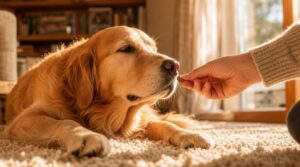
Rewarding calm behavior is simpler than it sounds — timing is everything. The moment your dog’s body softens, reward it within a second or two. That’s Timing Reinforcement in action.
- Use Low-Value Treats to avoid spiking excitement
- Practice Gradual Reward Fading as calm becomes consistent
- Stay aware of Environmental Thresholds — start in quiet spaces
- Keep Neutral Body Language when delivering rewards
- Withhold rewards if pawing escalates
Teach Alternate Cues
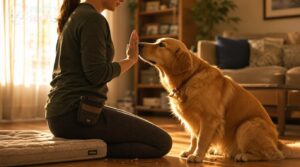
Once calm behavior clicks, the next step is giving your pup something better to do. That’s where teaching alternate cues comes in.
Hand target training is a great example—your dog learns to touch its nose to your palm instead of pawing. Use opposite cue pairing, prompt fading, and generalization practice across different rooms and situations so the behavioral cue sticks everywhere.
| Cue Type | Replacement Behavior | Training Method |
|---|---|---|
| Hand target | Nose to palm | Positive reinforcement |
| Mat touch | Paw on mat | Prompt fading |
| Sit cue | Calm sit | Cue specificity |
Avoid Mixed Signals
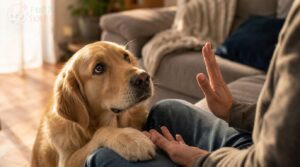
Alternate cues only work if your response stays consistent. Mixed signals are one of the biggest reasons dog pawing behavior persists longer than it should. If you sometimes reward attention-seeking behavior with petting and other times push your dog away, they’ll just keep pawing to figure out the rule.
Consistent timing, uniform owner response, and body language sync give your dog the clear cue hierarchy they need.
Set Gentle Boundaries

Consistency sets the stage, but gentle boundaries seal the deal. Think of it as consent-based petting — you decide when touch happens, not the paw.
Try these reward-based training steps:
- Pause interaction the moment dog pawing behavior starts
- Resume only when four-paws-on-the-floor calm returns
- Use a calm wait cue as a clear alternative
- Redirect with a toy or nose-targeting job
- Adjust body positioning slightly away to lower intensity
Watch for Health Changes
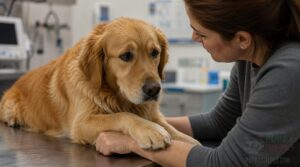
Sometimes pawing isn’t about attention or affection — it can signal stress or illness. Sudden, constant pawing paired with appetite changes, mobility issues, respiratory signs, skin alerts, or elimination issues points to medical causes worth taking seriously. These dog health concerns — pawing included — deserve a closer look.
If something feels off, talk to a vet online or in person before it worsens.
Frequently Asked Questions (FAQs)
Why do dogs paw at you?
Your dog’s pawing is a mix of instinct and learned behavior — a form of dog communication that blends evolutionary roots with social bonding.
It’s their clearest body signal for connection.
Why does my dog paw at my legs?
Your dog pawing at your legs is basically their whole vocabulary in one gesture.
This action combines attention-seeking behavior, dog communication, and canine body signals, all packed into a single tap.
Why is my dog pawing me for attention?
Your dog’s pawing is a classic attention-seeking behavior. They’ve learned that a well-timed paw gets results — your eyes, your hands, your presence. It’s their simplest Social Attachment Signal, and honestly, it works.
Why does my dog give me a paw without asking?
Your dog gives you their paw without asking because it has become a behavioral habit—an instinctive contact rooted in owner predictability.
That spontaneous solicitation signals pure dog affection through practiced pawing behavior.
What does it mean when a dog gives you their paw without you asking?
That gentle paw landing on your lap? It’s your dog’s way of saying, "Hey, I need you right now."
Whether it’s seeking attention, affection, or comfort, dog pawing is purposeful communication.
Why do dogs extend their paws?
Dogs extend their paws as a natural, non-verbal gesture rooted in Evolutionary Origins — a built-in form of touch-based communication.
This behavior is shaped by instinct, Hormonal Feedback, Breed Tendencies, and reinforced through Training Contexts over time.
Why do dogs give their paws without asking?
Your pup’s unsolicited paw access touches evolutionary roots — a neurological trigger wired from birth.
Breed variations and owner personality shape how often it happens, but the message is always the same: ‘Hey, I need you.’
What if a dog puts a paw on You?
When a paw lands on you, it’s your dog’s version of a tap on the shoulder — seeking attention or sharing affection.
This gesture may also quietly signal stress through body language only you can decode.
Why does my dog give me a paw when I eat?
Your dog’s timing is no coincidence. That paw tap during dinner is a hunger cue — predictive pawing rooted in meal timing anticipation.
You fed them once, and now the reward cycle keeps it going.
Do dogs paw?
Yes, dog pawing is completely natural.
It’s a mix of evolutionary pawing, instinctual behavior, and attention-seeking behavior — a simple but powerful dog gesture your pup uses to connect, request, or reassure itself.
Conclusion
That paw on your knee is a small gesture with a big voice. Once you understand why dogs give you their paw—whether they’re asking for dinner, craving closeness, or quietly saying they’re scared—your whole relationship shifts.
You stop guessing and start listening. Every press, nudge, or tap becomes a clear signal rather than a mystery.
Pay attention to the timing, the context, and your dog’s eyes. They’ve been talking all along.
- https://www.ellevetsciences.com/pet-care/why-do-dogs-give-you-their-paw-without-being-asked/?srsltid=AfmBOopEeVac7pnbaeBMzN6okgul5AeADAGVQl9DkfASpnG_FE6MTnPx
- https://canidae.com/blog/how-dogs-use-their-paws-to-communicate
- https://www.petmd.com/dog/behavior/why-do-dogs-put-their-paws-on-people
- https://k9maniadogtraining.com/why-do-dogs-put-their-paw-on-you/
- https://petpads.net/blogs/news/understanding-your-pets-behavior-what-your-dogs-pawing-and-scratching-mean?srsltid=AfmBOoqTyk1xFbSK4tL5LXUGCD_sc0hwBikXVcT_xz31pQbx9xjMzhL6