This site is supported by our readers. We may earn a commission, at no cost to you, if you purchase through links.
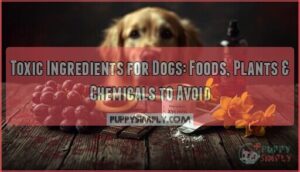
Every year, the ASPCA Animal Poison Control Center receives over 400,000 calls about pets exposed to toxic substances—and dogs account for the overwhelming majority. What’s striking isn’t the obvious culprits like rat poison or bleach.
It’s the everyday items: a handful of grapes left on the counter, a sugar-free peanut butter used in a homemade treat, a bouquet of daffodils your dog nosed through while you weren’t looking.
Toxic ingredients for dogs hide in places most pet owners never think to check. Knowing exactly what to avoid—and why certain substances trigger such severe reactions—can be the difference between a close call and a tragedy.
Table Of Contents
- Key Takeaways
- Common Foods Toxic to Dogs
- Dangerous Sweeteners and Additives
- Chocolate and Caffeine Hazards
- Toxic Raw and Cooked Ingredients
- Hazardous Household Substances
- Poisonous Plants for Dogs
- Risky Medications and Chemicals
- Signs of Toxic Ingredient Exposure
- Prevention and Emergency Actions
- Frequently Asked Questions (FAQs)
- Conclusion
Key Takeaways
- Everyday kitchen staples like grapes, xylitol-sweetened peanut butter, and garlic are among the most dangerous toxins for dogs — far more likely to cause harm than obvious hazards like bleach or rat poison.
- Speed matters: xylitol can trigger seizures within 30 minutes, theobromine lingers for up to 72 hours, and antifreeze damage becomes irreversible if the antidote isn’t given within 8–12 hours.
- Your dog’s size and breed amplify every risk — a small dog can hit a lethal dose from a single grape or two sticks of sugar-free gum, and herding breeds with the MDR1 gene mutation process certain substances in ways that make standard toxicity thresholds dangerously misleading.
- Prevention is mostly about storage: locking cabinets, elevated shelves, sealed containers, and knowing the Pet Poison Helpline number (855-764-7661) before you ever need it can be the difference between a scare and a tragedy.
Common Foods Toxic to Dogs
Some of the most dangerous things for your dog aren’t found in the medicine cabinet — they’re sitting right on your kitchen counter.
From grapes to garlic, common kitchen foods that are toxic to dogs might surprise you — especially since many seem completely harmless.
Everyday foods that seem harmless, or even healthy, can trigger serious reactions ranging from kidney failure to seizures.
Here’s what you need to know about the most common culprits.
Grapes and Raisins
Even a single grape can trigger life‑threatening pet poisoning — and that’s not an exaggeration. Tartaric acid toxicity is the culprit, damaging kidney cells directly, because dogs can’t clear organic acids efficiently.
- Kidney failure timeline: symptoms appear within 24–72 hours
- Dose thresholds: raisins toxic at just 2.8 g/kg
- Early clinical signs: vomiting, lethargy, increased thirst
- Treatment protocol: IV fluids within 48 hours are critical
Prompt veterinary care is essential after any grape ingestion. veterinary care after ingestion.
Avocados
Avocados are a bit more nuanced than grapes. The real canine health risk here is persin, a fungicidal toxin concentrated most heavily in the peel — up to 720 micrograms per gram — with lower levels in the flesh.
Small amounts of ripe avocado are unlikely to cause serious pet poisoning, but the pit is a separate concern entirely: pit blockage risks are real, often requiring surgery. Veterinary experts recommend following avocado safe portion guidelines to keep intake within safe limits.
Cherries and Cherry Pits
Cherries are one of those toxic foods where the danger hides in the details. The flesh itself is mostly fine — size-based tolerance means a medium-sized dog can safely enjoy three cherries occasionally.
The real canine health risk is pit chewing risks: chewed pits trigger cyanide release, cutting off cellular oxygen. Whole pits create choking hazards and may require emergency X-ray detection to locate blockages.
Onions and Garlic
Unlike cherry pits, onions and garlic work silently — their organosulfur compounds attach to your dog’s red blood cells, triggering oxidative hemolysis, meaning the immune system destroys those cells outright.
Dose dose thresholds are low: even 0.5% of body weight in onions causes poisoning.
Delayed anemia signs often appear days later, making early veterinary care and prompt veterinary treatment easy to miss without bloodwork.
Mushrooms (Especially Wild Varieties)
Wild mushrooms represent one of the most unpredictable pet health risks in your backyard. Amatoxin risks are severe — species like Amanita phalloides can trigger fatal liver failure within 48 hours. Watch for these warning signs after any mushroom exposure:
- Drooling or vomiting (muscarinic effects)
- Tremors or seizures (isoxazole neurology)
- Restlessness or disorientation (psilocybin symptoms)
Removing every fungus you spot — immediately.
Macadamia Nuts, Walnuts, Almonds, Pistachios
Tree nuts are a quiet danger hiding in your pantry. Each type carries its own Pet Health Risks and Food Toxicity profile — and the Symptom Onset Timeline can catch you off guard.
| Nut | Primary Risk |
|---|---|
| Macadamia | Weakness, hyperthermia within 12 hours |
| Walnut (moldy) | Seizures from mycotoxins — harmful fungal compounds |
| Almond | Choking, pancreatitis |
| Pistachio | Liver damage, intestinal blockage |
| All varieties | Pancreatitis from high fat content |
Toxic Dose Range starts as low as 1–2 g per kilogram for macadamias. Storage Safety Tips: airtight containers, high shelves. If ingested, Veterinary Emergency Care and activated charcoal are standard Treatment Protocols.
Dangerous Sweeteners and Additives

Sweeteners and additives hide in more places than you’d expect — not just candy, but peanut butters, protein bars, and "sugar-free" snacks you might share without a second thought.
Some of these ingredients trigger serious, fast-moving reactions in dogs, even in small amounts.
Here’s what you need to know before your dog gets into something that looks harmless.
Xylitol
Xylitol is one of the deceptive toxic foods hiding in plain sight — it’s in sugar-free gum, some peanut butters, and even toothpaste.
Even a small amount can be fatal, so checking ingredient labels before sharing any snack is essential — safe homemade dog treat recipes let you control exactly what goes into every bite.
For dog safety, this matters enormously: xylitol triggers a sudden insulin surge that crashes blood sugar fast. Hypoglycemia symptoms like staggering and seizures can appear within 30 minutes. Higher doses risk liver failure. This is a veterinary emergency requiring immediate treatment protocol.
Artificial Sweeteners (Other Than Xylitol)
While xylitol gets most of the attention, other artificial sweeteners deserve your awareness too. Sucralose toxicity and aspartame risks in dogs are still being studied, but saccharin hazards and acesulfame potassium dangers have shown gastrointestinal upset in some animals.
Monk fruit misconceptions are common — many assume it’s safe, but processed blends often contain added ingredients. For canine nutrition and pet food safety, always read the full label.
Candy and Licorice
Candy might seem harmless, but even a few pieces can quietly threaten your dog’s health.
Hard candy choking is a real emergency — dogs gulp without thinking.
Black licorice brings glycyrrhizin toxicity, which disrupts heart rhythm and drops potassium, making licorice heart effects especially dangerous for dogs with existing conditions.
Sugar alcohol diarrhea and xylitol candy emergencies compound the risk.
Keep all candy out of reach.
Ice Cream and High-Sugar Treats
Ice cream looks like a small indulgence, but it hits dogs hard from multiple angles. Lactose intolerance means most adult dogs can’t digest dairy, leading to bloating and diarrhea within hours.
The fat content raises pancreatitis risk considerably, while sugar overload drives weight gain, dental decay, and blood sugar spikes.
Toxic food awareness matters here — chocolate or xylitol flavors turn a treat into a case of food poisoning in dogs.
Chocolate and Caffeine Hazards

Chocolate is one of the most common causes of dog poisoning, and caffeine isn’t far behind — both contain compounds that a dog’s body simply can’t process the way ours can.
Knowing exactly what makes them dangerous, which forms carry the highest risk, and where hidden caffeine sources hide in your home can make a real difference.
Here’s what you need to watch out for.
Theobromine Toxicity
Chocolate is one of the most misunderstood poisonous foods for dogs — because the danger isn’t the chocolate itself, it’s theobromine, a compound your dog’s metabolism can’t clear efficiently. With a half-life of 17.5 hours, it lingers far longer than most toxins.
Dose thresholds matter for dog health:
- Vomiting begins around 20 mg/kg
- Heart effects start at 40–50 mg/kg
- Seizures emerge at 60 mg/kg
- Fatalities occur between 100–300 mg/kg
- Signs persist up to 72 hours
Understanding these pharmacokinetics and clinical signs shapes better toxic food awareness and treatment options.
Types of Chocolate to Avoid
Not all chocolate carries the same canine health risks — and that distinction matters.
Baking chocolate is the most dangerous poisonous food here, delivering roughly 447 mg theobromine per ounce.
Dark chocolate toxicity follows closely, at 160 mg per ounce.
Milk chocolate limits are more forgiving, but still harmful.
White chocolate safety is real — negligible theobromine — though its fat content still threatens dog health through pancreatitis.
Cocoa powder risk tops them all.
Caffeine Sources in The Home
Chocolate isn’t your dog’s only caffeine threat — your morning routine might be, too. Coffee grounds sitting in an open trash can hold around 50 mg of caffeine per teaspoon, enough to seriously harm a small dog. Watch for these household hazards:
- Coffee and coffee grounds left on counters
- Tea bags — one can poison a 13 lb dog
- Energy drinks spilled or knocked from the fridge
- Caffeine pills stored in bags or pantries
- Soda pop left in accessible cups
These toxic substances add up fast for pets.
Toxic Raw and Cooked Ingredients

Some of the most overlooked dangers in your kitchen aren’t exotic or unfamiliar — they’re everyday ingredients you handle without a second thought.
Whether something is raw or fully cooked doesn’t always make it safer for your dog; in fact, the preparation method can sometimes make things worse. Here’s what you need to know about the specific risks hiding in your kitchen.
Raw Dough and Yeast
Raw bread dough isn’t just unfinished food — it’s a double threat.
Your dog’s stomach warmth accelerates fermentation acceleration, causing yeast gas buildup that leads to painful gastric distention and even rupture. Alcohol intoxication sets in as ethanol absorbs into the bloodstream.
Follow your emergency vomiting protocol only within 30 minutes, and always under veterinary guidance. This toxic food moves fast.
Raw Fish and Seafood Risks
small, seemingly harmless piece of raw salmon can quietly devastate your dog’s health.
Thiaminase deficiency develops when fish like herring, carp, or smelt break down vitamin B1, eventually triggering seizures.
Bacterial contamination from Salmonella and Listeria causes vomiting and fever, while parasitic flukes transmit salmon poisoning — fatal in 90% of untreated cases.
Heavy metal accumulation and sharp bone hazards make veterinary care essential.
Cooked Bones and Fat Trimmings
Tossing your dog a leftover rib bone feels generous — but cooked bones are a serious dog food safety concern. Heat strips collagen, leaving brittle shards prone to bone splintering.
Those jagged pieces become choking hazards that pierce gums, puncture intestinal walls, and trigger internal injuries like peritonitis.
Fat trimmings carry their own pancreatitis risk.
Watch for emergency symptoms: bloody vomiting, bloating, or anxious pacing.
Hazardous Household Substances

Your dog doesn’t have to eat something dangerous to get into trouble — plenty of household substances are toxic just from a sniff, a lick, or brief skin contact.
The risks often hide in plain sight, sitting under your sink or in your garage.
Here’s a look at the most common hazardous substances you’ll want to keep well out of reach.
Cleaning Products
Your cleaning cabinet holds more danger for dogs than most people realize. Common household products — from bleach to disinfectant wipes — can cause serious harm through ingestion, skin contact, or simply inhaled fumes.
- Bleach hazards: Sodium hypochlorite corrodes a dog’s mouth and stomach lining, even in diluted form.
- Ammonia irritation: Fumes from glass and oven cleaners trigger respiratory distress in enclosed spaces.
- Phenol toxicity: Pine‑scented floor cleaners leave toxic residues that dogs absorb through paw grooming.
- Glycol ether risks: Found in carpet removers and "natural" sprays, these damage the liver and kidneys.
Disinfectant wipe dangers are equally real — benzalkonium chloride on freshly wiped surfaces can irritate a dog’s paws and gut. Toxic substances in the home, including paint, pesticides, and lawn and garden products, follow the same rule: store them where curious noses simply can’t reach.
Antifreeze and Paint Thinner
most dangerous household hazards — a single puddle in your driveway can be lethal.
ethylene glycol toxicity waiting to happen, since dogs are drawn to its sweet taste.
fomepizole antidote must happen within 8–12 hours.
ventilation exposure risks through fumes alone.
Secure container storage and propylene glycol safety alternatives are your first line of defense.
Pool Chemicals and Fire Logs
Your pool shed and fireplace corner are two of the most overlooked household hazards for pets. Chlorine tablet toxicity causes severe mouth burns and bloody vomiting, while calcium hypochlorite burns the GI tract even in small doses. Copper algaecide risks are especially serious for certain breeds prone to liver toxicity.
- Chlorine tablets burn the esophagus on contact
- Pool shock granules cause vomiting and lethargy quickly
- Fire log wax obstructions may require surgery
- Lighter fluid inhalation can trigger seizures or coma
Poisonous Plants for Dogs
Your yard and living room might look beautiful, but some of the most common plants you’d never suspect can send a dog straight to the emergency vet.
It’s not just exotic species — everyday garden favorites and popular houseplants are on the list too.
Here’s what you need to know.
Azaleas and Rhododendrons

Azaleas and rhododendrons are among the most dangerous toxic plants your dog can encounter in a garden.
Their grayanotoxin mechanism disrupts sodium channels in heart and muscle cells — every part, from leaves to nectar, qualifies as a dog poison.
Symptoms timeline is swift: vomiting and cardiac effects within two hours.
Treatment protocols include activated charcoal and IV fluids.
Garden prevention means removing these poisonous plants entirely from pet‑accessible areas.
Tulips and Daffodils

Spring gardens often look harmless, but tulips and daffodils rank among the most deceptive toxic plants you’ll keep near a curious dog.
Tulips carry tulipalin A and B — glycosides concentrated in the bulb, where bulb toxin levels run up to ten times higher than the leaves.
Daffodils produce lycorine, triggering intense vomiting and, with larger ingestions, heart arrhythmia risk.
Veterinary decontamination within four hours usually means full recovery.
Other Common Toxic Houseplants

Your indoor garden can hide some of the most dangerous common dog poisons. Beyond the outdoor threats, these toxic plants and poisonous plants sit quietly on shelves and windowsills:
- Sago Palm – Even two seeds cause severe liver failure
- Peace Lily – Calcium oxalate crystals burn the mouth and throat
- Philodendron Plant & Golden Pothos – Both trigger drooling, vomiting, and potential kidney damage
- Snake Plant – Saponins disrupt red blood cells and cause GI upset
Pet poisoning prevention starts with knowing these household hazards for pets by name.
Risky Medications and Chemicals

Your home might seem safe, but some of the biggest threats to your dog are hiding in plain sight — on bathroom shelves, under the kitchen sink, or tucked away in the garage. Medications, insecticides, and rodenticides each carry their own risks, and knowing what you’re dealing with makes all the difference.
Here’s what you need to watch out for.
Human Medications
Your medicine cabinet is one of the overlooked dangers for dogs. NSAID toxicity from ibuprofen (Advil) or naproxen can destroy your dog’s stomach lining and shut down kidney function. Acetaminophen poisoning — even from a single Tylenol — causes methemoglobinemia, where blood loses its ability to carry oxygen. Antibiotic liver injury and opioid risk round out a serious list.
| Medication | Toxic Dose | Primary Danger |
|---|---|---|
| Ibuprofen (Advil) | ~100 mg/kg | GI ulcers, kidney failure |
| Naproxen | ~5 mg/kg | Gut bleeding, renal damage |
| Acetaminophen (Tylenol) | ~100–200 mg/kg | Liver failure, oxygen loss |
| Opioids | Varies | Respiratory depression, coma |
| Antibiotics | Varies | Drug-induced liver injury |
Insecticides and Bug Sprays
Bug sprays are just as dangerous as prescription drugs. Pyrethrin toxicity can cause tremors within an hour of contact, and organophosphate risks are even more severe — these chemicals block nerve signals entirely.
Three exposures your dog faces daily:
- Residual spray hazards from treated carpets and baseboards
- Carbamate exposure from lawn granules dogs walk through
- DEET alternatives that seem safe but aren’t pet-formulated
Always consult veterinary care before any insecticide use.
Rodenticides and Ant Baits
Rodenticides are among the most lethal toxic substances your dog can encounter at home. Anticoagulant mechanisms — like those in brodifacoum — quietly block clotting factors, causing internal bleeding within days.
Non-anticoagulant toxicity hits faster: bromethalin triggers seizures within hours.
Bait formulation risks are real too, since soft peanut-butter baits attract dogs easily. Ant baits containing fipronil or avermectin provoke tremors and ataxia.
Exposure symptoms demand immediate veterinary care — don’t wait.
Signs of Toxic Ingredient Exposure

Knowing what to look for can make all the difference when something goes wrong. Dogs can’t tell you they’re in pain, so their bodies do the talking — and the signals are usually hard to miss once you know what you’re watching for.
Here are the key signs that your dog may have been exposed to something toxic.
Vomiting and Diarrhea
Vomiting and diarrhea are your dog’s body waving a red flag — and onset timing tells you a lot.
Grapes trigger vomiting within 6–24 hours; xylitol within 30 minutes.
Watch for these severity indicators:
- Fluid loss leading to rapid dehydration
- Electrolyte imbalance causing weakness
- Blood in vomit signaling serious food poisoning in dogs
Veterinary care is non‑negotiable.
Seizures and Tremors
When toxic substances reach your dog’s nervous system, seizures can follow quickly — xylitol can trigger tremors within twenty minutes, while chocolate-related convulsions often appear six to twelve hours after ingestion. Early neurologic signs like disorientation or unsteady walking signal a veterinary emergency before full convulsions start.
Xylitol can trigger seizures within minutes — long before your dog looks sick enough to worry
Seizure duration matters, so time each episode.
Treatment protocols and post‑seizure monitoring are essential to canine health and pet safety.
Weakness, Collapse, and Pale Gums
Pale gums are one of the most urgent signs that your dog needs immediate care. Three causes demand instant action:
- Onion Garlic Toxicity destroys red blood cells, causing hemolytic — or cell-rupturing — anemia within days.
- Rodenticide Bleeding from anticoagulants depletes clotting ability, draining blood internally.
- Xylitol Hypoglycemia triggers dangerous insulin surges, compromising circulation fast.
Toxic Shock Effects follow quickly — don’t wait.
Prevention and Emergency Actions

Knowing what’s dangerous is only half the battle — acting on that knowledge is what actually keeps your dog safe.
Practical habits can make a real difference, both in preventing exposure and in responding quickly if something goes wrong.
Here’s what every dog owner should have in place.
Safe Storage Tips
Your kitchen is the first line of defense.
Install Child‑Proof Latches on lower cabinets storing cleaners or Food toxicity risks such as onions and xylitol gum.
Use Elevated Shelf Placement — above five feet — for antifreeze and rodenticides.
Keep all Medication Lockboxes secured and separate from pet supplies.
Secure Trash Bins with locking lids, and always use Original Container Sealing to prevent accidental spills that turn common household hazards for dogs into emergencies.
When to Contact a Veterinarian
Don’t wait for your dog to "seem sick" — by then, the window for easiest treatment may have closed. Contact a veterinarian immediately if you notice any immediate symptoms or suspect exposure.
- Small dog urgency: Under 10 kg? Even a toxic amount threshold, such as one grape or two xylitol gum sticks, warrants emergency veterinary care.
- Pre-existing conditions: Kidney or liver disease accelerates delayed organ effects dramatically.
- Unknown substances: Antifreeze or rodenticide exposure requires veterinary guidance within minutes.
- Post-treatment monitoring: If symptoms return after initial pet poisoning treatment, seek dog poison follow‑up care same‑day.
Using The Pet Poison Helpline
If you’re unsure whether something your dog ate is dangerous, the Pet Poison Helpline — reachable 24/7 at (855) 764-7661 — connects you with veterinary toxicologists who assess your specific situation.
Call preparation matters: have your dog’s weight, the toxic substance, and timing ready. The flat fee covers full case follow-up, and specialists coordinate directly with your veterinarian throughout treatment.
Frequently Asked Questions (FAQs)
Can dogs safely eat human vitamin supplements?
No, human vitamin supplements aren’t safe for dogs.
Vitamin D toxicity can strike at just 1 mg/kg, and dosage mismatches mean your dog needs veterinary guidance and species-specific nutritional guidelines, not your multivitamin.
Are essential oils dangerous to dogs indoors?
essential oils are dangerous to dogs indoors.
Diffuser safety matters because inhaled microdroplets trigger respiratory irritation, and skin contact risks arise when particles settle on fur, leading to toxic absorption through grooming.
Which wild berries are toxic to dogs?
Wild berries like yew, holly, mistletoe, baneberry, and pokeberry are genuinely dangerous to dogs.
Even small amounts can trigger vomiting, seizures, or heart failure — so treat any unfamiliar berry as a serious threat.
Do toxic effects vary by dog breed or size?
Absolutely — breed and size matter more than most owners realize.
A small dog reaches a toxic dose far faster than a large one, and herding breeds with the MDR1 gene mutation process certain substances dangerously differently.
Can dogs develop allergies to common safe foods?
Even the most trusted foods can turn on a dog over time.
Food Allergies such as Beef Allergies, Chicken Sensitivities, Dairy Intolerance, and Wheat Reactions are surprisingly common, affecting Pet Health and Dog Food Nutrition.
Conclusion
Your home is a minefield; your dog can’t navigate alone—and that’s what makes your awareness the most powerful protection they have. Toxic ingredients for dogs don’t announce themselves; they hide in fruit bowls, medicine cabinets, and garden beds.
Learning what’s dangerous, recognizing early symptoms, and acting quickly when something goes wrong shifts every outcome in your favor. The difference between a close call and a catastrophe often comes down to what you knew before it happened.
- https://vcahospitals.com/know-your-pet/xylitol-toxicity-in-dogs
- https://frontiervet.com/blog/onion-garlic-poisoning/
- https://www.impactdogcrates.com/blogs/puppy-news/which-artificial-sweeteners-are-safe-for-dogs
- https://www.petmd.com/dog/nutrition/what-can-dogs-not-eat
- https://www.merckvetmanual.com/toxicology/food-hazards/garlic-and-onion-allium-spp-toxicosis-in-animals