This site is supported by our readers. We may earn a commission, at no cost to you, if you purchase through links.
Most puppies end up surrendered to shelters before their second birthday—not because their owners stopped loving them, but because nobody warned them what the first year actually looks like.
A soft, sleepy puppy in your arms feels like a straightforward decision. It rarely is.
Puppies need potty breaks every one to two hours, vet visits that can run $1,500 or more in year one, and more daily structure than most new owners anticipate.
The things to know before getting a puppy aren’t meant to discourage you—they’re meant to set you and your dog up for a life that actually works.
Table Of Contents
- Key Takeaways
- Is a Puppy Right for You?
- What Will a Puppy Cost?
- How Should You Puppy-Proof?
- What Supplies Do Puppies Need?
- How Will You Train Daily?
- Positive Reinforcement Training Basics
- Potty Training Schedule
- Crate Training Without Punishment
- Short, Frequent Training Sessions
- Puppy Socialization Window
- Introducing People, Sounds, and Environments
- Preventing Chewing, Digging, and Barking
- Feeding Routine and Meal Schedule
- Exercise, Play, and Mental Enrichment
- Frequently Asked Questions (FAQs)
- What should I know before getting a puppy?
- How do I welcome a new puppy into my home?
- How do you identify a dog?
- What do you need for a new puppy?
- What should I know before I get a puppy?
- Should you ignore a 9 week old puppy crying in his crate?
- What should you know before getting a dog?
- What should I know before a puppy comes home?
- How do I choose a puppy?
- How do I know if my puppy is healthy?
- Conclusion
Key Takeaways
- Puppies need potty breaks every one to two hours, and first-year vet costs can easily hit $1,500–$2,000, so honest financial and time planning before day one isn’t optional.
- Your home needs a real safety audit before your puppy arrives—toxic foods, plants, loose cords, and unlocked chemicals are all genuine dangers to a dog who explores everything with its mouth.
- The socialization window between 3 and 14 weeks is a narrow, one-time opportunity that shapes your dog’s temperament for life, so controlled exposure to people, sounds, and environments during this period matters enormously.
- Consistent short training sessions, a clear family routine, and the right supplies from the start are what keep puppies in their homes—most surrenders happen not from lack of love, but from lack of preparation.
Is a Puppy Right for You?

A puppy can bring real joy into your life, but the decision deserves an honest look before you commit. The questions below aren’t meant to discourage you — they’re meant to help you feel confident going in.
Reading up on safe socialization techniques for young puppies can help you prepare for those early weeks that shape your dog’s personality for life.
Ask yourself how you stand on each one.
Daily Time Commitment and Supervision Needs
Before you bring a puppy home, your daily schedule needs a hard look. Puppies demand constant attention — here’s what supervision actually looks like:
- Supervision Slots every 1–2 hours, especially after waking, eating, or play breaks.
- Crate Intervals for safe alone time when you can’t watch closely.
- Change Monitoring during arrivals, visitors, or room changes.
- Pet Sitter Planning for workdays and backup coverage.
- Mental Stimulation through short training games to prevent mischief.
Potty Breaks Every Few Hours
Supervision is just the beginning — potty training adds its own rhythm to your day.
Young puppies have real Bladder Capacity Limits, so potty breaks every one to two hours aren’t optional.
Watch for Urine Timing Cues like sniffing or pacing.
Building Potty Schedule Windows around meals and naps makes housebreaking predictable.
Training Response Timing matters too — reward immediately after success outdoors.
Consider the puppy bladder capacity limits when planning breaks.
Lifestyle Changes for Work, Travel, and Sleep
A puppy reshapes your lifestyle fast. Work schedule adjustments are necessary — someone must cover midday potty breaks.
Travel changes too: a proper travel sleep kit for your pup means a crate, familiar bedding, and travel accessories for dogs.
Even your home sleep environment shifts with early wake-ups.
Keep these in mind:
- Adjust meal timing around your puppy schedule
- Plan exercise timing for morning energy bursts
- Start crate training early for better sleep training
Family Responsibilities and Household Rules
Every family member needs a role before your puppy arrives. A clear Pet Care Schedule — feeding, walking, cleanup — prevents confusion and resentment. Pair that with a Chore Rotation so no one burns out.
| Family Rule | Example | Why It Matters |
|---|---|---|
| Quiet Hours | No roughhousing after 9 PM | Helps rest and calm behavior |
| Screen Time Limits | Phones down during pet play | Builds bonding and supervision |
| Visitor Notification | 24-hour notice required | Reduces overstimulation for puppies |
Establishing Consistent Routines across everyone in the house matters more than you’d think — consistency creates well-adjusted adult dogs.
Space, Rental, HOA, or Breed Restrictions
Before you fall in love with a breed, check your lease.
Apartment Size Limits, HOA Breed Bans, and Pet Deposit Fees can quickly close the door on certain dogs — especially large and giant breeds.
Review your CC&Rs for Leash Regulations and Noise Ordinances, and get any approvals in writing.
Skipping this step could cost you your tenancy.
Puppy Energy Levels and Breed Temperament
Not every puppy fits every lifestyle — and breed energy patterns play a bigger role than most people expect.
A Border Collie’s herding breed traits mean constant mental stimulation needs, while a Husky’s maturity energy curve stays high for years.
Watch for these temperament signal types and overload warning signs:
- Frantic behavior that won’t settle after exercise
- Demand barking or destructive chewing
- Restlessness despite adequate dog exercise needs
What Will a Puppy Cost?

Bringing a puppy home is one of the best decisions you’ll ever make — but it comes with real costs you should plan for ahead of time.
The first year alone can run $1,500 to $2,000 in routine care, and that’s before any surprises.
Here’s a closer look at where your money will actually go.
First-year Veterinary Expenses
That first year of vet care adds up faster than most people expect. Between vet checkups, vaccinations, preventive care, and spaying or neutering, you’re realistically looking at $1,500–$2,000.
Diagnostic imaging costs and routine bloodwork expenses can push that higher if something worrying shows up.
Veterinary wellness plans and preventive care packages help spread costs, but always budget for unexpected veterinary expenses—pet insurance makes that much easier.
Vaccines, Deworming, and Parasite Prevention
Your puppy’s Core Vaccine Schedule protects against distemper and parvovirus in rounds starting at 6–8 weeks—because Maternal Antibody interference means one shot isn’t enough.
Deworming Frequency usually follows a multi-dose plan every two weeks, early on.
Add Flea Tick Prevention, Heartworm Prophylaxis, and consistent preventive care, and your vaccination schedule becomes a real budget line.
Factor it in before day one.
Spay or Neuter Costs
Spaying/neutering is one puppy expense that catches many owners off guard. Several factors shape the final bill:
- Sex-specific fees — female spays cost more than male neuters
- Weight-based pricing — heavier dogs mean higher anesthesia demands
- Low-cost clinics — shelters often charge considerably less than private practices
- Bundled services — some packages include pain meds and post-op care costs
- Add-ons — pre-op bloodwork raises totals
Budget accordingly.
Emergency Vet Fund Planning
Unexpected emergencies happen fast — and vet bills don’t wait. That’s why a Dedicated Savings Account matters so much for Financial Planning for Puppy Ownership.
Set up an Automated Transfer Schedule to grow your Target Fund Amount consistently, ideally between $1,000 and $3,000 to start.
Keep Vet Contact Info handy, plan for Insurance Deductible Coordination, and never let pet budget planning be an afterthought.
Pet Insurance Considerations
Once your emergency fund is taking shape, puppy insurance becomes the next smart layer of protection. Most plans reimburse 70–90% of vet costs after your deductible, so Deductible Strategies matter — higher deductibles lower monthly premiums but raise out-of-pocket costs during claims.
Watch for Breed Exclusions, understand Coverage Limits, and consider Wellness Add-ons for vaccines and check-ups. Review the Claims Process carefully before committing.
Food, Toys, Grooming, and Training Costs
Beyond insurance, your day-to-day puppy expenses add up faster than most people expect. Here’s a realistic monthly breakdown:
- Monthly Food Budget: Dry kibble runs $40–$150 depending on breed size, with Premium Diet Expenses pushing that higher.
- Toy Replacement Cycle: Budget $10–$40 monthly for puzzle toys and chew toys.
- Grooming Service Fees: Expect $20–$60 per session every 6–8 weeks.
- Training Class Fees: Group classes cost $80–$150 for a full program.
Breed-specific Health Risks and Expenses
Your breed choice shapes your long-term puppy expenses more than most people realize. Genetic disease costs vary widely — French Bulldogs face chronic respiratory issues, while Dachshunds risk spinal disc emergencies.
Bloat emergency expenses in Great Danes can hit thousands overnight. Orthopedic surgery fees and chronic condition management add up fast.
Breed insurance premiums reflect these risks directly.
| Breed | Common Health Risk | Estimated Cost Range |
|---|---|---|
| French Bulldog | Respiratory issues | $1,000–$5,000+ |
| Dachshund | Spinal disc disease | $2,000–$7,000 |
| Great Dane | Bloat (GDV) emergency | $3,000–$8,000 |
| Labrador Retriever | Hip/elbow dysplasia | $1,500–$6,000 |
| Golden Retriever | Cancer, joint disease | $2,000–$10,000+ |
How Should You Puppy-Proof?
Before your puppy sets a single paw inside, your home needs a quick but honest safety audit.
Dogs explore everything with their mouths, and what seems harmless to you can genuinely hurt them.
Here’s where to start.
Remove Electrical Cords and Choking Hazards
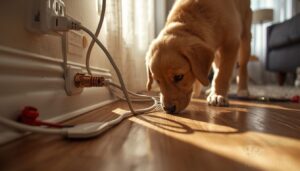
Your curious pup treats every dangling cord like an invitation. Start with Cord Concealment Strategies—route wires flat against baseboards and bundle slack so nothing swings into reach.
Chew-Resistant Cord Covers protect what you can’t hide, and Outlet Cover Installation blocks curious noses from live sockets.
Replace any frayed wiring immediately; Damaged Cord Replacement isn’t optional.
A Trip-Free Floor Layout keeps everyone safer.
Lock Away Cleaners, Medications, and Chemicals
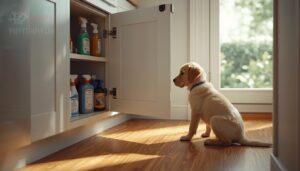
Cleaning products and medications are among the most common causes of toxic exposures in dogs. Locked Cabinet Storage isn’t just smart—it’s essential.
Keep everything in its Original Label Retention packaging, practice Separate Hazard Classes organization, and store chemicals with Cool Dry Ventilation in mind.
Pet-Safe Storage Habits, central to Puppyproofing the House, give your home genuine home safety for dogs and help prevent toxic substances for dogs from causing harm.
Keep Toxic Foods Out of Reach

Your kitchen holds more danger for a puppy than you might expect. Chocolate, onions, grapes, and stone fruits can cause serious harm — even in small amounts.
Preventing toxic exposures in dogs starts with these habits:
- Use Secure Food Containers with tight-fitting lids
- Label Hazardous Foods clearly for everyone in the house
- Practice Countertop Cleanliness after every meal prep session
- Invest in Trash Can Safety with a lockable lid
Food Prep Supervision matters most when it’s chaotic — think dinner parties or kids’ snack time.
Check for Poisonous Houseplants

That pretty pothos on your shelf might be quietly dangerous. Many common houseplants — English ivy, sago palm, and dieffenbachia — rank among the most serious toxic exposures for puppies.
For accurate Botanical Identification, trust botanical names over common labels. Know which Toxic Plant Parts pose risk, watch for Symptoms Monitoring like drooling or vomiting, and keep Poison Control Steps handy.
Choosing Safe Plant Substitutes protects everyone.
Use Baby Gates, Crates, or Playpens
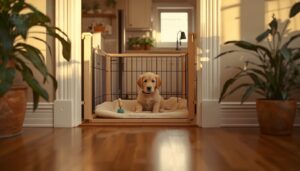
Think of barriers as your puppy’s training wheels — they keep everyone safe while trust is still being built. A solid Gate Placement Strategy blocks stairs and kitchens without cutting off your view. Crate Comfort Tips like soft bedding and a divider make the crate feel like home. Playpen Safety Features keep exploration contained and fun.
- Baby gates work best hardware-mounted in doorways with Adjustable Barrier Height for growing pups.
- Crate sizing should allow standing, turning, and lying down — never use it as punishment.
- Playpen panels with non-slip feet create a portable puppyproof zone you can move room to room.
Your Zone Progression Plan should expand your puppy’s access gradually as they earn it — Puppyproofing the House works best in stages.
Create a Safe Puppy Base Camp

Your puppy’s base camp is their whole world at first. Aim for at least a 4×6-foot space with a washable floor, a crate nearby, and spill-proof water within reach.
Your Base Camp Layout needs Temperature Control between 65–80°F, basic Noise Management, and steady Ventilation. Combined with baby gates and a daily Hygiene Routine, this setup makes puppyproofing feel manageable rather than overwhelming.
Prepare Enzymatic Cleaners for Accidents
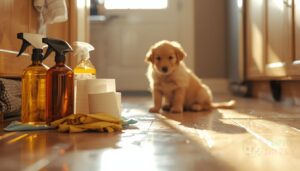
Accidents happen—that’s just part of puppy potty training. Having enzymatic cleaners ready before your puppy arrives makes cleanup faster and more effective. For best results:
- Pre-cleaning prep: blot moisture with paper towels, then remove solids before applying
- Dwell time guidelines: let the cleaner saturate fully for enzyme activation
- Odor neutralization tips: skip masking fragrances; enzymes actually break down odor compounds
Always run a surface compatibility test first, wear gloves as basic safety gear usage, and keep puppy pads nearby for quick containment. Commercial cleaners beat standard soap every time.
What Supplies Do Puppies Need?

Before your puppy ever sets a paw in your home, you’ll want the right supplies ready to go. Having everything in place from day one makes the adjustment smoother for both of you.
Here’s what you’ll need to get started.
Properly Sized Crate With Divider
A well‑chosen crate becomes your puppy’s den — a place they’ll genuinely love. Follow these Crate Size Guidelines before buying:
| Feature | What to Look For |
|---|---|
| Adjustable Divider Mechanism | Expands space as your puppy grows |
| Chew Resistant Materials | Powder‑coated steel, smooth welds |
| Ventilation Standards | Evenly spaced bars, open airflow |
Divider Positioning matters most for Crate and Housebreaking Training Methods — a snug space naturally encourages Den Comfort Features and helps Puppy Crate Training success.
Food and Water Bowls
Once the crate is sorted, food and water bowls deserve the same care.
Stainless steel durability makes it the top pick — it won’t harbor bacteria and cleans up fast. Ceramic odor resistance works well too, though it chips if dropped.
For fast eaters, a slow feeder design helps digestion. A collapsible travel bowl accommodates outings, and an adjustable height stand facilitates comfortable feeding your puppy long-term.
Collar, ID Tag, Leash, or Harness
Now that bowls are sorted, your puppy needs a collar and tag before anything else. A well-fitted collar with D-ring attachments holds ID tags displaying your phone number — choose durable tag materials like stainless steel that won’t rust or fade.
Reflective collars improve visibility on evening walks.
Adjustable leash lengths give you flexibility, while front-clip harnesses gently discourage pulling without straining your pup’s neck.
Puppy Food and Training Treats
Once your pup is tagged and leashed, food becomes your next priority. Choose a puppy food with real meat first on the label — protein quality matters more than clever packaging. Look for calcium balance suited to your breed’s size, especially if you have a large-breed pup.
For training treats, small soft bites with limited ingredients work best. Rotate treat types to keep motivation high.
Safe Chew Toys and Puzzle Toys
Regarding chew toys, material safety and size guidelines matter more than you’d think. Hard rubber toys like Kong toys hold up under serious bite pressure and support dental benefits by reducing plaque.
Rope toys and synthetic bones work well for moderate chewers.
Skip soft stuffed toys for aggressive chewers. Follow a weekly rotation schedule and adjust puzzle difficulty as your puppy grows.
Grooming Brush, Nail Trimmer, and Shampoo
Building grooming habits early makes a real difference for your puppy’s health and comfort. Pick the right tools from the start:
- Brush Types: Use a slicker brush for tangles or a rubber brush for short coats; clean it after every session for proper brush maintenance.
- Nail Trimmer Safety: Choose guarded blades to avoid cutting the quick.
- Shampoo pH Balance: Use a tear-free, pH-balanced dog shampoo designed for puppies.
Puppy Pads, Waste Bags, and Cleaners
Accidents are part of the journey — so stock up on the right gear before your puppy comes home. Leak-proof pads work best with consistent pad placement in one spot, helping reinforce puppy potty training techniques and schedule.
For puppy accidents cleanup, enzymatic cleaners break down odor at the source, acting as true odor neutralizers.
Biodegradable bags keep poo bags eco-friendly and practical.
Car Restraint for Safe Travel
Your puppy needs a safe spot in the car — loose pets become projectiles in a crash. A snug puppy restraint, paired with a seat belt clip, keeps them secure without restricting breathing.
Consider these essential puppy supplies for home and travel:
- Lead and restraint rated for vehicle use
- Seat belt clip with airbag compatibility awareness
- Travel crate safety setup, secured against sliding
- Puppy travel checklist kept in your glove box
How Will You Train Daily?

Training a puppy isn’t something you do once and check off the list — it’s woven into every single day. consistency matters far more than ideal, and small efforts add up fast.
Here’s what your daily training routine should actually look like.
Positive Reinforcement Training Basics
Think of training like a conversation — you speak, your puppy responds, and you reward immediately. That split-second reward timing is everything.
Training is a conversation where your reward timing speaks louder than any command
Positive reinforcement works because your puppy connects the correct behavior to a payoff.
Use high-value rewards for new skills, keep cue consistency tight, and build through shaping steps.
Short, focused training sessions with puppy training treats make the biggest difference.
Potty Training Schedule
Start with short, frequent potty breaks every 20–30 minutes — that’s the backbone of any solid potty training schedule. Use meal-linked breaks after every feeding, and never skip the nighttime potty walk.
As accidents drop, try interval stretching toward every hour. Cue timing matters: catch body signals before they become messes. Some families swear by the intensive three-day method to jump-start the whole process.
Crate Training Without Punishment
Once potty training clicks, the crate becomes your next big win. Think of it as your puppy’s personal den — not a timeout corner.
Gradual Door Closure builds a Calm Crate Environment, your puppy actually chooses. Use Quiet Time Rewards and Short Duration Increments to build trust.
Watch for Stress Signal Recognition and always lean on positive reward-based training to create lasting positive associations.
Short, Frequent Training Sessions
Once your puppy feels comfortable in the crate, training your puppy beyond it becomes the real adventure. Short sessions win every time — puppies focus for only 3–5 minutes before checking out.
Try these Micro Skill Drills using Spaced Repetition and Brief Reward Timing:
- Run Focused Cue Sessions on one command, like "sit," per session
- Use Quick Energy Breaks between repetitions to reset attention
- Keep positive reward-based training immediate — treat within seconds
- Repeat mini-drills several times daily instead of one long block
- Consider a puppy training class for structured puppy training and socialization
Puppy Socialization Window
Those short training wins build real confidence — and that confidence grows fastest when socialization timing is right.
The socialization window runs from roughly 3 to 14 weeks, and missing it matters.
This imprint window shapes how your puppy sees the world long-term.
Controlled exposure and gradual habituation during these weeks lay the foundation for socializing puppies to prevent behavioral issues before they start.
Introducing People, Sounds, and Environments
Visitor desensitization works best when you keep it calm and controlled. Let guests offer a closed fist first, speak softly, and avoid looming over your puppy.
For gradual sound exposure, pair new noises with treats at low volume. Safe room introduction and controlled outdoor outings build confidence gently — positive associations during the socialization window make everything easier later.
Preventing Chewing, Digging, and Barking
Puppies don’t misbehave on purpose — they’re just wired to chew, dig, and bark. Redirect those instincts before they become habits:
- Set up a Designated Dig Spot with buried treats to satisfy digging drive.
- Offer Scheduled Chew Breaks with puppy chew toys to curb teething‑induced chewing sprees.
- Create Barking Buffer Zones using privacy film and white noise for dog anxiety prevention.
Barrier Management and puppy‑proofing do the rest.
Feeding Routine and Meal Schedule
Meal Frequency matters more than most new owners expect. Feed your puppy three to four small meals daily until six months, then shift to twice a day.
Portion Control keeps growth steady — measure every serving and weigh your pup weekly.
consistent Water Access, time Treat Timing around training, and avoid freefeeding or grain-free diets without veterinary guidance.
Any Gradual Food Change should unfold over several days.
Exercise, Play, and Mental Enrichment
Your puppy’s body and brain need equal attention. Gentle leash walks build endurance without stressing developing joints, while interactive fetch and obstacle courses add coordination in short bursts.
Scent games and mental stamina drills — like hiding treats around a room — satisfy curiosity naturally.
Structured play breaks prevent overstimulation.
Rotating toys keep puppy playtime fresh, and blending mental exercise with physical activity makes every session count.
Frequently Asked Questions (FAQs)
What should I know before getting a puppy?
Getting a puppy means real commitment — time, money, and preparation.
From puppy proofing the house to puppy training and socialization, you’ll want a solid plan before that first tail-wag walk through your door.
How do I welcome a new puppy into my home?
Welcoming a new puppy home takes more than love — it takes a plan.
Your Daily Routine Blueprint, First Night Comfort setup, and Family Greeting Rules make all the difference from day one.
How do you identify a dog?
Every dog tells its own story at a glance.
Head shape, ear position, coat markings, body proportions, and tail carriage all help identify a dog—but microchipping remains the most reliable method.
What do you need for a new puppy?
Before bringing a puppy home, stock up on essential puppy supplies for home and travel: a crate, bowls, collar, ID tag, leash, and safe toys.
A solid puppy checklist keeps nothing forgotten.
What should I know before I get a puppy?
A puppy turns your whole world upside down.
Before you start the adoption process steps, ask yourself honestly: Do you have the time, budget for unexpected veterinary expenses, and heart for responsible pet ownership?
Should you ignore a 9 week old puppy crying in his crate?
Not entirely. Wait about two minutes — that’s your ignoring window — so he can find his self-soothing cue.
Then do a quick comfort assessment.
If distress signals continue, check for a potty need first.
What should you know before getting a dog?
Before you fall in love with a fluffy face, ask yourself the honest questions — breed compatibility, long-term commitment, allergies health, and legal responsibilities all matter more than you’d expect.
What should I know before a puppy comes home?
Before that puppy crosses your threshold, have your puppy arrival checklist ready, your initial vet visit booked, and your house locked down. Preparation now saves real stress later.
How do I choose a puppy?
Choosing the right puppy starts with honest self-reflection. Match size compatibility, grooming requirements, and energy levels to your lifestyle.
Prioritize breeder reputation, health screening, or rescue adoption to support responsible dog ownership from day one.
How do I know if my puppy is healthy?
alert behavior, clear eyes, a shiny coat, steady digestion, and easy breathing sounds.
Daily health checks plus timely vet visits and vaccinations keep your puppy’s health care on track.
Conclusion
Think of puppy readiness the way you’d think of planting a tree—the best time to prepare was before you brought it home, and the second best time is right now.
Everything to know before getting a puppy points to one truth: dogs don’t fail their owners; preparation does.
You’ve done the honest work of asking hard questions. That’s not hesitation—that’s exactly the kind of thinking that turns a puppy into a dog who stays.
- https://www.akc.org/press-center/articles-resources/responsible-breeders/?utm_source=openai
- https://www.aspca.org/pet-care/general-pet-care/cutting-pet-care-costs?utm_source=openai
- https://www.ovma.org/petcare?utm_source=openai
- https://www.aaha.org/resources/2022-aaha-canine-vaccination-guidelines/recommendations-for-core-and-noncore-canine-vaccines/?utm_source=openai
- https://meridian.allenpress.com/jaaha/article/60/6/1/503802/2022-AAHA-Canine-Vaccination-Guidelines-2024?utm_source=openai