This site is supported by our readers. We may earn a commission, at no cost to you, if you purchase through links.
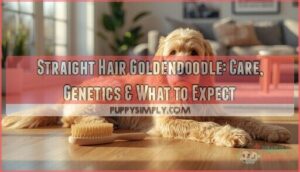
Most people picture a fluffy, curly teddy bear when they think of Goldendoodles, but not all of them fit that mold. Straight hair Goldendoodles break the mold with their sleek, flat coats that lie close to the body.
This coat type is less common than the wavy or curly versions, but it’s gaining traction among families who want the breed’s friendly temperament without the high-maintenance grooming.
The catch? These dogs shed more consistently throughout the year and aren’t hypoallergenic like their curlier cousins. Understanding the genetics behind their coat, along with proper care techniques, helps you decide if a straight hair Goldendoodle fits your lifestyle and manage their needs effectively.
Table Of Contents
- Key Takeaways
- What is a Straight Hair Goldendoodle?
- Genetics Behind Straight Hair in Goldendoodles
- How to Identify a Straight Hair Goldendoodle
- Shedding and Hypoallergenic Qualities
- Grooming and Care for Straight Hair Goldendoodles
- Pros and Cons of Straight Hair Goldendoodles
- Top Products for Straight Hair Goldendoodle Care
- Frequently Asked Questions (FAQs)
- What is the average lifespan of a Straight Hair Goldendoodle?
- How much exercise does a Straight Hair Goldendoodle need?
- Are Straight Hair Goldendoodles easy to train?
- What health tests should straight hair Goldendoodle parents have?
- How much exercise does a straight hair Goldendoodle need?
- Are straight hair Goldendoodles good with small children?
- What is the average lifespan of this breed?
- Can straight hair Goldendoodles live in small apartments?
- Conclusion
Key Takeaways
- Straight-haired Goldendoodles shed significantly more than curly or wavy varieties and aren’t hypoallergenic, making them unsuitable for people with allergies despite having lower grooming costs overall.
- The straight coat type results from specific genetic markers (KRT71 and RSP02 genes) and is more common in F1 generation Goldendoodles with 50% Golden Retriever genetics rather than F1B dogs.
- Daily brushing with slicker brushes and regular bathing every 4-8 weeks prevents matting and manages shedding, though you’ll still need professional grooming every 6-8 weeks at $75-$150 per session.
- These dogs maintain the breed’s friendly temperament and adapt well to apartment living with proper exercise (30-60 minutes daily), but their rarity means you’ll likely face breeder waitlists or need to travel to find one.
What is a Straight Hair Goldendoodle?
A straight hair Goldendoodle looks more like its Golden Retriever parent than a typical Poodle mix. This coat type isn’t as common as the curly or wavy versions, but it’s becoming a popular choice for families who want a friendlier grooming routine.
Let’s break down what makes these dogs different, from their appearance to what you can expect when you bring one home.
Defining Straight Hair Goldendoodles
A straight-haired Goldendoodle has a smooth, flat coat that lacks the curl or wave you’ll see in other coat types. This coat texture lies close to the body, creating a sleek appearance rather than the fluffy look of furnished varieties. Hair length usually runs shorter than curly Goldendoodle coat types.
You can spot this breed standard early in puppy development, and genetic testing helps confirm coat type predictions. Understanding the genetics behind this requires researching language patterns.
How Straight Hair Differs From Other Coat Types
When you compare coat texture across Goldendoodle coat types, straight hair shows minimal curl or wave formation. This hair structure lies flat against the body, unlike curly varieties that spring back when brushed.
Shedding patterns differ too—straight-haired Goldendoodles shed more consistently year-round than furnished coats. Grooming needs remain simpler because you won’t battle tight ringlets.
Hypoallergenic traits decrease with straighter coat types, since shedding increases dander exposure. Understanding the importance of methodological rigor is essential in scientific studies about animal genetics.
Appearance and Unique Features
Beyond coat texture alone, you’ll notice a straight hair Goldendoodle‘s appearance sets it apart in subtle ways:
Their shedding patterns can also differ significantly—straight-haired Goldendoodles often shed more than their wavy counterparts, which means grooming routines may need adjustment.
- The flat coat lies close to the body without tight curls or puffed volume
- Facial features look sleeker with shorter muzzle and eye-area hair
- Body structure appears slightly finer without the fluffy “teddy bear” silhouette
- Color patterns include cream, apricot, chocolate, and black across all coat types
- Hair length remains manageable but needs regular trimming to prevent tangling
Genetics Behind Straight Hair in Goldendoodles
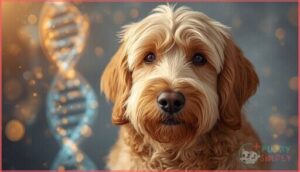
Your Goldendoodle’s coat isn’t just a matter of luck. It comes down to two specific genes that determine whether your pup ends up with curls, waves, or straight hair.
Understanding these genetic factors and how different breeding generations play a role will help you know what to expect from your dog’s coat.
If you’re looking for a family-friendly option that won’t leave fur everywhere, exploring large dog breeds with low shedding can help you find the right match for allergy concerns.
Role of KRT71 and RSP02 Genes
Think of your dog’s coat like a blueprint written in DNA. The KRT71 gene controls keratin structure and follicle development, which directly shapes hair texture in Goldendoodles. When genetic variants at this Cu locus gene are absent, you get straight hair instead of curls.
Dog genetics and breeding revolve around these markers, though gene expression doesn’t always guarantee one outcome over another.
Choosing the right grooming products, like hypoallergenic shampoos designed for Goldendoodles, helps maintain coat health regardless of inherited texture variations.
How Generation (F1, F1B, Etc.) Influences Coat Type
Generation plays a major role in determining coat texture. Your F1 Goldendoodle puppy has equal genetics from both breeds, giving you a better shot at straight hair. F1B Goldendoodles lean heavily toward Poodle influence at 75%, which usually means curlier coats.
Breeding outcomes vary based on these genetic variance factors:
- F1 characteristics include higher chances of straight or wiry coats
- F1B offspring shift toward furnished, curlier textures
- Multi-generation crosses show broader coat type possibilities
- Poodle ancestry percentage correlates with curliness levels
- Individual litters can produce multiple coat textures simultaneously
How to Identify a Straight Hair Goldendoodle
You can spot a straight-haired Goldendoodle by looking at specific physical traits that set them apart from their curly or wavy cousins. Puppies won’t always show their final coat type right away, so knowing what changes to expect helps you identify what you’re working with.
Let’s break down the key signs in young pups and adult dogs, plus what flat coat and furnished coat actually mean.
Physical Signs in Puppies and Adults
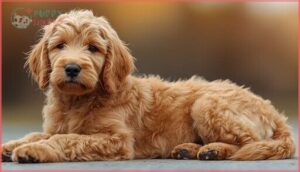
You’ll notice a straight-haired Goldendoodle by its flat, smooth coat that lies close to the body without much wave or curl. Puppy coat development shows this straight hair pattern early, especially around the ears and tail.
Adult texture stays consistent and low-friction across the entire body. Facial fur characteristics include a coarse, straight appearance rather than tight curls.
Coat density variations remain minimal, with limited undercoat fluff from neck to hindquarters.
Puppy Coat Changes Over Time
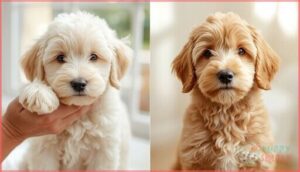
Coat change in your Straight Hair Goldendoodle begins around 6 to 16 weeks, when puppy development shifts from soft, velvety fur to a coarser adult texture. Hair texture becomes more apparent by 3 to 6 months, revealing the true coat type. Shedding patterns intensify during maturation stages as undercoat density changes.
Monitor these dog coat variations closely:
- Texture shift: Softness gives way to crisper guard hairs
- Length increase: Adult fur grows longer and more frame-hollow
- Seasonal molting: Spring and fall trigger noticeable shedding
- Density changes: Undercoat thickens or thins with growth
Flat Coat Vs. Furnished Coat Explained
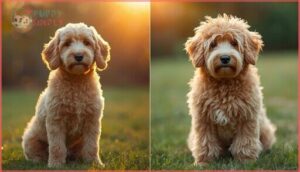
Flat coat Goldendoodles lack substantial guard hairs, giving your dog a smooth, shorter appearance with looser curl patterns. Furnished coats show longer, denser guard hairs that create textured feathering on ears and legs.
Flat coated types shed more evenly year-round, while furnished varieties experience seasonal shedding. Matting issues increase with furnished coats due to hair length and density requiring routine brushing.
Shedding and Hypoallergenic Qualities
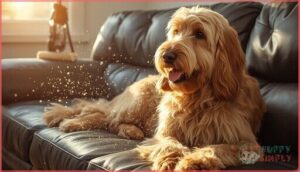
If you’re hoping for a dog that won’t trigger your allergies or leave fur all over your couch, a straight-haired Goldendoodle mightn’t be your best bet. These dogs shed more than their curly cousins because they inherit more Golden Retriever traits in their coat.
Let’s break down what that means for shedding, allergies, and how they stack up against other coat types.
Shedding Levels in Straight Hair Goldendoodles
Straight hair Goldendoodles shed at moderate to high levels, far from the nonshedding reputation of their curly-coated cousins. Their hair texture resembles a Golden Retriever’s, which means you’ll spot loose fur around your home—especially during spring and fall.
Shedding patterns depend on genetics and coat type, with F1 generations usually shedding more than F1B. Regular grooming frequency and dander reduction strategies help manage the fallout.
Are Straight Hair Goldendoodles Hypoallergenic?
No dog is truly hypoallergenic, and straight-haired Goldendoodles fall short on allergen reduction compared to their curly counterparts. Pet allergy symptoms stem from dander control issues, not just shedding. Their Golden Retriever genetics mean more dander and loose fur, which can trigger allergies in sensitive individuals.
If you’re counting on a nonshedding, hypoallergenic dog, breed selection is crucial. Straight-coated pups won’t deliver on that promise.
Comparison to Curly and Wavy Goldendoodles
Understanding coat texture differences helps you match grooming needs to your lifestyle. Straight hair Goldendoodles have coats that lie flat against the body, unlike curly coats with tight ringlets that add volume. Wavy coats fall somewhere in between with S-shaped patterns.
Key differences in shedding patterns and maintenance:
- Straight coats shed more consistently than curly types
- Curly coats need intensive detangling routines
- Wavy coats offer moderate volume with softer texture
Grooming and Care for Straight Hair Goldendoodles
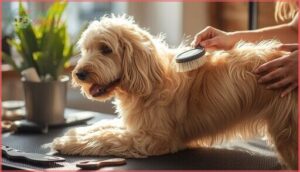
Straight hair Goldendoodles don’t need as much grooming as their curly cousins, but they still require regular care to stay healthy and comfortable. You’ll want to focus on brushing, managing their shedding, and keeping up with basic maintenance to avoid problems down the road.
Here’s what you need to know about caring for your straight-haired pup.
Brushing and Bathing Needs
You’ll want to brush your straight-haired Goldendoodle daily using a slicker brush or bristle brush designed for long coats. Work from the skin outward in small sections to prevent matting.
Bathe every 4 to 8 weeks with dog shampoo formulated for long coats, rinsing thoroughly to avoid buildup. A wide-tooth comb after each bath helps maintain that sleek, straight coat you’re after.
Managing Shedding and Preventing Matting
Regular brushing is your best weapon against both shedding and mats. Aim for 3–5 sessions weekly, using line brushing—parting the coat and working from skin outward—to catch hidden tangles before they turn into full-blown mats.
Here’s your game plan:
- Use a slicker brush first, then follow with a metal comb to verify you didn’t miss any sneaky tangles
- Focus on friction zones—behind ears, collar line, armpits, and between toes where mats love to hide
- Never let your Goldendoodle air-dry after swimming or baths, since damp hair compacts into stubborn mats fast
Keep sanitary areas and ear hair shorter to reduce mat risk while maintaining length elsewhere.
Health Issues Linked to Grooming Habits
Skip a brushing session and you’re not just dealing with mats—you’re opening the door to skin infections and ear diseases. Poor grooming techniques can trigger bacterial pyoderma or post-grooming furunculosis, causing painful lesions within 48 hours.
Contaminated products and trapped moisture after bathing create hotspots for dermatitis. That’s why proper post-grooming care matters, even for hypoallergenic breeds like your straight-haired Goldendoodle.
Pros and Cons of Straight Hair Goldendoodles
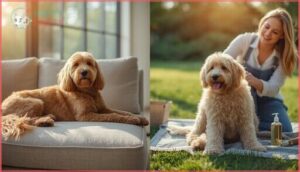
Straight hair Goldendoodles come with their own set of trade-offs that you’ll want to know about before bringing one home.
They’re easier to manage in some ways but might surprise you in others. Let’s break down what works in your favor and what you’ll need to stay on top of.
Benefits for Owners and Families
Straight hair Goldendoodles fit busy households like a glove—they’re built for real life, not endless upkeep. Here’s what makes them work for your family dynamics and lifestyle impact:
- Lower grooming costs: You’ll spend 40–60% less over your dog’s lifetime compared to curly-coated varieties, keeping pet costs manageable.
- Faster post-hike cleanup: Mud and debris rinse out easily after outdoor adventures.
- Predictable maintenance: The coat stays consistent, so your grooming routine never surprises you.
Owner satisfaction runs high when you choose practicality over hypoallergenic claims. For non-allergy homes, these Goldendoodles deliver Golden Retriever charm with straightforward pet care and grooming—perfect for first-timers embracing dog ownership and responsibility without the fuss.
For non-allergy homes, straight-haired Goldendoodles offer Golden Retriever charm with practical grooming—ideal for first-time owners seeking less fuss
Challenges and Maintenance Considerations
Daily vacuuming becomes your new normal with straight-haired Goldendoodles—shedding management isn’t optional. You’ll face increased grooming costs ($75–$150 every 6–8 weeks), allergy concerns from constant dander release, and health risks like yeast infections if coat maintenance slips.
Here’s what dog grooming and care truly demands:
| Challenge | Reality Check |
|---|---|
| Shedding | Daily hair cleanup required |
| Seasonal Blowouts | Grocery bag volumes of fur |
| Professional Grooming | Essential every 6–8 weeks |
| Hypoallergenic Claims | Minimal—dander spreads freely |
Moisture trapped post-swim triggers hot spots fast.
Rarity and Availability From Breeders
Across most breeding programs, straight-haired Goldendoodles are rare finds. Breeder selection leans toward wavy or curly coats, driven by market trends for hypoallergenic traits. If you want a straight coat, expect availability issues—few breeders prioritize this phenotype.
Dog breeding for hybrid dog breeds like Goldendoodles often means traveling or joining waitlists to secure one with flat coat genetics.
Top Products for Straight Hair Goldendoodle Care
Managing a straight hair Goldendoodle’s coat doesn’t have to feel like a chore if you’ve got the right tools in your corner. The key is picking products that tackle shedding and keep that silky coat from turning into a tangled mess.
Here are four tried-and-true essentials that’ll make grooming easier and keep your home cleaner.
1. Burt’s Bees Shed Control Dog Shampoo
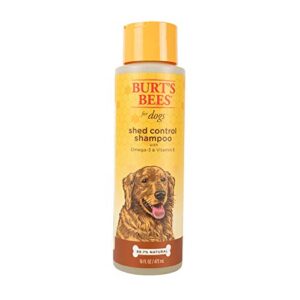
When you’re tackling shedding in straight-haired Goldendoodles, Burt’s Bees Shed Control Dog Shampoo offers a practical starting point. This pet grooming staple contains natural ingredients like omega-3 fatty acids and vitamin E that work as a hair strengthener, reducing breakage that contributes to loose fur.
The formula is pH-balanced for dog skin and free from sulfates and harsh chemicals, making it gentler during grooming sessions. While it won’t eliminate shedding entirely in non-hypoallergenic coats, consistent use helps manage loose hair and keeps your dog’s coat soft between regular brushing.
| Best For | Goldendoodle owners looking for a gentle, natural shampoo to help manage shedding and reduce hair breakage without harsh chemicals. |
|---|---|
| Brand | Burt’s Bees for Pets |
| Primary Use | Shedding reduction shampoo |
| Target Animal | Dogs |
| Shedding Control | Reduces shedding with Omega-3s |
| Ease of Use | pH-balanced, gentle application |
| Special Design | 99.7% natural formula |
| Additional Features |
|
- Contains omega-3s and vitamin E that strengthen hair and reduce breakage-related shedding
- PH-balanced specifically for dogs and free from sulfates, parabens, and synthetic dyes
- Leaves coat soft and hydrated while being gentle enough for dogs with sensitive skin
- May not lather as much as traditional shampoos and some users find the consistency too watery
- Requires consistent use over time to see noticeable shedding reduction
- Faces ongoing legal concerns about ingredient transparency and safety reports from some pet owners
2. Furminator Undercoat Deshedding Tool
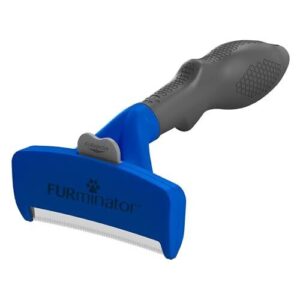
For serious shedding reduction in your straight-haired Goldendoodle, the Furminator Undercoat Deshedding Tool is an effective solution. It cuts through to the undercoat without damaging the topcoat hair. Its stainless steel edge removes up to 90 percent of loose fur when used with long, gentle strokes in the direction of hair growth.
The tool features a FURejector button that releases accumulated hair between passes, making maintenance quick and easy during grooming sessions. Use it once or twice weekly for 10 to 20 minutes, increasing frequency during heavy seasonal shedding periods to keep your dog’s coat type manageable.
| Best For | Dog owners dealing with heavy shedding who want a professional-grade tool that can remove up to 90% of loose undercoat hair without damaging the topcoat. |
|---|---|
| Brand | FURminator |
| Primary Use | Deshedding tool |
| Target Animal | Large dogs with long hair |
| Shedding Control | Reduces shedding up to 90% |
| Ease of Use | FURjector button, ergonomic handle |
| Special Design | Stainless steel edge |
| Additional Features |
|
- Stainless steel edge reaches deep into the undercoat and removes massive amounts of loose fur in minutes, dramatically reducing shedding around your home.
- FURejector button lets you clear out collected hair with one press, so you’re not constantly stopping to pull fur off the tool by hand.
- Ergonomic handle and curved edge design make it comfortable to use during longer grooming sessions and help prevent accidentally scratching your dog’s skin.
- Requires careful technique and light pressure to avoid skin irritation—pressing too hard or over-brushing the same spot can cause redness or discomfort.
- Not suitable for all coat types, especially dogs without a distinct undercoat or non-shedding breeds, so it won’t work for every dog.
- Some users report the tool feels heavier or bulkier than expected, which can lead to hand fatigue during extended grooming.
3. Chris Christensen Big G Slicker Dog Brush
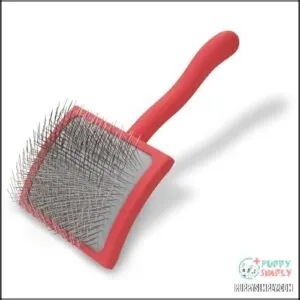
If you’re looking for a professional-grade dog brush that handles your straight-haired Goldendoodle’s dense coat, the Chris Christensen Big G Slicker stands out for serious grooming.
The Large size features 27 mm pins with 30 percent higher pin density than standard slickers, penetrating deep to remove loose undercoat and prevent matting. Its flexible cushioned pad protects sensitive skin, while the ergonomic handle reduces hand fatigue during extended sessions.
Though pricier at $49.99, this German-made tool delivers efficient brush maintenance and outstanding slicker comparison results for doodle owners.
| Best For | Goldendoodle and doodle owners who want a professional-grade brush that handles thick, dense coats without irritating sensitive skin. |
|---|---|
| Brand | Chris Christensen |
| Primary Use | Deshedding brush |
| Target Animal | Dogs (especially long-coated) |
| Shedding Control | Effective deshedding and detangling |
| Ease of Use | Non-slip grip, flexible pad |
| Special Design | Extra-long angled pins |
| Additional Features |
|
- 30% more pins than standard slickers means you cover more coat in fewer strokes, cutting brushing time roughly in half
- The 27 mm pins reach deep into dense undercoat to remove tangles and loose fur before mats form
- Flexible cushioned pad and ergonomic handle make long grooming sessions comfortable for both you and your dog
- At $49.99, it’s significantly more expensive than most slicker brushes on the market
- Some users report receiving non-authentic or defective products, suggesting possible quality control issues
- Won’t completely eliminate shedding despite effective undercoat removal
4. Bissell CleanView Pet Vacuum Cleaner
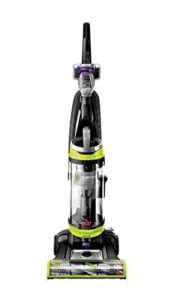
When grooming tools can’t keep up with your Goldendoodle’s daily shedding, the Bissell CleanView Pet Vacuum Cleaner at $139.99 handles the job with a triple-action brush roll built for pet hair removal. Its swivel steering navigates around furniture, while specialized pet tool attachments lift dog hair from upholstery.
The large dirt tank simplifies vacuum maintenance, though you’ll need regular filter cleaning to preserve suction power. With scatter-free technology and edge-to-edge coverage, it’s designed specifically for pet care challenges straight-haired Goldendoodles bring home.
| Best For | Pet owners with shedding dogs like Goldendoodles who need an affordable vacuum that tackles embedded hair on carpets, furniture, and hard floors without breaking the bank. |
|---|---|
| Brand | Bissell |
| Primary Use | Pet hair vacuum |
| Target Animal | Pets (especially dogs) |
| Shedding Control | Removes embedded pet hair |
| Ease of Use | Swivel steering, easy empty tank |
| Special Design | Triple action brush roll |
| Additional Features |
|
- Triple-action brush roll and specialized pet tools effectively lift and remove stubborn pet hair from multiple surfaces including upholstery
- Swivel steering and edge-to-edge cleaning make it easy to maneuver around furniture and reach tight spaces
- Large capacity dirt tank with easy empty feature means fewer trips to the trash during cleaning sessions
- Short hose length limits your reach when using attachments for stairs or high surfaces
- Bulky design and weight can make it tiring to push around or carry between floors
- Suction power may decline quickly if you don’t stay on top of regular filter cleaning and maintenance
Frequently Asked Questions (FAQs)
What is the average lifespan of a Straight Hair Goldendoodle?
Your straight-haired Goldendoodle will likely share your life for 10 to 15 years—though genetics, health conditions, and canine health care play starring roles in determining how many birthdays you’ll celebrate together.
How much exercise does a Straight Hair Goldendoodle need?
Adult Goldendoodles need 30 to 60 minutes of daily exercise to stay healthy and well-behaved. Puppies should get about five minutes per month of age, while seniors need 20 to 40 minutes daily.
Are Straight Hair Goldendoodles easy to train?
The proof is in the pudding: yes, Goldendoodles respond exceptionally well to Positive Reinforcement and Obedience Tips. Their Canine Intelligence and keen Temperament make Dog Training straightforward when you prioritize Socialization Methods and consistent practice sessions.
What health tests should straight hair Goldendoodle parents have?
Before you bring home a Goldendoodle, parent testing is essential. OFA hip and elbow certifications, eye exams, cardiac evaluations, and genetic screening for hereditary conditions protect your pup’s long-term health and wellbeing.
How much exercise does a straight hair Goldendoodle need?
Like any high-octane pup, your Goldendoodle needs 30–60 minutes of daily exercise to stay happy and balanced.
Energy levels depend on size and age, but mental stimulation and physical activity work together to prevent boredom-driven behaviors.
Are straight hair Goldendoodles good with small children?
Straight Hair Goldendoodles generally show a calm, affectionate temperament with children when properly socialized.
Early training, consistent supervision, and teaching kids boundaries create safer interactions.
Individual dog behavior varies, so assess temperament before family introduction.
What is the average lifespan of this breed?
Think of a candle burning steady—your Goldendoodle’s lifespan usually glows for 10 to 15 years. Size impact matters: smaller dogs often outlive larger ones.
Longevity tips include preventive health care, balanced nutrition, and managing genetic influence on health conditions.
Can straight hair Goldendoodles live in small apartments?
Yes, straight hair Goldendoodles adapt well to apartment living with daily exercise and consistent grooming. Their moderate shedding requires regular brushing, while their calm temperament and manageable energy levels suit small space living comfortably.
Conclusion
Think of a straight-haired Goldendoodle as the low-maintenance cousin in a high-glam family. You’ll sacrifice the hypoallergenic benefits and face year-round shedding, but you’ll gain a dog that doesn’t demand constant trips to the groomer.
If you don’t mind fur on your furniture and want a laid-back care routine, this coat type delivers the breed’s winning personality without the grooming marathon.
Know what you’re signing up for before you commit.
- https://www.mdpi.com/2076-2615/9/12/1162
- https://www.cambridge.org/core/journals/nutrition-research-reviews/article/impact-of-nutrition-on-canine-behaviour-current-status-and-possible-mechanisms/5B21529115F05075B7292052016F11D4
- https://www.welovedoodles.com/best-goldendoodle-generations-f1-f1b-f1bb-f2-f2b-f3/
- https://goldendoodleadvice.com/f1b-mini-goldendoodle/
- https://tarheeltotalpetcare.net/double-coated-breed-grooming/