This site is supported by our readers. We may earn a commission, at no cost to you, if you purchase through links.
You can’t find dog hair on your black pants after cuddling with a Maltese. That’s not a miracle—it’s genetics. Some small breeds grow hair instead of fur, which means they shed minimally or not at all. For people with allergies or anyone tired of lint-rolling every surface, these dogs offer a chance to enjoy companionship without the constant cleanup.
But here’s what most owners don’t realize upfront: what you save in vacuuming, you’ll invest in grooming. These breeds need regular brushing, professional trims, and careful coat maintenance to stay healthy and mat-free.
The good news? Once you understand their specific needs, you’ll discover breeds that fit perfectly into your home—from playful terriers to elegant lap dogs.
Table Of Contents
- Key Takeaways
- Best Small Dogs That Don’t Shed
- Unique Low-Shedding Small Breeds
- Minimal Shedding Terrier Breeds
- Grooming Tips for Non-Shedding Dogs
- Health Considerations for Low-Shedding Dogs
- Frequently Asked Questions (FAQs)
- What is the best non-shedding small dog?
- What is the calmest dog breed that doesn’t shed?
- What is the best dog for seniors that don’t shed?
- What is the best low maintenance small dog?
- What are some tips for housetraining a small non-shedding puppy?
- Which breeds are best for apartment living?
- Are non-shedding dogs harder to train?
- Are small non-shedding dogs good with children?
- How much do low-shedding small breeds cost?
- Can non-shedding dogs live in hot climates?
- Conclusion
Key Takeaways
- Small dogs with hair instead of fur—like Maltese, Bichon Frise, and Toy Poodles—shed minimally, but you’ll trade vacuuming for regular grooming commitments, including daily brushing and professional trims every 4-6 weeks.
- No dog breed is truly hypoallergenic since allergens come from dander and saliva proteins, not just shed fur, meaning low-shedding breeds won’t eliminate allergy symptoms for sensitive individuals.
- Small breeds face higher risks for dental disease (affecting up to 90% by age three), requiring daily tooth brushing and professional cleanings to prevent periodontal problems that disproportionately impact toy-sized dogs.
- Costs add up quickly with low-shedding breeds—expect $1,000-$3,500 upfront from breeders, plus $50-$90 grooming visits every 6-8 weeks, pushing lifetime expenses beyond $20,000 when factoring in veterinary care and maintenance.
Best Small Dogs That Don’t Shed
If you’re looking for a small dog that won’t leave fur tumbleweeds rolling through your home, you’ve got plenty of excellent options.
These breeds produce far less hair than typical shedders, though you’ll still need to stay on top of grooming to keep their coats healthy.
Let’s look at seven popular low-shedding breeds that might be perfect for your lifestyle.
Maltese

The Maltese is a tiny companion that’s been charming humans for over 2,000 years. Weighing just 4–7 pounds, this Mediterranean breed rocks a silky single-layer coat that barely sheds, making it a hypoallergenic favorite for allergy-prone owners.
Why the Maltese stands out:
- Low shedding: That fine, continuously growing coat means minimal hair around your home.
- Compact size: Perfect for apartment living and travel.
- Long lifespan: You’ll enjoy 12–15 years together with proper care.
- Affectionate nature: This breed forms deep bonds and thrives on human companionship.
- Trainable: Maltese training responds well to positive reinforcement methods.
Daily brushing prevents mats, while professional grooming every 4–6 weeks keeps that signature silky look intact. Beware of dental disease—common in small dog breeds—so prioritize tooth brushing. Factor in pet insurance early, since Maltese face risks like patellar luxation and heart valve disease.
With balanced dog nutrition and 30–60 minutes of daily activity, this low-shedding small dog breed adapts beautifully to your lifestyle. Their canine behavior leans clingy, so early socialization helps prevent separation anxiety. This breed’s history stretches back millennia, yet the Maltese remains a modern non-shedding champion. Understanding the life span factors is essential for providing the best care for your Maltese.
Bichon Frise

If you crave a playful companion with a cloud-like coat, the Bichon Frise fits the bill. This small dog breed is known for low shedding and a hypoallergenic profile. To keep them thriving, prioritize regular dog grooming, proper Frise nutrition, and consistent Bichon training. Additionally, focus on canine hygiene and consider pet insurance, as urinary stones and dental issues are common. Dog socialization is essential to prevent boredom and separation stress. To minimize allergy risks, explore the hypoallergenic coat benefits of the Bichon Frise.
| Benefit | Bichon Frise | Care Need | Frequency |
|---|---|---|---|
| Low Shedding | Yes | Grooming | 4–6 weeks |
| Hypoallergenic | Yes | Brushing | Several/week |
| Lifespan | 12–15 years | Dental Care | Daily |
| Social Nature | High | Exercise | 30–60 min daily |
Havanese

Another gentle soul with a silky coat is the Havanese. This small breed usually stands 8.5 to 11.5 inches tall and weighs 7 to 13 pounds. Their low shedding makes them one of the most sought-after hypoallergenic dog breeds. You’ll need to commit to coat care through daily brushing, especially for long-haired dogs.
For ideal pet wellness, focus on:
- Havanese training using positive reinforcement
- Dog nutrition with high-quality protein sources
- Bathing every two to three weeks
Their affectionate “velcro dog” nature means they bond deeply with you, making them ideal nonshedding dogs for apartment living.
Shih Tzu

If you want a lap dog with personality, the Shih Tzu fits the bill. These low-shedding companions stand 8 to 11 inches and weigh 9 to 16 pounds. Despite their long, silky coat, they shed minimally compared to other small dog breeds. You’ll need regular dog grooming and care—brushing several times weekly and professional trims every 4 to 6 weeks.
Their friendly temperament makes them great apartment pets, though you should know they’re not fully hypoallergenic. Pet insurance can help cover breed-specific health concerns like dental disease and respiratory issues common in brachycephalic dogs. With proper Shih Tzu training and consistent veterinary care, these affectionate companions often live 10 to 18 years.
| Care Priority | Your Action Plan |
|---|---|
| Coat Maintenance | Brush 3–4 times weekly to prevent mats |
| Veterinary Care | Monitor breathing; brachycephalic risks exist |
| Canine Nutrition | Feed high-quality diet; watch weight closely |
| Shih Tzu Training | Use positive methods for stubborn streaks |
| Dog Socialization | Start early; they’re naturally friendly |
Toy Poodle
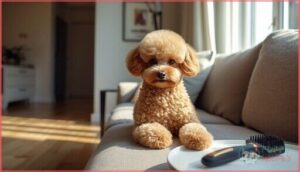
If you’re chasing freedom from dog hair on your couch, the Toy Poodle delivers. This hypoallergenic standout from small dog breeds weighs 4 to 9 pounds and boasts a curly coat that traps shed hair inside those tight ringlets.
You’ll invest in Curly Coat Care—brushing every few days and professional grooming every 4 to 6 weeks—but your floors stay clean.
Toy Poodle Training is a breeze; they rank second in canine intelligence, mastering commands in under five repetitions. Pair Poodle Nutrition with Small Dog Agility games and Toy Breed Socialization, and you’ve got a low shedding, low maintenance pet care champion that thrives in apartments and lives 14 to 16 years.
Yorkshire Terrier
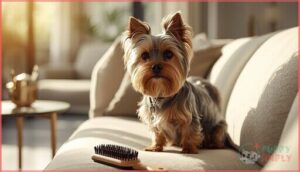
Yorkshire Terrier owners escape the hair-covered furniture trap: this 5-to-8-pound dynamo sports a single-layer coat that grows continuously, shedding far less than double-coated Small Dog Breeds. You’ll brush that silky hair every few days and book grooming appointments, but the payoff is Low Shedding freedom and a 13-to-14-year companionship.
Terrier Training demands consistency—these confident pups need Dog Socialization and boundaries. Factor in Yorkie Nutrition and Pet Insurance for dental care, and you’ve locked in Low Maintenance Pet Care with Hypoallergenic appeal rooted in centuries of Breed History.
Coton De Tulear

The Coton De Tulear’s cotton-like coat sheds minimally, trapping loose hair until you brush it out—daily combing prevents mats in this 8-to-15-pound Low Shedding companion. Hypoallergenic appeal meets 14-year longevity when you pair Coton Care with consistent Dog Grooming and Pet Insurance for dental work.
Dog Training utilizes their intelligence, while Coton Health screening guards against rare kidney conditions in Small Dog Breeds rooted in Madagascar Breed History.
Unique Low-Shedding Small Breeds

Some small dogs break the mold completely—they’re not your typical lap breeds, but they still keep shedding to a minimum. These unique picks range from nearly hairless varieties to dogs with quirky coat textures that naturally shed very little.
If you want something different that won’t cover your couch in fur, here are five standout breeds worth meeting.
Chinese Crested
If you’re looking for a truly unique small dog breed, the Chinese Crested delivers both personality and minimal mess. This toy-sized companion comes in two varieties—Hairless and Powderpuff—but the Hairless Variety sheds almost nothing, making it a standout among hypoallergenic small dogs. Here’s what makes Crested Care special:
- Low shedding means less cleanup, though exposed skin requires regular sun protection and moisturizing.
- Their affectionate Crested Temperament thrives on close human contact and indoor living.
- Be prepared for potential skin conditions and dental issues linked to the hairless gene.
Xoloitzcuintli
Meet the Xoloitzcuintli—affectionately called the Xolo—a hairless wonder with Mexican origins stretching back 3,000 years. Hairless genetics stem from a FOXI3 mutation causing ectodermal dysplasia, which eliminates most fur. This ancient breed ranks among the best low-shedding dog breeds and hypoallergenic dogs for small dog breed lovers seeking non-shedding companions.
Breed history reveals toy and miniature sizes perfect for apartments, though their vigilant nature means you’ll hear alerts when strangers approach.
| Xolo Care Priority | Why It Matters |
|---|---|
| Skin protection | Exposed skin needs sunscreen and moisturizer |
| Dental checks | Missing teeth are common due to the hairless gene |
| Temperature control | Sensitive to heat and cold extremes |
| Regular bathing | Prevents oil buildup and skin infections |
Basenji
You’ll find the Basenji stands apart—this quiet dog breed barely barks and grooms itself like a cat, earning its spot among hypoallergenic dogs and low-shedding dog breeds for small dog breed enthusiasts.
Basenji essentials to know:
- Basenji Exercise: 30-60 minutes daily prevents boredom behaviors
- Basenji Health: Screen for Fanconi syndrome (7% affected)
- Basenji Nutrition: Quality diet maintains their fine coat
- Basenji Behavior: Independent yet affectionate temperament
- Basenji Training: Start early—they’re clever escape artists
Affenpinscher
If the Basenji seemed quirky, the Affenpinscher takes it a step further. This “monkey-faced” toy breed, originating from Germany, sheds minimally and has little to no odor. Standing between 9 and 11 inches tall, these low-shedding dogs are well-suited for apartment living, provided you can manage their stubborn nature.
| Trait | Detail | Your Action |
|---|---|---|
| Coat Type | Wiry, rough texture | Brush 2–3 times weekly |
| Shedding | Very light year-round | Strip dead hair by hand |
| Size | 7–10 pounds | Fits small spaces easily |
| Lifespan | 10–14 years typical | Schedule vet checkups |
| Temperament | Bold, alert watchdog | Start Affenpinscher training early |
These hypoallergenic pets aren’t completely dander-free, but their nonshedding coats outperform most small dog breeds.
Brussels Griffon
Unlike the Affenpinscher’s wiry coat, the Brussels Griffon gives you two choices: smooth or rough. The rough-coated variety qualifies as one of the most hypoallergenic pets among small dog breeds, shedding almost nothing if you hand-strip regularly.
Breed history traces them to Belgian stables as ratters. Training methods work best with patience—they’re smart but stubborn.
Health concerns include eye problems and patellar luxation, so vet visits matter.
Minimal Shedding Terrier Breeds
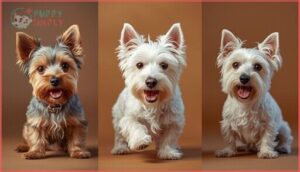
Terriers pack a lot of personality into compact, wiry frames that naturally shed less than most breeds. Their tough coats evolved for working outdoors, which means less fur on your furniture and more energy in your home.
If you want a small dog with terrier spirit and minimal shedding, these seven breeds deliver both.
Norfolk Terrier
You’ll find the Norfolk Terrier stands around 9 to 10 inches and weighs about 11 to 12 pounds—compact enough for apartment living but spirited enough to keep you on your toes.
This low-shedding breed sports a wiry double coat that barely releases hair, making it popular among hypoallergenic dogs for families seeking low maintenance dogs with big personality.
Cairn Terrier
The Cairn Terrier shares that wiry terrier coat, but stands a bit taller at 9.5 to 10.5 inches and weighs 13 to 18 pounds.
This breed’s harsh texture sheds very little, making it one of the top low shedding dog breeds and a smart pick among small dog breeds for apartment living.
You’ll need weekly brushing and hand-stripping every few months to keep that weather-resistant coat in shape.
Scottish Terrier
The Scottish Terrier stands 9 to 10 inches tall, its double-layer wiry coat shedding minimally. Beloved for quiet dog breeds, this sturdy companion fits small dog breeds for apartment living beautifully.
To maintain that signature dog coat texture, you’ll want to follow these terrier training tips:
- Brush twice weekly to manage the undercoat
- Hand-strip or clip every 6 to 8 weeks
- Schedule monthly baths with gentle shampoos
- Clean ears regularly for breed-specific health
Scottish Terrier temperament combines independence with alertness. Dog grooming and hygiene matter deeply here—Scottish Terrier history reveals a working breed whose coat needs consistent care to stay healthy.
Silky Terrier
Silky Terrier care revolves around that fine, straight coat—reaching 8 to 10 pounds, this low shedding dog breed member barely sheds but demands brushing several times weekly. Dog grooming and hygiene includes professional visits every 4 to 8 weeks.
You’ll spot small dog breeds for allergy sufferers here, though terrier training curbs vocal habits essential for apartment life. Canine socialization supports that 12 to 15 year lifespan, while pet ownership costs factor in dental care needs.
West Highland White Terrier
West Highland White Terrier care centers on that signature wiry coat—low shedding dogs in this terrier training breed reach about 15 to 20 pounds with minimal hair loss yet face notable health challenges.
Small breed nutrition and dog owner responsibilities include:
- Weekly brushing with slicker brush and comb
- Monthly bathing and hand-stripping sessions
- Daily dental care (periodontal disease affects 15.7%)
- Weight monitoring for obesity prevention
Dog grooming and maintenance contributes to the 12-year-plus lifespan, though skin allergies occur in 23% of these small dog breeds for allergy sufferers—white coat care demands consistency.
Sealyham Terrier
Sealyham Terriers belong to the rarest low shedding dog breeds—UK registrations hit just 43 puppies in 2008—yet their dense white coat sheds minimally when you maintain weekly brushing routines.
These small dogs weigh 20 to 24 pounds, live 12 to 15 years with proper pet insurance coverage and dog nutrition, and require hand-stripping for ideal terrier training.
Breed history traces to Welsh working roots, though primary lens luxation now demands DNA screening in dog grooming and maintenance programs.
Dandie Dinmont Terrier
Dandie Dinmont Terriers rank among the rarest low-shedding dog breeds, weighing just 18 to 24 pounds, with a double coat that traps hair instead of releasing it. You’ll need hand-stripping every few months and brushing twice weekly for pet grooming maintenance.
Their breed history traces to Scottish working roots, though intervertebral disc disease now requires vigilant canine nutrition and pet insurance coverage.
Start terrier training and dog socialization early to manage their independent streak.
Grooming Tips for Non-Shedding Dogs

Non-shedding doesn’t mean no-maintenance. These breeds keep hair on their bodies instead of your furniture, but that trapped hair needs regular attention to prevent problems.
Here’s what you need to know to keep your low-shedding dog’s coat healthy and tangle-free.
Brushing Frequency and Techniques
You’ll need to brush your low-shedding dog at least two to three times weekly—daily is better for curly or long coats. Use a slicker brush or metal comb, working in sections from skin outward to catch tangles before they turn into mats.
Grooming schedules matter: dogs brushed fewer than twice weekly develop tight mats that require shaving, defeating your goal of keeping that beautiful coat.
Bathing and Coat Maintenance
Bathing your low-shedding dog every four to six weeks works well for most breeds. Choose a dog-specific shampoo with a pH around 6.5 to protect the skin.
Test bath water on your inner wrist; aim for body temperature (around 98°F). Rinse thoroughly for several minutes to prevent irritation, then towel-dry and use a cool blow dryer.
Place cotton balls in the ears to keep water out and reduce infection risk.
Preventing Matting and Tangles
Your dog’s clean coat won’t stay that way without a plan. Mat removal becomes harder once tangles form, especially behind the ears and under the legs. Brush two to three times weekly to prevent this.
- Use stainless steel detangling tools weekly to catch small knots early
- Apply pH-balanced coat conditioning spray before brushing to reduce friction
- Focus on high-risk zones: armpits, collar area, hindquarters
- Increase brushing during seasonal coat changes when loose hair traps easily
Professional Grooming Needs
Even consistent at-home care can’t replace professional expertise. Most low-shedding dog breeds—including Poodles, Bichons, and Maltese—need salon visits every six to eight weeks.
Sessions usually run 1.5 to 2 hours and cost $50–$90, depending on coat complexity. Mobile grooming offers convenience but may add $20–$40 per visit.
Budget accordingly—professional maintenance keeps these breeds looking their best.
Health Considerations for Low-Shedding Dogs
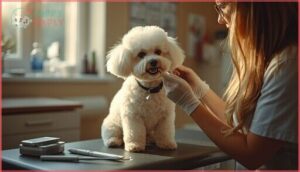
Choosing a low-shedding dog is just the first step—keeping them healthy takes a bit more attention than you might expect.
Small breeds face specific health challenges, from allergy realities to dental problems that sneak up fast.
Here’s what you need to know to keep your pup thriving for years to come.
Allergy Management and Risks
You might think low-shedding dog breeds mean freedom from pet allergy symptoms, but the truth is more complicated. Around 10% to 20% of people worldwide are sensitized to dog allergies, and no breed is truly allergy-friendly. Here’s what allergy sufferers need to know:
- Allergen reduction starts with air purification – HEPA filters greatly lower airborne allergens in homes with pets.
- Respiratory risks remain real – Dog-sensitized asthmatics face over 1 million additional attacks yearly in the U.S.
- Immunotherapy offers hope – Treatment can reduce symptoms after 6 months, though it’s not instant relief.
- Bedroom exclusion matters – Keeping dogs out of sleeping areas cuts allergen exposure where you spend hours nightly.
- Environmental control helps, but isn’t a cure – Regular vacuuming and washing bedding support your efforts but won’t eliminate all allergens.
Low-shedding dog breeds don’t produce less dander or saliva proteins. Studies show Poodles can carry high levels of Can f 1 allergen despite minimal shedding. If you’re considering a pet with allergies, consult your doctor first and plan realistic environmental strategies.
Dental Care for Small Breeds
Your canine companion’s teeth deserve daily attention. Periodontal disease affects up to 90% of small dogs over three, with toy breeds facing five times the risk of larger dogs.
Daily brushing matters most for small dogs, since periodontal disease strikes up to 90% of them by age three
Brush your pet’s teeth daily—it cuts plaque threefold better than chews alone.
Schedule professional cleanings under anesthesia, because awake scaling misses hidden gum disease. Veterinary care and pet insurance help protect your dog’s health long-term.
Diet for Healthy Skin and Coat
Nutrition shapes every strand your pup grows. Feed a diet balanced at 5:1 to 10:1 omega-6 to omega-3 fatty acids—that ratio slashes inflammation and maintains skin barrier integrity in low-shedding dog breeds.
Antioxidants like vitamin E and polyphenols boost coat resilience, while hydration needs demand about 1 ounce of water per pound daily.
Quality pet care starts with what fills the bowl.
Exercise Requirements for Small Dogs
Small dogs need 30 to 60 minutes of daily exercise to maintain energy balance and prevent obesity-related joint stress. Low-shedding dog breeds thrive with physical activity levels split into short walks plus mental stimulation through indoor games—perfect for canine companions in apartments.
- Morning routine: 20-minute walk plus brief outdoor playtime
- Midday break: Quick relief and movement session
- Evening activity: Longer outing or puzzle play for dog care and maintenance
Frequently Asked Questions (FAQs)
What is the best non-shedding small dog?
Looking for freedom from fur-covered furniture? Toy Poodles, Bichon Frise, and Havanese top breed comparison charts for allergy sufferers.
These low-shedding dog breeds combine minimal dander spread with long lifespans, making them ideal low-maintenance pets.
What is the calmest dog breed that doesn’t shed?
The Maltese ranks among the calmest low-shedding breeds. You’ll find these gentle companions perfectly content resting on your lap between short walks, making them ideal allergy-friendly pets for quiet households.
What is the best dog for seniors that don’t shed?
You’d think a low-shedding dog means less work, but seniors often find the opposite.
Maltese, Bichon Frise, and Havanese remain top low-shed breeds for elderly companion seekers, balancing manageable size with moderate energy needs.
What is the best low maintenance small dog?
For truly low maintenance pets, Basenjis and Italian Greyhounds win. Their short coats need only weekly brushing, and they skip the pricey grooming appointments that curly-coated low-shedding dog breeds demand every month.
What are some tips for housetraining a small non-shedding puppy?
Housetraining small puppies is like building a sandcastle—patience and timing matter.
Use crate methods, reward systems immediately after outdoor success, and schedule frequent potty training outings every two hours.
Prevent accidents through consistent supervision.
Which breeds are best for apartment living?
Bichon Frise, Havanese, and Toy Poodle excel in apartment living due to their compact size, low-shedding coats, and manageable exercise needs.
These city living companions adapt well to small spaces while keeping noise levels reasonable for pet-friendly living.
Are non-shedding dogs harder to train?
Training a non-shedding dog isn’t a tougher hill to climb. Trainability factors like canine intelligence, breed temperament, and your training methods matter more than coat type. Owner expectations shape success, not whether you choose low-shedding dog breeds.
Are small non-shedding dogs good with children?
Small non-shedding dogs can thrive with children when properly socialized and supervised. However, kid-friendly breeds like Havanese need careful family dynamics management.
Small dogs under 9 kg show a higher bite risk, requiring consistent child safety tips and training.
How much do low-shedding small breeds cost?
Sticker shock hits hard—expect $1,000 to $3,500 from breeders for popular low-shedding dog breeds. Adoption fees run $50 to $ Add first-year veterinary expenses, grooming budget, and lifetime costs easily exceed $20,000 total.
Can non-shedding dogs live in hot climates?
Yes, they can thrive with proper heat safety measures. Short coats aid thermoregulation, but flat-faced breeds face higher risks.
Shift walks to cooler hours, provide shade and water, and monitor for panting or lethargy closely.
Conclusion
Think of grooming as the price of admission—you’re trading vacuum cleaners for brushes, and that’s a fair deal. Small dogs that don’t shed give you freedom from endless cleanup, but they ask for commitment in return.
If you can manage regular coat care, you’ll find a companion that fits seamlessly into your life. Choose the breed that matches your energy, lifestyle, and grooming capacity. The right dog won’t just shed less—it’ll feel like home.
- https://www.aaaai.org/tools-for-the-public/conditions-library/allergies/dog-myths
- https://pmc.ncbi.nlm.nih.gov/articles/PMC8724828/
- https://www.cbsnews.com/news/hypoallergenic-dogs-wont-help-allergy-sufferers-much-says-study/
- https://www.petscare.com/en-ca/news/faq/what-is-the-longest-living-hypoallergenic-dog-2
- https://www.houndsy.com/blogs/modern-tails/what-dog-breeds-require-little-exercise-discovering-low-energy-companions