This site is supported by our readers. We may earn a commission, at no cost to you, if you purchase through links.

Your eight-week-old golden retriever just lunged at another puppy during what was supposed to be a calm greeting exercise; within seconds, three other puppies joined the chaos, and suddenly you’re wrestling a furry tornado while the instructor’s voice barely registers above the commotion. Puppy class behavior problems don’t just disrupt learning—they create a cascade of stress for owners, confusion for puppies, and frustration for trainers trying to maintain order.
The root causes often trace back to developmental timing, insufficient socialization windows, or overstimulation in group settings where novelty, excitement, and immature nervous systems collide. Understanding why puppies struggle in class environments—and how their brains process new experiences during critical growth periods—transforms your approach from reactive damage control to proactive behavior shaping.
The solutions aren’t about stricter corrections or louder commands; they’re about aligning your expectations with your puppy’s developmental capacity and creating conditions where success becomes the default outcome.
Table Of Contents
- Key Takeaways
- Why Puppy Classes Face Behavior Problems
- Puppy Biting in Class
- Chewing and Destructive Behaviors
- Jumping Up on People and Puppies
- Potty Accidents During Puppy Classes
- Whining and Barking in The Classroom
- Managing Hyperactivity and Overstimulation
- Nighttime Crying After Class
- When to Seek Professional Help
- Setting Up Classes for Fewer Problems
- Frequently Asked Questions (FAQs)
- Conclusion
Key Takeaways
- Puppy class behavior problems stem from developmental timing mismatches, insufficient socialization during critical 3-to-14-week windows, and overstimulation in group settings—not defiance or poor training.
- Effective management requires aligning expectations with your puppy’s developmental capacity rather than applying stricter corrections, focusing on proactive behavior shaping through consistent routines and positive reinforcement.
- Common disruptive behaviors like biting, jumping, hyperactivity, and vocalizations resolve through specific techniques: bite inhibition training, “four on the floor” exercises, scheduled breaks, and attention withdrawal—all paired with immediate rewards for desired actions.
- Class structure matters as much as training techniques; smaller class sizes (5:1 ratio), predictable routines, and gradual exposure to novelty prevent most behavior problems before they start.
Why Puppy Classes Face Behavior Problems
Puppy classes bring together young dogs at wildly different stages of development—and that’s exactly why behavior problems show up so consistently. Some puppies are still figuring out bite inhibition while others are testing every boundary they can find; meanwhile, fear periods and sensitivity windows come and go on unpredictable schedules.
To understand why your class feels chaotic, you need to know what’s happening beneath the surface during those critical first months.
The Role of Puppy Developmental Stages
Understanding puppy developmental stages helps you anticipate behavior issues before they escalate. Puppies progress through socialization periods—especially that critical 3-to-14-week window—where neural maturation shapes fear responses and confidence. Missing proper exposure during these developmental milestones can lead to behavioral fragility later, causing problems like overarousal or reactivity in class settings.
- Early socialization periods directly influence puppy behavior problems in training environments
- Neural maturation milestones align with temporary surges in exploration and distractibility
- Inconsistent handling during puppy development creates long-term behavior issues
- Fear responses formed early persist without proper socialization exposure
- Puppy developmental stages require age-appropriate class activities and expectations
How Socialization Impacts Class Behavior
Social learning during those early weeks sets the stage for everything your puppy does in class. Puppies with quality exposure to gentle handling, varied environments, and positive dog-to-dog encounters show markedly less fear-based reactivity and fewer disruptive vocalizations during group sessions—meaning calmer, more focused learners who respond better to trainer guidance and positive reinforcement cues. Effective training methods often rely on scientific study summaries to inform their approaches.
| Socialization Factor | Impact on Class Behavior |
|---|---|
| Early positive exposure to people and dogs | Reduces fear-based reactivity; improves responsiveness to trainer guidance |
| Diverse sensory experiences (sounds, textures, sights) | Decreases startle responses; enhances classroom engagement and attention |
| Balanced social play with obedience tasks | Minimizes impulsive behaviors; strengthens cue reliability amid class dynamics |
Environmental factors matter too. Controlled exposure to novelty—new toys, surfaces, sounds—within safe limits during puppy development directly reduces novelty fear and improves adaptability. Puppies that experience structured, predictable routines with clear trainer guidance exhibit fewer puppy behavior problems like overarousal or withdrawal.
That’s why quality puppy socialization isn’t just about puppy interactions; it’s about creating positive associations that translate into better class dynamics and smoother puppy training outcomes overall.
Puppy Biting in Class
Puppy biting ranks among the most common—and most disruptive—behaviors you’ll encounter in class settings. What looks like aggression is usually normal puppy behavior, but that doesn’t mean you should ignore it or let it continue unchecked.
Understanding the difference between harmless mouthing and problematic biting, then applying the right techniques, will help you manage this issue before it becomes a bigger problem.
Teaching your dog early on how to channel their natural energy into play rather than nipping helps establish boundaries that distinguish gentle interaction from aggressive behavior.
Mouthing Vs. Biting: Key Differences

When your puppy explores the world with teeth, you’re witnessing one of the most common puppy behavior problems—but distinguishing mouthing from biting matters. Mouthing involves gentle play without jaw pressure; it’s teeth exploration, not aggression. Biting, however, causes discomfort through applied force.
Redirecting that energy toward appropriate chew toys helps satisfy their natural urge while protecting your furniture and hands.
Understanding mouthing stages and teaching bite inhibition through positive reinforcement transforms puppy training, helping your pup learn safe interaction limits during critical development phases.
To better understand canine behavior, researchers often study language patterns and their impact on animal communication.
Safe Redirection Techniques
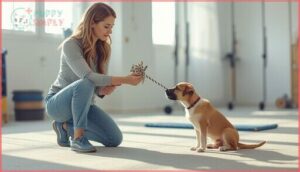
When redirecting aggression or puppy biting during class, you’ll want to offer calm cues paired with a preferred toy—immediately. Use low arousal responses; avoid raising your voice or making sudden movements, which heighten excitement.
Positive reinforcement works when you reward the instant your puppy switches focus. Gentle guidance through brief, consistent commands helps modify destructive chewing and other puppy behavior problems without overwhelming their still-developing impulse control.
For puppies showing early signs of reactivity or aggression, pairing training with the right equipment for managing aggressive tendencies gives you better control during socialization walks.
Teaching Bite Inhibition

Bite inhibition teaches your puppy to soften jaw pressure during interactions—a vital developmental stage that prevents painful, injurious behavior later. Gentle mouthing through controlled socialization helps shape appropriate responses; positive reinforcement rewards soft contact while time-outs address hard bites.
Pairing bite inhibition with a consistent potty training schedule for Goldendoodles creates a structured routine that builds your puppy’s self-control in multiple areas.
Effective mouth management during puppy training and behavior sessions includes:
- Brief, frequent practice with littermates and humans
- Consistent cues paired with replacement toys
- Observation of body tension and arousal signals
- Gradual introduction of mild resistance and new people
Chewing and Destructive Behaviors

Chewing isn’t just a puppy quirk—it’s how they cope with teething pain, explore their world, and burn off nervous energy during class. When your pup gnaws on leashes, chair legs, or even other puppies’ ears, they’re not being defiant; they’re simply doing what comes naturally.
Here’s how to redirect that chewing instinct so everyone can focus on learning instead of damage control.
Why Puppies Chew During Classes
Think of your puppy’s mouth as their hands—they’re gathering information about the world through chewing, especially during teething pain between 3 and 6 months.
Class distractions like chairs and training materials become irresistible targets for arousal regulation when stress builds up.
Without proper puppy enrichment and scheduled breaks, biting and mouthing escalates as your pup attempts to self-soothe through these normal puppy behavior problems.
Providing Appropriate Chew Options
Smart Chew Selection during class can transform destructive Puppy Chewing into productive Dental Health support—here’s your toolkit for managing Biting and Mouthing through proper Calming Aids:
- Offer size-appropriate, durable Chew Toy Safety options designed specifically for Puppy Teething and developmental stages
- Rotate chews regularly to maintain novelty and engagement, reducing boredom-driven Puppy Behavior Problems
- Supervise all chew activity; provide separate items per puppy to prevent resource guarding
- Choose non-toxic, easy-to-sanitize materials without small parts or synthetic additives
- Integrate chew breaks with Positive Reinforcement cues, strengthening self-control while supporting PuppyProofing goals
Using Bitter Apple Spray Effectively
Bitter apple spray works as a deterrent when applied correctly—but misuse can backfire. Test a small patch first, then coat inappropriate items from several inches away, avoiding the puppy’s eyes or nose. Reapply after washing to maintain deterrent effectiveness, and always pair with positive reinforcement for desired chewing choices; spray alone won’t solve puppy behavior problems without teaching bite inhibition and offering product alternatives like approved toys.
| Spray Application Tips | Safety Precautions |
|---|---|
| Apply from several inches away | Avoid eyes, nose, and mouth |
| Coat surfaces evenly without dripping | Perform patch test first |
| Reapply after washing or fading | Check for skin sensitivities |
| Target authorized objects only | Discontinue if irritation occurs |
| Use consistent spray pattern | Store away from children |
Jumping Up on People and Puppies

Jumping up is one of the most common—and most frustrating—behaviors you’ll see in puppy class. It happens when puppies get excited, want attention, or simply haven’t learned a better way to greet people and other dogs.
Let’s break down why it happens, how to teach an alternative behavior, and what you need to stop doing if you want the jumping to end.
Why Puppies Jump in Class
Jumping triggers in class often arise when your puppy’s excitement collides with inconsistent trainer responses—one of the most common puppy behavior problems you’ll encounter.
Class dynamics intensify this; proximity to other pups during puppy socialization amplifies arousal, making energy management critical.
Without positive reinforcement for calm behavior and clear behavior modification cues, jumping up becomes your puppy’s default way to engage during puppy training sessions.
How to Teach “Four on The Floor”
Teaching your puppy to keep all four paws on the floor starts with clear cue timing and immediate reinforcement when correct puppy posture appears. Use leash guidance to gently redirect jumping up, then reward the moment proper floor positioning occurs—this behavior modification approach tackles puppy behavior problems at their root.
Practice paw placement in short sessions, building muscle memory through consistent dog training techniques that make calm behavior your puppy’s go-to response during puppy training.
Preventing Reinforcement of Jumping
Once your puppy understands the mechanics, jump prevention hinges on what you do next. Never reward jumping with eye contact, touch, or verbal praise—attention fuels the behavior. Instead, redirect immediately to a calm behavior like “sit,” then reinforce with treats within 1–2 seconds. Leash management and training consistency matter:
- Keep leashes short during greetings to limit upward momentum
- Use positive reinforcement only when all four paws stay grounded
- Practice structured meet-and-greet routines at home to generalize learning
Consistent reward systems transform puppy behavior problems into reliable dog training techniques through behavior modification.
Potty Accidents During Puppy Classes

Potty accidents happen in puppy classes—it’s part of the deal when you’re working with young dogs still mastering bladder control. The good news is that you can minimize these mishaps with some smart prevention and a solid plan for when accidents do occur.
Here’s what you need to know about keeping your classroom clean and reinforcing the right habits.
Quick Clean-Up and Prevention Tips
When accidents occur during puppy training, acting swiftly is crucial to maintaining a calm and safe classroom environment. Immediately blot any moisture with paper towels, then apply a pet-safe enzymatic cleaner to break down organic matter and prevent repeat soiling. This dual approach effectively addresses both sanitation and odor control, which are essential pillars of good hygiene practices.
| Cleanup Step | Purpose |
|---|---|
| Blot and remove moisture | Reduces staining and odor |
| Apply enzymatic cleaner | Breaks down organic matter |
| Wipe contacted surfaces | Minimizes cross-contamination |
| Seal soiled materials | Maintains scent control |
Prevention is always better than cleanup. Establishing a consistent potty schedule before, during, and after class is key. Designate a specific toileting area outside your training space to reinforce location cues. Controlled exposure to novelty—such as new toys, surfaces, and sounds—within safe limits helps reduce stress-related accidents and improves focus, addressing common puppy behavior problems before they escalate. Ample crate or mat time between activities allows puppies to settle, preventing overstimulation that can lead to issues like excessive barking or destructive chewing. A predictable routine, combined with clean, odor-neutral rooms, lowers anxiety and sharpens attention—essential elements for classroom safety and effective puppy proofing that support long-term success in puppy training.
Reinforcing Good Potty Habits
Once your space is clean, building reliable house training comes down to timing and consistency. Potty scheduling tied to meals and playtime teaches bladder control; immediate positive reinforcement after success strengthens cue recognition. Crate training aids accident prevention by tapping into natural cleanliness instincts, while clear potty cues help puppies connect behavior to location—core strategies for resolving puppy behavior problems.
- Reward the instant your puppy finishes: that split-second praise cements the win
- Track every potty event: dates, times, outcomes—data drives better training decisions
- Use one simple cue word consistently: “potty” before heading out builds powerful association
- Gradually extend intervals as reliability grows: confidence comes from repeatable success
Whining and Barking in The Classroom

Whining and barking can turn your puppy class into a chaotic echo chamber—but these vocalizations usually signal something specific, from excitement overload to anxiety about being in a new place. Understanding why your puppy is making noise gives you the power to tackle the underlying issue instead of just reacting to the symptom.
Let’s break down the most common triggers, how to handle attention-seeking behaviors, and proven techniques to help your excitable pup settle down.
Why Puppies Whine or Bark
Vocalization triggers during class sessions generally fall into three categories: attention-seeking, stress responses, and social signals. Your puppy’s whining causes range from separation from littermates to unfamiliar canine communication patterns; barking patterns emerge when puppies encounter novel stimuli or feel frustrated.
Noise reduction starts with identifying whether puppy behavior problems stem from physiological discomfort—teething, hunger, equipment irritation—or environmental factors like sudden sounds that escalate arousal and prompt behavioral issues in dogs.
Managing Attention-Seeking Vocalizations
Consistency is your secret weapon when addressing vocalization triggers—those repetitive yips that disrupt calm environments and derail your best training moments. Attention withdrawal works because puppies learn that barking won’t summon handlers; instead, you’re teaching quiet cues through measured responses that reduce arousal management challenges tied to separation anxiety and other puppy behavior problems.
Three proven attention-withdrawal techniques:
- Pause all interaction when your puppy vocalizes, resuming only after three seconds of silence—this window prevents inadvertent reinforcement of dog behavior and body language signaling demands.
- Reward alternative actions like sitting or eye contact with brief praise, not treats, so you don’t create dependency on constant food rewards for addressing behavior issues.
- Use timer-based routines with 30-second attention bursts followed by calm pauses, gradually extending quiet intervals to build impulse control without triggering fresh bouts of barking.
Calming Strategies for Excitable Puppies
Arousal thresholds—how quickly excitement tips into chaos—determine whether your puppy can absorb lessons or spiral into hyperactivity. Structured, low-stress training with muzzle-free relaxation protocols calms excitable pups faster than free play. This approach addresses puppy behavior problems like separation anxiety through positive, reward-based training that builds quiet time management skills in calm environments.
| Strategy | Implementation | Expected Outcome |
|---|---|---|
| White noise with calm verbal cues | 2–5 minute sessions, repeated hourly | Lowers baseline stress, aids puppy relaxation |
| Gentle handling at doorways/gates | Slow movements, paired with soft praise | Reduces startle-related reactivity by ~30% |
| Structured play breaks with time-ins | Brief pauses every 5 minutes of activity | Improves impulse control during puppy behavior and training |
| Olfactory enrichment over fetch | Scent games before high-energy tasks | Decreases overall arousal, stabilizes focus |
Dim lighting, soft bedding, and predictable routines stabilize heart rate variability within one week—proof that calm environments aren’t luxuries but necessities for managing hyperactivity.
Managing Hyperactivity and Overstimulation

Hyperactivity in puppy class can derail even the best-planned training sessions, leaving you frustrated and your puppy too wound up to learn anything meaningful. The good news is that most overstimulation stems from predictable triggers—and with the right approach, you can help your pup settle down and actually absorb what you’re teaching.
Let’s break down what’s causing all that chaos, how to burn off excess energy before it becomes a problem, and why strategic breaks aren’t just nice to have—they’re essential.
What Causes Hyperactivity in Class
Hyperactivity in puppy classes isn’t random—it’s rooted in physiological factors and neurodevelopment that affect impulse control during the critical 3–4 month window. Environmental triggers, learning patterns, and immature neural circuits combine to create the perfect storm of behavioral issues you’re seeing.
Here’s what drives hyperactivity management challenges in your classroom:
- Elevated heart rate and cortisol spikes during obstacle-focused tasks
- Sensory overload from novel sounds, unfamiliar people, and exciting toys
- Short attention spans causing rapid shifts from focus to exploratory puppy behavior
- Inconsistent routines that increase anticipatory energy and restlessness
- Prior reinforcement history where energetic responses earned attention or rewards
Strategies to Reduce Excess Energy
You’ll tackle excess energy head-on by combining 60–90 minutes of daily exercise with varied mental stimulation—puzzle feeders, scent games, and trick-based tasks that engage puppy development and socialization needs.
Structure play with time-bound sessions and clear end cues, then shift to calm environments with designated rest zones.
This approach fosters energy regulation through positive reward-based training while addressing hyperactivity through exercise variety and dog behavior modification strategies.
The Importance of Scheduled Breaks
Think of scheduled breaks as your puppy’s mental reset button—regular pauses prevent puppy burnout and support cognitive rest during intense socialization windows. Break timing matters for stress reduction and behavioral correction and modification:
- Insert breaks every 3–5 minutes to maintain engagement and consolidate learning
- Use quiet, low-stimulus rest zones to lower arousal and cortisol levels
- Follow consistent class scheduling patterns to reduce anxiety-related behavior problems and solutions
This approach honors puppy development and socialization needs while strengthening dog training and psychology fundamentals, making puppy ownership and responsibility more manageable for overwhelmed handlers.
Nighttime Crying After Class

You drop your puppy off to sleep after an exciting class—and then the crying starts. This frustrating pattern isn’t coincidence; the mental and physical stimulation from training can disrupt your pup’s ability to settle down at night.
Let’s look at why this happens and what you can do to help your puppy wind down properly.
Reasons Puppies Cry at Night
You’ll often hear nighttime crying in those first weeks—your puppy’s facing separation anxiety after leaving littermates. Teething pain, environmental factors like temperature shifts, and simple bathroom needs all trigger puppy whining.
These nighttime fears are normal puppy behavior problems; understanding sleep patterns helps you address puppy care and training issues with puppy training techniques that actually work.
How Classes Affect Sleep Patterns
Class scheduling directly impacts your puppy’s sleep cycles and rest patterns—puppies experience lighter sleep and more frequent awakenings on class days compared to non-class days.
High-stimulation sessions late in the day correlate with longer sleep onset latency at night, leading to puppy whining and nighttime crying.
When class activity ends at least 2–3 hours before bedtime, you’ll see improved sleep quality and reduced puppy fatigue.
Tips for Better Nighttime Routines
When late-class sessions disrupt your puppy’s wind-down, you need deliberate calming techniques and a consistent sleep schedule to restore their rhythm.
- Provide a final potty break just before lights out, using consistent cues to reinforce potty training success
- Create a predictable bedtime routine with gentle brushing or massage as relaxation methods
- Dim lighting and lower external noise to signal sleep time
- Place a familiar scent item in their crate to reduce puppy whining
These strategies support puppy health and wellness by addressing dog behavior and psychology—your nighttime crying issues will decrease as predictable patterns take hold, usually within 5–7 days of consistent puppy training.
When to Seek Professional Help

Most puppy behaviors you’ll see in class are completely normal—they’re just part of raising a young dog. But some patterns signal deeper issues that need more than basic training techniques. Knowing when to call in extra support protects both your puppy’s development and your peace of mind.
Red Flags in Puppy Class Behavior
Some puppy behavior issues signal deeper trouble. Watch for repeated growling or snapping at classmates—these aggressive signs demand immediate Trainer Support. Fearful behavior, like persistent cowering or trembling, reveals Puppy Stress that standard Classroom Management won’t fix. When unwanted behaviors escalate despite redirection, you’re looking at genuine behavioral issues in dogs requiring specialized intervention beyond typical puppy socialization challenges.
| Red Flag | What It Looks Like |
|---|---|
| Aggression | Growling, snapping at instructors or peers in most sessions |
| Fear | Excessive cowering, trembling, hiding during participation |
| Disengagement | Inability to redirect from toys or peers when asked |
| Tension | Stiff posture, pinned ears, taut tail before commands |
| Vocalization | Persistent whining or barking despite calming attempts |
Differentiating Normal Vs. Concerning Issues
You’ll spot normal exploratory mouthing and temporary excitement spikes during Puppy Development—these settle with redirection.
Behavioral Red Flags like repeated aggression, persistent fear-based avoidance, or pain-related resistance need immediate attention.
If your puppy can’t settle within minutes despite Socialization Techniques, or bite intensity escalates over sessions, you’re seeing behavioral issues in dogs requiring specialized help beyond standard Hyperactivity Management.
How Trainers Can Support Owners
Consistently, skilled Dog Trainers translate complex Puppy Behavior into actionable Owner Support—it’s what separates frustration from progress in Puppy Development. Effective Trainer Guidance includes:
- Written action plans with step-by-step Class Management routines you can replicate at home, reinforcing Training Strategies between sessions.
- Real-time feedback during Positive Reinforcement exercises, plus objective progress reports summarizing your puppy’s Dog Behavior Modification journey.
- Accessible resources—handouts, video demos, and checklists—customized to your Puppy Training stage, ensuring clarity and confidence.
Setting Up Classes for Fewer Problems
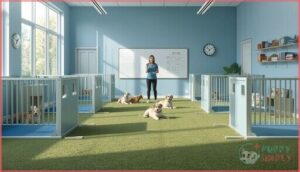
The best puppy classes don’t just react to behavior problems—they prevent them from happening in the first place. How you structure your sessions, from class size to daily routines, creates the foundation for success before a single pup walks through the door.
Let’s look at three key factors that set well-behaved classes apart from chaotic ones.
Benefits of Small Class Sizes
When you’re working with six puppies instead of twelve, everyone wins—think of it like the difference between managing a dinner party and a stadium event.
A trainer-puppy ratio of 5:1 or lower means you’ll get individual attention for each behavior challenge; your pup will experience calmer environments with fewer distractions, leading to faster mastery of dog behavior modification techniques and improved small group dynamics overall.
Importance of Consistent Routines
A stable daily structure—fixed class times, predictable transitions, and uniform reward schedules—reduces anxiety and accelerates learning in puppy raising. When daily routines mirror what’s practiced at home, you’ll see fewer accidents, less whining, and steadier progress across every session.
Your dog trainer will use consistent feedback to reward desired behaviors through positive reinforcement, creating stable environments where cues like “sit” stick faster.
Safe Exposure to New Experiences
Gradual exposure transforms nervous pups into confident learners—but only when you introduce novelty at the right pace. Environmental enrichment paired with sensory training builds adaptability without triggering fear responses; structured socialization techniques prevent the behavioral fallout of rushed introductions.
Gradual exposure builds confident puppies—but only when novelty arrives at the right pace, preventing fear while strengthening adaptability
Your canine behavior modification approach should include:
- Low-intensity stimuli first, monitored through tail position and yawning
- Brief, predictable sessions repeated weekly
- Multisensory experiences: gentle handling, varied surfaces, mild sounds
- Pairing unfamiliar objects with rewards within two seconds
- Rotating contexts—indoors, outdoors, car rides—to maintain curiosity
PuppyProofing and safety measures guarantee controlled novelty introduction increases positive affiliative behaviors by 20–40%, setting the foundation for dog behavior modification success throughout your puppy training program.
Frequently Asked Questions (FAQs)
Can puppies attend class while still teething?
Yes, puppies can attend class while teething—usually starting around 3–4 months—if discomfort remains mild.
Trainers should provide chew toys, shorten sessions, and monitor mouthing behavior to guarantee safe, productive participation.
How do littermates behave differently in class?
Littermates seem inseparable—yet that bond often fractures focus. They mirror each other’s reactions, escalate play instantly, and struggle with independent cues, requiring trainers to separate them briefly for genuine canine behavior modification progress.
Should shy puppies join group classes immediately?
Not always—shy puppies often need gradual socialization and trainer guidance to prevent fear escalation. Assess puppy readiness first; class structure with controlled exposure facilitates dog behavior modification better than immediate immersion, reducing separation anxiety risks.
What vaccines are required before starting classes?
Most reputable programs require core vaccines—distemper, adenovirus, parvovirus—plus rabies where legally mandated.
Bring current vaccination records, health certificates, and proof of deworming to your first session; booster shots must remain current throughout training.
Do breed differences affect classroom learning speed?
Breed differences do influence trainability factors and learning pace in classroom dynamics. Working breeds often acquire obedience cues faster than non-sporting types, though individual puppy behavior and handler experience also shape canine behavior modification outcomes.
Conclusion
Like building muscle memory through repetition, resolving puppy class behavior problems requires consistency, patience, and strategic reinforcement over weeks—not instant fixes.
Your eight-week-old’s chaos transforms into cooperation when you align training methods with developmental readiness, manage environmental triggers proactively, and celebrate small victories without rushing progress.
The puppies who once scattered your focus will eventually demonstrate impulse control, but only if you commit to the process with realistic expectations and unwavering structure.
- https://pangovet.com/?utm_source=dogster&utm_medium=article&utm_campaign=dog_behavior_training
- https://avsab.org/wp-content/uploads/2018/03/Puppy_Socialization_Position_Statement_Download_-_10-3-14.pdf
- https://www.sciencedirect.com/science/article/pii/S0749208123000268
- https://x.com/godofprompt/status/1990526288063324577
- https://www.onelook.com/?loc=olthes1&w=subpoint